Unscripted with @jrichlive ft. Garrett Lord (Handshake)
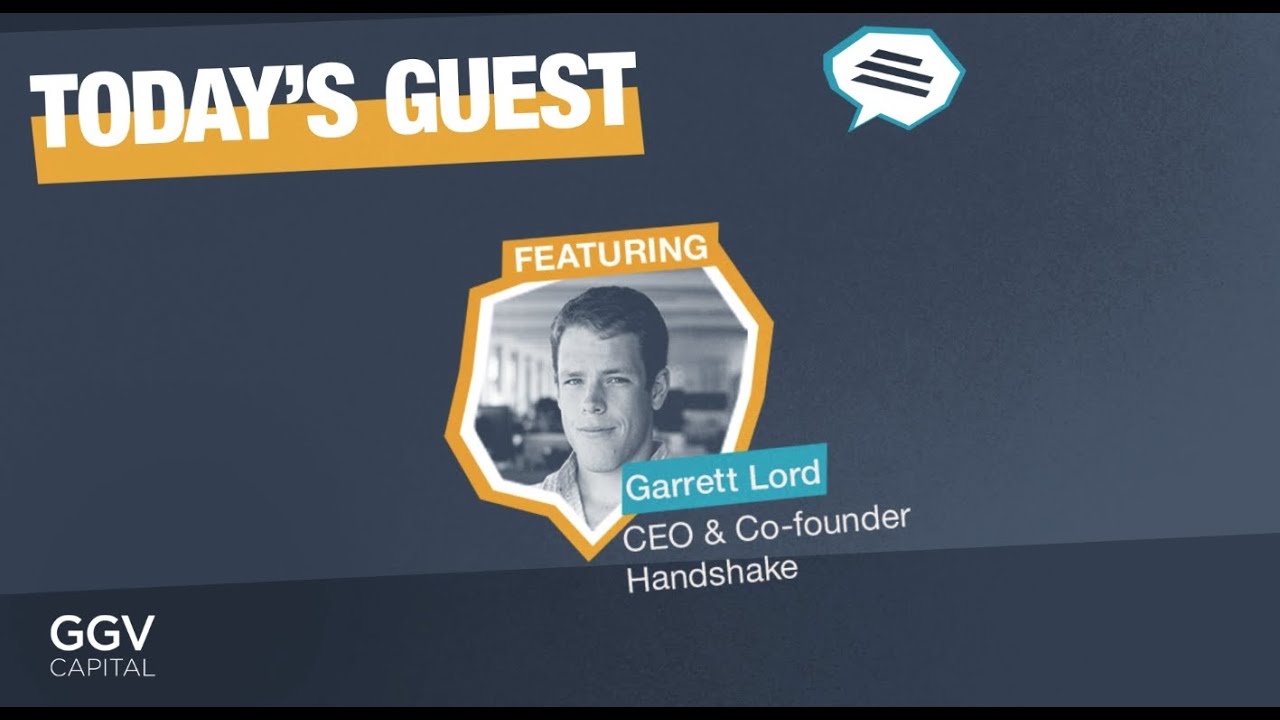
Garrett Lord, founder of Handshake, took 100+ rejections before his dad's $150,000 check and two VCs backed him in 2015. He built the recruiting platform from a Michigan college dorm, stayed quiet on hype, and learned that deep investor relationships beat speed dating term sheets.
Chapters
All right. It says we're live, Garett. So we're live. Happy Thursday, man. Great to see you.
Great to see you too, Jeff. Always fun talking.
I love your background. It's much more exciting than mine. But hey, we've only got a half hour and you and I have spent a lot of time over the last couple years together, I thought it'd be fun just to share some of the things that I've heard from you about being an entrepreneur, how you started Handshake, why you started Handshake. And obviously you had the big news last week about the funding and some of the growth metrics. I want to jump into that as well, but can you just sort of wind back the clock? How did you— how did you come— you know, tell everybody a little about your background and how you came to start Handshake and why you started it.
Yeah. So, um, handshake for me is just like a very deep personal problem that I faced in college. Um, a little about my background, I grew up in Michigan, the Lower Peninsula of Michigan, or the Metro Detroit area. I went to school— I love to ski, as, as do you, Jeff, and some of our favorite pastimes together— and I went to school, uh, in the biggest mountain in all of Michigan, a good 850 vertical feet, Mount Bohemia, at a school called Michigan Tech that gets about, you know, 250 inches of snowfall a year. So it's great outdoors, but It was there that I experienced, you know, I grew up in a kind of working-class family, went to, you know, what was community college for 2 years because I was paying my way through school and then went up to Michigan Tech to study computer science. Always been a huge nerd. And it was there that I just really experienced a lot of the information, the inequities that exist in graduating from college to career. My story of kind of how I came to found Handshake was I got an internship through a professor at Los Alamos National Labs. So fun mountain biking, which we also enjoy together, and drove down to New Mexico.
Nice.
And I met students from all kinds of kind of really prestigious institutions, Stanford, Carnegie Mellon, MIT at this research laboratory. And they had all talked about, you know, opportunities in New York and California and what it meant to work at technology companies. I remember when a friend told me he worked at Google and I was like, oh my gosh, you work at Google. You know, that's what I would love to try to do that. And breaking into those companies from Michigan Tech, they didn't recruit at our school. And because our school was so geographically constrained, I mean, it's 8 hours away from Chicago, 6 hours away from New York. We kind of, I helped get a bunch of friends jobs at Palantir and other tech companies in the Bay, friends that were even more talented than myself and that were struggling to find internships and struggling to find jobs. And so I thought it was really unfair that, you know, kind of the socioeconomic status of your family and kind of what school you go to, it has such a, historically had such a play in what kind of job you got after college. Today in America, 40% of college students are underemployed, meaning they're working a job that didn't require a college degree. And we thought that problem was really driven by a lack of access based on what school you went to, a lack of information. I mean, I thought iBanks were internet banks. I didn't even know it was out there. And a lot of employers were just evaluating students by what school you went to. So we set out, you know, my sophomore and junior year of college to start working on this side project. Originally, we called it Trajectory, but students couldn't consistently spell trajectory, so we renamed it to Handshake. And the mission has always been to try to level the playing field and make it— and help students find meaningful opportunities after college, regardless of who your parents know or what school you go to. Fast forward to today, I'm just incredibly blessed. You know, today Handshake is the largest network in the country for college students finding internships and jobs. There's over 525,000 companies using the platform, 100% of the Fortune 500.
Wow.
So over 17 million students and young alumni that use Handshake. And then we partner with 1,100+ of just, of universities across the country, which is about 87% of the top 500 schools. And so this ecosystem of universities helping their students find jobs, students networking with each other, learning from near peers, connecting to companies, finding internships. And then on the company side, there's a free and premium product that helps them And what—
so like a lot of people see the kinds of things that you saw coming out of college, but not everybody goes on to start a company to solve that problem.
What—
were your parents entrepreneurs? What do you think kind of gave you the bug to say, I could go build something to solve this problem?
Yeah, well, I think my dad is a huge role model for me. My dad's in the construction industry and just witnessed him and grew up on kind of job sites helping him with all the grunty tasks of, you know, demo. And I just witnessed his work ethic. He's a bit of an entrepreneur because he started his own business and, you know, in the construction industry. And for me, I think that work ethics, you know, really is an important part of my life. But I think Kind of one special story about starting Handshake is, we kind of got just addicted to this problem, like just so focused on it in college. This was junior year, senior year, a little bit of sophomore year where the kind of founding story of capitalizing the company was, I was gonna take a job at Palantir after school 'cause I had a ton of student loans. And my dad, I used to drive my broken down Jeep to all these universities and we used to sneak into career fairs at other schools trying to understand like, what is it like, I used to read Paul Graham and he used to say, get close to your customers, talk to your customers.
You're getting as close as you can.
We'd drive like 8 hours and go sneak into the— I'll keep the university out of it— career fairs and talk to employers and talk to other students. And my dad just witnessed this just like unrelenting like focus and just kind of had never seen me more passionate about something. And he actually surprised me my senior year of college. He had refinanced his home. and drove up a Ford Focus because the Jeep kept on breaking down. And kind of, we had been talking about starting— I'd been talking about starting this company, but I didn't know anything about raising money. So he introduced me to all the doctors and lawyers at the country club, and we did meetings at the country clubs. And my dad wrote the first check in a handshake for $150,000.
Wow.
And just said, you know, I'll forever regret not kind of empowering you to take this risk. Here's a little bit of a safety net and, you know, see what you can make happen on this idea. And it's probably, you know, it's kind of beautiful to think about. I used to tear up when I thought about it. But it's, you know, that, that's what got us to start. $700 a month house, 4 friends living in it, and just driving around to school signing them up.
And when did you raise your first round of venture capital?
Probably around 2005.
2015. Yeah.
I booked a one-way ticket to Silicon Valley because my dad no longer could afford to support the company and slept on friends' couches and had a little suitcase and spent about 4 months getting, you know, probably 100+ nos and took one person to say yes. You know, Tony at True Ventures and Will Kohler at Lightspeed, just, they led the seed round and the rest is, you know, kind of been a beautiful story.
That's awesome. I mean, I think, you know, it's— I always tweet out overnight success story when companies go public and people are like, oh, you know, but there are no overnight success stories. Like most founders have a story like yours where they start, you know, with a little idea and figure it out. And I just think it's so inspiring and so amazing. I mean, I hope we all as parents have a chance to do what your dad did for you and, you know, give our kids that nudge. And obviously it could have failed. But I'm sure he wouldn't have regretted it no matter what. Can you just talk a little bit about, I mean, you've been really successful at raising capital. You raised, you know, you got True, KP, Spark, you got us, you got a bunch of good investors around the table. Are there any insights that you could share with folks, other entrepreneurs that are out there? I mean, obviously you started this thing with nothing, your Ford Focus and a suitcase, and now you've raised, I think, $150 million. Any tips that you would have? You mentioned the 100 nos. How did you persevere when you were getting the 100 nos? I mean, because you ended up with a great list of investors, but it had to be challenging early on.
Yeah. I mean, just to maybe share some— I think this is kind of under-talked about amongst founders, but it's pretty hard early on. And just to maybe share with a bit of compassion to other people going through this, I mean, I used to go on morning runs after, you know, getting 2 nos, 3 nos a day and just like, just listening to— I would listen to Lose Yourself and like cry on a run in the morning because I was like, we're running out of money. I had 5 or 6 friends that had all, you know, quit their jobs, taken $25,000, $30,000 salaries, believed in this vision, believed in the mission. And it didn't seem like we were gonna be able to make it work because I was just, I wasn't making it happen for 2 or 3 meetings a day and getting nos. And it was just, the lows are pretty low. And I think exercise really helped just create, I don't know, I'm a huge believer in just staying, trying to stay active. But maybe some advice I have, there's a lot now that has been almost democratized or written about capital raising and processes. So maybe I won't focus on that because I think that's well documented online.
Yeah.
And I'd encourage founders to just be relentlessly resourceful and really really read all the great content out there about fundraising. The thing that I think is maybe underwritten about, or I wish— I've been super thankful to have gotten this luckily right, but is you partner, it's easier. I think you said this, it's easier to get divorced than it is to separate with your venture capitalist. And I am super fortunate to partner with Tony and Will and Eric and Mamoun and Megan and Alistair and Laura and Jeff. I just think like spending the time to not just speed date, but really get to know. I mean, I knew you for a year and a half, 2 years.
Yeah, almost 2 years.
2 years.
And I looked up to you as a father. I looked up to you as a businessman. I looked up to your philosophy on Handshake. And you're a guy that I really wanted to do business with. And I think if I've learned anything in building Handshake, it's like, you know, that, you know, you want to enjoy the people that you're building the business with. and feel you can learn from them. So that's written about in some of the articles, but I think it's really important to try to partner with people that can help push you. A lot of our board members, you know, I think their role is to, you know, pick you up when you're getting beat down, and then when things are going well, they, you know, push even harder. And I think that that's really helped create Handshake today.
And I've used our relationship as an example many times. For some reason, there's this narrative in Silicon Valley of like the speed dating run a quick process, get a bunch of term sheets, and move on.
And I'm—
and I've had founders come to us and pitch us and say, I'm looking for a term sheet in a week. And I'm like, then we're just not a fit, you know. And I give them the example of you and I spending time for 2 years getting to know each other.
You know, we hung out in Tahoe, we've been mountain biking, we've been skiing.
And, you know, that's pretty unique. It's pretty unique to get to spend all that time together. But I do think that that's just a valuable way to build a relationship an investor or a board member or an entrepreneur, and I encourage folks to do that. And even if you feel like you're wasting time, I don't see it that way. If the business does well, those folks that you've cultivated those relationships with are going to be super interested in working with you, and I think it's great advice.
The other thing you do really well, when I was 30 and I had started my first company at 25, basically failed by the time I was 30 and was starting my second company, But I was super stressed. It was really stressful. Like you said, you got the weight of the world on your shoulders. You got these people that you've recruited in to come work with you and you feel like you're responsible for their wellbeing. How do you manage the stress? And I know you love to mountain bike and get outdoors and like, how do you, how do you, how have you done that? It seems to me like you do it really well.
Thank you. It's a constant struggle.
And I'm sure you don't have a formula, but like, how do you carve out time? How do you balance your time with your team? I don't know, I'm just curious if you have any tips you could pass along to other young founders that are feeling that same stress.
Totally.
Particularly this year. This year has been so crazy.
Oh yeah, and the team's been— yeah, it's been a hard year for a lot of folks, especially parents. I can't imagine juggling teaching your kids at school and balancing work. On my side, I You know, I think something I both am good at and struggle with is I really compartmentalize a lot. And, you know, I feel like it's Friday evening, you know, wrapping up work late in the evening and, you know, you're gonna meet up with some friends or, you know, hang out. And, you know, I really, I struggle for the first hour and a half of leaving work where I just am not quite ready to, you know, be the awesome Garett that, to share experiences with my friends together. And so, you know, sometimes what I do and I like doing is just a little bit of exercise after work. just to clear your mind and kind of be a different Garett outside work. 'Cause you just, I mean, as a CEO, you're just, my schedule is generally back-to-back Zoom meetings most of the day. And it's super, I mean, I'm context switching across so many different types of interactions across the course of the day that it's, I find it's like hard to get out of like work mode. So on my side, I, and then another thing too, I've realized is because work is so important and showing up in a, compassionate and like really awesome way for your team. I find that like really need to prioritize sleep and I really need to prioritize exercise. And I really, it's days when I, you know, get 5 hours after, you know, back in the day, a red-eye and then jump onto, you know, sales meetings and internal meetings. I'm not like my, I'm not bringing my best to the table. And so there's been, you know, some learning lessons on my side around just like making sure that you're prioritizing sleep and diet and exercise in order to maybe you know, not be cranking it, you know, 90 hours a week, right? But, you know, how can you show up in the hours that you are at work in a really quality way?
Yeah.
And then the other thing on my side I've really learned about is I work with this wonderful teammate of mine, Jay Lou, at Handshake. And he really, we get super focused on how I spend my time and tracking that to goal. And like, what are the priorities? What are we saying no to? And that's been a constant evolution as the business changes like every 6 months. But those are some of the main takeaways on my side.
That's awesome. One of the other things that you do, at least you and I spend a lot of time on recruiting, and it seems like you spend a lot of your time on recruiting and thinking about your team and the organization and the culture. How have you figured that out? How do you manage that time? How do you prioritize it? Do you have external advisors that have helped you with that? Do you have a great head of people? Maybe share some tips for founders because I've been super impressed with the way you've built the team at Handshake and You sort of treat it as a never-ending work in progress, which it is at all stages of building a company, but you've just consistently been able to recruit super talented people, which is hard, as you know. When you have 25 people in a company and almost no revenue, it's hard to recruit. Now you've got a higher profile and lots of great investors, and that helps you. But how— maybe if you could wind back the clock a little bit over the last couple of years, any tips or tricks that you might be able to share with folks who are entrepreneurs about recruiting and how much time you spend on it, where you focus it, and any, I don't know, external inputs that you've had that have helped you be good in that area?
Yeah, a couple maybe quick comments, some diverging thoughts, but like, you know, I'd be remiss if I didn't give a—
I'm just super thankful and proud to work with, you know, the team that we've built today at Handshake. It's unbelievable how far this business has come, and that's on the backs of so many teammates who have have just dedicated themselves to trying to make Handshake a mission-oriented business and a great business. And it's kind of one of the greatest joys in building a business is watching people grow and building that culture and team.
Yeah. I miss some of that in person, you know, now that we all work from home.
But maybe some, a couple quick learning lessons on my side, maybe for earlier stage founders, like I wish I worked with executive search firms earlier. I thought it was like, oh, $90,000, $80,000, like, no, that's way too expensive. I'll do it myself. But the rigor of a search team that's super focused on bringing you, you know, 6 qualified candidates per week and managing that process, there's a lot to learn from them. I've actually learned a lot about recruiting from professional search people that have placed hundreds of executives over the, you know, a decade. And so there's a ton to learn from them.
And I like partnering with them in a more consultative way.
Second thing, you talk about this a lot, but I wish I— I think there's a lot to prior experience and hiring more experienced executives. and experienced leaders earlier in the company's lifecycle. We had some incredible athletes at Handshake early on that have gone on to be huge leaders in our company. But, you know, great example, you know, on the sales side, we hired this gentleman named Brett Scale, who's just totally knocked the jacket off the ball in terms of bringing Handshake go-to-market.
Oh, yeah.
And he's just a wonderful leader where, you know, we hired him at $500,000 revenue.
And I've learned so much from him. And, you know, I could name a lot of my executives, but you know, you bring in these executives who know what they're doing and can help partner with you and teach you, quite frankly, how to build this business has been a huge learning lesson.
You know, I feel bad because I talked about Brett and not other people, but I'll move past that. The second thing is, you know, on my side, I think one of the— you got to figure out what people's motivations are. So I spent a lot of time trying to do discovery with candidates. I think that's something I learned later in my life as a leader, but like, I, in a lot of the early phone calls with people, I'm just like, what motivates you? What's a good fit for you? What do you want to be doing? How do you envision your career for the next 4 or 5 years? And you could tell pretty quickly, like, is there alignment to the overall role and scope? Is there alignment to like what motivates them? On my side, I think there's 2 huge levers that I get to pull in describing Handshake's business model. One is the mission.
Totally.
Which is really compelling. And a lot of people resonate with that deeply around the, you know, in America today, just the socioeconomic divides and what that means for opportunity. We're working on a very small part of that process. I mean, there's getting to college and paying for college, and then we're at the end of it, of finding a meaningful job, which is still hugely important. And then the other thing is the mission, which a lot of people gravitate to. And the other thing is the complexity of the business. I mean, we're like one of the largest consumer networks that most people have never heard of.
Yeah.
Every college student in America, Handshake's a verb and it's huge. But if you're not in college, you haven't heard of it before.
Almost every candidate I interview with you says that to me. I didn't realize how complex this business was, how hard the product is to build.
Totally.
Like from the outside, it doesn't, they don't, they don't understand all the moving parts. And then once they get into the process with you guys, they see that.
And you bring that to life based on what they care about. If they care about consumer or enterprise or higher education or the marketplace. So those are the 2 vectors I pull on is trying to understand what they want and then the complexity and deep network effects, super strong moat, really fun lifecycle challenges, and then on the mission side. And you tie that all together and we've been able to build an amazing team.
Hey, one of the things, it's funny, Ryan and I, Ryan Dennehy tweeted out this morning that he was seeing fewer bombastic media-centric CEOs in the venture tech world. And you've been relatively under the radar. I mean, when we did the financing in December of last year, you didn't make a big push to announce it. Can you talk a little about why you've kept a low profile? Because I certainly, over the years, have always felt like— I wrote a post 7 years ago talking about the quiet successes of Silicon Valley. And you have all these amazing companies like Veeva, $40 billion company, nobody's ever heard of Peter Gassner, the CEO. All these amazing companies that have been built by people that nobody's heard of. And then of course, you had Adam Neumann at WeWork and Travis at Uber, and those attracted all the headlines, but the reality is there are all these amazing people building these amazing companies. You could have run for a lot more press and coverage if you wanted to. Was that conscious on your part, and do you think it's been beneficial?
I've never been very good at being cool or popular. I feel, I wish, I think it would help the company to be way more hype and way more popular and You know, everyone's so kind. I think it would have been super helpful to hire the best designers and engineers and executives. I mean, I, on our side, I think we're trying to get much better at just sharing our narrative and how special Handshake is and the future of this company. We were kind of outsiders. I mean, we were these kids from Michigan Tech, you know, in, you know, working on—
Stanford and come out of YC.
Yeah.
Higher education business. I mean, this wasn't initially what people thought of as the sexiest problems. I think we are trying really hard to just share more about the impact our company's having. And I hope over the next couple of years we can build a way deeper talent brand. I think for recruiting is a huge purpose in the market. I think we do really well with community marketing and customer evangelism and like really letting our users speak for the impact of our product. So our, our end customers, employers, students, and universities, I think we're, we're, we, we stay really focused on them, but within Silicon Valley, if you could teach me how to crack the code on being cool, I'd go there.
Nah, you're pretty cool. What about, talk a little about the, the, what you're seeing happening in higher ed. You talked about it, you know, the universities, they're, they're a core customer for you. The students are your core customer. What do you see happening in higher ed? Obviously COVID has just completely thrown that whole ecosystem upside down. Anybody who has a child that's at a college or university right now, it's a crazy experience. What's happening and where do you see it going over the next 3 to 5 years, just given that you guys are so intertwined with that market?
Yeah.
So our higher education partners had just an unprecedented, I mean, they were, it was really challenging to transition. I mean, into a completely virtual model. A lot of schools were facing decisions around, are they gonna bring students back?
Are they not?
You know, that was the primary priority was just trying to figure out the operating plan for students.
Yeah.
Now you've seen universities make, you know, a variety of kind of, you know, persona switches either into hybrid models, in-person models, or completely virtual models. On our side, our core customer and the people that we try to empower with great technology is the career center. And they've had a really challenging year. A lot of universities have received budget cuts. cuts to career education and professional education. They've seen deeper resource constraint, but they were already resource constrained. And this is, I'd say, even kind of closer to my heart. It's been deeply, even continue to be even more unfair for institutions that where students need their help the most. I mean, if you look at the largest endowment institutions in the country, they haven't struggled nearly as much as your You know, smaller, more rural historically Black colleges and universities or Hispanic-serving institutions.
Yeah.
Or some rural state schools. I mean, these are offices where we're talking at a top endowment school, we're talking 1 to 1,000, 1 to 1,500 career counselor ratio to students. At some of these more rural institutions, we're talking 1 to 4,000, 5,000, 6,000. We're talking 2-person staff.
Yeah. They're just overwhelmed.
That is. And, and so we've seen those institutions even hit harder, which on our side is, I'd say we're trying to take that in a motivating, we're trying to take that in a motivating way. How can we help, really help them? How can we build great technology to help them scale up the way they spend their time? How can we talk about like, how do you put an Iron Man suit on that 2-person team to help them help the largest number of students? So on our side, we think that the world of college recruiting just is forever changed, which is, I think, going to be changed in a way more fair way because companies are going virtual at scale. We're seeing companies from their desk recruit at, you know, like cool stories, General Motors, you know, they're recruiting from 650 schools. Historically, they only recruited from 18 schools. And that's incredible. It creates way more opportunity for students. And so on our side, it's really how do we help scale up employers and universities with technology to create more opportunities for students?
That's cool. Well, hey, we've got about 5 minutes left. Like, what— when you look out at next year, you know, our country's been in this crazy mode. We just talked about how it's impacted universities. Talk a little about how you're motivating your team heading into '21, what you see in the tech universe next year, and just what inspires you as we— and obviously we're in this like crazy window where we also have an election and everybody's losing their minds over that. So how do you, you know, how do you ground yourself and communicate with the team and say, hey guys, let me tell you what, what's coming in the next few years and what will get— just what gets you excited?
Yeah, I think the thing that gets me most excited is hearing stories from students whose lives were changed by Handshake and found not only jobs they might not have found before, but meaningful work and making smarter decisions. I mean, that, that brings me the most joy. I think on our side, that's what we try to focus on is this overall impact we're having. I mean, college recruiting hadn't changed in 50 years, you know, since— not calling you old, Jeff, but, you know, since you went to school, it didn't happen.
It wasn't 50 years ago.
You know, and so on our side, I think we can, through online marketplaces and, you know, building great technology, we can make this ecosystem way more fair and way more efficient. And then on our side, what's really getting exciting about Handshake is you know, as you talked about the broader tech landscape, you know, it's a great time to be in technology. Valuations that are at an all-time high.
Yeah.
Handshake from a business perspective is, you know, we have enough money in the bank to get to profitability if we wanted to. And revenue is, you know, doubled, will double this year and has grown just in a crazy way over the last several years. And so as a business, we're, I think, just finally hitting the stride of like moving on from kind of this adolescent phase of, you know, growing growing the company to a point where we're the clear market leader and the clear winner in this space and have the opportunity to reimagine what it looks like for all 3 sides of our marketplace.
Yeah. By the way, I couldn't agree more with your point about there's never been a better time to be in the technology industry. I was talking with a few of our LPs last month and they were sort of saying, hey, we've been in this 10-year bull run for tech. Are you concerned that it's ending? And I was like, oh my God. Go long, as you say. Yeah, go long. But I just think, like, I mean, you look at what's happening in the SMB economy relying on tech, you look at what's happening in the Fortune 1000 who are still only 20%, 25% in the cloud, you look at what you guys are doing in the industry that you're changing, you look at telemedicine, you look at healthcare, fintech, like all these categories, I feel like, and maybe it's because we're in it, we're in the middle of it, but like, man, I've never been more bullish on the next 5 to 10 years, I think are going to be incredible. And you've got all these changes that have happened in society as a result of COVID There are so many industries that are going to change for good. I mean, obviously, e-commerce, one that I'm heavily invested in, but it's just like, man, it's such a great time to be an entrepreneur in the technology industry. And people will say, oh, Apple, Google, Facebook, they're more dominant than ever. It's hard to compete. But it's like, yes, but then look at Handshake. Like, those guys aren't competing with Handshake. Like, there are all these categories where there's so much opportunity, and then it's— and it's doing good things, right? It's not like you're creating a widget that's just helping somebody, you know, do something better in a factory, which is fine, but like, you're actually changing the lives of students coming to colleges. You guys are— I mean, you've got major— you just mentioned GM— major corporations that are completely changing the way they do recruiting based on Handshake. They couldn't have done it otherwise. So I don't know, I'm just so inspired by you and others. And I just, for that next generation coming up, whenever I meet with somebody who's thinking about starting a company and they're like, oh, there's all these challenges, I'm like, dude, there's never been a better time. I mean, there's just never, there's more capital, the technology is easier to spin up than ever, the customers are ready. I don't know. And obviously, I'm biased because that's the business we're in, but it's hard not to be excited.
So true. I'm a believer.
You're in. All right, man. Well, thanks for the time. Any last words you'd love to pass along to folks? I appreciate you taking the time and obviously, it's super fun getting to work together.
Yeah. I love it too, Jeff.
Yeah.
And I'm thankful to be able to chat with you and thanks for helping us share our story.
All right, man, thanks for the time.
Thanks, Jeff. Have a good day. Take care.
More from Garett

Handshake's remarkable refounding: a lesson in how the next AI fortunes get made | Garrett Lord


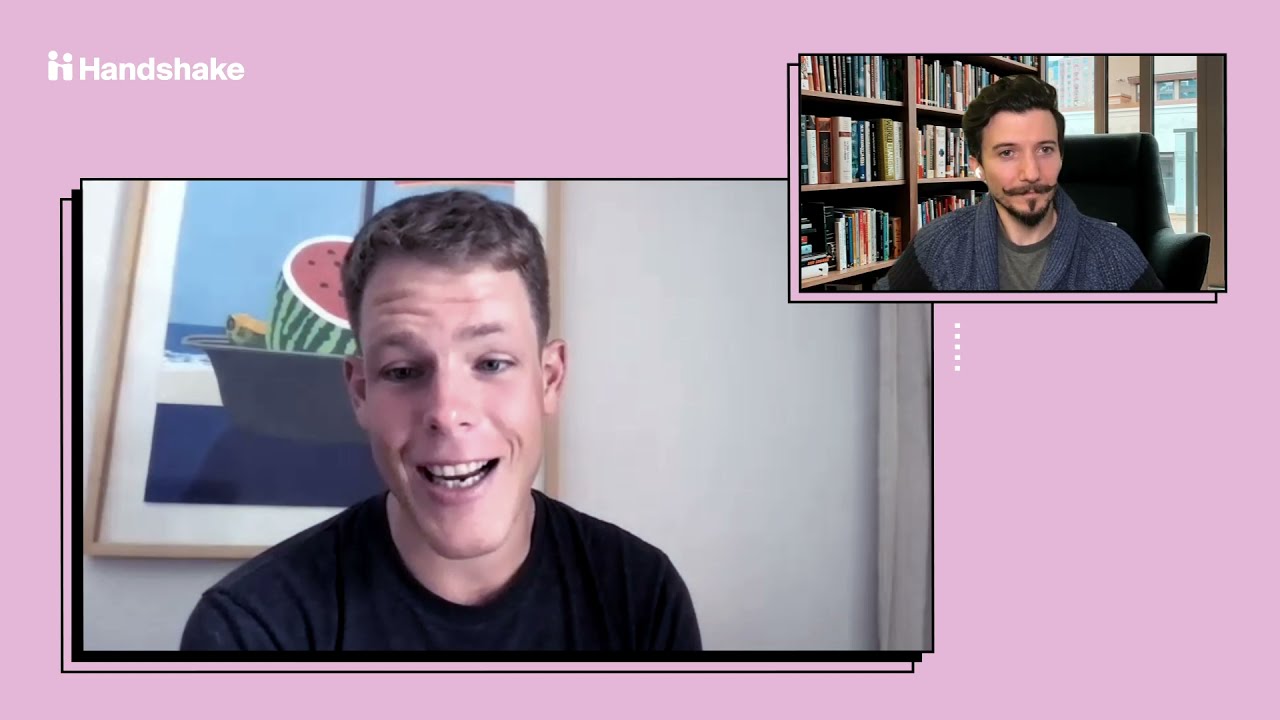
E08 - From Michigan Tech to the fastest growing EdTech company in the world - The story of Handshake