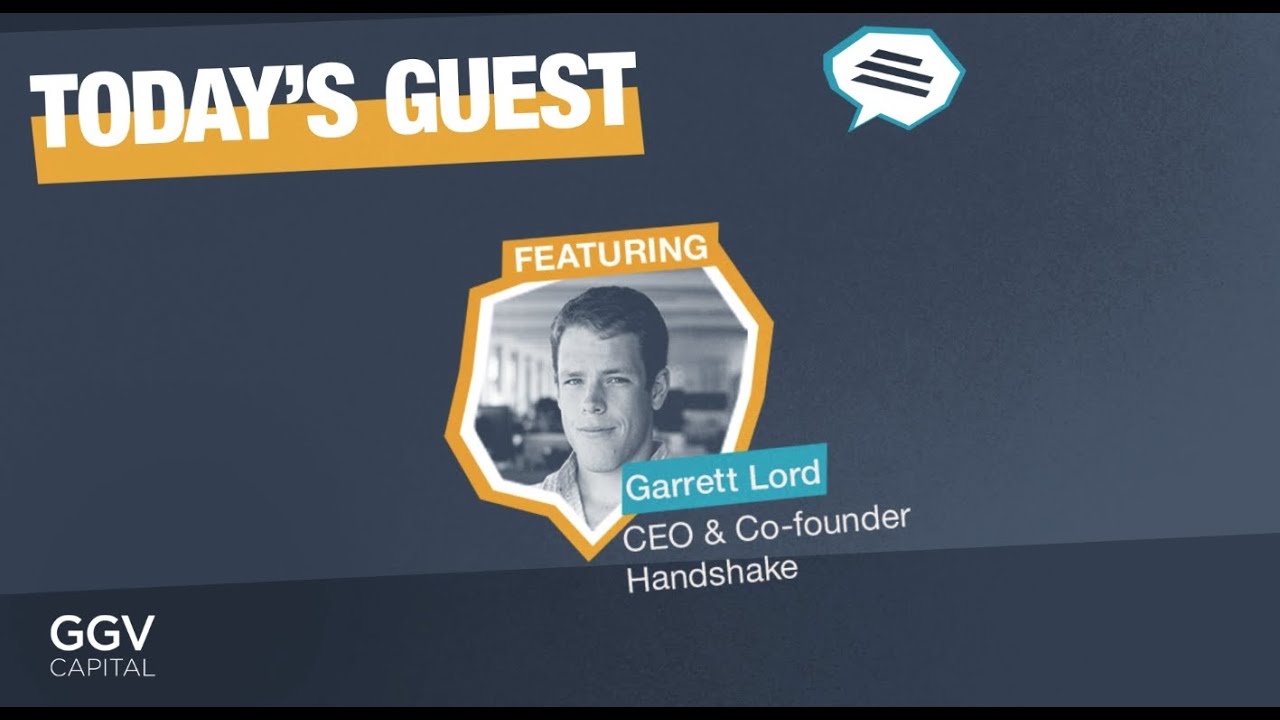
First Block: Interview with Garrett Lord, Co-Founder and CEO of Handshake

Garrett Lord, CEO of Handshake, grew up working-class in Michigan and built a platform serving 92% of U.S. universities and 22 million students. He lived in his Ford Focus in the early days, sleeping in McDonald's parking lots. His new company, Handshake AI, supplies frontier AI labs with human data and has grown to 150 staff.
Chapters
Nobody liked that. They're all like, that's too intense. Olympic pace. What does that mean? I'm like, this is what it requires. Like, I mean, I don't need you. I don't— doesn't mean you need to work 7 days a week, but like you must bring that Olympic level of passion to the team. And I think like not having this like groupthink where everyone like waters down every line to try to meet something that matches the masses is like really important.
Welcome to First Block, a Notion series where founders from the world's leading companies tell us what it was like to navigate the many firsts of their journey and what they learned from that experience. Our guest today is Garett Lord, co-founder and CEO of Handshake. I'm so thrilled. I reached out to Garett. We've known each other for a little bit. I reached out to him. I said, do you want to do a podcast with me? He's like, hell yeah, let's go. So here we are. Let's kind of start with your founding story. I think it's always good to remember our roots. Can you walk us through how you came up with the idea for Handshake?
Thanks again for having me. Yeah, what was the journey for Handshake? I mean, it starts really with like a personal story. I mean, I grew up in Michigan in a working-class family, like not really complaining about that, but dad's in construction, went to community college for 2 years and paid my way through school, transferred up to a 4-year school called Michigan Tech where I studied software engineering. And then I had several like incredible moments that changed my life. I worked at Los Alamos National Laboratories doing InfiniBand research. Now it's become all the rage with obviously large compute clusters. And then I— a bunch of students from really well-known institutions like Stanford and MIT and these schools that I always dreamed of, you know, even visiting. I quite frankly didn't track many of them when I was in high school, but met a bunch of these students that talked about Silicon Valley. And I took an internship at Palantir that really changed my life. I met a bunch of students starting companies, and they knew the difference between what it meant to be a product manager versus a software engineer. And they knew what it They just knew so much more about the job search experience than I did when I was in school. And I maybe thought coming back to school, I could start a company and I could start a company that would help young graduates from around the country find their way into an amazing dream job, kind of regardless of what their parents did or what school they went to or who they knew. And that would really democratize access to information that would help students really understand where they could fit in this world of work. And so we built this network that early on was Really, you know, the company didn't work for many years. It was just really a slog until we signed up our first 5 schools and then 60 schools. And fast forward to today, you know, there's a million employers in the network. We power about 92% of the universities in the country. There's 22 million students, young professionals that use it. And everyone at Handshake really wakes up every day trying to bring a lot more fairness to this college-to-career transition process.
That's amazing. So did you just fall into your internship at Palantir? That feels like a pretty wonderful place to intern.
Yeah, it was pretty cool. There were like 200 people. It felt like the business was exploding. I did not fall into the internship. People— it was really hard to get an interview because I didn't go to a tier 1 school that everyone had heard of before. So I really— I was cold emailing recruiters and trying all the classic tactics to get attention. And I got an interview. I, you know, stayed up the whole night before preparing for it and ended up flying out to Washington, D.C. for my interview in person. Their whole, their whole kind of thesis was like putting really, putting a ton of responsibility onto every single person and just believing in you and believing in what you could accomplish. So yeah, Palantir very much inspired me. And then they were super gracious enough to like when I graduated kind of say, feel free to get your company started. If it doesn't work, you can always come back to Palantir. And so having that safety net of being able to come back was really helpful in the dark times of starting a company.
Yeah, let's talk about some of those dark times. A few of us might be in them right now. You're not alone. I think so much of the startup community is saying like, the hard knocks will come, but you can definitely jump back up. Was it easy to start Handshake? I feel like you had to really hit the road.
Yeah, I would say it wasn't easy starting Handshake, and it wasn't easy starting Handshake AI. Like, both of them. I don't think it gets easy, like, willing anything into existence, as many of you are experiencing right now as founders. Yeah, I mean, stories that maybe provide some motivation in dark times, like, you know, hundreds of universities said no to the first version of the product and, like, lived out of a Ford Focus driving around school to school. You know, from Michigan to Florida, from Michigan to Pennsylvania, from Michigan to Colorado. Like we would just like literally live out of this car because we didn't have enough money, sleeping in the back of the Ford Focus in McDonald's parking lots. But you know, spirits were high amongst one of the three of us as founders. You know, sometimes you'd be having the darkest moment and you get pulled out of that nightmare mode by your founder saying we can make this happen. And then we you know yeah so what of uh uh. A lot of, I mean, to keep it real, like a lot of like fear, you know, fear of failure, fear of letting your friends down, fear of will we be able to raise more money? Like, will customers believe in us?
Mm-hmm.
And I think, you know, just day by day you were just trying to like stack days and stack wins. And I think that philosophy of like stacking days is still what I bring to work at Handshake every day. It's like, some days I'm awesome, some days I can only give 60%. But if you just like persevere and keep on stacking together your best effort every single day, like I've been pretty overwhelmed at what you can accomplish over a long period of time.
It sounds like there's a lot of resiliency just built into you. Would you agree with that?
Yeah.
Was it always that way?
I don't think life was very easy growing up. You generally have experienced periods of adversity in your life. And I think that, you know, over time, the adversity almost becomes like a norm, and you almost like reprogram your brain to deal with the amount of ambiguity and uncertainty in the future. But yeah, I have a very strong role model, my dad, like, who my first week at Palantir was like, you might— I was pretty intimidated with all like the, so to speak, like, you know, savvy kids and traveling all around Europe and talking about all they knew about the world. And my dad's like, you might not know as much as them, but you certainly can outwork them, right? Like, you know, I really I believe in that, just powering through.
Grit.
Yeah.
I love that. I liked what you said too about compounding interest and trying to just get better every single day. You know, if you just focus on moving that median 1%, it's really amazing what you can do.
Totally.
Yeah. You got to be optimistic. You got to be crazy to be a founder.
For sure.
I agree with that. What's one piece of advice you wish you would have given yourself in those times in your forward focus?
I think extending Handshake's growth out just a little bit, I wish I had a little bit more foresight around the focus on talent density and talent brand because we moved from Michigan with all of our most talented friends to Silicon Valley. And in Silicon Valley, we didn't have big networks here. We didn't know investors. We just weren't really tapped in. And I think I would really focus a lot, kind of like Notion is doing right now with this event. creating really intimate and special experiences to bring super talented people around the table. Because as your company goes through hypergrowth, it's, you know, you're only as good as the talent around you. And I think it's very competitive, as many of you know, to hire like top software engineers, top salespeople, and investing in that earlier as a founder, I think, could pay dividends during periods of growth.
I'm curious to know, for the founders in the room, like, how do you think about hiring around what you spike at and where you need augmentation?
At a certain point, you know, I almost view the journey as like from like 0 to 25 people, sometimes 0 to like 50 people, you— and people might not like this advice, but you can kind of like manage every single thing and every single person, right? Like, and I don't— maybe not be like in the details, but I was extraordinarily intense and focused on like high standards in like every aspect of the business through Even to we were like, even to this day where we're like 600, 700 people. But at a certain point, you really need to focus on as a founder, like what are you uniquely gifted at? And oftentimes it's not even what you're gifted at. It's like, what does the business require? Like what do you actually need to be able to, in order to grow 10x or really reach the next level and have a full order of magnitude impact on the business? Like what do you need to get good at? And for everything else, you really need to like work with amazing executives who run your business and can kind of marry the 3-year plan with the 1-year plan. Like, they can hold all the constraints in their head. They can make the right trade-off decisions. They can hire the right people. They can hire and fire and lead and organize and drive to outcomes. And I have a wonderful group of executives that, you know, if I were to, you know, have a medical emergency and be out of the business for 4 months, 5 months, 6 months, I feel very confident in the ability for the company to run and their judgment and taste in decision-making. And then what I've had to get good at is like, I had to get good at shit I didn't like. Uh, you know, I had to buy like a sport coat from Men's Warehouse and like fly to New York and figure out how to do enterprise sales. Like, I've gotten good at like going to the Warriors game and like hanging out with customers. Uh, but that was kind of a nerd, a more introverted nerd early on. Like, that was not something I like loved to do. Um, I had to get really good at fundraising to raise capital and to be able to like And I sat with a coach over and over and over again to get feedback and the presentation and really learn how to answer their questions. And, you know, I had to get really good at hiring. Like a large part of my job is kind of saying the exact same thing to dozens and dozens of people every single month for like now what goes on 10+ years. I have to be really good at recruiting. What does it mean to be good at recruiting? It really means being a great listener and understanding like what do people actually care about and why are they joining your company and what does matter to them so you can really Bring you know the right tools together to close the candidate, and so I've had to get good at what is required for the company to be successful at every road. And right now, what that's looked like with Handshake AI is like you know business has gone zero to hundred million dollars in like seven months. So this year will as a you know combined business will be over three hundred million dollars revenue. And like you know that that future business have had a good of like how do you do an act two inside of a core business? Like how do you incubate a new business inside of a core company? How do you bring these 2 things together through team change and culture and communications. And so, you know, not things that I would say I like would have loved to have got— gotten good at like 7 years ago, but that's what's required to take the company to the next level.
Yeah, they say there's like 5 different founding transitions that you make as you become more and more successful. And the one that you pointed out that I think is really resonant for this group is how do you think about scaling yourself through others? It's really hard for founders to give up making every single decision about your baby, your company that you grew from 0 to 1. But there comes that point where you have to think about what needs to be uniquely you and where can you lean on really talented experts to augment. Totally.
And at the same time, also to balance that, like, I agree with that, but just in our prior conversation, you said like Ivan designed this office, right?
He did.
Right. So it's like, you know, that's a story of a great founder. Like, I would consider Ivan a friend and really respect what he's built. And like, he's still individually making sure that the polish on his office is great. Now, like, 95% of executives would say, like, you probably shouldn't be, you know. So I think, like, you know, this micromanagement, I like to change the term into, like, micro-interested, right? It's like, you can be micro-interested in topics and, like, empower people to make decisions, which is probably what Ivan did and what I do at Handshake. But you also can't build a culture where you don't allow inspection and you don't allow people to get interested interested in the really important decisions in your company.
Yeah, I love that. Micro-curiosity, micro-inspection. And how do you kind of set the tone that that's not a bad thing for you to dig in? You want to jam with your team. It's not Garett the CEO, it's Garett, part of Handshake, coming in to help.
It's mostly founders in the room. keeping it real, like, I don't, I don't think you ever find a perfect balance of that, right?
Yeah.
Like, you know, I think the natural human nature for most leaders is like, why is somebody asking me questions? Like, why am I not more empowered and more trusted? And like, you know, that's not something that in this journey from, said most people are at 25 to 50 people, like, that you're ever going to figure out and going to hundreds and hundreds of people. Like, I do think you have to recognize that you're— everything, every single thing you say means so much. I think a lot of founders, like, really— I struggled with that, I would say, earlier on in the journey, and realizing just how meaningful it was when I sent an email about something versus another person on my team. So the way I like to operate more now is actually being micro-interested with my execs, and then letting them lead the actual conversations.
And then you come up with this new idea, Handshake AI, and I hear that that is going quite well.
Yeah.
You brought that up. Will you tell us a little about that origin story? It's like Inception. A company within your company.
Totally. So first, what is Handshake AI? And then maybe how did it get started? Handshake AI provides the people and data that frontier models need to advance on the post-training side of the house. So think reasoning data, think agentic software, think generalist preference ranking, think safety work. We provide a variety of people and tools that help frontier models advance. and driving more capabilities based on the research area. We work with 7 of the top frontier labs, of which most people would know the names in the room. There's an insatiable appetite for this data as models— most of the gains as of recent, the last 12, 18 months, have all come from post-training as they've already absorbed the entire internet on the pre-training side, and there aren't as many gains to be made there. So specifically what that looks like is thousands of professionals and experts providing human data to these labs. How did it get started? It actually got started because many people started coming to us asking us for access to our experts and professionals. They were saying, hey, do you have access to biology, chemistry, physics, mathematics, software engineers? Do you have access to music majors or educational designers? We want them to actually be creating structured human data that improves our models. And so we started sending a lot of these people to these different players and really started to realize, like, the experience was fraught with issues. People weren't being paid on time, they weren't being trained effectively, model companies weren't actually getting the data that they needed at the level of throughput or speed, volume, and quality that they needed. That's what they care about: speed, volume, and quality. Quality data first and foremost, the speed of the turnaround on producing that, and then being able to get to sufficient volumes. So we decided to enter the business in March of this year, signed up our very first customer, and now have grown to 7 of the Frontier Labs. And that company has been like a company with inside of a company, kind of separate part of the office, separate team, largely separate culture, different working norms. That team started day one on Notion, which is awesome, right? We're here talking about Notion. All of our PRDs are built using Notion AI and just started with a totally different template of taking a lot of the learnings that I had in building Handshake over a decade and being like, how would I want to run this back again? And now that team has grown from 3 people to 150, 160 folks in really like 4 or 5 months. The team's grown very quickly. And revenue obviously has been going crazy too. But yeah.
That marketplace model must be really rewarding for the people who participate. I imagine professors are not used to working with AI labs.
Yeah, I mean, professors, no, they're not.
No.
But I mean, if you think about it, it's like, It helps in a variety of fashions depending on like the persona. Like for some people it's about working more flexibly on their time instead of like teaching a chemistry class, making $22 an hour. They can make $150 an hour working on a project and they can work for 30 hours over the course of 2 weeks and pay for their entire semester worth of, you know, personal budgets they need as opposed to teaching a class.
Yeah.
For other people, this becomes their full-time job. Most, almost every single person that's, you know, actually building and creating these datasets are learning more about like frontier AI tools, right? They're learning like complex prompt engineering. They're learning how to spot hallucinations. They're learning how to follow chain-of-thought reasoning and chain-of-thought reasoning errors. They're learning about the difference between SFT data and evals. But if you zoom out to the rest of America and the graduating student population, this is something they put on their resume and they talk about with employers. Bringing these 2 businesses together where a student or a young professional can work on a project and then it adds a badge to your profile and then more companies are recruiting you because of that skill is really the long-term vision. Yeah, but it's been rewarding.
Talk about next level shaping this generation of talent that's going to be hitting the market. You're actually bringing people along in the AI journey using your products.
Yeah.
That's really great.
Thank you.
I mean, that's hugely impactful.
Totally. I mean, it's monetarily impactful. It's helpful for employability. It's helpful for improving labs' performance. I mean, people are really shaping AGI. And, you know, we are pretty motivated to play a large part. On our side, we think about it as like not just providing the model companies data, but also like helping universities adapt to like what the future of education is going to look like.
Yeah, I think it's really smart that you all have found a great wedge of the company within the company. And yet it's such a cyclical process where your Handshake AI is actually going to be powering your core product too. I'm curious about internal operations at your company. I think there's a lot of folks in the room who are probably wondering what you use for your tech stack, what you use for internal tools. Can you walk us through that?
I mean, we spend hundreds of millions of dollars a year on like headcount and tools. But what are the things I'm in every single day? Google, Notion, Slack, Zoom. I'm in ChatGPT all day. And I'm in Sheets, I'm in Linear.
Oh.
What else am I in regularly? It's probably the— I'm in Figma quite a bit. I'm in Salesforce. I'm in a bunch of custom dashboarding built on Hex.
Were you always involved in sales? You mentioned, I need to go sell to enterprise customers. Was that when you went really upmarket? Or were you always plugged in?
I tried to get my other co-founders to get involved in sales, and my co-founder Ben Christiansen did cold call with me for like 2 or 3 months. Then once we had our first customers, he's like, I'm never doing that again. So I've been doing sales ever since. He did all like the account management and post-sales side. He's like a wonderful human and customers love him and he's so product-oriented. It was an amazing fit. But yeah, I've always been Very focused on sharing the vision, selling customers, driving transformation.
We always wrap up with 2 questions for First Block. The first one is, what's one building block of advice you'd leave behind for early-stage founders? If they take one thing away from tonight, what would it be?
I'd say if you're— I really like the thing I said earlier where if you're going through periods of— you anticipate your company working and going through periods of rapid growth, that you really focus on cementing, making it clear. One, the talent brand side of really investing in finding the top, top people and improving the talent density of your business. It's just that first— everyone says it, but the first 25 people really cements the roadmap for the next 100. That's one. And two, but also being very clear on what is and isn't acceptable in your culture. And I think your culture is defined by the hard decisions and really codifying that in the recruiting process and being transparent so that people are self-selecting out of the process. Almost being too over the top around what you expect, I think, brings a lot of clarity to new teammates that's helpful when you're growing super quickly.
I've asked founders too to take a really hard look in the mirror about that. describing your culture externally to candidates. And you do want to be a little bit more extreme than perhaps even reality inside your walls, because self-selection is incredibly powerful.
I mean, like, you know, it's like we are writing our culture docs, right? There's all these strikeouts and red lines and comments and common threads. And it's like, at the end of the day, you got to own it. And like, something I own is like Olympic pace, Olympic passion. Like, you know, Michael Phelps famously going to the Olympics was in the pool every single day for the 4 years up to the Olympics. He swam every single day. Whether he was sick, whether he wasn't sick. And they're like, that's what it took to get to the Olympics and have more gold medals than anyone else. And like, nobody liked that. They're all like, that's too intense, Olympic pace, what does that mean? I'm like, this is what it requires. Like, I mean, I don't need you, it doesn't mean you need to work 7 days a week, but like, you must bring that Olympic level of passion to the team. And I think like, not having this like groupthink where everyone like waters down every line to try to meet something that matches the masses is like really important.
Yeah, I do think it has to be founder-led. There's something intrinsically special about taking a founder's vision and helping to bring it through life, but it will not have life if it is not your vision. That's, that's a good point. The second question we end with is, if you had to rebuild Handshake from scratch today, what's the first block you would start with?
I think it's just like going as big as possible. Like, once talking to this advisor of mine, like, 1:30 in the morning, like 2 weeks ago, and some things are going well and some things aren't going well. And he's like, go big or blow a fucking crater in the ground. And I was like, hoorah, like, wow. Like, he's like, he's just been around Silicon Valley enough times. It's like, you know, there are all these companies that were— they didn't go big and they just get passed up. And right now the entire economy is being like resorted with AI and like Hundreds of companies will cease to be relevant in the future. And we're at a moment in time right now where, like, just go big. And because if you stack days and you really put in the work and you're a little bit lucky and you surround yourself with great people and a bunch of other conditions, you can really make huge things happen right now. There's a sea change happening in technology, and I think a lot of people will regret not going big. I'm going all in on our AI business. And like all the chips are on the table and it's like risk on and it's intense and it's fast growth and it's like it's— and it's really working. And I think it takes conviction as a founder to pull that off.
Gumption. Yeah, I love that. Thank you. I appreciate it. All right, team, thank you for having us.
More from Garett

Handshake's remarkable refounding: a lesson in how the next AI fortunes get made | Garrett Lord


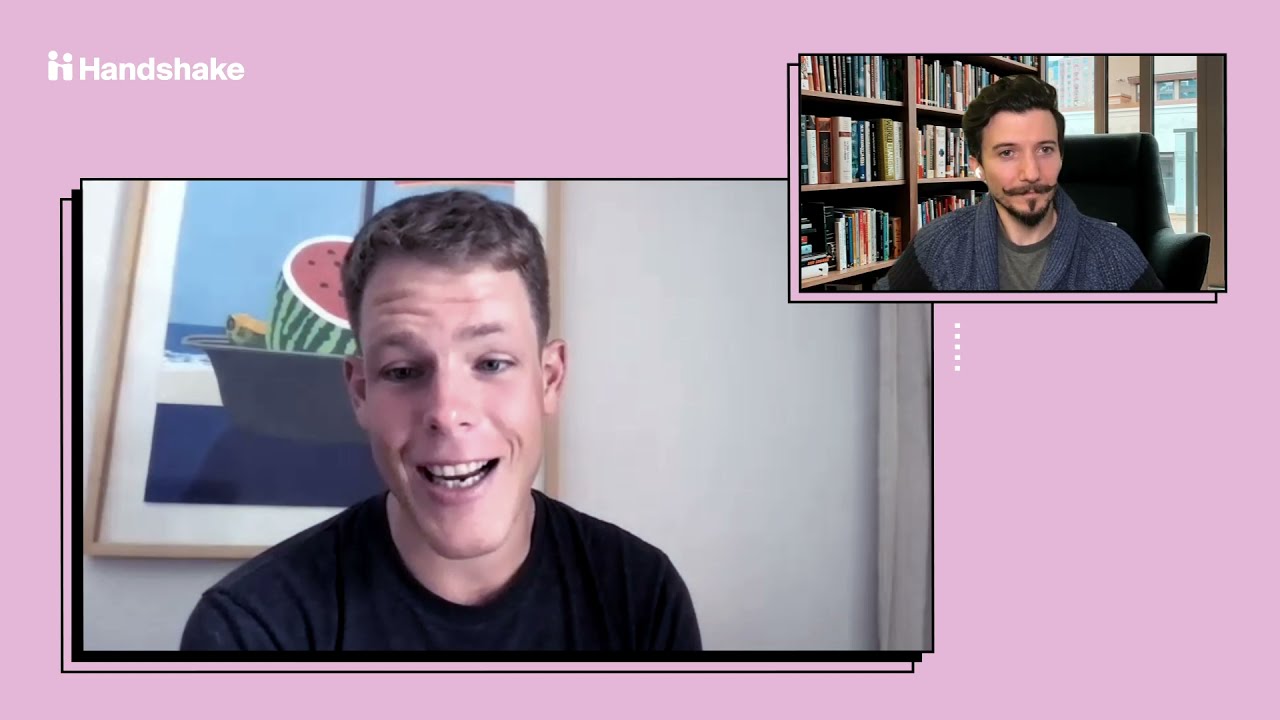
E08 - From Michigan Tech to the fastest growing EdTech company in the world - The story of Handshake