Sleeping in Parking Lots to $250M+ Revenue: The Handshake Story

In this interview, Handshake co‑founder and CEO Garett Lord recounts the company’s scrappy origins, early fundraising, go‑to‑market tactics, product evolution, and growth into a $250M‑plus revenue business. He describes how he and co‑founder Ben drove across the U.S. in a beat‑up Ford Focus, sleeping in McDonald’s parking lots and working from Starbucks, while living in a $700‑a‑month house with eight other roommates. Their dad, a risk‑on construction worker, funded the venture with his retirement savings after seeing early interest from universities and employers. To break through the credibility gap with career services, they used cold‑calling and highly personalized gift boxes (mugs from each school’s alma mater, handwritten notes, and custom photos) that secured the first five university sign‑ups out of hundreds of pitches. Early product naming (Trajectory → Handshake) and branding were refined through these outreach efforts. Handshake’s launch was chaotic: they rolled out the platform to students, alumni, and employers simultaneously, leading to massive email‑queue failures and operational fires. The team endured grueling work hours, couch‑surfing on friends’ sofas, and a move from Michigan to Silicon Valley funded by early investors. After over 100 rejections—including from Y Combinator—they finally closed a seed round with True Ventures and Lightspeed, followed by multiple later rounds. The company’s growth strategy prioritized university relationships and student value before monetizing employers, a sequencing that helped de‑risk the business and attract capital. Lord discusses the competitive landscape versus LinkedIn and Indeed, emphasizing Handshake’s focus on early‑career talent and the emerging AI‑driven “human data” business that matches PhDs and master’s students with LLM labs. He outlines product decisions such as maintaining a student‑first ethos, building AI‑powered recruiting tools (annotation, interview, payments platforms), and leveraging data to improve hiring outcomes and employee retention. Hiring at Handshake involves intensive working‑session case studies to assess candidates, and the board is actively used in interview vetting. The founding team’s strong personal bonds (co‑founder as best man, mutual respect) have kept all three founders together. Looking ahead, Lord envisions Handshake overtaking LinkedIn and Indeed to become the dominant work platform powered by AI. Key takeaways: relentless bootstrapping, creative sales tactics, the importance of sequencing product focus, the role of personal networks in early funding, the challenges of rapid scaling, and a vision of AI‑enhanced career services.
Chapters
More people use Handshake in our demographic than use LinkedIn.
Really? Yeah.
It's an unconnected graph. So like LinkedIn is very focused on who you know, what you've done. But if you think about young people in America, it's like—
We haven't done much yet.
Yeah. You know, how do you look cool on the network when you like have only ever mowed lawns like I did?
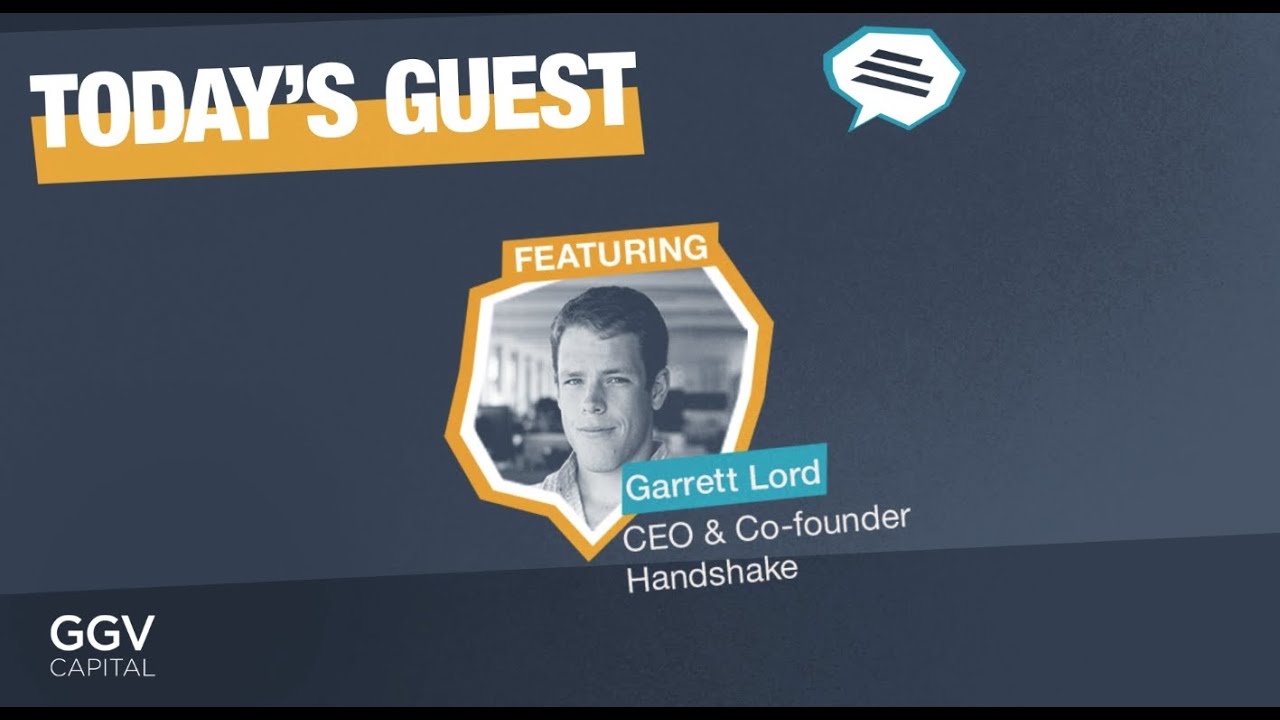
Welcome to The Peel. I'm your host, Turner Novak, founder of Banana Capital. Today's guest is Garett Lord, co-founder and CEO of Handshake.
We have 100% of the Fortune 500 million companies. 1,600+ universities, 18 million students and alumni.
Handshake has spent the past decade building the company for this exact moment.
Every one of the labs is spending over $1 billion a year. They need experts to provide data to improve their models.
We talked to Handshake's human AI data labeling business that has taken off.
The only durable advantage is actually access to an audience. We have 500,000 PhDs, 3 million master's students. Revenue will grow as a combined entity to be like far over $250 to $275 million this year.
We have more demand We also talk about how AI is changing the job market and careers.
The opportunity in many fields is to be the young AI-equipped craft employee.
And getting into the early days of Handshake, tapping out his dad's retirement account to fund the first years, driving all across the country to land the first customers. McDonald's at like Nationwide Broadband, sleeping in the back of the parking lot, sneaking into career fairs.
And I remember like grabbing like passes, you know, I had those lanyards.
You grabbed a lanyard out of the trash.
And then you just like flip the script. Like, tell me about yourself. Actually, no, you tell me about yourself.
Handshake's very first brutal 7-month fundraise.
And when they keep on telling you no, no, no, no, no, no, no, it really gets tough to have confidence.
Moving from Michigan Tech to Silicon Valley.
It was actually the co-founder of LinkedIn's house.
Advice for scaling a 3-sided marketplace, what the future of hiring looks like, and Garett's unique strategy. for hiring executive-level talent. And Jeff said that you, you do a ton of prep and you help the board members prep also. A quick thank you to James Alcorn at Lightspeed, Handshake board member Jeff Richards at Notable Capital, and Garett's co-founder Ben Christensen for all their help brainstorming topics for this. A reminder, I publish new episodes of The Peel every week exploring the world's greatest startup stories just like this one. But before we talk to Garett, we have to talk about Ramp. If you're running a finance team, you know how much time gets wasted on expense management, chasing receipts, categorizing transactions, waiting for expense reports, it adds up quickly. Ramp handles all of this automatically. Ramp is a corporate card and expense management platform that over 40,000 companies like Shopify, CBRE, and Stripe are using to streamline their financial operations. But here's what makes their corporate card different. Every transaction gets automatically categorized and matched to receipts. No more wondering what that $47 charge was for 3 weeks later. You can set spending controls, get real-time alerts, and even block certain merchant categories. It's like having a finance team member embedded in every purchase. That's pretty cool. The platform also integrates with your accounting system and ERP, so everything flows through without manual data entry. Whether you're issuing cards to a few employees or managing spend across departments, Ramp gives you visibility and control without the paperwork. Stop chasing receipts. Check out ramp.com/thepeel. Get $250 And see what a corporate card can actually do for you. Time is money. Save both with Ramp. Garett, welcome to the show.
Thanks. Thanks for having me.
Yeah, this is going to be fun. I feel like you have a lot of interesting stuff that's going on right now, but also a lot of interesting things historically too. It's been, it's been a journey. But just for real quick, for people who do not know what Handshake is, can you just explain real quick?
Yeah, we are the Like a leading network that young people in America and in Germany and in France and the UK find internships and jobs and navigate from college to career. And so that means, you know, if you think about the product, it's short-form video. There's a feed, there's groups, there's messaging, there's profiles. There's a whole kind of social network around helping people learn from other near peers, get inspired, discover and explore like different job roles, find their first internship, find their first job, find their second job, find their third job. There's, so it's a, it's the largest place in America where people are finding their first job. And there's a million companies that use Handshake. We have a bit over a million companies, including almost every big company. We have 100% of the Fortune 500 that actively use Handshake. And we are proud partners of 1,600+ universities in the country and community colleges. So it's a really, the way they think about the business is a 3-sided network. So there's, you know, a million companies, 1,600+ universities, and there's about 18 million students and alumni that use Handshake as their way to, you know, kind of navigate this world of work.
It kind of sounds like LinkedIn, LinkedIn for Gen Z, quote unquote. Like, based on everything you just said, like, as an investor, you get that pitch all the time. Like, oh, we're building LinkedIn for Gen Z. It sounds like you actually did.
Yeah, and we, more people use Handshake in our demographic than use LinkedIn.
Really?
Yeah. For sure. And I think one of the other ways to think about it is like, it's an unconnected graph. So like LinkedIn is very focused on like, you know, who you know, what you've done. But if you think about young people in America, it's like, we haven't done much yet.
Yeah.
You know, how do you look cool on the network when you like have only ever mowed lawns like I did? Right. Uh, the, the trick there is you pitch it as you're like an entrepreneur. Yeah.
And you like, you know, went out there and hustled, acquired customers and like bootstrapped a market.
Now you just type into ChatGPT and like make yourself a boss in this, but that was my background, right? And we, so it's unconnected. It's all about like discovery and exploration, getting inspired, learning from peers. And if you think about the way that like information is locked up on a, you know, historically it was like, if you went to UPenn, you knew a ton about finance. If you went to Stanford, you knew a ton about software engineering and startups. And I mean, you went to school in West Michigan, right?
Yeah, we both grew up in Michigan.
Totally. It's like, how many people do you know that will like, dropping out of school to work at Y Combinator companies. Zero.
That was like, I actively tried as hard as I could to graduate, took tons of student loans, worked 3— I had 3 jobs while I worked 40 hours a week, 3 jobs while I took 18 credits one year in school just to pay for school.
There he is.
To mei se. And not have loans, which I didn't end up having. But yeah, it's unheard of. Totally.
Yeah. I mean, that's very similar to my story. I mean, Grew up in an amazing life, not complaining about it, but grew up in a working-class family in Michigan. Went to community college for 2 years, paying through school, saving up. You know, it's much cheaper to do credit hours at a community college, you know, get in your—
Which is, it's crazy. The price of college is nuts.
Totally. And then transferred up to Michigan Tech. And that was really the impetus for starting Handshake was, you know, just trying to unlock these, this information and access and like level the playing field no matter kind of what your parents did, what school you went to.
I think the interesting thing right now that's going on, you guys started a new business recently that seems like it's kind of really taken off. What is sort of the state of what's going on right now at Handshake? Yeah.
If you take a step back, maybe just simply answer the question. We're helping frontier labs hire experts to help them with human data necessary to advance their models.
So what's a frontier For somebody who's just coming into this cold?
Yeah, I would say it's any one of the main LLM providers that you would use. So we work with 6 of them. So we work with basically everyone that's building the modern LLMs that you're using. Um, and the reason, if we just take a step back, like the reason we entered this business is, is it kind of is connected to the Handshake story and connected to where our labs are going. So like historically, a lot of the gains that were made for all the LLM tools that we use came from pre-training. That was sucking up more information than anyone else had on the internet. That was sucking down books and every blog post and every article on the entire internet, every YouTube video, every Reddit post. A lot of the gains were made in improving these models from improvements in pre-training.
This was just all the information you could put in to stick in a model that then used to do Exactly.
And then about 18 months ago, right? Or really around like, yeah, 18, 24 months ago, the gains started to be made in these model companies on the post-training side of the house. And the post-training side of the house is really, you know, the models essentially in essence have like sucked up every piece of public information anywhere in the world already to their model. And so they have the corpus of every possible piece of content. And so in order to make gains, they needed new content. New data, and specifically like they, you know, the type of data they needed historically was like generalist. It was like preference ranking. So did you like post A or post B more? And the industry really was fueled on taking advantage of smart international talent. As the models got better and better and better, the models are almost today, they're good enough where they don't need generalists. What they mean is they need experts. Experts, you know, you think about experts as like PhDs or master's students or lawyers or doctors. Or tax consultants, or you know that that are really at the top of their game in a particular field. And what they're doing, you know these these model companies they need experts to provide data to improve their models. And Handshake's well, you know we entered this business about 18 months ago, providing a lot of the players in the space with experts on the network. We have 500,000 PhDs. We have three million master's students. And if you think about academia, the definition of a PhD essentially is like proving a novel or a net new piece of information or contribution to a particular field. Like the definition of a PhD is basically to be at the frontier of knowledge.
So basically, you know, the entire, the entire universe of things that can be known and you're like piecing them together or trying to discover new things and push, push knowledge forward.
That's how you do your PhD, right? Like in physics and astrophysics, right? Something that nobody's ever done before. as peer-reviewed by trusted academics. You contributed a new piece of knowledge to that domain. Because we have 500,000 PhDs and 3 million master's students in basically every area of academia, the labs and other players in the space are coming to us and saying, can you help us hire these experts?
Before, when someone did that, when they came to someone in a one of the labeling companies, they would have to say, yes, we can help you. Let's go find those people and let's go acquire them and bring them onto our network. Yeah.
So you think about it, like if you were, if you're a PhD in physics, like, you know, 12 months ago, 18 months ago, you're getting like ads on Instagram. Like you're getting ads that are following you and retargeting you all over the web. You're getting cold emails.
Were you really? Like, it was that bad? For sure. Really?
I mean, there's such an insatiable demand for this. Like every one of the labs is spending, you know, over $1 billion a year, you know, at the highest level on human data. And acquiring these academics and experts is, you know, it's hard fought. Like you're acquiring them historically across multiple channels. Where Handshake had a really unique advantage is because we built this network over the last 10 years and have partnerships with 1,600 universities, 92% of the top 500 schools use it. We have direct trusted relationships with hundreds of thousands of experts. And so after sending these people on our network to other players, we really started to realize a couple of things. One, people were having like a really like disjointed and frustrating experience. Like people were not getting like paid on time. There wasn't clear instruction. It was, it was just, imagine it's like new all-in gig style work. Yeah.
It's kind of like the gig economy for knowledge work almost. Yeah.
But you were treating the gig work as if it was like an Uber driver and like you were, you were, you're being very transactional with them. And we're talking about like MIT PhDs.
Yeah.
Stanford, Berkeley PhDs.
These guys are taking us to Mars. Yeah.
It's like, these are, these people need, they expect to be treated as experts. And so we started hearing frustrations from these users. We started hearing frustrations from academic labs and we really started to realize, well, there's so much demand out there for these experts. How can we leverage our network and the trust we built up to build a better experience that's like experts first? And that's led us to this longer-term vision of building like the global experts-first marketplace that helps people make $60, $80, $100, $125 an hour with their skills. And also connecting this journey from not just getting paid, it worked, but connecting the job search journey, connecting it to your career story. So we, we believe in a long-term future where Handshake can leverage our business and human data. And we're already doing this today. It's what AI interview tools we're building, some of the agentic recruiting tools we're building to like leapfrog and build the best matching marketplace on the internet. And if you think about like job search on the internet today, you have like a It's just like, yeah, it's just like a black and white website basically.
Yeah.
Well, literally you have to like go in there and be like, okay, like I'm 25. I'm like a marketer, like marketing. And you press search and it's like, you know, 80,000 jobs. It's like, you know, do I want to work at a big company?
Do I want to work at a small company?
Like, what are the skills I have?
Do I want to work in performance marketing, social media marketing?
So like, we, we are already today, like leveraging a lot of this matching engine and fine-tuned model we're building to improve our marketplace. And we think that, you know, if we just take this like next 10 years though, there's a totally different set of roles that will need to exist in the economy. Many jobs will be displaced and people need to be upskilled and reskilled. Many people will need to be articulating like, what skills do I actually have? And it's better than just putting on a resume. It's actually like doing like a work simulation where we actually prove this out. So the human data business. In summary, we're able to pass on all these customer acquisition costs that other vendors have to acquire the experts. We're able to pass it on to better training, better communities for the PhDs. We're able to pass along the savings to the labs themselves by improving the retention or passing a cheaper pay rate over to them because we don't have these huge structural costs of acquiring people.
It's interesting too, it's happening at a time right now in the market where College kids are having a little bit of a harder time getting jobs. Like if you look at the data, recent college grads have higher unemployment rates than later in career. Maybe that's always the case, but it's hard to get a job sometimes when you're getting that first job. So it's interesting that it's happening then. And then I think you've mentioned this in the past too. It's like at a time where a lot of schools are losing federal funding or state funding where, you know, there might be a PhD program or their project or their thesis isn't getting funded. So it's like another way for them to make money. Yeah.
Yeah. I mean, if you, if you take a look at like what we're hearing from our fellows, we call them fellows on the network. It's a pretty crap opportunity to make money.
Yeah.
I mean, teaching assistants.
You said $100 an hour. That's, that's insane. Totally.
I mean, you can be a teaching assistant making $30 an hour.
Yeah.
Or you can be actually applying your unique area of expertise that you're doing your PhD in and like contributing that knowledge to the frontier of AI. And you're also learning like incredible skills around prompt engineering, spot hallucinations, Like really understanding what the models are good at and not good at. And what we hear from a lot of our fellows is like this, this helps them in their actual court research. This helps them build professional skills. This helps them instruct and teach students more effectively because they're able to be more knowledgeable on the frontier of what models are good at and, and make $100 plus, you know, $80 plus bucks an hour. Yeah. So it's, it's really a win-win-win across the board.
Yeah. Because when I was in college, I did 7 different internships just throughout, you know, the years. And one of the The reasons I kept doing new ones was because I found ones like, oh, instead of making $10, I can make $15 an hour. Like, I think my last one that I did for the last 18 months, I was making, it was like $23 an hour or something. That's like insane in Michigan as a college kid. Like, that's decent money. Like, that helps you pay for school. So $100, I mean, I, you know, I maybe wouldn't have even like moved on. I would've just kept doing that forever.
I was working at like a Micro Center mowing lawns. Like valeting cars. Yeah. Yeah. You know, Midwest, Midwest grit.
So I was talking to Ben, your co-founder last night, and he said, I need to talk to you about how did you decide to do this? Like, how did you have the conviction to, and like the general process you use to say like, okay, this is an opportunity and this is what we're going to go after.
Yeah. Well, I think a lot of marketplaces, like if you just like take a backdrop from like Amazon, right? Like you, you really get to sit at the middle of what's happening in the marketplace and pick your shots on where you can make an impact given your structural advantages. And what was very clear is we started to see an incredible amount of demand for PhDs and master's students and experts, people that are studying to be lawyers, people that are studying to be doctors, people that are studying to be consultants and getting their master's in tax accounting. And so we started to see this and we also started to hear from our users that it was a frustrating experience. As I mentioned earlier, like, you know, they weren't getting paid on time. They weren't getting interrupted properly. They weren't being treated as like, you know, experts in their domain of ex— you know, in, in their domain. And so because of that, we started to really realize that we had an opportunity to go direct. And we could also, as I mentioned earlier, like pass along this customer acquisition costs and the savings and kind of leapfrog all the competitors in the space. I think that the only durable advantage in human data, right? It's a very operationally intensive business. Over the long term, I mean, it's the only durable advantage is actually access to an audience. Otherwise, it's essentially like a commoditized set of companies that are all just operating on their operational, like, superiority and competing with one another for margin. If you can pass on, if you can improve retention, if you can build loyalty and actually treat these people the way they expect to be treated. You can pass along many, many benefits to the labs. You can produce higher quality data because you've accessed that better people and they're retained longer. You can produce data quicker because the turnaround time from activating them to actually participating in a project is much faster. They care about speed. And they also care about volume. Those are the 3 things they care about: speed, quality, and volume. And you can produce higher volumes of data because your ability to activate your retained audience is is superior structurally to your other competitors. And so we've really seen that resonate in the market. Hence why we're working with Fixable Labs, hence why we're growing so quickly. And it's, I think what's also really cool is like hearing the incredible stories from our fellows and, you know, it's a pretty unique opportunity.
Yeah. What's sort of the current state of the business? I know you've, I've listened to some of the stuff you've done recently. It sounds like the numbers keep changing. Maybe this is going to be changed. This is going to be bigger by the time we publish, but what's kind of the current state of Handshake?
The numbers keep on doubling, right? Like this last month with the industry news, like there's been an incredible amount of demands. Our team has grown from, you know, we'll go from zero to hundreds of people that work on this business. The revenue will grow as a combined entity to be like far over $250, $275 million this year. I think that that forecast will just continue to raise at, at a warming rate. Every month we have set out and basically said, what is the most aggressive hiring plan that we should build against? And every month we've been wrong.
So we started like on the upside.
We've, we've been wrong and it's been far bigger.
Yeah.
Like right now we have, we have more demand than we can fulfill. We, you know, we just turned down a $15 million project yesterday. Like we are turning away work because we want to make sure that we follow through on our like brand promise in this space, which is like treating fellows super well, never overcommitting to labs and producing the highest quality data and being transparent around what we can actually take on. So much this industry, it was a little bit, it's just, you know, we, we, we think it's really important to like Do what we say we're going to do, do a, you know, kind of under-promise and over-deliver. And so, yeah, we're extremely thrilled about the progress we're making as a business. And, you know, this long-term opportunity is a race towards like over $1 billion revenue in human data. I think what's often lost though, when you think about the human data factory business, is how this is connected to our actual core marketplace. And so it's like the really the long-term opportunity is building the like place and platform that people turn to. to upskill and reskill themselves in this new economy. It's helping higher education think through and evolve in the way that they prepare their students from college to career. There's a whole, we, I mean, we have 70% of the Fortune 100 pays for the product. So they're coming to us and saying like, how do we upskill our students? How do we upskill our young grads inside the company? How do we think about like the changing type of roles that will evolve and like how we could better prepare our students? So Like there's a lot of spend going across higher education from the employer side, from the labs. And I think it's using the human data business to like advance all those efforts.
So if I'm building a recruiting business, like what are the KPIs that kind of matter? Is it like job listings? Is it number of interviews? Is it jobs placed? Just like, how do you think, not from like a financial performance, but like a product and like health of the marketplace, what are the things that actually matter?
Yeah, we have 3 like North Star goals inside the business. They've remained very consistent over time. I mean, a lot of this, we're at the entry because then like sequencing, right?
So it's, you know, like order of what you do.
Yeah. Because I signed up all the schools in the country, then it was building a big employer business, improving commoditized. And then the future is all about consumer, right? And, but those 3 North Star goals are reflected in the company. It's like, then the number one goal is engagement. You know, we track DAU, we track MAU, we track, you know, day 7, day 30, day 90. We track all like normal consumer metric, but engagement, I'd Do people turn though?
Like you get a job and you're like, oh, I don't need Handshake anymore. Like how do you keep people around?
Oh, there's so many alumni that use Handshake. I mean, if you, it's, the story's kind of as old as time in technology. It's like, if you, if you do, if you grow up with young people, right? Like take like Apple products, like Apple is super focused on getting their products engaged in elementary and middle schools and they graduate and they go work at like a top bulge market bank and they get handed a PC and they're like, what the hell is this? Right? Like, you think about like Google, like really trying to have a way to like invest in Google Docs across. So you go from like high school and college with Google Docs and you go into like a big bank and they're like, you're sharing around version V13 of Excel model. Like, what the hell is this? Right? So, you know, this, this idea of you like, you know, capturing their heart and mind and their trust early in their journey. What we see is that when students come in freshman year, and we were successful with them freshman year, you know, sophomore, junior, senior years that they use Handshake after college. So the highest level vision we have is like going bottoms up against LinkedIn and like taking people from 18 all the way into 30. And we're, we're beating them at college. We're beating them at first job. We, you know, and the long-term dream of Handshake is to build like the global kind of Career discovery, exploration, knowledge worker, like platform to find jobs. And there's like, if you think about it, like Indeed and LinkedIn, there's, you know, $20+ billion a year spent across both those platforms.
Yeah. Yeah.
So there's a huge economic opportunity, obviously, to build a business, but there's also a lot of like moral quality that we can build in this process as well. And it's not, shouldn't be so related on like who you know or getting lucky or what school you go to, but it should be rooted in your actual skills.
So I know we've talked a little bit about AI and just the business opportunity for Handshake and the product, but how do you think that, I don't know, is it going to be harder or easier to get jobs with AI? Are career paths going to change? I don't know how much you thought about that, but for someone listening to this, they might be trying to get their first job and they've seen the headlines of AI's removing 80% of jobs or whatever the crazy number is. How do you kind of think about it at Handshake or from you personally? Like, how do you think people's careers are going to change or the job market's going to change?
I mean, what we hear from, we're at the benefit of working with, you know, a million plus employers. We hear from our employers, especially our large employers, is that it's, you, these young people have an opportunity to get almost brand themselves. It's like these digitally enabled, like Iron Man suit equips, AI native.
So these like super smart, just like they know all the tools.
I was just talking to an engineer on our team yesterday, an intern who works on mobile team, and he had his first PR up in 2 days. And he like put all of our codebase into Cursor and was like, you know, he's a young crack software engineer, right? Like if you were trying to do this 3 years ago and you were coming on all the AI tools, like it took much longer to ramp.
Yeah, you'd have to like, I mean, even if you go back like 10 years, like you have to like read the entire code base or like you'd have to maybe like learn a new programming language or something on the job.
Yeah. How do I put up a PR and how do I get my dev environment working? Right. So it's like, I mean, I remember at Palantir when I interned there, it was like, it was much, how do you get my first PR up in the first 2 days? So I think that young people and take like social media marketing, like you're using DALL-E, right? Like you're building images. You're like, experimenting with campaign analytics and uploading that all to GPT. Like, yeah, you really have an opportunity. And I think young people are far better at this than old people.
Yeah.
And so that's what we hear from companies is like, you know, yes, certain job roles will go away over time. And I think that always happens in a technology shift and people will adapt. But the opportunity in many fields is to be like the young AI-equipped, cracked, you know, employee that is, has the power of 5 employees working for them using these AI tools.
Yeah, I've been trying to immerse myself in it more, but I think it's harder when you're— I'm 34, I'm married, I have kids. It's just a little bit more difficult to immerse yourself in that than when you're in college, you're 19, you can spend all your time learning this stuff. So yeah, I've been trying to— I think there's this one that's called Gumloop. It's like an automation, you can string different tasks together and run almost autonomous jobs that automatically recur and do things. That's how it's been explained to me. Sounds pretty cool, but I gotta figure this thing out.
Totally.
But it's like, man, I need to have the time. I need to ask my wife, it's like, hey, can I spend 6 hours on Saturday and just do this? So I feel like it's a taller, taller ask when you're older.
Yeah.
So young people have the advantage. Do you have any advice then for somebody who is 23, 22, 21 trying to get their very first job?
It's the same advice that's remained quite consistent over time, which is First, you use Handshake.
Great advice.
I mean, for sure, there's so much to learn from like upperclassmen and alumni, like groups to join, people you can message, content you can digest. Like, we've got so much content from like, how do I build a resume? To like, how do I think about like different employers in my industry? To like, what's a day in life look like? To like, what is actual skills I need in my job? To what classes should I take in order to be more successful? You know, what cities are cool, right? Like, so I think there's just so much out there that just demystifies this experience for students and allows them to like discover and explore different paths. I think getting involved on campus and trying to build experiences, you know, professional experiences that allow you to tell your story effectively is huge, right? Like I was in the You know, IT Oxygen Enterprise on campus, right? I was in the Association of Computing, you know, Technology, like getting involved on campus and getting closer to alumni and employers. Learning from peers is huge. Most of that content ends up like flowing back into Handshake. So if you're more passive and maybe, you know, a little bit, you know, concerned about your time on campus, like you can just watch them through our full-on video or participate in groups and be a lurker. A lot of students are like lurkers in the network, as you might imagine in a social media platform. And then I really encourage people, like, I think also people don't realize how many jobs they need to apply to in order to be successful. Like, I think this idea that you're just going to apply to 1 or 2 or 3 jobs, we see in the numbers that you have to apply to, you know, far more jobs in order to be successful. And that's okay. Like, you know, you're going to do a bad job on certain interviews, like stay confident, you know, get inspired, like, you know, be persistent and like power through it.
I've kind of experienced this a little bit or picked up on this. Luckily, I don't have to actually apply for jobs myself right now, but it sounds pretty brutal from what I've heard. It's like there's a job that gets posted on LinkedIn and because of AI, there's just hundreds, thousands, tens of thousands of people that apply to it. It just makes it super easy to apply and then it just makes it impossible on the employer side to stay on top of things. So there's just so much competition.
Hence why marketplaces exist on the internet.
Yeah.
Right. Like, you know, in the future world, like that's the definition of marketplace, right? Too much noise.
Right.
How do you find signals to match more effectively? And that's what we're really good at at Handshake. Like if you talk to young people in America, Handshake's like the preferred platform they're using. Their time, their valuable time is more effective spent on Handshake than Indeed or LinkedIn. Really? And that's because it's higher signal. The, you know, we drag out the future. It's like, yeah, but like, you know, in this, in this world that could possibly, you know, we'll see inevitably happen is like a job seeker has an agent and a company has an agent and there's just more noise than ever, right? It's like agents talking to other agents, right? So what is the definition of like a high-quality marketplace. It's providing opportunities to, you know, use signals and data to incentivize better outcomes on both sides of the marketplace.
So just beyond jobs, like how do you think AI will impact marketplaces? So it just like makes the supply-demand discovery happen more efficiently?
Would you think about how broken this is right now? Like we just talked about Indeed. It's like, yeah, you know, you should pull it up on your phone. It's like, I'm imagining, I don't want to imagine you're like a marketing major. It was like 2 years outside of school and you went, you're from Michigan. So let's say like General Motors, right? You know, that's like the big 3, right? So you're like a jet, you're, you know, you want to get a job. You know, you're working at a tier 3 automotive distributor and you want to get a job at General Motors, right? It's like, what, what experience do you actually have to share? Like you studied marketing, you went to Grand Valley State, right? So it was like, you studied marketing at Grand Valley State.
I learned the 5 Ps in my marketing class and I don't even remember what those stand for. Right.
So it's like, you know, you don't know universal companies to apply to. You oftentimes you're trying to figure out what does it mean to be a product marketing manager? Because you're already 2 years outside school. Like what's it mean to be a product marketing manager? What's it mean to be a performance marketer? What's it mean to be, you know, work in marketing operations? Like what platforms do they use? Like what type of company is cool? Should I go to a big company, small company? Should I go to the state of Michigan? Right. Like you go on Indeed and it's like you type in marketing. And you just get like, you know, I said it earlier, but like tens of thousands of jobs, it's like totally broken.
Yeah.
And so you think, I mean, that is so different than the consumer expectations that everyone has on other platforms. So, you know, in the future on Handshake, you imagine a world where you're like talking to an agentic, like video AI interviewer who's collecting information and coaching through this process. It's, you know, actually performing tasks. So doing like work simulation, actually you can like prove skills. I mean, it's just like you get way more into it, but I think that the, you know, what Handshake is heavily invested in is making this the best use of your time when you're trying to discover, explore, or apply to jobs for your first job, second job, third job, or your first internship. And also like talk about the way the marketplace used to work, you know, at Grand Valley, GVSU, how many companies recruited at GVSU? What, in there? Maybe like single digit thousands. Right? Fast forward today, GVSU, Handshake's a proud partner at GVSU. Like, there's probably over 300,000 companies that recruit the network. So we're able to help people bridge across geographies. You know, maybe you're like a small chiropractic clinic in Jackson Hole, Wyoming. It's a real, real customer of ours. Yep. You log into the self-service product. You don't even know what school, you don't care what school you're recruiting from. You just want to find the right chiropractic student, right? So You know, historically you had to like go into a list and like select each one of the schools. And now we're just like, really?
Yeah.
Now, now you're able to like target students maybe that went to school in Michigan, that grew up in Wyoming. Maybe students want to move to the Mountain West, right? And actually indicate interest. So this, Indeed and LinkedIn are like so far behind the ball, the matching for early careers. That's why people trust us.
Interesting. And it's, it's kind of fascinating that If you and me were sitting here today talking about this and we were like, let's start a company, we probably couldn't just do this. You kind of need the groundwork all laid. You kind of spent the past decade plus building this all. Basically, you're building this startup inside of a startup. You have some people, it almost sounds like a Skunk Works type of project. How do you balance it? You got it all started, but it sounds like— Like, how do you, how do you, how have you approached all this?
Well, I don't know if this chart's ever in balance. So balance might be a tough word for us, but how do we, how do we figure it all out? I mean, A, like the people on, you know, that worked at Handshake are like, you know, super committed. Oh yeah, I think a really strong team that's building our core business. Our core business is roughly like, you know, 600, 650 people globally. And we've really been successful, like operationalizing our core business. We have probably 200+ people in go-to-market, you know, 200+ engineers, like people, we know the metrics that matter. We know how to plan annually, like execute quarterly, like balance the week and what you need to get done with the quarter. Like have a strong goal setting process. We have strong leaders across the business. And so, you know, and there's so many things that matter in our core business. Like, you know, we're at some point this year, we've had like $1 million a week in self-service revenue. And like, there's a whole team laser focused on self-service revenue. There's a whole team laser focused on DAU. Um, we run, you know, hundreds of events across the country with our marketing team. So I'd say like, you know, over the last 10 years, we've really figured out how to like operationalize our core business. And this new business that we started inside Handshake AI, really got started like completely outside of that. So I've been able to use some of my like really strong executives' time and like guidance and pinch hitting, but I built a totally separate team that basically just rolls up directly to me and is able to operate in a more like zero to one capacity than our existing core business, which is, which just looks very, it's a very different level of maturity.
So you'd recommend, if I'm trying to do something similar, it's not try to borrow people that are also working on the core business. It's actually your new dedicated thing is this new project. Yeah.
I don't think you can split. I think that's the general guidance from like all founders is they build like a SEAL Team 6 or pick your analogy, like your all-star team. They hire, they pull over people from existing business. I mean, we have a total system of all-stars in our core business too, but like this is, Everyone wakes up every single day. They only think about handshake AI over time. Even right now, like the team's grown to over 50 people. Like we're now starting to think about integration points across the product and like really trying to be thoughtful around like how can we connect the student experience? How can we connect the agentic AI interviewer? How can we connect our like skills assessment or work simulation into our core product offering and launching that across hundreds of thousands of companies? So there there's now becoming like you know kind of. do working groups or task forces that are focused on how to leverage the entirety of what we built to grow all the metrics for CareDot.
It's crazy. I think the thing we should really talk about now is going back to the early days of Handshake, because I don't think any of this would be possible without all the early work you did in the first decade of the business. So going back, we both grew up in Michigan.
Yep.
Where'd you go to school?
I went to Oakland Community College. Oh, I went to Birmingham-Sehome, went to Covington, went to Michigan, Corton to Covington, Covington to Sehome, Sehome to Oakland Community College, Oakland Community College to Michigan Tech. And then dropped out of Michigan Tech.
Oh, you didn't actually finish?
Unfortunately not, no.
And then, so what was that first kind of job or internship that you got when you were at Michigan Tech? That first big one?
First internship I got was at Los Alamos National Labs.
Is that, is that related to NASA?
It is connected to, it's actually on the DOE side, Department of Energy. NASA's in a different department. Department of Energy, there's 3 labs, Lawrence Livermore and Los Alamos. At the time they ran the fastest supercomputers in the entire world. I worked in a team called HPC-5, which is High Performance Computing Team 5. High performance computing was focused when we were doing like in-memory InfiniBand, like benchmarking, essentially.
What does that mean?
The team that I worked on, I mean, think about the core, like, goal of Los Alamos. And I think they might say it publicly differently, or, you know, there might be a bit of a spin to it, but the, the, the core of Los Alamos job when I was there was to ensure that the nuclear stockpile was ready. And because you cannot test nuclear weapons, there are these large supercomputers were being used to do physics simulations around the readiness of the nuclear arsenal. The reason there's 3 labs is because Sandia, Los Alamos, and Lawrence Livermore, the president or the powers that be wanted an independent opinion across 3 labs and like consensus would win, right? So like labs were purpose-built to basically, in case there were spies or any type of nefarious activity, like there were supposed to be 3 objective opinions and consensus would win on whether the stockpile is ready.
So if someone had infiltrated one of them and sabotaged—
This is a lot. This is out of my pay grade.
It sounds like it. Yeah.
I'm like, devil knew this. that's the core, right? And there are so many brilliant PhDs that work across many other areas of scientific research at this intersection of government interests. HPC5 was focused on new computing paradigms that could improve the performance of these large supercomputing clusters. And we're talking about order of magnitude, like hundreds of millions, maybe even billions of dollars spent on each one of the supercomputers, spent on a day. One of my buddies that worked there actually ended up becoming the co-founder at ICAI, like the guy that ran all the clusters over there, Andre, like runs all their computing infrastructure at XAI. So like, you know, needless to say, these people are the best in the world at running the most sophisticated compute clusters of our time. And that internship was just like radically changed my life. I mean, it was, it was an incredible opportunity to get exposure to We grew up in Michigan. Like, I'm not making fun of Michigan, but like, this was working with the smartest minds from the top PhD programs at MIT and Carnegie Mellon and Princeton and Stanford. And I got exposure to people that were extraordinarily driven and had had really like incredible careers and internships. And they were like, dude, you gotta, you know, they're, I was a pretty hardworking guy and pretty energetic. And they're like, you gotta break out and suck a belly. Like, gotta cold work at a startup. So I started like researching startups and I really fell in love with Palantir. This was back when they were like, you know, was this like 2012, 2011? Yeah, I think that's right around that timeline. Yeah. So I got my internship my sophomore year there and I read this post by Shalabh Shankar, the COO of, or I think it's the president of Palantir, was talking about like how software engineers, nerds, Equated it like Lord of the Rings. You can still see the post on Quora, like could make an impact on the world. And I was really attached to like, how can you make like impact by being a software engineer? And I, and they say it was the hardest internship to get, like only the best of the best.
Was this Palantir that would say that?
Palantir was like, go get public.
That's such great marketing. It's like, we only hire the best. Like it like attracts people.
Yeah, it was epic. And so I like was dead set on like working there and I was applying and like cold emailing. And how'd you, how'd you get through?
Like, how'd you get? Yeah.
No response. No response. I got extraordinarily lucky. One of the recruiters had worked at Sandia National Laboratory and he knew how elite the program was at HPC5. Uh, breaking into HPC5 was like from Michigan Tech was also like a total anomaly that I was able to break in there.
How'd you do that one?
I followed The co-founder of XAI, Ross Nardeen, who had gotten that internship the year before, and he had hustled his way in. He's like, he's extremely like resourceful. So he'd hustled in and then I was, you know, like a superstar freshman, um, and was able to break in there too. So I went to work at, you know, Palantir. The, maybe, you know, that was extremely life-changing, like, you know, flying out to DC. They like, you know, just to tell some of my jokes about like, you know, they pick you up in like a chauffeured car. And I'll never forget like, and telling my family about like, you know, A, they like flew me out and they picked me up in a chauffeured car. And, you know, I love this joke, but my dad's like, man, this like nurture you're doing is like really working out. Like chauffeured car at the airport is insane.
It's like some FBI stuff. Yeah.
I was like, you like used to ground me for being on the computer. And like, I told you this would work. Man. Yeah. And so I flew out there. I got the internship, Palantir.
And didn't you like wear a suit and tie to the interview or something like that? You said? Oh yeah.
I was, I didn't know what I was like.
No, it's okay. I actually, my first—
Went to the store in Houghton and like, we like bought new clothes. I was like so dialed in. I was so nervous. And I'm super grateful that they gave me an opportunity there. I mean, the people I work with ended up pretty cool. Like, you know, Right next to our office was like Matt Grimm, co-founded Anduril, like, you know, Trey Stephens, who's, you know, co-founded Anduril as well. And like, he's a prolific partner at Founders Fund. Like, you know, I get to work with incredibly, I mean, I didn't work directly for them. I worked on projects for Matt Grimm, but I got to keep the cool thing about Palantir is they like, they took a bet on people. And if you did a great job, like you could take on more and more. Like, I also got to work on Team Rubicon, which is like a veteran organization. I actually Went to a hurricane. I think it was Hurricane Sandy. What it was, like lived out of like a gymnasium with a bunch of like military vets. Oh, building software to help them do disaster response. So like, but the cool thing with Palantir was just learning that like young people, talented people could like do anything. You know, you could just, I got flown to. Hurricane Sandy, and like, they're like, figure it out. And I like figured it out, right? And like, you know, that was the whole ethos of Palantir. After that internship, I helped a bunch of my friends get internships there and full-time jobs. So Ross went to go work at Palantir, a couple other friends did from Michigan Tech. And I became like super frustrated with how unfair it really was on what school you went to and what jobs you get. And how so much of that process is kind of just connected to like your family and like the net worth of your family and the connections of your family or what city you grew up in or what city your school was in. And so I was like, well, maybe I could, and then all these Stanford kids starting companies at Palantir, like maybe I could start a company in Ishaq Attaq. And we started building Handshake, like nights and weekends in the library with a group of friends. And 10 years later, turns out just like Palantir, you know, you apply yourself for a long period of time, like, yeah, you can kind of reorient the world the way you want it to be.
So that was kind of like the early business model then was like, okay, I'm realizing that I can make 5 grand, 10 grand referring friends to work at this tech company. There's a business here potentially. Was that, and then I kind of like put you down this path.
It's just so broken. Right? Like the way that the tools that we used as students to find groups and jobs, some like Facebook groups, talking to other interns, Silicon Valley, there was like, you learn more information like hackathons, different schools, you know, every campus we visited when we were trying to build this business had like a different set of information that was helpful. But, you know, if you went to University of Michigan engineering program, you had more opportunities in Chicago than at Michigan Tech. So like, I just, I thought that we can really like build a product that makes this a lot better for all sides. And that's the story of Marketplace, like 3 sides, right? You have to make employers successful. You have to make universities successful. You have to make students successful.
So why couldn't you just go direct to students and just say like, I'll help you get jobs? Yeah. Like what was the, did you try that approach?
We did try that approach. The reality is like, and there's been like 50 competitors over time that have tried this as well and have all gone to zero. Every year VCs love to invest in one or two others and they always go to zero. So I'd be excited to follow somebody that figures out how to go D2C, like be amazing. But it'd be, you know, and if you did do that, we're going to copy you and figure it out faster than you will. So I wouldn't raise any funding to try, but the, the, the tough thing about building marketplaces, like there's a chicken and egg problem, right? Like you need, you need employers to recruit students and you need students to recruit employers.
It's a classic, like normal marketplace challenge.
And seeing that marketplace and getting to an upscale to change behavior on both sides is like remarkably challenging in this industry. We identified early on that universities were, you know, they're, they have a whole team focused on how to help students navigate into career and like to get prepared to meet companies. And those universities were using like really antiquate systems. That powered that program. So Vera and I, we started building products for universities as like the kind of the center of the marketplace. And in helping them, we get access to help all their students and we get access to all the employers that recruit to that campus.
Was there like a specific thing that they, that like wasn't good about the software? Like, was it just old software? Like it wasn't—
It was bad, man. It was It was like, just these old systems are just like, these are like legacy private equity, 5th owner backed, like offshore software engineered over 10 years, like system of records. It was just like textbook garbage software. Okay.
So then how did you first start getting connected to customers? Because I think For somebody who doesn't know, you talk about Michigan Tech. For somebody who doesn't know where that is, Michigan is in 2 peninsulas. So there's the bottom part, there's a top part. Michigan Tech is the most remote, furthest away from any other part of America in Michigan. It's literally off the map. It's basically with Canada. Yeah, I was going to say it's like—
It's in Canada, essentially.
I think if you actually looked at latitude lines or whatever, it actually might be north. Is it north of the—
It's around Minnesota too. Yeah.
So it's pretty much as far north as you can go without going to Alaska.
350 inches of snowfall.
Yeah.
You bring your hockey skates to class. You can play hockey.
Did you ever take a snowmobile to class?
I didn't take a snowmobile, no. I did cross-country ski class.
Okay. Yeah, I don't know if I mentioned it when we were recording, but my brother went to Michigan Tech, so I've been up there. It's a hike. We actually drove once when my brother graduated. We drove, my wife was pregnant driving up, And it was like us 2 in the very back seat of a car with like mom, grandpa, grandparents, cousins, etc. Like it was— 8 hours?
Yeah, it was probably 8 hours.
Well, it was in December because he grad— I think he was graduating in December. So it was like, it was snowing. So I think it was like a 10-hour drive. Yeah, it was.
It makes sense.
Yeah. So like, how did you start talking to customers then if you're just like, you're completely isolated from the rest of the country, every other school?
We had to drive to schools.
Like, because you, you sort of snuck into some career fairs, right? What was that whole story?
Yeah. Yeah. I mean, I think we realized pretty early on that in just reading like on the internet, how you like go watch like the Peter Thiel Startup School class at Stanford that might come out in like 2012, 2013. So you got to talk to customers.
Because you watched every episode of that, I think. Yeah, I did.
Yeah. I read like every Paul Quinn blog post. This is like, now there's like been a democratization of like information, but early Y Combinator days, like really ended up democratizing it. I ended up getting rejected from YC. Like, I don't know, we applied like 2, 3 times, got rejected every year. Still sad about it, but that's all right. And, you know, but we read everything on YC and all the blog posts and they just were prolific around like talking to customers, knowing your customers better than anyone else.
Yep.
And so, yeah, we, you talked about how far Michigan Tech was away, like I had the, you know, we drove down like literally, I mean, I, I don't know, dozens and dozens of dates. I went from like a 4.0 GPA to basically almost failing out of school. I got put on academic probation my freshman or my, my, the first semester of my senior year and then ended up dropping out second semester because we were just on the road. And we used to go to like Central Michigan, Western Michigan, Milwaukee School of Engineering near Wisconsin-Madison.
And these are all like 8-hour drives, 6-hour drives.
Yeah, that was just in Michigan. But then we drive from Wake Forest, we drove to Princeton, we drove all the way down to Florida, we drove to Denver, and we just visited schools.
How did you get into a career fair? Because I've gone to a career fair. I've actually gone as an employer once. They don't just let you in. How'd you get in? You sneak in. Did you pretend to be a student?
Yeah, for sure. Yeah, you just say you're a student. Yeah, but you make a badge check-in and you just come in or the employers are coming in and—
And just pretend to have some resumes and wear a suit? Like you're a kid.
And I remember like grabbing like passes, you know, I have a lanyard, so I'll be trash. I mean, you just sneak in.
You grabbed a lanyard out of the trash.
Yeah. But it's like, it's not that hard to sneak in a career fair.
Okay.
Fair. But yeah, we would talk to employers and at the career fairs were huge networking functions because you've got to like learn from other students. You got to talk to employers. Oftentimes we talked to the university when they're, they're actually pretty busy during career fair week. So like it was hard to speak to the university. You have to visit them like off cycle.
Yeah.
Um, but it was through all those conversations that we really started to understand how to put together this marketplace. Because in order to like launch at the first school, we had to have like an entire employer product built. We had to have an entire student product built. We had to have like enough functionality to replace the system they'd used for like a decade. So it was actually like, we worked on this like sophomore year, junior year, senior year. And then, you know, it took us the first 6 months after school to sign up our first 5 customers.
And you would, you, so you would like go to, you'd go up to a recruiter pretending to be a student and you'd get an interview.
The best was at Michigan Tech because I was like, I had pretty legit resume at 4.0 GPA. Like, so everyone wanted to talk to you. I, at one point, I think I still remember this. I know it's a little weird, but I had like 18 interviews. Like you're going around campus, like with Daniel, zero blocks in between, like late to the interview. And then you just like flip the script. You've got, you know, they're like, tell me about yourself. Actually, no, you tell me about yourself. Like, How do you recruit from students? How'd you pick Michigan Tech? What systems do you use? How do you think about the cost to acquire each student? Like, how do you think about like the efficacy of events and ROI? How, like, you know, how do you run your target school strategy? And would you mind talking to me again? I mean, I was building a lot more rapport than that. Like, can I talk to you again about this? Yeah. I remember like spending money, like hosting like a cocktail hour, my first like Like, uh, event, you know, I don't even know, like a dream back then, but like we're at the Keweenaw Brewing Company, Keweenaw Brewing Company, you know, outside of Michigan Tech career fair inviting like recruiters to come. And I remember being super disappointed because we had to like buy out the venue and like basically nobody showed up. So yeah, luckily our events are more successful now, but yeah, you know, at one, one point you do everything.
And what were you doing? You were like, were you like flying? You were flying around the country, staying in like fancy hotels? Like, so what'd you do?
We, I mean, when we were driving to schools, we just stopped to have a car. I, we had this like, you know, salvage title Ford Focus that my dad helped buy because my Jeep kept on breaking down. And we, my co-founder Ben and I would just drive to New Jersey, drive to Denver, drive down. And we, we'd sleep at the back of like Yeah, it's pretty back then, like now, nowadays, like Starbucks is the ideal place to work from. The internet's the best in Starbucks, but like back then it was McDonald's. It like nationwide broadband, all like the McDonald's locations. So you just like sleep in the back of the parking lot and you had great Wi-Fi and a couple, couple of police knocks, you know, you get like a tap tap from a flashlight at night. Like, what the hell are you doing here?
Yeah.
And you're like, whoa, you know, we're students and we're like driving universities to like sell this software. You know, you never get trouble from cops when you're like furiously trying to sell career service center software.
They're like, okay, get out of here.
They're like, okay, like you'll be gone by tomorrow morning, right?
Yeah. Yeah. So then how did you fund all this stuff? Because like you didn't have any customers, didn't sound like you had a lot of money. Were you still like referring friends to Palantir? How were you paying for everything?
We lived in like a $700 a month house. So, and I think there was like, by the time we left, there were probably 8 or 9 people that were living in this like It would be a stretch to call a free bedroom. Like somebody lived underneath the staircase. Like there were, you know, 2 people in my room. So like, I think it was like, you know, 8 or 9 people that lived in this house. And then all my close friends basically took like, I think like $15,000, $18,000, you know, $20,000, like a year.
A year.
Yeah. And the way to be funded that was my dad, who's like, Crazy man.
So because he worked in construction, right?
Yeah, he worked really hard for worked extraordinarily hard my entire life to build pride for our family. He's he's a pretty risk on guy, and he he just like really was like I've never seen you be such a like psycho about like visiting all these universities. Like how he takes eight hours to drive to me, and you're like driving to me sleeping at my house, and like. On the way down to like North Carolina, like it amidst like your, you know, your schoolwork and like what's going on and you're bringing like your friend, you know, Ben, your co-founder. And we would just drive. We'd see people like aunts, my uncles, our friends, like friends of his houses. So he just saw me become like completely fixated on like this problem. And he also got to follow some success, like some of the schools said, they were interested in the software and employers were interested in the software. And he was friends with people at like General Motors that were like, oh, campus recruiting is such a pain. And so, yeah, he like basically like funded us with all of his retirement money, which is, um, kind of insane when you really step back. Yeah, super insane. I mean, this isn't like, this isn't, yeah, extremely insane for like a working class family.
Did he refinance the mortgage too?
Yeah, I think he sold off a piece of property that he wanted to build a home on that was like a long-term investment of his. He like refinanced his house, pulled out money, and he, he, he, there was, he was the definition of risk-on. And, you know, he's in a poor kid.
Does your dad have equity in the business? Yeah.
My dad's done very well. He's now a part of a country club and drives a Range Rover. So, okay. That's, yeah, he's a big turnaround from like a 15-year-old rusted out F-150, a red F-150 and then a white F-150, and he would clean it on the weekends. But yeah, big, big— he's pretty proud.
So then how did you get these schools to actually sign up? What was the process of convincing them to talk to you once you got to the career fairs, you were in front of— how did you convince them to even take you seriously?
Well, they didn't take us seriously for a long time. Uh, I mean, a couple of fund entrepreneurs also invest a little. It's like, you know, everyone, they basically just wouldn't respond to our emails and take us seriously. So like a couple of tactics work, like A, cold calling was like super effective.
Actually calling.
Actually calling. But what was most effective was like, the, probably the most successful thing we ever did early on was like sending a box to each university. with a mug from each Career Service Center director's alma mater. So if you went to Michigan, it'd be a Go Blue mug. Then we wrote a handwritten note and the handwritten note was like, you are a hockey fan, like we're hockey fans. Like you go to church on Sundays, like huge churchgoers.
Like just anything you could pull from.
You say you love vacationing in Florida on Facebook. Like, you know, actually I have family in Borda, big Borda guys, you know, like just ridiculous letters.
Yeah. Ben told me last night that you would actually pay people on Craigslist to write these because your handwriting was so bad.
Well, there was also so many letters we had to write. Okay. Yeah, my handwriting was bad, A, and B, we probably sent like 100 of these letters. And these letters are like dense. Like, we hired good people on Craigslist. They like looked really sappy. It was like 12-point font, cursive.
It was great. Handwritten like novels on like full pages.
So you would open up the box and be like, a mug on top. You'd be like, what the hell is this mug? And they had to put underneath handwritten letter, like you ought to read the handwritten letter.
Yeah.
And underneath that was like a, at midnight printed out the school computers, like manila envelope. You remember the manila envelope which you would turn schoolwork, there's a clear cover on top. You had like punch it in 3, in the 3 hole punches. It's like turning in homework projects. So it's clear on the top and underneath was then a picture of us. We had like our photographer friend like take pictures in like the media, full-time media lab. So it was like, you know, Max in the back, We bought track jackets from Palantir because we thought that was so cool, super professional.
Like those European Adidas type ones.
Yeah, it was ridiculous. It said Strider Corp. The product was called Trajectory, but students could consistently call it, spell Trajectory. So we renamed it Handshake. And these boxes were a hit. People were like, I will send me this crazy box. Like, I'll meet with you. So we're like, we're not going to meet with them. I'm like, Webex.
Yeah.
And we just get the car and drive. So we put like, I mean, we must have put 20,000, 30,000 miles in this car over like a summer. And we signed up 5 schools.
And that was out of like how many? How many did you have to talk to? Like drive to?
I don't know how many we drove to. I mean, we were definitely talking like hundreds of schools. Not hundreds, maybe like, like maybe 100 to 200 schools we were talking to. We got 5 to sign up. And it was also like a funny dance because you built this rapport as an entrepreneur of like, okay, like this kid's clearly smart. He's like very earnest and he's like trying really hard.
Yeah.
But he's also like just graduated, not graduated. Like he's also like, you know, 21, 22 years old.
Like he's younger than the people that you are helping get jobs and you're trying, he's trying to sell you his product.
Yes. That was really tough because you basically like, you had this like credibility gap, right? Like, so getting the first 5 schools signed up was almost like a dance. Like who's going to do this first?
Yeah.
Because if I can like say for those people who did it, like, then I won't get fired if it doesn't work.
Yeah.
But man, you know, Sarah Otto, Eastern Michigan University, loved me and loved Ben, my co-founder, even more. And she and Michael, I think at Hillsdale University. So like, there were 2 people that were just like, we're in, and then 3 others dialing the place up. And it was like Central Michigan, Eastern Michigan, Hillsdale College. Like, I think her name was Anne at Aquinas. And that was it.
Uh, did you ever talk to Lori Staggs at Grand Valley or Troy Farley? I know Troy Farley. Yeah, I know. Text Troy Farley right now. Yeah. Oh, nice. Yeah, I haven't talked to Troy in a long time, but I was—
Troy really grinded, Mike. You really grind.
He's pretty good.
He was like, he's a business guy. Yeah, he was like a business savvy. They ended up tying up here too.
Okay, cool. I'm glad they did it because I probably missed it because this was Oakland University.
I mean, I know all these people.
Yeah, okay. Interesting.
I mean, you spend 8 hours dreaming of meeting with somebody driving, and then you're ruminating.
Yeah, exactly. You're visualizing the meeting. You're going to talk to them for 30 minutes, maybe an hour if you're lucky. It's like, I got to know everything about this person. You almost have to visualize how the conversation's going to go and prepare what you're going to say in every situation and know how to kind of control it to make it go the way you want in that kind of a case.
Yeah. I mean, the software was pretty impressive demoing it.
Correct.
The main thing we struggled with was like credibility because higher education was there like risk averse. I mean, we are, we are the, as of our knowledge in the overall university, the fastest growing higher education company in like history. We, you know, we power 92% of the schools in the country. So in order to do that, like it was really, you know, you, you build up trust in this industry. Like these, you know, these are, we have a whole like 50-person team that's focused on like the relationships and executive briefings, the trust building, building tools for them based on their roadmap or what they want to see. But getting people to take the leap early on, I think was the hardest part.
And so I know you mentioned Eastern Mission was the first one. I know you had an issue with them when you went live, like what happened? Oh yeah.
Well, anybody that builds software knows that demoing something and launching something into production are 2 very different situations. I think my co-founder Ben Kali told you the story, but yeah, it was like things Things demoed well from our knowledge how it would be used. But then when you launched 5 schools and put like, you know, 30,000, 40,000 employers, tens of thousands of students, and like, you know, 100+ staff members on a platform, all like launching within the same like 2 weeks, like there were a lot of fires.
And you'd never done a launch. Like you were just going live.
We launched all 3 constituents all at once, all in like a 2-week period. And so we just, Yeah. So grateful and thankful to those customers that believed in us and helped us. Like they opened up their offices. We basically, all of us as teammates, like went to work from their offices so we could sit over their shoulder. And then probably the lowest sleep scores. Um, this is pre-sleep score tracking, but like low sleep scores.
It would have been, would have been pretty close to zero.
Yeah. Basically like we were just always getting sick because it was just, you, it was just a couple of years there where it's just like, you know, you're getting sick every other month because just Not sleeping and grinding through.
It's kind of like the, the forward-deployed engineer model from Palantir. That's like more popular now, but I guess not as many people were doing it back then.
Yeah. I had to go out of pride to be in a forward-deployed engineer.
Yeah. Is that what you— because you did that basically when you were going to like Hurricane Sandy, you said?
Totally.
Interesting. Okay. Um, you had an embarrassing email issue that happened too. I actually had an interesting email issue on my end. I'll tell you the story after you tell yours, but yeah, I'll know. But so, so what happened with your email issue? At the hackathon.
Well, prior to launching the schools, we wanted to like build more reputation with employers and with students, so we could like prove that we have done a couple things that was like when we went to Sarah at Eastern Michigan, we're like, you know, we've at least run this. Like you can, you could trust us.
Yeah, we know how to send emails.
Yeah. So we, we went to the UC Berkeley hackathon called Cal Hacks. This is in like. Many, like, probably almost a decade ago, in the earliest movement of, like, hackathons. It was actually the first hackathon was called MHacks. Like, Dave Fong started that.
Yeah, Dave's like a legend.
Yeah, they were asking, I know Dave well from, you know, we're really like being students together. We did MHacks, which gave us so much credibility to do CalHacks. And we had an emailing issue where essentially amidst the career fair, like, I don't know, 11, 12, 1 AM in the morning, we sent like every single student individual, like hundreds of individual emails. We just had like a queuing issue with our like Mailgun API, which is like how you send emails. And we had enough domain authority to like send 300 emails.
And it would hit their main inbox.
Yeah, but not that, not like, not like in a nice way where it's a threat, like a separate individual email where it took you like 5 minutes to like archive.
Okay.
And I, you know, I didn't have to do this, but, you know, I thought about like ducking and rolling underneath my table and just like never, never leaving.
This is super embarrassing. Oh, cause it was in the middle of the hackathon. Everyone was there.
And everyone's like, what? I mean, respectfully, like, why is Handshake emailing me so much? I mean, there were, there were obscenities, there were different words being used, but what we were, we were luckily able to learn from that issue. Uh, and yeah.
So I had to not, maybe, maybe similar.
One of the things that was kind of funny for a developer there was when you hit an API, It's now on their side. I remember calling that founder, co-founder Scott and Ben at like, I don't know, wee hours in the evening, be like, so how many more emails, how many emails were sent and how many more are coming?
They're like still coming through.
And he's like, I actually don't know. And I was like, well, can we like pay to get an answer? And he's like, well, that would cost, we'd have to upgrade to the enterprise tier to be able to have phone support. And I was like, well, Don't think we have the money to do that. And he's like, so you get the estimate of how many emails. He's like, Garett, there could be like hundreds of thousands more emails coming. Like, we don't know. We're gonna like find out at like 8:00 AM ET. And so the emails like ripped all night to everyone. I mean, people that were there at Berkwood, they'll remember it. Like, it must have taken you like 10 minutes to go through your inbox.
So how often were you getting emails? Just every minute? Like, or every second?
Oh, they faxed so you could queue them up, right? We had enough domain authority to send them out and Mailgun just Yeah. So it was embarrassing.
That's crazy. Yeah. Mine, maybe not quite as similar levels of embarrassing. So when I was in high school, me and my friends, I had a website that I just learned to code on, mess around. I just would find a PHP script, throw it up, make it work, experiment with it, whatever, move on. And one of the things that I got in trouble with in high school was We'd always play games in class. And so I found this proxy that wasn't blocked by the school where you could just go to the site, type in any URL, and it would take you to it. So people would use it to play games.
Interesting.
People used it to do other things, other nefarious things. I ended up getting in trouble for this. I got suspended for a day. They blocked the proxy. The whole school knew that it was kind of me who got everyone onto this. And then so one of the things I started doing was I'd just take the games that my friends liked, I'd rip them and just put them on my website, which wasn't blocked. So a lot of people started going to the website. One of the things that I had on the website was this PHP anonymous email bomber where you could send anyone an email from any address and say anything you want. You could send it as many times as you want.
An alias?
Yeah. And it was kind of funny. I pranked a friend with it once and that was it. And it was just still on the site. And so someone used it to send an email to a teacher from the principal saying that he was fired and sent it like 70 times, and it said it came from our website. So it was like 6th hour into the day one day, they called me and my friend down to the office and they're just like, why'd you do it? We know what you did. And I actually didn't know what happened.
Yeah.
'Cause me and my friend were like, what is going on? I remember sitting there, like it did the thing where like your head kind of starts to shake almost like—
Visual sweat.
Yeah, your eyes are just kind of like vibrating, like, and you're just like, what is going on? They're like, you're expelled. Like, you're not coming back.
Yeah.
And they basically expelled us for a day. We were able to prove the next day, we figured out what happened when we got home from friends, like what was actually going on. Then my friend's dad, he like went into the logs of the website and somehow proved that we didn't do it. I actually don't know. I should probably ask, like, what did you figure out that like proved we were innocent? So he like asked us to come back. They're like, we want you to start the computer club. Like, they're trying to like, you know, Uh, butter us up and like make us, you know, happy again. But yeah, I had so many things like that in high school where I just, you'd like, you know, the, the MS-DOS box would pop up when you start Windows at some of those like high school or like college computers. You'd like type something in and like hack it and like get it.
A little flash drive, you go to the BIOS, it'd be like, I need to launch like U-Boot 2 off a flash drive, right?
Yeah, we, me and my friends were always getting in trouble for that stuff.
Nerdy kids.
So I guess like, so, so, so kind of like back to your story. So you had, you were signing up all these different schools. How were you standing out against LinkedIn at the time? Because LinkedIn was like kind of around. Were people using LinkedIn or they were using Indeed?
For sure. I mean, LinkedIn, Indeed were, were, were, you would, if you think about it, like when we got started, like it's like your first question on LinkedIn is like, what's your job? I don't actually have a job. You like build a profile and you're like, you build an Instagram profile. I mean, back then it's like you looked cool and you went on LinkedIn and you looked like a clown.
Dishwasher at the whatever.
Running experience, right? So it was really failing to meet the audience that we were targeting. And we believed that if we could engage people and build trust with them early, that they would stick with us over time. And that's like largely played out.
And you didn't have a lot of customers. I know you were, there's a point like your dad was He gave you the money, was kind of starting to get tapped out. You guys were kind of running out of cash. Yep. So what did you do?
The only thing an entrepreneur could do: try the king doctors and dentists that my dad was friends with.
So you were literally pitching doctors and dentists?
Doctors and dentists in Michigan, a wealth manager, a yeah, Neftel Networks phone sales leader. Like you know, at least we're like. Like, Ick Dogs, Michigan, dude. My dad's in Cameron, his network, and we're taken over by the conference room and I'm like pitching Handshake.
Did you get a little bit of money from kind of the Michigan or not really?
I didn't, we didn't, we didn't. I mean, it was like, it was brutal trying to pitch doctors and dentists on like a 3-sided marketplace network that wanted to help students, university, and employers. This was like, this is not going very well. And so we flew to Silicon Valley. And I, the whole team, I just goes like, you guys, there was two, one fun thing. I was like, wait, it's no shade till we raise. Like my co-founders said they weren't going to shade and they all ran the business and I flew to Silicon Valley and like was going to go out to the land of the brave where all the startups are and raise money.
And how'd it go?
Not well. You know, took us I don't know, 6, 7 months plus to raise money. Basically went through all the connections from Palantir.
So you were basically friends from Palantir, like, hey, I'm trying to raise money. Can you help me?
Yeah. And the problem was twofold. Well, one was everyone saying no, and two, I didn't have any place to live. Call a hunter.
I said, what'd you do?
So I just was living on friends' couches. But it was a little awkward when you ping your intern buddies going, you know, you'd sit in my couch like a night, 2 nights, maybe you had 3 nights, then it gets a little weird. So then you like move to the next person and they're like, 3 nights. And then when you start like hitting the 8th friend for like the 10th rotation of like 3 nights, then it moves to like 1 night, right? So you start with like 3 nights at everyone's, everyone's gracious.
Yeah.
Then you overstay your welcome, then you move to like 2 nights, then you move to 1 night. So, you know, at some points you're at the end, you're like, some people are just like, no, right? Like, this is a little bit weird. Like, yeah. They were nice about it, but one of my buddies, like, yeah, Alex Itawa, who ended up, you know, I stayed at his place a bunch of times. Kind of Andrew was a close friend of mine for many years. Like, well, you stay at their house. They were running a hacker house. But yeah, you just was not easy, right? Like, I think that's the story that a lot of people, you know, they just assume everything was like always great. In a company like Handshake. I mean, it's even still really hard at Handshake, right? Like, take 4 years ago when we were like, yeah, kind of just went off a cliff and growth was decelerating. We had to do 2 layoffs, like, and, you know, people that we trusted and liked working with at the company, like, we had to move on with them and try to do as best we could to support them, but reduce headcount. Like, you know, it's like a total thing from the outside. Everything just looks like awesome always. And then this—
Yeah.
It's pretty rapid now going zero to like hundreds of millions of dollars of revenue. Right. It's like pretty cool in the company right now, but like at every point there's just like immense hardship and, you know, you just have to be like very persistent and never quit and just keep on powering through. And that was, you know, on our side, the consequences were really high. Like, you know, I had all these buddies that had turned down all these jobs and my dad had, you know, worked extremely hard in construction to have this money and there wasn't really a viable backup plan for him. And for us, and so we just had to keep on persevering.
And you know, how many how many people said no?
Like over 100, probably over 150. And it ends up, it ends up like, and it ends up being like helpful for you as they help be. You care so much about what venture capitalists think. I see this pattern all the time. Like, oh my gosh! You're like NBA with your two and twenty. Like you're so. Business genius. Sorry to make fun of VCs. You can actually hope that click goes viral because like, you know, they get to make like, you know, dozens and dozens of bets. They clip like $500,000 to $2 million a year minimum. They keep 20% of the profits and they just get to invest in the portfolio of companies. And like most of them like have never built successful businesses.
So yeah, I mean, I understand.
I love VCs. I love our board members. I love a lot of VCs. I'm friends with a lot of VCs, but like As an entrepreneur, getting a no, you know, I think like you, the core point, you know, I mentioned is that you care so much about what they think and all their feedback. And when they keep on telling you no, no, no, no, no, no, no, you really, it really gets tough to have confidence. It really gets tough to maintain an independent view on the future. Like it really, you know, I was like, I don't know, 24, 23 years old. Like, And here I am like, you know, I can't get— the doctors and dentists say this is dumb in Michigan. And then the smartest Stanford GSB, you know, that's a big deal. Michigan, like you went to business school, like you're saying no. And then the entrepreneurs are saying no. It is super tough to just power through. And I think every great entrepreneur, almost every one of them, they have that experience. Most of them do. So it's, and most of the VCs have empathy for it as well. But, um, you know, it's, there was no choice but to make it work.
So how did you get through it?
I don't know, the way I get through most things, like, you know, 7 AM this morning, the Lion's Creek steps, like, you know, listening to Gucci Mane and like Lil Wayne, you know, like powering through 3 and a half hours of sleep last night. Like, you know, the way you get through most days, like a workout in the morning. Some prayers, good music, close friends, some tears, many tears along the way. It's how you get through those things.
And then I think you finally got someone to say yes. What happened there?
Tony Schneider, True Ventures, said yes super fast. It's amazing. He's like, this is a good idea. More words than that, but you should meet the rest of my partners. And then like met the partners like 2 more times. They're like, we're in. Like, we'll only round at $10 million pre-money valuation and we'd like to put, you know, $2 million in the company. And then of course everyone else says yes, right? So even though we had multiple term sheets, FOMO, you know, a lot of free receivable FOMO and the MBAs love that. And then we had multiple term sheets and we, you know, it was true. We ended up pre in Lightspeed as well with Ben Incredible. He helped hold us, like they split the seed round. And then the A was super hard as well. Uh, but then after the A, it was like preempt, preempt, you know, B, C, D, E, like all multiple term sheets.
Was it that the spreadsheet looked good and you were like growing? And if you have an MBA, that looks good to you? Like, is that kind of why it got easier?
I think all the, many of the questions that VCs asked were all the right questions, right? It just, it was just written.
risk.
And it did sound crazy, to be fair. That's why I got rejected from YC so many times. Wait, you're going to sign up every school in the country? No company's ever done that before. You're going to sign them all up fast? No company's ever done that before. And you have to sign up every school in the country fast. Then you have to make money from companies. And companies at the time, there was that total addressable market story. It's like a small TAM, right? There isn't that much money spent on campus recruiting. So I had to take an act one, believe in act one, which is crazy. And then like believe in the act two, which you're going to make money from employers. And then in order for this to be a public independent fast growth company, I have to believe that you're like, you're going to grow with people from 18 to 30. Right. So this was, you know, it was, it was crazy. And I think that is, I mean, take all the crazy stories. You're going to build a bike that has a TV on it. And there's going to be like an instructor named Alex Toussaint that like yells at you and like track watts with like Midwest ladies.
And then you're going to start it soon. You're going to start like a treadmill and all these other fitness products.
Sounds crazy, right? Or you're going to build like, you know, all the companies sound crazy. I think ours just sounded like it had never been done before, really. So it makes sense why they said no. What ended up sort of happening is that we had de-risked, back to your question, we had de-risked these things. We had de-risked, we had signed up 5 schools and 6 schools. We had companies that told us how much money they would be spending on internship. We added value for them. We started to have a ton of promotion from students in the product. So as the company got more de-risked and the revenue started to rip, the term sheets poured in. Nice.
How much would a company pay? Let's just say a big corporation, like a Fortune 10 company. Are you paying like $1 million a year for recruiting stuff?
Yeah, about $1 million. Never. Some companies spend several million dollars a year. For the biggest companies, about $1 million a year.
I think after you raised the seed round, you moved to actually move from Michigan to Silicon Valley, right? I know Ben was telling me last night that was sort of a debate. What did you kind of think through versus staying in Michigan versus moving here?
He said it was a debate.
Oh, he said it was like, it was a discussion. Like you talked through it.
I don't remember hearing much discussion.
So it was just, you have to move here.
Oh, I guess you're right. Because we got money from A large Michigan family, prominent Michigan family, and they want us to stay in Detroit.
This was a part of the seed round?
That's part of the seed round. Yeah. After we got term sheets, so-called IBCs, there was a large party in Michigan because investing that was very interested and they wanted to build. I know I can't, I can't poo-poo on Michigan, right?
Like, go Michigan. I mean, I live in Michigan, so I've stayed in Michigan.
Totally. I guess I would just, to which I would respond, like, Yeah, it's pretty tough to build a prominent tech company in Michigan.
Yeah.
Go, my guy, Garett. I'm going to catch bullets if I go at Michigan any harder. But I thought it was evidently clear that if you wanted to really go for it and really make a huge impact on the world, that you lived in one place and one place only, and that was Silicon Valley.
Okay. So what'd you do?
We called my cousin who was a bartender and said, dude, are you willing to quit your job where you have a lot of support tickets? Will you drive a U-Haul up to the Upper Peninsula of Michigan? And like move all of our stuff and desks and stuff. And so he quit his job bartending in Metro Detroit, rented a U-Haul, drove up to the Upper Peninsula of Michigan. We told True and Lightspeed, actually, like, I'm sorry, I told you we have a lot of money because Paul Graham says you're supposed to say you have a lot of money, but we actually have no money. And we're actually on one of our interest credit cards. Like, would you mind before we close at docs wiring us like, you know, $25,000, $30,000? Because we have to move across the country and we're Out of money, and to which Light Speaking True responded, "No problem." They wired us money, which is pretty awesome. Yeah, so then we bought flights. My cousin packed up like you know all the fish had. Why did I get taken out for this part? The fish had all died in the fish aquarium we had. Unfortunately, we forgot to feed them when the people flew across the country. That was very depressing for my cousin. Get him in trouble for that. Packed up the house. He drove a U-Haul across the country and joined as our first. first support agents and head of like operations, we call them. Like his job is like picking me up at like airports when I landed at like 1 AM, like running all customer success. He also did like all payroll. But yeah, we moved in this house in Palo Alto, which is also kind of funny because this guy, you know, you think you're like sad that you're like, everyone else like has hacker houses. Like I'm going to have a hacker house and you like apply to live at the house and you're like, what do you do? It's like, oh, it's It's just me and this man, you know, you're like 22. How many other people live here? Oh, it's just me and my friend. It was actually the co-founder of LinkedIn's house. He sure must have known that we were going to run a hacker house out of his house. But I was trying to be super coy about it. I promise you there's not like 25 people living in your house. 24. He let us live at his house and then we just call up our Michigan friends. My sister's super social and she had like, we hired out all her like social friends who are good at talking to people to like do sales and like customer service and stuff. And sales, like, you know, a lot of her friends joined the team. We lived out this house. That was our Los Althus.
And then what, what were some of the key product decisions that you think you've kind of made over time? Like whether early, early days or like as you guys scaled up, like anything you think you really nailed of like, this was just fundamental in the success?
Yeah, I think we, what we nailed that easily could have made this business not work was like the sequencing of like focus and feel very thankful for our early capital partners and like believing in that sequencing because we went from seed, Series A, and Series B, and we had never really made much money from employers. It was like always focused on investing that capital into universities and into the student products. Um, and now monetizing too early. And that took, I mean, we raised 3 to 10 to 20, right? So that took $33 million of capital.
To get the schools, to get like majority of schools.
Yes. And years and years and years. And we just stayed steadfast and focused on like just the schools and making them happy and building the best product for them. That then ended up being the conduit to then be able to have this larger network with employers and students. And schools were okay with us making money on it in a way, as long as it like didn't take away from student opportunities. So I would say the prioritization was super unique and many marketplaces think about that.
Yeah.
Other maybe intentional product decisions, like it was always like students first. Like we always like have never compromised on making decisions that are the best interest of like job seekers and students. At many times when it was very easy to do so, like A lot of constraints around it, but we stay pretty steadfast on being laser-focused on providing value to students, CM employees. We, I think this like Handshake AI is then like very intentional as well. And like the way we're building the Handshake product platform, the annotation platform, the interview platform, payments platform, it's like very much in the lens of like, how do we leverage all This, all these problems to build like the best job marketplace matching platform on the web. And so the broader opportunity, as I mentioned earlier, for Handshake is to be the place that people go to in this new AI economy with the new evolving roles to learn skills, to navigate their career. And I think there's a ton of work that we're putting in right now to like automating what, I mean, what is recruiting? Recruiting is sourcing. It's screening, it's scheduling.
These are like, they're kind of like manual-ish tasks.
They're very rote tasks. I think it's extremely, you know, the current state of reasoning models today can, can, can, can do the vast majority of what recruiters do every single day. And so it's building that really into a marketplace and a platform to help recruiters spend their time on better things. Like, or to automate a lot of the recruiting efforts. Like, you know, we're really, really focused on that.
So you're, you're kind of like at this point, so you kind of, you mentioned a little bit earlier, like these different stages of the business, it's like, is Sequence in a way, do you've gotten to this point now where you can build like a, almost like full stack job software, just like everything about it?
Yeah, but it's also about data. And then like, the more you have data around hiring outcomes, the more you have data around what interviews are good and not good. What the more you have data around like actual work simulation and being able to do, really understand what like the skill taxonomy looks like and who has what skills. Like the more you have data, the more you can tune and improve these models and the better you can make experience for all sides. Like, I mean, inevitably at the highest level, like hiring someone is extremely imperfect. And, you know, I don't know if I posted a job recently, but you're like, you have hundreds and hundreds of applicants. You're trying to find signal and most people derive signal by like But how does, how does it work mentally? It's like what school you went to, what job you've been a part of, right? Like, turns out you'd be pretty successful if you went to Grand Valley State University. Turns out you'd be pretty successful if you went to Michigan Tech. Like, that wouldn't be the first 2 schools that come top of mind when you think about like a venture capitalist or an entrepreneur. Yeah. And so how do you help people understand like what signal is in the applicant pool? And I think AI Like radically transforms companies' ability to find and stay building noise. And I really identify employees that will not only like perform better, but stay longer. And like, that's what all companies care about. They basically want to understand what people are going to perform best over time. And they do that pretty simply. It's like a, most companies are like a 3 by 3. It's like potential on one side and performance on the other and performance review process. And they just want to understand like, the customer acquisition or the cost per hire costs, like what channels produce the best employees for my organization over the long term. And if you can improve a company's ability to retain and acquire better talent over the long term, they will pay you more money than anyone else on a per-channel basis. And that is, you know, that is extremely connected to our core mission.
Yeah, I think it's kind of underrated employee retention. Like you might get this amazing on paper, looks like an incredible candidate, And they leave after 6 months versus someone who stays 20 years and is like a contributor and does the job well. Maybe they outperform.
Like, I don't think it needs 20 years. I mean, it's just like, I mean, you should take like a whole top, you know, bank. It's like they just want their employees to stay like 3 years.
Yeah.
Right. People are leaving a year in. Take like software engineering at the Whirlpool. Like they just want people to stay, you know? So it's like these companies, you know, what you really care about is, you know, Retention and performance over a shorter duration than 20 years.
Yeah. One thing when I was talking to Jeff Richards on your board beforehand about this, he said, do you have a very intentional way that you hire kind of like key hires at Handshake? What's kind of your process and just how do you make sure that the whole process runs smoothly?
The whole process, I mean, it looks somewhat traditional of a lot of companies. I think there's a couple things we do that like some companies do that I feel really is important for us, like working sessions. So like actual, like some people can have a good day if you have a bad day. Like, you know, some people are really good on their feet. Some people are not so good on their feet. Some people like, you know, interviews, 30-minute, hour-long interviews are super imperfect. What is the highest signal process that we've done and has worked so well for me over time, has improved my hit rate, is a working session where you actually bring in the people that are working with this person. You give them a prompt. a case study, and they have to produce materials and lead an executive conversation or a conversation about that topic with everyone else in the room. And that is the best analogy to what it means to actually do work in a company. Not like, can you tell me about yourself? You can get some signal. And by the way, hiring's imperfect. I probably over all time maybe bat 60%, maybe generously 70% on hires. I've I've hired a ton of executives that haven't worked out. But I think since instrumenting this like working session kind of case study in like true half-day, like onsite, people get a sense for who you are, what the culture is, what the rest of the executive team looks like. And it's really improved. And then I have a wonderful board. Like I really, like I really love using them as well and their areas of expertise to interview candidates.
Oh, really? Okay. And Jeff said that you, you do a ton of prep and you help the board members prep also. What do you do to help them be prepared going into those interviews?
We just write up all the pros, cons, strengths, weaknesses, sentiment on backchannel, sentiment on forward channel references, how this candidate— oh, we just, these people are extremely busy and they're generous with their time. So you just want to make sure you maximize it. I like being like, describing what I want them to vet.
So we need to figure, do you think this person really understands how to do like product marketing in mid-market or enterprise or something super specific, like please vet this for me.
Yeah, totally. Because we have a general good signal. I like focusing on them, focusing them on something that I want them to vet, which I think they're uniquely capable of vetting. And there's been cases where they didn't want me to hire somebody. I did hire somebody. It turns out it didn't work. So I've I've learned to really lean on that.
Yeah. So I have one more question. One thing I noticed, all 3 co-founders of Handshake are still around.
Oh yeah.
That's not super common. A lot of people might think that that's a normal thing, but in most startups, there is some attrition that happens with the founding team over time. How did you guys make it work that you're all still here?
My co-founder's my best man at my wedding. We hang out. We're like brothers. I mean, I think the story that most companies is like, and also is, I think goes beyond like even the co-founders, like just the early employees at Handshake, like people put blood, sweat, and tears into building this business and against all the odds when it wasn't working, like believed in Handshake together. What has worked with my co-founders, like, we, you know, we've been through so much together, like, you know, the highs, the lows, the roller coaster of building this company. We really treat each other with, I think, a lot of respect, care. By respect, I mean, like, you know, really care about each other as people. I think, like, also now when the business started to work, like, allowing people to work on what they want to work on, like, You get to, by having more resources and more money and more business success, like you really can hire people to do things you don't want to do. It's like, really, how do you spend your time actually enjoying your role? One of my co-founders is, they was like one of the leading, like, you know, problem solvers in the business. He took up his rotate ground, been like some of the hardest problems in the entire company. That's been exhausting, Brian, because he's always doing like the hardest thing. But I think he gets a lot of affirmation. He's like, Fred Singel was my best man, like the single best person I know in my life. Like, just like the incredible heart. I think most people at the company was able to like him more than even me.
He's awesome.
And Michael Foner Scott is super brilliant as well. So we, yeah, feel really proud to still work with them and hope, I think we can probably work together for the next decade.
Yeah, that was awesome. Well, speaking of the next decade, what is the next decade at Handshake? Maybe you touched on it a little bit, but maybe like succinctly kind of wrapping up the convo here, like what do you expect? What should we expect from you guys over the next decade?
I mean, we want to take down LinkedIn and Indeed. We want to be the largest job search network on the internet. And there's this huge catalyst of change with AI and people need new skills and a place to jumpstart and restart their career. And we, we, we want to become the work platform on the internet where people think about finding jobs and be the best place Best match for marketplace.
So if you want to find that out, what's where do they go? Handshake.com.
Join handshake.com.
We'll throw a link in the in the description. Where else can people like should people follow you? Like do do post online anywhere?
Follow me on Twitter, Garrett Lord. Follow me yeah on LinkedIn.
LinkedIn. Is there like a handshake profile? Like do you post on handshake?
I mean I do post an intro.
Okay, I'm I'm maybe I should have signed up. I'm literally like not actually even a member. Yeah, you should sign up. So it's kind of like LinkedIn. Yes. Okay, so should I sign up for Handshake and like, like, would it be helpful for me as an investor? Like, can I like build a—
I think you build a huge brand. You think like they're still like, you know, still early enough, the social currency where you can become like quite popular quite quickly.
Interesting. Okay. Because yeah, I always think about that because I started using TikTok back in like 2019, 2020. I feel like I was one of the first VCs to start using it. I mean, I started making memes and stuff on Twitter pretty early. Um, but the podcast, it was like, I feel like I can really like carve a lane here. So I'm always thinking about that. Maybe I should It'll be actually like the first VC on Handshake.
I love it.
Okay, cool. Well, this is a lot of fun. Thanks for doing it.
Of course.
Thanks for your time. Loved it. And thank you for listening. And thanks to Ramp for supporting this episode. Upgrade your corporate card and get $250 at ramp.com/thepeel. If you missed it, check out last week's episode with Jay Cooper at Railway on solving hard problems and doing hard things. And the weeks before that with Matt Mullenweg at Automattic on how WordPress grew to power over 43 of all websites on the internet, and with Grant Li on how Gamma grew to over $50 million in ARR with only 30 employees. If you like this conversation, please like, comment, subscribe, and name your next AI model after me. And if you don't want to miss a future episode, subscribe to my newsletter, The Split, linked in the description to get each episode plus a transcript emailed directly to your inbox every week. Thanks again for listening. See you next time.
More from Garett

Handshake's remarkable refounding: a lesson in how the next AI fortunes get made | Garrett Lord


E08 - From Michigan Tech to the fastest growing EdTech company in the world - The story of Handshake