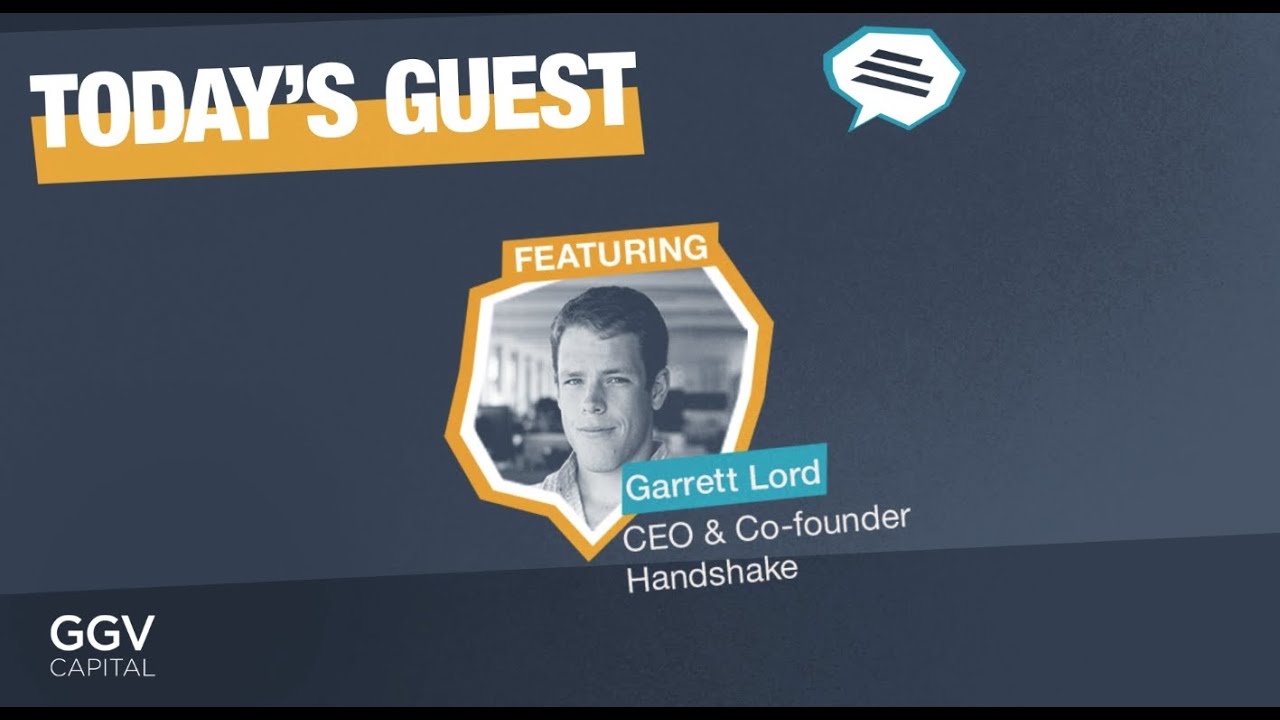
Handshake's remarkable refounding: a lesson in how the next AI fortunes get made | Garrett Lord

Garrett Lord explains how Handshake pivoted from a career network into a data platform for AI labs, now a top-2 vendor for leading model builders. Lab budgets for data are doubling year-over-year. He describes vertical strategies in finance, law, and robotics, and argues frontier models will dominate high-value work despite open-source gains.
Chapters
I remember calling like Mamoun and Margo and Will and Megan on our board, like literally over the holidays. I laid out a whole like investment thesis. We wanted to be able to target like $25 or $50 million of run rate revenue. That seemed like insane. I remember asking Will Reed, like, what do you think good looks like in a year? And he's like, I think it's probably like $100 million. And I'm like, dude, you're absolutely crazy. Like, I don't— I mean, we're starting from zero. We have one lab relationship. And now we've gone zero to a billion in like a year. Like, we're probably one of the fastest growing AI companies out there. The opportunity in front of us is so big that it just requires Incredible execution. How can we be more ambitious? How can we turn around in a month, plan in a week? That's basically my entire job. I spend 0% of my time celebrating any of our success.
Garett Lord spent 10 years building Handshake into the career network for an entire generation. 18 million students and alumni, 1,600 schools. Almost every company in the Fortune 500 is a customer, and it's a company valued well north of $3 billion. Most founders would spend the next 10 years protecting that. Instead, over the course of 2025, Garett did something almost no founder does. He refounded the company around a business that was barely a year old. Handshake AI went from $0 to $1 billion in gross revenue in 15 months. And to get there, he did layoffs, reset the entire company, and bet the thing he'd spent a decade building. Today we get into the why and how of this transformation and how Handshake is shaping the future of AI.
Knuckle up.
Garett, welcome to the show.
Yeah, thanks for having me.
So Handshake started in 2014 as a LinkedIn for college kids, and over the decade ahead, you built it into a $3 billion business. Yet in 2025, you decided to transform it completely into a new thing, Handshake AI. Let's start with the genesis of Handshake AI. What were the early days like and what gave you this hunch that you need to go in this direction?
It all really started at a Christmas party where I was talking to a researcher at one of the frontier labs. And so much of being an entrepreneur is, I think, trying to talk to customers, understand trends in the marketplace. I had seen, uh, you know, quite a few recruiting companies really focused on AI and really serving the labs. And I was particularly curious. I mean, I think that's one of the main attributes of a lot of entrepreneurs is just trying to figure out like what's going around you. I used that opportunity at the Christmas party to like dig in with this researcher. It was actually kind of funny. I'm, and normally at a Christmas party you meet 25, 30 people and I basically talked to one person all evening, just trying to understand a little bit more about like what they were recruiting people for. And, you know, what was clearly articulated from him was that like, you know, there's really 3 stages of model building. There's pre-training, which is scraping the internet. There's mid-training, which is called supervised fine-tuning or feeding in high-quality samples. And then there's post-training. And post-training is really around creating environments where models can learn from reinforcement learning, uh, really codifying a lot of the knowledge and judgment that wasn't on the internet. You know, they kind of, it became clear in my conversation with him that obviously there can be continued gains in pre-training, but a vast majority of the gains that were going to be had in modeling was going to come from digesting what was in people's heads into forms of fuel. in reinforcement learning that models could learn from. And he was articulating this kind of massive build-out of post-training and the amount of data that is needed and really kind of summarized the conversation like there are 3 stools to AI. There's algorithms, there's compute, and there's data. And so I actually started our relationship 2 weeks later with that same exact researcher at that top-tier lab, uh, where we started working with them on recruiting STEM PhDs. Uh, and so—
Just put a timeline to this. This was December '24?
December of 2023. Yeah, exactly.
Yeah.
You know, so much of being an entrepreneur is like building a small strike team, taking some of the best people in the company and starting to explore this idea. We started to reach out to a bunch of other relationships they had with other labs and our real focus was on serving the top 2 model builders. Like that was, we, we thought that if we could serve these top 2 model builders with these frontier capabilities and kind of evolve with them, that, you know, that was really an indication of what the future would look like. And so It started off, you know, kind of as a small exploratory strike team. And very quickly by January of that year, this was my full-time job at the company.
Were you looking in that moment or at that time, like did Handshake, the business that had grown to a $3 billion plus value business, $250 to $300 million of revenue, if I'm correct, were you looking for a new wave, a new wave to attach that business to? Was it slowing down or did this opportunistic come about as an extension that, hey, we have this network and we are very well equipped to do this.
We were serving a lot of the key players that were serving the model companies. So we were basically like the number one recruiting source for some of the competitors that produce data in the ecosystem. And so, you know, really what does that mean? That means that we had the talent on the network. They trust Handshake, they use Handshake, they have it on their phone, and these companies were messaging talent on our network trying to hire them to do these type of gig jobs producing data. And we were hearing from our students that like they weren't being paid on time. They thought it was kind of a messy process. And what became clear with the researcher is just like, you know, how much more you can improve the experience and make this about something that people can learn AI skills, people can monetize their intelligence. And $55 an hour for a college student was like a, it's, you know, you're not going to drive DoorDash and make $55 an hour. And so I really thought that, you know, we had this massive moat, you know, in the human data industry, really it's You know, the supply chain is like, you have to have access to an audience and you, you know, just economically, like, you know, you have a cost of customer acquisition. Then you have to vet the people, teach the people, and then put them onto your own platform. At the beginning, we had the people, we were vetting them and we were training them, but we didn't have the actual platform to be able to deliver the data. And so I thought that we could kind of vertically integrate and move up the stack. And it's turned out, I mean, that advantage of having access to an audience It's not just about, some people would say it's about the economic, like cost of customer acquisition. That's our advantage. And 89% of people that worked on Handshake.io last month came from the network. So obviously there's a massive customer acquisition advantage, but the bigger advantage is actually we're able to target like the highest quality people. So a lot of the shapes of data today are focused on like accounting or law or medicine, or really like the largest professional white collar domains in the country. And we're able to attract much higher volumes of high-quality people. Say you want to target accounting, for example, like EY, KPMG, Deloitte, Accenture. Like these are all, these are all like paid customers that spend a million-plus dollars a year on Handshake. And so when we wanted to target accountants, we were starting to ping people in advisory, in tax that had 5, 6, 7, 8 years of experience at the, at the Big 4 accounting firms. And so we were able to turn around on the highest quality people. Much, much faster, obviously at a structurally lower customer acquisition cost. But that matters a lot for data quality because, you know, one of the primary inputs for data quality is like, what is the unique knowledge that person has and how good are they in their actual profession? And so that's actually the main captive advantage of Handshake. People think about Handshake as like an early career recruiting network. And yes, we're the number one place that young people in America find and search for jobs. But we also have, you know, tens of millions of profiles of alumni. In basically, you know, we need to find farm supervisors. Turns out there's these large land grant institutions like Michigan State and University of Illinois who like have a farm supervision and agricultural program. And so we're just able to structurally access really, really high quality talent and they trust Handshake. They use it in school. They had a profile built. Uh, so that was, that was kind of how we thought it'd be most efficient.
But did you feel it was a need to have, or this was truly an extension of what, what you already had?
Oh, it was, it was a, it was a pretty radical pivot.
Yeah.
Like, I mean, like just in terms of the way we were operating the business, like You know, the old metrics of the business and still in a core SaaS business, you know, you have top line revenue growth, you have NDR, you have rep, you know, overall productivity rates, you have gross margin, you have contraction and, and, and, you know, new sales for existing customers. The way you run that business on a quarterly and monthly and weekly cadence looks radically different than how you run a human data business. And it looks very different than like serving large enterprises with AI solutions that we're building for them as well. And so, you know, it took on my side, I talked to a couple mentors and other CEOs. And basically the consensus viewpoint, I love learning from others. Like, I think that's so much of what makes Silicon Valley amazing is like being able to really call somebody up and ask for advice. But I started basically a separate team completely outside of the existing company that reported directly to me. And then, you know, over time we kind of grew a separate part of the office with a much different operating cadence and like structural requirements to serve customers.
How early did you know that this was going to be a rocket ship and this needs all your attention as a CEO?
From the moment of the holiday party, it became clear to me that although we were doing tens of millions of dollars of revenue by serving the, the, these human data companies, on the backside of that tens of millions of dollars revenue, they were making hundreds of millions of dollars revenue. And so we were just missing out on the entire LTV of what they were able to capture. And then what the researcher really described is like what he defined as this explosion of the amount of data that's needed to serve models. Like he, he kept it really simple in that, like he used this analogy that the reason that software engineering productivity gains have exploded and the job of software engineering has changed is because there's GitHub. There's like tens of millions of human hours went into like artifacting codebases. And so that's like the perfect fuel for reinforcement learning. It's verifiable. All of the context is encapsulated in a single codebase. You know, even more than that, like an actual other software engineer has to review your PR, which is another, another way to generate rewards. Then you have unit tests. And so that productivity gain you got in software engineering was not gonna end up happening in other white-collar knowledge professions because there isn't a Reddit forum or GitHub equivalent, right? There's no Reddit file of like tax accounting in America.
Yeah.
And so he was describing, he really recommended from the onset that we start working across multiple data types. Like, it's so much of being an entrepreneur is like, what's your insertion point?
Mm-hmm.
Where you have a competitive advantage, and then how do you quickly bundle and work to other areas? So our insertion point was really around like what's called STEM reasoning or like PhDs helping models in biology, chemistry, mathematics, physics. We then like 2 months into the business then started moving to generalist domains and that's like multimodal video, audio, personal shopping, personal finance, consumer tool use, uh, things like Strava and other consumer apps. Uh, then from there we moved into professionals because we had this massive moat of young alumni and You know, all the way up to like kind of 34-year-olds in America where we're able to target people in, basically we power 92% of schools in America. We basically power the entire graduating class. We also power 60% of community colleges in America. So we were able to target basically every single profession. So we moved to professionals. Then we quickly spun up what's called a safety team. And that's helped, that helps models, model builders make sure their models don't build like bioweapons or say bad things to children. So we have like a safety team. We have a robotics team internationally. So we basically work systematically across the different data types because inside these labs, obviously you're customer concentrated. Like we now work with basically every frontier and model builder today. But inside of these teams, there's also, they have a lot of different teams focused on different objectives, right? They're basically trying to hill climb in cancer therapeutics, or they're trying to hill climb in new material science discoveries where another team is trying to focus on better image generation or better conversational voice. And another team's focused on how do I actually call Bloomberg and FactSet and all these professional tools that I'll be using in finance. And so, uh, by working with the lab and building trust and producing high-quality data, you can kind of move across the different pillars of the data that they're working on.
So there's a whole conversation we'll have on everything you just described happened in literally 18 months ago to now. And so how do you move at that speed? But before that, I want to also talk about like, this is not an easy change that you pulled off. You have an existing business, you have execs there, you have a full team there. How did you start communicating this to the team that was running that? When was that? Was that early in January itself or that happened over March, like February, March, April? How did the board conversation go? Start with the execs. Like when did you start communicating to your team? Guys, this is big and we are going full steam ahead on this.
I think the story behind every one of these great companies is like, you have to have an amazing team. And like, I've just been working with a lot of these executives for Um, you know, I, generally speaking, if you come work at Handshake, it's either not gonna work and you're gonna leave in like a month as an exec, or we're gonna work together for years and years. And so got this gentleman, you know, John Stoll, who's our president and COO, Matt, our CTO. Basically, I started having conversations with them around, hey, I really think I need to start punching out of a lot of the core operating streams of the business. Like—
That was in January?
That was in January of that year. Okay. Um, in December of that year, I started having those conversations. Mm-hmm. I remember calling like Mamoon and Margo and Will and Megan on our board, like literally over the holidays, over Christmas, New Year's, and being like, I wanna make some of these amazing offers to new, new employees. Um, I laid out a whole like investment thesis cuz so much of, you know, getting the budget to approve this was like telling a story around what this be— could become. Um, and fortunately I like, I think I have, um, just a, an amazing board. Um, so people were super on board. I think I started off saying I wanted to spend $5 or $6 million on this new business venture. And I said that by the end of the year, I think we, we, we wanted to be able to target like $25 or $50 million of run rate revenue. And that, that seemed like insane. And everyone on the board, I think, was like, I remember asking Will Reed, like, what do you think good looks like in a year? And he's like, I think it's probably like $100 million. And I'm like, dude, you're, you're absolutely crazy. Like, I don't, I mean, we're starting from zero. We have one lab relationship and we ended up, you know, in a year going for like a billion. Yeah, a billion. So that's been the story of this journey entire. all the way through is like, you know, my core executive team focused on running the core business, which, you know, is a ton of work. That's kind of their day job. And at the, in the first 2 quarters of the new business, I basically spun up a totally separate team that reported directly to me.
Was there pushback from your exec team? Was somebody worried, hey, Garett, you're distracting yourself from something with something, we have a great thing going here, or, you know, that landscape is already competitive and commodity, which we'll talk about the defensibility, differentiation, all of that. Margins, but like, was there pushback at all from your team or the board?
There was no pushback from the board. There was definitely pushback from the internal team.
Okay.
I think that, and this is a story of like talking to a lot of CEOs, is like incubating something new and different inside of a business is hard. Fortunately though, I had like a lot of trust, right? Like it was like, I'm gonna, I mean, you can frame this in a way that was like, I'm gonna go try this for a quarter and if it doesn't work, like we're gonna be just fine.
Right.
And fortunately our core business is very profitable. And so there was, Plenty of money to go around. But yeah, I think it was a big uphill climb. I mean, I basically asked to assemble some of the strongest people in the core business that were being pulled from existing initiatives that were driving, you know, the core business. But, you know, I think you have to have courage. You have to be comfortable in ambiguity. I recognize like I was getting asked a bunch of questions around like, what's our competitive advantage? What's our long-term moat? How is the market going to evolve? And it's like, I think every good entrepreneur, you just start like, what do I say? I don't, I don't, I don't have the answers.
Yeah.
Like, but I'm gonna start breaking it down.
Right.
Yeah. And so most of my week and months in the early stages of business was just like going on coffee chats and walks, basically calling every single person I could through my extended network. Like I went through every connection I had on LinkedIn and begged, borrowed, and steeled, like for any, any friend they knew that was anywhere adjacent to labs, just try to, try to learn, learn, learn, learn, learn. And every week in December, in January, in February of that year, it became extremely clear that this audience and the structural advantage we had with trust with tens of millions of people around America, knowing their grades, knowing what they did in school, knowing what they're doing after school, was this massive structural moat that could allow us to accelerate. And that's really what we've done. I mean, I, I mean, even make a joke, like, I mean, I couldn't spell reinforcement learning when I started this business. Right? Like I didn't, that was probably one of the more intimidating parts of this is like, you know, what, what does it mean to post-train? What does it mean to, you know, mid-train? What does it mean to do evaluations? What does it mean to do an ablation? These are all terms I had no idea of. I mean, I think the story for other entrepreneurs listening is just like, you just, you know, I put my pants on the same way everyone does, like either left leg or right leg first. Like everyone out there that's created anything started from the place that you did where you, you don't know what you're doing and you figure it out. And I felt super confident in our ability to like go figure it out, especially once I realized just how deep this trust that we had built with tens of millions of people, like how big of an advantage that will be for our business.
How did the communication with the rest of the team beyond the exec team go? Did, was there an all hands at some point where you talked about this more openly? How did you manage the communication through the rest of the team?
Yeah, I, I over time as an entrepreneur have really relied more on my team to do most of the communication. I mean, obviously I talk in all hands. But like, I personally like don't love, you know, being the one that's like taking a lot of the credit and doing a lot of the storytelling. I mean, obviously I, I, I'm happy to tell the story at all hands, but I really love like the executives that run these teams to be the ones that are really driving the strategy and telling their managers and leaders and they kind of extend the leadership team what's important. So yeah, I did, uh, the 2 things I did very early on, I was like, we have like an extended leadership team of like 35 people. And so I basically briefed the core kind of directors, senior directors, VPs, and C-level leaders. I'm like, here's what we're focused on. It also was not that cannibalizing to their existing core business, right?
Yeah.
Like they had plenty of resources to be able to achieve what they wanted to achieve. But over time it became much, much more challenging to integrate these 2 businesses. At some points in this journey, we've turned away like $15 million of work a month. Like we just cannot scale up fast enough. And so there, I think about mid-year In 2025, we had to make the call across the leadership team that we're just going to move over way more resources from the core. Like I, our entire recruiting team used to balance like recruiting across the entire business. And it became a point where I was like, hey, like we no longer can serve anything other than the AI business because we can't be turning away $50 million of work a month.
Yeah. How do you keep, um, A-players motivated in the core team then, or in the marketplace business?
The key thing, and it's, it's always hard to like nail this as a founder, but like, There's just one story of Handshake, which is that we have a network and people come to this network to trust us to like find a job, to learn the skills and kind of uplevel, reskill themselves to be ready for the, the jobs in the future.
Yeah.
And then you also can come to Handshake to like kind of monetize your intelligence and knowledge and judgment in your profession, right? So there's like, you know, there, there's a couple other benefits of using the network, like managing your professional identity and getting recruited by companies, but like This one network we wanted to drive, I really believe that we could just drive more reasons to engage with Handshake, like the real durable moat of Handshake. So we have a million companies using it. You know, we now have basically every model builder and now a lot of enterprises that are using Handshake's network to help improve their models and evaluations. And then we have a huge upskilling and reskilling business that's helping people learn the skills of the future, which I feel like is really, really important. A lot of people are super down on like, young talent. And I, I think that narrative is, you know, is there's a total bifurcation in the market on what people think. Some people are like, early talent jobs are gonna go away. And other people like Cloudflare, for example, Matthew Prince, like he's doubling down. He hired 1,100 interns. He's seeing the fastest people inside of his organization pick up AI are actually young people, right?
Yeah.
And so I wanna equip like the next generation of talent to be successful in this future. I don't think this whole narrative of like, you know, we're all gonna play board games for a purpose one day is an, is, is a vision that I want for my, for my kids and, and for, you know, tens of millions of Americans. So, We wanna help upskill and reskill and really teach people how to be ready for the jobs of the future. And then we, we are the largest network of young people finding jobs in the country, right? So like basically all of higher education depends on us. And then, you know, 100% of the Fortune 500 uses us to recruit. So this network ultimately, like telling that story, I think was confusing for people internally. They didn't understand what it meant to like produce data for labs. They didn't understand the connectivity between like How, when you're producing data, are you learning skills? But, you know, fast forward, you know, a year into this business, a little bit over a year, like you can come to Handshake to learn, you can come to Handshake to find a job, you can come to Handshake to manage your professional identity, you can come to Handshake to monetize your intelligence. And like our network's more than doubling this year and like week on week utilization is like over 50%. So the net— the network's like, the network's on fire because there's so many more reasons to come to Handshake. Yeah.
So would it be fair, actually it doesn't feel anymore like 2 different businesses and more like an additional revenue line item that has exploded, but the core elements of the product, which is the network and others have only, of course they've extended to RL environments and all kinds of post-training and mid-training offerings, but it still is built on the network, unfair access to the network you have. And so does it feel like 2 different businesses today or does it feel like multiple revenue line items?
I think LinkedIn's a great analog. Like they have a network and they have marketing solutions, they have sales solutions. They have talent solutions. They have LinkedIn Learning.
Yeah.
They actually have many different revenue lines on top of one network. And people come to it for different seasons and different reasons to use the network. Right. And, uh, they also have a social graph. I mean, the handshake is very analogous to LinkedIn. Like we have a network and you can, we monetize it by finding a job. We monetize it by helping you upscale and reskill. We monetize it by helping produce inhuman data for labs. But like, if you take a great analogy, like one of the world's largest healthcare companies, or in America, the largest healthcare company. Or like, you know, one of the top Big 4 accounting firms, like they're using our network to bootstrap their valuations internally, right? So that insertion point in enterprise, like the, you know, that, that's also a huge monetization pillar as well. And so we, we think that all these businesses together are, there's more reasons to engage with Handshake and get more value out of it. And that's ultimately what users care about. I mean, I think this year our network will probably double, or I mean, it's on track to double. I think by the end of the year we'll probably triple the size of the network. And then just like the engagement metrics are so much more healthy because there's more reasons to come.
Did you have to reset the cultural elements at the company? Because this business that has grown to $250 million plus of revenue, it's a different kind of a beast. You're starting with something that is small. Within 6 months, it becomes a beast of a business. And then by the end of the year, it's at a billion, the speed. The business model, like, did you have to reset the culture or it was almost for a while felt like 2 different cultures within the same company?
I mean, it felt like 2 different cultures in the same company. You know, if you look, if you just zoom back, like Handshake was deeply uncool, then it was very cool. Then our growth, you know, slowed down immensely. And now we've gone zero to a billion in like a year. Like we're probably one of the fastest growing AI companies out there. I mean, you're the investor. But, uh, what was required at the beginning is like, you know, we, we, we definitely like extended a lot of our core values. Like we have a, a principle called students first, which is like in balancing a marketplace, you have to have one side that you prioritize over everything else. And so like very early on, Handshake, yeah, one of the founding principles is fellow first. Like we're gonna take on work, we're gonna treat people really well. Like a lot of these human data businesses started out of basically the advent of like labor arbitrage where there's like international low-cost country. talented folks that are basically drawing boundary boxes around stop signs. And it was very hard for those companies that were drawing, you know, boundary box around stop signs with low-cost labor to treat like an accountant the way that they deserve to be treated or to treat a student the way they deserve to be treated. It would, they were treating them almost like body shops. Um, you know, that we just felt like that was just like not really like ingrained in, in the way that we wanted to build this network. Like we, we fellow retention, fellow NPS is You know, basically all the aspects of the Fellow journey are something we track from the very, very beginning of this company because we believe that you treat people the really right way. Like, this is just one stool of the network you're coming to. You're coming to find jobs, you're coming to upscale, you're coming to monetize your intelligence, you're coming to help work with enterprises and treating people poorly was like the wrong choice. But yeah, I mean, I had to, to, to keep it real on what happened to, you know, what transpired internally. We, we went from a fully remote workforce. Mm-hmm. Like, You know, with really primary hubs in San Francisco, New York, Denver, London, Paris, and Berlin to 5 days a week in office across 2 offices, New York and San Francisco.
Was it always remote first, even before COVID or COVID had forced you in that?
COVID forced, I think almost everyone remote first, right? We try to focus our hiring on hiring around hubs, right? So that we could bring people back to the office. But yeah, there was a massive initiative internally to get people all in the office 5 days a week. I mean, I just so believe in like, Um, you know, uh, we're, there's no clipboard. So if your kid's sick or like you're not feeling well or you have a hair appointment or a doctor's appointment, like work from home.
Yeah.
Like we're not gonna be checking in every single day, but like the expectation internally is that like we're all here pushing super hard 5 days a week and you're collaborating with peers and you're part of this high energy culture. Um, I made that call really midway through last year where it was like, this is the Super Bowl of our business. Like there's such a large opportunity to help people and to like grow this business. And we are gotta be in the, we gotta be in the office 5 days a week. Uh, and that was not a decision that people liked. There are probably, you know, no fewer than like 100 people that decided to leave the business. There was, you know, attrition was like, you know, very, very high as folks were trying to kind of resettle into DNA. We, we codified a value internally called Olympic pace.
Mm-hmm.
Which was, I think like, uh, you know, you have to be opinionated about how you codify your culture. And like Olympic pace for me meant like Michael Phelps, head of the Olympics, was in the pool every single day for like 5 years. I believe in like stacking days. You know, when you come in every single day, some days you have like a 70% day. Some days you're like on fire. Some days, you know, you had an issue with your kid and you're distracted. But like, if you just compound and stack day after day after day and give it your best, like great things will happen. That's been the story of my life and the story of this business. And so like Olympic pace was a core value. We're gonna be in the office 5 days a week. And I think a lot of people didn't like that.
Mm-hmm.
Right. And, uh, I empathize with that. Like, I think so much of what was challenging for me as a leader in navigating that was like, You know, it's kind of unfair to change the expectations of the culture after you've joined the company.
Yeah.
Like I recognize, I mean, that's like a full-time me. Like I think like, you know, if I were to do a retro on myself, like I think I wish I would've like codified the values of the organization earlier so that people understood what they're signing up for. But now we make it super clear and I think as long as there's no surprises, like, you, you know, the message that you're telling to the talent market, the folks you're interviewing, they understand what the expectations are, then it's a super fair trade. Like you're choosing to join this company for these values and And for this mission. And, you know, that was an important part of change.
So let's talk about the speed at which you grew, because this is a ridiculous amount. Like, I think no business in history may have gone this fast, $0 to $1 billion in one year.
Certainly Anthropic and OpenAI, but yeah.
Anthropic and OpenAI, I agree. But, but you're in, you're in an elite tier. What started breaking? Can you walk us through last year of all the problems you had to face in terms of just scaling this? At this speed? Like what started breaking first?
I mean, I think we've hired like 400 people, 300 people and like in like maybe 8 months, 6, 8 months. I mean, there's the number one problem in our company right now is we just cannot, we cannot meet the demand that the market's serving for us. We've cared deeply about our like reputation and doing things the right way, treating fellows right, not overpromising to customers, paying people equitably internally. Like, you know, we just, Um, you know, we try to do things like in a focused way. I've just been through the growth at all costs and like, uh, but yeah, I mean, so many problems. I think the main way I think about solving problems as a leader is it's almost kind of fun to zoom back. Like I got to spend basically a decade learning how to build a business and going through all the growth as a CEO and reinventing yourself and maturing and, you know, understanding your blind spots and figuring out how to augment them. Like I kind of got to do that for a decade. And so Now at 36 years old, like being able to like run a second chapter and kind of run it all the way to the Super Bowl has been awesome. I get to kind of not, I still make a ton of mistakes as a leader, but I get to like really learn from that pattern recognition. And the main thing I've learned, long-winded way of saying, is just like so much of how I wanna build this business is focused on like hiring incredible leaders and really building that like extended group of leaders internally. Like we have 25 prior founders. Inside this business. Like we could have never built what we built without these founders. We could have never built what we built without like hiring super high agency young folks. You know, we, we believe a lot in like growing talent internally versus hiring. That's one of the big lessons. I used to hire like shiny executives. And the reality is like, I, I've done far better in like home growing talent and giving people opportunities to step up and coaching them. I think the reason we have executed so well and come from not being in this business to now being the number 2 player in the space is by hiring incredible people. So I've kind of systematically look at like, where do we want to be in 6 months from now, a year from now, 2 years from now? Really, it's hard to look 2 years, really 6 months and a year from now, 'cause things are on fire. And like, what are the capability gaps or problems that we really need to solve? And then I like to kind of think about problems of like red, yellow, green. Like what, what's red today, but will be green in 6 months. And I try to not focus on those problems.
Mm-hmm.
Like a lot of the team wants to flag issues to me where there's Where there's like a fire and I'm like, red, yellow, green. Like, is it gonna be fine in a quarter? Is it gonna be fine in 2 quarters? If it's going to be fine, if you guys have the ball, I'm not gonna spend my time there.
Yeah.
I'm gonna try to focus on things that are red today that will be red in the future.
Give me an example of something that 6 months ago was red then and felt like if I don't step in, it'll be red again in 6 months.
Oh, one of the biggest ones is like international. Like we opened an office in Bangalore. We had a, a ton of talented people working in India remotely. And we were like, this is insane. Like the level of intensity and passion and technical skill that's over there, the opportunity to work in like a high-growth startup where you're like, you're having a ton of ownership. I saw that very early on in this journey and was like, this is an, an absolutely wild unlock. But it's very hard to spin up a totally different team in person all the way around the world.
It's a different culture also.
It's a different culture. Totally. And so, uh, I focused with 2 of the leaders internally on like, How do we, and by the way, resetting teams to change their operating rhythm where you add in somebody, you know, a team that's located all the way around the other side of the world. Like it was, that requires like an, a ton of force, like just like thoughtfulness and like effort to get right. Right. So we have gone from like 0 to 100 people in India in like probably 2 months. And I think that capability as an organization is incredible because we basically can work 24/7 all the way around the globe. We have fellows all around the world.
Yeah.
We're, I mean, we need to hire knowledge workers in Germany, in France. Like there's different cultural preferences when it comes to the different shapes of data that we're producing. And also we didn't, we didn't wanna set up India as like, like a lot of companies like set it up as like this, like offshoring operation that was like not our ethos. This is gonna be like a completely equal team no matter what office you're a part of, whether you're in New York, San Francisco, or Bangalore. And you're gonna work on like high agency projects and impact this business. And we have seen an unbelievable success, but like. That was not something that we were just going to stand up without like forcing it, completely punching it in.
Right.
Um, that, that's, I think, a great example of one.
How do you ensure quality control at this speed of scaling? Um, like in terms of the output that you're providing to your customers and the internal processes, like so much, so many people at Handshake are probably barely like 5 months in. Like, how do you ensure the quality control is going through? All through those 400 people, you know, is it culture? Is it just daily communication? What does it actually take to ensure this?
Onboarding Handshake was just like grab a laptop and sit next to somebody that knows what they're doing and just like jump off the deep end. But that doesn't work when you start hiring like, you know, hundreds and hundreds of people. So we had to build like, we have, you know, 2 incredible leaders internally that focus on like basically have built a bootcamp to make the skills like kind of 80% of the skills that are required to do this job. At least like you understand what you're getting yourself into and like how to upskill yourself to be able to run these queues. So like the training and learning program where you have like dozens and dozens of people going through it at one time is like absolutely critical. You have to like codify a playbook. I think it's like unfair to expect that every single employee that you hire is just this like going to be able to figure everything out on their own. Right. And that doesn't work when you start getting like hundreds of people and it's a more matrix organization. So building like a training and learning program internally, luckily I had seen that before in like hiring a sales team. Like we had built like a sales enablement team and there was like a bootcamp and QBRs. So I've taken kind of a lot of the learnings outta the original business into like how we speed scale a team. And then I think culture's like huge. Like I think culture's really made in like the hard decisions. Like you, there's only so much you can do to like write it down, but you really have to like role model it and incentivize people to role model it and talk about it in reviews. And, you know, I think it takes when 85% of the organization is new to the company in the last 6 months. Our culture really codified when we had the entire group of like the first 50 or 80 Handshake AI people really hit like 8 months, 12 months in the program. And they, you know, they had seen the way that we worked. They had seen the decisions that were made and they started to kind of represent and reflect like what we expect out of the way that we're going to treat each other and treat our customers.
You've touched on hiring a little bit. So let's talk about that. How do you kind of now ensure the hiring bar is high? Because the people you hire, you can give them good onboarding and training, but ultimately the people quality becomes the culture. Or direct input. So how have you ensured over the last year to ensure that the hiring bar is still high and yet you're hiring this much in capacity of people that you need? Because you're probably constantly feeling behind on hiring.
Yeah. I mean, I think the story of hiring is like, I mean, I'm maybe going to say something like provocative, like in Handshake, I've never worked with such a talented group of people. Like I think one of the important things I think I've learned in like building this company is like hiring people that you like love to work with and you feel like you're learning from. I mean, the group of people that I get to work with at Handshake right now are like, I think like everyone that's here is kind of like ride or die. Like it's a, it's a group of people that have just been through such deep lows and such high highs that like the shared experience of working together and I feel like people feel super respected. Those relationships are what has gotten us here today. Like folks like Young and Sahil and Matt and V and Stahl, like. I mean, there's so many people on my team. I mean, I wish I could go on almost just a name game here of people that have just laid it all out and it's required. It's required laying it all out.
Yeah.
The number of times that I'm in the office at 1, 2, 3:00 AM and there's like 75 people here is like, you know, hundreds of days. Like, I mean, it is, you know, entire weekends, family plans, vacations, like Um, there's a guy named Jake on our team. Incredible. He started, started this business and Avery that I work with where Jake had like a vacation planned with his like girlfriend and it was really important. He had been working hard and he just is like this, I can't go on the vacation. Like we have to get this delivery across the line. And so people have given up a lot to build this business. Um, and I try to role model, um, I'm like a blue collar kid. Like I, like, uh, I feel super thankful to be here. This is like the greatest adventure and like awesome adventure. Um, I'm loving it. And I like try to drive with a ton of intensity. Like we have huge ambitions on what we wanna accomplish as a business. But when it comes to hiring, like, I really trust the people around me to hire well. And like, I think that interviewing's super imperfect. A lot of people like on Twitter wanna talk about like how this perfect interview process and like the first 7 people you hire are reflective of the culture in the future. I, I kind of think that's a little bit of BS. Like, it's so hard to understand. Like, we try to hire from friends, you know, in, in the company. Like, you try to hire through referrals. We have super elite talent that's applying because the story is super fast growing, but like, you don't really know how somebody's gonna do until they're 2, 3, 4 months in.
Yeah.
months in. And then I would argue that like inside of a business, you're not, you don't, like a lot of young people don't realize, I don't think you really like are putting up points until you've been here a year, like till you really figure out the full matrix. Um, and so you try to hire really great people. You have to trust your leaders. I mean, underneath organizations, you know, we hired an amazing guy that runs trust and safety and it's like, poof, like he hired like 15 people in like a month, right? It's like, how can we even vet that? We have to trust people. And then one thing I really like is that we run the leadership team and all the operating cadences, the data reviews, the daily syncs, the weekly syncs in a way where like everyone's kind of allowed to comment. Like I, I like to run like a super flat company right now. I probably have, you know, 2 dozen direct reports, which is very different than like the way I ran a SaaS business was like functionally on the leadership team, like, you know, monthly business reviews that like literally the pace of this organization changes daily. And then the pace of these labs, I mean, the labs move, they are so passionate and work so hard and we work for them. So if they're working at 2:00 AM on a Saturday, you better bet on our side, like we probably have a delivery supporting their work. In some of these like darker, like harder moments, like I really like to remind myself of like why we're working this hard.
Mm-hmm.
Right. And it's like both my in-laws have cancer right now. They're both like, going through chemo and radiation. And it's like, you know, these custom cancer therapeutics and MRI cancer vaccines that are developing, like AI's gonna accelerate that. Like my entire cancer journey where I go to MSK and Cornell and all these meetings and have all the doc reports, like I'm using, I'm using a model. I won't name models.
Yeah.
But I'm using a model to break that problem down. And like my friend that's starting a business who is a ski lift operator who, you know, is a really passionate guy. He helps like immunocompromised and disabled people learn how to ski. Like, He is not being treated super well on his job and he wanted to start his own business and he, he's using these models to like figure out how to start his own business and like work through employment contracts and permitting. And it's like, I think these models are helping so many people around the world and like we are the pri— we are one of the primary inputs driving model progress. And so I think continuing to remind people of like why we're working so hard and why this is important. And then long-winded around like trusting people, but you, I, I like put a lot of love and trust in my team. And I also am not one of these people that just like fire, like when people are off track, like I'm not just like gonna fire them. Like we've, we, I really believe that like you can coach and grow and love on and be a hard ass and like push people to grow. And like, yes, people, you know, you can't teach them like some certain raw innate skills, but like the story of myself is like, I'm imperfect in so many ways and I've just had to like learn how to adapt and be the right person to lead this company 6 months from now. So I, I, I really believe a lot in like coaching, codifying what good looks like, building playbooks, meeting the different personalities where they're at and believing in people. And then, yeah, of course, like, do we fire fast? We fire super fast. Like there's an onboarding expectation, 30, 45 days, like in onboarding, but it's generally like, we're going to fire you right away or you're going to make it and we're going to push you and we're going to help grow you to be the leader you need to be in the company.
On leadership itself, you're probably outgrowing some people very fast. Have you had to upgrade execs, uh, mid-flight last year?
I haven't upgraded a single exec.
Okay.
I think it's maybe a hot take.
This is, yeah, let's double-click on that.
How? Uh, like you just sat there and said, I think, I think that's like the old playbook, like firing executives. Like, I just think that's old playbook. Like, I think, A, I think you run teams in a way more, like the story of Handshake is we actually have multiple businesses out of Handshake. So like, you know, we have a research team inside of that research team. They have many different mandates. Uh, you know, they're building benchmarks, they're doing loss buckets on models, they're ablating on open source models, they're building public research papers for labs. They're building quality tooling that makes every single person better at producing high-quality data for the labs. Like inside of like, you know, inside of STEM or in professionals, like we're across 180 different professional categories. You have labor all around the world. So it's like inside of Handshake, it's very entrepreneurial on the fact that like probably 80% of the platform and technology gets you there on data. And you have to like, we have a 30-person forward-deployed engineering team, if not more, that is like customizing the work for each one of the labs depending on the shape of data that they're producing. kind of building that into a compounding, you know, technology advantage internally. And so, yeah, I mean, to answer your question in a more spicy way, like, I think that, you know, I was just talking to like, talking to like some fancy execs, you know, they get introduced, you're on fire, business, meet 'em. And I, and I talked to them and I was like, they don't know anything about post-training. They don't know anything about data. They don't know about the modern ways of working. Like most of our employees log into a coding harness every single day to do their job. Almost the entire SPL operation. Like we, we believe that like, The way we're producing this data, we wanna identify the entire process. And so we have probably made every single person inside the company like 4 or 5 times more effective than when we started this business. And systematically, we're just automating every single part of the problem we do. Like we have these forward-deployed engineers that are basically codifying skills, MCPs, like, you know, building your own harness, like basically to help automate the work that we're doing internally and put the human, 'cause there's a lot of annoying work we have to do. To put the human in a more and more advantaged position. And so it's like, where am I going to get, am I going to get that person like into it?
Is it partly, and I'm also like trying to grasp this, that if you have such insane product market fit, of course, talent quality matters a lot still, but if you have such insane product market fit, the talent also is able to grow to that faster because the talent is execution, executing against the product market fit versus making product market fit happen. Which requires a different level. And that's why people have to constantly upgrade. Because one would imagine, maybe just to double-click, the person who was managing your FDE team even 9 months ago was managing a much smaller team. They are managing a much bigger mandate now. So typically the reason people upgrade execs is because just the management level, management skills are different.
Yes. So good, good point. So I would just say that like in situations where people get leveled, the pie has grown so much that they're in a job that was 5x bigger than they thought it was going to be. So like, yes, like it, was there a forward deployed engineering leader that ran forward deployed engineering and then our CTO started helping? Yes. But that person thought they were gonna be running like a 2-person team and is now running a 30-person team.
Yeah.
And it's getting split and now they're responsible for like forward deployed engineering on robotics, internationalization, and like onboarding tens of thousands of people in countries with a totally new payroll stack and, you know, legal stack than what we have internally. And so, yeah, the pie's growing so immensely. I, I, I kind of split up my team into like, Core operations in 0 to 1. So we're constantly launching new businesses inside the company. Like we're moving across each, across each data type. There's new, what's called reinforcement learning environments, which is the longer shape of data that really is indicative of where the future's headed. You know, you kind of have like the 70% of the portfolio is like what we know how to do. And then 30% of our time, if not more, is spent punching in completely new businesses because we want, we believe that in the future there'll be like a, a lot of consolidation in the space and there'll be The tech, like it used to be, you could start a human data company if you grabbed like 15 doctors and you jump all them to write hard prompts and they built like verifiable answers or rubrics on the backside that, uh, they used to be sufficient. It no longer, you no longer can raise $2 million seed round and like build a human data company. Like the, the amount of work you have to do internally to be able to produce high quality, long horizon data is, you know, so I believe that, you know, we already see this today. Like we've bought 8 companies in the last like 3 months. We've basically been picking up a bunch of super talented teams that believe that when they bolt on their capabilities to Handshake, we can commercialize that and scale up. Plus they want access to our research, plus they want access to our platform, plus they want access to like basically unlimited free fellow acquisition at scale. And so we've been on a huge acquisition spree, which is, I had never bought any company up until Handshake AI. Like it's been, that's been a huge part of my journey. And then the 25 founders internally too, they're doing But we don't manage people as tightly as you used to. Like, you know, you gotta give people scope and rope and like a big goal. And then we're pretty like real with people on like where they need, like data acquisition. This is an initiative internally that like is insane now. I mean, we're acquiring hundreds of thousands of documents. We're buying data from businesses. We're building full simulated businesses and reinforcement learning environments where like, you know, labs wanna have basically like an entire operating business that they can train off of. And like, that was a capability that like did not exist like 3 months ago. And now we have like 15 people on like acquiring data, you know, synthetically enriching that data, de-anonymizing and de-identifying that data. It's like the, this, the pace in this company is, or the pace in AI alone is just, it's not SaaS.
And so your own job has also changed a lot over the last 15 months or 18 months, I presume, like. Where did you have to get better dramatically fast over the last 18 months as a CEO?
Oh, getting a lot less sleep. I don't think I've ever, I mean, it's just one fun joke with the new child and then, and then this business, like, no, but the serious answer, where have I had to get much better? Like learning how to operate a business like this, throwing away old patterns and like approaching things with first principles, leading a team of like 20 direct, direct reports versus like 6 or 7. Um, I mean, I spend all my time launching new things on problems that won't get solved naturally in the next 6 months where leaders are like struggling to figure it out and on hiring.
Yeah.
Like the number one way I can get leverage as a leader is hiring. I mean, I've never thrown myself harder into hiring the next generation of talent. And also because the business has gone zero to a billion dollars, the type of talent we're able to recruit right now, we were, I mean, Handshake was a great business. Super impactful. It's $3.5 billion company doubling revenue every single year. Like we, we acquired pretty good talent. We have never been able to acquire the level of talent across all of our businesses, upskilling jobs and the labs business and enterprise business like we are right now, because the best people wanna work on, you know, generationally transformative businesses. And the progress we have made, like you, you kind of can't recruit that level of talent early on. It was very hard to do because They have to take so much risk, but now with the revenue scale of the business, like we're just able to get, uh, more and more people are learning what we're doing.
Are there people around you, founders and CEOs who've helped you level up on hiring and 20 reports versus 6 reports and moving fast? Are there people you talk to when you are running into an operational issue?
Yeah, I actually mostly talk to my team.
Okay.
I used to, I mean, I'm like a student of the game. Like I love talking to advisors. I mean, great people are like Christopher Payne at like DoorDash, who's like prolific and incredible. You know, I've got our board members that I talk to, Margo. I, I talk to several people that have run at-scale businesses, but the vast majority of coaching, and maybe this is different than how I originally, when I ran the SaaS business, I was relying on external coaches. How do I build a demand generation events muscle? How do I create a category? How do I think about pricing and packaging? How do I think about, you know, what did LinkedIn learn in terms of marketplace attribution over time? I was kind of like learning from them. In this new AI business, like not a lot of people know what's going on.
Yeah.
And like the patterns that worked in the past are, are, are like—
Maybe the anti-patterns now.
They're, they're anti-patterns.
Yeah.
And so most of who I spend all my time talking to is like the core leadership team of Handshake AI. And, and like, you know, we keep it super real. Like we're super honest with one another and are constantly pushing each other and arguing and like trying to debate, like getting to the right point and. I actually run, I believe one thing I constantly am doing is like, you need to have everyone understand the story of where you're going. So like we just had, we very regularly have like 30 to 50 person meetings where everyone is brought into the fold on like, here are all the problems, here are all the goals, here's why we're making what decisions we're making. Like, ask any question you want, but when we leave this room, There's not enough time to, for each person to describe what they're doing and debate it out. But like when we leave this room, everyone needs to lock arms. Like you might not have the goals perfectly in your head, but at least you understand the story of everything unfolding across the company from training and learning to fraud, to robotics, to STEM, to professionals, to reinforced learning environments, to research. Like everyone, I try to bring along like 30 to 50 people and then their job as leaders is to bring along the hundreds of people underneath them. But that's very different than my 6-person executive team that I used to have in the core business.
Let's shift towards the business model itself. I'll steelman the bear case on the company. So labs keep needing data to train themselves on specific frontiers. So it could be a code gen is where it started, but accounting, other things, but what they need keeps shifting because once they get to a certain critical mass of training, they're moving on to the next thing. So one is where you're collecting the data is constantly shifting. And so it's not a business that can stand on a platform like the traditional software businesses you build once you sell for 10 years. The other part of it is like ultimately maybe synthetic data is what all AI is trained on. So this network might not be as yieldy in the future. How do you think about why is this a company that has some defensibility over the years to come? versus a window of opportunity that you massively capitalized on?
So, I mean, if you just look at like, I think the backdrop of this, if you look at data companies, people for the last 5 years have thought data companies were gonna go away. Yeah. And every year the market like is almost doubling it from, from a CAGR perspective, like the lab budgets for data are growing. You know, one of the, you know, we know some of the lab details, but like they're all almost doubling year on year. So like there's more data that's required. And that's one thing, like I, I'm super long data. The other point I would make is like, if you think about like what's driving a lot of model progress right now, it's like scaling up compute and scaling up data, right? Uh, most of the gains are sucked on pre-training and most of the actual gains are coming from the post-training side of the house. So if you look at like the latest like Microsoft paper that was released where they actually broke down, or you look at like QuEN or KIMI or the open source papers, the way they're driving a lot of the gains is by more data and more compute. It's just, it's, it's very clear that like, you know, and then it's also fun in the fact that we now know that when models scale up with enough data and enough compute, you have what Happened in software engineering, which is like a complete reinvention of the job where you went from like helpful copilot to like models doing a 3-hour, 6-hour, and 18-hour task. And so like, you know, the constraint on driving that productivity gain in accounting or the constraint on driving that productivity gain in oil and gas or logistics or finance more broadly is the fact that there is no GitHub. Like it, the, this work is fundamentally unverifiable. And so you make a point around synthetic data. Synthetic data's I mean, obviously driving a lot of gains, but most of the gains are actually being driven by making what's unverifiable in human heads into verifiable content that models can actually learn from and reinforce in learning.
Do you believe there will be an end to the window though, or will it all, the frontier will always exist? Unverifiable data will always be needed.
I think recursive self-improvement is like something people are talking about. And like, I think that the, there will be human data for as long as humans are needed in the economy. Like for as long as humans are needed in the economy, like when RSI fully exists, like humans are no longer needed.
Yeah.
So really you're taking like, you know, you're, you're, you're kind of thinking that like, you know, the day, realistically, the simplest way to answer it is like the day that humans are no longer needed is the, is the day that humans are no longer needed. Right. So the, I mean, and I think a great analog of this is like Waymo, like Waymo is, you know, Waymo and software engineering, I think are indicative of like where the future's headed. So for Waymo's been having, you know, they have 3,000 people driving 10 years ago. They have 3,000 people driving today. Like there used to be human in the loop around, are you staying in the right lane? And now it's human in the loop around like a dump truck backing up and a stroller coming across the street. It escalates to a human, it gets synthetically enriched, it gets pumped into reinforcement learning, and then humans never need to get in that situation. So if you think about like what's happening in software engineering, like software engineering is, it's incredible in the fact that like you're basically putting a human in the loop in like a very verifiable outcome. And so it's compounding at an incredible rate, plus all the open source And repositories where all the context surrounded. If you start talking to like accountants around how helpful these agents are, like we just released a public paper called like Banker Bench at associate level investment banking tasks, which is just like literally the first year investment banking job. A top model, the top model right now gets 23%. Like it's not able to automate a task that people are doing. I think there's a huge disconnect between what people are saying is like all the jobs are going to be eliminated. a year from now and the reality of productivity gains in AI and enterprise today. And a lot of the road, and this is why I think Handshake's important and all of our great competitors are important, is like the road to carving that out and until RSI exists is codifying the knowledge, judgment, decision-making of humans in these job disciplines into training fuel to learn and automate from.
CodeGen also worked because of GitHub. Having verifiable outputs and there's a lot more corpus. How are you guys, you don't have to spill all your secrets, but like, how are you guys finding the full trace to outcome on accounting? And is that buying private data? Is that simulating environments for people to act as accountants for tax prep or other things? Like, how are you actually doing accounting or marketing or?
Yeah, I think you nailed it with accounting, right? Well, let's just like pick banking as a great analogy. Like, You know, the shape of data that we're producing today is like, you know, first you have to understand the taxonomy of how people are spending their time. So like what percent of the time is going into like leveraged buyouts versus discounted cash, you know, DCFs, like what, what does the actual job look like? Then you have to understand, like you have to break that down, that task down into like a prompt. And then you have to build a completely realistic environment called reinforcement learning environment with the actual tools itself. Each one of these tools ideally have real-world data. That mimic the messiness of the real world. They actually have like parity and functionality with the real production applications that are used. And then you have a set of verifiers on the backend, right? And you have to generate sparse rewards across when you're rolling out, you have to make sure it's not reward, you know, you can prevent reward hacking or minimize reward hacking. Like you have to make sure that, you know, the way that you actually design the reward structure works for different model builders techniques and different model builders have very different techniques. Generally speaking, like the, the, the same arc of what they're trying to accomplish. But yeah, the, the new shape of data is like real professions, long horizon tasks, real tools, and then rewards. And they roll those out in post-training runs, right? And they hill climb to the reward of, you know, the objectives that humans have defined. And so small things you might not realize, but like, you know, you'd say that models today have like completely solved financial modeling. Well, the reality is like, if you look at like what humans care about, they care about like The formulas and the way that they're written, like a formula has to be malleable. You can't be logging into an Excel spreadsheet with dozens of tabs and it's referencing tabs across each, you know, or a cell's referencing across multiple tabs. It's, it's a mess. It's, you, you puke all over it, right? So fun study from us, 522 investment bankers in BankerBench, like 70% of people would rather start over from scratch than use the model that AI has produced because they can't pick up that model and malleably use it, you know, to, to improve it. So it's like, When you start really breaking down just a single function, yet alone like rolling up the performance marketing budget, which is a finance and a marketing exercise, like we're not there yet. Like it's so unverifiable and these are long horizon tasks that like, that is the future of training, codifying what people know into environments that model builders can train off of.
How does differentiation play out between the various platforms that you compete With, uh, right now, is it based on people are specializing on certain verticals? You might be specializing in accounting or medicine. Somebody else might be doing something else, or is it a battle for the margins?
We're not saying it's a battle for the margins. I mean, there's so much demand, like it's really about quality. Quality prompts everything else, quality and reputation. I guess something we feel really fortunate about, like we're the number 1 or number 2 vendor at like most, uh, at the top 2 model builders and most of the other labs. And it all comes down to being able to produce high-quality data. And that's really, really hard, by the way. So it's, it's, it's quality, it's volume, and it's speed. You gotta be able to produce high volumes of quality data. Ideally, you can turn around really fast, but cost is really not the main factor. Like there's an insatiable demand for data from every one of the research teams. And by the way, you, back to the point around like RSI, like when you talk to researchers, like All of them, there's a big difference between like what the MBAs say and what the researchers say. The researchers are like, this is an amazing business. And the MBAs are like, what if I thought, I thought the models are like producing all the data themselves. Like, aren't models able to coach themselves? And the reality is there's just a huge disconnect between people that actually understand what's happening in this model buildings and in these labs and like people on the outside.
In your view, given the margin structure, it doesn't seem like it's a fight for margins with the speed at which Do you foresee in the next 4 or 5 years a data training platform going public?
Yes. We aspire to go public sooner rather than later. Like that would be, we have the scale to do it. We have the profit, both businesses are very profitable. Like, yeah, we would love to be a public company.
5 years out, like how much of your work is more about Frontier Labs versus open source and versus enterprises directly buying from you for their own post-training?
I think our Labs business will get to $10 billion run rate revenue sooner rather than later. Like, I mean, there's going to be that amount of money spending. And then if we can continue on our, like on the share, if we continue producing high quality data and maintaining our reputation and working across all the verticals of data that they're trying to acquire, the most likely market structure is just like 2 or 3 very large players that control most of this work. Like the barriers to entry to compete as a small player, it's kind of like NeoLabs versus Labs. It's like very hard to compete as a small player. Obviously on the fringes, like there will be great small players, like in like cancer therapeutics research. It's very hard. We, we're constantly facing like verticalized companies trying to kind of bite off one chunk of it. And that's amazing for the ecosystem. And I like, I like that there's competition. I like for the labs, there's competition. It keeps everyone on their toes. But, um, you know, I think the long-term market structure is probably 2 or 3 large players that are like building the tools, building the environments, having this, this will become a full-time job. Like millions of people around the world will be doing this.
Yeah.
I mean, I think the future of a lot of employees in, in enterprises is actually looks more akin to being a Waymo driver in your job. Like, you know, putting it, the idea that an enterprise, you know, say an insurance underwriting has 25 people that are the most elite underwriters. The idea that they're like even doing the underwriting right now, I think in 2026 makes no sense. They should be creating the data that actually powers this elastic underwriting judgment engine that just compounds over time. I don't know if you read like the, the Satya post that he talked about this compounding.
Yeah.
But yeah, so I think our labs business will, will be massive. I think our recruiting upskilling business, like it should do billion dollars revenue, like very easily. Like there's $14 billion a year spent on LinkedIn. There's $9 billion a year spent on Indeed. Like the recruiting, upskilling, jobs of the future, helping people adapt to what's about to unfold is like, that's a multi-billion dollar run rate business. Our labs business, we love supporting the frontier. Like I think it's so cool. And then we have our enterprise business.
Yeah.
Right? Where we're helping large enterprises really like codify their knowledge and judgment into evals. And there's a whole stream of work we can talk about there, but that, that's probably a multi-billion dollar revenue line item. And ultimately it comes back to like the network. Like we want the network to continue to grow and like drive value for users and have more reasons to come to Handshake and get value out of it.
Do you foresee a world where enterprises start adopting more and more open source and they just own their own post-training environments themselves? There will be an inflection point for you where the enterprise business will be larger than the labs business, or that's just too far out?
I think that large enterprises will leverage frontier models and they'll leverage open source. I mean, I think there's still so much gain to be driven outta the frontier models. Like for example, like, you know, if you look like, you know, you're gonna call one model like Gemini for multimodal reasoning, which is the best at it, right? And you're probably gonna call like Opus or Codex for, you know, code, right?
Mm-hmm.
Like an Opus, Opus is better at some aspects. Codex is better at others, right? Some companies will go all in on one model company. That's okay too. But like, I think over time there'll be, you want to be calling the right model for the right use case. And I think the frontier will continue to stay at the frontier. Also, you'll see players like, you know, micro, other amazing players have different distribution and different advantages. Like take Google, for example, the distribution advantage they have, Microsoft, the distribution advantage they have. Like, I think like, you know, all these labs, we're still in such early innings. I mean, the story's clear, like what's happening in law and what's happening in software engineering is what's going to happen in every single profession. I don't think people really realize that as they capture data like they have done in GitHub and as they scale up their models, what we've seen with software engineering where our software engineers are 2 or 3 times more productive and they're like managing a series of agents that do the work is going to happen in every single knowledge worker discipline.
Maybe I'm pointing to a specific prediction that if you have a prediction in mind for open source adoption versus OpenAI Anthropic continue, or those like Frontier Lab models continuing to be used by enterprises. Do you foresee like open source adoption driving up?
I think OpenRouter's data is probably the most indicative of this right now, right? Like, I think that like early signs, I think that model builders will also make it like the whole, the thesis of open source right now is that you can build this like compounding flywheel. I think fine tuning models has not made much sense for the last 4 years. Like people that were fine tuning it, like it very rarely doesn't make sense, right? But if you look at like super sophisticated Uh, vertical application AI companies, like, you know, one of the large support companies that you know of, right? Like, these are friends of mine that run these companies, like 80, 85% of their queries are run by open source, but that's like a very, like, they know the distribution. They're super good at mid-training and post-training open source models. Like, I don't predict enterprises will be doing that over calling like Codex or Anthropic or Gemini or Microsoft's model or Copilot, right? So, uh, but yeah, I do think in certain areas they will leverage open source models. I think the frontier model builders will probably confront this idea of like mid-training and post-training on your own data and building like environments to support. I mean, I, I think that both ecosystems will prosper, but I don't think that the only answer to like your data, your judgment, you're not gonna give to the labs will be all you can do is use open source. Like these organizations are too sophisticated and they will come up with answers for how you can train on your own data as well as riding the overall frontier intelligence curve. And I think that's the big thing for enterprises is like our, a lot of our core of our enterprise business is like evaluating agent performance and helping you pick the right models for your use cases and to know where you can build a compounding advantage. Obviously we'll talk more about that later, but yeah.
One thing we haven't talked about is physical AI. Interestingly, you know, Scale AI, which was the first data labeling business, I think it was for self-driving. I don't know if it was for Waymo. Are you guys making inroads there? Is that? a big part of the future of Handshake AI?
We do a lot of egocentric data capture. I mean, if you think about like what they care about doing, they care about diversity of data.
Yeah.
They care about high quality data. They care about diversity of environments.
Yeah.
They care about like egocentric video capture. You want enough data in a certain distribution and then you want the next thing and the next thing and the next thing. Right. And I think a lot of robotics models are still like in the pre-training phase. And so, yeah, there is so much demand to leverage. And we basically, if you think about our audience, right, like 25 million people who would love to be making $55+ an hour doing egocentric video capture. Yeah, we actively have people right now, you know, I won't disclose the exact size of it, but like, you know, capturing egocentric video for many of the labs. And this is where, this is where like the vertical player, horizontal players, like, you know, there's like other like robotics-focused data companies. I just think like that trade doesn't make a ton of sense. Like, The reality is like a network is gonna own most of that. And yes, like there are certain niche data types that these players will own over time. But I think we'll be like, by the end of this year, I think we'll be like one of the largest robotics data companies, if not the largest robotics data company in the entire space. And we did, and we entered robotics in like Q1 of this year.
Mm-hmm.
The ability to get to scale, the ability to leverage your research team, the ability to get to like, it's just, it's gonna be harder and harder to compete as like a Y Combinator company building a robotics data company.
What about bio? Like the, the kind of stuff that AlphaFold and others are doing around coming up with new proteins and stuff. Are you on that frontier also? Or that's, that's at least niche enough that vertical specific players will have to start off with that.
I think vertical, like some projects that we're thinking about kicking off, I think there will continue to be, like, if you talk about biology, medicine, like we have a ton of projects in that discipline. We have thousands of PhDs. and professionals across all the STEM disciplines, probably tens of thousands of people in the STEM disciplines producing data that, that they want to use to accelerate science. I think it will become harder and harder for Handshake to participate in, in super deep vertical, specifically where you meet the real world.
Yeah.
Like wet lab biology is hard for us to crack. We might, I mean, we are doing wet lab biology work today. But if you think about like what that would mean as an extension for Handshake, like that would mean that we're actually needing to physically build out a footprint. We're gonna need robots. We're gonna need to like build a full simulated environment. Like there are, there are several areas around Handshake where I do believe vertical players can do a great job. But if we can do our job right, like, and we continue to like grow this business and produce high quality data, like I wanna compete in that. I think it's great for the world.
Yeah.
People keep us on our toes and whatever serves the labs best, like we're down with, we're going to compete as hard as we possibly can. But I think that like in wet lab physical biology, we'll probably have other great competitors and that's good for the world.
So it sounds like you guys are at the frontier of every, every aspect of data training, whether it's again, pre, mid, post, every vertical.
Not as much the pre side, more on the mid and the post, mostly on the post. Uh, and then yeah, we have, I think we've been the most ambitious company out there in terms of bundling and moving across the value chain. Yeah. I mean, I'm not going to talk about what we're spinning up because all of our competitors listen to these podcasts too. But like we, uh, on every major shape of data, like we are seeding bets. And then I think we've gotten really good with 25 founders of the company. We have a whole strike team and they like stand up the business and they roll to the next one and to the next one, to the next one, to the next one. I mean, our coding practice right now is on fire, like producing high quality coding data environments. And that's a business that we entered like at the beginning of the year, right? And so we want to be a trusted player to all the frontier labs and we want to work across all the main shapes of data they care about.
What does this all mean for knowledge workers?
I think the accurate answer is like, you know, you'll see disruption, like frontline customer support workers. Like, you know, that's a job that people are needing to get upskilled and reskilled to be like ready for the jobs of the future. And a lot of jobs will be eliminated, right? I also think like a lot of jobs will look a lot more like software engineering.
Mm-hmm.
Like we're hiring more software engineers. I think that the, the fun thing to think about is like how elastic it is and like, will you do more of it if it's cheaper? If it's lower for us to build great product, we'll, and there's opportunities to grow revenue, we'll probably build more product, which means we're hiring more software engineers, not less software engineers. And we're probably 2 to 3 times more, you know, we're shipping 2 to 3 times more value to our customers every year than we were in the past. And so, you know, is that the case with like accounting, for example? Like, I don't quite know the answer to that. Like, I think in the case of law, like more small businesses will be leveraging lawyers because it became cheaper to interact with lawyers. So I think it's like very job dependent. Um, but I will say like, I believe in like humans' ability to like adapt and like, I do believe in our ability to like, I think that's why I'm so passionate about upskilling and reskilling. And, you know, we've done work publicly with Google and with OpenAI and like really proud of the partnerships we've had there. Um, and working with other labs as well. Um, like we want to help be a place that people can turn to. To like figure out what skills they need to be ready for the jobs of the future. I think there'll be a lot of job displacement, but like, I want to live at the intersection of like helping the people adapt and find these new jobs and upskill themselves. I mean, even my uncle was messaging me like his, there's an AI course at the company that he's getting, he's being asked to like learn. And it's like, you know, come to Handshake and like figure out the tools you need to do to like be 10x the accountant inside of your company.
So let's shift to the inner game, um, you know, in this transformation. So. You have a 10-month-old at home. You have a second baby you guys are expecting.
In October. Yeah.
Uh, in October. Congratulations. You know, you mentioned your in-laws have both been diagnosed with cancer recently. So you're moving to New York. All this while this company has blown up in a way that very few in history have blown up in a good way, but still it's all intense. How are you holding this all together?
Step one, like have an amazing partner and wife. Like, I mean, she's like the rock in our family and Easily the best thing in my entire life is like our family. And I woke up this morning, like, I think having a son and a family provides me like a ton of fulfillment. I think my whole world has gotten much smaller. Like I really, you know, I don't have a ton of time. Like the time that I do have, I am focused on like hanging out with my family. Basically every hour of the day that I'm not working is spent like hanging out with my family. I try to work out. I think something that you asked about managing the inner game. So the biggest things that help me manage the inner game is working out in the morning. Just doing something light or heavy, just getting the body moving is really important for me. I really, I don't sleep nearly as much as I want to, but I do try to prioritize getting like 5 or 6 hours of sleep every single night. Weekends for me, I mean, I'm on a bunch of calls and meetings, but like, I generally try to spend like Sunday, like really focused on the family. Like I don't like interspersing the calls all across the day. I like having like a chunk of family recharge time. I love routine. I mean, the older I get, the more I realize like how important routine is. I basically don't drink alcohol anymore. I try to eat super clean. Like I think like, you know, working out, eating good, being recharged by family. Uh, and then work's like fun. Like, I mean, it's a suffer fest at a lot of times. And like, have you heard of Type 1, Type 2, or Type 3 fun?
I have not. So double-click on that actually.
Type 3 fun, they use it in like mountaineering and I think it applies to business. Type 3 fun is like, you're, you know, I love to mountaineer, so we're going up. Out up Mount Shasta. It's freezing. You're tired. It's cold. Sucks. Sucks the entire time. When you wake up at 3:00 AM, sucks when you're coming down. 2 weeks later, you're like, that sucked. I never want to do that again. Like, that's type 3 fun. It's miserable. Type 2 fun is like climbing up the Grand. Like type 2 is like, it's a huge sufferfest and you really don't want to be there while you're doing it. But then a week later, a day later, a month later, you're like, that was awesome. It's like the struggle was worth it. And type 1 fun is just where it's fun all the time. And so I think a lot of business is, I think a lot of doing anything great in life is type 2 fun, where it's like, you know, as you compound and as you put in more work and as you, you know, push yourself, like in the moment it can be seen as really hard and afterwards it feels really gratifying and you grow and you learn from it. And I think like work for me is a lot of type 2 fun. Like there are moments of type 3 fun. It's rarely ever always fun. It's not type 1, but like, I like work. I like making impact. I like, I think my wife and I, like, we love, you know, she has a very ambitious, she's got a huge job at Andreessen Horowitz. Like, you know, we, we push it super hard. We want to live life to the fullest. Like, that's one other trade-off. You asked me about lessons learned. Like, I want to work with people that I find fun.
Yeah.
So like executive hiring and firing people, like I'm not going to work with somebody that like drains energy from me. I wanna work with people that are like pushing equally as hard and I learn from and I grow from. And so, yeah, it, it, I think it is possible to have it all, but it's not super possible to like, you know, have a ton of friends and like you can't balance everything. Yeah.
You have to give up on type 1 fun, I guess, to use your framework. Have there been moments of doubt through this journey or the product market fit has been so insane that has always felt right in these last 18 months?
Oh, it's felt super existential all the time. I think it's more self-imposed. Yeah. I mean, in the early stages, like of the, of building this business, it was, uh, one of the scary things is just like, you know, signing up for projects and needing to like figure out how to do them and being resource constrained. I mean, there's a certain point of our organization, I, I think especially in Q1 of this year where, well, the biggest mistake I made this entire year was not hiring like another 300 people.
Mm-hmm.
And because of that, we did not have enough. We, we have, we have great reputation producing, you know, we have a lot of opportunities where labs want to give us work, but our overall like service level and like how we were able to serve them, like went down dramatically because we just did not have enough bandwidth internally. And so I think that's felt pretty existential. Um, I think the more existential parts of the company were quite frankly far earlier in the journey, like when we had no money. We're living out of like a Ford Focus, driving around school to school. Like, you know, we've been very well capitalized and profitable and like now most of the pressure is self-imposed. Like I think our leadership team, one of the things I like to say is no rearview mirror. It's maybe not the most fun way to live life, but like, you know, my job, my job is like drive standards and constantly pushing people to do more. Like if they think they're doing a great job, then it's like, how can you do more? How can you do it faster? How can we be more ambitious? How can we turn around in a month plan in a week? How do we drive intensity and like excellence internally? Like that's basically my entire job. It's not a great way to live, but I spend 0% of my time celebrating any of our success. Like I think the opportunity right now is like, you know, the opportunity in front of us is so big that it just requires incredible execution and I'm just trying to push it in like in every single area of the business.
In the first decade of Handshake, the mission that you were on, I remember meeting you very early on in that journey and you had this mission around democratizing opportunity, right? And that's why Handshake started as like this career platform for college kids and all of that. What is the mission in this new phase of Handshake?
I want to help people like figure out where they fit in the new economy, learn the skills and find the jobs of the future. And adapt. I think the narrative that's out there right now that humans will not participate in the future, it's just a narrative that I want to fight against and help. If you think about, you zoom back into Michigan or you zoom into like college students graduating or you zoom into like my uncle who's an accountant, like people are scared about AI coming and they're trying to figure out what to do and they're trying to embrace it. They're trying to figure out how to figure out, you know, how to get the productivity gains out of it. I want Handshake to be the place where people turn to, to do that. And it's like a network of hundreds of millions of people around the world that are using this to upskill and find jobs in the future. I also want, I mean, that's kind of one part of our business. The other part of our business I really want to drive is like, I want to like pave the path to AGI. Like I want to be, I want people to look at what's going to happen 4 years from now when a new custom cancer therapeutics discovered or a new energy source that helps. And in particular, what I care about is like also the rest of the world, not just America. Like I think a lot of the productivity gains that are going to come and science acceleration is going to come and medical discoveries that are going to come are going to like impact billions of people. I feel pretty empowered and excited about the fact that like most of that progress is coming from data and compute. So we have our friends like building out power infrastructure and buying GPUs and doing inference. And we have our friends at the labs building incredible algorithms, the smartest minds in the world. And then we have players like us who wake up every day and grind our faces off to try to produce the highest quality data that goes into the algorithms that leverages the compute to power model progress. And like, That vision of helping, you know, labs do this and then also like enterprises. I think it's like pretty cool to think about like the future, the way they're talking about it. It's like, I don't, I don't like it. Like every business is, is going to be just nuked. Like we're going to have, you know, the entire Fortune 500 is just at a massive disadvantage and like every job's going to get automated. Humans have no role in every company. I don't, I don't like that future. I want companies to succeed with this technology. I want them to get the most out of it. I want them to accelerate earnings. I want them to hire more people. That's what empowers— excites me.
As you think about the next couple of years for Handshake AI, beyond recruiting and meeting the demand that's coming to you, what genuinely scares you about the future of Handshake AI?
I think it's very hard to like continue to balance like all sides of our business. And like, man, that's really hard. We have 15 different businesses inside of Handshake AI. We have a huge learning and upskilling and jobs business. We have an enterprise business that is exploding. I think probably what scares me most is like my ability to grow, to be able to hire and manage and drive a vision and drive standards and build a cohesive, high-functioning group of people that can manage like such a wide breadth business. I think like, but there are great analogies of this in the past, like Google and Amazon. And I mean, I, I think Handshake can be like a company of that size, like one day. I think right now, In AI, like, it's go big. Like, go, like, fully go for it. Like, I think they're the 2, the coolest jobs in the world to do right now. One of them is to work at the labs. Like, if you can get a job at the labs, I would work at the labs. Specifically on like research and product and engineering. Like, that's the coolest job in the world. The second coolest job in the world is working at a data company. Like, we're powering all of model progress. I would 100 times rather work at a data company than work at a vertical AI application company because A lot of those companies, we'll find out how they evolve over time. I think many of them are durable, many of them are not, but like sitting at a data company, we basically see the vertical AI companies being built out and we see the labs being built out and we see enterprises changing. And so I just, I think on our side, the like managing the bets, managing how we go big in a way that like fully takes advantage of all the opportunity in front of us from a place of like abundance and excitement is probably what scares me the most.
Do you have a hot take on application layer surviving as an independent layer? Do you, do you have a hot take on all these vertical AI companies will ultimately get obliterated by Anthropic and OpenAI.
I have a couple fun thoughts. Like, like, let's pick like Procore. Do you know what Procore is?
Yeah, of course.
Yeah. So like Procore, for those of you who don't know, is like a, you know, it's a system of record for builders. And like my good friend who's a builder and my dad who's a builder use the product. So like my question would be like, is my dad more likely to like learn how to use a frontier model with extended thinking, uh, in like a coding harness? Or is he more likely to like use the invoice AI management system of Procore? That's bundled into the way that he pays his employees and he manages all of his customers. What do you think the answer is?
Uh, Frontier Labs.
You think he'd rather use Frontier Labs?
Yeah. Yeah.
I'll take the opposite bet on that front.
Yeah. But isn't it easier for even your dad, uh, as much as he may have been a different generation, just to, just to use a chatbot who gives the answers faster?
That's a good point. I mean, well, I guess structurally answer a different way. I think like where there's complex workflow that is ingrained in the existing operating process. It's harder to just wipe out all that middleware, right? So like maybe where I'm bearish a little, I mean, I think like these legal vertical AI companies will be big companies one day. I'm not saying they're going away. I, I just, but I do think that like the incremental switching cost to, and, and by the way, where they'll probably most sticky is like in like the Walmart supplier onboarding legal procurement process where there's like heavy workflow.
Yeah.
Like, where there's heavy workflow and compliance and, you know, meeting the standards at buying box of like Walmart, like they will probably use these vertical AI companies.
Yeah.
But like, I think like, like, I think 90% of legal AI usage will fall onto like the latest frontier model and not land on one of the legal companies. So will the legal vertical companies be super high enterprise value? Yeah. I mean, I, I still think they're big companies, but I, uh, the company I like a lot more is like Open Evidence. Like, I think Open Evidence is really cool. They have like a whole data flywheel basically where they're able to like, you know, if you think about how a doctor uses Open Evidence, and I'm not a doctor, but like they're basically sitting at this like incredible, like distribution of how people are using it. And then they're able to systematically swap out front-tier models. They're able to fine-tune when they need to. They have a constantly evolving evaluation set that helps them. And this, and they have distribution, so they just continue to compound and compound and compound and compound. And they're able to like customize that product in such a unique way for each one of the different use cases that doctors use it. Yeah. And I think like model builders, it's hard for them to do that across every single category of work. The story the model builders would say is that, uh, you know, the models would get so good and good enough to the point where they'll be able to like, you know, build and optimize that experience for each one of the doctors. And I, I kind of buy that argument too. But I would say that like, I like Open Evidence more than I like Legal. And I still think Open Evidence is an amazingly large business. Yeah.
Cool. All right. Next up is our quickfire round. Red flag you never ignore in recruiting?
The gut. Gut feel on a candidate.
Most overrated piece of advice in AI right now?
I think your diet should be mostly research, like researchers talking to labs or people at the labs and not getting too stuck on what's happening on Twitter. I think a lot of people at Twitter don't understand what's happening at the forefront of AI.
One thought that you disagree with from the lab researchers when it comes to human data?
I think I continue to want to push researchers to care more about how they, how we work with humans and how we train them, instruct them, and the turnaround times we expect people to work. Like I just, I continue to think that we, we as an industry can get better and better at the way that humans interact in producing data. And I will continue to try to push our lab customers to drive an experience that's like great for humans.
A job that will definitely not exist in 5 years.
Frontline customer support.
A job that will survive the next 5 years in knowledge working job.
Software engineering.
A career skill you'd recommend every 18-year-old to pick up given where the future is going.
I think trying to be high agency and like operating in ambiguity, like specifically taking risk. Like I just learning, like growing on your own, putting your own agency and growing and learning for students, specifically like picking up AI skills. Like young people have incredible opportunities in these large companies to drive an impact. And they need to embrace AI and push themselves to learn more about it.
So last question for you, a young person watching this podcast wants your life, wants what you've accomplished. What's the one thing you'd tell them that journey actually requires?
Over time, as I've gotten older, I've become a lot more confident in just like my abilities. And I think specifically like what that's meant for me is like, you know, You have to push yourself to continue to grow. Like everyone that's ever done anything cool in the world, like puts their pants on like one leg at a time. And anything you wanna make happen in the world, I believe is like very possible.
Mm-hmm.
That's the fun thing when people come to work here, sometimes they're just like, wow, like you can just like do things. You can just like figure it out. And I think like stacking days, day after day after day, and like, you know, giving it your absolute all, great things happen. And if like, you know, like the power of compounding is really powerful in life. So what I would say is like, if they want, If they want to make an impact in the world and build a great software business, like I would say, just like find a great team and just put one foot in front of the other every single day and give it your all. And what it requires, I think, like, I think a lot of people try to start businesses just because they're so excited and thirsty to like start a business. And I really think that you should try to do something that you're like innately passionate about, because like a decade-long journey, if you don't have something that fuels you through the hard times and gets you excited to like drive and motivate a team and work really hard, like you're not gonna make it. I think all the best founders, most of them that I interact with now, like they have some, they have some edge that drives them. And then generally it's connected to like the passion they have for the business that they're building.
Garett, this was amazing. Thank you. Thank you.
Thank you for coming on.
More from Garett


E08 - From Michigan Tech to the fastest growing EdTech company in the world - The story of Handshake