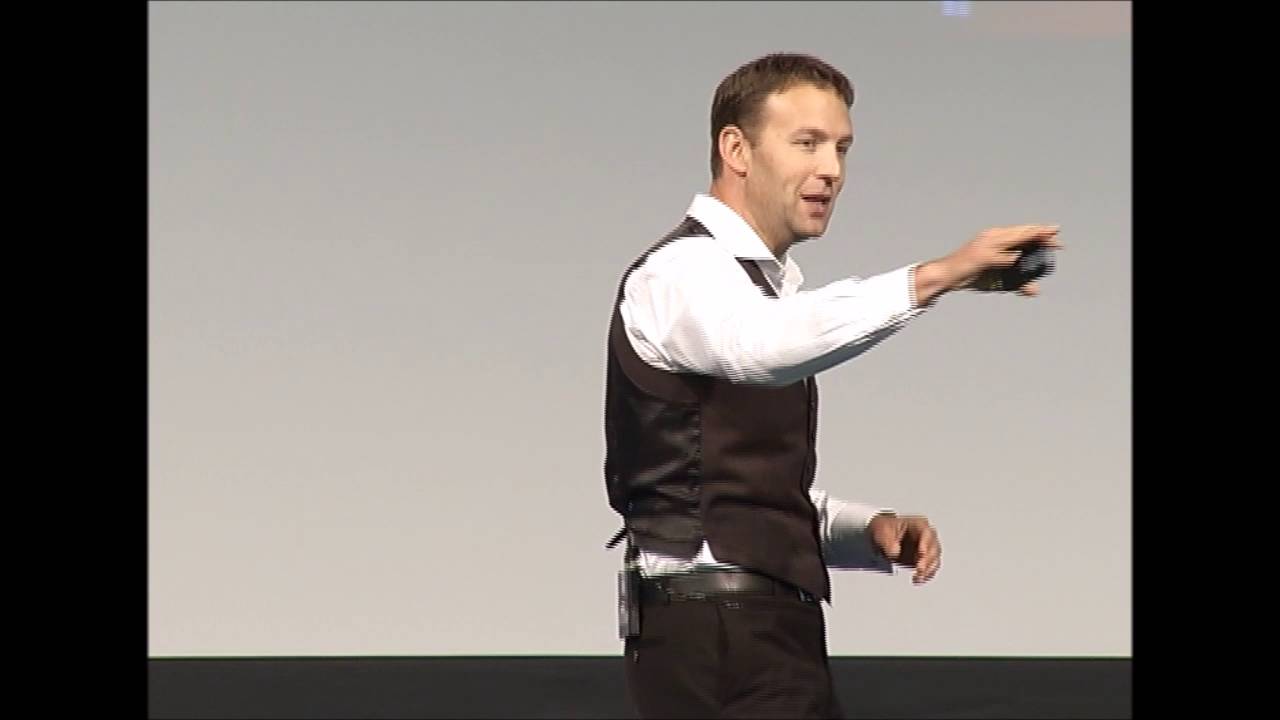
This content was created by Gavin Freeman. This content was uploaded by Gavin Freeman. This is a YouTube presentation titled "Integrated health and wellbeing" (created 2014-05-18). The excerpt is a live talk by a single presenter (labelled SPEAKER A, who references gavinfreeman.com.au) to an audience with brief audience interaction. The speaker describes a personal motivation for improving health after turning 40 and covers an integrated approach to wellbeing: motivation, posture and flexibility tests, conditioning before exercise, matching exercise intensity to stress levels, measuring daily steps, portion sizes and macronutrients (protein, carbs, fats), sleep hygiene and routines, and how to assemble a multi-month plan to avoid burnout and regain fitness. Metadata: contenttype=YOUTUBE, title="Integrated health and wellbeing", createdtime=2014-05-18T08:25:21+00:00.
Chapters
Cheers. I don't even know how to start from that, but I'll take the challenge. And I guess rather than telling you what you need to do, maybe I might, you know, get you to explain I'm sure why you might want to get off the couch and stop drinking, or at least move you from heavy beer through to lighter beer. Guys, thank you. I have met some of you. I'll give a quick intro to me and my background. I won't spend a lot of time on it, and then I'll get cracking into it because I know dinner's there, and it's only so long I can hold you between the self-wine and food. Although we will be talking about all of those things tonight as well. I started my life off as a sports psychologist. Australian Olympic team. Spent a number of years working with elite individuals and enabling them to perform at their highest level. Predominantly as a psychologist, but also from a more generic and holistic point of view to sort of say, you know, how do you actually prepare yourself to be able to perform effectively? So today we talked a lot about those things, but that's— but tonight is more about you. And it's about thinking about you as an individual and the health and the well— and your health and wellbeing. Because we know That if you're healthy, right, and if you are fit, then your ability to deliver on the things that you want to do is going to be easier. Without a doubt. But the challenge is, and I don't want to stand up here, you know, you're all adults. I don't want to stand up here and talk to you and tell you what you need to do. Because you've all heard a bunch of different stories around what's the right thing and what's the wrong thing and blah, blah, blah, blah, blah. What I'd rather like to do is actually spend a bit of time exploring kind of the why. And so, you know, for me, and I'm going to share a story with you to kind of get us started. There's a big why as to why I thought, you know, health and wellbeing was important. And I had a monumental year last year. I turned 40. Which for those of you who can remember turning 40 is an interesting time. For those of you who haven't turned 40 yet, it will be an interesting time. But more than that, something kind of happened around this time last year. A friend of mine sent me a photo. I was, um, I speak on Sunrise and Wake Up TV and that sort of early morning stuff. And I don't really look at it myself because, like everybody else, I don't like watching myself on TV, you know, in any form of filming. But they sent me this photo. That's it there. And it was a really confronting photo for me. And it hit me. And I looked at it and I went, I really don't like that photo. And it was kind of about, you know, why didn't I like that photo? And there's a whole number of reasons why. I kind of liked what I was talking about. I just didn't like sort of looking at that. And I was reflecting back to when I was a little younger and thinking, I really don't like that photo. And so while I was putting this presentation together, But also, I went in and thought about it, and I reflected back to the last time I was here. And this is what I was wearing last time I was here. Right? And it fitted me really, really well. But it sort of doesn't fit anymore. And I thought I would kind of share that with you. I'm only going to go so far. It didn't fit, and I didn't like what it felt like. In fact, you know these were my pants. I kind of thought, you know what? That feels so much better. And you know, and for me it was about what it represented for me. I've got a young family, and I thought, I want to be able to run around with my kids. I want to be able to do certain things. And I really didn't like that photo. And 2 weeks ago I was on the Daily Edition, which is a Channel 7 show, and that was the photo that came off it. And I thought, I actually don't mind that photo. And so for me, the why was a very personal why. It was a very in-depth personal reason as to why I wanted to go on a journey about changing the way I felt, changing in some way the way I looked. But it wasn't so much about going on a diet or It was about taking an integrated approach to looking at my health and well-being. And so from that I built this little program to say, well, how can we actually look at our health from an integrated perspective? Rather than saying to you, don't do this, don't do this, don't do that, and all the rest of it, actually think about it from a holistic perspective. And so what I'd like you all to do is I'd like you to start me on this journey. I know some of you have glasses of wine, so just for a moment, Can you put them down somewhere better? And get yourself a coach. So get yourself a partner. Alright. So everyone got their coach? Yeah. You're gonna have to hop in the chairs, ladies. Alright. Okay. All I want you to do is to do one test that I did, and I failed miserably at this test, but I'm hoping some of you guys can, um, you know, prove me wrong. Now, for the ladies who are wearing high heels, you will be cheating, so if you want to do it correctly, take the heels off. If you don't, that's fine, but we know you're cheating, okay? All I want you to do is touch your toes. There's a whole bunch of people up the back just looking at you going, ah. You might be aware of it. Right, so show of hands, without cheating and without bending your knees, not doing the sort Sort of the knee bend and then touch the toes. Or this one, as I've seen some people do. Right, who was able to touch their toes? That's, that's, that's pretty good. I'm thoroughly— yeah, keep your hands up. Yeah, I think it's probably one of the best tests because it checks your whole flexibility of almost your entire body to be able to go. Now, if you didn't even attempt it, well, I challenge you later on tonight to just do a skid Do a little test before you go to bed. Now, who heard when they touch their toes? Me. Who's able to get their fingers underneath their toes? Right, so there's the touching and then there's the getting underneath. It's a— when we age, one of the things that happens to us is we start to lose our flexibility, right? And we get injured very, very quickly. We get injured a lot when we're doing stuff. And being able to keep flexible is probably one of the most challenging things because it hurts to do. Nobody enjoys it. But it can be something that can really help with your overall fitness. And realistically, the most important thing that we have is our posture. Alright? So let's do a quick test. Let's mimic what it looks like for us to work. What do we do when we're at work? How are we at work? Let's go. Okay? Yep. Hands up. That'll be mine. Alright. So, just put your hands down for me. Now keep that posture, because that's what we're like at work, isn't it? Let's see what our postures feel like. Stay in this action, and all I want you to do is lift your arms up. Try and get them up as high as you possibly can. Yeah? How's that looking? Yeah? Are we sort of Michael Jackson-ing it? Yeah. Little bit sort of looking like that? Alright, put them down. That sensation, that's what's happening to us as we sit down all day. All day we're getting tighter and tighter and tighter. And then when we're trying to stretch out, we find ourselves doing this all the time. And we end up kind of looking a little bit like good old Michael. So the most important element is around, you know, you don't have to visit a surgeon. All you've got to do is play with your posture. And the easiest way is grab a piece of hair. Sorry for some of the guys. Imagine you had a piece of hair there. Just use your theory here. Just pull it up. Right? Now I challenge you to stay like this for the rest of the presentation. Right? Straighten it up. Back straight. Feels comfortable, doesn't it? Yes. For some. You just wait for about 3 minutes, you're all gonna sort of slowly curl your way back down. 'Cause we don't like it. We're pulling our body out of alignment. So it's not about me telling you what you should do. It's about you just checking in and kind of going, where am I? How is my body reacting to a variety of different things? So when I look at this health and wellbeing— he's been at the gym, so I probably don't want to do that. When we think about the overall health and wellbeing, we've really got to think about it as a house. And we can't just look at the individual elements to it. We've actually got to think about it as a whole. And we've got to say, well, there's the stuff at the top. And that's our attitude. It's our mental approach. It's the way we look at the world. And the things that go a long way to holding them up is our lifestyle, our nutrition, and our exercise, right? But underpinning all of this, because it's all well and good me giving you a gym program or me telling you how to think about something, but underpinning all of this is probably the most important element. It's about your own personal motivation. Because I can't make you do anything. Right? I can't force you to do anything. Right? The only person who can motivate you to do anything is? Yourself. Yourself. Right? And guess what? You're the person who motivates yourself to self-sabotage as well. You know, in addition to actually doing the task. So it all comes down to you. I just— it's a good drop. Alright. You know, that's one of the moments that I had, and I sort of thought about it from this perspective, and I said, you know, what's the— let me ask you, what's the worst thing that could happen to somebody close to you? They might die. Yeah? There you go, well done. You predicted my thoughts. So let's put death on our scale there at 100, right? Now, anyone got kids? Yeah? Anyone got nieces, nephews? Anyone was a child at a point in time? All of us? Okay. As either a child or if you do have kids or even nieces and nephews, have they ever, or did you ever break a plate or smash a glass window or something along those lines? Dropped a bowl? Yeah? Do you remember how you reacted or how mum and dad reacted at the time? Yeah? Somewhere about there? Right? But what happened a couple of minutes after that? They took it away. I kept yelling. I kept yelling, right? But, you know, what all too often happens is that the little things in our world, like the broken plate, get reacted to as if they're up the top there, right? And, you know, we live in this reactive mindset, and so we look at things and we react to them without really putting things into perspective. And the bigger goal when it comes to taking around our health and wellbeing is to be able to put a lot of things into perspective and to recognize that That's pretty much where the plate needs to be. But knowing the type of reactions that we do will go a long way in being able to put things into perspective. Yeah. And I was tested only yesterday, no, the day before. I was having lunch and my daughter, God bless her, decided she was going to put away all the glasses from the dishwasher. How can you complain when your kid says, I'm going to empty the dishwasher? But she picked up a glass and it slipped out of her hand, right? And it dropped and it smashed. And you know what? The proudest moment I had was in my reaction, in that, because I was about to kind of do the whole, you know? But I didn't and I was able to sort of go, are you okay? She was in tears because she got frightened. But I didn't react and I was, it's okay, it's just a glass. You know what? That's probably not how I would have reacted maybe 3 or 4 years ago. But I think it's important that we do put things into perspective because the way, you know, the amount of stress that's on our body has a huge impact on our performance. Would anyone disagree with that? No? If we're overstressed, what happens to our performance? Decreases. Decreases, right? But in a similar vein, if we don't have enough, I don't want to call it stress, but if we don't have enough Energy or activation, then what happens? It's down as well. It's down as well. So it looks kind of a little bit like that. For those of you who've done the doc, it's called the inverted U theory. Now, for those who really wanna test me on it, it's your Dodson Law, and you can Google it. But basically what it tells us is that we've all got a zone, and we've got a zone of optimal functioning. But every one of us in this room is gonna have a different zone. Right? So for me, it's gonna be different for you. And the challenge we all have to face is finding our own zone. Recognizing that if we go too far to this side, well, we're gonna end up being burnt out. And if we go too far to the other side, we're gonna end up being rusted out. Has anyone seen anyone burnt out? What does it look like? Not pretty. It's not pretty, is it? Right? It's— what's really fascinating about the way that the brain perceives pain is that I'm hopefully some people in the room will agree with me. The brain actually can't feel pain. So when we're stressed, it doesn't feel pain. Not in the same way that our our limbs feel pain when we punch them or pinch ourselves. The brain doesn't feel that same sort of pain. So it finds different ways to tell us when we're in a little bit of trouble. Right? And the important element is recognizing that. When it comes to burnout, burnout is your body shutting down. Now, 9 out 9.9 out of 10 times when you interview people and you talk to them, they would have seen all the signs and symptoms leading up to that and would have ignored them. And so what happens is the body goes, "I can just pretend. I can pretend. I can pretend. I can pretend." And then when it switches off, you've got nothing. You're not coming back, and that's why it's not. It's not over pretty. So we've really got to think about, from your own perspective, as to what's your zone? Where is that, you know, where is that midpoint for you? And how do you get there? How do you know when you're starting to head on the outside? What are your signs and symptoms? And as I said, because the brain doesn't feel pain, it tends to show us in a bunch of different ways. Right? For some of us, we'll look at some of the sort of more mental aspects. We'll make mistakes. states. We'll get confused, we'll forget things. Others get more emotional and that's their indicators. Other people become, you know, there's more physical responses to that stress reaction. And for some of us, I guess it's that more spiritual, the I'm feeling lost, I'm not quite sure what to, where I'm going and what I'm doing. But the challenge for you now is to think about, well, which one of those is the ones that resonate for you. What are your signs and symptoms that are telling you you're heading one way versus the other way? Because if you know what they are here— no? No? Still haven't got them yet? Off the couch? Alright, I'm working on it. But if you do know what it is that drives you and the way you react, you can start to preempt it. And rather than using hindsight, which is the That's the one thing we all are very good at, being able to reflect backwards and say, oh yeah, yeah, yeah, now I recognise it. It's being able to use foresight and say, let me start to look ahead and I can see I'm heading down a pathway and I can start to make some changes. But we have a few things that get in our way. I'm not going to spend a lot of time on these, I'm just going to highlight them to them. I think I'm possibly preaching to a bunch of people who already know some of this stuff, and some Sometimes we need to hear it again. Our brains do a wonderful bunch of wonderful things. For those of you can't read it, I'm reading it to you. Says things to you like you should do that, and then about a second later goes, "No, I'm not sure you can." Or it motivates you to do a workout once. You know, you've set a goal. I gotta go to the gym. So you go to the gym, and then you just never go back. It's how gyms make money. They kind of prey on that. Thinking you'll sign up and then you kind of never ever go back. You know, unfortunately it's our brain's mindset, that's what it does. You know, I know this is wrong, but it's just easier if I keep doing it. Again, you know. So we've got to overcome these barriers to change. At least you're recognizing what it is, so that's a good start. So by the next— this time next year, I think I'll have you off the couch. Right? And my last, my favorite one, because this convinces you to do something and then makes you feel bad about it. You know, that'll happen tonight at about 9:30 when you walk past the sweet truck. You're gonna go, I'm gonna have one of those and one of those and one of those and one of those, and then you're gonna eat them all and then you're gonna go, oh, I feel the sugar rush kicking in. But unfortunately, that's— those are some of the things we need to take care of. So we need to know which one of these barriers are the ones that work for us, right? And if we can understand that, then we It can goes a long way in starting to plan for it. So let's come back to our fortress. We've looked at the top one, that's kind of our attitude, our mental approach to doing things. But I wanna spend a bit of time just quickly going through these bottom 3. Again, I'm gonna try my best not to preach to you, I just want you to have a think about it. I'll give you some information and you can consider it. Alright? So, who's thought about selling an exercise program? I have. Anyone? One person, right? I think I did, apparently. Yeah, Ian thought about it once and then kind of— well, here's my insight to you, mate. Don't. Exercise is bad for you. Exercise hurts, right? While it has benefits later on, the mistake most of us make is we start to think, oh, I wanna get fit, or I wanna go to the gym. So we remember back to when we were like 4, 15, and we were sort of, you know, a hell of a lot stronger. So we go in and we think, oh, I can put, you know, 20 kilos onto that, or I can go out and push myself in the gym and hurt myself. And one of the things we don't realize is that if our bodies aren't conditioned, if we don't have that flexibility, if we don't have the conditioning within our muscles and in our joints, then doing an exercise program is actually quite dangerous. It can cause a lot more damage. And ultimately we get hurt, and then what happens? We stop. We stop. We stop. We don't go back. So one of the challenges is to think about is, how do I condition myself? How do I get myself to a point where I'm ready to now go and start doing exercises? When I embarked on my journey, I got a personal trainer. And so I rock up at the first session and I went, alright, I was there, I had my gym gloves on, right? I had a weight belt on and this guy looked at me and he just laughed. And he went, what do you think you're doing? I went, well, I've got my gloves and I've got my belt. Because I remember back in the good old days, for the guys out there, you feel a lot stronger when you wear this thick leather belt. Doesn't do anything, by the way. And he said, no, no, no, take that off. And I spent the next 3 months rolling around on a foam piece of rubber. And geez, it hurt. Right? Every part of my body just ached. Because all I did was roll on this damn foam. And he basically said to me, I'm not starting a gym program until this rolling doesn't hurt anymore. And I spent 3 months getting that conditioning going. And, you know, when you talk about motivation, the first time it hurts rolling on something, right? For those of you who wanna try it at home, grab a tennis ball. You don't have to go out and buy a foam roller. Just grab a tennis ball. Put 2 tennis balls together, wrap them up, and sit on it. And then just rock around a little. You know? You'd be surprised where you find those little joints that you go, oh, there's a good spot. Right? We need to condition. If we're gonna take on any form of exercise, we've gotta understand where it sits in the overall program, and it's usually not the starting point. Right? Think about how conditioned are you? Can you touch your toes? How flexible are you? Right? Can you get your arms all the way back up when you're standing upright? One more point. So, the first thing we need to think about when we talk about exercise is that we need to think about when we've had a tough day and it's been a crappy day, what's the first thought if you were gonna exercise, what would you wanna go and do? Go for a run? Hit the gym? Maybe do a boxercise class? No, not that far. Didn't put the gym that far. What's really interesting is the mistakes we make when we think about how our body's reacting because when our body goes through a stress response, right, and we become stressed at work. Think about it. Does it make sense to then go and do a form of exercise that is further stressing the body? No. Right. You know, emotionally we go, yeah, yeah, yeah, I'm gonna do that 'cause I'm gonna feel good. But if you think about what it's actually doing to us is that, you know, we need to understand and recognize That what type of exercise do we have, what type of stress levels do we have. And if I'm really, really stressed, then I don't wanna be going out there and doing really stressful exercise. I wanna come in and do more relaxing-based exercises. If I'm kind of got low energy, that's when I wanna go and do the higher forms of energy. Because I've gotta— you gotta understand that as your body exercises and as it gets stressed, it stimulates your adrenal glands. And it stimulates the cortisol that runs around in your body. And when you get adrenaline pumping for 8 hours at work, because you only work 8 hours, don't you? Oh, there was a minister in the paper the other day that said he's not accepting any more work after 4 o'clock. No, I'm not. Yeah. Alright, so you're stressing yourself for 8 hours, you've got to recognise that if you go continue and go and stress yourself a little bit more, then it's going to have some impact on you. One of the things for you to work out, and this is just a Here's a little thing for you to work out, for those of you thinking about doing any form of exercise, is have a quick think about what your athletic age is. Right? Sorry? So, you can all do this quickly. Think back to the last time you did rigorous continual exercise. Right? That's zero. How old are you now? Right? So don't think back to when you were 18 and were able to do a whole bunch of stuff, and now you're 39, or 40 as I was, and went, oh, I'm alright, I can do all this. Our athletic age starts at zero from the last time we did a form of physical activity. So you need to put it into perspective, right? You wouldn't tell a child who was starting for the first time to just go out and flog themselves. So, you know, think about your athletic age if you are gonna take on board something, and put it into practice, put it into proportion about this is where I'm at, and I've gotta take it as part of a bigger picture today rather than just a single thing. So, 1970, on average, people took 27,000 steps a day. Why? Well, we didn't, you know, we walked a lot of places, and we didn't have a whole bunch of other stuff. We We didn't have a whole bunch of other stuff. didn't have emails and all the rest of it. We actually had to walk to the post office. How many steps do you reckon we take today? 2,500. 2,500 steps is on average what most of us take today. For about $5, you can go buy yourself a pedometer, stick it on your waistband, and just check and see how much you— you think about it. 2,900. 2,900? Today. There you go. Today? Today. Okay, you were sitting around for most of the day doing a workshop? In fact, we got you jumping up a few times as well. So you probably snuck out a few more times than you would in a day, regular day at work. There you go. 2,900, so you're about average, right? My challenge to you is, can you get in 10,000 steps? Yeah? And how would you go about doing that? Go for a walk. Sorry? Go for a walk. Well, yeah, you'd be surprised what happens if you go for a bit of a walk. You have to get a second job as a waitress. Yeah. That's what my daughter's done. She's gone from 2,000 to 12,000. Yeah, gone from 2,000 to 12,000. That's fantastic, right? And it's just about starting. It's about getting moving. And that's really when we talk about exercise, for some of us who don't do anything, it really is just about actually getting the body moving. The more you move, the more you enjoy moving. And the more you want to continue to keep moving. Does that look familiar to anyone? Yeah, that's me. No? Maybe? Yeah? Look, at least he's got the headphones in, so he's talking on the phone, you know, but munching away. And it's hard, you know, it's really hard to actually think about the type of food that we eat. And for the most part, for those of you in the session today, we watched a fascinating TED Talk around, you know, that people will just eat what's put in front of them. We don't think twice about what it's actually doing to us. We just do it because of a matter of convenience or whatever it might be. But you have on board right now all the tools you need to ensure that you're getting a healthy diet. Believe me? I'll take your I'll word for it. prove it to you. Okay, here they go. Everyone, hands up. Right, pull a fist. Have a look at your fists. Put them together. Now, that is the size of your stomach. Alright? Wow. Now, what I want you to do is, I want you to visualize something for me. I want you to do this. I want you to visualize last night's dinner. Right? So last night's dinner is on this side of your hand. I just want you to open up, have a look at last night's dinner, and compare it to the size of your stomach. Right? So when we go out and we think, well, what size portion should I have? There's the size of your stomach. Yeah. So what we aim to do is to fill that effectively, but There's an interesting insight for you guys. The one mistake the body's made, right? It's pretty decent at most things. It's made one mistake, right? The nerve that runs from our stomach to our brain that sends the message that we're full is delayed by about 20 minutes, right? Yes. And that's why when you eat a little bit too much, about half an hour later, You know that sensation? You're sitting there going, oh, I'm full, I'm stuffed. Now it goes kind of back to, I think it kind of goes back to caveman days where they were going, look, you want to overeat because there's a good chance you might not get a meal for a little while. So it's one of the things that have been left behind. But it's understanding that. So it's often with kids, if you think back to when we were growing up, what was the message we were always given? Finish it. Finish what's on your plate. Rather than eat until you're full, right? So we grew up thinking, I have to finish what's on my plate. Now if you go and pile your plate up this high, and what do we do when we're away on conferences and stuff? It's kind of like, I'll have a little bit of this, a little bit of this, a little bit of this, and before we know it, it's, you know, it's a massive plate. And then the mind says, well, I need to finish that, because otherwise I'm wasting it. But it's recognizing that's the size of your stomach, right? So what we want to try to do Is think about, okay, well, how do we break down the foods? How do we think about the types of foods that we need to eat? Well, open up your hands. Right? Look at your palm, up to about your knuckles, and generally about the thickness of sort of the side of just up by your middle of your hand. Right? Mm-hmm. That's about the amount of protein that the body likes. Right? Now, recognizing that, you know, for For the most part, people are of different sizes, and you know, there's some of the guys in the room that'll have bigger hands than some of the ladies. That's— it's a nice way of kind of taking into account, but that's about the amount of protein that the body does. And do you know what protein does? Protein's the building blocks, right? Protein's the food product that helps your body replenish itself, helps build the muscle group, right? It doesn't actually give you massive amounts of energy. It does in a delayed fashion, but it's not the immediate energy. Instant It's the building blocks. energy. It's not like the lollies that you had while you were, you know, trying to keep away from today. But that's about the amount of protein that we should really think about. Now the type of protein doesn't really matter. It's up to you guys. But, you know, consider how much protein you're having. When it comes to the veggies, right, what we like to say to people is, you know, double it up. Pile it on. Get all the colors you like. The more the colors, the merrier. Right? Because what happens to vegetables is they all just tend to compress down when they go into your stomach, so you can fill up with additional veggies. But the more colors you put into play, the more nutrition you're gonna get from different things. Now, should we cook them or keep them raw? Raw. Who likes raw vegetables? Okay, a couple of hands have gone up. Right? The more we process food, the more we take out all the nutrition. The nutrition's So, think about it, you know. If you like and you can handle unprocessed food, then that's probably a handy thing to do. Alright, we're almost there. We talk about carbs, right? And there's a whole bunch of theories out there, and I'm not gonna sit here and tell you what it is that you do. But all I can say to you is, let me tell you what carbs do. They provide you with energy instantaneously, right? Now, if you don't use that energy, what happens to the carbs? Body goes, this is great energy, right? I know what to do with this. It's incredibly efficient at turning those carbs into fat so it can be stored, right? Because what it says is, well, if you're giving me this food, I need to look after it so I can use it later on. Because the body will use its fat stores quicker than it will use its Protein stores. Okay? So if you don't use it straight away, it's gonna go, you beauty, I'll hang on to it. The problem is, it's not great at turning it back from the stored fat into usable fat, which is why it takes a little time when we wanna lose the odd kilo or 2. It's not an instantaneous thing. And by the way, it never comes off the one spot you want it to come off. Right? So sorry, but I don't have a solution to that one. So if you go to exercise, Have carbs. If you're not going to exercise, well, maybe think about how you might do it. For me, I love my rice. I love my pasta. That was I love bread. So I sort of you know bit the line and kind of said I'm going to you know try and get the better of all the evils here, and I just cut them down. So I still have them. I just don't have as much as I used to. I usually don't have them for two out of the three meals in the day, and I'll leave one. Then I'll pick the one that I'm So if I'm gonna exercise the next morning, I'll have it at dinner. So the next morning I can get up and I've got all the energy that I need. So it's about just thinking about what your day looks like, about how you effectively are gonna use it. Right, fats. Fats is a bad word, right? It's got a bad rap. And the reason why it's got a bad rap is because all the sugar people did a great job of giving sugar such a good rap. So what do we do? We go out and buy food that's low in fat, don't we? We look at it and we go, low in fat, low in fat, low in fat, great, I'll take that. Have you ever read what's on those labels? Go and look at the sugar content. Because when you take fat out, you've got to put something back in, which tends to be sugar. Fats are good for us. Our bodies know how to deal with them, but there's good fats and bad fats. So, thumbs up? That's about the amount of good fats we want, whether it comes from nuts, you know, or different types of fats. Oils, that's about the type of— that's the amount of fat that we need to potentially have. So, I'll come back to that one. I'll just tell you, so what I challenge you tonight, right, is make it a conscious thought rather than a subconscious thought around the way you go and the types of food that you select. Make it a conscious choice. And you know what? If you choose to do something, then at least you'll be able to accept that decision. Alright? So have a think. When you go around dinner tonight, it'll be interesting to see how many people walk around and just do this. Once you've got your plate ready, sit down and have a look and kind of see how you go. Alright. Kind of last little bit there. The lifestyle piece. And really with lifestyle, when we think about the overall way we do things, the one thing that I like to focus on, at least to encourage you to think about, is the way we sleep. Who gets a good night's sleep? Who wakes up feeling unbelievably refreshed, bounces out of bed going, bring on the day? About 3, 4 people, right? Who would like more sleep? Me. Who feels like they wake up sometimes in the Yeah. Or we wake up in the morning not feeling really refreshed. Sleep is probably, of all the lifestyle factors, sleep is probably the most important one. It's the only time your body gets to recover. Because during the day it's sort of working and our sympathetic nervous system is kicking in. As we go to sleep, our parasympathetic nervous system kicks in Yeah. and it's like, Slows everything down, and our body's able to actually repair itself. So when I think back to my days when I was rolling on foam rollers, I used to get about 4 to 5 hours sleep. And I was high up on my caffeine and it worked really well. And I was fine. I didn't feel like I needed any more sleep because I just learned how to deal with about 4 to 5 hours sleep a night. You know, the trainer that I worked with in pulling this all together, Basically said, you're getting conditioned and you're sleeping more. And it took about 3 months to build that 5 hours up to about 7. Right. 'Cause you can't go from 5 to 7 overnight. It doesn't work. You get into bed and you just lie awake and look up at the stars. But it was 15 minutes and 15 minutes and 15 minutes and 15 minutes. And as soon as I got to about 7 hours sleep, I just noticed a complete difference. And what I thought was okay isn't okay. Now when I get about 5 hours, I feel captured. But it really makes a huge difference, right? Just think about it. If you're not getting enough sleep, there's a couple of little tips and tricks we can do. A few little things to consider. Who goes to sleep with their iPad? Anyone go to sleep with their— who goes to sleep with technology? Yes. iPad? Their TV on? No? Even books are an interesting debate because, you know, you're stimulating your brain while you're going to sleep and you're reading this really story that you're getting into and then you've got to try to shut it down. Who's got a sleep routine? So let me stop that. So one, get rid of technology. And I know that's hard, but— and the reason why, I'm not just telling you to do that, the reason why technology causes problems, for one, is it overstimulates the brain. But for two, the light, you know that glow that comes comes out of technology, the body does this really interesting thing. Every time it picks up any form of light, it produces a product, a hormone called melatonin. And so as soon as the light hits your skin, melatonin starts to produce itself and it basically starts to wake you up. So when those lights are on there, it's stopping your body from actually getting into a deep enough sleep. So if you can remove the technology, it's not a bad idea. Bad things. Create the Batcave. It's worth the investment of putting some blinds up and just making sure that it's really, really, really nice and dark to be able to do that. Who's got a routine? Who has a sleep routine? A glass of wine. You can do it here. Who's got kids? Hands up for people with kids. Right. How do you get them to sleep at night? Do they have a routine? Yeah. Yeah? What happens if you don't follow your kids' routine? What happens if you're a bad parent like me who has— whose kids have incredibly powerful routines and mum goes out for a night out with the girls and dad's left to put them to bed and dad doesn't Everything except read the story because that's the one that takes forever. So it's the off you go, hop into bed, and my son and not so much my daughter she reads herself now, but my son will hop into bed and about half an hour later what does he do? Shh shh shh shh. Yeah this. And he goes, "I need some water." Right? Which basically is Daddy, can you come and read me a story? Go upstairs, read him his story, and what happens? He's out like a light. He's out like a light, right? Some, for some reason we forget our routines. So, so later on as adults we just figure, I'll hop into bed and go to sleep because I know how to do it. Well, we can actually train ourselves to go to sleep. We can build routines where we can start to actually learn how to calm ourselves down and slow ourselves down by using various trigger points. So for those of you with kids, think about what your kids do and build one for yourself. For those of you who don't have kids, it's not that hard to do. Think about a routine around how you The last thing I'll leave you with is the sugar and caffeine at nighttime. You know, there's a lot of debate that talks about do you have it, should you have it, shouldn't you have it, and all the rest of it. Everyone's different. The only thing I'll say to you is when we look at what— how the body deals with those stimulants should be indicative to how well you respond. So test it out. Have a crack at not having sugar late at night. I don't have sugar. And see what happens. Alright? Because what happens when we have sugar is your body starts to produce insulin. And insulin gets your body to work really, really, really hard at turning everything that you've just eaten into fat so it can use that for energy. So what do you think is going to happen at night when you have a sugary cake? You're going to— it depends what energy you get up to later on at night, but you know. You're going to gain weight. So, while you're at conferences, you shouldn't have any sugar. Bring it home, it's okay. But again, test it out. For those of you who are not sure, see what it's like to go off caffeine at certain times and see if it impacts on your sleep. You might be surprised. So, when we think about it, and this is kind of pulling it all to a close, think about it as an overall plan. Think about your health and wellbeing as an integrated plan. Not just, I'm gonna go on a diet, or I'm gonna get some exercise, or I'm gonna do this, or I'm just gonna do these things independent of each other. Recognize that they're all interrelated, right? So if you're not getting enough sleep, well then there's no point trying to get some exercise because you're not giving your body time to recover. When we build these plans for people, what's really interesting about it, if you look at this, exercise starts there at about the 6-month mark. So when we work with individuals, predominantly senior executives, Who are grossly overweight. We tend to say it takes about 6 months just to get the body ready before you can start to bring in some of the more rigorous-based exercise. So this is a typical plan that we might put together for someone where we say to them, first bit off, first calf off the ranks is actually looking at your sleep. Spend the first month just getting your sleep ready. Once you've done that, then start looking at some other elements, but start putting it together as an overall Don't just try to cherry-pick and think, well, if I just have salad tonight, that's going to solve all my problems. Right? Unfortunately, that's not the case. But you can take back, you know, you can take back your health. And you can take ownership of it, and you don't have to use the excuses of, I don't have time. Because it's all about you choosing to do it for you, not because somebody else tells you to do it. I have a question. So guys, thank you very much. Enjoy dinner tonight. Thanks. For those of you interested and want copies of that or interested in getting it, if you head to gavinfreeman.com.au, there's a little login at the top, and all you've got to put into that login is corrections as your login and dodge as your password. I'll get an email sent out to people. That'll take you to a page where We'll have the presentation and we'll have other bits and pieces of information. We've put a— there's a stretching plan up there and there's some other tidbits that might be of interest to you. But thank you for listening and indulging, and enjoy dinner tonight. Thank you.