11 Reasons Why Your Business Systems FAIL
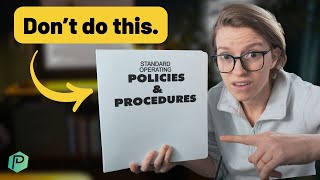
Layla breaks down eleven common reasons business systems fail, from poor planning to team resistance. She offers practical fixes for small business owners struggling with process implementation and systemization.
Because I own a Tesla. I know why your business systems are failing.
Seriously? You gotta be kidding me. Norman. Okay, we gotta watch more of this.
But just because you don't own a jet like I do, like, so what? I own a jet. You can still solve this problem by getting a virtual assistant to write your standard operating procedures. All you need to do is hire my virtual assistant agency.
And there it is. Saw that one coming.
But if you really want to be the alpha male I know you're capable of being, we gotta fire anyone who doesn't follow that system.
Dude, you are the exact problem with this whole process space. Oh, my God. Ugh. Just. I can't stop watching. It's like a train wreck.
Now, remember what I always tell you here on this channel. Not just that I went to Harvard, but I did go to Harvard and sort of online. But the thing I always want you to remember is, even when things get hard, firing people is always right. And in fact, when you fire your team for making a small mistake, the best thing to do with that $30,000 you're freed up from that underpaid employee is invested in my thirty thousand dollar mastermind experience. Because when you join.
Oh, my gosh. I mean, Norman, if this is what people see when they search, you know, how to fix their failing business systems, we are doomed. Like, I. I know you're so comfortable, but I think I have to go film a video on this. I know. I'm sorry. I'll be back. I'll be back. I'll be back. All right. I feel I have no choice. I have compiled, based on working with thousands of small teams, the most common reasons that business systems actually fail. And none of them have anything to do with hiring someone's virtual assistant agency or generally just spending more money on software. None of that baloney. But just because money's not involved, don't think these aren't easy to fix. Each of these 11 issues are something that, with a little intention, you can modify and finally get your business systems working for your team, rather than just being something that you think is working, but is actually just wasting a bunch of your time.
So.
So let's get started. All right, so the first reason your business systems are being undermined is what I like to call squatters rights. And yes, all of these are going to have goofy names, because why not? Squatters Rights is about forgetting who is actually involved in a process. Maybe you're trying to revamp the way you invoice. And I've seen it so many times where somebody Rebuilds the process for invoicing. But they forget about the people who, who are actually involved in invoicing. They forget about accounts receivable, the accountant, the CEO. All of these different people have rights to the thing that you are renovating. They're there first, they're there before you are. Often if you are not taking into account every single person that's involved in a given process and having their opinions heard, having them at least be made aware of what's changing and more importantly, why the change is happening, what you're going to end up with is people who just completely ignore everything you're doing. They'll say, hey, you want me to to redo invoicing? Tough. I'm already here. I'm just gonna stake my claim to the old way. And even if you tell me I have to do the new way, screw you not gonna do it. When, not if they hold out long enough, they will undermine your process change, they will undermine the business systems you're building and they will keep on doing status quo. But here's the thing, as annoying as this might sound, it's not the squatter's fault that they are there in this position when it comes to this metaphor. The reason they're there is because you didn't include them earlier on. But you can actually easily solve this if you start incorporating more stakeholders, all stakeholders into your business system creation, which is something actually talked about more up in this video here. The second reason your business systems are being undermined, even though you so painstakingly create them. The try guy problem. This one I actually see more often in business owners and managers than general team members. But it can happen at any layer of the hierarchy. What try guys are all about is trying things. And that doesn't sound so bad, does it? I'm just gonna try the new system. I'm gonna try the new process. It is very, very dangerous. When you have a try guy on your team trying out a new process, they are basically telling you, eh, I'm half in, half out. And as soon as things get hard, which every change in a business is gonna have hard moments, difficult moments, the try guys are going to be out the other way. How do we fix this? We need to shift everyone's mentality, especially leadership, away from try when it comes to a system, we are going to do the new system. And if we find out that it is severely broken and it really doesn't work, we will do another system. There is no trials here because when you do something, you need to go fully behind it, or like we've been talking about in this video, you're going to undermine its success. Whether we're talking about trying a new software or trying a new workflow or trying a new strategy, just take try out of your vocabulary, commit to doing it, and realize that the first two weeks to two months of anything new, especially software, is going to have some crappy moments. And when those happen, it's no big deal because you determined that you're going to do it. And at the end of those two months or three months and you're like, oh man, our strategy really isn't working. Fine, do something else. But stop half assing these plans and being surprised when they don't actually fool through. Quick note here. When it comes to this try guy mentality, we're often not exhibiting this behavior because we're trying to be a jerk. We're not trying to be, you know, half in, half out. We're not trying to be undermining your business systems. But whether it's us or our team demonstrating this behavior, the reason it happens usually is, is because someone is not convinced in the value of what you are actually building in the value of following the system. So they're like, well, I have to do it, but I don't see the point. I'll just try it. The best way I've seen to resolve this try guy issue is to actually have a plan for how you're going to systemize that someone can understand the logic of and actually have a video that goes over that plan. You can watch it up here in case that helps you get a running start. Because if we half ask something that's difficult, we're never really going to know is the reason it didn't work because it actually was bad bad? Or because we only had half of our effort in it because the rest of our effort was sitting back there thinking, meh, who cares? It's only temporary. All right, problem number three, I'm going to call AI problema. And it basically just means there's a problem. But the reason I put this in Spanish is because this problem reminds me of somebody who takes their very first language class. You know, like the six year old. Maybe they come back from Spanish class and everything they want to say is in broken Spanish. I mean, maybe this was just me. And even if speaking Spanish isn't at all helpful in the environment they're in, that little kid is so excited to share that they know a few words of Spanish, that everything they say is going to be in Spanish. Often Incorrectly, this problem is that same attitude, but applied to your business systems. Someone finally discovers what business systems are. They finally see the power of a procedure, of an automation, of a software, and they get so excited about it, they start just throwing business systems everywhere. And when that happens, similar to a little kid speaking Spanish and not really knowing what or why he's saying what he's saying. When we do this, we are implementing procedures and policies that don't have value, because rather than seeing a problem or a situation in Spanish where you can use your new skill to solve it, we're just throwing out solutions to problems that don't even exist. And when we're cluttering up our business with policies and procedures and systems that don't actually help anyone, we're undermining the value of all of the systems, including the important ones that you really want people to follow. We're training people to believe, hey, half the time the business systems we're building are pointless and should be ignored because they don't add any value. We do not need that working against us. So rather than just throwing business systems out there because you now know how to do that, make sure you're solving an actual problem or preventing an actual problem before you just throw more business systems at it. By the way, if you're watching this video and you're like, who the heck is this person? You're just kind of nodding along. I feel like I should say at least hello. Hi, my name is Layla. I'm the owner of ProcessDriven. Started business about six or so years ago, started a YouTube channel shortly after. And my obsession, my team's obsession is figuring out the right way to systemize small teams. All of the content we produce on this channel is to help you and me in that game, in that research. And the main thing that we do at our company is take all of that research that we often share here on YouTube and help people apply it through our business, where we actually help with the coaching and training and education required to implement these plans. So while I'd love to have you like and subscribe, because that really helps this video show up to more people. If you are someone who's hearing everything I'm saying in this video and you're like, great, I understand how to fix it, but I don't really know, you know, what to do next, how do I actually implement that? I'd like a little bit more support here. That's exactly what our paid services do, and you can find information about those in the description below. Our main program, ProcessDriven Foundations, teaches you how to set up your entire framework, your entire structure for building strong processes and systems. And if you'd like more guidance and templates and support through that, that program might be the one to check out. You can find it down below and it opens a few times a year. All right, anyway, hellos out of the way. Let's get back to the video. Problem number four is helicopter parenting. This is when you have business systems that are built, but one or two people, a small group, are the only ones that are actually fixing or revising or improving these systems. Whether it's updating an sop, fixing an automation, pointing out something dumb in a workflow, or when we have one or two helicopter parents doing all of this for our whole team, we're telling the rest of our team, hey, I know I said business systems is important, but not for you. You just, just be calm. Suzy's got it. That is not what we want. To have effective business systems, you need everybody to follow them. And if you want to have everybody follow them, the best way you do that is allow everybody to have ownership over making them make sense, fixing errors, revising them, when software changes, you need that co authorship. And if you have two helicopter parents doing all of this for your entire team, don't be surprised if only those two helicopter parents actually follow the business procedures because they're the only ones that have skin in the game. We need to skip that and stop being helicopter parents. Now. The fifth reason your systems might be undermined is what I'll call tragedy of the commons. And yes, my econ major is showing. This is when there is no one who is championing the cause of processes and systems. And you might be thinking, well, Layla, you just said we shouldn't have one or two people in charge of everything, so why is it a problem to have no one in charge of it? Well, hear me out. We don't want a helicopter parent who's the only one doing anything when it comes to our systems. But at the same time, we don't want no one who cares about this enough to remind other people to do things to make sure that we don't lose sight of SOPs and business systems and automations as a priority for our business. It's a good idea to have at least one person who's the encourager, the steward of your business systems who's going to encourage and not undermine other people's involvement in the business systems if you don't do that. And no one's in charge you're going to end up in the situation where I thought you were doing it, I thought you were doing it. And all of a sudden you're going to find that your business systems haven't been used, implemented, or referenced in months, even though you spent so long creating them. So do not put yourself in this position to give yourself a steward so you don't have the tragedy of the comments.
By the way, if you're too broke to invest in my program, all you have to do is remortgage your house. It's really not that hard.
Wait, who turned this back on? Does it turn itself? Did you turn this on? Don't do that. All right, back to this problem number six we have here is what I like to call the cultist at Thanksgiving. I know. Aren't these names just fun? This is all about having different levels of belief and not reconciling them. So, Layla, what does this have to do with a cultist at your Thanksgiving party? When it comes to your business, if you have one or two people who are drinking the Kool Aid and saying, oh my gosh, business systems are so good, maybe they're your steward and everybody else knows nothing of those business systems, believes nothing at it. Maybe they're not even try guys. They simply don't give a. You are going to have a problem moving as a unit towards the direction you're going. This is similar to having issues with squatters rights or the try guy mentality. If we don't take the time to show people why they should care about business systems, to make sure that everybody is involved not just in trying or squatting, but actually involved in the creation, we're going to have all of our plans fall apart. And this is most deadly and most concerning when there is a difference between leaders of the business and the general management of the business. I've seen this happen with teams that hire process consultants who just come in and everyone rejects them. It just goes terribly because you haven't made business systems part of the cultural conversation. It's not something you're talking about. It's not something you've made a priority for everybody. Even worse than try guys or squatters rights having problem six, this cultist issue. This will result in you not even being able to get business systems off the ground, let alone having them fall apart afterwards to fix this. Especially if you have leadership who is undermining your business Systems. We at ProcessDriven actually created a tool because I hated seeing this issue happen. You can find it for free in the description below. It's called the systemization Snapshot. It's a free assessment you can take that will assess how systemized your organization is or isn't and show you a brief roadmap of how you can improve that. This assessment can really help give a reality check to those on your team who don't believe in the value or the merit or the possibilities of business systems and is a great way to avoid this issue. Again, you can find that for free in the description below. But let's go on to number seven. Number seven Is the something's in your teeth issue related to Thanksgiving, Right? I have these thematically arranged something's in your teeth comes back to culture, which I hit on a little bit in the last one. If you have a team that is not going to tell you, hey Layla, you've got something in your teeth. You're not going to have business systems that work. They're going to fail because you have, for one reason or another, developed a culture of quiet, of yes, of I don't want to cause a conflict. And when that happens, you walk around with stuff in your teeth. In other words, you walk around with processes that don't actually work. So your process design failed just from the onset because you didn't know something, you missed something, whatever. But people are afraid to tell you. And that is what we need to fix to really build business systems. We need to build a continuous process of improving those systems, of getting feedback, of getting ideas, incorporating those and making things better. We cannot do that if our team is afraid to tell us, hey Layla, this thing that we built here, this sucks. We need to change this. This isn't good. We're doing it, we're not trying it, but man, it really doesn't work. We need our team to be able to say that feedback. We need to be able to hear that feedback without being offended or sensitive or anything. And we need to be able to take that feedback and turn it into something real that will improve our business systems. A great way to go about doing this is to build a process improvement system into your business, which sounds fancy, but really isn'. I already linked that video, but you can find it in the description below on how to systemize your business like and subscribe while you're down there. But that video will show you how to solve this issue very thoroughly. Problem 8 Single use appliances My favorite thing to look at at the grocery store. My least favorite thing to actually have in my business. This is what happens when you try to solve business systems and business problems. Piecemeal, you say, oh my billing isn't working. I want to implement a new billing software. Oh my HR isn't working. I'm going to blend a new HR software. You're doing everything piecemeal. A system here, a system there, and you never take the time to actually renovate the entire structure of your business and you end up having so many single use appliances, some single benefit software, some single benefit procedures and single benefit policies that you end up wasting a ton of time and money. Solving this problem comes down to having a better strategic approach to building your systems to really find opportunities to solve multiple problems at once. And that's best done by actually knowing what problems are to be solved. This is why we recommend to almost every single person we work with here at ProcessDriven to start your process building journey by setting up a no code work management tool. This is a flexible tool that allows you to solve a lot of problems in one spot. And I actually talk more about this inside a free training I'll put in the description below called the Blueprint where I go through how to systemize your business and the importance of having one go to place to organize all this stuff to get away from cluttering your virtual counters with single use appliances. I just realized I've only got space for three more mistakes in this video and I probably have a list of about 30 more. Oops. I hope I picked some good ones. If you'd like to see a part two to this video going over some more of the mistakes that I just shoot. I really wish I included, but I don't have enough time for write the word fail in the comments below because I really love waking up in the morning opening my phone and seeing a bunch of comments say fail, fail, fail. I think that'd be kind of funny. So if we get enough votes for this, we'll make a part two video. But for now let's just get to number nine. Problem nine is procrustification. Maybe I could have made that one a better name, but this is just what happens when you get into business systems and processes and you spend all of your time tinkering. I love tinkering. It's fun. But when you start using building processes and automations as a form of procrastination, we are in problem territory. Your productivity is going to sink and at the end of the day you're going to say oh God, why do these systems waste so much of my time when in reality you wasted so much of your time. Yeah, if you have a 30 second task and you spend five hours creating an automation to do that for you. And that 30 second task happens every day, once a day. How long is it going to take you for that to be worth your time? This is the kind of mental math I want you to think about. It's often not worth setting up an automation or SOP or business systems for every little thing just because you can. To solve this, my suggestion to you would be to focus your process building and your business systems on things that are going to pay you back within a week or two weeks. If you get through those, go to things that'll pay you back in a month. But if the thing you're building now is not going to save you mistakes or headache or time within the next two months, you may really want to hold back and put it on the back burner and not work on it. Right now there is so many things that you can do that will have immediate payoff. Why waste your time? Why procrastinate on things that will have such a small amount of return? Unless you're like super advanced in this case, that's all you have to play with. Sure, by all means. But for most of us, avoid the procrastination. Next up is problem 10, and I call this the while we're at it problem. And this one directly stems from my experience in home renovations. While we're at it is the code word for things are about to get wildly out of control and over budget. If you are working on your business systems and you find yourself frequently saying, well, while we're building this one policy in our handbook, while we're at it, let's also set up a new HR software. And you know, while we're at it, we should also set up an email marketing software. And while we're at it, let's change our billing and accounting software too. I get where you're coming from. Generally speaking, one to two changes at a time is plenty. Do that, Finish it, let people get used to it. While you're building the next thing, give people breaks in between. Because every time you're changing your business systems, you're not just changing a software or a process. Business systems is how people work. You are changing people's habits and behaviors and that freaks people out. So rather than having to do 16 changes at once, let's do one or two and just keep coming back and iterating. Not only will your projects get done faster and more efficiently than if you try to do a giant thing all at once, you'll also have a Much happier team around you because they'll be able to follow along and keep up with all the changes rather than getting completely overwhelmed. Are you with me on that? Okay, we got our last one and this last one is going to be painful to listen to. This is Insta homesteading. In other words, you remember during, like Covid, where people would see homesteading and gardening and they'd be like, oh my God, cute little chickens and I can have all of these raised garden beds and it all be so nice. Do you remember those days? Yeah. Well, similar to our friends over on Instagram when they discovered homesteading during COVID When it comes to our business systems, a lot of folks get into it thinking only about, oh my God, when I have all those chickens and raised garden beds, I can just take so many pictures for my Insta, it's going to look so freaking gorgeous. And they forget about the fact that the things that you are building the business systems are the chickens or whatever else it is. It requires maintenance, it requires work. Once you set up the raised garden beds, you actually need to like fill them with things. So once you have chickens, you actually need to like clean their coop. Everything you're building requires a teensy bit of maintenance, but if you don't keep up on it, you don't do just a little bit every week or every month, it's gonna pile up into a giant pile of chicken shit. Okay, my friend, I can't believe I'm saying this, but for the first time ever in the history of ever, we need to learn from people on Instagram. I can't believe I'm saying it either, but we need to go into our business systems with maintenance in mind, build routines, have that steward, have your team members all go into this expecting that every quarter they might need to update an sop. Every year you might need to check in on that handbook, that HR handbook you built, Plan for maintenance and build that into your expectations when you go into that next business system building project. This is actually something we help folks with inside our program, process driven foundations that I mentioned before. It's linked below and we're actually creating a brand new offer at the time of me recording this video for advanced operators to fast track and save them time as they do their continual maintenance together and to learn more about those resources and all of the resources I mentioned in this video. I know there was a lot. Just head down to the description while you're down there like, and subscribe. And I promise if you do that, I will try to avoid using that voice for the rest of the video.
Remember, smash that, like, button while you're smashing cans of Natty Light. Sunday night at the front frat house at Harvard.
Seriously? Again? Wait, what? You know, moments like this when my family says they don't understand what I do for a living, I try to explain it. I understand some of their confusion. I can see why. Why this could be a little confusing. But hopefully you learned something about process today and maybe me a little bit about yourself. Oh, my God. Ridiculous.
Kappa, be the male.










