3 Ways to Prevent Clients from Ghosting You
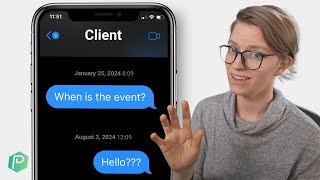
A creator shares three strategies to keep clients engaged: vision calls to align on goals, detailed project plans that set expectations, and clear revision policies. Using an event planning example, she shows how these processes prevent clients from going silent and help you stay in control of the work.
Your client is not responding to you. You need information in order to do your project. You want to be treated like the expert, but for whatever reason, they're not getting back to you with the information you actually need to get the project done. Now, there are many videos on YouTube that show you how to chase down your clients and hopefully get them to respond to you, maybe without annoying the hell out of them. Maybe. But in this video, what I want to focus on is how you can prevent this situation in the future. Because the best way to chase down a client who's ghosted you is to never have them ghost you at all. So what I'm going to be doing is drawing on the and working with thousands of small teams to organize their systems and processes to prevent mistakes and use this process strategy to look at a normal client workflow, one very much like the one that I bet is inside your business, and show you some subtle ways we can tweak the process, the way we work with customers to prevent this ghosting from ever happening to begin with. So let's go through an example scenario and then let's talk about how we can fix it. So to get started, let's review the actual situation, because this isn't just a hypothetical, this is actually a real situation. A viewer of this channel sent to me asking for some advice. My client reached out to get a head start on planning an event. My team and I started working on it to try to clarify some of the details we didn't really have. What is the budget, number of guests, the media press going to be involved? Do they prefer a gala or brunch time event, et cetera? I would ask clients about it, but usually this client would just say, well, we don't have the details yet, we'll let you know asap. We'd try to nudge every now and again, but they'd still give the same answer. Fast forward and we're already in October and we're in panic and rush mode. The client approved the plans, whatever was settled, and then they started reprimanding us and pointing out things that should have been obviously included that they do not need to spell out, et cetera, freebie bags. Ooh, that's not a fun moment. And it continues. My go to approach for resolution for succeeding events would be to start asking them more details, even, even the smallest things, just to be sure. But I'm afraid that will make me look like I don't know how to do my job because I'm bombarding them with too many questions. It Might even look bad if I keep asking for reconfirmation about it. Yikes. Not a fun situation to be in, not a fun process to be a part of. So what can we do to fix it? I've got three strategies for you, and if you stay till the end, I've got a little bonus fourth one. But let's start off with number one. All right, so the first adjustment I would make on my end if this was my process. Is this area around questions in onboarding for it's not really clear what this process looks like just from the descriptor, but assuming it looks roughly like this process map, I would actually tweak this to include a vision call. At the very beginning. I might not call it this. You could call it an onboarding call or discovery call. But my goal in that first call would try to understand the outcome in terms that the person I'm working with cares about. So if I'm working with a marketing director, I might be asking them about what are the marketing metrics they're looking at. If I'm working with a brand person, I might be asking them what are they hoping that someone feels like when they attend this event. I'm hoping to get the outcome in their language in this very first call. From this vision call focused on outcome, I would then work behind the scenes to generate a project plan. Now, if I could just do this off of the top of my head because I'm really good, I would try to do this during the actual vision call, I would present the plan. But assuming I needed some time to work out the details, I would do this offline. I would create a plan with all of the details I could possibly think of. And this is where that instinct of wanting to have hundreds of details outlined may actually be awesome. Because not only is this plan going to clarify your assumptions, it's also something you can use for project management. So this is not just a sales tool that's going to waste a lot of time. So I would take the vision, create a plan. I would share that plan with the customer. Ideally, I would send it to them via an email, but if my client doesn't check emails, I might just get on a call to review it with them. But that would be my next step. Either way, whether they got it in advance or not is a review call to lock in that plan. So we want to lock in those details, make sure every single detail matches how they picture it in their head. During this call, one of two things will happen. Either the client will notice details missing or everything will be perfect. If everything is perfect and we get that client, okay, then we can move on to the actual event delivery steps and go through all of that. If there is a change that does need to happen, we don't need to have the reprimand step or the anger. This is all built into our process, remember? So the whole attitude shifts. Even though the events might be the same, the client notices the changes, we make the changes, and we bring it back for an additional round of review. And we'll continue this for as many rounds of revisions as it takes to lock this in or until you hit the maximum that's set in your contract. You want to design for whatever you think is the normal common scenario, which might be one or two rounds of revisions for this process, and bake these revisions into your normal process so that they all happen before the event execution starts moving forward. Now, I know this is a lot of details, so let's actually mock up some of this and let's act out what these steps might feel like. So let's start off with that very first vision call. How might that go? If we start treating that as understanding of the end outcome, rather than asking a million questions, let's just play that out. Hey, Mark, I'm super excited about working with your team on this event for November. I want to get my team started as quickly as possible so we can make sure everything goes off without a hitch for you. I did want to ask, though, do you have kind of a vision in mind for what this event would look like? You know, time of day, attendees, do you want press there or not? Any of those details? No, that's okay. That's what I'm here for. Right. I would like, however, at this point, to understand a little bit more about the goals of the event. Because between you and I, there are hundreds of details that need to be worked out between now and this event. And if I know what your goals are for the event, I can reverse engineer and kind of figure out what exactly we need to accomplish the goals that you actually have. So before I go into any more details, can you tell me a little bit about the goal of this event? So you really want this to focus on guest experiences? You're thinking it sounds like you do want press there just based on. Okay. Yep, you do. Mm. Okay. What about the overall feeling of the event? We've definitely run events like this in the past. Sometimes the focus is really on showering the attendees with gifts and making them feel like VIPs, and other times it's more about the community and celebration and connection. Do you have a sense of where on that spectrum you would fall? Okay, so given that vision, I'm starting to see what you're looking for here. It sounds like a big event in a gala venue, and you want to have some entertainment, hors d'. Oeuvres. I'm starting to see what you're. You're putting here. Am I right on that? Yeah. Okay. Well, given that, since I'm understanding your vision now, I'm going to go work with my team and we're going to come up with an overall event plan based on our experience working with similar types of events. Of all the things that we would typically include in an event that fits your vision, I'm doing that just because teams like yours typically, you don't have time for 300 questions. I could ask you about every single detail, and I will bring that plan back to you. That way, rather than having to sit here and go through every single detail, you can just review the final plan, and you and I can make any customizations we need to to make sure it really matches your vision in that moment of time. Once we lock in that plan, though, that's when your work ends. We will take care of everything else from that point of bringing that plan to realization. But it is important that we get that plan to really reflect what you want to see, because I would hate to spend all this time creating an event that doesn't exactly match what you want to picture. Okay, great. Can we put a call on the schedule for about a month from now to review that plan and lock in any edits? That'll give you some time to review it, but that way we can really move quickly in locking that in and getting the execution on our team, because I would hate for anything to be waiting to the last minute and end up on your plate or stressing you out or anything. Great. All right, how about September 15th? Perfect. I'll send you the invite now and expect that project plan on your desk at least two weeks before that call. Okay, wonderful. Talk to you then. So that was the vision and outcome call. And you'll notice that at the end of the call, I really set the expectation of what is going to happen next. Next. This is me demonstrating expertise and my experience by saying, hey, here's what needs to happen, and I'm going to keep repeating that at every call. You'll see. And I also outlined why the things we were doing was built for the client's best interest. I wasn't just saying hey, here's a bunch of homework you have to do for no reason. Everything I tried my best to position as helping make their lives easier. You don't have time for details, so we'll sort it out. I want to understand your vision. That's why I'm asking these questions now. Everything was trying to be from a client's perspective, to be more and more valuable. But it's also giving me the things I need to start moving on to the next step from there. As we talked about on the call, the planning, the sharing and all that stuff will happen and then we are ready for the next call, which fortunately I scheduled during the first call. That is a great way to make sure that the ball doesn't get into the client's court and we're then chasing it. We always want to keep the control on the service provider, so we're the ones charged with next step. So. And moving things forward, anytime we need a client, we need to schedule and plan for that time in some kind of fixed capacity. In this case, a call. So that way it's really easy for the client to keep the ball moving forward. We don't want them to have to remember things, check for an email. I mean, if we can avoid those things, it's great to do. So in this case, I'm choosing a call as my format because that is what will work best for my imaginary client. Mark, if your client is not one for calls and they prefer a different format of communication or go for it. My suggestion would be, though, try to focus on whatever is going to give you a quick response. And for most people, having a scheduled meeting is the fastest way to get answers to your question and to make sure a deadline is hit. So that's what we did here. Now let's go through and talk about what this second call might be like. And again, let's just act it out. Hey, Mark, we are back again. Have you had a chance to look at that event plan yet? Briefly. Okay, well, not a problem. I don't want to assume that you've read the whole thing, so let's just spend some time in this quick call and we'll just review the details. This call will be very quick, but I just want to make sure that every detail that we've outlined matches your expectations because this is really our last chance to make any tweaks. So after this becomes like magic wand time, we'll just make it all happen for you. Okay? So let's just make sure we're making the right thing happen. So let's go through this page here, page one. Give that a quick skim. Is there anything on here that looks off to you? All right, so it sounds like we do need to modify the swag bag. Not a problem. I'm going to change that to a yes on our form. We do need a bag. Do you have a vision in mind for what that bag would include? Okay, perfect. I would probably also include, just based on experience, some of your sponsor information in there. Maybe a port. Oh, yep. Okay, so we'll add that in. Great. So the swag bag would include branded equipment of some kind that you're going to provide information from your sponsor, a free book from the keynote speaker, and then just some mementos from the event. Okay. And those momentos you already have in stock. Great. Okay, perfect. So we have those. Are we good to lock in this swag bag? Yeah. Okay, cool. And we will lock this in. Let's go on to page two. All right, so that's page two and page three. All right. No edits on any of these. Wonderful. Could I just have you sign at the bottom to confirm? Great. All right, so just to review, we've gone through the entire project plan. This is all exactly what you're picturing in your head. So when we go and realize this, this should be exactly what you're looking for. Correct. Is there anything that we didn't talk about that you really picture as part of the event? No. All right, so I'm going to give this plan to my team. We are going to make some magic happen. No further work is needed from you at this time. I will reach out if there is something that comes up and vice versa. If anything comes up on your end, please let me know right away. But we should be good to have this plan executed as our final process adjustment. I want to talk about something that affects almost everything we've already talked about. It affects this step, this step, this step, this step, this step, all of it. And that is our policy around revisions. Now, we talked about this policy in the second call, but if you were designing this process, the second call is not the only spot you want to be talking about this process for review and revision. In fact, pretty much everything I highlighted here in pinky purple is something where we want to mention how we handle revisions. We want to have our policy for changes or feedback in our contract, in our onboarding stuff, in our proposal, in all of our calls, in most of our emails. We want to have that reminder there. And the reason this matters is because we want to make it very clear why it's in the customer's best interest to remember these dates. In the original scenario, it seemed very much like the service provider was chasing the client for these dates that the service provider knew was important, but the client really didn't have top of mind. And this is understandable. Our clients are busy. They're paying us for our attention because they don't have attention to give. So if we do require their attention on something, in this case it might be the drop dead date for edits. We need to make that very much on their awareness, on their radar. We need to remind them, we need to set that expectation and we need to do so in, in terms of why it's valuable to them. So, for example, we might have a message at the bottom of every email reminding this client of those key dates. Or we might have a little reminder baked into the end of every call we have. In fact, let's just play that out. Here's what that might look like. Oh, and Mark, one quick thing before we go. I know this was our kickoff call, so we've kind of gone over a lot of information, but I do want to remind you of those two key dates. Yep, I know. The same dates I put in every contract, every proposal, every email. But those two important dates are the event date, which is all locked in, but then also our plan finalization date. Okay, I'm going to keep reminding you of this, but it's going to be September 15th. We'll have a call right before then, but that is our deadline for confirming all of the event details. Anything after that date, we cannot guarantee that it'll be able to come to life during this event itself just because of turnaround times. Yes, I know, I know. I've told you so many times. But I just want to make sure you have that on your calendar. September 15th. Great. Okay, thank you. And as you could tell hopefully from that skit, this is something that we're not really adding to the agenda. This is not some kind of big push. It's just muscle memory. It's something we just know how to handle. We know what our policy is and isn't. We know what happens if someone has a change that happens to last minute. What do we do? How do we charge people for that? We need to have this information top of mind so. So we know how to handle reprimands or changes or whatever in a calm way, in the moment, while enforcing the actual boundaries we have. If we don't know what our policy is and if our client doesn't know what that policy or boundary is. How are either of us expected to enforce it, remember it, or respect it? We can't, right? So let's make it part of common conversation before it becomes a problem. Now if you're watching this and thinking, oh my goodness, where else is in my business am I missing a policy that could make my life really easy? What else should I be having a set structure or a standard operating procedure for? Well, I actually have a resource for you. It's for free. In the description of this video, it's called 109 SOP topics and it's just 109 areas that pretty much every team will want to have some kind of policy or procedure set for. They range from routine things like how to send an invoice to less routine but very important things like how to maintain your website. These kinds of areas are something where every team will really benefit from having a policy in place for. But much like this situation around client change orders until the mistake happens, most of us just don't think about them. And so then we get caught in these crisis situations. But I don't want that situation for you. Go ahead and use the link in the description below. You can actually get the list of 109 areas that you can just check off and go through and make sure that you have all of the key areas protected in your business. Now I promised you a bonus tip. You stayed to the end. So here it is. Everything we just built for this process map. All of this is branding. It's internal branding. That's what I think process really is. We've taken the way we do things and made them perfectly suited to one particular type of person, which is the person that this question asker is working with. We're better serving that type of customer. If we are clever, we can lean in to this personalization to make this a higher value service by really designing everything around what our customer needs. Maybe our customer loves making changes at the last minute. We could choose to build our process around last minute changes and we could charge a premium for that service for that perfect person. The more we customize this process to the specific, specific avatar we are solving, the more valuable this service is, the more we are showing our expertise by working with that specific type of person. Just like design branding, we're supposed to repel some people and attract others, right? When it comes to our process, the same is true. The modifications we've made to this process is going to make this service more valuable to the person that we were looking to solve for. But if we have other customers who prefer to write out their thoughts, who hate being on calls, who would rather plan years in advance, this might not be the best process for them. So when we're thinking about process, make sure we're doing so in conjunction with the type of customer you actually want to work with. Because there's no point going through all of this to customize and tailor and better serve a type of customer. If you don't like working with that type of customer. You know you can have a customer who changes their mind all the time, but if you're fine working with that person in exchange for charging a premium price, then amazing. Let's optimize for that. Let's build a plan that allows you to make lots of changes last minute, you will be so valuable to that type of customer. But if you and your team hate last minute changes, maybe you don't want to even enable and serve this type of customer at all. Maybe it's just not going to work. You want to work with more organized clients. If that's your jam, go for it. Build a service around that customer. And I don't know if that's the case for this particular person in this particular situation of events, which is why I went through ways we could modify this to be more accommodating. But I want to highlight this important choice you have before you move on and start implementing this process is internal branding for specific personalities. Ideally, those process changes you make should line up perfectly with the type of customer you want to serve. So when it comes to a process, whether it comes to your client fulfillment process or those other policies and procedures I mentioned before, those 109 other areas you want to lock down. Which again link for that is in the description below. You want to design all of that around the actual outcomes and experiences and people you are looking to serve as the stakeholders of your business. That means all of your stakeholders, your customers, your employees and your owners, your CEO. As I like to say, make sure it's optimized for the outcomes you are actually looking to have. By the way, thank you so much to the person who submitted this topic for this video. If you'd like to see your situation featured in a future video, go ahead and leave a comment below with what challenge you are facing. Who knows, your situation may just inspire the next video video on how to use process to solve business challenges. But in the meantime, if you're not sure quite where to start, watch this video on the end screen next where I talk about how you can calm a disorganized business in six simple steps. And until we talk next time, enjoy the process.










