A Discussion About Project Management | HubSpot Admin HUG | August 15, 2023
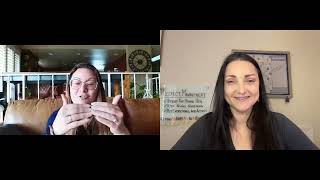
Deanna Giloff and Nicole Pereira of Remotish discuss project management for HubSpot admins and agencies. Key points: separate true project management from solo work-management, use iterative planning with padding for ambiguity, over-communicate status to reduce micromanagement, and use specialized tools like Teamwork for execution while keeping HubSpot for CRM and reporting.
Chapters
So, hi all. Welcome to the HubSpot admin hug. If you're just joining for the first time. Hi there, I'm Deanna giloff. I'm your HubSpot advocate and admin. While I am eagerly waiting Kyle Jephson's hug return and keeping the hug afloat until then, I have my own HubSpot partner agency, Stratsmark, where I share my HubSpot and strategy services with other organizations needing to fill a gap in their service offering or just businesses getting started with taking their sales and marketing effort to the the next level is a discussion about project management with Nicole, CEO at RemoteTish. So Nicole is going to help us make sure we are getting everything done to ensure all the hard work we're Putting into our HubSpot portal isn't going to waste.
Yay.
And we are going to do this a little bit differently. Nicole's not going to share a giant presentation, do a bunch of slides. We are going to have a nice conversation because many of you have already submitted a bunch of questions questions for her. So I'm very excited about that. Nicole, you want to share a little bit about yourself so that everybody knows who you are if they haven't had a chance to work with you yet. Obviously.
Awesome. Yeah. I'm Nicole Pereira. I am CEO at a little boutique agency called Remotish. We focus on sort of foundational HubSpot setup. I think we, we call it revops in some cases if there's revops Strategy or it's HubSpot administration in other cases doing it since it before it was cool, before everybody had a term for it or a word for it and before when everybody was an inbound marketing agency and I was the only one going. But I'm not a marketing agency. The lone non marketing agency in this entire world apparently at the time. I've been in the HubSpot ecosystem since about 2013. This is actually my second HubSpot agency. So I have a slight addiction to a certain business model with a certain company that's orange.
About that.
We all have a slight addiction with this. And you know, I myself, I'm not on the front lines dealing with clients. But then that time and energy that I don't spend with my clients, I get to come out now and spend for free with the community and share any knowledge and wisdom I might have picked up along the way so that it's all easier for sort of the, the next generation of admins and platform users to come and do great things.
Awesome. All right, so Guys, I turn on the Q and A. If you haven't checked that out, it's right next to the general tab up in the top, right. Go ahead and put any questions you have. If you didn't get a chance to shoot those over to us before the event, we'll definitely be checking those out and we'll get to as many of those as possible. But if somebody asks something that's similar to what you want to talk about, go ahead and make sure you upload that so that we can prioritize getting those talked about. So, Nicole, tell us why project management? Why do you care about project management so much? What is. Why is this such a passion for you?
Yeah, no, what's interesting is for, for I guess all the, the freelancers or business owners or anyone with sort of an entrepreneurial bent in any way whatsoever. Side hustlers. For me, a big problem in my first agency and moving forward was time management and making the margins and how to run a profitable business. And it was all so difficult to figure out, right? Clients would come in and they'd pay you money and then you'd have to give them something, whether it was the time that you spend or the value that it gives or something. But how. I didn't quite understand how, how I could make more money with less. When you're in the business of labor, you kind of have like this weird one to one relationship. It's like, you know, one client and you have to like add some unit of something, some labor. It's not like software or widgets where as you get larger exponentially, like, you know, the margins just shoot through the work, through the roof. And so from, from that angle, I was always very concerned, how do I make more margins? When I was a worker, I was always concerned about capacity. I was always concerned about people not being aware of what I could and could not do within a period of time. And if they didn't have some structure in place that allowed them to estimate that. I always felt the victim of other people's poor planning. I was expected to do more than I could even humanly do or legally do within a period of time. And so from those two angles, being able to be very good at, at managing work became important. I think right now there's this. The term project management gets thrown around a lot, especially because I think in our field and even everything adjacent to it, there's been a really big push for planning, right? We want to be a proactive individual in the ecosystem versus reactive. A lot of other types of Work feels very reactive, but we don't want to be that. We don't want to be firefighters putting things out all the time. We want to foresee what the systems may need. We want to build for it in the future. We want to build something strong that's going to last for a long time. You can't do that if you don't have some sort of project management skill, right, to, to go through that whole process. But the problem is I kind of actually think we're in a crisis of over planning sometimes because we treat everything like an over engineered project when sometimes things are smaller and there's a lot of smaller things. We just need to get the smaller things done incrementally and the time and the energy that it goes to build out a full blown project plan for these smaller things actually gets in the way of just getting smaller things done. So I'm kind of interesting person where I feel like to truly understand how to get work done, you need to kind of get the whole gamut of how work can be done when you're a knowledge worker. And I think there's actually lots of information out there about the, the tactical way to go do project management. Like there's PMP certifications, there's boot camps, there's templates, there's guides, but there's actually not a lot of theory out there to tell you how to think about how to do the work. And so the broader sort of scope of it all, I call work management. Like how do you manage the work? And is it a project? Is it a task? Is it, you know, is it, you know, something very large? Is it small? Is it just me? Because now we're being trained to do gigantic project plans when you are the only unit to plan for. You're the only resource to calibrate for at that point. What really matters is to know your due dates, to know your pieces, and then to map out your calendar every day on, you know, Google or Outlook and find your way to the end. Do you really need a massive tasking system? Do you really need more than maybe simple checklists and due dates? And so at that point that doesn't really fall into the category of project management. True project management is when you're set with a finite amount of resources, whether it's time and budget, you are coordinating usually other people to do what needs to happen. And so you're truly a project manager. You're not an implementer, you're not a person building the house, you're not a person pouring the Cement, you're the supervisor, that's really project managing. But when you're the only unit, then you're just managing your work. And we also forget that there's usually multiple projects in our world. Then we say project management, but we don't factor the fact that there's multiple projects. All of them now need to be factored together even when they're independent. Right. This project and this project need to get done at the same time. But like they don't share resources in the sense or goals or anything other than getting done. So how do you figure out how to parse your time out? How do you, how do you consider non project related things? Your vacation time, your sick time, right. The anomalies that occur, your low energy at the end of the day, things like that. Now you're really, you have to think about your work, your work management. And so I'm kind of like turning us on our heads here because I feel like project management has just become one thing, like making a project plan and then following a very static plan. But I feel like rarely does that actually happen. And if we're not a little bit more flexible, if we also can't plan for the micro, if we can't just get something from one day to the next day done, like having this wonderful skill to build these gigantic plans, though they might look great for the sea level, it looks horrible when you don't execute on them, right? Like if you can't actually meet what this over engineered situation is demanding, it actually hurts you. And I think a lot of people have sort of discredited the skill of sort of being agile and having a goal and having loose understanding what needs to happen and letting some of it just fall in place as you go along, I think a little bit of that skill comes from also just getting really good at estimating your time and having a very disciplined way of looking at your time with calendar blocking and just time management, which is a whole nother discussion. I'm sure we could have.
Nicole talk about time management.
That's the big blocker for. What gets in the way for all this I think is honestly time management, not lack of project management or the need for something really robust and big. And so kind of want to just get us thinking and talking about that because you know, I am all about when there's a big impactful piece of work we need to do to plan for it, right. So it rolls out well. But when you're the only unit that you have to consider when you're sort of like the only thing involved in getting the job done. I would almost under plan in a sense. Right. Like to make sure that you're really clear on things and I would give more iterative updates or I would do like micro plans about pieces of it. And I think you're going to find yourself actually just getting better at planning in general.
So when you, when you are faced with something, with an effort or a project that is a true actual project, there's other people involved. It's not just you, you know, nose to the grindstone and getting stuff done. What, how do you tackle something? What's your first bite of the elephant?
Yeah, I think for me a lot of people tend to like dive into the details. Like their project plan is also like a full blown like tactical plan. And a lot of times I don't know if that's really needed. Honestly for me, if I know making a landing page is going to be 10 hours and there's 20 million steps involved, do I really need to sit there and estimate all 20 million steps? I think that over time you start to realize that you understand what a group of work will take. But every little detail within there, like is it necessary? And I think I'm looking at a question actually here that says. Let me see if I can find the question. How do you handle the whole issue of project management under conditions of ambiguity and uncertainty coupled with a tendency to micromanage? I feel like most projects are much more ambiguous which makes it very difficult to do true project management. True project management. You know the end result, you know all the resources that are needed. You have a schedule and I mean it is not supposed to change. If it changes, then you soup in and you fix it. But it can't be flexible. It can't take someone's opinion in the middle of the project. Right. It can't take a change of priorities in the middle of the project. That's why you spend so much energy, time and money on the planning phase. Almost more in the planning phase than execution. And when you're getting into millions of dollars and construction projects and it makes sense, but when you're doing like a one month long project, it doesn't make sense. And I do see people doing full blown project plans for something like that, so to speak to John's question. I feel like honestly most projects in the knowledge worker field has a lot of ambiguity. So you have to plan for ambiguity. You either pad your numbers, that's like your bucket for the unknown. The that you always give yourself checkpoints at the Beginning and the end of the work that you're doing. Were you under or over your estimations of what was happening? I would rather you spent a whole lot of time just estimating groups of work than dealing out exactly how to do every single task, right? Like link to every knowledge article and everything all mapped out. I'd rather you just have estimates. Like, hey, I estimate this amount of work needs to be done. When you have more than yourself, maybe it makes sense. Or if you're doing a repetitive task and you're like, this always has to take this amount of work and somebody else is doing it, that's fine. But I'm talking right now mostly on the fact that a lot of HubSpot admin work that is done is done by one person, one solo owner. Most of these companies are not hiring multiple admins with multiple layers of responsibility. You might have a boss you report up to, but you are the person in charge of constructing the situation. The micromanagement, John, comes from sort of lack of transparency or communication. It, it becomes on you to communicate out the success of what's happening. Are you still on time? If you find that you just have sort of a bit of crushing micromanagement, you just have to plan into your project or your work updates, regular updates. If the individual doesn't know how to go to the source where the updates are being held, then you need to automate reports or you just need to kill them with updates. Absolutely. Just like inundate them with updates on where everything's at. And you'll find at some point they will back off because you've proven that if something changes or something's critical, you're always one to put forth that information. So hopefully that answered John's question. I don't know how to mark these.
As marked it for you.
Look at you. All the power in the world. Yeah, communicate until they tell you to stop. Communicating literally is what you do. You go nuts with the amount of communication. You'll be surprised. It's just like everyone needs to be communicated on an update of an important initiative in a different way. Unfortunately, that becomes your burden to take. Right? But the more you do it and the more you train them on where to go see it, and the more they feel more comfortable going there, the better off you are. But that's like all this stuff we're talking about really isn't project management, because in project management everyone's already trained, they already know where to see the, you know those resource meetings that happen every single week. But when you're the only person but you have other people interested in the work that you're doing. It does feel very micromanage y for sure. You know, you're the only one. So why do they care? I'm going to hit the deadline. Well, they all care and I think, you know, I've been, I've been victim of it too. I just want an update and so when I don't hear from somebody for a period of time and I don't see movement happening in the tools that we agreed we're going to use, I'll start to annoy people asking for updates. So over communicating, I think solves. Solves a lot of problems, honestly. Not just in work management for sure.
Let's see. Christine says, how do you handle the need for training on your process? I think the biggest failing we had was that we were relying on task descriptions and way too many subtasks to make up for bad training practices.
Yep. So you're speaking about two things there. Right. You're speaking about training which probably needs more education up front. Might actually may not exist in. In a PM system. Right. It might be in a learning management system. It might be a packaged up way of reading. All right. This is where the task occurs. This is where you know you can get more information. Here is how you escalate where you need help. Training is something. Steps in the process.
I think we lost Nicole.
Hello.
All right, there you are. We lost for a second.
Kicked out for a moment. Okay, thank you. Sorry about that. No, so I feel like that's a whole. I have a whole set of opinions on that too. Where people think that asynchronous training is so easy that we can just toss somebody new world and just expect them to get the nuance or truly understand. If you really want somebody to be able to do a repetitive process, well, you have to give them a little bit more formal training in my opinion. Right. Maybe something that's more synchronous. Make sure they understand all the pieces and the parts. They understand where to go to get more information. But I think that's kind of a little bit different than project management. That's sort of like process compliance in a sense. Right. How do we make sure somebody can follow a process? And Christine, to your point, it is actually quite difficult to just throw somebody new without context or nuance to follow a process blindly and do it well if they're missing all the pieces around why that process was established. What is important about the process? What are the caveats? If you don't Follow the process. What could occur? It's just training. You need to have good training.
That makes sense.
I do, yes, Christine. So I do put that there. But what I don't do is expect that someone new can go to that task for the first time and do it well. It needs to have supplemental training. Whether the training is a video or a reminder, hey, if you haven't gone through this process yet, go to this training first. But I think you need to really think about delivering training separate from like following a process and doing the work. Yeah, I do think you should handhold people to do a process. I think even the smartest people in the world who are not in your organization, they're going to be missing all sorts of context. Also, I think we tend to get people in a company, we tend to onboard them to the culture and we onboard them to the benefits. But then we think that they should just naturally know how to do all the work. And even though they might tactically know how to go into like HubSpot and do something, if you have a very particular way in your process to do it, proprietary way, or there's a reason when they don't know the reason, how can they become impassioned about why you do it that way? They don't have the tribal knowledge, they don't know why this decision was made. They don't know why that if they skip a step for this particular process, everything fall apart. But if they skip a step for this other process and use their best judgment, they're okay. They won't know that. And so if you're not there to train them on all that work, then you're sort of like you're setting them up for failure and misalignment with what work you're doing. And I think we just, we actually don't give enough training to people. And if you think about it, we have brand new people, entry level people or people at the lowest rungs of the company and we give them two weeks of training and expect them to start doing what they do. But an executive could come in and require six months to research and understand what's going on in the company, what's the product, what's the service, what do we do talking to people. It's like, why are we allowing the smartest person in the organization to have so much time to train up and get acclimated? But we have the newest person with the least amount of skills and experience to come in and, and we're basically throwing them to the wolves to figure stuff out. It's actually quite like cruel in my opinion. That's not to say that these individuals can't get started and start working right. But when somebody's not there as their trainer to guide them to be a safe place to ask questions where honestly we set those new workers up for failure a lot.
True, true. So let's see. Feel like if you don't have good PMing, communication in general brings more success. So yeah, like the system itself for sure. All right, let's see, we started here. Are there specific tools in HubSpot that can help with project management? That's a tough one.
Yeah, let's, let's talk about that for a bit. I think for a long time OG HubSpot users have wanted HubSpot to be all things for everyone, the whole thing, right? Like tile my roof, do my taxes, like all the things, you know, wash my car. The problem is, is it's really built to like make money up to a point, right? It's built for your marketing, your sales, it's built for your potentially servicing communications. It's now being built for finance related items. But what it's really not built for is delivering the work. Right? Like, like the way we deliver the work is all so unique. The way we deliver. If you're in professional services, if you're not professional services, the things that you make, the physical things or whatnot, like are never done in HubSpot. And so I think when we, when we're sitting here going, yeah, but we should be able to do everything, time tracking, resource management, pm, that is really just a totally different thing and that happens in a totally different place. That's not to say that there isn't integrations to allow you to transition from one side to the next, but I would even argue there's people who get third party deal desks and tools related to the whole process of closing a deal and collaborating in that handoff. It exists because HubSpot just goes to a point and then at that point it falls off and either you bring on third party tools, but I think where we actually do the work will always be outside of HubSpot because I don't think HubSpot is intended to be our work delivery engine. That being said, there's plenty of integrations right now to almost all the big tools that allow you to sort of seamlessly go back and forth.
Right?
Things happen inside of HubSpot. A deal is closed, a project is opened over here. There's even ones we're starting to pull data over so that you could, you could connect resourcing reporting to your financials. Right. So like for us in our situation, we use teamwork and we're working on pulling over the hours used at the end of each month's retainer into for agency services, for anybody who's in the agency side or if you're in professional services, there's some sort of delivery of time in a calendar unit, whatever, a month, pulling that over and going, okay, well if we spent 35 hours this month and they paid us this month, I can do a calculation and it'll show me, right. How much per hour was I receiving on this project. And then I could roll it up into other calculations and I can slice it, dice it, I can go, oh well, all the, all the deals with the higher hourly average are coming from this source. Right. You could get really deep into that sort of analysis. So HubSpot does give you, I think, that analysis, but I don't think that that's necessarily the right place where the actual PMING should work. That being said, even the project area in HubSpot is at this moment, and I don't know if it'll change, is so light, it's not really connected to anything. Right. It's more of this like isolated outside area, more for onboarding. And even since it was created, it's been matured over the years to, you know, have templates and things like that, but they're really to do lists and to do lists not so much connected to anything meaningful. And there are more robust to do engines out there that will give you more PM related tools.
Going back to what you were saying about being your work management, if you're managing yourself and you're managing your own, like little micro tasks. Absolutely. Like you can, you can get away with that, you can get away with using HubSpot. HubSpot for project management. Right. But I agree, like you need, you need something that's going to give you those timelines like you need to see dates and goals and who's working on what and where and when am I. So yeah, having those specialized apps like Kristen mentioned, then like you said, they, they can tie back in and give you the data from it, but not necessarily relying on it as your one, be all, do all. And this is kind of, I mean, I bleed orange. Like I love HubSpot, I live in it all day, but it's not my only source, it's not my only tool that I use to do my job. Right. So keeping that in mind, you know, and things like approvals and stuff like that, where those are tasks and those are project efforts. You can pull those back into your project management and still make use of HubSpot to get your things done.
I think I know that there's a question in here, it's rather vague and I actually want to answer said. On a scale of 1 to 10, how often do your projects go 100% according to plan? You know, I would say zero times because you should plan for it not going according to plan. I think if you, I think if you plan a little more iteratively, at least in professional services, it'll, it allows you to predict when it won't go to plan. I would say 99.99% of the time it's usually other people that are the reason why your work doesn't go to plan and not you. And that's why I have a little bit of a PM about face these days. Because when we over engineer and build a plan for how we know we can deliver on and then anyone from the outside comes in, impedes our ability to deliver on it, we get frustrated and they get frustrated, everybody gets frustrated and nobody's getting anything done. We just need to get better at planning. Like less is not the word, but planning for a less static relationship. Like for me, I like to plan often in relatives. Once this gets done, then this gets done. If this doesn't get done, we'll just wait around and then the next item will get done next in line. And I'm not promising a date because I have some unknowns like I need these things to be done now. Once we get past this hump, then now I can promise dates. Five days after this, 12 days after this. So when you plan in relatives, you build a little bit more of elasticity into your planning so that when something comes in and messes things up, you can recover. Like, hey, I told you once I got this, I'm going to need five days. So when we, you know, inevitably we have somebody from the outside, be it a client or a boss or a coworker or whatever, and we made this date promise and then they come in and change the scope, but they don't quite realize that change like changed the timeline or the budget and it's on us to be like, hey, this changed the timeline in the budget. But if that's already baked in, if you go, hey, this is relative to when this decision is made and this is the budgeting relative to the decisions you make you've actually planned. And I feel like that's a Better plan than something super static. And it's hard though, because everybody wants guarantees. And unless you're willing to be like a dictator of a project manager, like say no to everything, which most of us don't have the power or the fortitude to do, then get really good at speaking to the ambiguity and the elasticity that's needed and to say, hey, this project guaranteed will not land exactly as we expect. Here's the 15 ways we probably will get in our own way of getting this work done. But I think this goes back to the communication part. If we just over communicate over communicate the expectations, over communicate the failures we might have over communicate how we deal with the failure. Hey, here's our process of sorting through when we found a hiccup. I think you'll find that most people get really sticky on guarantees or deadlines because they fear that you're not going to take their work that they're asking you to do very seriously, or that you're going to be careless with it, or that you won't hit the deadline with the portion of the work that's critical to get done by that period of time. But if you've planned for all these things, if you've actually, if you plan for everything around the project more than the actual project itself, you might actually see yourself getting more done. I know it sounds strange, but that's what my career has shown me.
No, for sure. I mean, I love the idea of making things dependent on an action happening because you can only control what you can control. You can't, you can't control when someone's going to reply to your email. You can't control when they're going to give you a call back. You can't control when they're going to have a brilliant idea and be able to finish the copy that you need to stick on the landing page, whatever it is. Definitely planning for that. Unknown and uncontrollable. Absolutely. Let's see. So how, I mean, you kind of talked to this, but how do you fit agility into project management on more of a tactile. Like what, what are you doing to make it be more agile when someone says, okay, I need this in six weeks. How do you, how do you make it more agile when you know, I have to do all of these things? It'll fit in six weeks, but I'm, you know, there's some flexibility in there.
Yeah. If, if you're doing something that you know could fit in six weeks with the available resource, maybe the resource is just you. If you're able to combat new work outside of this agreement. So, hey, I'm on pause for anything else, then it's just communication. So the whole thing about, like, this is what we plan to do in this period of time, maybe we don't have it all mapped out, but my estimations and experience tell me that we could do the majority of it. These are the reasons why it won't work. And we need to get into an agreement that we're not going to do these things. And if we do, then we agree there's a consequence, right? So we agree. If we do this, or if anything, you know, if I call it risks, right? If we have to log a risk on one of our categories of risks, we're going to sit, we're going to talk about the ramification of the risk. Sometimes it's worth it. Sometimes three weeks into the situation, whatever you're working on, there's a change in priority, right. Or a crisis that occurs, you know, and, and it's not something we could have planned for. And the change in budget or timeline might be acceptable due to the new information that has landed. Right? But I think a lot of us, especially, I think, you know, the younger generation that's coming in, they. They've not been equipped to sort of deal with that confrontation. They've not been given enough opportunity, enough grace. They've not been given a safe place to be, like, hey, this changes the deal. I think the remote world has made it difficult for people to solve a problem asynchronously. And so I think there's synchronous moments in remote working and asynchronous moments. I think as you're younger and trying to assert yourself and you're trying to learn, you need to be more synchronous. I think managers and bosses need to be able to train and mentor and guide new generations to come and speak, speak up and find the words that they need to say. This changes the agreement. Right? And it's just, unfortunately, we just have a lot of people who are put in a position of project management with zero authority. They're just, they're basically just task coordinators there to try to guarantee that whatever was agreed upon, you know, gets done. And it's. It's highly unfortunate. And to kind of. Christine's comment, that's a training thing like, how do you have the right infrastructure in place to allow someone to do the work? There's actually a Q and A in here. Do you need to be qualified or hold a PM certification in order to be a project manager. And I think there is PM certifications out there. I think a lot of them are built for the project management. I spoke of the really static, I have a block of resources, I parse out the resources I plan and nothing really changes way of project management. A lot of the people I know that have gone formally through those routes though, that's really great to learn. Project managing, professional services or knowledge work is just unique, super, super unique. It's not software development, it's not like it is just a really unique way of humans doing work with other humans. And it's much more around the things I told you about the communication, right, or managing your time. It has so much more to do with those things than it does project management in the traditional sense. And so I don't think you need to have a certification in a very official way. But I do think the reason why a lot of times when our work is spoken of, it's like they almost always gravitate towards the project management. And so if you go to like the Rev Ops bootcamp, I hear all the time, my ex employee, she actually runs it. Jen. And so like majority of that boot camp is planning, right? It's planning, it's communicating, it's setting expectations, it's not actually sitting there going, okay, so let's talk to how you're going to talk to a CEO around the, you know, the velocity that we're trying to change in, you know, how you collect income. Like you're not speaking to RevOps strategy per se, you're speaking to the planning of RevOps because the planning part everyone's missing, they're all coming into professional services and they're missing sort of that planning element. So everywhere you go you just like you could throw a stone and you land on a course in our field that is around project management. And so I don't think you need that. But to go to Christine's comment, every place does it with their own flavor. So you need to have good training because you could have a very well qualified individual land on your doorstep with all the PM certifications that the world could give them. World renowned, right? And they could still fail in your organization because they're not following your process doesn't mean that they're fully capable. Like if you just say hey, here is a goal and here's what we need to do and you left them to their own devices, they'll figure it out if they have the skills and capability, but they will fail because they won't meet your standards. Of how the work is actually done. Unless you're in a results only organization where they don't care about the journey into delivering the work, then then you need to take the time to make sure people understand, like your method of work delivery.
Absolutely. The second part of Emily's question, since we're on that. So what do you do with projects that are stalling, where you have to beg clients or other people to give you information to complete tasks, you know, the project date, the project due dates pass, it's over budget. How do you rectify a project that's gone awry?
Yeah, I think this is where you have to sort of have that agreement in place. You know, this is where you have to flex that ability to say this is our plan and here are sort of tenets of agreement to deliver on this plan. And if we go out of boundaries, these are the consequences. Right. In theory, if done right, nothing should go over budget because the moment anyone asks for something beyond the scope, you are charging them for it. Right. Or you're saying, hey, no problem, would love to do that. We're going to toss that on the wish list. Since it's an idea but not a priority. We're going to revisit post launch looks like an easy thing. We could launch this within a week after launching, but we'll just have to agree on what that costs. I think it's like that confrontation thing, like the. To talk about a change and its financial or time ramification is a scary thing. And it usually takes a more senior person or a more seasoned individual to sit and have that sort of. Honestly, if you think about it, that's more of an account management skill, which is another consequence of our field. People feel that you should be a really adept project manager and account manager, which in many places actually are two different roles. Right. One is a person who's not dealing with a lot of people per se, but just the people working on the project. And the other one is dealing with communications with outside end users or stakeholders and navigating like the ramifications of the choices that they're making. I found it's actually quite hard to really be good at both. One, you have to be like really good planner. You really focus on the work, you might be very tactical. And the other, you tend to be very social and gregarious and you want to sort through problems and problem solve and you have a lot of critical thinking skills. Sometimes it doesn't really work well living in the same body because they're really two different. It's almost like the argument of like, you know, you got your creative and then your analytical people and they're usually not the same type of person. Not that it's impossible, it's just a harder thing to develop, I think. I think it's the same thing with the account management and the project management. It's a little bit of an unreasonable ask to make you like the perfect communicator and the perfect planner all in one. But when you're the sole individual, you are forced. And that's why actually, if you think about it, I'm sort of guiding you to be a better account manager. Like be a better account manager and I'd be okay giving up a little bit on the project management side. If you're the only unit that's affected. Once we're dealing with more people and you're truly project managing other individuals, I think it's good to go. But question in the mean chat, how do you handle being a.m. and p.m. while handling your mail role? Oh, that's. That's tough to have to be everything to everyone. It sounds like. It sounds like a pretty big ask. Some people thrive in it. Some people love that full control. Like they control the full life cycle and they can control the output. But I think if you have a third role and you're also AM and P ing it can feel quite difficult. I think you just have to get really, really good with your resource and time management, Alex, and speaking up for yourself to make sure that the agreements you make with those around you are reasonable.
I'll tell this to people all the time. No, it's okay to say no.
Well, and it's a delicate thing too because it's like say no with context. I'm all about context everywhere we go. Like, give people the grace of context. Tell them why their request is not plausible. Oftentimes people don't see beyond what they're asking you. They don't understand the other stakeholders or the other things that are affected. They don't understand that you have a vacation in two weeks. Right, like, and that their failure to plan for your vacation is not your problem. So that, that becomes sort of like a communication skill in a sense and really being able to articulate why things can and can't happen or how they should and shouldn't happen. Which I think in our field, providing a process for intaking questions or in taking changes or work requests is actually quite important because I think in some organizations people feel that they can just like slack you request and that is the official method in which the request has been delivered and agreed upon. And I think it becomes up to you to give. You know, if it's happening. Often if you find yourself the victim of other people's requests versus you being able to be proactive and sort of sorting your work yourself, then you it's on you to give people at least a channel to communicate. This is the channel you take in which to request something. This is then will I follow up? You have an SLA around it and that's a lot of just stuff that you can set up easily yourself. And usually few people are going to say no, I'm not going to fill out this form to put in a request. If they knew that they're going to get a timeline back in a slot in the production plan that you have for the next six months, then I'm pretty sure that they will adopt your method of requesting for work for sure.
So Hector has a question. Q2 if you want to follow along top updates that HubSpot and sales team must know on a regular basis to support the flywheel model in terms of getting information from the PMs and delivery items, it feels like one is asking them to do extra work since the deal is done. And like sales is not staying in its lane. But you and I know how connected service and sales are as well as marketing. So I feel. Yeah, I feel like you kind of started touching on that and the SLAs.
Yeah, I was going to say that that sounds like a combination of SLA and a really clear sales to service handoff for us. What's interesting is like there's all these behaviors. So after a payment is collected from a client there's all these steps, micro steps that occur before a project is set up in our PM system. And like that bridge is where everything would falter. That's where all the friction was. Somebody was not going in the right order or the client was sort of feeling the kind of way about the way we deliver stuff. And so we set up a ticket pipeline inside of HubSpot that bridged the gap. It's just four little stages but it makes sure that this like this handoff to like well when sales no longer involved, right. Like when does that football get passed and then the transition happens and it moves directly to service. And I think for a lot of people they, they think it just a deal gets signed and a task gets created and everybody can do what they need and everybody's happy. And sometimes it works because you have a very intuitive salesperson who proactively went off and got aligned with their service counterpart and. And they made their own microprocess. But that's not a repeatable process. Right. When it's in somebody's head or it's only unique to two people. And so if you map out what that looks like, the combination of the SLAs and the actual process of the handoff, I think you're going to find that lanes won't be a problem anymore because everybody will be told what their lane is and who's responsible for what. As they like, get closer to. From one side to the other side.
Yes. Love that. See, how do you create a new deal in a different pipeline after it's closed? That's a very tactical answer. Hector will touch offline on that guy. As I submitted some questions from the PMs a few weeks ago. Yes. So I actually, I brought those up and Those are very HubSpot specific. How is the system working? I did share those with Nicole just in case she wanted to touch on any of that and you know, her, her knowledge and her expertise. But I will tell you that tactically, in terms of HubSpot, the system, Kyle and I have it on our roadmap to get somebody in here to talk to us about the application itself. So stay tuned on that. I don't want you to think we're not answering it, but it's not really what Nicole is here to talk to us about and share with us about.
I was happy to talk about HubSpot, but I think right now I'm excited to theorize around maybe some ways we can change how we think about planning our work in HubSpot. Right. And, and building that skill that allows us to deliver our work well in HubSpot. And it's not just HubSpot work. Right. It's a skill for life. Honestly, I just think our field has not been properly supported because they're like, well, you're sort of tactical. You're. You're sort of not tactical and you're sort of a task taker. You're sort of not. Because we do a big project and, you know, an implementation or a migration, you know, we're a lost sector out there of like, who are we? You know, who are we? But I think right now if we can think about our work in creative ways in terms of, you know, does this require a really big project plan or do I just need to plan out my week with focus time so I can get to the end of the week and achieve this little micro piece of Work overengineering is sort of my word of the, of the year. I think we've learned that we spent years over engineering a lot of things and then now it's untethering where we want to get rid of some of the over engineered friction. Sometimes it's okay to let somebody just use their best judgment if they're skilled, to figure out how to do certain things or give yourself the grace to say, you know, I understand the steps I need to take. I don't have to have every little tiny thing documented. Yeah.
And you, you posted something on LinkedIn a while back and it was about your calendar and how you, it was a way to manage your time and it was for you and you know, very personal. But you had creative names on your, your meetings and maybe you could share a little bit about that. I feel like as admins we kind of work in our own little bubble sometimes, but this is a way to be in our own bubble but still be engaged.
Yeah, no, I think, I think that if people spent more time planning their week, I believe it actually follows. I wasn't aware, but I think that if anybody practices EOs, the entrepreneur operating System, I think they have something I think called like 30:10, where it's like you spend 30 minutes at the beginning of a week planning out your week and then 10 minutes, I think at the end of each day recalibrating what's going to happen in the week based on what you did in that day. I'm all about time blocking. If you are in a heavy production environment, if you value your time, if you want to know how long it takes for you to do things, you should block time on your calendar for work. When you don't block time on your calendar for work and you find yourself lost in meetings and Slack messages on LinkedIn, you know, doing everything but the thing that needs to get done. That's where then you have a crunch, you're working on the weekends and then you're finding yourself, you know, like falling short of your own personal and you know, expectations of other in your organization. If you know something's going to take 10 hours and if that's not somehow sort of visually on your calendar, you're going to just have a hard time because it's very easy to be like, oh, I work 40 hours this week, I have 40 hours worth of work assigned to me. But that doesn't factor in bathroom breaks, that doesn't factor in, you know, like, like legal time off. That doesn't factor in the 10 hours of meetings that you didn't plan for that occurred last minute, the, the fires and the emergencies. Now you're working 50 and 60 hours. That's where at least if you're on the agency side, Agency life is a thing, right? Where we've been known historically to be overworked, like burnt out all the time. It's, everything's urgent. But if you've planned your calendar in such a way, if you've made people aware of your limitations and what's possible and what's not, you're going to combat that. You're always going to have a lovely 40 hour work week. In my organization, we took it a step further. When Covid hit and the whole world went remote and our clients started becoming remote and giving us a little bit more grace, I just doubled down on efficiency. I was like, you know what? Like, it is very hard to stay concentrated in your home environment for eight hours straight. Like, can we work for six hours a day, get everything done? Because we got rid of all the baloney, right? All the stuff that's inefficient, that takes up time and energy. One of the things was calendar management. Like we, in our company, we never ask if you're available. You have your start of the day, your end of the day. You have your focus. Time blocks with descriptions to your point of the visual you saw. We have color coding, so we know what is the thing on the calendar, what does it mean visually when we're scanning everybody and we all have free and clear ability to schedule something on someone's calendar when it's within the acceptable parameters of working time for that person. Like the amount of efficiency we've gotten just to connect with each other is astronomical. And that's just time management. That's nothing to do with project management. That's just managing your time to deliver on the project. And I think time is one of the things that people have like the least connection with. They have budget. They're like, okay, it can't cost this more. But the problem is it usually then requires a worker to go in and work twice as much with no extra pay to hit that promise because it was not well planned on the time side.
No, that makes perfect sense. I love it. I, I have started changing mine as creative as yours, but I have gotten a little better. They're not so boring of blocked work. So I try.
Well, you also look at your calendar all the time. So for me, I wanted to put creative meetings. I want to be excited. I'm, I'm interesting. I'M a very social introvert. Like too many meetings drains the heck out of me. Like, holy smokes. I have to be like, prepared for these meetings because I'm just gonna be like laying flat on the sofa for the rest of the day. So for me, I want to get excited about it. There's a psychological element to it, you know, really controlling. Controlling and owning your calendar versus being a victim of it can make you feel way more empowered, way more energetic, way more focused. And so I think even if it's only you, even if you're not on a team like mine where you all need to see each other's calendars, here's another thing. We were talking a little earlier about micromanagement. We don't need a micromanage because when we go into our PM system, we see when something is intended to happen. But then we can go to someone's calendar and see it's actually there. Hey, working on the thing with a link to the task. A manager now doesn't have to ask when the thing's going to get done. I see it's on their calendar. They've actually made a space for the thing. I don't have to ask where the thing is at.
That's lovely. That's. That's lovely. I love it. That makes me happy in so many ways. I'm going to put the link to the survey in there since we're wrapping up here. I. Nicole, I enjoy talking with you normally, but I. Project management is just near and dear to my heart, getting things done and accomplished. If I could check in off like the rest of the day. So I, I've loved it. If we didn't get to your questions, I will share them with Nicole and, you know, make sure she has those and maybe she can reach out to you or put it on the community or on LinkedIn or something and we'll, we'll get those questions answered and like I said, I will make sure we'll get someone here from HubSpot to talk project management also so that we can talk about what the system can do on its side and, you know, anything that maybe is future looking. But I love it. Thank you, Nicole. I appreciate your time and you guys, thank you for sticking around and talking project management with us and we'll see you next week. I will. Love it. Bye, guys.
Bye.










