Becoming an Agency Expert Through HubSpot Academy with Kevin Dunn
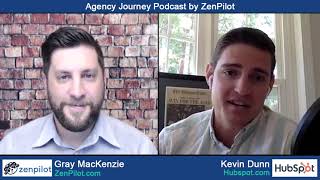
This is a YouTube video titled "Becoming an Agency Expert Through HubSpot Academy with Kevin Dunn" published in August 2021. It features a podcast-style interview hosted by Gray MacKenzie with Kevin Dunn, the manager of Education at HubSpot Academy. The conversation covers Kevin's role managing partner and developer education, the HubSpot Solutions Partner Program, agency growth challenges, trends in remote work, and the value of education and training within the HubSpot ecosystem. The discussion also touches on the Agency Unfiltered podcast hosted by Kevin and insights into agency operations and tech stack consulting.
Welcome to the Agency Journey Podcast, where we connect with agency leaders to uncover the hidden systems and processes that drive their success. Now, let's dive into today's show. Hey, it's Gray. I want to let you know that today's episode of the Agency Journey Podcast is brought to you by Around. What is Around? It's a video calling tool that's lightweight, it's playful, it doesn't take up your whole screen. It has saved me so much CPU usage, and I was a super early adopter of round back in early 2020, and I'm so thrilled that they're sponsoring the show. We're still using it. It is the coolest internal communications tool that we've added in the past 18 months here at Zen Pilot. We absolutely love it. It's made our meetings a lot more enjoyable. The GIPHY integration is absurd and really fun. And, um, yeah, I think everyone's kind of gotten used to here in the post Covid environment, the fact that people are working from home, but they have some super cool tech that's baked in. Everyone talks about being AI based. They actually have AI based noise removal, camera framing and background cropping. So basically you're not seeing a big square rectangle of what your camera would be. It's a circle that centers on your head and it cuts out a lot of the background stuff. And then if you get people screaming in the background, I've got four kids at home. It's going to cut out a lot of that noise. It's absolutely awesome. So you can try around for free. Go to Around Co agencyjourney if you sign up. If you like it, shoot me your favorite filter. Ask me for a link to my secret room. I love to hear from other agencies who are using it. I think this is an awesome tool for internal agency teams. All right, let's get back to the show. All right. Welcome into another episode of Agency Journey. I'm your host, Gray MacKenzie. This week I have the pleasure of bringing on Kevin Dunn, who's the manager of Education on HubSpot Academy, leads the team responsible for the partner and developer education. Fellow podcast host. We'll get into that podcast agency unfiltered and a huge Tom Brady fan. Kevin, welcome to the podcast. Thanks for joining us.
Great, man. Thanks. Thanks for the intro. Thanks for having me on. Yeah. Psyched the chat today. It's gonna be fun.
Well, I'm excited. Are you working from home right now?
I am, yeah. As I think a lot of people are these days, so. I am, yeah, very true.
Especially right Now Sully's leaving you alone for right now though.
Yeah, you know what, he was just by my feet. Don't know where he is though. Yeah. So Sully's our five year old black lab. He likes to hang out with me sometimes, but we let him sleep in the bed, which blessing and occur. So he's probably up there right now.
That's awesome. Well, I'm excited to have you on so your journey. We'll give people kind of a little bit of context first to orient you. For anyone who has not heard, there is going to be a lot of overlap. We come from the HubSpot ecosystem so there's still a number of HubSpot agencies listening, but a lot of non hubspotters as well. Your journey with HubSpot started how long have you been at HubSpot now? Four or five years.
A little over five, maybe. Maybe like five and a half, I'd say. Yeah. So about five years. Yeah, five years.
Started as a channel consultant working with agencies. And then how did you get moved into the inbound professor side and then the partner education side of things?
Yeah, so loved being a channel consultant, like being able to work with solutions partners on the front lines. It was an awesome time, really rewarding when Academy was looking for a new solutions partner professor. So like a content creator, educational content creator, specifically for partners. To me it was an attractive opportunity because whereas it's a channel consultant, you consult one to one. Right. And I saw this Academy role as an opportunity to consult one to many. You're like consult through a megaphone. So amplifying education and consultation. So it seemed like a really fun opportunity. And so about a year and a half after being a channel consultant, applied for the role, worked with the Academy team and yeah, it's been, it's been on the Academy team ever since.
So that's what I was curious about was whether that was self prompted, which would have been my assumption if someone else chose you, like Kevin, you need to come. You need to come.
Yeah, I wish somebody appointed me, but very much, very much self, self motivated.
That's cool. That's kind of your desire and passion to move into that. So maybe you can, if you don't mind, just give people, especially outside the HubSpot ecosystem who aren't familiar yet. In the 30 second recap of what you do at HubSpot today.
Yeah, so since becoming a solutions partner professor, I now manage a team of partner professors and developer professors. So I'm lucky to kind of be the head of the Partner Academy of HubSpot Academy or the partner training side of the tool. What's cool is that the HubSpot Solutions Partner Program gives our partners an entire section of the academy, in addition to the academy, the courses and certifications that everyone else sees. So training built and made exclusively for partners, how to sell, how to demo, how to implement, integrate, how to service, how to price and package new services. So a lot of cool training to be had there for our partners. And so I manage the partner professors who create that course curriculum and then I also manage the professors again who handle developer education. So, you know, leveraging HubSpot's APIs to connect systems or build custom apps, as well as building on the front end and building on top of our CMS hub. So that's my team. Yeah, that's what I got.
That makes sense. I think that's the kind of underrated piece of not, not everybody. Some agencies, I think, appreciate it going into HubSpot. But one of the big differentiators for HubSpot has been the investment into education. Both obviously on the front end. I mean, thinking way back to the first version of Inbound, marketing, the book, but continuing especially for the agency program and putting out a lot of resources. And there are resources that we've had plenty of guests on in the past who have talked about the good, the bad and the ugly. Hey, here's things that in the past HubSpot's coached on that people may disagree with, but the. And the only way you get better is by getting more at bats. And HubSpot's made a big investment into the education side on an ongoing basis and that's paid off big time in terms of the way the program's grown and customers.
I mean, we want the partners to be true experts, right? Like true subject matter experts as it relates to inbound and what the strategies and the tactics that the CRM platform of HubSpot enables. Right. And also too, we want to create the space for differentiation. And if you're going to be the absolute best web development shop in all the land, let's give you the ability to certify the skills necessary and stand out, whether you're going up against other HubSpot partners or non HubSpot partners. So differentiation, product expertise, it's definitely what my team has in focus. And so hopefully that's coming out there, coming through for the partners, maybe listening for sure.
So where did the podcast come from? In the podcast, the quick background, agency unfiltered. You search for agency unfiltered, probably find it in whatever your podcast player is. We've had a lot of shared guests who've been on that show as well as on. As well as on ours. Where did that idea come from? And then I'm curious to dig into some of the things that you're kind of excited to take, like, where's the direction for the podcast move forward now that you're. You gotta be close to 50 episodes in, right?
Yeah, we're like, right at 50 as we speak. So agency unfiltered, as you kind of teed up, it interviews leaders, managing partners, like C Suite executives, like leadership folks at agencies or CRM integration companies, or any types of partners that HubSpot has. And we just bring them on the show, interview and get to learn about, you know, what they. What they've gone through, for better or for worse, some of the tactics, some of the things that they've operationalized that seem to spark scale or growth. Basically, the idea came about feedback from just partners saying, like, we want to hear from and learn from other partners. Listen, I've never been the CEO or a founder of Solutions Partner Organization or an agency. And so we just wanted to create the space for folks that have gone through it and lived it to share their stories and hopefully find some good sound bites or learning opportunities for others. As you know, the Solutions Partner program is a diverse set of business types, and some are big and some are small. Uh, some are brand new. Some have been in business for decades. And so there's just so many different perspectives on how to grow and scale a business, and partners want to hear that. So I took the opportunity to shove a mic in front of their faces and extract what we could.
Yeah. Um, were you on board for the podcast right away? Because you got a great voice and great conversational style for the podcast itself. Did you know that going into it, or you.
No, no, I. No, you know what? I just. I'm a big. I like content. Right. I mean, I wouldn't be on the HubSpot Academy team if I didn't like being on content. And I think. Yeah, I think being a podcast host, I knew the value would be there if we could build it the right way. And I figured that I'd be able to hone my skills over time to just unlock and enable these partners to share their expertise. Right. I have the easiest job in the world. I just have to ask the right questions and get out of the way. And so I think the real skill set of being a podcast host is clarity around your questions, and then Just zipping it. And you could probably say the same thing. So, yeah, I didn't lead with it thinking that I would be any sort of stud at it. Just I knew it would be valuable for partners if we can get a microphone in front of folks that have found success.
Yeah, yeah, that makes a lot of sense. So especially here recently, I'm curious to dig into some of the trends in terms of what you're seeing from the agency conversations that you're having right now, and obviously specifically in the HubSpot Solutions partner space. So we're recording this end of Q2 2021, coming off at least three for a lot of agencies. Four consecutive really good quarters of agency growth. I want to start kind of on the challenges side. Are there. What are the kind of the major recurring challenges that you're hearing coming from agency owners?
Yeah, you know what? I think I'm hearing a lot about service consolidation. And I think it's just a matter of really reflecting on. And there's just one. I think I have a couple, but I think the first is about like the services that you offer and who you offer it to and determining like, okay, do we want to continue being everything to everybody or should we. Should we really pull back our menu, reflect on what we're truly the best at and who are the best fits for that service offering and then just really double down on that? I think over the last few years it was really easy to just expand service offerings. Marketing agencies wanted to help with sales services, but then they wanted to help with integrations between platforms and then they wanted to connect third party apps on top of whatever system they just migrated them to. And then Rev Ops is a Persona that they should target. And so how do we unlock or reduce silos between teams? And so it's really easy to expand your menu of services. And so I think the trend we're starting to see is folks realizing that's too much bloat. It's impossible to remain profitable and deliver great work in a timely fashion for everything. So going against the grain and pulling back, I think that's. That's one of the big things.
Yeah, that makes sense. Really good. I was listening a couple of weeks ago. I don't know when this episode came out, but listening to Heather Park's story. Yeah, Heather Michael run Rent Bridge. But talking about going super deep into the property management space and, and going deep on that niche. And you've had a mix of folks. Remington Bag's been on, so you have a little bit of a different Take maybe on the way to niche than someone like Heatherwood, which is the cool part about kind of seeing that.
And then like builder funnel, they're like, no, it's all the way in Rentbridge too, right? It's all the way in our name. You know what I mean? Like, that's how dedicated. I mean, the folks that niche, I mean, niches are riches, right? There's riches to be found in niches and so they double down on it. But what's fun about working with partners, to your point too, and probably you see this as well, is that you start to get conflicting opinions. And that's, I think, where the best stuff happens. Because there is no right way, you know, being hyper verticalized or like finding a niche like that's not the best fit for necessarily everybody, but those that do do it can find success. So I think having the opportunity to have different perspectives or conflicting opinions is probably one of the funner parts of my job.
Yeah, no, I totally agree. But on the upside, what are you hearing is kind of consistent wins or themes for where agencies are succeeding.
I mean, I think everyone's hands were kind of forced over the last 18 months, but I think everyone has to embrace remote. And I think there's a couple different levels to that one, like enabling your existing team to work remotely and like baking it into the culture of your team. I think you have to rethink the office space and what it means. But at the same time, I think embracing remote, working like a remote workforce, opens up the talent pool. So it's like, okay, your existing team, I would imagine, for the most part, unless you've had this baked into your core from the beginning, the majority of your team kind of all lives close to where your office is or was. But now if you're going to embrace remote and like layered into your culture, deep into your culture, you can start to source talent from any pockets, right? Any pocket of the country or the world. And so I think what it means for the talent pool and work life integration and the results your team can produce, I'm seeing a lot of folks now pivot to either hybrid or fully remote again. But I mean, you know, everyone's hands were kind of forced on that front. But it's a good thing.
I think it's. It's made the marketplace more competitive. We've been remote since 2014 and that used to be an advantage. Now that's just the status quo. So that's totally not an advantage. Now the marketplace is significantly more competitive.
I mean, it's easier said than done too, right? I mean, you know, a lot of these agencies have, you know, you have your coffees, you have your snack bar, maybe you have your ping pong table and like, you know, it's deeply rooted into your culture and so you have to rethink what it means. Like what does a hybrid or a remote culture look like for your team? What do the benefits now look like? Like what's the value of joining your team if they don't get those things? And so, I mean it's easier said than done, but I'm seeing a lot of folks embrace it, which is great.
I'll put you on the spot with a couple of questions. These are the controversial ones. You can dance your way. Dance your way. Is there one thing as you're interviewing, maybe not just interviewing folks, but talking to HubSpot partners in general? Is there one or it could be a couple of things. There may not be one theme either, but is there something that sticks out as like, oh, why don't they all do this? Or here's one mistake that they're making. I see over and over.
It'S hard to generalize. No two partners are the same as you know. But I would say people should be open to hiring employees that won't directly like be open to non billable hour employees. You know what I mean? Hiring, you know, BDRs to support the sales effort, somebody to handle HR or culture, even just like specialty hires. Right. I think a lot of folks freelance or contract out developer work when I think there's a ton of value to add when you have a developer in house. Right. And so I think just rethinking the way you build your org chart and prioritize hires, not every single hire has to dedicate go directly to billable hours for client delivery. So thinking outside the box on that front, that's probably one thing.
I think that's a great one. I think you think back to like the marketing role and impact. Brand and Design was one of the first HubSpot partners to really scale extremely quickly. And a big part of their story was hey, we hired a full time marketer in house at John beach.
Just be our marketer. Right? Exactly right. Yep.
That's a great point.
I think that expands too to leadership positions and I think there's an opportunity where if somebody climbs the career ladder, it's okay for them to be less. Less time dedicated to billable hours for clients and more strategy and subject matter expert, you know what I mean? Like leadership positions. Anyways, I Think you can think beyond just the billable hour? Yeah. And I think Impact brand design is a really great example too with yeah. A marketer. Right. And they're going to market us and that's their full time job and unlocks growth.
Right. That makes a lot of sense. If you were start. If you left HubSpot and you had to start an agency, which to be fair, an agency potentially at this point, I won't speak for you, but potentially one of the last business types you would, you would start having seen the journey on the other side purely from an enterprise value perspective. If you had the option of starting a SaaS company or you know, a different company, you'd probably choose that over a agency. Unless you're passionate about the agency space. Is there a specific service that you'd offer or specific tech partners that you'd choose?
Yeah, I think, man, it's like you mentioned that we're recording this right at the tail end of Q2 here and so it's like, it's so buzzwordy to say, but I think that if I had to pick some sort of like service specialty, like I think people really need help with tech stack consultancy, tech stack migration or integration. And then honestly, what it comes down to, again, we've been using this term Rev Ops or revenue operations a ton, but really that just comes down to what? Removing the silos between functions at your business and ensuring that the data is consistent across all teams. There's clarity, it's reportable and it speaks similarly to all systems they use. So just this whole sort of tech stack strategic consulting, revenue operations enablement. I mean I think that's, that's where a lot of businesses are struggling and that's probably the direction I'd go.
Yeah.
Now that's just assuming that I would even have the specialty or the expertise to make that happen. But I would surround myself with the people that could. Right. But that's probably, that's probably where I'm spending my time.
Well, it's interesting. You've got Remington Bag from Impulse Creative, who you've had on the podcast. They've gone super deep into Rev Ops or like Connor Jeffers and the team at Aptitude 8, probably another one who've gone down that same journey. And there's like, I mean in any year there's these different buzzwords like is it abm? Is it Rev Ops, Is it email marketing?
Klavius Conversational engagement was a big one for a long time. It still is, but you know what I mean, for sure. But I think, I think Revops has lasting power. It's not so much a hot strategy or like a hot tactic, you know, versus like. No, this is a long form value add that companies need help with. Right. Their tech stacks are cobbled, everyone's operating in silos. Teams don't work together, speak together or speak to each other, leverage the same data points or using the same tool. So anyways, that, that's, yeah, there's a.
Huge need for that makes a lot of sense. When you say tech stack consolidation or integration, are there specific tool sets or areas that you think are more like high opportunity areas than other areas?
You know what, I think they're. I think there's an opportunity. I'm really interested. I mean, again, based on the role and the team and the company that I work on and work for, the LMS space is really interesting to me. And obviously I think there's a ton of value in having a front end LMS for your prospects or customers to learn to get better at, to certify their skills. Right. And to validate their knowledge, their skill set, their expertise. But, but I don't think that. And we can nerd out on education development for a moment, but the front end LMS is a little different from the way in which you can store an author in like revision control and update your content and education. Right. So I think one of the things that HubSpot Academy is going like actively working on is ensuring that all of our education and content is up to date. Something changes, a strategy, a funnel turns into a flywheel or a tool changes and we preview that tool in a, in a product tutorial or a walkthrough. And so I think there's just a, an opportunity for having a really remarkable creator experience on the back end of an lms, but also making sure that as a company you host education courses, content for your customers or your prospects because, you know, education helps people self paced, on demand education helps all of those folks become more successful. So anyways, that's a long winded answer, but I think there's a, there's an opportunity with LMS specifically.
I like it. I think there is a big play there. Um, Andrew Hong at Toby Agency was just on podcast and they've got a podcasting course for, for their customers. It's free, built on teachable prospects, can go through and read it and obviously some percentage of those people want help. They won't actually want to do all the podcast production themselves. Have you seen any other good agency examples who are doing obviously on your end, you guys have a very well built out LMS setup at HubSpot, but any agencies who you've seen that using.
Well, you mentioned, you mentioned Remington a couple times. And I think the Sprocketalk experience, I know they have like the LMS template or like plugin so folks can use it on HubSpot. So I think they're another great example. I think what I mean, actually it's funny that a lot of the names that we've already talked about, but I think with Impact plus there's a whole community built around education, so I think they do a great job. But candidly, I'm seeing a lot of SaaS organizations invest in this as well. And so you're starting to see customer education teams and academies pop up all over the place in the SaaS landscape because again, there's just a ton of value to be had there.
So. Right, right. That makes a lot of sense. Howard, you, you talked about something that I haven't heard anyone else talk about on the podcast, which is kind of a great experience on the back end for creators and the versioning and revision management side of things. What does that look like at HubSpot or how are you building out that infrastructure internally?
Yeah, so I mean you have to think of things in like three ways, right? It's the tools that you use, the tools and systems and then the processes as well. So tools, systems, processes. And so we try and be as intentional as possible. I think there's a balance between overly prescriptive process and having some flexibility based on. I mean every professor on Academy is going to ideate an author and project manager slightly different. But I think it really comes down to tools and systems that enable revision control. For us, that also means revision control by language because obviously we have customers globally, so we're thinking beyond just English based education here. But so we have a storage system that enables that. And then we also have just very prescriptive process with some flexibility there enabled, but just a process in which we want folks to adhere to for an update methodology, if you will. And so that starts with, okay, how do we mark something as either up to date or like what are the flags? What are the things that officially moves an up to date piece of education to requiring an update? And once that triggers, how do you project management, what are the steps, what are the teams you have to collaborate with and work on? And then once the update happens, okay, how do we distribute that, set that live, who do we alert internally and externally, et cetera. So tools and systems and process and it just, you know, it's like Novocaine. Give it time. It always works. Right? That's. Remember the Titans quote for you.
What, what's the size of the. How many different professors are on the team internally?
Yeah, so the, the education team that we have, there's. I'll just give you a quick kind of like lay of the land of organizationally. But we have, you know, professors that we'd say handle our customer education. Something like the content marketing certification, email marketing, just education available. We have the partner professors, we have the developer professors and then we're expanding our international professors. So folks that build or localize or build education for Spanish speaking audiences, French, German, et cetera. And then in partnership with all these professor groups, we have a content operations team. And so they help us with instructional design support, content editing, content review on qa. And so I think with all of those kind of pockets or sub teams, our education group is probably like 30, 30 people or so. Wow.
Yeah, that makes a lot of sense. Then that, that experience has to be pretty dialed in and there's got some strong systems.
You know, it's, it's like a, it's like a duck swimming on a pond and everything looks very calm.
Right.
But if you look underneath the water, the legs are kicking pretty, pretty furiously. So I mean we've it. The team does great work in many languages and in many like to solve for many learning objectives or learning outcomes. But it's, it's fluid. You know, processes change, things always have to be reworked, there's always opportunities for optimization. Yeah, I mean that's the fun stuff, right?
That's awesome. Any big, over the next 612 months, whatever it is, any big initiatives for you guys coming out that you're allowed to talk about publicly?
It's a good question. I'll give you this, something that this is just a person. Like this is what I would love to see roll out for us. And I think we're going to try and put calories into this and see if we can make it happen. Because I know partners specifically are really looking for help and guidance and support around building curriculum based on the role or employee type. And I really want to get to a place where we make that way easier. So if I'm bringing on an inbound strategist or a new sales rep or a new HubSpot developer, like we can go, they could go to HubSpot Academy and have kind of the recommended learning path for those roles, including hey, here's the baseline knowledge but here's where you could actually grow, right? I mean if you think of like a T shape employee, it's like here are the things you need to go depth like deep in, but here are some additional skills that you can build. And so anyways, curated learning path, role based learning paths, those are things that I really want to see happen.
So hopefully more to come makes a lot of sense. There's a huge opportunity there in the agency space for especially around account management training. So that strategist, I mean all the roles there's opportunity but that's one of the ones that comes up in our world most frequently is where can I go and where can I put my account management team and have them go through, right.
The soft skill development but also like any nuances that they need specifically. I mean in my world, HubSpot. Right. But I mean there's still some soft skill development that they would need as well. And I think the question is too. And I think there's a, as we talk about LMSs or like education, I think there's an opportunity for agencies to formalize and to operationalize the training that they need that's specific to them. Right. Like you can point folks to HubSpot Academy but our courses are never going to teach them how to use your time tracking software or like your intranet or like your, you know, preferences for client communications or things like that. And so there's an opportunity there to build self paced on demand modules for new employees and pair it with SaaS based education as well. So for sure I would definitely do.
That as we're wrapping up. Kevin. So the podcast people search for agency unfiltered or I think it's academy HubSpot.com agency.
Agency unfiltered.com will definitely drop you there, but Spotify, Apple podcasts. Yeah, we're about 50 episodes, a wide range of topics. There's been some really interesting, really interesting stories that like you couldn't have even teed up if I was a, you know, a movie director or like a script producer or something like there's some stories there that just, they, they blow my mind that folks have been able to experience and then like pivot around and solve for. So yeah, Agency unfiltered. Try it out.
Awesome. I'll get two last questions for you. This will be quick. First one. Okay, favorite Dave Matthews Band song man.
So, so just for context here, Big Dave Matthews Band probably I'd rather, I don't even know if I want to say how many shows I've seen on air here, but a ton. Like, a ton. And so. Good question. There's too many. It depends on the mood you're in on the spot.
Good point.
But tripping Billy's. Tripping Billy's is always a good one. You can't go wrong with tripping Billy's. Maybe the Stone as well.
There we go. One A one, good recommendations. And I couldn't have you on and not ask this question. To wrap up, what is the weirdest part of HubSpot life?
The weirdest part of HubSpot life, man. I know. It's like, it's good to be having.
The reaction every single agency owner has on the. On the podcast if they haven't listened to.
Yeah. So as quick context, I asked this question, what's the weirdest part of agency life? To every single guest. And it's also a good barometer to tell if they've heard past episodes because, like, some folks come prepared. Like, oh, yeah. The answer is I'm like, me right now. They're like, what? But I'll tell you this, man, I think the weirdest part of HubSpot life for me right now, again, this is the end of Q2 here, but my wife is actually 38, coming on 39 weeks pregnant. And so I've been navigating the parental leave policy of HubSpot. And we're also approaching a week of global rest called HubSpot Unplugged. So I'm about to take a substantial amount of time off. And so it's been weird, but it's also been interesting. Kind of laying, laying. Just get everything set up, making sure that everyone has their new escalation points, meetings and in flight projects and everything squared away. And so it's been really weird for me as I'm only a few days away from taking all this time off. It's like, well, my, you know, it's my. My hands are off the wheel, so it's. It's a pretty surreal feeling.
That's awesome. Congratulations. This. Is this the first.
Yeah. Our first. Yeah. So it's going to be a little girl. Yeah.
That's awesome. Congratulations. That's.
My wife's. My wife's glad that it's a girl because Dave Matthews done. I don't know if I would have been able to get her bought in on that name.
That's awesome. Well, Kevin, thanks for coming on. Thanks for being generous with your time. This has been great and really appreciate having you on.
Yeah, of course. Happy to be on. It's been always fun chatting about agencies, about LMSS education. I mean, you're speaking my language here, so it's been fun. Yeah. Thanks for having me on.
Awesome.
Thanks, Kevin. Thanks for listening to the Agency Journey podcast. Visit agencyjourneyinsiders.com to join the podcast community and be sure to subscribe for future episodes.










