Brenna Zenaty on Tattoos, Tech, and Owning Your Power | Women of HubSpot
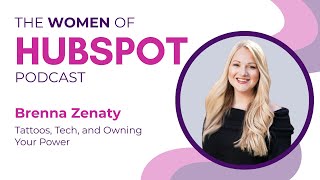
Brenna Zenaty talks about her career in tech, how she built confidence, and what mentorship meant to her rise. She shares why she got her tattoos, how women can own their power in marketing and tech, and what she's learned about networking and staying true to yourself.
Welcome to the Women of HubSpot podcast, the show that celebrates the voices shaping marketing technology and the ever evolving HubSpot ecosystem. Hosted by George B. Thomas from Sidekick Strategies, each episode brings you the stories, strategies, and superpowers of the women driving this industry forward. It's their time. It's their mic. This is Women of HubSpot.
All right, so I'm super excited to be here again. Again. If this is the first episode you're watching or listening to, this all comes out of Super Bowl Sunday. Sitting there with my daughter, actually, my whole family, but one of my daughters starts to talk about how the quarterback of the Philadelphia Eagles has a team and his team is all females. And I. I get moved. I'm like, wow. Like, I'm getting goosebumps just even thinking about the moment that I was having with my daughter. And so I put this post out on LinkedIn, and I was like, hey, who are the amazing women of HubSpot? And the post went ham. I mean, it went crazy. And today I am here with Brenna. Brenna, I'm super glad that you have taken time. Cause otherwise, it would be really boring if you. You've taken time to just sit here and have a conversation with me. So, first of all, how the heck are you doing today?
I'm doing great, George. Thank you so much for including me in this opportunity and this amazing cast.
Of HubSpot women, trust me, I. I see the list, and I'm like, I don't get nervous very often, but just the. The sure amount of horsepower that is gonna be in these videos. I'm like, this is. This is gonna be a journey. It's gonna be good. Speaking of journeys, you've been on a journey. And so let's go ahead and start with these questions. And if we could go back in time. Don't you love when questions start like that? If we could go back in time and we could meet young Brenna just starting out, what would we see? And also, what would she be most surprised by about where you are now?
Oh, man, I love this question. And now that I'm a certain. At a certain point in my career, I actually have thought about this a lot. So even, like, going back to high school, I went to a very, very competitive high school. Like, I ended up going to a state school and had a great college experience. I graduated with a lot of Ivy Leaguers. I was in a lot of AP classes. So I kind of went into that feeling a little bit of pressure to. To achieve a certain status or to have My career trajectory figured out when I was 18, which is silly for most of us. I would be shocked if most of us had that figured out. But throughout college like I honestly I changed my major a lot. I was an English major, I wanted to be a vet, I wanted to be a librarian. I had a lot of ideas, but I didn't have a lot of focus. And from a work standpoint I started working in retail and kind of the service industry early. Like when I was 16. I kind of worked my way through college. I worked at like action sports retail companies. And then even after I graduated and moved out of my hometown in New York, I was still working in retail for a while. And I got my first gig in kind of the corporate world when I moved down to Atlanta, Georgia with my now husband, which is where I am now. And kind of my first taste in, into corporate and really my, my like kind of break into this industry was actually getting a junior level marketing role at a HubSpot. It was a HubSpot partner agency or agency partner at the time. So early, early stages of the program I got in. It's how I learned about HubSpot. We were an inbound marketing agency, so I was an inbound marketing special specialist. That's how I got acquainted with HubSpot Academy as well. And it was kind of the first time. It was really like the first time I even worked in kind of a tech adjacent role. I don't come from a family of, of folks that worked in tech, mostly blue collar jobs. So it was a first for my family as well. And then really from there like I kind of started to figure out what I was good at and what I liked. I liked creative aspects. I liked the technical aspects of setting up products and platforms for customers. And then I got my first role as a customer success manager at a tech company called Terminus here in Atlanta, which is an ABM tech company. And eventually worked my way into very haphazardly into a role with a customer education role which was the first role there. So long story short, I fell in love with that role. I feel like it combined a lot of the things that I wanted to do when I was younger. I wanted to write, I wanted to do something that was creative. I liked teaching, but I didn't want to be a teacher with my English degree. I liked the technical aspects of the products and creating product training. And then one day it doesn't happen a lot, but one day I saw an open role at HubSpot Academy and I was like, well, I gotta Go for it. It feels like a sign. And it was a role to originally focus on creating content for solutions partners, which I was like, great. Feels serendipitous, like a full circle moment. And that's how I got here. So I don't come from, like, a traditional L and D background. I didn't major really, in anything that I'm doing now except for English, and I'm doing a lot of writing. But, yeah, I think young Brennan would be pretty stoked. Stoked to see how my career turned out. And that in kind of a roundabout way, we got to really where we wanted to be and at the level of our career that we want it to be in.
It's so interesting, kind of that roundabout, like, spaghetti bola, spaghetti life that we live. And it's. It's funny because you mentioned, like, vet and librarian, and I think one of our other folks, if not multiple folks, probably have said librarian in there somewhere as well. And to be part of, like, the HubSpot, you know, agency, partner ecosystem. And now doing what you're doing is amazing. By the way, I will say one of the fun moments is that was the most polite way I've ever heard anybody say I don't come from a family of nerds ever heard in my life. So that. Thank you for that. As a. As a nerd, I'm like, that was actually a really well way to say that. So. So let's dive into this because obviously, you know, along the way, you've probably had some inspiration, some mentors. Like, who. Who are some of your biggest inspirations or mentors in your journey so far?
You know, I think, honestly, the agency owner, her name is Ann Marsden. Shout out to Ann, who gave me a shot at my first job in marketing without a marketing background. Like, that was really my entryway into this whole world. And she built her business from the ground up, and I learned so much from her and the people that ran that agency with her and worked with me. And again, it's how I got into. Introduced to HubSpot. So very grateful to her. And really, I've had a handful of managers, and I've worked honestly. I've had a lot of female managers as well. I don't think I've ever been in a situation with a manager where I've been micromanaged. I think I've gotten to a point where I've built trust pretty quickly with managers, and I think in that way, I'm grateful to a lot of them for kind of letting them control my own Destiny. When I worked at Terminus, that ABM tech company, I worked with a lot of women in leadership who, you know, we were a startup. Like, I was employee number, like, 70 or something. So we were all building the plane as we were flying and figuring it out together. And I kind of came up in my career there with a lot of other women, and I'm super grateful for them. I'm grateful to my coworker Sydney Smith, who actually gave me a shot and was like, hey, we are going to pilot this customer education role. We've never done this before. Would you be into it? We think you'd be a good fit for it. So she's really the reason that I got to be where I am here at HubSpot in this role. And I work with a lot of incredible, incredible people and incredible women on the HubSpot Academy team. I think you've already talked to one of them, Meg Duffy, who's also a senior professor on my team. Meg has been just a champion of mine from day one. We've gotten to collaborate on a ton of projects together. Her and Jorie Monroe, who you might know as well. Meg, Jory and I are collaborating on a really exciting project right now, and I'm just constantly pushed to be better at my job because I get to work with people like them, and they also just have your back from a human standpoint, you know, like, they're both friends of mine outside of work. So I'm super grateful for that. And people like Courtney Sembler, who I think you're going to be talking to as well, who is our kind of fearless leader and Academy director. Like, she's someone who always makes time to talk about my career and talk about her experiences and what she's working on outside of Academy. That's super, super cool. So, yeah, very, very grateful to have a lot of. A lot of mentors, a lot of people I've learned from over the years.
I love it so much because it really paints the picture of how it's best if we don't do it alone. And I really love to lean into that piece where you're like, kind of being the master of your own destiny or the master of your own journey. Micromanagement is so 1989, I swear to God. Like, trust your employees. Give them the safe space to do the thing that they're trying to do. And remember, it's all about lessons, not about failure. So it's interesting. First of all, I love Jory. We need to get Jory on an episode as well, so we got to make that happen. I'm going to make a mental note that we definitely put that in the schedule. You're not doing it alone. You've got some great women around you throughout pretty much your entire journey that we're talking about today. But I'm super curious. Have there been any hurdles or biases that you've had to overcome in your career? And if so, how did you navigate them at that point in time?
I think the biggest one that's kind of a recurring theme for me is, you know, I talked about that I don't have a formal background in L and D or education based on the role that I'm in now. You know, I didn't necessarily come up in tech out of the gate. So I think there's definitely an element of. I don't want to call it imposter syndrome, because I feel like, especially for women, that's a phrase that's thrown around a lot, but it is a little bit of the, like, not speaking up because I feel like I don't know enough or don't have enough information to be able to have that seat at the table. So I think, to be honest, it's been a lot of confidence building. I would also say I'm. I consider myself maybe to be an extroverted introvert. Like, it's taken me a while to get comfortable even having conversations like this and, like, being able to talk openly about my career. And I think with experience comes confidence and with opportunity comes confidence. But that was. Wasn't always the case for me. And I think that I'm grateful that I've had a lot of different roles and I've worked in agencies and startups and now a big corporation like HubSpot. I think kind of that variability and experience has really helped me in situations where I'm like, well, should I say that thing? Should I suggest the thing? I think it's made me realize that not like, you know, we all have good ideas and sometimes we're doing a disservice to ourselves to not speak up when the occasion arises. So, yeah, I think. I think a lot of it is confidence building. And I think, again, I owe that to a certain extent to mentors and people that I've worked with directly who have stepped in and given me opportunities that maybe I wouldn't have seeked out myself. And something I've really leaned into, I think, in the last year, is saying yes to more things that make me uncomfortable. Like, I had the opportunity to speak at Inbound for the first time last year. And when I was originally asked, my immediate reaction was like, that's not me. That's not for me. Could never be me speaking in front of a group of 700 people. I would die of stage fright. But the first thing I told my manager after I got off the stage last year was like, you know what? I would do that again. I would do it again. I made a big deal out of it and it was fine. I was totally fine and I got good feedback. So yeah, I'm trying to make more of my career saying yes to things that initially make me uncomfortable because most of the time they turn out to be absolutely fine.
Yeah, I love this idea of yes. The things that make me uncomfortable make you uncomfortable. Growth is actually forged in the times of uncomfort. The magic moments are on the other side of fear and I love that you kind of dove into that. I also have to double click on the extrovert introvert because I can step on stage with the best of them. But I swear all that is holy, I could be a monk on a mountaintop and not lose a moment's worth of sleep. It would be okay with it. Here's the funny thing though. I love kind of piecing together the pieces of. Of what make these powerful women in HubSpot that are using HubSpot, who they are. When I first wrote that question or we came up with that question, I for sure thought that most people would do like an external hurdle or bias and the fact that you're like, no, I kind of have my own hurdle that is in place. It's interesting to me to have that amount of self awareness and understanding of yourself, which I think adds to the power of who you are and how you're showing up. So super, super amazing. Now with that being said, because this is more of like maybe kind of the same question, but from a different direction. Have you ever faced a moment where you felt like underestimated, overlooked, or just like out of place in the HubSpot ecosystem? And if so, how did you handle it?
Totally. I mean, I think, to be honest, coming in and working and supporting, working with and supporting the solutions partner program, I kind of felt two ways about it. I was like, this is an amazing opportunity. HubSpot is super invested in its partner program. Partners are invested and leaned into the program. This feels like an incredible opportunity and a great role to step into. But at the same time, our partners are experts. Like, I am six or seven years removed from being a HubSpot platform user at this stage. So I'm not a product expert anymore. And also the ecosystem has evolved so much since I've been, you know, I've kind of been like on the outskirts of it in tech and in abm. I've been working with marketers in my last job for the last six years. But I think a thing kind of related to what we were talking about before, like a thing that I get in my head about is not feeling like I'm an expert. Like if I'm an educator, I should be the expert, right? Which is true in some respects, but not in others. Sometimes it's about working with the people that are the experts to share the information in a way that reaches the biggest possible audience and provides the most value. So I think that was really intimidating. You know, partners create a ton of user generated, like, incredibly insightful, helpful content on channels like LinkedIn every day. And I would definitely get in my head about it, especially when we're creating certificates, notifications for y', all, we want to create stuff that provides value. And to be honest, like, rather than get in my own way about it, I think what I found to be really helpful is working with partners directly to create that content. Whether it was like, hey, I'm putting this thing together, can I chat with you about it? Could I send you some stuff to review? Do you want to be featured as an expert in this content? So I found that like working with the experts and working with people directly kind of helped remove that mental block. For me, it was definitely still there. You know, partners love to give hot takes and we appreciate them because that's how we move forward together. But yeah, I think like building relationships with people, like once you talk, you have conversations like this, you realize that we're all just people trying to do our best work. And I think that relieved a lot of the anxiety that I had about not showing up the way I wanted to or producing the best content that I could to help a group like our solutions partners.
I love that so much. And the fact that it comes down to, if we boil down what you said is like, listen, I was uncomfortable, but I knew I love to create content. I kind of want to be an expert, but I'm close to the experts. And by the way, hashtag collaboration, like, let's use that for the win. And it's so good and so powerful. And honestly, over the years, the amount of content we've created that are like interview based or collaborative content, it's just, it always wins. Like everybody's coming from the Right perspective or from the right place when they're creating this. Okay, so this is. By the way, this is amazing. This is. I love these conversations so much. So, Brenna, Mike, my next question is. And you kind of have to get a little bit vulnerable with this one. I mean, you don't have to, but if you're gonna answer it, you probably will. It's gonna take you back to a place, a time. And. And so the question is, have you ever experienced a significant failure or significant setback, and what did you learn from it?
Yeah, totally. Anyone that says they haven't is lying.
Right.
I appreciate the opportunity to be vulnerable. Yeah. I think, to be honest, like, kind of before I started looking for this next opportunity at HubSpot, I was at a point in my career where, like I said, I had dedicated almost six years to a company that had grown tremendously during that time. It went from startup to scale up. In that time, my role changed a bunch, leadership changed a bunch, and I felt like I was busting my butt and doing a ton of good work. I managed a bunch of programs. I managed a bunch of platforms, and I was really trying to get to that next promotion level in my career, and I reached a point where promotions were announced and I wasn't on the list. And it was a period of transition for me where I felt like I thought I was on the same page with leadership and my manager, and I don't think I was. And, you know, I think in situations like that, it can go both ways in terms of whose fault it is. I guess that it ended up that way, and I took it really hard. And I think, you know, after I kind of had the comedown from it, I think what I realized was, you know, I think I've reached a point in my career where I'm ready for something new. I really like what I'm doing, but I'm not sure that the business is focused on it right now, which is okay. That's their prerogative as a business. But I really want to do it, so I think I owe it to myself to see what other opportunities are out there. And really, shortly after I kind of had that internal conversation, this job opportunity at HubSpot came across my plate. And I was like, all right, all right, universe. Like, cool. Noted. And so, yeah, I think it also taught me a lot about, like, anything in life like this. This can happen with friendships, it can happen with hobbies, whatever. It's like sometimes there comes a point where you're ready to move on, and that's okay. Like, we go through different seasons of life and change, and that doesn't mean necessarily that you failed at a thing. It just means that time is over. And that's kind of how I look at it now. Like, I took it really hard in the moment, but, you know, if I. If I hadn't had that opportunity, would I be here where I am now? Maybe not. So, yeah, I think that's what I would encourage a lot of people who find themselves in similar positions is, like, if it's not working out, maybe it's not where you're supposed to be.
Yeah, I love. There's some great lessons in your answer. There's a season for everything. Many times a thing is a stepping stone to the place that you didn't know you were actually headed. And so it's so interesting to see your understanding of the power of the pivot. Like, all right, we're gonna pivot. This is the way I want to go. And then it to actually work out, and you be where you're at, which is absolutely amazing. Brenna, question for you. What does empowerment mean to you, and how do you pass that on to others in your field?
Oof. Yeah. I think for women, empowerment means listening to women. I think it means believing women when they share their experiences. I think it also means, like, supporting programs that support women and really, other marginalized groups as well. Things like employee resource groups, mentorship programs, leadership training programs. Like, I think, like, inclusivity and diversity in our teams and our businesses is how we win. So that means to me that everyone deserves a shot at getting a seat at the table. And, yeah, I think, like, my advice to other people who have been in my position is to not be afraid to speak up and share your ideas. Because really, what's the trade off of not speaking up? What are you losing if you don't. What if you. What are you losing if you don't take a shot and say yes to the thing that you're afraid to do? The worst is that you find out it's not for you or that it's a no. But I think the risk or the disappointment of the unknown to me is worse. And. And so, yeah, I think, like, you know, someone from the other side listening, supporting, believing women in other marginalized groups and giving them that chance, taking a step back and giving them the voice is really what empowerment means.
I love that so much. And so with that definition or understanding of empowerment, can you share a moment in your career where you felt especially empowered or proud of. Of what you had achieved.
Yeah, totally. I think, to be honest, like, I've hit a lot of professional milestones being at HubSpot and I think, you know, like, generally one thing that I'm really grateful for is that we're just given the autonomy. Like, you know, we have strategic direction and, and Courtney and our leadership team have a vision for us and we have specific content assignments that we're working towards. But we're really given the freedom to control our own destiny and create content in a way that feels authentic to us, which is amazing. I mentioned getting to speak at Inbound. Like, you know, again, like, that was definitely a highlight of my professional career because it's probably. Public speaking is probably one of my biggest fears. And I'm just super proud of myself for leaning in and trusting my gut and like, so grateful to all the people that supported me to get to that point. And I, I just think it showed myself, like, hey, you can do the hard thing. And I also think, like, taking a chance and pivoting out of customer success into customer education. You know, at that company, I had the opportunity to implement our first LMS system. I launched our first certification program and I did. All that is essentially a team of one. We didn't have this amazing academy team and learning and development team that we have here at HubSpot. I basically had no one. So I had to learn from my community, community, which was incredible. And I'm so glad that that was available to me. But I kind of had to figure it out as I. As I went and I got a lot of great response from it. And again, I think all of that experience got me here. You know, when I, when I interviewed at HubSpot, it was the most confident I felt in an interview because I felt like I actually had the experience. Like, every question they asked, I felt like I had a scenario for. And I was like, okay, like, because even applying to a company like HubSpot, you get in your head about it a little bit. Right? You know, it's a. It's a competitive job market, It's a competitive place to apply to and I felt confident and hopefully that showed. Hopefully that's part of the reason I'm here now. But yeah, I'm really grateful that I took that chance and I leaned into what younger Brenna really loved about being in the workforce. And I paid attention to that and didn't try any like, square peg, round hole stuff. Like, even after being a CSM for a few years, I was like, ok, this is what I like about the role. This is what doesn't really serve me anymore or what I don't really want to do long term. And I think that paid off.
So many good pieces in there. One you just literally leaned into. Sometimes you've got to do a life audit on the location that you find yourself, which is amazing. I also love that you were like, I felt confident because I had been there, done that. I had the experience. I was. I was basically building the plane as I was flying, and I was the pilot and I was the person, like, dishing out drinks and all of that. So, like, sometimes you just got to do it right, and then you. You find that you actually land in a place that you maybe thought that you would never get. So that's so amazing. So many good pieces. Now, I'm curious because obviously this is the Women of HubSpot series that we're doing. So I have to ask the question. If you could change one thing about how women are supported in this industry, Brenda, what would it be?
Well, George, that's a good one. This is the one that's going to stump me because I probably have so many ideas. But I think that, like, in tech especially, I think traditionally, you know, women play a lot of roles that don't get the spotlight, like at HubSpot. I mean, we have so many incredible women working at HubSpot that are creating massive marketing campaigns, that are running events like Inbound, that are developing products. And I think that, you know, we have Women's History Month. HubSpot does a lot of incredible programming around that. But I also think, like, seeing more women in tech leadership, women founders and celebrating women founders and celebrating those stories. Seeing people like Yamini become CEO of a company like HubSpot is extremely inspiring to me and I know to many other people. So I think what can be hard is if you don't see people that look like you in positions of power and positions of leadership, it's hard to envision how you yourself can get there. And again, I think that goes with, with any underrepresented or underrepresented or marginalized group. So I think giving people telling those stories, I think is super important because they're out there. Women are doing incredible things in tech every single day. And I think it's up to us to tell those stories and for allies and other groups to tell those stories for us and celebrate those stories, but also to make sure that women that deserve to be in those positions are getting those positions. I think, you know, if I can speak very broadly and Generally, or at least from my own perspective, sometimes it feels, feels harder to ask for the thing that we want than to sit back and not ask for it. Especially when it comes to things like promotions and opportunities to collaborate and work on specific projects. I think women can look at a resume or look at their experience more often than not and say, well, I haven't done that before, so maybe I'm not the best person for the job. And I think most of the time we end up proving ourselves wrong. So, so, so yeah, having, having those stories shared and, and actually seeing ourselves, I think in those positions of, of leadership and of accomplishment mean a lot and make a lot of difference.
So. Good. You might want to rewind that, ladies and gentlemen. I'm just saying that that was such a good answer and so important to be stated. And immediately when you're talking, there's just like multiple people who I know are behind the scenes that are flying in my brain and there's also multiple people that I know get the spotlight and I'm like, and there just needs to be more of that. There needs to be more of that. So obviously it is the women of HubSpot. So I have to ask this question as well. Are there any particular tools, strategies, trends in HubSpot that like excites you right now?
You know, this is kind of a niche thing. Well, maybe not, but one of the projects that I'm working on right now with Meg Duffy and Jorie Monroe is, you know, HubSpot is really leaning into use case driven messaging and education right now. I think for anyone that's listening, that's familiar with partner content or has taken the HubSpot implementation for partners certification in HubSpot Academy. That was a project Meg and I launched at the end of 2024 and we really leaned into and took a bet on, you know, rather than teaching like high level strategy or like basic product stuff, we said what if we rooted our, our education in use cases that are specific to HubSpot, like let's frame it in hypothetical customer scenarios and teach people that way rather than just like kind of siloed segmented learning. And I think as a business, HubSpot is really leaning into that as well. And what's it, what it's allowing us to do in it from Academy perspective is really experiment more and think more critically about like what that learner journey at HubSpot looks like. Like, yes, you need to know how to go in and find the forms tool and how to create a form and what buttons to click. But you also need to learn how to use the forms tool with landing pages and website pages and lists and all of these other features in HubSpot. And you need to think about how it fits into a broader strategy, even just outside of marketing marketing, how it fits into your sales and service strategy as well. So that's really exciting. It's something that leadership is really supporting, especially so we're part of the customer success organization. So it's something that John Dick, who oversees customer success at HubSpot, is really leaning into. And I really hope it's going to make a difference for learners, especially folks who are new to HubSpot or who are looking to. To level up and get more out of their HubSpot investment. Yeah, I think. I think it's a really cool way to think about education. It's a lot more creative, it's a lot more storytelling involved, and I'm excited to see what the response is. So stay tuned.
Yeah, I'm excited to see that as well. To be honest with you, as somebody who's been in the HubSpot Academy since 2012 and seen a lot of different content come out through there, that it excites me to think about it from that direction and even when you say more storytelling around it. But you had me, by the way, way back when you said experiment more in critical thinking. Like, probably any business with anything they're doing could probably experiment more and do some more critical thinking and they'd be good to go. So let me ask you this. In your mind, how important is networking with other females or just networking in general to you, and what strategies do you use to kind of build connections along the way?
Yeah, I mean, I think it's extremely important. And to be honest, like I mentioned, extroverted introvert. So networking is not something that comes supernaturally to me. But I think what we do well at HubSpot is we kind of have, especially when you're new or you're in onboarding, we have this concept of setting up coffee chats so you kind of do it like with your surrounding team and that helps kind of get a baseline and get to know everybody. But we also have this thing at Academy called the Buddy program, where you get paired up with other people from the team for a quarter and you have regular chats. I've been fortunate enough to be paired up with a lot of other women on the Academy team, including Courtney, who was one of my first buddies in the. In the Buddy program. And I think it just gives a more unstructured Time to get to know each other on a personal and a human level and talk about art experiences. I'm also involved in our mentorship program for marketing interns this quarter. So I got paired up with an amazing intern who's also a woman on our customer success team. I should say not marketing, but I've never been a mentor before in kind of a formal capacity like this. So it's teaching me a lot about how I can provide value and how my experience could kind of help shape someone else's career trajectory. And it kind of takes me back to, like, when I was young in my career and what kind of questions I had and how other people helped me figure it out, kind of what my next step should be, which is awesome. And also I mentioned, like, creating content and collaboration gives us the opportunity to work with a lot of folks outside of HubSpot, and that's been invaluable to me. I've definitely leaned in. I have to give a shout out to my buddy Mark Hands, who I know, you know, he just. His last day at HubSpot was on Friday. But he is someone who. I know we're so excited for him, totally tragic for us, but he is someone who has been supportive of me from day one. And he's honestly helped me make a ton of incredible connections to other female founders and or to female founders, agency owners in the HubSpot ecosystem. And really getting to work with those women and have them as a resource to bounce ideas off of and stay connected and learn more about their career, you know, outside of the organization that I'm in has been awesome. So definitely, if you're not someone, if you're someone like me who maybe is a little shy or when it comes to networking, I think leaning on people like a Mark who, it's one of his superpowers and, you know, he goes out of his way to connect people like that, and that's made a huge difference for me. So sometimes it's just saying, like, hey, who do you know I'm interested in in this thing? Or talking to someone about this, who do you know that I should talk to? Or who else should I be talking to? Has made a big difference.
I love that you circled back around to collaboration, by the way, like, I'm going to collaborate with somebody who might be a ninja at networking. But also I love the fact that I brought up networking and you're like, so that we can learn who they are as a human, like, on a personal level. And it shouldn't be a transaction, right? It should be a relationship. So I love that so much. All right, so as I land the plan, I got a couple, few more questions here, but we'll land the plane. What's been the most. One, one, right. What's been the most rewarding aspect of your career so far?
The most rewarding aspect. I, you know, this is going to sound so cheesy. Maybe not. I think having my parents and my family, who I mentioned, like my in laws, my parents, none of them come from a tech background. Like they have a, they have a very basic understanding of what I do in my career and I think being continually celebrated by those people in my life who go out of their way to listen to episodes of a podcast that I'm on or when I published a blog post at my last job and my dad figured out how to log in and leave a comment and say that he loved the blog post. You know, my dad, who's worked in the plumbing industry for 30 years, like that is really the most rewarding thing, is having people that you love, even if they don't really know what you do, recognize that you've reached a certain point in your career to be proud of is amazing. And my husband too, he, he didn't work in tech most of his life, he worked in the tennis industry. And you know, it's really only been the last five years that we've kind of done similar things and can talk shop at home and like he's a champion of mine every day. And that really means a lot, especially as someone who doesn't like to share their own successes, which is something I'm also trying to get better at. That means everything.
Yeah, I don't find that cheesy at all, by the way. I find it very, very moving. And I gotta be honest with you, my wife's aunt never understood what I actually did as a career. Just never. And so, but when they try to at least understand and they engage, I think that's absolutely amazing. So here's the thing. I know that there's going to be people that are already in the HubSpot ecosystem that watch this. There's also going to be people who are not in the HubSpot ecosystem that are going to watch this. So what advice would you give other women who might want to just choose this type of career path?
You know, kind of in the, in the digital age, like knowledge is super available to us and community is very available to us as well. So whether it's, you know, I mentioned that I learned from community when I first joined or when I first got that role in customer education, that community was a slack community that I found that was free to anyone. I think it was suggested by another person in a similar role who said, hey, you should join this slack community. There's ton, you know, there's people looking to fill job roles, there's people talking about, you know, education, tech, like all this stuff and that's, you know, I, I went back to that community so many times when I was figuring out what I was doing in that role. So whether it's a slack community, whether it's joining a co working space, you know, I live in Atlanta, which is a fairly big city and we have tons of women in tech meetup so getting on LinkedIn or even Facebook and seeing what local groups meetup groups are available to you is huge. And yeah, seeing like again like HubSpot does so much great employee resource group programming. So we have a women in HubSpot channel and I try to be active in that and join in discussions or attend webinars or things like that. And I think it's also leaning into opportunities like I mentioned, whether it's applying for a team lead program or a mentorship program or we have HubSpot fellows which is kind of like an MBA style leadership development program. I think leaning into those. You know we also seeing if your employer will reimburse you for taking a course. Most of HubSpot Academy is free, but you know, any, any other type of courses or continuing education, see if your company will sponsor that or support that in any way to help you level up your career. Get on social media. There's tons of incredible social media communities to join as well. But yeah, I think just like starting small and, and focusing on who you know and what you're interested in and start doing a little research because I think what I've found is when you start asking for help, like more and more help comes organically. It feels like a domino effect sometimes and, and yeah, so, so don't be afraid to see what's out there.
Yeah, it's a good life principle that domino effect. When you're focused on something, it kind of shows up at your doorstep. So here we go. Here's a short easy one. Maybe it's easy, it's a short one. But Brenna, what are your long term goals really?
You know, just in life? My long term goals are to travel and see more of the world. I think that's been the biggest learning experience and growth experience for me is getting out of my bubble One of my goals is to build more community. I think in the, the post Covid remote work age, I think it's afforded me a lot of flexibility. I don't know if I would be working at HubSpot if it wasn't for that flexibility, but it has kind of made community smaller. So I'm kind of trying to drink my own Kool Aid or drink my own champagne. And the advice I just gave around, around seeking the helpers and seeking out my community to help me build and I think really like my biggest goal is I want to feel good about the work that I'm doing, you know, no matter what level I'm at. I think once I start losing passion for what I'm doing and it just become, you know, to a certain extent work is work. But I think once I feel myself stepping out of that or having a setback kind of like in my last role, I think that's when I'll know it's time for a change. So yeah, I think like I really love what I'm doing now and I would love to be doing that at the highest level, whether it's program leadership or management. But yeah, I don't want to lose sight of what I really love about my job and what young Brenna really wanted to be doing when she was 18 and still figuring out her life. And I think if I'm doing that, no matter where I'm at or what level I'm at, I'll be good, I'll be in a good spot.
I love it so much. A, those are great goals. B, the fact that some of them were personal, some of them were business related is absolutely amazing too because it shows this line of balance. I've got two questions for you and then we're out of here. This one is fun. The last one could get interesting, but we'll see. So what's a surprising or little known fact about you that people might not accept, expect?
I think when people meet me in person, they're surprised at how many tattoos I have. Like full, you know, like it's hard when you're on camera. Like normally I'm wearing sleeves. And I think if you are also a person that has tattoos, there are certain assumptions that people will make about you. And it's certainly something that I felt stressed about. Like once I got into the corporate world, I was like, oh man, am I too edgy to be here? Is this not professional? But thankfully, I think the working world has evolved quite a bit over the last few years and I feel very comfortable being myself at work. But yeah, a lot of people are normally surprised, especially if I've never met you in person, that I have quite a few tattoos.
Yeah, I love me some tattoos, by the way. You have to be yourself. Everybody else is taken. I'm just going to throw that out there 100%. Brenna, finish this sentence. Success to me means blank.
To live my life outside of work, I think freedom to pursue hobbies and be with the people that I love and have my work be a way.
To support that work, to support what's truly important. Such a good way to close. Brenna, if people want to connect with you, where do you want to send them?
Yeah, please. I'm Brenna Zanati on LinkedIn. You can email me, I'll give you my email. Bzanatihubspot.com hit me up. But I would love to connect.










