Building Better Branding With Melissa Rosenthal
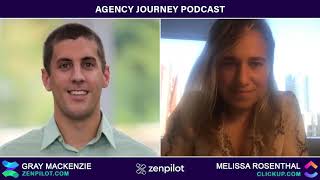
Melissa Rosenthal, Chief Creative Officer at ClickUp, talks about building the company's brand, creative strategy, and culture. She covers how ClickUp approaches social media, paid ads, and the creative decisions behind their marketing.
Welcome to the Agency Journey podcast where we connect with agency leaders to uncover the hidden systems and processes that drive their success. Now, let's dive into today's show. All right, welcome back to another episode of Agency Journey. This is Gray MacKenzie, and this week I've got the pleasure of bringing on Melissa Rosenthal, who is the chief Creative officer at ClickUp. So it's been a little while since we've had ClickUp on the program. Zeb Evans on about a year ago, talking about some of ClickUp's vision and traction and go to market. So, Melissa, I'm excited to have you on and talk about a lot of the creative things that you all are up to right now. Welcome to the show.
Yeah, thank you for having me. Excited to share.
So maybe, maybe real quickly, just by way of intro, I know you've got a background at buzzfeed and Minute Cheddar. Prior to joining ClickUp, you're probably what, around nine months in, but maybe you could just give us a quick background on kind of your career trajectory and what brought you to ClickUp.
Yeah, absolutely. So I started at BuzzFeed very early. I was the ninth employee there. So it was kind of like the wild west of the Internet days when everyone was trying to figure out modeling and kind of what would make sense. But I believed in it as the future of media. So I joined as an intern actually and kind of worked my way up to oversee the global creative department. You know, hundreds of people globally. We expanded into different countries. It was an amazing and wild ride and, you know, the brand became pretty, pretty famous and well known and that was, it was, you know, really exciting and not having any experience in advertising or marketing, it was like a fast tracked course into kind of understanding like all the different kinds of, kind of elements of what marketing and creative looked like and you know, working with external agencies as well as media agencies and buying media and it was pretty fascinating. So I feel like that was my crash course and in kind of everything, you know, media and marketing related. Yeah. And creative.
That's awesome. And then how did you get connected to ClickUp originally?
Yeah. So after, I can just briefly after, after buzzfeed went to Cheddar, built that and then we sold it and then I some time off to figure out what I wanted to do next and was building like a small SaaS company with my husband and yeah, I mean it just was kind of right place, right time. I had heard of ClickUp and I was very familiar with the project management space and the productivity space. I'd Worked in pretty much every program and had my frustrations with all of them. So it was when ClickUp reached out to me, I, you know, immediately was like, this is, this is a kind of a rocket ship of a company and they're solving a problem that I've been experienced for many years. And you know, it was, it was kind of like a no brainer in terms of product and once I got really into the product I just saw how powerful it was and was pretty, pretty amazed at what Zev and team had built and how they scaled it and what the organic growth looked like. So it was, it was that and a mix of a lot of other things that led me here. A lot of the community that had been built around ClickUp just by means of how amazing the product was and how passionate people were about it and how they would go, you know, to the end of the earth to shout it from the rooftops, to tell other people. And this kind of like viral coefficient and this organic engine that was a big part of their growth was just really, really interesting to me and I always wanted to go into software. So I felt for, for a brand and a product that kind of felt different in market. This was, this was something I wanted to jump on and really help build out, especially on the brand side.
Well, you touched on a huge part of the ClickUp story which was all organic growth for a number of years as they got going. Obviously companies is still super young, but that was the whole story of initial growth was that virality and sharing of the platform largely. Yeah, you guys have obviously taken a shift in that direction here and ramped things up over the past year. So what the creative department today, I am trying to remember, maybe you're 16 or 17 different folks.
Yeah, about 20 across the whole.
About 20 now.
Yep.
Has all of that been built? So what was the state when you joined? And then maybe bring us just through the state today and some of the things that you're focused on.
Yeah, when I joined I believe there were three, three people, maybe four. So it was, it was very early. I had seen what they were doing in creative and, and I just saw this like blue sky opportunity to build a best in class like creative internal agency within the company and what that allows you to do to be kind of, you know, vertically integrated is, you know, the product better, the team knows the product better, you're able to operate on fire on all cylinders. There's visibility within what, what's being created and what the outcome is. And the, and the KPIs and kind of the data sharing and also you're able to take risks. So, you know, Zeb and I were aligned on kind of what the vision would be and the North Star of making, you know, making this brand feel human and personifying the product and not just pushing features, but, you know, talking to people as they are people. And not just, you know, even, it's even in a B2B model. You know, the best type of branding is when you're speaking to people. So, you know, with a consumer approach. So, you know, the North Star is to make the brand feel, you know, feel human. And every touch point that a person has or business has feels that, that way. So now the state of the team is we're 20 people, as I mentioned, we oversee kind of everything across content and, you know, anything that is a collateral, piece of collateral that comes out of my team. So video, design, community, social. We kind of are constantly, you know, events, you know, we're, we're constantly trying to push ourselves and, and push the marketing and push the brand and, and, you know, really, you know, make the brand famous to the right people and that, you know, I think there's a way to do that through really just understanding your audience and building things that people enjoy and attaching yourselves to things that are relevant and happening in the, in the world of what you want to be a part of.
How do you primarily measure that? Are we achieving that goal of making the brain feel human, getting the word out there?
Yeah, I mean, I think there's a lot of social listening, of course. So when people write in and it's also, I think there's a lot of pieces to it. So it's product, it's customer service, it's, it's marketing, it's engineer, it's everything that kind of goes into that. So I wouldn't say it's just isolated to the brand or isolated to the creative team, but you know, that to be able to do that, you know, you see it across social, you see the response, you see the ROI and what you're, what you're delivering. People start to mention you in sales meetings in terms of being the best in class at doing X and Y and Z, and it becomes this point of differentiation as a company. And, you know, when you have multiple points of differentiation between best in class customer service, best in class social visibility, best in class advertising, and creative, best in class product, you know, you really start to do that. So it's not one team or one person or it's the entire company firing on all cylinders, but you start to see it in market. You know, people write in every day how amazing the customer service team is or how awesome the ads are and the fact that they search for them or, you know, they, they saw ClickUp on a billboard and then they told their boss about it. So it's measuring on, on a lot of different ways. Specifically like, you know, it's both quantitative and qualitative, you know, based on kind of how we're measuring and what, what we, what we need to see and kind of how we, how we measure that.
Which one do you hear more frequently? I hear a handful of things that people see about ClickUp, but most commonly I hear they have billboards everywhere. I was watching the game or I was at the subway or I was wherever and I feel like I can't get away from ClickUp. That's happened a number of times. I'll talk to somebody and they reached out to us for agency operations help. They don't know about ClickUp. We talk about ClickUp and they're like, I can't unsee it. It's everywhere. But then the other thing that we hear about, and I'm sure you hear about this all the time, is the Returning to Work series and some of the creative videos that you all have done.
Yeah.
Which one do you hear more comments about?
It's kind of equal now. Yeah. I mean, yeah, the video team did like a fantastic job on that series and they came up with it and pitched it to me and then I was pretty on board. I think it's a once in, kind of a cultural moment where you can just synonymously attach yourself to work as a whole by relating to people's, the reality of what we're doing in a way that makes it a little bit more lighthearted. But we can attach ourselves to. We can't deal with the awkwardness of returning back, but we can handle all of your productivity. So it was pretty, it was pretty much a no brainer to do that and just to bring people joy during what could be a stressful time and kind of giving them that laugh, but then also saying we have you in terms of your, you know, your workflow and the way you want to work. So yeah, no, that was, I hear that a lot and it's amazing. And the team, you know, is ecstatic about the responses and the reception to that and then the billboards. Yeah, I mean, I'm a huge believer in out of home. I always have been, I think, you know, a type of advertising that you can't Skip, you can't, you know, you can't have automated by bots reviews and, and you are able to hyper target based on where you want to be and who's around that area. I think it's just, you know, it's super powerful and it makes you look, you know, enormous. So it's a touch point on, on a customer journey. But I'm, I'm a big fan of the medium. So, yeah, it's a, it's a mix of we see your ads and we love them and we also see all your billboards and they're all over. And, you know, that's a kind of a perfect mix of, of, I think, smart branding.
Right. When you brought up one other thing, you brought up social listening earlier and you are all over Twitter. Seems like you see everything on there. I mean, I'm sure you're all over all the socials. What's your, what's your social platform of.
Choice if you didn't Twitter and LinkedIn. Yeah. So, yeah, I mean, Twitter is incredible for listening and responding to real customers and people. And, you know, our approach has been, you know, not only responding from the, from the account, but we have, you know, people that are on the team that are passionate about the community and want to. Want to be in touch with them and like, speak with real people. And I think when you do that, again, it's like this really incredible point of differentiation because having real employees jump in is just powerful. And then, yeah, LinkedIn I love just because it's kind of this incredible organic media engine that I think some people do really well. But, you know, as a company, there's lots of really interesting things that you can do there. So I'm a big fan of that platform too.
Well, this is a little more tactical or granular, but it's super common to see you or Chris or Zev or somebody on the ClickUp team jump in. ClickUp support is already. The ClickUp response team has already handled from a social perspective, whatever the might be. Yeah, you all will jump on it. How does that get coordinated? Uh, what platforms are you using to help keep that in place? And then is that just kind of like, do you guys block time each day to do that or is that just a, hey, this happens to be part of what we do.
Um, I mean, it's a mix. So we, we definitely have a Slack channel where we kind of go back and forth on, on certain tweets or certain comments, but it's really, again, it's like passion, like we're all looking through it. I block time on my calendar to go through tweets in the morning and then in the afternoon and then at night, um, and then, you know, I'll check sporadically throughout the day. And same thing with LinkedIn and kind of everything that kind of mentions us. We use Sprout as our, as our tool of choice, but it goes way beyond Sprout. Like a lot of the coordination is really just kind of having me and the social team and Chris and Zeb just caring about the community and not letting the size of the company influence our ability to step in and have those real interactions. So yeah, it's a mix of slack and just blocking our time to make sure it's a priority because it is.
The other thing that has become a larger part, at least from the outside of the go to market strategy has been paid ads. Social, sure, you're running search as well, but especially on social. How has that evolved and has that been, I guess in terms of channels, how's that work for customer acquisition?
Yeah, I mean we're scaling up across a lot of different channels. The things that have worked for us in the past, they, they, you can continue to spend more, but you want to find efficiencies in other, in other places. So yeah, we've scaled up our YouTube, our Facebook, our social in general and you know, with, with an in house video team and creative team, we're able to create ads and pretty, and motion graphics. We're able to create ads pretty much in real time, test a ton of different variations, see what's working, what's not working, iterate on those ads, you know, next day and then put them into market. So there's, there's kind of this really incredible like life cycle that we have of being able to ramp and spend but understand what's, and what we need to pivot and you know, have Having predictive modeling in house and data warehouse is really helpful for that. Same thing with podcasts. So it's. Yeah, I mean we're certainly ramping up our spend, but we're doing it. You know, anyone can spend money, but few people can do it well. So it's a, it's an art and a science. I would say that makes sense.
We just had Troy Osinoff from Juice on the podcast, who followed you at buzzfeed during customer acquisition there for a little while digging into some of the paid ad side. So been interesting to see all the channels kind of ramp up here, coinciding with obviously the, the funding received last year and you coming on board?
Yeah, absolutely.
That's been awesome to see what has that. So internally this is more of a, not a personal question, but I'm gonna, we'll see how, how far you want to go with this question. How has the relationship with Zeb and with the rest of the exact team at ClickUp Ben around pushing forward some of the ideas and campaigns and types of go to market strategies that you've been putting?
Yeah, I mean, Deb's great to work with. He believes in building brand and building a strong brand and you know, having that be your legacy because, you know, anyone can kind of do this, you know, to acquire customers, but when you build a brand, you know, you're building a brand for 20 years and not a brand for the next three years. So, you know, we're, we're pretty well aligned there. And you know, a lot of the sentiment has been let's take big bets and let's make sure we're measuring them and we're iterating when we need to. So, you know, it's, it's kind of like figuring that, that, you know, that balance out. But yeah, it's, it's. As long as we're able to measure and figure out what's working and pull the levers, you know, in a smart and efficient way. It's, it's been pretty, you know, it's been a great way of being able to test big things and go big. And I think, you know, you never know what's going to hit. You know, you never know when you're going to have something that just goes crazy and people pick it up and they love it, share it, talk about it and wins us accounts. I think that's just the, you know, it's continuing to do that. It's emotion. It's the same thing we did at BuzzFeed. It's every day it was trying to break platforms, figure out what would work for us. And you know, you do it enough, you have enough wins and all of a sudden, you know, you go from a company that I had to explain to people what we did to becoming, you know, a household name where people just couldn't get, couldn't believe that I worked there. So, you know, I think it's that, it's, it's. I'm starting to see that effect here where ClickUp's becoming that more of that household name, especially within, you know, work productivity. And I think like we're only going to go up from there. So, yeah, I mean, it's being able to measure it, of course. And that's really important. So whatever idea we have, you know, there's, it's like, okay, let's figure out like how much does this cost to execute? How do we want to execute it? But we're really cost efficient with having the team in house. So, you know, we don't have to go out to an agency and spend, you know, hundreds of thousands of dollars or be on a retainer to be able to execute, you know, creative and kind of thought provoking ideas around the space and really allows us to be different.
You mentioned something about brand and a number of people talk about brand. Did cancel at Drift, talked about branding. Here's the big, the big moat. Who are some of the. One, I've got two kind of final questions here, but who are some of the folks who are shaping the way that you are thinking about building the brand at ClickUp? By at ClickUp. Your role building the brand at ClickUp?
Yeah, I mean there's a lot of like, it's kind of a mix of who's doing what best in class. I would say, um, it's definitely not like my playbook is not like, let me see what everyone else is doing and kind of help shape that. It's a lot centered around like human emotion, which is something I learned like early days is, you know, the best way to connect with people. I would say there are a lot of companies doing a lot of different things well like, you know, HubSpot built an incredible education, you know, like platform. And I would say they, you know, they did that incredibly smart, in an incredibly smart way and became very well known for it. And I would say there's others in the space that are kind of doing the same. But in terms of what. And I'm always paying attention to those companies, but I would say in terms of what, you know, really sets us apart is that we're not following, we're kind of trying to lead the way with that and taking little pieces of inspiration along the way. But it's, you know, I mean there's a lot of consumer companies that inspire me to like, I think, you know, they, they built a community and I think the companies that have built that community are the ones that we look to follow because it's like, why have they built that community? I mean webflow has done an incredible job of it too. And they have that really great human relationship with their customers and their businesses. And it's very evident across social and the way that they even poke fun at themselves with webflow memes, they're great. And I think there's a lot that you can take from pieces and chunks of companies like that to form your own strategy and your own experience, too.
That's awesome. And then you all just officially moved into the new San Diego office. How's that? How's the move in going?
It's awesome. Yeah. Well, I mean, we're moved in, so I would say being in person, you know, especially as a creative person, is. There's no. There's no way to kind of replicate that on Zoom. You know, it's not. It's not the same as going into a room with. On a whiteboard with a bunch of people. People and brainstorming in real time and fixing a problem in five minutes. You can't do that over Zoom. So fully support a hybrid and remote work culture. But I'd say being creative and building brand, it's much easier to do that in person. And sometimes you're just sitting around eating lunch together, and you come up with an idea that's just like, wow, that's the idea. So I think there's a lot of the passive benefits of being around other people and that energy that you can't replicate. So, yeah, it's going really well. It's an amazing office. Where. Right outside the Padre Stadium. So there's a nice work perk there. And we go to games all the time as a company and as teams, and, yeah, it's great. It's been an amazing thing to see all these amazing people that I've worked with over Zoom in real life.
That's awesome. Well, I know we are tight on time, but I appreciate you coming on, giving us the inside look and allowing us to dig into some of what's driving.
Yeah. And I'd say that the most exciting part is, you know, we've made a lot of progress over the past year, but it. It's day one for us. You know, it's always day one. And I think if you can always keep that mentality, you know, the sky is the limit. Like, we. We have. Have very high beliefs in this company and what we can, you know, what we can do here and the way that we can transform work and, yeah, it's, you know, it doesn't happen overnight, but there's a lot of, you know, hiring the best and best in class people that are excited to build this and, you know, really can rally around it. It's amazing. So the culture here is really special, and so that contributes a lot to it as well.
Yeah, that's awesome. Anything else, Melissa, as we're wrapping up here?
No, I would say just stay tuned. We have a lot of really incredible, incredible ideas and concepts and creative and marketing and branding opportunities that we're working on right now. A big event we're about to launch. So stay tuned for that. And no, it's been great chatting and looking forward to you seeing kind of what we do next.
Awesome. Well, I appreciate you coming on, being willing to share. Thanks for listening to the Agency Journey podcast. Visit agencyjourneyinsiders.com to join the podcast community and be sure to subscribe for future episodes.










