Corporate SEO, Scaling Your Agency, and Selling Trainings and Tools with Ryan Stewart from Webris
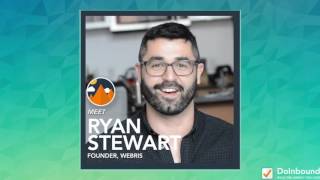
This is a YouTube video titled "Corporate SEO, Scaling Your Agency, and Selling Trainings and Tools with Ryan Stewart from Webris" published in June 2017. It features a detailed interview between hosts Andrew and Ryan Stewart, an agency owner specializing in SEO. The discussion covers Ryan's journey from working at big agencies to founding his own agency, the importance of process and offshoring in scaling, the development of training products and tools, and insights into agency operations and client management. The content is a single-speaker interview format without George B. Thomas involved.
Foreign.
Welcome to Inbound Agency Journey. This is the show where inbound agency leaders share the strategies, shortcomings and successes they've experienced in their journey toward building their dream agency. Now here are your hosts, Andrew and Griffin.
Would you mind kicking us off just by sharing a little bit about your background and introducing yourself to the listeners?
Yeah, absolutely. My name is Ryan Stewart. I own an agency based out of Miami, Florida called Webris. We specialize in search engine optimization and some other marketing strategies as well. Got about 8 years of experience in client facing SEO. I used to work for big agencies. Then I went off on my own and we've been doing this for about two years. We also sell some trainings and some tools which we will talk about more.
That's awesome. Two years ago, what, what brought you the point where you wanted to jump from big agency life and go out on your own?
A lot of things. I mean, just seeing I didn't work well for people, number one, that was kind of like my biggest thing was that I was a contractor for the big agency and I didn't like the way they did things, to be completely honest. I didn't like. I didn't like getting stuck in between unhappy clients and, and people who weren't involved in the contracts but were getting paid for them, if you know what I mean. So. And I realized that there was a huge gap, especially for SEO between your small local agency and these big agencies who work with corporate clients in the market for SEO is really that 2000 to like $6,000 retainer that, you know, everyone needs these days, especially e commerce websites. So taking my knowledge from that and just kind of like the growth hacking style of SEO that I did, just really built a process and a framework that was really good technical, really good analytics, really good content, and really good link building and just mashing that together into fitting into that, that market, that void that I felt was there. Yeah.
Nice. So did you. Did you kind of put all this in place and then just make the jump and go for it, or did you kind of build it on the side and then once it was up to.
Yeah, it was, it was a little bit of both. I mean, you get to the point where you have to eventually take that jump, you know. But technically I was, I was a contractor consultant for that big agency, so I was managing two of their accounts. I was managing Best Buy for a little bit. I was working on Target really big accounts, which was cool. It was good exposure and it was good to see how big agencies do SEO too, because they're really just analytics and reporting and technical SEO. They don't really do that much in terms of like execution. So I got to learn a lot about especially how big websites function. It was just really good knowledge. But I was doing a lot of link building on the side and building somewhat of a personal brand on the side through guest posting and getting on sites like Moz and stuff. And I started getting a lot of inbound leads and it got to the point where I was making really good money as a contractor, but you know, I had to take a pay cut to start the agency. But I saw the potential in just the lead volume. So it was a, a gradual building up of confidence process in terms of going out on my own and hiring people and not doing the work anymore, but delegating it as opposed to doing all the work and making all the profit. It was a gradual thing. But then like I said, I got to a point where you just have to jump and go all in because there's just not enough time in the day to do both.
Yeah, definitely. When you guys did jump in, when you jumped in, got the agency up and running, started bringing people on, was it always part of your strategy to offer training as a part of the services or did that kind of evolve as you got things off the ground?
It evolved when I realized really how hard it is to make money in this world, like consistently, because especially to I market myself through content, through video. And the large majority of the audience that I'm able to reach is agency owners and other marketers. And if you look at kind of just the total number of views that we get on content, guest posting in our YouTube channel, it's over a million a year. And then you look at the number of clients that we have and there's just a big gap. And I realized that I wasn't scraping enough of the market in terms of what we were offering. People were enjoying my content, getting a lot of great feedback and I built up a level of trust with people. And I also again realized that the void in the market was less for knowledge and more for process. And kind of like this is a framework types type training. Not so much like this is a link, this is what it does, but more exactly step by step, how to do it, and then more importantly how to just give that to people to do it for you in terms of offshoring. So I saw the void in the market for that and I launched that. And it's, it did really well. It's still making sales like a year and a half later. So the plan is to scale that up to scrape the market in terms of like the mid offerings, you know, a thousand dollars. Our agency services are like 3K and up. And then, excuse me, bottom. Bottom is going to be like cheap WordPress plugins and a lot of free, a lot of free tools to just get people into that funnel and then, you know, bouncing them through email and remarketing and stuff to convert them either to training or to agency clients.
That's awesome. I think a lot of agencies feel that gap right there where they put in all the work, they get some traffic, they earn some leads and stuff. But such a small percentage of those jump up to thousands of dollars. But yeah, and then if you sprinkle those low cost offers down there, you're gonna be able to figure out pretty quick who's willing to pay you and who's just there to scrape free stuff. So that, that makes a lot of sense. So just going through your site, talking to you before the interview, like it's obvious that process is a big part of what you guys do. Did that come naturally to you? Like, are you just kind of that analytical type of a thinker? Or has that been something you've really had to discipline yourself and put into play if you want to duplicate yourself in this way?
You know, it's a little bit of both. If you look at my personal life, it's not like that at all. Yeah, I can't function as a grown human being. But when it comes to the business, you know, I realized pretty early on that especially when you're dealing with clients who have all sorts of expectations and you're working, you're delivering a service that you ultimately don't know if it's gonna work right, you need some sort of framework that is at least going to help you, at the bare minimum, give stuff to people regularly, stay in communication with people. Just build a process and a framework to just stay on top of them right at the very end of the day. What I tell clients is that like, I can't guarantee you results, but I promise you that what you're going to get is top notch communication. We're going to be there for you. You're going to get ongoing reports, you're going to get all these deliverables on time and you have to have a process to do that, but more importantly to execute that at scale. So that was really where the process started because I realized I couldn't really make money in this world without it, especially in the agency life.
Yeah, so did you, did you begin to apply that first, like training your own teams internally and then see like, wow, we can kind of of repurpose a lot of these byproducts that we have right here and launch it into training?
Yeah, that's exactly what it was. I mean it started as when you're first getting started, you know, as a consultant, I was doing everything myself. But you quickly realize that you can't scale without people. And when you're still getting started, like you can't afford local people, they're just too expensive. So I had to look offshore. And if you want to manage people offshore, you absolutely have to give them the most detailed processes possible, otherwise it's just never going to get done. So I started building it for them and then I started just kind of publishing it on the blog and people were just going crazy for it. So I cleaned it up and I turned it into a training and it's done like 400,000 sales in a year and a half. So it's done really well.
Dude, that's awesome. And it's something you already built, you already needed to service your clients. I think that's awesome. So right now, when you, when you're putting, when you're kind of walking through the process building out training for your team, do you like, do you start with your org chart first and figure out, you know, here are the seats I need to fill someday as I scale and then kind of then figure out, okay, what do they need to do to their job? Fill out step by step checklist, work it that way, or are you doing like need based first?
So I don't, we don't go off an org chart model. This is actually a conversation I had with my operations manager over the weekend. We're more of an assembly line, right, where it's not levels and tiers so much as a straight line. So the people that we have on board, they're the people that we have locally. They're more managers and they're more kind of like all around marketing strategists that understand the process end to end. But we use quite a bit of freelancers and offshore to cut our costs. And those people are trained to do one thing and one thing only. Like we have someone who only does gtm, we have someone who only does Google Analytics. So what that allows us to do is scale up with clients and just give them little micro pieces of the process and not overload them. And they're just trying to do that one thing. Like we have one person, one VA who only runs a competitive analysis for us. Right. So basically instead of hiring more people underneath people, it's hiring people more horizontally, if that makes sense. So if we scale to a point where, and you know, we built the process too, so we're only doing that thing once. So we'll kind of batch the work up front and then kind of drip that deliverable over time. Like we'll build a content calendar, but we'll drip that over time. We'll build, do the link strategy up front, but we'll deliver to them in, in month three. So we're able to like batch the work up front based on the process that we built. That allows us to be kind of like hyper productive in how we deliver work and how we kind of manage our clients at the same time.
Okay, really cool. When you, when you kind of take the lessons that you guys learned as an agency and now you want to branch more into the training side of things to kind of expand your reach, get more out of the traffic that you're already earning, what are some of the channels or what are some of the methods that you are planning on using different products, different tools. Where are you kind of seeing value gaps in the market that you think you can help people out with?
So, so in terms of marketing ourselves to get more reacher in terms of, to. To. New products to sell.
Yeah. New products to sell.
Yeah. So. So it's all need based, based. Like I, I look at all the content that we create, all the trainings that we have to date and the tools that we built that we haven't launched yet. They're all based on agency needs. Like being an agency owner, I understand the pain points and we're constantly building these processes and these tools to better service our clients. So basically I'm not going out and like looking for voids in the market. I don't, I don't look at competitors. I don't believe in competitors. I believe that everything is internal. And you know, we're really competing against ourselves because, you know, it's really the service that we deliver. So it's the same thing with tools. We're looking at what we're struggling with, mapping out that process. And then we're saying, okay, you know, like we need to do this competitive research, we need data from ahrefs, we need link data, we need traffic data, we need analytics data. How do we automate this? Right, so we're looking at the process and then looking at how to automate that and then layering tools and technology on top of it or VAs on top of it. Now we're packaging that and selling it. That's the plan. So we're looking at our own internal pain points, and then we're looking at how to automate that, and then on top of that, how to package that and sell it and then market it.
Gotcha. That's awesome. And so when you look at, I guess, like, the services that you guys are doing right now, is it primarily like SEO stuff? You branching out into other different channels?
What's going that breakdown look, like we tried. Like, we tried to do Facebook ads. I hired somebody here locally, full time, but it was just too, like, SEO in itself is just too much work, you know, like, so then what we found was that we were. We were overloading ourselves and under and under delivering at the same time, which is kind of a weird paradox. But, like, what happens is we would, you know, instead of going horizontally, which a lot of people think that you have to do, what I found was that our margin just eroded, right? Like, especially when it comes to account management for, like, Facebook. Like, you have one person, and I didn't feel like building, like, a whole offshore team under them because you had the same issues, right? I had one person here locally, but she maxed out a two accounts for ads, and I found that people were only willing to pay a certain amount for that Facebook management. And the margin on it was terrible. So we were gonna have to build an offshore team under her. And I was like, man, instead of doing all this, let's just take it all back and look at just our SEO and build a much deeper SEO service as opposed to a much wider, like, marketing service. And, you know, a lot of people in the market think that, oh, like, we're already doing their SEO, we might as well do their website. We might as well do their Facebook. What happens is you kill that relationship. If you don't do a good job with those new things, you get so you're actually killing the original relationship, as opposed to being that trusted provider that does one thing for them very well and one thing only. And a lot of people now that what we're finding, especially e commerce sites that we work with, they want to work with specialists, they want to work with people that know SEO because it's so deep and complicated that they want it done right. And the same thing with Facebook, the same thing with pay per click, and they're just hiring a marketing manager to manage all these agencies. And I learned that from working at the big agency too, is that these Internal marketing positions at like Target and Best Buy, they're really just managing contractors and agencies. Right. They're not really doing the work. So we wanted to specialize in doing SEO and doing it very deep. So like I said, we do a lot of analytical work, we do a lot of strategy work, we do a lot of content work, we do a lot of technical work, and we do a lot of outreach, link building and influencer marketing. So all under the scope of SEO, but we're really getting into other aspects as well, including like some design and elements and stuff, Stuff like that.
Okay, that's awesome. I think so many agencies get, get themselves in that spot and they think, oh, I can help this client more by spreading out. Yeah, but you're really shooting yourself in both feet because, like the client gets pissed at the same time. You get stretched, you get more gray hairs because your team can't deliver on that stuff the way that you promised it.
Exactly.
Okay, so like one question, like just jumping from big agency stuff down to kind of that more mid level. What. What kind of lessons have you been able to take from the big accounts that you worked with and applied them to some of the accounts you're working with now as an agency? And how is that transition process worked out?
Yeah, I mean, two things really. Number one, pardon my French, but like the ability to bullshit when you're working at a big agency. Yeah, I mean, like, it's really important, man. You have a call every week with a client at a big agency every week, sometimes more. And you're just constantly struggling for stuff to talk about. You know what I mean? Like there's only. If you're not. When you're not doing the execution, when you're not responsible for content or links, you're only really doing like tech Plessio and reporting. You have to learn how to like think and talk on your feet. It's a very important client management skill set. Right. Like, especially managing the agency. You realize how many clients will hit you up for just dumb stuff. You've got to have an answer. So that. Honestly, I think it's a skill set not talked about enough is just the ability to manage clients and like manage expectations and just keep them engaged after a certain point because it gets hard to manage clients long term. So that would be number one. And then number two is just technical and analytics. Like what a lot of smaller agencies don't do well is technical because they learned SEO from kind of the growth hacking point where they're doing like content marketing and link building. But they don't know how to do a technical audit. They don't know how to. They just don't know how to fix technical issues or identify them. So I learned that very, very well at working. It was Sapien Nitro, that was the name of the agency working there, working with those clients. The ability to identify like very minute technical errors. But then again, combine that with like gap analysis, pushing into content and then pushing in a promotion and links to really drive growth and not just fix error. So combining those two things is what I really learned.
That's awesome. Then you take that, apply that to clients you work with and also like it just. That's going to blow through your whole process too.
I.
You said something earlier that I think really resonates that you can't really do this agency thing without a great team. And if you really want to be profitable, offshoring is a big part of that. Can you talk me through some of the tool stack you guys use or just the process to keep everyone on the same page when you're spread out across time zones? Across. I mean everyone here has like their own islands of expertise too. So how do you guys bring all this together and deliver killer service?
Everything we do is run through Google Drive. We don't use Dropbox, we don't use Asana. We build everything custom in Google Sheets. This is what were the tools that we're getting ready to launch in the public is people don't realize how powerful Google Sheets are. It's really incredible because you can connect APIs to them and basically build software. You can hack together software in a day. If you're using like I love Moz, I love semrush, love Ahrefs, they're all great. But basically we don't use the tools. We just use your APIs.
Gotcha.
So what we do is like we build something. I'll just give you an example. Like we have a project management suite that we use all in Sheets that we're going to be launching publicly that automatically. It's just amazing. Like we have this dude who's a developer for Google Sheets and he when we onboard a client, all you do is hit a little, a little dropdown menu up top. You add their information and it automatically. It creates a Google Drive folder for them. It creates all their templates in Google Sheets. It pushes their information to other sheets. So like our link management file, our content management file, it automatically creates a project plan for them. It automatically generates an email and Gmail. Like it's amazing what it can do. And like, there's some really good project management tools out there and technical audit tools. But when you understand that you can really build something, whatever you want. It's just the ability to customize is so incredible and so quickly too. You can be very agile with what you do. So everything that we do is pretty much custom. Like, we use all of your standard SEO tools, Screaming Frog Moz, all those things. But we're really just hitting their APIs, because as an SEO, I mean, pretty much anything you do anyways ends up in Excel. So we're just pulling that all into one sheet and then using the power of like aggregation formatting, like advanced lookups, advanced just like crazy stuff. And we're building these like, really cool audit tools, like competitive audit tools that just crosswalk all this data with a click of a few buttons and really give us a competitive edge in the market. Because this is what I'm pitching clients too, is I'm saying, like, you know, when I'm going up and getting RFPs from against some of these bigger agencies, I know that they build their own tools too. And that's like one of their big sales pitches is like data viz and Technical and like all these tools that they built. But then I come in and say, hey, look at, we have the same thing, but we can customize it based on whatever you want. Like, tell us what's important to you, we'll build something custom for you at a fraction of the cost of these big agencies. Yeah, it's a huge, huge selling point for.
Dude, that's awesome. I think it's like agencies are going to get value out of that. I mean, the, the framework thing is what I think a lot of people miss. They go to Asana, they go to Basecamp, and they think, this is just going to solve all my problems. But they're missing that framework and sounds like you guys are able to put together a framework that's worked well for you and that's going to resonate with folks. So that's awesome.
Yeah, I mean, literally, it's mapped out. I'm not even going to lie. Every client gets the same process. It doesn't matter what you do. You're getting the exact same. It's step by step. It's built into Google Sheets and it's built out for 12 months and the client has access to it and they get live tracking of the tasks we're working on. It's all the same. It doesn't matter. Step by step.
Cool, man. So, Ryan, you share some awesome nuggets here. If anyone wants to dive in more, kind of jump into your pool and learn about what you guys are up to. What's the best way for them to connect with you and get in contact.
Webris.org is where we're going to be listing all these tools. We have a sidebar menu. We're redesigning the website and launching all this stuff in the next month. I'm also pretty active on Twitter, YouTube and Facebook. You just look for Ryan Stewart in Google and you'll, you'll find all of our stuff.
Awesome, man. Thanks so much for coming on. Thanks for dropping all the knowledge and we'll chat soon.
Awesome. Appreciate it. Andrew.










