Defining Agency Culture and Establishing a Niche with Evan McBroom
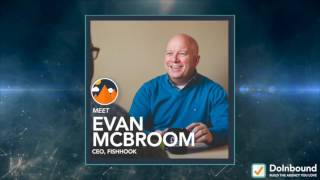
This is a YouTube video titled "Defining Agency Culture and Establishing a Niche with Evan McBroom" recorded in April 2017. It features a podcast-style interview hosted by Gary and Andrew with Evan McBroom, founder and CEO of Fishhook, an inbound agency specializing in the church and faith-based nonprofit niche. The conversation covers topics such as the agency's origin, the importance of niching, agency culture and core values, team structure, client journey, and the challenges and opportunities of inbound marketing within their specialized sector. The discussion is a single-speaker interview format without George B. Thomas as a participant.
Welcome to episode 96 of Inbound Agency Journey. This is Andrew. Excited to have you here this week where Gray is talking to Evan McBroom. Evan is the founder CEO of Fishhook. They are an inbound agency that targets just the church niche. And so in this conversation, Gray and Evan dig into all kinds of topics ranging from processes. The things that are the asset for the agency early on can actually be the deficit later on, the importance of documenting everything, going through the process of building processes. They talk about creating a clear vision as a founder and owner leading a team, and also dive into the whole idea around niching and how a niche can actually help you be more profitable as an inbound agency. Before we get to that conversation between Gray and Evan, this podcast is brought to you by Do Inbound. Doinbound is process and project management just for digital and inbound agencies. So if you're looking for an easy, intuitive design to a software that helps you break your processes down into easy, repeatable Systems, check out do inbound@doinbound.com you can get the show notes to this episode@doinbound.com podcast without further ado.
Here we go.
Welcome to Inbound Agency Journey. This is the show where inbound agency leaders share the strategies, shortcomings, and successes they've experienced in their journey toward building their dream agency. Now, here are your hosts, Andrew and Gray. All right, welcome back to Inbound Agency Journey. Another week, another episode. This week, I am pleased to Bring on Evan McBroom from Fishhook. Evan, welcome to the podcast.
Hey, Gary, thanks for including me. Excited to be here?
Absolutely. Well, I'm excited to have you on and I just reached out to you actually this week. I've been following Fishhook for a while now. Your design has stuck out to me. As I mentioned before, we started recording and was excited to kind of get this turned around and record pretty quickly here. So for anybody who wants to check out the website, all the notes, every site or anything that we mention here today, we'll throw in the show notes@doinbound.com podcast. But for anyone who wants to check out Evan's site right now, go to Fishhook us and you'll be able to check out the design that I mentioned there in the intro. Evan, we like to start. Yeah, go ahead.
It's fishhook with two Hs. I'll be saying that for my entire life.
But two Hs, that is a great. That's a great clarification for people because those, you always have those tricky when you've got double consonants there where there could be a word break that. I bet that. I bet that causes a lot of confusion.
It does, but we've cleaned up, so now we can move on. Thanks, Gary.
There we go. We got it. Well, cool. Well, Evan, we like to start this podcast typically with just kind of your. The time you're an agency owner, there's always the mix. Like personal and professional are very intertwined and it's kind of all one story. But. But walk us through kind of where Fishhook came from and then I'm sure I'll have lots of questions and probably interrupt you as you're going through it, but where you guys are today?
You bet. Sure. So in my mid, I guess that's early 50s, so I had this 14 year career in a kind of standard agency world. The big emphasis on video and live events and things like that. Loved that work. As it rolled into my late 30s, I just sensed a restlessness about that work that I kind of couldn't. And I came to understand that, like, if you've ever met a priest or a minister or they got called to the Peace Corps or the mission field, they'll talk about having a calling. So I felt like I was having a calling on my life that I thought I was actually going to go to seminary and become a pastor, but I really didn't like to study. And my wife was like, I can't envision you in seminary going back to school. And she was right. And what I discovered was there was this real need within churches and faith based, not profits, to bring communication strategy into those organizations. And so Fishhook was born out of that desire to come alongside and help these organizations that I care a lot about and then bring my professional background to that as well. And so fishhook was born 14 years ago in 2003, and it's been a great, great ride.
That's awesome. So 14 years ago, obviously, you guys, I know that inbound is not a brand new thing, but it's in the course of your journey, a relatively new thing for Fish Hook. As you guys started out, what were the services that you were providing at that point?
Sure. So I would say a big emphasis on strategy. We have a communication assessment that we do with the organizations and specifically the churches, because people who lead these organizations, they've gone to school for lots of things, but communication strategy is not one of them. And so we do a lot of coaching on the front end of our relationships and then we do branding and identity work, web development, graphic design, Video, so those sorts of deliverables and processes along the way. But Inbound kind of didn't come into the picture till about three and a half, four years ago.
Okay, and what. What shifted at that point that. That you guys kind of moved in that direction?
Yep, sure. So we're headquartered in Indianapolis, although we work throughout the country. And right here in our city is Element three, which is a great inbound agency. And they were hosting kind of a mini version of Inbound called Go Inbound. And, like, literally, Gary, I. This was. This was why I went. I knew of their agency and respected them. I had the day free, and it was like, a week from the date of the event, and I had never been to the new hotel where it was being held, and I think it was, like, 200 bucks to go. And so, literally, like, that was it. That's the reason I went. And I'm telling you, about 90 minutes in, after hearing Brian Halligan and a couple other people present, I started to realize that Inbound had the potential to solve something that really plagues a lot of our clients. And so, like, I think by lunch, I was texting my business partner, Leah Norton, saying, hey, clear the decks for Monday's team meeting. I've got a. Like, there's something I can share with the team, and this could be really big.
That is awesome. So Tiffany, Obviously, who runs Element 3, has been on the podcast before. That's great that. That you got to attend Go Inbound. And that's funny that it kind of came up. You know, it's funny how. How our paths kind of wander and meander to. To where they are.
No doubt.
So. So then it had. Yeah, I'll let you go. Let you keep going with the story.
Well, that event was in June, and by Inbound in Boston, which I think was, like, late August, early September, we had hired staff. We had hired a person to lead this effort, and we signed on with HubSpot, and we were, like. We were committed, and we were ready to go.
That's great. Awesome. We'll probably get to a little bit more of what a typical client journey looks like a little bit later. But in terms of the bulk of the business right now, are you still largely doing strategy or how does the business break down with the component that. Strategy versus website building versus Inbound retainers or partnerships? What does it look like today?
I mean, for us, Inbound has revolutionized how. Like, how we're doing our own marketing. Like, we went to school literally, for a year. First people go to their clients first with inbound and then catch up with their own work, you know, later we decided to go to school on our own for a year. And then it's been. It's been a good journey, but a hard journey to help our clients come around to the. To inbound. I mean, I'll just be. I mean, to be candid, it's been hard. Good, but hard. We're still completely committed that it's a strategy that will work. It's just a. It's a. I think many of our clients, like, they have a long way to go sometimes just to get current, and we're trying to take them what they would see is, like, beyond, like, current, if that makes sense.
No, it definitely does. I think that's. Every vertical or industry has its own set of challenges. And when you're trying to teach people, first of all, what communication needs to look like, there's just a long way to go in that vertical. Now you kind of mentioned what led you towards that vertical. Have you thought about, or maybe you guys do service outside of that vertical? What's been driving you staying inside that church or. Or nonprofit circle?
Yep. Well, I think there's a couple things. First off, all of my career before Fish Hook, I worked in an agency where we did, like, we did work for anybody and everybody. We were generalists. And I got so frustrated over all those years of losing to niche agencies. And also, I never really felt great about going into a new industry and claiming that I was an expert when I really. We weren't. We were not an expert in their industry. And, And. And so then also, if you take into this, the fact that for me, there's a. There's a spiritual component to my work, and so that keeps me in the niche. And then the other thing is there came a point where somebody who was giving me great advice, somebody I trusted a lot, who's a. Like a business coach. And I was trying to make this determination because, you know, Gary, in the earlier years of Fish Hook, we did have to do some work for some small businesses. And because, you know, you're trying to eat and feed your family and. And grow a little enterprise. And. And as I was trying to make that determination of were we going to keep doing that small business work or really focus on our work within the church, he said, you know, Evan, in the city of Indianapolis, how many companies are there that do marketing for all sorts of companies? I said, boy, if you count everybody from, you know, somebody working in their. In their home office by themselves to big firms, 150 companies, maybe. And he said, and how many companies in the country are helping churches with strategic communications? And I'm like, okay, I know of like six. So let's say I don't know everybody. So let's say there's 20. And my buddy said, well, would you rather be one of 20 in the country or 150 in Indianapolis? And that was really a defining conversation. And at that point, all of the examples of our work with corporate clients came off the website, and we only leaned into projects within our niche. And, and now today, if we get a call from, you know, somebody who's out outside that niche, we refer them off to other places. Right. And there's a lot of power and strength and, and peace for me in that.
That's awesome. I think that's, I mean, obviously you've established that, that niche. There's a lot of experience that you can draw on from all the clients that you have and then leverage that in, in future ones. So there's been a lot of discussion, especially in the, the HubSpot partner community, about specialization and finding a vertical. And so I was excited to, to kind of pick your brain on how you've, how you pick that, but then also some of the benefits like you mentioned, so.
Yep, yep.
Well, I want to ask you a question about a page on your website. And this is obviously the answer to this is going to go far beyond a page on your website, but if we go to the Meet the Team page, fishhook us. Team Fishhook with two H's for anybody spelling it who wasn't listening to the first two minutes. You say we value Jesus skills with a Z. Woo pants and ta da. Now, obviously there's some explanation throughout the site, but I just wanted to hear from you because culture defining core values has been a topic of quite a bit of conversation on the podcast. I think there's this huge movement over the last couple years that's continuing to intensify towards obviously the buzzword of culture, but the value of culture. And so I would love to hear from you how you guys came up with those values and what that means to you.
Yep, yep. Well, I mean, culture is a huge deal here and so much so. I mean my, my title and I mean, we're a small enterprise, we're 13 people, but my title is Chief Culture Officer and that was given to me by the team saying, you know, Evan, that's really what you do. So I, I really pay to our culture. How will we, how will we, you know, work with one another, how we work with and interact with our clients, all that stuff. So here's how we came to those values. I think typically, values are created kind of in reverse order. Teams will sit down and they will think, what are the values that we should have? What are the values that we would like to aspire to or that we. And we work this in a different order, and we observe this in working with some folks who do strategic planning with our clients. And we were sitting in and watching this, and we're like, hey, we need to do this for ourselves. So what we did is we sat around and told stories at a company retreat. And I think at the time, There were probably six or seven of us, and we just spent 90 minutes or so telling stories about kind of key moments in Fish Hook's history up to that point. And as we told the stories. So these are stories of when we moved at a new space or when we won a big piece of business, or when we lost a piece of business, or when we had to, you know, let our first person go, or, you know, these things that you do and you look at, like, how did we behave? How did we. How did we actually treat one another? What was the. How was the culture being expressed before we even put words to it? And then we look for themes, and those themes then became words, and those words then became the expression of our values. And so really, that's how. And we work with our clients now to help them define the values. And that's the same process that we take them through, tell stories, listen to themes, and these become the values.
I love that process. And you're exactly right that. I don't know. I think that core values, probably. It's probably a good thing if they're a mix of reality and aspirational, probably hopefully leaning more towards reality. But we're always trying to grow and evolve. And so some level of aspiration is good. But I do think you're right that in too many cases, it just becomes 100% aspirational. And these are the values we'd like to have. Does anybody actually exemplify them now? Like, 40% of us do? So I love that you shared that. Now that we kind of know how you got there, walk us through what these mean.
Sure. So the first one is Jesus. And so I know that some of your listeners will resonate with that, be like, huh? And that's okay. But for us, this is really at the core of what we do. Like, we want to represent Jesus. Well, we want to conduct ourselves in ways that like, if Jesus was watching all of that go down in a client meeting or an internal meeting, like he'd look over and go, hey, nicely done. Like, that was about integrity and respect and honor and clarity, all that stuff. So that's the foundational one. Skills is about really hiring top end people that just because we work in kind of not for profit space or space that other people might see as like, you don't have to be that excellent. We want like, we want high end people on our team with significant experience in their area of expertise. And we expect a ton from each other and we expect a lot from our clients as well. So that's Skills Woo. That's from the assessment tool called Strength Finders. If you're familiar with Strength Finders, Woo stands for winning others over. And so as a company, like, we want to bring the energy and life into our relationships with one another and with our clients that like, will make us and deep friends. So that's woo. Pants. Pants is short for big boy pants or big girl pants. And that means, you know, coaching and consulting with strength and clarity, but also with compassion. And I don't know if you read any Patrick Lencioni material, but he's one of my favorite writers on company culture and he talks about this term artificial harmony. And artificial harmony exists when the people of an organization are afraid to say hard things that need to be said to move your organization forward. And he said that's no more prevalent than kind of not for profit or missions driven organizations and really no more prevalent than in churches because a lot of times people in those settings, you know, they, they don't want to come off as, you know, being hard or critical or. Well, if we're going to help our clients advance their mission, sometimes you just got to be the one in the room to say the hard thing. So that's, that's Pants and then Ta da is about celebration and recognition. And so that started out when we, when we would look at how our clients would unveil the brand. Because you know, when a client rebrands their church, whether it's with a new name or just a new visual identity, there's an opportunity to roll that out with the congregation, the people that go to church there to help the people understand, like this is a communication tool, this is a tool that we'll all use. And so there's, you know, you can roll that out with some fanfare. And in some of our clients we would say, you know, they're kind of a big loud church they might be like, ta da, you know, but in some of our churches, they might be. Some of our clients, they're like, maybe a little more reserved, and so they're more like ta da. But either way, we want to celebrate the rollout of new work and also recognize the people on our team and our clients team who make great work happen. Wow, There they are.
That's a great synopsis. Obviously, you've been through that before, but I like it a lot. I like the. I mean, I just. Anytime I come across any company whose core values aren't simply like, we'll be excellent and we'll be diverse, you know, like the kind of exactly what you'd expect that maybe nobody can define. Obviously, if you're going to have core values that are kind of more off the beaten path like you guys have, everyone on the team needs to be able to define them and that that'll mean something and resonate with. With people internally and externally.
Yeah.
So thanks, man. That's awesome.
Well, and then the challenge, we got to keep talking them up, you know, we gotta. And I think part of my role is to be the one who, who looks at a situation. And I mean, sometimes you want to say, hey, guys, remember, this is our value. This is what we ought to do. But more so is to look at when is the value lived out or expressed, and to point out and say, hey, way to go. Like, you did it. You lived out the value on your own. And we want to celebrate that.
Right.
And so.
Yep, that's great. Well, kind of in the same vein of the culture, obviously, the biggest piece, what makes the culture is the people. And you mentioned before, you know, you're a team of 13 right now, but in terms of. And you kind of mentioned a little bit about who you're looking for, the type of people who you bring onto the team. One of the topics that's come up quite a bit in our conversations with agencies through this podcast is how do people structure. How do other agencies structure their client services team? We've got the pot approach. Sometimes where you've. You kind of break stuff down into different pods. Sometimes you've just got everyone has a skill and they get thrown together depending on what the client needs. How do you guys structure the team and have that set up to service client accounts? If you're obviously you're servicing multiple clients at the same time, or they're kind of, what's the organization and how do people get pulled in? Are there teams within that or does everyone just kind of work as needed on different projects.
I would say the latter. We're more the throw the team together approach. We've thought about pods and there was a point where we kind of explored that idea for us. We feel like if we did pods, and I'm not saying this is the case for anyone else, but we felt like if we did pods we would in essence have kind of three different expressions of our agency. And we didn't necessarily want client A, client B and client C to get different experiences in that clear. In those kind of clear divisions. However, here's what was a challenge. So we, you know, like other agencies we've, we've got a, a key role we would call the communication strategist. So that's like coach consultant, project leader and sometimes part time content developer as well. So they're kind of our version of the AE with a lot of project leader in them.
Right.
We have web development team, there's three people on that, graphic designers, we have two of those plus freelance support, one video person and an online engagement specialist. So that's Amy and she plugs in with all the different teams around online engagement, whether it's inbound or just ramping up and improving social media with some of our clients. So here's what got crazy. I am a real hands off guy when it comes to process how processes are done. That's just not my gifting. And so it was fine in the early days that and I'll just use our people's name. So we have, let's say Leah and Lindsay and they are both in this strategist role. And I'm kind of like, hey guys, I don't care how you run your jobs. Like just run them how, you know, run them the way you want to. We have some general processes but you know, go for it. And at the time we had one, maybe two web people. Well, as the team grew and we had these different matrixes, you know, you take one person from this team, one person from that team, one person and you throw them together in all these different matrixes. It was becoming really frustrating I discovered for especially what we would call our implementation teams. So that's web and design for them to figure out how do I work with Leah when she's running a job? How do I work with Lindsey when it's a Lindsey job? Then we had Shayla and Jamie. So the more of those strategists we got, we actually kind of had to bring agency to a grinding halt and retool our leadership structure and our processes. And I had to get out, out of the way and allow other people to lead the way on the development of consistent processes. And we. It's brought like wholeness, harmony. It's improved things beyond what I could have imagined. Yet at the time that we were doing it, I really felt like the party was over. I really felt, I mean, that's what this coach consultant we work with, you know, I was pretty bummed out and much of what I was hearing, Gary, and I think this is, this is true, that as a, as a small agency, our agencies really take on our personality as the founders or the leaders. You know, the agency's personality is an extension of the person who's leading the way or started it. And what we discovered is some of the things that were, I'm going to say, kind of charming about my personality in the early days, do it your own way, entrepreneurial, hands off, no structure. Those things were charming in the beginning. They became debilitating later. And I started to realize, like, oh, I'm the problem. And so really in terms of like struck that that's where your question leads me to completely on the structure issue. We had to bring a new structure that was based on something more effective than me.
Well, I mean, it really sounds like what you're describing is kind of a classic agency journey where you need the diverse skills of different people at different times in an agency's growth and evolution. At the beginning, I think that a little bit more of the charismatic visionary type is engaging to both the prospects, but also internally, you don't need the overhead of somebody necessarily who is trying to define processes for every single thing. When there's two or three people on the team, obviously having some sense of what you're doing, everyone needs to know the process. But the extra overhead associated with the super organizer, that can be a handicap early on. And then you grow to a certain point and add people, add clients, where the processes become mission critical. And all of a sudden the strength from the early days becomes a little bit more of a handicap unless it's, unless those strengths are wielded in the right way. So you just, you're constantly going through that adjustment phase of, and kind of recalibration of, well, where do my strengths fit now that we're here? And so that's, that's really cool to hear, kind of how that story came together and how you guys have evolved and worked through that and had the self awareness to recognize that and maturity to move through it. So that's awesome.
Thanks, man. Cool.
Well, so you kind of Mentioned how things are broken up where you've got like a communication strategist kind of leading the charge and then implementation team working alongside them. As far as the typical client journey, are most of the organizations you're working with, you're starting off with strategy. Like how does a normal client kind of move through the services that you offer or what's their journey working with you?
Yep. So I would say like a lot of the conversations start off. We get, we get really, really great. And we did before we were really following inbound principles. We get a lot of inbound leads. And when I say a lot, I mean before, you know, before we, we're using inbound for our own marketing. We were getting one or two calls a week as a small agency. That's pretty good. We get more now and, and we never did any outbound calling because our clients just don't, they don't want to be told hey, by the way, we work with so and so and you could be more awesome. It just kind of doesn't fit in our, in our, in our niche. But our niche is really well networked. So it's not uncommon for us to get a call in from someone who's a pastor at one church and they've worked with a pastor in another church and they're our client and you know, they're a warmed up, warmed up prospect. But if it's not that warmed up, it's usually a call about a website. We do a lot of church website work and they'll see our name at the footer. And so a lot of times the call begins with a church wants a new website. And it's a very tactical thing. We don't want to do a website for a church if they don't have a solid underlying communication strategy. And so usually in about a 15 minute phone call Discover do they have any underlying strategy or would we just be making them a better looking non strategic website? And so we oftentimes can move that conversation pretty swiftly from web only to exploring a communication strategy. And then we start off. So really the first engagement is usually a communications assessment.
Nice. That was actually going to be one of my questions, Evan.
Great.
Was whether you guys kind of break that out and do the strategy first. And it sounds like you do.
Yeah, yep. And then, and then we have areas for improvement and that's the pants part. And, and so, and that also this is really a cool thing we get to do. So the same way that like, you know, some companies might specialize in secret shopper programs In a retail environment, we have secret, we call it a secret worshiper. So we come and do a secret guest assessment for our clients on a Sunday or Saturday night and, and we give them a, we give them a report on how were we greeted, how was the signage, how did your bathroom smell when you invited us to the coffee area? Did anybody turn around and talk to us? All that stuff. If we, how was children's check in? And so a lot of. Because that's for that kind of to use business terms like that time when, when they're, when somebody would become their new customer. Yeah, like when somebody would kind of engage with a new church. It's going to be at that kind of first time guest opportunity. But then we look at all their materials and especially we interview a ton of people on the staff to discover how our communication decisions being made. So probably 20% is assessment of their materials and a big chunk of it is what are the people and processes they have in place to make their daily, weekly monthly communication decision. That assessment report then outlines how will we coach them and what will we do with them in terms of branding and identity web, that sort of stuff.
Right, right. That's, that's. I love that idea. And I think that, I think that you guys, not, not that this is a unique situation where other agencies can't do it, but the ability to do kind of the secret shopper thing in this space is. I love that you guys take advantage of that because that's, that's probably an advantage that you have. You know, there are a lot of businesses you're working with a B2B manufacturer. It's pretty hard to kind of go through the authentic customer experience if you're, if you're from an agency. Like I don't know what I'm ordering, but sure, we'll have this conversation.
Right.
But you guys can have that ability. So I love that you're leveraging that in that, that audit and assessment and strategic process. That's great. So. So if a journey.
When my kid.
No, I'll let you go first.
Okay. I was gonna say when my kids were little and still there's other people here who work here. Like they'll take their kids with them and like we'll put their kids on the clock. We'll check them into the kids room or the student ministry and they'll come out and they'll give us a report as well. So it's kind of a family thing sometimes.
That's great. I was gonna ask. So if you start, you get Either a lead who's worked with someone who's been through the process. And obviously in that case they're gonna have an idea of, or at least some level of knowledge about what the process is going to look like and can totally relate to most inbound leads coming through, looking for something tactical. They think they know what they need and then you put them through that process. So I'm assuming in most of those cases that kind of goes the audit and strategic piece, the website build. Do you have kind of on the client journey ideally for you? What, what comes beyond that piece? Is it kind of a, hey, we have your website, let's measure this, let's improve it. Is it now we're going to implement something else for you? What kind of happens on the back end of that website launch?
Yeah, I would say on the, on the backside there's a number of things. I mean, some of our clients resources are so tight, that's kind of the end of the journey until they, you know, are kind of ready for some other significant thing. But for many of our clients, there is an ongoing effort. They may have a school that is part of their organization and we'll go to work on that. They may want to, you know, build a building or do something that's going to require some fundraising effort. And we'll, we'll help with that communication. There are times where they'll specifically want people to maybe get more involved in serving in the community. And so we'll help with specific campaigns around getting people to kind of move out of the walls of the church and go serve in Big Brothers and Big Sisters, you know, go make a difference, you know, in our world outside. So there are all kinds of kind of special things help with the, the greatest opportunity for inbound, if I can kind of go. There is. Is really on. Is really on two pieces. Because this is, this is wanting to take more for. And we kind of have to through some of these other. But there's a huge opportunity to. In America, you know, there's a cultural shift and it's often said in kind of our circles that people in America are still in North America are still looking for spiritual answers. They're just not looking to the church as often for them. And so, you know, our clients would feel like they have a lot to offer people that would make their life more whole, more fulfilling, more satisfying, better relationships, you know, all sorts of stuff. Yet in the current model, the person kind of has to come in their doors, go to their church and become part of the life of Their church or, you know, watch some expression of their church online. You know, in essence, watch church online. But you know, a church has a ton of content. They would have a ton of content that they believe would help people in their everyday life. But right now, you have to go, in essence to their store to consume it or their online version. And we really believe there's a huge opportunity for churches to take all the content they have, sermon class, materials, lessons, other learnings, and package that up as approachable content that would be searchable. So if it's the middle of the night and somebody's up searching, how do I save my marriage? Or somebody's online saying, how do I deal with this addiction? Or talk to me like these things that we just search for in the middle of the night, our clients, churches would believe, and I think they do, they have a lot to offer people, but they're not necessarily presenting it in the way that people are looking to consume it. And so where we are leading some of our clients and we hope more is the creation of online content that is not beating anybody over the head, but presenting it to them in a very inbound fashion for them to consume and hopefully take a step in their own personal development and spiritual journey that would lead them to a better place.
Right? Yeah. No, I think you're. I think you're exactly right. You are kind of. With, of course, I assume at least all those clients, you're sitting on a gold mine of content that is there. And we kind of have our.
I.
Guess, our traditional ways that we think that gets packaged up, that gets packaged up in the form of a sermon, and that gets packaged up in the sermon that then gets posted one time to this crappy looking page on the church website.
Right. That you'd have to watch. You'd watch a half hour sermon to get the whole thing. Well, you know, let's take the 40 seconds of really impactful meat, put 200 words with it, and help somebody out in the middle of the night.
Right?
So, yeah, so, I mean, yeah, you get it, you get it.
That's awesome.
But here. So here's the next challenge. I mean, anybody who's, who's leading an inbound agency, they know there's a lot of work to do to do this. And so that either means the client needs a budget internally to put content development and processes and all this stuff, or they've got to hire somebody. And so that's a big shift where many clients, you know, in a B2B world or retail world, those companies have had marketing budgets and now we're saying, hey, you can actually make your marketing budget go a lot farther with Inbound than Outbound. Well, our clients necessarily already have big outbound marketing budgets. They haven't done a lot. And so it's a big shift for us to help them budget wise, get to where they need to be.
Yeah, no, for sure. Anytime there's a great, there's a great opportunity. But that is a great challenge when the marketing budget has been. These two guys kind of knew what they were doing and they volunteered five hours a week to help us keep our website running or whatever.
Right.
To go from that to. Well, now we need to invest a couple thousand dollars a month to, to really take this to the next level or hire somebody to feed this thing. Yeah.
Right. Yep. So, but we're getting there. We, we're seeing progress and we are, we're committed.
Well, that's great. Well, Evan, I could, I could probably ask you questions all day, but, but we've, we've crossed the 30 minute mark. I really appreciate you being generous with your time and coming on. Obviously we'll link up the website and is there anything else that you'd like to share with with listeners here before I let you go?
Great. I would just say, you know, I love, love this community, this inbound community. We've had a great experience at Inbound the last several years and it's just been, it's super exciting to see how people are doing. Great, great work. I'll hope that you'll come be a guest on my podcast and share what you, what you've been learning as well. And I think that's, that's one of the things that we've looked market. It's really in line with so many of the teachings and principles that would resonate with our clients. You know, it's open handed. It's about sharing, it's about helping each other. And so it's, it's a great thing. It's a great thing you're doing to share content like this.
Awesome. Well, thank you, Evan. I really appreciate you coming on and taking the time to spend with us. We will definitely encourage people to check out the Fish Hook website and thank you for your time. Thank you for listening to Inbound Agency Journey. You can find the show's notes for Today's episode@doinbound.com podcast again, that's doinbound all one word.com podcast. If you enjoyed this episode, head over to itunes to subscribe or leave us a review of the show until next time. Remember, life is a journey. Keep moving, moving forward.










