Entrepreneurial Operating System (EOS) for Agencies: Learn from Experience with Marisa Smith
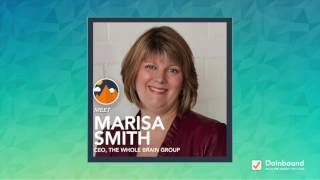
Marissa Smith discusses implementing the Entrepreneurial Operating System in her agency. She covers EOS's six key components, common implementation challenges, and how to adapt the framework for different agency sizes and remote teams.
Hello and welcome to episode 95 of Inbound Agency Journey. This is Andrew. Really excited to have you here this week for a really cool conversation that Gray has with Marissa Smith. Now, this is Marissa's second time on the podcast, and if anyone has heard her first talk, you know you are in for something special here. Marissa really brings the goods when it comes to putting an organizational framework in place for your agency. She's a huge advocate of the eos. If you've read Traction by Gene Wickman, that is the entrepreneur's operating system laid out in there. And Marissa has walked that line for her agency. And she's also now helping other agencies with EOS implementation. And in this episode, there's tons of resources and links, next steps that you can take if you're interested in using the EOS at your agency. Before we jump into that conversation, this episode of Inbound Agency Journey is brought to you by Do Inbound. Do Inbound is project and process management for agency pros just like you, from the ground up. Everything inside of Do Inbound was designed with the marketing agency in mind, from the framework that lays out how work is broken down to the design of the tool and the visual elements inside of there. Everything was built with a marketer in mind, and we designed this guy to help you scale your agency. Now, the fallback of most project management tools is that when you log in, it's completely blank. You're looking for a system and a framework to operate your agency on, but what you find is an empty whiteboard. Doing man is different. And then it gives you a predefined stroke structure to help you break down your work and format everything in repeatable processes, templatize those, use them over and over again for clients as you move forward. That makes you more profitable over time, keeps your team on the same page, and it reduces your risk as an agency pro because you extract the processes out of the minds of your core team members, put them down in repeatable formats so they can be used time and time again. Check out do inbound@doinbound.com without further ado, folks, here we go.
Welcome to Inbound Agency Journey. This is the show where inbound agency leaders share the strategies, shortcomings, and successes they've experienced in their journey toward building their dream agency. Now, here are your hosts, Andrew and Gray.
All right, welcome back to Inbound Agency Journey. This week I am bringing on a repeat guest. Marissa Smith was on back in episode number, I want to say 32. I should have looked that up probably ahead of time. But Marissa chatted with Andrew about developing an agency operating framework and a lot of your story. So I'm excited to have you back on today to be Talking about the EOs, what you're up to currently, and how agencies can benefit from your story really, and from a lot of other agencies. So welcome to the podcast.
Thanks for having me back. I appreciate it.
Well, I am very appreciative that you took time to come back on, so I thought it might make sense for folks who haven't been tracking with us or gone back all the way in the archives, this is now episode 94. So over a year ago to just kind of recap your story. Obviously, a big part of your really, your life and career has been with whole brain group. So do you just want to kind of give us a little recap on the agency story and then how you found EOs, and we'll kind of go from there?
Sure. So I started my company back in 2002. I had been working at the University of Michigan prior to that doing technical support and database website stuff. And so I struck out on my own with visions of flexibility and spending all this time with my family and making lots of money and the classic. Yeah, classic, classic vision. And really worked by myself for the first couple of years, then hired a few people to help out as we started to grow. But about 10 years into the journey, I kind of woke up one day with, you know, I think we had 10 employees at that point in time. But I was really at a point where about 80% of the work I was doing was stuff that I didn't really enjoy doing anymore. I had worn every hat in the company, had been involved in every aspect of the company, and had sort of woken up with this kind of garbage position of everything that had to be done, I was doing. And although I had hired people for various roles, I had not done a fantastic job of being clear about the roles and responsibilities and really letting go of the things that I no longer wanted to do anymore. But again, I had also kind of resigned myself that this was the way it had to be. Most of the other agency owners I talked to had similar stories. You know, you'd say, how are things going? Oh, I'm so busy. Oh, I'm so tired. I only got three hours of sleep. Well, I only got four hours of sleep. And it was kind of this competition. And so I thought, well, this is just the life of the entrepreneur. It's not what I thought it would be. It's working 60 hours a week and Never seeing your family, and that's just the way it is. So I was out to dinner, though, with a friend, and I was complaining and noticed that he wasn't really complaining right back to me. I said, all right, what's your secret? Why don't you have any of these problems? And he said that he had started using the entrepreneurial operating system and it had changed his life. I thought, okay, it's time for me to read that book. I went back and read the book Traction, which is by Gino Wickman, the founder of eos. It was like the clouds opened up and the light came down and the angels started singing. And I thought, oh, my gosh, why have I never heard of this before? Why didn't I read this 10 years ago? We just started implementing the system. About two years later, we hired a professional implementer to help us because we kind of hit the ceiling again. We couldn't really break through trying to do it ourselves. And now, two years later, I realized that I wanted to be a professional implementer. And so I turned the day to day of the company over to my leadership team a few months ago, and I'm now trained as a professional implementer, and I'm out helping other business owners do what I've done.
So that is an awesome story. It feels like you've told that a couple times. That's Chris, well done. I mean, that transition, as you were saying, obviously we were kind of joking about the classic, but also classic the agency. I think people just don't realize, like, a business really does kind of have its own way of taking. If you don't drive and direct your business, it will definitely drive and direct you, and it just takes over.
Right, right. I didn't realize that you could be intentional about the path that your business takes until about 10 years in. And once I realized that I could really take control and set an intention and get everybody rowing in the same direction, that we could actually achieve that. But if it was all in my head and nobody could see what was in my head, we were never going to get there. And that was the disconnect, I think, that I had experienced for the first 10 years of the business.
So, as I mentioned to you, kind of before we hit record here, we've been getting a lot more questions. I feel like EOS is really starting to grow in the agency space, and it's kind of gotten beyond, at least with a lot of folks, beyond the stage of just awareness of, hey, what is the eos? And now to kind of almost that Consideration stage where people are like, well, should I do this or should I try and continue to put together my own operating system? We've implemented it at do inbound and been running on it for a little over a year now and absolutely loving it. It's been really helpful for us just to go through. It's so cool to go through even like the organizational checkup we just completed that we do that every six months and to go back and compare. Now we've got three different data points and see how that's grown and we've matured just over the course of that. But I'd love to hear from your story and I don't know, maybe we need to preface this with kind of an overview of what the implementation model looks like, but I'd love to hear. I think it'd be beneficial to learn the order that you guys kind of went about implementing it and then obviously we can kind of dive into whether that, whether you'd still recommend that same order or what lessons and mistakes you might have made, lessons you've learned.
So yeah, I made mistakes from the beginning.
I'm not alone. We're not alone here.
Right. I definitely would not go back and do it the way that I did it. So the tactic I took was I read the book and about three chapters in I stopped reading the book and just started filling in the tools and thought I got it right, I'll just take it from here. And I didn't get to the chapter that says don't roll it out in the order that it's presented in the book. That was my first mistake. So after filling in the tools myself as kind of the first pass, and then kind of dropping it on my team and saying we're doing this and it not really taking hold for a few months, I realized that I needed to finish the book, take a step back and really get everybody's buy in that they kind of was, they were looking at it as yet another one of the books that Marissa had read that was the flavor of the month. And so I really, at that point, I think we did have a professional implementer come in and give us a free 90 minute meeting. So we got the complete overview of the system and the six key components of your business and how the system would help us strengthen all of those things that really kind of connected the dots for everybody. And they went, oh, that's what you're talking about. Once we did that, then we still went back to self implementing because we didn't have the money at the Time that point in time to hire a professional implementer. But I would definitely recommend starting with that. You know, read the book all the way to the end and then bring in a professional or certified implementer to do the overview for you and your leadership team. Because it really does get everybody kind of level set. Then you're all seeing the same thing. Everybody can ask their questions, you know, kind of start off going in the right direction instead of going off in five different directions, which is kind of what we did initially. However, despite making that mistake, we still, I think, saw enough progress because I'm pretty disciplined and organized. And so I had, you know, we were doing the level 10 meetings. We were following our quarterly meeting pulse. We, you know, had our Vision Traction organizer, We had our accountability chart, all those things. So we were checking the box. What I would say in hindsight is that I think we had a pretty good grasp of the science of eos, but we did not have a good grasp of the art of applying it. There are some subtleties to how you should roll certain things out or how you should implement some of the tools that you don't always get from just reading the book. And so professional implementers who have done this with a bunch of different companies and have actual training in doing this, they understand those subtleties. And, um. And so I think we would have avoided some of the missteps that we made if we had had a professional kind of guiding us. You know, nothing was catastrophic, but we probably would have gotten to our endpoint about a year sooner with the guidance of a professional, so.
Right, right. That makes sense.
2020 hindsight, of course, obviously.
So why don't you. I've got a whole bunch of specific questions based on that that I want to ask you, but before we do that, let's talk about the six key components of the business. For anyone who hasn't read the book or is unfamiliar right now, do you want to share those with us?
Sure.
Then we'll dive into what the implementation process should look like.
Sure. So the idea behind the six key components is just that in any business, at any given time, there's like 136 issues going on. Right. So what Gino realized was that to the degree that you can strengthen those six key components of your business, a lot of those issues that you're having are going to fall into place because they're really symptoms of root issues that you haven't solved yet. The six key components are vision. So making sure everybody's 100% on the same page with where you're going as a company and what your plan is to get there. People. So making sure you have the right people in the right seats to help you achieve that vision. You're building a sustainable, scalable culture that will last you until you hit your 10 year target. Data, which is stripping out all of the subjective feelings about how sales are going and things like that, and really boiling it down to objective metrics and measurables that you can look at on a weekly basis so that you can spot issues before they become big problems. Once you have that vision, you've got the people, you've got your data, you really have this more transparent organization. And the things that are obstacles to your vision start to stand out. And those are called issues. And so the issues component is all about making sure that you're really great at solving issues, that you identify them, you discuss them just enough so that everybody's heard, and then you actually come to a conclusion and solve it so that you can hopefully never address that issue again. So healthy organizations are really great at solving issues so that they can maintain that momentum. The next component, the fifth component, is the process component. So the process component is all about again, making sure that your business is scalable and consistent, so that your employees have a consistent way of doing business with your customers and they have a consistent experience with your company. And so that you don't have to be in the middle of everything and micromanaging it all. You have it all documented, everybody's following those processes. And then the final component is traction. And so the traction component is about that focus and the discipline, the accountability that you need to execute on the vision so that you're not distracted by shiny stuff, but that you've got this kind of 90 day world where you're focusing on rocks and priorities for the quarter you're meeting regularly, you're maintaining that momentum, that traction, so that you can achieve the vision. So those are the six key components. So when they're all strong, you've got a much more cohesive company. All the different pieces are integrated and you know, it should be much more effective company to run and a much more fun company to own and work in.
Right? Right. Well, I think that's helpful as the, as a backdrop. One of the things that stuck out to me as I was reading the book, a couple takeaways. One, I just kind of felt like very few of these ideas by themselves are, are unique and completely brand new to me, but the whole cohesive system that brings them together, this is exactly what we needed. I kind of had that takeaway as I was reading this. The other thing that kind of stuck out to me was I felt like I was almost reading in some of the chapters almost like a synopsis, especially, I guess, with the components. Each of the components was almost like a synopsis of some other book that I read. So, like, people. A lot of what I felt there was like a connection to good, to great. Talking about having the right people in the bus and having the right people in the right seats. And through process, I felt like it was almost like, here's the E Myth again. And so it was like, here's all these great and helpful business books that I've read and now they're all coming together into one cohesive system. So I think that even just breaking it down into the components by itself is helpful to identify. Okay, here's what I need to be paying attention to.
Right. That's what I love about. Yeah, go ahead.
No, go ahead.
System is that it really is. This is all time tested stuff that has worked forever. But Gino just somehow, in reading all of the same books that we've all read, this vision appeared to him of how he could boil it all down and simplify it and put it into words that resonate with people who are entrepreneurial and into tools that are practical. That people who, again, entrepreneurial, who don't have patience for big giant binders of policy manuals and three month strategy phases and things like that. He really just boiled it all down so that people like us would read it and go, okay, this I can do. I think that's why it resonates with so many people, because he was an entrepreneur himself, so he gets the mindset and he created something that he would want to follow. And, you know, so I think that's why it's so fantastic.
Yeah, I agree. I think the achievable piece is a big, big part of why it's having the traction that it is. So if you could go back in time and redo it, could you walk us through? And I know that this could. This could be lengthy. So we can, we can break it up. And I'm sure I'll probably. I'm a chronic interrupter, so I may interrupt you a whole bunch of times, but. But if you could implement it at your agency or this is kind of the hypothetical relatively young agency or agency who's to some degree spinning their wheels. There's probably some growth, but it's not the kind of growth that they want. And it's not the kind of they don't feel like the lifestyle isn't necessarily what they were hoping it would be. In order to grow, it requires adding 10 hours a week to your workload instead of there's just this process in place where new team members get brought on when it's time to so the agencies in those situations. What is the right implementation path with this? Obviously we start by reading the book and understanding where we're at, but going from there. What would be the best way to approach this?
I definitely would reiterate the point of have a professional EOS implementer come in and do the 90 minute overview for you and your leadership team. Just, it's a great level set, it's free. Do it. There's no reason not to do it after that. Then you have to decide if you want to follow the guidance of an implementer and hire them to kind of be your guide or if you want to do it yourself. So regardless of the path you choose, I would definitely follow the proven process that Gino has outlined in the book because it's worked with like, you know, 20,000 companies. Why change it, right? So that process is, you know, do the 90 minute meeting and then you do something called a focus day. And that focus day is where you learn how to identify when you're hitting the ceiling, what that feels like and what kind of skills you need to develop, what tools you have at your disposal through EOS that you can implement in order to do things like, you know, delegate and elevate people in your organization, hire an assistant, get things off your plate, you know, stuff like that that will help you break through to that next level. You also will learn how to run a great level 10 meeting so that you are having more effective meetings, you know, on a weekly basis with your leadership team. So you're solving issues and, you know, keeping things moving. You take a first pass at your scorecard and, and it just identified 10 numbers that you can look at every single week and start getting a pulse on your business. You take a first pass at your accountability chart. Again, just get clear on what the different roles are in your company and what the structure should be before you put people in those seats. You want to get the structure done first. That was a mistake we made is we built it around the people instead of building the structure first. So anyways, there's a number of things that you. I won't go through the whole thing, but you do this focus day and you get everybody in a room and just work on all of this. Work through all of it and get agreement. And then if you're working with an implementer, you'll go off for 30 days in practice by yourself and then you'll come together again for another full day session, which is called vision building. And that's where you start working through the eight questions that make up the Vision Traction Organizer. You get your whole leadership team aligned around things like your core values, your 10 year target, your core focus, your marketing strategy, things like that, and you work your way through those questions as far as you can go, take a break, go back for 30 days work, come back, finish out the vision for another full day. So it takes about three months to kind of get up and running and use the foundational tools and begin to master them. And then after that you start to get into the 90 day world and that's where your picking your rocks. You're focusing on those rocks for a quarter, you're measuring your progress, you're following the meeting pulse in between those meetings and you're just kind of picking a few things off your issues list, solving them and doing a great job checking them off and then moving on to another set of issues. The biggest mistake people make is they try to solve everything at once and then they don't solve anything. Entrepreneurs are notorious for identifying an issue and dropping everything they were working on to go solve that new thing and the company's left kind of in disarray behind them. I would definitely say again, there's way more to it than my 2 second overview there. But in the book that proven process is outlined and I would definitely follow it to the letter because there's a reason that it's laid out that way. It's been proven to work. And so I wouldn't mess with, don't mess with perfection. Each company is different though, and so you may identify different. You know, you're going to have different rocks to work on and you may roll different tools out in a different order based on what your highest pain is. But ultimately the idea is that over the course of about 18 to 24 months, you, you'll work through everything. You'll have gotten through all the tools in the toolbox, you'll have learned all the lessons that are part of the system. And hopefully if you are working with an implementer at that point, you can kind of graduate and do it on your own. We're not trying to create dependence on us. We actually like it when our clients can kind of be pushed out of the nest and we get a great sense of satisfaction. When we can see them working on their own that way. So. But if you do decide to self implement, there's a system called basecamp, which is an online resource center that you can join. It's a monthly fee and that sort of thing. And all of the tools and the implementation guides and everything are in that system and you can access them if you aren't in a position where you can hire a professional implementer. So just do you want to DIY it or do you want to work with somebody who's already done it? It just depends on your path.
Yeah, well, I think that's really helpful. And so I've got some specific questions and higher level, I mean one of the questions, and I think just based on what you just said, like we already really don't need to ask this, but I'm curious, so I'm going to put a twist on it. I mean the question kind of itself boils down to like, I'm, I'm part way, you know, like anything, you're super excited about something at the beginning and it's rare for that same level of passion to continue. So someone gets a couple months into implementing EOs and they're like, well, do I really need to implement 100% of this? Like, can we get away with, you know, I don't want to, I don't want to structure, I don't want to have a weekly scorecard or there's two numbers I want to measure here and not everything necessarily fits into a weekly basis. It's just too hard. I don't want to do it. So I guess what I'm curious, the original question is like, do I need to follow 100% of the EOs to get the results? Maybe the better question for you, since obviously I think your answer is going to be follow the process.
Hell yeah.
There's a reason that it's there and there's a reason that every piece is there. As an implementer, the companies that you're working with, are you seeing a big difference between, I guess if we're looking at the data itself, between companies who are following 100% and companies who are kind of a little bit more pick and choose what they want, Right?
So if you're working with a professional implementer, they will guide you to follow EOS as purely as you can. We want to see people really following the process for the same reason that you stated, we know that all of the pieces are there for a reason. And so yes, it takes time to get there. So you're not Going to be pure on day one, obviously. But we also won't let you off the hook with, well, you don't really need core values. Just skip that. So there are things that are just fundamentally foundationally important that we will push you on because we know how important they are. The people that we see who don't fully embrace the system that way over time typically do still suffer from some of those symptomatic issues. And it's because they never really got down to the root and truly solved the things that are the, the root of their issues. So it's kind of like we're speaking to agency owners here. Right? So let's say somebody came to you and said we want to generate leads and traffic on our website and we're willing to do everything but you know, blogging, we don't think that's really that important. Right. Would you let them not do blogging? No, because you know how important it is. Right. And if they don't do that one piece and then they complain about the results they're getting, you know, that's, that's part of the issue. So the system is there for a reason. Just like inbound. There's a reason, there's all those different pieces of the methodology. It's because it's not just one thing that's the magic bullet. It's the whole thing that as a system has to work together for it to fully function. So.
Right, yeah, I think that's helpful and that's a good illustration. Another question would be like, I'm a one man agency right now or you know, we're two partners who are doing this. We don't have anybody on the team. We want to grow to the place. Like we've heard about the EOs, we want to grow to this place. What's the right time to implement it? Should we spend time and bother worrying about this now or do we need to wait till we bring somebody on? That's kind of a common question is I don't know that I need to get an entire framework when I'm a one man band with two contractors right now or a team agency.
Right. No, that's definitely a valid point. I mean the system is really the sweet spot is for companies who are like 10 to 250 employees. So some of the people using the system have fewer than 10, some have more than 250. But that's kind of the sweet spot. What I've seen is that companies that are smaller than 10, the essential tool to use is the vision Traction Organizer. So at the very least, getting agreement with whoever's in the company on those eight key questions so that everybody is kind of rowing in the same direction is fundamentally important. And the questions that you answer also then help you hire the right people who are going to be a fit for your culture as you grow. And if you kind of don't have that stuff articulated, you can kind of get off track and put a lot of effort into getting everything back on track. So I'd say the vto, the Vision Traction Organizer, is a tool that everybody should use no matter how big you are. And then the accountability chart is also very important in those early days of figuring out what seats will be in the company. And why do I feel schizophrenic? Oh, it's because I'm sitting in six of them. But it helps you then identify what those functional roles should be and what kind of people you need to hire to get where you want to go. And obviously, scorecards, all the tools are helpful, but if you can get those two nailed down when you're smaller and then as the need for having team meetings arises, start using the level 10 meeting, right? And when you start with the level 10 meeting, then you need a scorecard. And you should probably have rocks and things like that. But it can be overkill to document all of your processes when it's one guy. You just have to figure out what the right time is for some of that. But definitely once you get five or six people in there and you start to realize that you're having those mistakes and part of it's due to inconsistency and they can't read your mind anymore and things like that. You can't just shout across the office at people. That's typically the time where it's important to look at those tools and say, what problem do we have? Which tool can help us? And start to roll those things out, that's really helpful.
So I have a couple more specific questions, and these are kind of scattershot all over the place. One is around the scorecard. So should every team within an organization? And this is kind of integrated into second question that I have. So I'm gonna give you the classic two parter here. One is, does every part of the organization department, whatever that is, should everybody be operating with an L10 as their meeting format? And then kind of the second part is then does everybody need a separate scorecard where you kind of have, you've got, you know, your leadership team scorecard, but then whatever other team that you have has their own scorecards.
Right. So that's a great question. So when you are fully rolled out in an organization, each department typically has a weekly meeting, whether or not It's a true 90 minute level 10 meeting. Some companies just need a, some departments really only need a 60 minute version of that. But that really comes down to how many issues do you have and how long is that issue solving part of the meeting. But in most of the companies that I've worked with, where there's 20 employees, that kind of mid range, there's a leadership team level 10 that's absolutely every week, 90 minutes, same day, same time, same agenda. And then the different departments may have a different meeting pulse depending on their needs. So it may be every other week, maybe every week, but only for 60 minutes. The important thing there is that it's consistent, everybody knows when it is, and that some version of that level 10 meeting agenda is being used. So I would definitely follow the whole agenda. It's just that the length of that issue solving portion may vary again, depending on how many issues you're solving every week. I have seen people use the same scorecard across all meetings and it doesn't typically work that well. Right. Because there's different things that you need to look at at a company level. And then when you're down on the marketing side, that's where you want to be looking at. Click through rates and tweets and you don't want that information up at the company level necessarily. So over time the goal is that you're looking at the key numbers for that department that will help you identify issues before they become problems. So again, doesn't happen overnight. Almost everybody gets their scorecard wrong the first time and it's a work in progress because different things become important at different times. And so something that was important that you absolutely had to track, once that becomes second nature, sometimes it can come off the scorecard and it gets replaced with something else.
Right? Yeah, I think just realizing there are certain pieces of this that are kind of, I don't know that anything's set in stone completely, but set in stone for a period of time and other pieces that are iterative and should be updated consideration.
Right. The main thing to remember though is master it at the leadership team level first. Because those leaders are going to be responsible for making sure the same processes are adhered to in their own departments. So if they don't have it mastered, they're going to spread bad habits to the departments and then it's way harder to get that all cleaned up. So, you know, we practiced for a good year as a leadership team before we began to push this type of thing out to the rest of the company. Because I think we would have really messed it up, quite honestly, if we had done it faster.
That's actually really helpful to hear you mention that, because that was one of the other questions I had is how long do you run this kind of at the top level, not top in terms of hierarchical, but at the leadership team level before everyone else. So I think that is helpful to understand. We need to get this right here before it spreads out.
Right. So, you know, it doesn't have to be a year. That's not a rule or anything. But again, I think part of the reason we took so long is because we weren't working with a professional. Once we worked with that professional and he sat in on our leadership team meetings and said, yeah, you're getting stuck on discuss and you're not moving to solve. And here's a great way to move people along and come to a conclusion. He just gave us these little subtle things that just improved the quality of those meetings, you know, tenfold. Um, and we just were too close to it when we were doing it ourselves to see some of the bad habits that we had. So having that fresh perspective is just fantastic.
Cool. On the subject of vision, so EOS obviously recommends you set this 10 year vision and then you work it down to, you know, you go all the way down eventually to your 90. That eventually breaks down into a 90 month or a 90 week, 90 day. I'm just going to keep going down until I get the right. But your 90 day, your quarterly rocks that you have. One of the objections here is, especially in the agency space, especially smaller organization, 10 years is way too far to look into the future. That's what you hear is 10 years too far to look into the future for some people.
So absolutely. And that 10 year target is not set in stone. So we say tenure on the tool itself because that's what most people choose. But in industries like ours that are changing, you don't know what social network is going to be out next week, let alone 10 years from now. People get really caught up in that and they let it stop them. What we say is you can pick five years out, you can pick three years out, if that's as far out as you can see. But just pick something that's on the horizon, that inspires people, that you can then work backwards from to set your priorities and your goals for your one year and your 90 or, sorry, your three year and your one year picture. So, you know, don't get too hung up on that 10 year thing. Like I said, you know, some people choose five, some people choose 10. That's not really that important. It's really about what's the big goal, what's the bhag, you know, as Jim Collins called it, the big, big hairy, audacious goal that we're all working towards that people will rally around. Right.
Yeah, that's really helpful. Last specific question for you. How does this work in remote teams as compared to in person teams?
That's a great question. So it can definitely work in remote teams. What we recommend though, is that if your leadership team is remote, so if both the, the local team and the leadership team are remote, that you come together in person for those planning sessions, at least on a quarterly basis. There's something about getting everybody in the room looking at the whiteboard, writing on the tables, whatever it is that you do, that that energy is really harnessed better if you're in the room than if you're trying to do that remotely. People who do that, though, they typically will come together like that. You can still, then you can run your Level 10 meetings on a weekly basis with Zoom or some other tool. But we really do recommend that those, those planning sessions happen in person and definitely the annual should happen in person. We also recommend that you go off site, if you can, to a place where, you know, if you're on your way to the bathroom, nobody's going to stop you and tell you about the webinar that didn't start on time, you know, and get you distracted. So if you can be off site, have everybody truly focused, get your devices off, no computers, you know, all of that. So you're really just in that mode of planning and reflecting that. That's a much, you know, a really valuable use of your time, for sure. Yeah, yeah. But I, you know, I do know people who, you know, their director of marketing is in, you know, Russia and that person can't afford, you can't fly them in every single quarter. You know, you can, you can work with that that way, but definitely trying to get them in as often as you can just because of that. Team. Team health is a big component of this. I think a lot of people discount that or they don't think about that as being so important here. But the entrepreneurial operating system is as much about the process and the tools as it is about building this healthy, cohesive leadership team that functions well together. And so people just naturally start to drift apart every 90 days. And bringing everybody back together like that to, you know, renew the alignment and the commitment and get any issues on the table and work through them as a team is really important to maintaining that momentum over the course of the year. So.
Yeah, I definitely agree with that.
Mm.
Well, cool. Well, I know I've, I've kept you on here for a while. If people have follow up questions from this or want to figure out, should I, first of all, should I do eos, but should I self implement? Should I use Basecamp? Should I use an, an implementer? What resources are out there? What's the best place to point them.
To so anybody can feel free to reach out to me? I get inquiries actually all the time from the last podcast that we did. I have a new website which is marissa-.com, which I'm sure you'll put in the show notes and on there you can reach out, you know, fill in the form or book a meeting with me. I have the HubSpot meetings tool on there, so you can book a call with me, but I'm happy to talk to anybody and answer your questions. And then if it makes, you know, if you want to work with an implementer, I can help connect you with somebody in your local area. There are 155 implementers around the world now and most of us work in a, you know, particular kind of in our backyard. So everybody's really great and I'm happy to connect you with the right person so that you can get your implementation questions answered. But, you know, from that initial conversation, I'm happy to, happy to help.
Awesome. Well, I just want to thank you, Marissa, for coming on. As you mentioned, all the resources we've talked about here, those will go in the show notes@doinbound.com podcast. But thank you so much for coming on and helping to shoot down a bunch of these objections. Just kind of shed some more light on the EOS process and what's just possible if you take the time to intentionally guide your business. So thank you.
My pleasure. And I should mention, I would be remiss if I didn't mention that EOSWorldwide.com is the website for EOS itself and obviously all of the full resources are there, but I have a link to that on my site as well. So, you know, either way is fine. But I would. I should mention that too.
Awesome. Good stuff. Thank you.
Thank you for listening to Inbound Agency Journey. You can find the show's notes for Today's. Episode@doinbound.com podcast Again, that's doinboundalloneword.com podcast. If you enjoyed this episode, head over to itunes to subscribe or leave us a review of the show. Until next time. Remember, life is a journey. Keep moving forward.
Sam.










