Finding Your Agency Niche: RentBridge's Heather and Michael Park
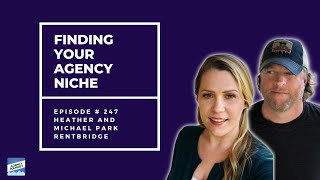
This is a YouTube video titled "Finding Your Agency Niche: RentBridge's Heather and Michael Park" recorded in April 2022. It features an interview hosted by Gray McKenzie with Heather and Michael Park, co-founders of Rentbridge, discussing their journey in the property management and marketing agency space. The conversation covers their niche focus, the evolution of their business, the integration of technology like HubSpot, and their approach to scaling services and automation within the property management industry. The discussion also touches on challenges in software development, marketing strategies, and expanding into related real estate verticals.
Hello, this is Gray MacKenzie, and before we get started with today's interview, I want to quickly thank our sponsor for this episode, textexpander. You know I'm all about standardizing processes and working efficiently. Well, TextExpander helps agency teams do both from an efficiency perspective. TextExpander saves me personally a couple of hours worth of typing each month. And when you magnify that across our growing team, the time saving adds up. And this is the cool part that I didn't anticipate when I first started using Text expansion tools seven or eight years ago. TextExpander keeps our messaging consistently on point with the right spelling, language and formatting. So we've been able to eliminate a ton of simple mistakes and copy paste mix ups by rolling out textexpander across the team. I've actually got a video that'll be up on our YouTube shortly with a bunch of my favorite use cases. But for now, I want you to head to textexpander.com podcast and you get to lock in a 20% year one discount for all Agency Journey listeners. Again, thanks to Texas Banner, both for their sponsorship and the impact they've had on our team. Now let's get to today's interview. All right, welcome into another episode of Agency Journey. This is Graham McKenzie from Zenpilot. And this week I'll get the pleasure of bringing on Heather and Michael park from Rentbridge. Hey, I'm excited to have you on. Thanks for joining me.
Hey, Gray.
Yeah.
Good to see you. Thanks for having us.
So let's dig into Rentbridge. You've gone through a transition. Heather, I'm going to start with you because we connected maybe four years ago and Rentbridge was kind of a concept, but walk us maybe let's start with kind of a real quick version of the history. I'm sure we'll dig deeper into some of the pieces of it. Walk me through the evolution into the property management space and what you all are doing, and then give us a quick overview of where the agency sits today.
Sure. So, you know, we kind of like to tell our backstory, particularly to prospects that are getting a little more serious, because it just adds some color and paints a picture of who we are and why we do what we do. But the path that got us to Rentbridge was definitely not a straight and narrow path. I like to joke. I studied rocks, not marketing. So I was literally a petroleum geologist and Michael was a real estate attorney, and somehow we ended up owning an agency. But all that being said, when Michael and I Got into property management. He was already. He owned a property management company and I was getting out of oil and gas and joined him at the PM company. And ultimately we sold that and started Rentbridge. But in that very small window of time between that and Rentbridge, we were actually an agency called park dmc. Park Digital Marketing Company. And we probably, as many fledgling agencies do, we tried to just be everything to everyone. And that was, as you can imagine, a lot of fun. So we learned our processes and what we didn't want to do the hard way through Park DNC and ultimately really just had to make a decision about are we truly going to focus on our niche or not. And I remember coming into the hub world as an agency. One of the first things that I was encouraged to do in a couple of the different certification courses was considered niching. And I remember thinking, how is it better to say no to 99% of everything and yes to your 1%? How does that help you grow your agency? And so, you know, we thought about it, thought about it, and sure enough, okay, fine, we're going to do this. And absolutely that was exactly the result that we experienced was as soon as we decided this is our corner of the world, we're going to plant our flag here. It was the biggest corner of the world that we could have ever possibly imagined. So that was our rocky road to becoming Brentbridge, as it were. But even then, since then, Rentbridge has evolved and changed and grown, and a lot of that is thanks to Michael and a lot of his ideas. As far as the process automation side of things goes, we like to internally joke at Rentbridge that Michael sees lines that connect things in the world that other people don't see. We're just looking at a picture and Michael sees something different than everybody else does. So that's kind of where the process automation side of things came in. So I'll let Michael speak to that.
That's awesome, Michael. So today I'll let you connect those dots. Today, rentbridge is a HubSpot diamond partner right in the ecosystem. So I'd love to hear what things look like today. And I've got a handful of other questions that I'm super curious about. The working relationship, how you two split up kind of responsibilities as managing directors.
Oh, that's going to be interesting. Yeah, that's an evolving thing as well, mainly due to surgeries. But the. Yeah, the path has been kind of just to fill in a few of the kind of pieces with others. Yeah, My prior career was a real estate attorney. I was a partner at a law firm then. We did, gosh, we're doing like 1100 transactions a month. Back before the real estate crash. I then, through a couple of businesses that I sold, ended up building a property management company. And for whatever reason, I've always kind of been this operationally minded kind of person of, you know, trying to like, trim the fat and try to automate things as much as possible. But the technology and, you know, being an old man these days really wasn't there to do a lot of the technology piece of it like we can today. I mean, the things that we can do today is phenomenal. And we were. We kind of had Rentbridge and Park DMC living next to each other. And Rentbridge was. I'd actually, after we sold the property management company, I had stayed on with the company in the institutional space for a bit and decided after a while to say, you know, I don't work for people very well. So I said, you know, why don't we take Rentbridge and I'll run the consulting side. You're in park BMC. And we, you know, and this was back in 2017 when we became a HubSpot partner. And frankly, in our consulting practice. I just finished wrapping up a course that we had put together and I started playing with HubSpot and I was like, huh, this has a lot of automation stuff. And my wheels just started turning up. I wonder if I could automate the leasing process or the lease renewal process. Maybe the rent collection problem. Maybe I can, you know, automate all the communications behind all the operational pieces.
And something to note here, Michael, is the reason that's happened is because at that time, HubSpot had just launched the service hub. Yes, that was the big key.
Yep. And prior to that, in our property management company, I had started a ticketing system using Zoho at the time. So it was very rudimentary compared to what HubSpot was. So when I saw HubSpot, you know, really service tickets and all that, I was like, oh, yeah, we can do this. And the way that the relationships of the objects worked really meshed real well with, with property management because it is a fairly sophisticated business. And as I started playing with it, we kind of put together the framework of what is now our PMOs, which is our property management operating system. And we just kind of dove in, honestly. And we ultimately, pretty quickly thereafter, probably within that same month or two, we decided to go ahead and just combine and brand everything under Rentbridge. So we have our marketing side of the Business and then our operational automation side of the business. And we were, it was our first conference, big conference we were presenting at. We stroked a check to be a booth there. And at the time it was like it was a lot of money for us at the time of this little bitty fold out booth and everything. And it was at a large property management conference. And with that came a couple of speaking engagements in that conference. And so we were able to speak and basically talk about technology and automation and everything. And we walked away from that conference and over the next couple of weeks that basically launched us from this little fledgling to we have a legitimate business with a fair amount of clients. We now have to hire people. So we started essentially in the very beginning with me and heather and maybe one 1099 person to today we're pushing on 30 employees. We went from this. We had zero marketing clients. We were not an agency that moved from one platform to the next. We were zero. We were not a marketing agency in the traditional sense. When we became a HubSpot agency, we just really started. We, we had done a few things but very minor. And all of a sudden we just blew up and we became. Was it silver? Gold, I can't remember all of them now. Gold, platinum and then diamond and knock on wood. We're going to hopefully be elite before too long in the HubSpot world. That's pretty fast track. And it was again, it was, I think due to this niching. It wasn't that we just randomly picked this niche. It was a niche that we knew. Since I was in my early 20s, I've been in real estate at some level. And so we were able to kind of combine a lot of these things into a really solid operational platform along with our marketing. And they kind of compete which one is bigger. I mean they're both relatively competitive with each other in terms of the size of their business. Yeah, right now marketing is probably winning. But as we are now looking into expanding some of our expansion, we have taken on real estate brokerages and we have some, you know, we've built out some stuff for real estate brokerages and sort of the next one we get mortgage companies that have contacted us and we have a couple of those clients and we decided to basically create a platform specifically for mortgage. Especially in this environment. They're extremely busy right now. So you know, having dealt with mortgage companies for, you know, for thousands of transactions, it kind of made sense for us to go kind of dive in there. So. So yeah, that's kind of the flavor we, you Know, we half stumbled into it, you know, half of it was intentional, half of it was unintentional and we ended up here and we're, you know, it's pretty exciting to just kind of ride the rocket ship the best we can. You know, we make a lot of mistakes along the way, but you know, we, we try to self correct the best we can.
Right. That's awesome. The, you hit on a big point. Anytime someone's looking at niching down you, they finally have gotten to the point where it's like, okay, I understand the value and why saying no is an asset to the business. There's always that element of hey, what are the factors you look at? And certainly if there's an unfair advantage that you have anywhere, which in your case you had coming out of being a real estate attorney and being in the industry and building the property management company and all that stuff, there's an unfair advantage that that gives you versus if I tried to go start that and I don't, I don't have any of that insight. I want to get back to the mortgage side and some of the other projects that you're working on as well. But first let's try and break this down a little bit just so that I understand it and everyone listening understands a little bit. You get the marketing side of the business, you've got the PMOS side of the business. It's the same core business. I understand marketing side. I'm assuming that there is kind of a conventional HubSpot type of relationship where it's a retainer based agreement.
Yeah, absolutely.
Maybe put 15 seconds on what those services tend to look like. But let's talk about the PMOS side and help us understand how does that get delivered. I'm assuming there's a recurring revenue model there, what those engagements look like.
Yeah. So I'll start with the marketing side. It is a very traditional service offering when it comes to just being an inbound marketing agency. However, being so heavily niched and niched in an industry that frankly up until very recently was somewhat archaic. It was an industry that no one focused on as far as technology is concerned. And what technology was available to the industry was kind of behind the times in and of itself. So we had a little bit of an advantage that we were taking transformative tech stacks and applying them to an industry that absolutely desperately needed them. So yes, very much traditional inbound marketing service offering, but we were able to take the niche and the industry and the need for this technology and basically productize it. So it Allowed us as a, again, very traditional marketing agency in that realm to become almost like a software. So people would come in, we would examine their websites, we would basically check the boxes of are you this type of property manager? This type of property manager? This type of property manager. And then from there we have a set of standard campaigns that we then customize to your market and customize to your branding and customize to your needs. But for the most part, the fundamentals, the things that take the longest for a marketing agency in general, all of the research, all the market analysis, all of the keyword strategy, all of that, it's going to be the same. If you're a single family residential property manager. You take the market, you change it and then you're able to really dive in and fine tune things like a traditional agency may not ever have time to do because they're doing all of the fundamental work for the first several years. So we were able to produce some really powerful, really effective campaigns early on for clients and we were able to do it repetitively over and over again. So we had the luxury of scaling the marketing side of our business very similarly to the way that we scaled our PMOs side, almost like a product. It was really fortunate.
And one thing to add on that marketing, one of the unique things about are this specific industry for us was the messaging is very unique. You have different targets for your messaging. You have tenants, you have owners and you know, institutional companies want to focus on tenants, but your third party managers want to focus on owners. And the messaging is very unique. So a lot, sometimes there's no comp, there's not a lot of competition or there wasn't at the time, or it was difficult to really get right if you didn't work in the industry to understand I know who you're trying to target and why and what the message is and all that. So that uniqueness, that high barrier to entry really helped us quite a bit. A good friend of mine was in commercial development. They did urban infill and large major markets like New York and Dallas and places like that. And he didn't like to go. They were a big company and when they went to go look at a project, they didn't like to go to cities where there was a low barrier to entry because then you're competing with everyone. He wanted to go to ones that were a giant disaster in terms of dealing with major title issues or the tax. The politics was extremely difficult, but because they had the resources and knowledge how to navigate that, so they were the Only player or one of the few players that could do it. And I think again, in this particular circumstance, if you have experience or you have some in into a niche, whether it's somewhere you've, you know, an industry you've worked or that you just know a lot about that, that those little minute details actually are what make the difference between you and every other marketing company. I mean, we came on the scene, it was even on the marketing side was a pretty big deal because although there were a couple of marketing companies that they weren't exactly agencies, but they had other components, small components of it, you know, they, they didn't come out from running property management companies. So some of those nuances kind of got lost whenever they were servicing those clients, even though they specialized in property management.
You're absolutely right. And the best descriptor I can give you for an example of what that looks like is if you think about the word landlord, does landlord mean. It means you rent your property to somebody, but that's not what it means to our clients. That's not what it means to somebody. Searching most of the time we have multiple definitions of just the word. Just that one word, landlord, a property manager, a third party property manager can be a landlord, so can the guy that owns it, so can the guy that services it. They all have the same title. So the context of what you're saying in these campaigns is that minute and that nuanced and nobody else would have that experience if you hadn't literally managed properties. So that particular just kind of granularity that we were able to achieve early on was very, very helpful.
Makes sense. That background, there's an element to this. So as you know, we had our software back in the day and there's a piece of that software journey that stuck very closely with us, which is obviously the margins that software enables and the improvement. Where we went from the agency, which at the beginning, we joined the HubSpot ecosystem back in 2012 with our agency, at the beginning we had no target market. It wound up evolving and getting there, kind of similar story, but there's no compounding advantage each time, which meant we're learning stuff. New there were no plug and play pieces. But in the services business, what you're talking about with prepackaged campaigns, hey, we know what the results this drives. That allows you to reach towards the type of margins that software allows. It'll never be software truly, but it'll be much more like it where you're able to put it in and generate super high margins because you're still able to deliver high value but super efficiently.
Yeah. And to clarify, we still deliver original content out of everything, all content still original. But the framework of the campaigns is very simple. We have a handful of pre built ones that we can do and so we're still able to deliver, deliver that custom original content, but we're just doing it more efficiently.
Yeah.
And that's honestly the beauty of it we have right now. Today we have 42 templatized or framework campaigns that they span across single family, residential, third party, commercial, multi. I mean it's property management. And of those 42, something is going to fit you fairly closely and that's where we get to spend all of our time in the details rather than the initial investigation.
Right. Well, there's this compounding advantage that happens too when you stay in a niche which is obviously you get better and better but you're lead, you're so you're leading the marketplace in terms of results grows your brand, your reputation, the partnerships, the referral networks that you start to build up, you start to build such an advantage where if you're starting which then obviously becomes a bit of a moat to some competitors. This is still a relatively low barrier to entry market. But by being so deep in it, you've got the PMOs built out, you've got all these assets built out, there's an advantage that gets built. That's something we think about a lot as we look at how do we keep growing at Zenpilot. If you're trying to come in and do process development or project management for agencies, there's an advantage that we have because we've been in the space for eight years and done 2000 plus agencies. You guys are benefiting from the same way. I'm not familiar with the space at all. You probably know whether there are competitors who are larger than you, but I would assume it's going to be a little bit of a turnoff to me if I'm looking to get into doing inbound in the HubSpot ecosystem for property management clients. Oh, rent prints are there. I'm going to run into you in every single deal that I try and win.
Yeah, yeah. I think we were fortunate. We, we were able to really stake that claim there and plan our flag pretty high. So there are competitors in marketing in general, but I don't know that we have a true agency out there that they've basically have niches within what a full service agency might do. So.
Help me understand the PMOs side, how that gets delivered what some of those. I realize there's a bunch of complexity to what gets, what gets produced, but how it gets delivered, what the like is that team, I would assume that team who has to service that is smaller than the marketing side dramatically so.
So I used to like to tease the marketing team because at one point it was me in the early days, I'd be like, hey guys, I'm going to meet with my PMOS department and I'd tease them and everything. However, we have grown significantly and even my role has evolved to where I, you know, we have, we have a handful of people that do that. The challenge with it, I would say that we have with HubSpot is we're like this hybrid, it's kind of software, but not exactly. We've made some moves along the way to try to pull certain things into the software code versus building workflows in the way that we deploy and things like that. There are challenges and we've made quite a bit of investment in that as we're going and those are still in it kind of happens piece by piece. And the bit. The first step of the software. Well, let me back up a little bit. You know, we went in, we built these. We were really relying on workflows, tickets and the underlying platform of HubSpot. It's fortunately evolved even further. But it's time we could create and hijack a couple of the object relationships. So, you know, you have a property, you have a building, you have a portfolio, you have property owners, you have tenants and owners. And so we had to build those relationships in our model to work inside of HubSpot so that the different pieces work together really well. Then what we had to do is we're like, well, we want to be able to talk to your property management software because they have software that collects rents, orders, maintenance tickets, it does all the accounting and all that kind of stuff. So we had to go. And at the time, we didn't have the internal development capability in the early days. So we basically partnered with actually another HubSpot agency that did. They were a middleware so with True J and they did a fantastic job of building the bridge that we currently actually use. And so we went and identified the, you know, well, we knew what they were but the, the two to three major property management platforms. And so we built this bridge where we basically are constantly taking the data from one and putting it in the HubSpot so that we can match up the data whether it's a tenant balance, whether it's what's the move out day, the lease renewal day, all that kind of stuff. And so we built all that. And once we did that, that was really the, is the flash point, you know, where, okay, now we can start scaling this. Because in the early days, I'm almost embarrassed to even say it, we would go in and manually upload like daily balances and have, you know, we would teach them, here's how you upload an HubSpot. And it was just, you know, I can't even believe we even did that.
But reports come out our ears.
Yeah, there was nothing in the industry that did what we did yet. And so once we built that, that was this flashpoint of, oh, wow, we need that data every day. Well, then we could trigger off certain communications based on tenant B, based on lease end dates and all that kind of stuff. So we were able to build all of this logic behind all of the different processes because really, when we break it down, we have five major pipelines, we have sales and onboarding, we have leasing, rent collections, move outs, and lease renewals. And so in each of those major processes, we have our different deal pipelines and we have different automations and all that kind of stuff that happens. And so it evolved, you know, quite a bit over time. So the deployment was, you know, we, we've kind of did what probably a lot of people do in the beginning is, oh, yeah, we can come in, here's the framework, and we'll come in and customize each of your pipelines. And so. Yeah, you want to do that? Yeah, yeah. And you know, they'd be like, oh, well, can you do this? And this, then this. And so all of a sudden we find ourselves just killing ourselves, deploying the first handful of, you know, maybe 10 or so portals. And we're just working just like, it just was very difficult to scale. So what we then started doing was scaling back, frankly. You know, we would generally say, hey, you've got to go through this process in the overall framework. You can configure, but not necessarily customize in the first round. Then when we come back in the second and third round, you can then start looking at some customization because. But until your team is up on the full platform, you don't even know what you want because, you know, it's. There's so much that we can do. Keep the wish list to the side and to the best that we can, we keep people in that mode. And then we come in and then say, okay, well, you can figure at a, you know, at an hourly rate or at a project rate or something like that, so that we can recoup those. Those costs associated with that. And so there is a challenge. I think it's a challenge. You probably maybe face this as well when y' all do your consulting or do your, you know, when you're delivering your services is, you know, here's kind of a framework. And they're like, well, but we really do it this way and this way and this way. And there's this and this. We want this little nuance here. And so that's probably the biggest challenge because we're not true software that you just flip on the switch and it's not right off the shelf. Yeah, there's a challenge, and we're working with another. We're kind of integrating three different platforms of property management, HubSpot, and then our bridge and all that. So we're kind of juggling these things. So this hybrid, as much as we would, you know, we can move as far into the direction of a true software platform that we can at some point, you know, there are limitations outside of ever building our own, which we don't have any interest in because we're, as Heather keeps reminding me, we're not a software company, you know, and. And so, you know, but that deployment we have been able to create. And this is kind of where we were talking a little bit before the podcast that we. We really have leaned on a. An LMS and our academy. And so what we did is we. Different pieces of that academy. And one part of that academy is we're going to train you. And I can't remember how many modules right now. I think we had like six, seven different modules that are fairly long. That takes them through this process of training them on every pipeline. Here's first, we start with, here's the framework. Here's how we organize the objects in HubSpot. This is what HubSpot is. And then we walk them through. Here's how we have a leasing, collections, pipeline, court set of courses that they go through. And so we really. That's part of the deal. They're going to hire us. You have to go through the courses your team has to go through. And then in the configuration piece, and this is still sort of, you know, gradually being rolled. You know, we gradually roll this out bit by bit.
Is.
There's a lot of configuration questions, you know, do you want to delay one day or two days? And those are configuration things. Those are fine. And so what we decided to say, well, if we can eliminate some of the phone calls and have them walk through, let's say a leasing configuration training where they can input, I want to delay two, not one or three. And then we can import that data into a spreadsheet that eliminates a phone call for us. So as we've gone through, we've gradually tried to build in education and automation the best that we can. Still not perfect. It's always still a challenge. We're constantly learning what works and what doesn't because humans are still humans. So there's a lot to it. I mean, there's a lot of different pieces and it is challenging. You had asked about the revenue model. It is primarily a recurring revenue model. We essentially do a pricing, kind of a flat pricing that's not really retainers, more of a subscription that gets you access to your bridge, a certain number of support hours every month, a handful of maybe configuration changes every month. And then there is a bit of a setup coming in to go ahead and do the initial setup. And then we, as they scale, we calculate how many doors they manage. And they're just small kind of increments up very slowly based on how many doors. Because the bigger they get, the more people they're going to have the, you know, and it becomes a little bit more, we get a little bit more requests for that. So as we, as we grow, we're able to kind of increase a little bit of the revenue along the way. Not super significantly, but it's enough to just kind of COVID that margin. So that model has worked pretty well. And I think, you know, we're going to, you know, we're constantly looking for that next way to improve it. And I think sort of the next way to improve it, especially within the HubSpot world, is, you know, again, further, you know, more productizing that piece the best that we can. So, you know, that's again, it's an evolution. And, you know, sometimes we go down a road and we figure out something doesn't work too well, so we pull back and we try some, you know, we make our adjustments along the way.
Right. You already answered one of my questions, which was, I'm assuming look at this from the outside and you say we're setting everyone up on HubSpot. I'm assuming you're implementing HubSpot new for a number of these, right?
Most of the time, yeah. Yeah. The most difficult clients are the ones that come in with HubSpot that they've been using for, if they've only been using it for a little while or they're that client that bought it and didn't know what to do with it. That's basically a new portal. But those guys that come in that they've been using it for eight years and they have a three digit hub id there's a lot of stuff in there we've got to unwind 100%.
We go through the same thing. Someone comes in and they're like oh it's okay. We're already on ClickUp and we've been using it for two years. Well now we've got a lot of stuff to try to try and reorient in there.
Well, we kind of have this balance of the clients who have zero documentation of their processes which happens a lot. They're one of the more difficult ones, the ones that have every minor many detail documented. They're also the difficult ones, the ones that are kind of in the middle that they have some level of process but they can adapt to rolling out. But the extremes of the spectrum become relatively challenging to say the least.
What from a HubSpot perspective they're getting service hub. What hubs are they primarily buying?
So back when it was I was going to show my colors as far as how recently I've looked at the pricing but back when it was called the growth suite is that what it was? The marketing sales service hub they or hubs they got all of that at a 25% discount and then they if they're a marketing client. The only thing that we added onto that was Reporting and the CMS, all of our clients are on the HubSpot CMS, all of our marketing clients.
So this is super interesting to me that I look at that from the outside and I'm sure you look at it from the inside even more than I do and say obviously there's a, you know in some of those engagements there's a bit of a commission structure but we're looking at, you know, a thousand plus dollars a month worth of revenue that you could be capturing if it was your software. Yeah, I realize there's a ton to build it out but what has obviously focus is huge and not getting too distracted but what's kept you disciplined to say that's it's not worth the juice, isn't worth the squeeze.
So my answer to that might be a little bit different than Michael's but in my opinion that's what I'm trying to do here.
I'm trying to stir up.
We come to the same five children, we don't necessarily have problems with that. But no, in my opinion the Particularly when it comes to property management. The internal architecture of the property relationships, and I don't mean property as in real estate, I mean the property field relationships and, and the hierarchy there is so unbelievably complicated and so intertwined that in order for us to create a software like HubSpot that would work with all of the different variations of property management software, I would essentially have to be HubSpot. There's really not a lot of watering down that you can do to a platform like HubSpot before. It doesn't have the capabilities that you need it to have in order to perform these PMOS functions.
Makes sense.
Yeah, yeah. And just kind of. So there's a couple of challenges with that. And our sales team would tell you that having to sell, they're having to sell twice depth, sell a fairly high dollar platform and then they're going to have to sell, you know, us, which we're not. Again, there are companies that you can get off the shelf for a fraction of what we charge. But we're also, because we're on the world what we think the world's premier platform, we have capabilities that extend far beyond what we could do on any other platform. Just the insights alone and the reporting alone is worth every penny. Now, getting a client to understand that before they've actually spent some time in there and really learned the system is a challenge. And our sales team really kind of butts their head up against the wall going, gosh, you know, they're in, they want it, but they, they can't afford both. So that happens quite a bit. I don't know that there's ever been a time as we've done that where I've ever seriously considered trying to either pull off the platform or try to build out our own. Just kind of an anecdote. Back in my attorney days, I did a stint as the regional president for a title company on the Mid Atlantic and the parent company reported to the board of directors and the board of directors decided at the time, oh well, you know, there's this old title company software that you use in order to basically manage all of the financial parts of those transactions, which is pretty complicated because you're dealing with the way lenders fund loans is very complicated at times. There's money that you don't really see, but it's coming and it's, it's very roughly complicated and. But they had decided, you know what, we want to build our own. We're going to become this tech platform and I remember the name of it was like Tempest or something. It was just, it was just remarkable. And so my region ended up becoming the guinea pig of their first beta. And it was just seeing the millions of dollars that were poured into the development of that and how flawed it was coming out was in the pain to the point where I basically had to threaten the board of directors that I was going to go buy the competitors off the shelf and start using that if they didn't put me back on the old thing, you know, through a couple of chairs and stuff in a boardroom. And metaphorically, of course. And just seeing that and experiencing that, I think that is forever scarred me against ever wanting to do any kind of software that involves any financial transactions or any complicated things, because that's the core of, on the property management side. But then when you get to, you look at the HubSpot side of it, just the, the even getting the, you know, the basic pieces and the way that it's integrated from the client journey from the first time they set foot on your website, all the way to the point where they're running their entire property management operations and that entire journey that they're able to see of their owners and their tenants and everything, you know, that's millions of dollars of development. I just don't have any interest in that.
Hundreds of millions.
Yeah. So I will, I'll stick with, you know, we'll stick with our piece of the pie and you know, be trying to be really good at what we do. And again, as entrepreneurs, which probably a lot of the viewers and listeners are, we have one of the biggest challenges we have is saying no. And it's not necessarily saying no to our clients, it's saying no to ourselves. I think we have as just creative minded business people, there are so many things that we want to do and it happens a lot where we go down a road and we're just like, we're just killing ourselves. We need to pull back and focus on, you know, our core things. And so we might get one of our, you know, we get our, one of our core pieces and it's just a tummy and it's running, we then can move and focus on something new or some other piece of it. And when we do it in a meta methodical way and we do things in order but not try to do them all at once. Every single time we do it all at once, or we try to be everything to everybody or try to have our hand in every piece of the piece, something starts suffering. But whenever we have allowed something to Mature to the point where we have a team in place that's able to run that division or run that piece of it, and then we start building another piece. Kind of like what we're doing, going and pivoting a little. Not really pivoting, but adding in a service in, say, mortgage side. Same thing with some real estate. We do some real estate there, but because we have spent a lot of time developing our property management services, this our background and experience in real estate as a whole, and, you know, dealing with a lot of mortgage clients and things along those lines and other endeavors, we're able to then build up and take the framework of what we've already really honed in and we can build on top of that and expand into a vertical that's related, but not necessarily the exact vertical. So it really, it does have to be this methodical way of doing that. And that kind of goes back to the software company of, you know, do we want to be the software and it's not the business we're in. Right.
Makes a lot of sense. I've been down the software route as well. We put a million and a half dollars into building out do inbound. And there's a lot of elements where I'd love to have another software run at some point in time, but for this stage of life and for what we're doing right now, it's so much easier. The end outcome we were trying to optimize for is how do we help agencies streamline their operations. And super hard to try and be the software and the consultants on top of that at the exact same time. You gotta pick one of those and focus on it. So that's cool.
Well, in our virtual assistant platform that we've launched, the only way that we've been able to participate, because that is a software platform and the only way that we've been able to do that is that we have partnered with people in the industry that are able to run with those pieces of it and we're able to provide industry expertise. We're able to provide a lot of marketing and some development resources. And so by doing that, we're able to participate in that. But if we were to, if that were, we're trying to do all that day to day without our industry partners at the same time, you know, we just wouldn't have the bandwidth to be able to do it. But fortunately, that platform has been able to do really well in its initial launch. But again, I would have to put a lot of that credit onto the people we've partnered with.
Right. Makes sense. Well, speaking of marketing and development resources, rentbridgegroup.com is the website. You've got a careers page there. Just rentbridgegroup.com careers. I'm sure right now there's never been a better time to grow an agency over the last few the best four consecutive quarters for agency growth here in the 10 years I've been in the space. But also never been harder to hire and retain your people.
Yes.
So you get that. Are there any other links anywhere else that we should point people here, Heather? Outside of. Outside of the website?
Sure. I would say vpn solutions.com is our virtual assistant platform that primarily does focus on the real estate industry specifically. However, we were talking pre podcast about whether or not that would be a useful bit of information. And the example that I used was now I posted myself as an owner of the company. I posted a need for a social media manager and was looking for somebody in another country primarily that had English as a first language. And I have more than 100 applicants for that particular role at extremely, extremely reasonable rates. So I would say absolutely yes. It's geared toward the real estate industry, but in general there are so, so many. There's more than 2,000 virtual assistants that have created profiles in the last just several months even that are readily looking for work.
That's awesome. Vpmsolutions.com Cool. We'll make sure that goes in the show notes as well. Well, it's been super fun. There's a whole second conversation we can have here that could go a lot longer, but we're at time, so I'm gonna let you go. But I appreciate you both coming on, making time and sharing the Rentbridge story today.
Absolutely. Thanks for having us. It was great to see you.
Thank you, Sam.










