Fixing Underperforming Businesses, Crafting Equity Deals, and Reclaiming Time with Casey Cavell
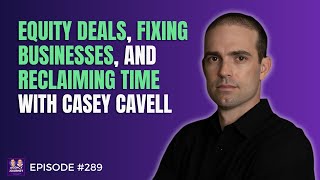
Casey Cavell, a serial entrepreneur, discusses buying underperforming businesses and turning them around, structuring equity deals with team members, and delegating to reclaim time. He also hosts the Dugout CEO podcast, which explores leadership lessons from sports.
All right, welcome back to Agency Journey. This is your host, Gray MacKenzie from Zen Pilot. Today I've got the pleasure of bringing on a friend. We have traded podcasts here now. Casey Cavell. Welcome to the podcast, man.
Good to be here, Gray.
I'm excited to dig in. You are not kind of the typical agency owner guest that we have on who's got their fingers and the bulk of their net wealth or net worth kind of tied up in one main venture. You've done a bunch of different things and have an eclectic set of interests and business pursuits. Can you kind of just start, introduce yourself a little bit, give us a rundown of kind of what you're focused on now and a little bit of what that path has been like? I'm sure more of that will come out as we. As we talk today.
Sure. Yeah. I guess I've been, lack of a better term, a serial entrepreneur. From the time I, you know, got done with school as a, you know, a student at Purdue University, I realized, you know what? I didn't want to go the typical route of going and getting a job. And I started reading books like, Gosh Good to Great and Rich dad, Poor dad and the E Myth. And I just kept realizing, like, there's a better way to do business. I. I was a customer of companies, and I was a consumer of companies, and I was like, if they made this change or did this differently or improve that or fix that, that organization or that company would be better. So I just started doing that in my early 20s, started finding businesses that were running that I figured out, okay, if I can make a couple changes here and improve it, the value goes up, the cash flow goes up. And that's what I did. I went and found underperforming businesses and, you know, raised some friends and family money and started buying these businesses and did that in my 20s and early 30s and had some successful exits. And, you know, these are small companies. These are companies that are doing a million in revenue. And I figure out a way to get it to $5 million in revenue and then exit, because I really didn't know early on, Gray, how to really build a business. I knew how to, like, make a business better or make it more valuable. But I didn't really know and learn until kind of recently, the last five or six years of how do you really build a sustainable business that didn't rely on me to be the person doing it? Because in all of those companies that build great, it was. It was Casey. Casey was the head of this, and the Head of that and the head of pretty much everything. Without me, it didn't really thrive. So that was kind of my journey to get going in business.
What did that look like? Were you when you were going in and I mean, actually I'll ask this sequentially. How are you finding these underperforming businesses?
Gosh, making calls. You know, there's business brokers out there that have businesses that are listed for sale. You can just find other people that can, that are experts at, hey, how do you buy a business? I mean, I went to seminars and boot camps and conferences. And the very first guy I went to, he taught you how to buy self storage facilities and the next guy told you how to buy apartment complexes. And that's next one. I was buying underperforming sports training companies. So yeah, it was just networking and telling people, hey, I'm looking for an opportunity. Do you know anybody that has a business that's looking to sell it? And then I just kind of found.
Them and then you were buying like 100%, you were buying the whole business or were you coming in as like a majority investor or minority partner?
Yeah, early on, you know, I've realized there's a couple ships you don't want to be on. Sinking ships and partnerships, partnerships are really messy now. They can be really good if you structure them well. But you know, early on, me being a guy that, you know, had to be in full control because I didn't really know how not to be in control until recently. I wanted to buy him out completely because a lot of times if it's not working well, like it's really hard to change the way people think. And people change is one of the harder things to be in. So when I bought a business, I wanted to buy it, own it a hundred percent and figure out a way to make it better and then create a system that when I sold it to somebody else, it was easier to run. I did this with some baseball and softball academies in Atlanta and you know, went in, figured out a way to make it worth more, make it operate better, better customer service, better results. And then when I went to sell it, I gave the keys over to somebody and that person then had something that was more like a franchise based model. Whereas, like, hey, follow this, do this, do this and it's going to be successful. And I think a lot of businesses, they don't really build like that. And they're mostly successful because of the owner founder. And it's going from the owner founder success to team success and processes and Systems, leading your company, which is what helped me, I guess, probably go from good to great.
Yeah, that makes sense. Tell me a little bit more. You've hinted at, like, this shift over the last handful of years and learning more around partnerships or doing stuff to tell us a little bit of the recent. Like, what do you. What do you mean by that?
Yeah, I think it's knowing yourself. I think entrepreneurs are so busy doing. They're so busy working, they're not really busy thinking and improving on themselves, knowing who they are as people, what's important to them, what their skill sets are, what their superpowers are, what they're not great at. And I think it was really trying to figure out what is my superpower in a company, what is that thing that I should be spending 70, 80% of my time doing, and then what are the things that I should not be doing? And then how do I bring on other people to do those things that I shouldn't be doing, but then, like, manage them in a way that I'm not suffocating? Because it's hard. Because if you grow a business, you're eventually going to have to hire yourself out of jobs that you're currently doing, and you're probably decent at those jobs or maybe good at those jobs. There's maybe some jobs that you're not good at, and you probably want to hire yourself out of those right away, but there's some that you're going to have to hire other people and trust they're going to do a good enough job. And. And I think for me, Gray, it was realizing that, you know what, sometimes an 8 or a 9 out of 10 is good enough. Like, it's just good enough. And if I'm able to hire somebody else and they can do it eight out of ten. Okay. And that frees me up an extra five hours a week. I can go use that five hours a week to go do something else for my business that I, one, might enjoy more and two, might add more value to my company. So that was a transformation that I had to kind of work through.
Yeah, that makes sense. What? So obviously you're kind of staying in the sports space, and some of the stuff that you're doing right now, your podcast, which I'd love to have you share a little bit about, but you just look at, like, the whole, whole portfolio, portfolio of companies that you've worked with and stuff. How big of a slice of the pie is the sports space? And why do you keep coming back to. And I guess out of like the successful ventures. Is there a trend there? Because that's a space that you're passionate about or what's the, what's the tie in with sports?
Yeah, I'm passionate about people, so I think sports is fun just because the product is great, but at the end of the day, it's about who you're working with. You know, I've worked with agencies that are, I guess, former athletes or sports fans. And I like working with people that are athletic or were some sort of athlete because you can kind of have a business kind of operate like a sports team. Right. Like everybody knows their position, everybody knows what they're accountable for, and everybody knows what they're measured to. Everybody has stats. And I think today's day and age, people are scared to be measured. But your athletes, they love it because that's how they grew up. All right, how do you know who the best player is on the team? You look at the box score, you look at the stat sheet. So I like bringing a sports mentality to everything I do. Whether I'm consulting with an agency and helping an agency owner get out of the weeds and, and focus on growing their business and not own or running their company. Like I like to use sports analogies and sports references, but really for me, whether the product is I'm selling, you know, B2B, you know, sales, consulting or B2B marketing or whatever it is, or I'm selling sports training or whatever, like it's all about the people. So for me, yeah, product is important and you want that product to do good for somebody, but it's more about the people that you're working with. I love growth minded, open minded, hungry types of entrepreneurs that really want to grow and build something special and then, hey, if they're sports minded, fantastic, right?
What's the mix right now for you of kind of your own ventures or companies that you're trying to build to then, you know, spin off and exit, or maybe you want to hold them for a long time versus consulting.
Yeah, I think consulting is fantastic because one, I'm always learning. When you do something, you and teach something, you learn it. And a lot of the times, Gray, I gotta be honest, when I'm leading and teaching, I go back and even listen back to what I'm saying because it's hard to even do that for my own companies. You know, the 8020 principle, so simple, right? 20% of the things you do produce, 80% of your impact. Pareto's principle, if everybody's heard about it, but then that also means that 80% of the stuff you do is basically a waste of time. It produces 20% of the results. I teach it all the time and I get companies to focus on what is that. But it's so hard for me to do that for my own self. So I think a lot of companies, sales agencies are really bad at selling. Marketing agencies sometimes aren't great at marketing because they're doing it for other people. It's hard to do that themselves. So that's where I can come in and kind of challenge the process. So yeah, I'm probably 60, 40, 60% I'm helping other people build their business. 40% I'm building something that I have equity in. And a lot of the times I am helping other people as a minority shareholder or have minority interest in what I'm doing because I don't really want to trade my time for money kind of thing because I know if I'm going to put my time and energy into something like it's going to grow far and beyond what a consulting fee would be. And I've never necessarily had that employee mindset. I'm trying to 10x and 100x kind of what I'm in.
Yeah, two different questions here. One is like, what is the ideal fit client for you look like. So let's start there.
So I think it's first, psychographically speaking, they want it bad. They have a big vision, they have, they see a big need, there's a big problem out there and they want to do everything they can to dominate that niche. Right. They know what they want to do, they know they're passionate about it and they have a 10x vision. So probably a company that's under 5 million in revenue is kind of my kind of niche in space. But they, you know, they got a team of at least a few people and they have something that's great and they just want to make it better. So they're growth minded, they want to 10x where they are, they're open minded, they realize that they haven't figured it out and they want to find out and learn from other people who have already walked that road. Because for me, that's what I did. I think that's probably the number one reason I was successful. When I would start in any business, I would find somebody else that built something very similar to what I wanted to do. And I just asked them how they did it and sometimes they just told you. And then I would take their model and then I would improve upon it. So it's open minded, it's growth minded and it's people that really just love working and love it. Right. Like I love playing golf, but I don't want to play golf every day. Like I get bored because there's nothing really there. Now if I'm on a team event or something like that and go win a trophy, like, I think that's fun. But that's what I like to do. I like to work with entrepreneurs that want to be great at what they're doing. They're willing to work together, they're willing to be challenged, they're willing to change and improve. And if they're that, like, we can figure out a way to, you know, work together.
Yeah. How big do you need that vision to be before you get excited? And that's like, hey, I'm running a $3 million agency right now. Is that like, hey, I need you to want to be at least a $10 million firm if this is going to be worth it for me or what? Like, do you have any kind of metric for how big the vision has to be?
I think it's interesting because you could have a really good 3 million dollar company and it's profitable, but it's not getting you what you ultimately want out of your life. And I think that's where a lot of entrepreneurs get stuck. They don't really know what they want their business to do for them, so they're just building things. So that's where I start. I first start with, well, why do you want a 10 million dollar company? Maybe you really just want a $3 million company that allows you to work 20 hours a week instead of 60 hours a week because that's going to free you up to do things that you want to do. And I've helped gray people. And when I say growth minded, that doesn't mean they, hey, I'm a one or two million dollar company. I need to be ten. It could be, hey, look, I'm a two and a half million dollar company. I just want to run a really great business that really takes care of people, that allows me to put my family first and pursue other passions. So it's not about the money side of it. It's just about I want to be better where I am. I want to make a for my customers and clients. I want to make a bigger impact for the people that I have. And I honestly just want to enjoy my life because I think that's. And I've been in that situation and several of my companies before I figured out A way to remove myself. I burn out. I had a couple million dollar business. You know, I was making 30% to the bottom line, but I was miserable because it relied on me to be there each and every single day. So the first thing I do is help people get their time back and get them a little bit more capacity to start thinking. Because I think so many entrepreneurs are so bogged to putting out fires. Like, we got to figure out, okay, why are these fires starting in their business? Let's prevent these things from happening again to get them some breathing room to really think, like, why do I want to build this business and what does this business do for my life? And then we can start thinking about, is it a $10 million company or is it let's double it and then exit and you know, do something else kind of thing.
What are the steps to freeing up some capacity early on? Like, what are the quick wins in those situations?
I think it's first figuring out the things that only you can do for your business and write those down and then figure out all the other things that you're currently doing in your business that, you know, you can easily delegate those to the team around you and just make a list. And it might not be as easy as, hey, all right, there's 10 things right now that I do not need to be doing. I'm going to give those away. But say, all right, of those 10, what are the two? What's the 20% of the 10 that I can delegate over time? Because just blindly delegating and blindly trusting people that you're giving your work over to might actually leave you in a worse situation because you don't teach that person or show that person or, or whatever. And then all of a sudden you just give it to them. They don't know what to do or how to do it. And then you're not even tracking the results and 90 days later you're back picking that thing up. So I think it's number one, figuring out all the things that you're currently doing that you should delegate, figure out which of those things are the 20%, and then teaching somebody else and monitoring somebody else that are doing those things to make sure they're doing them an 8 or a 9 out of 10. And if you can do that every 90 days, great, because you're going to pick up new things as your company grows that you're like, I don't even know why I picked this up. And I think if you can have clear roles and responsibilities throughout the organization, figure out what those five things are that only you should be doing, and then literally block time gray on your calendar each week to spend your time on those things. I think you're in good shape because I think. And this is another one of those things, gray, where it's so easy to say it, but it's hard to do it. Because even for me, I have a calendar where it's like, all right, I know what my five things are I need to be spending my time on, but am I actually doing those things in those time blocks, or am I allowing other things to creep in? And I think a lot of entrepreneurs, they have this perfect week, but then a lot of stuff creeps on their calendar. So it's learning how to say no to things that you don't need to be doing, and it's learning to delegate the things that you don't need to be doing to others that. That you trust that are going to get the job done.
Right. Yeah. Makes a lot of sense. I want to come back to the client or partnership side in a minute, but have you seen a trend like, what are those things that make sense to delegate? Is that like email and calendar management? Or are any trends among the entrepreneurs that you've worked with?
A lot of financials. Right. I don't think a lot of visionary founders like financials, so probably that obviously, you know, operations, systems, a lot of the stuff that you guys do and you guys help with, like, anything you can automate great people management. You know, it's important to know your people and get to know them and figure out where they are and where they want to be. But it takes a lot of time. So, you know, any business owner, anybody, probably shouldn't have more than, you know, a handful of direct reports.
Yeah.
So I think it's building leaders and inviting other A players into your organization. I think that's where a lot of entrepreneurs get stuck is they try to hire these C players and make them B players or they see a A B player and like, all right, they can be an A player. I would rather just go after an A player and then cut them into some of the upside they're able to create.
Yeah.
Because I think if you're able to invest in great people, it's going to solve you, help you solve some of your bigger issues quicker.
Yep, that makes sense. All right, so this question is selfish, because I want to do more of this. And it's also, I think, something that a number of listeners are feeling or seeing the same opportunity. Hey, here's A business, you know, they're hesitant about paying me what I would really want to make if I got really into, deep into the weeds with them to fix this. But I know they've got a good product. I could help them market this and sell the crap out of it. And you know, this could be a really big thing. And so I want to ask for some kind of equity in the business or there's some way that I'm tied to the upside of what we produce. If you took, you know, whoever your ideal client is, what do you want a deal to look like? Obviously there's a whole range of deals depending on how large a business is. So if we had to, you know, we can make up or manufacture a fictional situation here where it's maybe that $3 million agency and they're running a 15% profit margin. And the goal is they want, they're ambitious and they want to, you know, there's a single owner now wants to grow it and they, you know, want to. Their sites right now the only thing they can visualize is doubling. So a five or six billion dollar firm is what they're after. They want to be more profitable, they want to spend less time in the business. If you walked in and you said, hey, this, you know, for all the, all the reasons that I've been through in the past and you know, your personality and whatever, like this is a good fit for me and I'm interested in partnering up. How do you want to structure the business side of that deal so that you're tied into the upside?
So it's hard because the majority of people to say they want something, might say they want it, but they don't really want it.
Yep.
You know, look at sports, for example. Hey, I want to be a Division 1 athlete. Well, you know, actually what it's going to take to be a Division 1 athlete or I want to get that college scholarship or want to be, you really know what it's going to take. And I think the same thing goes for business owners. Like, they might want that, but do they really know what it's going to take from them and then can they even do it? So first I got to make sure their mindset is right. And number two, I got to make sure they have the capacity, the ability and the time to actually make it work. Because until I know they have the mindset and the capacity, I can work all day long and do my thing, but I'm probably going to need them to still own their individual aspect of the company. So the Way that I like to first start is okay every single time I go into a business. What's your current state of the company? Where are you at today? Tell me everything, the good, the bad and the ugly. Okay, tell me the future state. Where do you want to be three years from today kind of thing, or even a year from today? Okay, great. Well, I'm going to help you get there by doing these things. And if you're at this level $2 million company, we can get you to a $4 million company in a year. And it's only going to cost you XYZ amount of money. And by the way, I just want to get started over a 90 day period because I want you to know me and like me and trust me and I want to know like and trust you and I don't want to get married before we date kind of thing. And I want to come into your company, get to know you, get to know your team, get you some time back, get you some wins, help make business fun again kind of thing. And then we can figure out the long term kind of thing because the activities that you do today, you're not going to see those impacts for 90 days anyway, in my opinion. But I also don't want to sign up and say I can help you do something if I know I'm not going to have the buy in from the team to do that. So the way I start is where you at? Where do you want to be? Okay, what's that gap? Why don't you have it yet? All right, great. I can be that Solution. Give me 90 days. We're going to come in here and we're going to work together for a small fee. Okay? You're going to get a return on that investment and if for any reason you don't, you get rid of me kind of thing. Right? And then if it's working, then let's talk about what the longer term, bigger picture looks like. Because that's going to be a whole other conversation because I've been in so many rooms where it's like, all right, well you're going to do this and do this and I'm going to do this and then I do my part, but they're just not ready to hold up, hold up their bargain. And then probably other people have met with other consultants where they're feeling burned because it's like, hey, I've already had a consultant or I've had a coach, I've already had a business partner and they said they're going to do this, this, and this, and they didn't. And they might not want to be in business with me or whatever. So it's almost like, you trust me or let me earn your trust and let me show you that I can do what I say I'm going to do. And let's just give it a few months and then let's talk about the bigger perspective. And then after that gray, then I think you can have a little bit better of an idea of what do the numbers actually look like.
Yeah, I guess what I'm. What I'm trying to dig for is like your personal preference.
Yep.
Of, hey, if, like, let's say we. We date and 90 days goes by or 6 months goes by and things are looking good, and it's like, hey, I really, like, I want to spend more time here. I want to be even more invested than I am right now. And I want to, you know, it makes more sense for the business to keep cash in or for. For whatever reason. Like, is that like, hey, I want, you know, a quarter of the company or at this point there's some offer to. Or structure for you to take over and buy it. Like, what. What do you. What's kind of an ideal outcome for you?
It's so hard. Every situation is a little bit unique. But, you know, I'm not getting into something if I know I can't, you know, create really the vision that the entrepreneur wants to have. And if I was getting paid for my time, I want to get paid 5x normally what I would get paid for my time. So in order to do that, you probably got to double the company. If it's a $3 million company, there's got to be a path to get it to six within a couple year period. Right. Just to make it work. Because, one, I'm going to need some investments and some things that are going to help this business. So, you know, it's probably a company that wants to double. And then what does that look like? You know, gosh, it could be 10% of the company, it could be 5% company, it could be 20. It just depends on time, energy, and effort. And every situation is different. And, you know, I hate that thing. Well, it depends, but it really does depend on. Sure.
Yeah. Well, I think that's helpful and I can push you on that because for a lot of people trying to figure out, like, hey, what's what, you know, is this like, I'm asking for 2% or I'm asking for 50%. And so I think just being able to pattern match a little bit and see, hey, here's some folks who've done this successfully in the past. So I've, I feel like I've badgered a good number of people about like, hey, walk me through how you think about this. Like, where does this not make sense or makes sense for you to get involved and complicate your taxes and, you know, take up more of your time and do whatever else that's, that's helpful to, you know, kind of get some of how you think about it.
I think if you're getting into that situation, you just got to be really careful. The people that you're getting in with, if there's a profit sharing component, if there's an equity component, if there's a cash investment component, like, you just got to be really careful because now you're literally married with them and divorces are really expensive and costly and they take time and they can kill your business. So that's where, gosh, I like to have some sort of track record before I do that with anybody. And that's based on my personal experiences. Some that have gone really well and some that haven't gone so well. And that's where I created the model, which is give me 90 days, let me add some value, let me make your job more fun, let me give you some time back, let me allow you a team that you can trust, let me allow you to get the stuff done that you need to get done without you being the one to actually do it. And then let's see, is there a longer term possibility?
Yeah. Have you seen? So I'll just describe my experience real quick. I'm curious to hear if this matches up with what you've seen as well. And then I want to end by asking a little bit more about the podcast and I'll get you out of here. So I have seen from a whole bunch of agencies, I've seen a handful of times where they get equity in a company and that on average has gone better than when there's a profit sharing model. But I see a lot of the time in the econ, the DTC space, they're doing a profit sharing arrangement with some kind of startup and those always seem to peter out because either the product flops, like no one gets it to work and that's just going to die naturally, everyone might still have a great relationship, or the, the profit sharing cut is too low and the agency is frustrated by the fact that it doesn't grow as much as they want it, or it's Too high and they get cut out at some point and the brand says, hey, this, like this can't continue and they need to renegotiate it down. So it winds up being a good deal for whoever the brand is. But it's tough for an agency to win. And I've just seen that repeatedly, like be most of the time not be great at any season, but some of the time be great for a season and then die out and leave to a lot of frustration and bitterness when it dies out. Have you seen the same type of thing where profit sharing has been? Because that could just be, you know, that specific segment that I see in. But have you seen that be more. You'd think on paper, hey, this is simple. This is not the full marriage. This is like a, a piece of it. My, I guess my gut instinct going into it would have been this might be easier, but I've actually seen it be harder. And that's just a, the lens that I'm looking through.
Yeah, I mean, you know, there's, there's ownership and there's employment. So you own a company and if you own a company, you get a percentage of the profits. And if you're an employee and you're doing a service, you typically get paid a fee and you just get paid a fee. So I think any win, it looks like, all right, well, why am I getting a profit share? Am I getting a profit share because I've invested capital into this business and as a result I'm just getting a passive return profit share, or am I investing something in this that I deserve a profit share because I'm giving reduced fees or whatever that looks like. So it's just hard to structure it. And that's where every situation is so unique and so different and you almost, when you try to structure these things, you almost have to look at, okay, best case scenario, worst case scenario. Because gray business relationships really get bad when actually things get really good. Because when you're super successful, that's when bad things happen. Because it's like, you know, greed and all of that kind of stuff. So that's where you've got to be really careful with who you're getting into business with, why you're getting into business with, and what success looks like. And really defining what that looks like for everybody, the company, the employees, the owners, the shareholders before you get started on these types of things. And it takes time to do that. And then it's, what's a one year plan look like? What's a three year plan look like, and what's an exit strategy? If this is working great, this is how it's going to work. And if it's not, this is how, you know, write a prenupt in there. Well, if it's not working, this is how you're getting out of it. And I'm getting out of it where we don't have to, you know, not like each other anymore or whatever. And I've been in situations somewhat recently with guys that I really trusted and liked, and it just didn't work. And it's okay because we just went our separate ways. And I think that's where you got to be careful, you know, with who you're getting into business with. Make sure it's the right person, it's a value fit. And don't choose a business based on the amount of money you think it's going to get you, because that'll never ultimately give you that satisfaction. Get into it because there's something above and beyond just that.
Yeah, that makes sense. Tell me a little about the podcast.
Yeah, so had you on the Dugout CEO podcast, you know, being a baseball guy, sports guy, I just kind of said to myself, I know a lot of people that are really successful in the game of sports, baseball specifically, so, you know, you don't have to be a baseball fan to listen in. But our whole thing is we go and find people that are really successful at certain areas of life. It could be business, it could be baseball, it could be whatever. And I'm like, how did you do it? And it's really helping leaders at all levels get the tools they need to win on and off the field, you know, in the boardroom and in at home, to be a husband, to be a father, whatever that looks like. And, gosh, we've had on so many cool guests, and I just like asking questions that, like, I want to know the answers to. I'm a little selfish in it because I'm like, I learn when I just hear other people share their stories. And, gosh, we've had hall of Fame coaches on MLB players, just winners at all levels, from mindset to health to parenting, all of that kind of stuff, and it's been a lot of fun. And, yeah, Dugout CEO Podcast, and I've had that going for a while now. I'm trying to think how many episodes we're up to, but got a lot of really cool people in there. We just had on the Rookie, the Jim Morris from the, you know, the Disney movie, the Rookie. We had had on the Mental skills coach of the Chicago Cubs when they won the World Series. We had on the manager of the Savannah Bananas, the baseball team that's kind of taken the world by storm. And it's cool because they all are great at certain things. And I think that's what you have to do as a leader is figure out how do I become physically fit, how do I become mentally fit, how do I become that great husband or that great father? Because, as you know, building a great business is super important. But why? It's because you want to have great relationships. So for me, it was something that I wanted my kids to be proud of one day that they could listen to and kind of just help in all areas of life.
Yeah. That's awesome. Well, cool. Kasey anywhere. So search for Dugout CEO, podcast, the podcast players, anywhere else that you want to point folks here as we wrap up?
Yeah, just Casey cavell.com I got a newsletter I throw out every Friday. It's called the Friday Focus, where it helps you focus on the things that really matter. So, yeah, just check out Casey cavell.com I got a bunch of other free resources on there as well.
That's awesome. Cool. Casey, thanks so much for coming on today, man. This has been great.
You bet. Thanks, Gray.










