From Agency Exit to Building Companies on the Back of an Audience with Marketing Max
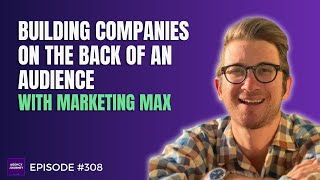
This is a YouTube video titled "From Agency Exit to Building Companies on the Back of an Audience with Marketing Max" published in September 2024. It features an in-depth interview hosted by Zen with Marketing Max, a serial entrepreneur and growth marketer who successfully exited a seven-figure agency. The conversation covers Marketing Max's journey from Wall Street to founding and scaling a digital advertising agency, the pivotal impact of the book "Built to Sell" on his business strategy, and his transition into building a media business with multiple newsletters reaching over 100,000 daily readers. They also discuss practical advice on agency operations, newsletter growth tactics, and content production. The content is a single-speaker interview rather than a multi-speaker conversation involving George B. Thomas.
Hello, hello, hello everyone and welcome back to Agency Journey. I'm your host, Kuba Graijsar and with me on the call today is Marketing Max, serial entrepreneur and growth marketer with a seven figure agency exit. You may know him as the man behind the Growth Daily marketing newsletter read by over 50,000 world class CEOs, founders and marketers every day. Or you may know him from his many other ventures which we might dig into on this episode of Agency Journey. Max, how are you doing today?
I'm doing good. Thank you for, for having me here. And Happy Friday.
Yeah, yeah, we're recording this on a Friday, if you're listening. On a Friday, that's super special. And happy Friday or whichever other day of the week you might be listening this on. Alrighty, Max. So I want to ask you a bunch of questions kind of relevant for our audience of agency owners Talk, Marketing Talk, newsletters, most likely. But before that I wanted to ask you a little bit of a question for people to get to know you personally. And the story behind this question is I got asked this on a podcast and I had what I thought was a very poor answer and then kind of what I said in response was featured as like the title of the episode and it apparently was a big hit. So the question, I'm not going to phrase it the exact same way, but what is a dish that you can reliably make and it's always a people pleaser. I think there was something like that, something that you can and like for me, I couldn't like I'm not good at cooking, trying to get better. So it was interesting for me to answer, what is yours?
My friends call me the grill master. I grill everything. I grill five, six nights a week. So any thing grill related, throw a nice piece of steak on the grill, you know, have a whole kind of secret sauce about literally making the sauce, marinating it in a baggie in the fridge for 24 hours. How long to cook it on both sides? Grilling wings, chicken, salmon, pork chops. Really, really love grilling pork chops actually and like seasoning them with a better the size charcoal, wood, fired gas, whatever. I'm the grill guy.
Okay, that's, that's awesome. That's awesome. So I'm about to ask you like right after this, the traditional Agency Journey question. What is your number one tip for agency operators? But first, what is your number one tip for grill operators? Max.
Wow. I've never been asked that. And I look, we host a lot of parties here. Obviously I'm in My backyard, and my grill's right there. But we host a lot of parties. No one really asks me. Everyone just says, like, wow, this is amazing. A great job. And I'm not doing that to pat myself on the back. But entrepreneurship is really hard, and so we have to pride ourselves on whatever our talents are. And so sometimes, you know, I got to remind myself I'm really good at grilling. But one grill tip, I guess, would be more salt. Like, put salt on the moment you take the meat out of the package, whether you're marinating it, like I said, in. In a ziploc bag for 24 hours, for an hour. Put a lot of salt on it. Put more salt on it. When you're grilling it on each side, like, during the grill, like. Like, you know, before you turn it over, put more salt on and put more salt on the other side. Just more salt brings out the flavor in anything that you could possibly want to grill.
Yeah, I love that. So, so applicable. And actually, I just had recently an experience like that. I was doing, like, a vegetarian stir fry, and I was seasoning it, and, yeah, I added more salt than usual. And at first I was like, ah, it's a little bit over, actually. No, no, it actually brought out a lot of the flavor. It actually worked. So that totally meshes with my experience as well. And next time I'm grueling, I will remember that. All right, Max, so I want to ask you about kind of your background for you to introduce yourself to the audience. We'll do that next. First, as I tease the traditional agency journey question, I ask this to everybody, and I'm very curious about your answer. What is your number one tip for agency operators then?
It's a tough question because I have so many, because over the five years when I was running my agency, I just really struggled and hit so many walls. And every time I hit a wall, I found so many ladders to climb over the wall. So I have a lot of different single pieces of advice that I think could change the game for a lot of agencies. But my number one, if I had to choose one, is to read the book Built to Sell, which is the book that changed my Life. It's like 200 pages. I read it in a weekend, and I'm the world's slowest reader. But every tip I could possibly give will not be as impactful as reading the book Built to sell. I would not have been able to exit my agency for what I did. I would have not have been able to reach seven figures in revenue as fast as I did once I read the book. Like, that book completely changed everything. And the whole concept of the book, the model that it preaches that I implemented into my business, like, you know, a religious person reading some religious text and following the good faith of the Lord or whatever it is, okay, I. That that book became my bible. And the strategy or the framework that it preaches is one single service, one single price point offered over and over and over and over and over again to every single client with the same checklist to deliver. And so before I read that book, I was running kind of a traditional digital marketing agency, where if a client said, I want you to run my SEO, if I want you to run my Facebook ads, if I want you to run my whatever, can you do it? And I would just say yes, because I thought more money, the better, and, you know, I can help them, and I know how to do it at least more than they do. So, you know, I just said yes. And I got crazy amounts of scope creep.
And.
It turned out, after reading that book, when we did a full deep dive and audit, that we were offering 17 different services. And so it made it nearly impossible to know what to charge. It made it nearly impossible to bill. It made it impossible to know who to hire next. It made it impossible to do any sort of predicting about, you know, how our revenues can grow and how much cash we need to have in the bank. It made it impossible to grow because we didn't know what product or service to market we had. We went to the market with a terrible message. And so that book totally changed everything, the framework and everything changed my life. And if you're an agency owner, that's like, hey, Max, you know, I do offer one service. Like, that's not a great tip for me. If you're listening to this, still read the book. Because a lot of the application of the strategy is very, very, very, very, very important and very, very, very, very, very underrated. So my best piece of advice is to read that book. We can get into more semantics of creating a checklist and a lot of little tricks I have up my sleeve. But that's the. The best tip I could possibly give. Everything that I can trace back to the success of my agency and scaling my agency as quickly as possible.
And.
Is rooted in the fundamentals of that strategy that that book preaches.
I love that. So you're kind of leading us seamlessly into your story. You mentioned you had 17 different services. So what did you finally kind of lean towards? What was Your one thing that you then transitioned towards?
Yeah. So the genesis story, really quick for context, is I was working on Wall street in New York City at a very small investment bank that doesn't even exist anymore. There was like 30 of us. Now the company's defunct, but I royally failed the Series 7 exam, which all investment bankers need to legally sell securities and grow and build your career, basically. And about two weeks afterwards, a client looked at me in the face after a board meeting that we had or after an investor meeting that we had in a boardroom in New York City, Midtown east, and she said, I want you to run my Facebook ads. I had no experience really running Facebook ads. I was a suit and tie wearing Wall street kid helping her raise a $5 million Series A investment round. And I said, you know, why? Why do you want me to run your Facebook ads? And she said, well, every agency I hire sucks, and you're a millennial, and I feel like you'd be good at it because I just bombed the Series seven. And I had always been interested in marketing and advertising, and I always knew I wanted to be an entrepreneur. I started my first company when I was 16 years old. I always kind of wanted to get back into it. I said, sure. She gave me $2,000 in ad spend. This was 2016, October 2016, she gave me $2,000 in Ad spend. I watched a couple of YouTube videos, played around with the ad platform, and within two weeks of launching her campaign, I turned her $2,000 into $20,000 in revenue for her business. Immediately hooked on Facebook ads, Google Ads, landing page optimization. I just started going down a rabbit hole, buying every book I possibly could about digital marketing and funnels and dot com secrets and all of the Russell Brunson stuff, and was immediately obsessed with it. And then to. To your point about, you know, offering 17 different services, I started signing up other clients at the investment bank. And I was basically like, hey, look, you know, we're helping you raise 5 million bucks or sometimes $50 million investment round. Know if you have a predictable way to acquire customers at a very low cost to acquire a customer, but then it'll be easier for you to raise capital. You know, can you give me. At the time, I was like, can you give me 2,000 bucks a month? And I was only charging $250 for my services. I didn't know what, what the value of this was. I just was happy to, like, be helping people. And the excitement of Turning, you know, 2 grand into 20 grand was so fun. Started signing up more clients, signing up more clients. Eventually, over the course of a couple months, raised my rates, quit my career on Wall street, started, you know, building what would eventually become my agency, right, Hell's Creative, based in Hell's Kitchen, New York. And immediately, because all of these companies were startups, they said, hey, can you help with our pitch deck for the investment round? We want a new logo. Can you help with our SEO? You know, our investors are really hounding us about SEO, whatever it may be. And so, you know, fast forward like a year and a half later. We weren't doing that much in revenue and we had 17 different services. We were doing 40 bajillion. It felt like 40 bajillion different things. But we got in a conference room after I read Built to Sell about a year and a half, two years into the business, and we num. We wrote down all of our 17 services on a list and then we drew two lines next to it and we made two columns next to that list and we ranked those 17 different services one to 17 in two different columns. One, what was the most impactful service that we offered? Because we knew that whatever service made the biggest impact on the business, that client is most likely to stick around for a very long time. We wanted to show roi. We wanted to make an impact in the business, not just be a nice to have. We didn't want to just be a logo design firm, even though that is the example that they use in, in Built to Sell. So we numbered 1 to 17, what's the most impactful highest ROI for our clients? Then we numbered 1 to 17. What is the most profitable for us? What can we charge the most for but make the least or work on the least amount of hours for? And we spent a good like 45 minutes debating, I think this is, this one's 15 and or 14 or like we spent a good like 30, 45 minutes doing that. Felt like an eternity because we really just wanted the answer. And, and once we finished it, it was very clear that the number one service that we offered out of the 17 that was the highest ROI and the highest margin business most profitable was Google Ads. So for like 30 seconds we looked at each other and we're like, are we just going to be a Google Ads only agency? Like, is that, is that what we're going to be? And we were like, well, you know, let's just think what else we could offer, right? If it was, if we wanted to take the built to sell playbook and like adapt our own slight tweak on it. And we wanted to service. Is there anything that kind of goes along with that? And we looked at all the other numbers, and the second number for both columns was Facebook ads. Okay? So we were like, hey, this makes a whole lot of sense to do Facebook and Google Ads, right? Google has drives a ton of qualified traffic. Facebook retargets that traffic building up closer to the rule of fifth, right? People need to hear see your brand five times before they even decide if they're going to make a purchase or not. So we thought that made a whole lot of sense. And we thought, hey, you know, at the end of the day, we're driving traffic. We're driving qualified traffic, whether it's coming from Google, whether it's coming from Facebook or a traffic agency, more or less. And so that afternoon, I wrote a letter, and if I'm going on too much of a tangent or if you have other questions, I know we have time stops to tell me, shut up at any point. But that afternoon, I wrote a letter that basically publicly announced that we were no longer a digital marketing agency, and we are a digital advertising agency, and we only offer two services. At the time, I was also very obsessed with the show Mad Men because our office in New York City, this co working space that we were renting office space from at our agency was on Madison Avenue. And so Mad Men, we were doing advertising. You know, I still liked wearing a suit every once in a while into the office because of my investment picking days, because I spent a ton of money on fancy suits, and I still just like that vibe in New York. And so I was obsessed with Mad Men. And there was an episode in Mad Men where the. The. The main ad agency gets fired by their number one client, which was a cigarette brand, Lucky Strike cigarettes. Lucky Strike tobacco. And it was a really big deal because they lost like 30% of their billables or some crazy number. And back then, that's how. That's how you were legit, right? You were legit on Madison Avenue as a Madison Avenue agency. If you had a big cigarette client, that was like, what made you. And they were fired by, you know, very, very prominent client. And Don Draper, the main, main character, wrote a letter basically saying why he's quitting tobacco like he himself is going to quit.
So that was the inspiration.
So I spent. This actually took a long time. I spent like 45 minutes trying to Google what episode that was. And I tried to find a screenshot of the exact letter because he basically wrote a letter why I'm Quitting tobacco and paid to have it as a full page ad in the New York Times or something newsletter fictional. And I ended up finding that I printed it out at our co working space and I went line by line and I changed it to why we're quitting Full service. Why we're quitting Full Service Advertising or Full Service marketing. And I sent that email to all of our clients and I said, you know, we're going to refund you last month's retainer or whatever the project is that we're working on. Fully refund. Like that afternoon we just cold turkey, we were like, okay, starting tomorrow we're not doing anything else other than Facebook and Google Ads. And our, and our business skyrocketed like almost immediately. Almost immediately.
So yeah, I'm curious about one thing. Yeah, like I like to get. Personally I'm very interested in like what happens in people's heads at moments like that. I mean there's business strategy. I understand you were inspired by a book that definitely kind of helped make the decision. But at the end of the day, there must have been a moment where you must have debated this inside of your head. Like what was going through your head and what made you, what was the kind of thought process that you applied that made you not only do this, but do it at so kind of rapidly with refunds and everything in such a kind of clear cut way. What was happening in your mind?
Two things. One, it had been plus or minus a year and a half of me and my co founder. I started Hell's Creative with a, with a co founder. One of my best friends from college worked at a big ad agency and I convinced him to come join me and start the business. So it had been a year and a half of the two of us working 80 hour weeks trying to grow a business that offered way too many products, way too many services, making almost no money. I mean, I think we were at the time that I read that book, after a year and a half we were only at like 20 or $25,000 in MRR and we had two other full time employees plus ourselves, plus rent. And we were just looking for a way out. We were just looking for, you know, an answer to how to make more money, make the business more efficient and make work less, not work 80 hours a week or at least work 80 hours a week, but you know, not make. I think we were only paying ourselves like $4,000 a month back then. You know, I was making way more than that. As an investment banker in New York City. And, you know, New York City is very expensive. So we were working 80 hours a week, paying ourselves like 3504 grand a month. Um, yeah, like, we were just looking for a way out. I actually, I'll never forget this. I remember exactly where I was when I heard about the book. I was visiting my. My friend for Christmas. I was. Spent Christmas with my friend, and I was, like, kind of bored. No offense to the friend. Hopefully you're not listening, John, but I was visiting my friend, and I was just scrolling LinkedIn, and there was an article that was like, five. Five books every agency owner needs to read. And this was like the third. And I was like, oh, you know, one day I want a big exit. One day I want like a. You know, I want to make. I want to sell my agency. I want to make money. And I didn't even read the synopsis of the book. I just saw it was called Built to Sell, and it was made for agencies. I went on Amazon, I ordered it. You know, I got back to my apartment in New York City two days later. I read the book in three days, which never happens for me. I don't even really ever read books cover to cover. I read every inch of that book, you know, on a weekend. And I. I walked in on Monday to the office, and I handed my business partner the book, and I said, I need you to read this. And then, you know, later this week, we're going to have a discussion about it. He read it that night. And then Tuesday morning, we. Or maybe Tuesday afternoon. Yeah, Tuesday. Tuesday, around lunchtime, we went into conference room B in our coworking space, and we did that exercise, and it changed our business and change my life, truly.
Okay, amazing. So I thought I would fast forward from this point on, because the first thing I want to mention is from your origin story, you were scrolling LinkedIn and then you found the book that changed your business forever. So, you know, if. If any listener is feeling guilty about scrolling LinkedIn, it can help you if you just find the right article at the right time. Like, you know, I can give myself some hard time sometimes about LinkedIn, but it can't be inspiring. So I just wanted to draw attention to that detail and let's fast forward from here. Max. So you mentioned you were dreaming of an exit. Now, I know that you're kind of post exit, and I just wanted to ask about, you know, what? Not even maybe necessarily about how the exit happened, but, like, what are you doing post the exit? And, you know, what's the game that you're in right now and like, what's the, what's the next kind of mission you're on?
Yeah, well, when I first started the agency, I never thought I would sell it. I wanted to like grow it to a 500 person or thousand person massive agency in New York City. I never thought I would sell it. And then very quickly I realized like, this is a really tough business. I don't want to be doing this forever. And that was around the time when I saw the book Built to Sell. And so I was like, oh, this could be my, my path out. You know, this is my, this is my way to grow it and then sell it.
Right?
About three years after reading that book, implementing the strategy, I ended up buying my business partner out about six or nine months after reading the book and trying that strategy. He wanted to go in different directions. So yeah, about three years after, you know, we, we got to seven figures in annual revenue, 15 full time employees. We're finding some pretty crazy success with our clients. And because of 15 million different reasons, I woke up and said, I don't want to do this anymore. And I sold the agency in October of 2021, not really knowing what I was going to do next. But I kind of took some time to work with a few one on one consulting clients and just start creating content on Twitter and TikTok as marketing Max. I just wanted to create content that helped people always been really, really, really fascinated with influencers and content and how easy it is these days to get out in front of people. And I kind of woke up 6ish months later, around March, April, and I launched a course about marketing because I realized every single person on Twitter and TikTok would DM me the same, like 15 questions about marketing, basic questions. I launched a course, of course, royally failed, totally flopped. I think at the time I had 10,000 Twitter followers, maybe like 50,000 TikTok followers. Promoted the living daylights out of the course. And I think I got like 20 people to buy it. So bad. And I felt so bad because I'm like, I'm marketing Max. I should be able to market my course. But after, after like three weeks of promoting it and getting 20 sales and making like no money for month of work or two months worth of work, I met with one of my friends and he's like, dude, don't launch a course. You should launch a newsletter. And I was like, ooh, that's what, what, what do you, what? And he said, with a, with a newsletter, you're reaching your audience more consistently than you are with a tweet or with a TikTok post. You're able to go way more in depth and you can promote your course. Every single newsletter sending people are way more likely to buy a course after reading multiple emails from you than actually, you know, just seeing a tweet and, and buying it. And you can monetize it by promoting other brands who want to pay you to reach your audience. Literally that afternoon, I bought the domain growth hacks weekly.com that was my first newsletter. And I came up with that idea just because, you know, every week I would tweet out one growth hack. It was basically a glorified marketing tip. And those would always do really, really, really well on Twitter. They get a lot of likes and retweets. And so I was like, Look, I have 30 of those or whatever, 20, 30 of those. I'm going to repurpose those into longer form newsletters and as a weekly send, and I'll send it every Sunday ahead of the week. So you have a tip, a marketing tip to use for the week. And, you know, I grew that business, or I should say I grew that list over the course of the next three months to about 10,000 followers in total at the time. I would get people responding to the email saying, hey, we'd like to sponsor this. And I was like, I don't want your money. I only have 10,000 subscribers. Or at the time I only had 5,000 subscribers, 6,000 subscribers. I was getting a lot of requests. And once I hit about like 12, 13,000 subs, I emailed all the people back who had emailed me, you know, a couple weeks before, a couple months before. And I was like, hey, you know, I'm ready to, ready to do some ads in the newsletter. Would you like to buy? They all said yes. Every single one of like the four or five people that emailed me and like, two of them had crazy success immediately. They wanted to book out the newsletter weeks in advance. And then once the newsletter hit about 15 to 20,000 people, my weekly newsletter was sold out of ad spots, of which we had three ad spots every week for like four months. We were just sold out like four months in advance. And it fluctuated between like four months in advance, six months in advance. We were just like booked, booked, booked. And, and I woke up and I, I was realized that this business of running ads in a newsletter is a billboard business. The more billboards you have, the more money you make. You have, you need more inventory. Because I was booked up six months in advance. So I decided I'm going to launch a daily newsletter. We're going to cover marketing news every day. And January 2nd or 3rd of 2023, we launched growth Daily was a daily newsletter. And then over the course of the next year and a half, fast forward to today, we now have three different newsletters. More than 100,000 people read our newsletters every single day. We do close to seven figures in annual revenue across all of our different products that are promoted or sold or monetized via the newsletter, including ads. Ads making up a big chunk of that. And I was gonna say one other thing and. Yeah, oh yeah. And we work with major ad partners. That's what I was gonna say. So we work with HubSpot, Notion, Mailchimp, you know, huge, huge, huge advertisers who wanna reach the marketing max audience. So, you know, I have more than 200,000 followers and newsletter subscribers across all socials and newsletters and probably 2:50 at this point. And so yeah, the, the, the thing that I'm doing now is essentially building a media business, media brand as Marketing Max or Growth daily dot com. And I'm building businesses on the back of the audience so that when we don't sell inventory, we are monetizing those ad spots with our own products or services. So instead of building a portfolio, so if I had to summarize it, I'm building a portfolio of marketing, software, media and service businesses on the back of an audience.
That's super interesting and a few things I wanted to dig into here. But first I just wanted to make it clear really for myself. So what I understand is like if you don't sell an ad spot to somebody who kind of wants to be there, what you do then is you use that ad spot to promote like one of your other businesses that you've got in your portfolio. Did I get that right?
Correct? Yeah. Unless you're the super bowl, it's nearly impossible to sell all of your ad spots at full price. So what most newsletters do or most media businesses do is they have a handful of affiliate deals where they'll just plug an affiliate offer in, where if someone clicks the page and buys, you know, a product or signs up for a SaaS business, you'll get 10% of the, the tool that they signed up for. That way they're still monetizing the ad spot in some way, shape or form. I don't want to do that. I have a strict no affiliate deal or policy. So I take my Unsold ad inventory. We have about eight ad slots to sell every single day. We're not big enough. I don't have the sales team to go sell eight ad spots a day. So, you know, our unsold inventory is used to promote our other businesses.
Okay, so the question that kind of presses itself on my mind, drills itself into my scholar that I wanted to ask you is, well, you're talking about huge numbers when it comes to subscribers. And I think a ton of the people listening to this have an email list, have a newsletter, and want to grow it. So not to ask, you know, too simple of a question, but like you mentioned, for grilling more salt and what is the, what is the secret sauce for growing a newsletter then? Like, how do you get to that. Those kinds of numbers? Does it come in stages or the particular tactics? Tell me more about that.
Yeah, well, one of the businesses that we promote in the newsletter that's in the portfolio is a business called the Newsletter Team. So I now have a consulting business where we help. I would say more than 50% of our clients are agency owners. We help them grow and monetize their newsletter. And this is like the number one question we get. I always thought it would be content, but the number one question is like, how do I get more clients on flies. Problem with doing this outside, Sorry. How do I. How do I get more. More potential clients on my list and how do I grow a newsletter? And the answer, up until about two months ago, has always been ads. Run Facebook ads to get people to sign up for a newsletter. It is the fastest way to scale. And if you can figure out that, you know, if I spend $2 to acquire a subscriber and via ads in the newsletter, you know, I'll make back that $2 within three months or six months, you have a really good business. You don't even need ads, though, to have a solid payback period and track that. So if you know, every month you're spending $5,000 a month to grow your list, and over the course of the first three or four months, if you can close one new client from those new subscribers, every single month, you spend five grand. Let's say your agency charges $3,000 a month, and the average client's going to stay with you for six months, you know, I mean, you, you, you're gonna, you're gonna make a pretty penny, right? You spend five grand and you get one new client and, you know, you get a $3,000 a month retainer client for six months. That's a very good ROI. And what we do at the newsletter team is we, we help agency owners, but anyone looking to start a newsletter with their ads, we help them figure out exactly what to send in the newsletter so that people open it. We figure out exactly, or we help you figure out exactly what call to action and what ad inside of your own newsletter to promote your own agency or your own business has the highest converting chance of booking a call with a target client for you. But the reason why I say up until two months ago is because I recently stumbled on a a new way of growing the list, which is semi controversial, but it's very legal and it's not any different from cold calling, which is essentially you can scrape an email list from LinkedIn of all of your target clients, you can manually upload that list into your ESP or into your email service provider wherever you're sending your newsletter from. And you can start sending people the newsletter. And so what we're doing now is we're going and going to very various data sources and we're finding our target clients and our target customers for our own businesses, but also for our advertisers. We're adding those people to the list and then they, if they don't have a certain open rate within a week or two weeks or three weeks, we automatically turn them off or kick them off the list. And if you do it at the right ratios and if you do it at the right time, you won't get any spam complaints or maybe you'll get one, but it'll be well below Gmail's threshold and you're able to grow your list significantly faster at a fraction the cost of running ads than, you know, really not just ads, but any other way you could possibly grow your email list or your newsletter. So we're now starting to offer that as a done for you service. Now that I've kind of piloted it with my own three newsletters and a couple first clients. We're now starting to offer that as a service where we will actually meet with you to figure out who your target client is. We'll scrape the list for you from LinkedIn, we'll upload it every week into the ESP of your choice. And if you don't know one or have one, we'll set it up for you and we'll even write the content for you if you want. And we're booking five to ten calls a week with what we call the newsletter funnel. This, this newsletter funnel, we're booking five to ten calls a Week for all of our different clients, more or less, depending on niche, depending on time and ramp period and everything else. We're booking five to ten clients a week or calls. I should say calls a week.
So some people listening to this will be thinking, okay, I want to press the easy button on growing my newsletter. What's the URL for that?
The newsletter team. Com.
Okay, well, that's nice and simple. Okay, so I just wanted the listeners to know that I've got one last question before I let you go. Zen. I asked you about growing the newsletter. Now, the last one, and you can go kind of as long or as short as you want. Here is I wanted to kind of look at kind of under the hood here at the Engine a little bit and ask you about operations. So you're sending like, from what I'm hearing, multiple newsletters daily. That's like a ton and a half. And then some of content. How are you making it all run smoothly? What's the secret?
Yeah, so one thing I want to say really quickly is I'm not here to promote the newsletter team or any one of my services. If you have questions about anything newsletter related or agency related, find me on Twitter, DM me. Or if you want to learn how to do this yourself and upload the list yourself, just DM me on Twitter. I respond to DMs on Twitter normally faster than I do texts from my best friends. So DM me on Twitter if you have questions. And I'm more than happy to help you figure this out. But, you know, if, if how to grow the list is the. The number one question we get from potential clients and clients of the newsletter team. The second question is, you know, how do you produce content? What do you say? And the truth is, content's the easy part. Not even with AI, just content is the easy part. There is a plethora of content in every niche that you could more or less mimic or get inspiration from and have a freelancer for pennies create that creates just good enough content where people want to and look forward to opening your newsletter every week or every day. So, you know, it seems like a lot. We send a newsletter out every morning at around 8am EST, and then we send a newsletter out every evening at 7:30. Yeah, 7, 7:30 EST. But it doesn't take more than an hour to write each newsletter. It doesn't take more than an hour. In fact, a lot of times it takes 30 or 45 minutes. If you set up your templates properly and if you follow the framework that I work with my clients on. You know, I call it, you just need to create a coloring book so that either you or the writer that you create just hops in and colors within the lines. If you know, we need to find four headlines of industry news, then we need to find three, you know, TikToks or tweets or blog articles or podcasts that's related to our, our, our content, our niche, or our service or our clients or whatever. And then we need to write one, like tip of the day. That's easy. That's literally a coloring book that you can draw within the lines for. You just know. Okay, now I got to go find three. And the sourcing of that is also very easy. There's like four or five really easy sources that will help you do that. Not even using AI. Like I found all this before AI really exist, not existed, I shouldn't say existed, but before anyone of the public got access to ChatGPT, you know, I was able to create a template that myself or my writers could hop in and bang out a newsletter that goes out to 100,000 people, that people look forward to reading, that has a really high open rate where engagement is high and clicks are high and everything else in 30 minutes to an hour. It's very, very, very simple. Similar to the agency game, right? Once you have a process, once you have a system, once you have a checklist, it's literally an assembly line. It's literally McDonald's right? Freaking. I heard this in the podcast or on another podcast a couple weeks ago, and I've been saying it everywhere. It's. It blows my mind. The average person of someone that works in a McDonald's is like 22 years old. And the average McDonald's store in the world does like 1 to 5 million dollars a year in revenue. And the average age of the manager is like 26. So if a bunch of 20 year olds can deliver millions of dollars worth of product for something that's more difficult than you think, cooking the patty the right way and making sure that the lettuce is on the thing the right way. If, if a handful of 20 year olds can service millions of dollars a year in revenue, your agency can, with very little stress and very little complications. And your newsletter can too. It's just a matter of setting up the right process and systems that I spent, you know, a year and a half perfecting for my newsletter and five years perfecting at my agency.
And do you know what I'm going to be thinking about for the next week after recording this episode.
McDonald's. Well, yes, I don't eat McDonald's. It's kind of gross.
But yeah, of course you grill your own stuff. I understand.
Compare.
No, I was going to say coloring the farmers market. Such an interesting.
Yeah, I'm sorry, what did you say? What are you going to think of?
What was the last thing I'm going to think of? Coloring books. That's such an interesting mental frame. And that's what I love about these interviews is like there's always a kind of a way of looking at things that perspective or typically an analogy. I'm all for analogies and this one was awesome and I'm so glad you put that in there. And unfortunately, our time is kind of at a close here, so I just wanted to ask you, you know, to let the watchers and listeners know where they can follow you and, you know, connect with more of your content before we close off.
Yeah, if you want to learn more about marketing and get my newsletter, just go to growth daily.com growth daily.com we put all of our newsletter content also onto the website. So if you want to check out some recent tips of the day, marketing tips of the day, or some headlines in the marketing industry, definitely check out growthdaily.com but if you have questions for me specifically about anything we chatted about, agency related, newsletter related, or if you just want to follow along with my journey, Twitter is by far and away the best place to do that. I'm the. I spend hours of my life every day on Twitter.
And your handle on Twitter is at MarketingMax.
Thank you. Yeah, it's just at MarketingMax.
Okay.
I have a very funny. I have a very funny Twitter banner in my bio, so go check it out. Pretty fun.
Okay. Yeah, yeah, watchers and listeners, go check that out. And if this is your first time listening to Agency Journey or if you haven't yet, don't forget to subscribe on podcast platforms. We're also on YouTube, so subscribe to Zenpilot on YouTube and all the Agency Journey episodes live there. Would love to have you as a subscriber. There's a Zen pilot newsletter too you can find on zenpilot.com, i hope you're subscribed, run by yours truly actually. And I'm trying to make it better with every edition. So it's called first class operations. So senpai.comnewsletter and be our newest subscriber. Had to drop that in given the topic of the conversation. Max, this was so interesting and informative and I learned so much from the conversation. Thank you so much for coming on the show.
You got it. Thanks for having me.
Yeah. And thank you, watchers and listeners. And we'll see you. Well, at least I will. I'll see you in the next one. Bye. Bye.
Cheers.
Sa.










