From Independent Marketing Agency to Elite HubSpot Partner With Rikki Lear
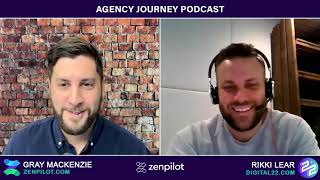
This is a YouTube video titled "From Independent Marketing Agency to Elite HubSpot Partner With Rikki Lear" containing an in-depth interview conducted on October 19, 2021. The conversation features two speakers, Ricky and Jason, discussing the growth journey of Digital 22, a marketing agency that transitioned from SEO and PPC services to becoming a dedicated HubSpot partner. Topics include strategic decisions, client management, scaling challenges, and the agency's approach to client health metrics and partnerships within the HubSpot ecosystem. The content is a detailed business-focused dialogue exploring agency growth and operational insights.
Game planning element, like selling the game plan before the retainer. We never really fully adopted that. We still sold into the retainer in most scenarios unless we thought, look, there's something perhaps complex here or something we need to scope out before we agree how we're going to work together. So we probably used it as like a 2 in 10 thing. We did a game plan before we went into retainer and we're doing similar on the project side. So we actually do the game plan a lot more now before we sell a project because that needs really tight definition and scope and how it's going to work. So more often than not we're doing some sort of game plan or workshop prior to a project engagement with retainer. I guess you can. You've kind of got infinite time to get where you want to go and figure things out and change the retainer around and these. But with a project it's like, look, let's all get 100% on the same page before we jump into things.
Right. I think that's often used in my conversations with HubSpot partners. I see a lot of folks who are using that kind of separated discovery project on the front end for retainers and ignoring it for projects. So I think that's a really keen insight is you need to be really clear on what all the deliverables are, what defines success, what, what is the right design of what we need to build out here. If you're taking on a project and committing to a fixed fee engagement, which really makes that discovery piece even more important on that end than the.
It's really helped us shape what our scope of work document is. So like I say, prior to a couple of years ago we didn't do a lot of project work so we had fairly simplistic scoping docs and things since going into it quite heavily. And some of these projects are a lot of money, so you need them to be right. Having the discovery workshops allowed us not just to scope out what we will do, but also to be really clear on things like omissions like what aren't we going to do things like what the dependencies are from the client side. And I think you need to have either a really in depth sales process or a discovery workshop to get that document accurate.
Yeah.
Otherwise you just end up. Someone lets somebody down at some point, whether it's the agency, whether it's the client, if you've not got those dependencies and omissions listed can really make a difference to the success of the project.
Makes a Lot of sense. We're talking about how HubSpot has grown. And so being tied to the HubSpot ecosystem, there should be some natural growth that happens as a partner. But I'd say Digital 22, you guys have an outsized growth. I mean, if we just look down on average how HubSpot partners have done, you've grown really quickly in a. That doesn't feel like a short period of time, but from the outside in a relatively short period of time. So can you walk us through a little bit of your journey? I think 2011, I think we were starting agencies at the same time. Yeah, walk us through kind of the agency, start the transition to HubSpot and then what are like, are there key points that you look back on and say, hey, here's why we're growing so quickly? In retrospect, you knew none of that at the time. You know, you tried 12 of those things that you think are all going to work and two of them actually wind up being the accelerators.
Yeah, sure. So, like just quickly going back to the start, I guess. This was never a. I didn't sit down one day and say, let's start an agency with like a business plan and whatever. I sort of fell into it a little bit in between some roles and things in employment and some stuff happened and whatever. Happy to tell those stories. But I guess the point was I came into this as an SEO and PPC professional, picked up plenty of contracts and work for myself, so much so that I couldn't fulfill them. So I hired someone and then, oh, you're an agency now. Cost us more than one of you and kept going that way. So I guess the first defining point for us really was we actually did okay as an SEO and PPC agency. I think we got to about 50 clients with say a team of four or five of us, but quite low average retainers, probably 5, 600 pounds a month was probably average. So. So there's a lot of clients, but low output. I got a cold call from HubSpot. I didn't actually come onto HubSpot through inbound, which I get reminded by the sales guy quite a lot. He cold called me. We decided to buy HubSpot for ourselves to get more SEO and PPC business. So it's going to be our marketing tool for us. And I guess the landscape at the time was changing, that SEO and content were coming together and things like that. And we got about a year, well, probably not even a year, maybe nine months into running HubSpot for ourselves, realized this is better than what we offer clients right now with just single channels. So I guess our first major decision and we were quite. What I heard differently from us, from a lot of other agencies I spoke to at the time is we were really brutal at that moment where we said, we wrote to all 50 of our clients and said, we're going with HubSpot. Here's where we're going. Do you want to come with us? And I think probably only four stayed with us, but they went from 500 pound a month retainers to five grand retainers.
Right.
So we ended up with four or five clients on five grand retainers. They all went, they had to buy HubSpot to stay with us. That made us a goal partner the day we became a partner, which was great. So we kind of, we didn't keep doing the SEO and PPC thing and try to do the HubSpot thing at the same time. We just, actually just went all in, which was probably our first milestone. And I think the thing we kind of got right at the time because there's a lot of people joining the partner program but trying to figure out how to do it alongside their web business or their current digital marketing business or something. So we were prepared to wipe the slate clean with the agency and start again, which is I think what one thing we did really well. So I think that was our first big pivotal moment, if you like. And then a few things we did over the years. Another clear one I can remember is when HubSpot started. There's a lot of discussions when HubSpot starts diversifying. It puts you in a really awkward position of like, what are we now? Like are we an inbound marketing agency that will utilize HubSpot but also go with other providers and we'll just do the best in class inbound and it doesn't matter the platform of how we get there or do we want to go on this boat with HubSpot and offer CMS CRM services? Do we want to do that? And that took us probably a year to decide because we're all, we were all marketers at heart. So like same we're not an inbound agency anymore and we're a HubSpot agency was probably quite a tough pill to swallow, like when I look back three years ago, but again it worked for us. We just went all in. We're a HubSpot agency, we're going where HubSpot's going. That means we're going to recruit CRM people that we've never recruited before. And people who care about sales ops and all of these things that as marketers you kind of touch the fringe of. So I'd say those were the first. Those are two big moments that I vividly remember with helping us accelerate our growth.
I think to that burn the boats moment of telling 50 clients that you're not clients if you don't jump on board, that takes a lot of courage to make that leap.
So.
And that's worth realizing for anybody trying to start or anybody building an agency right now. There's so much. One of the things that drives me crazy talking with agencies is the amount of agencies where an owner just won't, won't stand up and just lead and say, listen, here's the direction we're going. Like your job as the CEO is to step up and say, here's where we're going. Not that you don't involve other people in the decision making process and hear their insights. But at some point somebody has to lead. Um, and all of the, all the successful agencies have somebody who's done that at key points in the agency and when they start to struggle because someone's advocating that responsibility. Um, the point you bring up about being a HubSpot agency, as opposed to you had one core set of problems you were solving previously. Obviously initially it was traffic and conversions, SEO and ppc. And then that kind of expands a little bit. And now so that I guess if you look back at how you were weighing out the pros and cons, because being married to HubSpot is a big commitment. If you want to run a lifestyle agency with 10 people, HubSpot's not the right platform to be, to go all in on because by nature of what they're trying to do, capture and grow up market, they're going to continue expanding their capacity and capabilities. So if you're not trying to grow alongside them, that's a tough decision. But how did you ultimately make that decision to say we're going to be HubSpot, we're not going to just be an inbound marketing firm?
Yeah. I mean, you've probably touched on the root of it. Really. The conversations we were having as a leadership team is we're all marketers, we all love marketing, we're all super comfortable in marketers in marketing, in marketing land. So from like a passion and a learning interest perspective, like Markton was the obvious choice. But the thing we all have in common as a leadership team is growth. And we all know, we'd all know if we'd have stuck within Bell Marketing and maybe grew 20% year on year, we'd be probably bored. But I think also people recognize that for them to grow here, we need to grow as an agency. So everyone here is ambitious. If they want promotions and they want more salary and they want more opportunity, that's not coming if we're stagnant. And this is the message I'm always sending, is I'm not growing because I'm greedy. Like I'm, I'm genuinely not that money orientated. I'm growing because I love growing and I love the game and I love pushing myself and I recognize that if we don't grow, I will lose all of you guys because I won't have opportunities to give you at some point, like you will outgrow us. And I never want to stand here and in a place where our employees have outgrown the company, we should be going quicker than you guys so that you guys have opportunities available to you. And then it was a no brainer. Then it's like, well, let's go the HubSpot route because they're going there and there's going to be no limit of opportunity in that market that we could see at the time.
Right. How does that impact how you think? So when HubSpot launches a new hub, like Operations hub, the most recent hub that they've rolled out, do you at this point, now that you've had been through that a couple times, are you starting to figure out a framework or a process for, hey, obviously we're the customer first and we map it out and like what is that implementation or rollout or staffing process look like?
Yeah, it's really difficult and there's always quite decent size curveballs as well. They're not small things. So when they've launched new hubs, say like service hub or ops hub, they've been really hard for us. One thing we haven't done is dive in with two feet and say like, we're a service hub expert now because HubSpot launched yesterday. Like we really haven't done that. We've probably ran most of these things and to the point on opsub, we're still in this phase. It's like we're trying to figure out how it helps us and how we use it and get really good at it. And occasionally you get the client where they're super keen, but they're keen to learn with you as well. Like if you get the right clients, you can have that conversation to say, Look, I know HubSpot launched that yesterday I'm not an expert in it today, but if you're prepared to discover it with me, we can do it together and that's how we've approached them. So we've been probably quite slow and steady, I'd say, to get round to launching. But then when we do launch, we know, we know how we're going to do it and we know what results you can expect and we know the flaws of the software and maybe where we'd need to bring in any other integrations to plaster over some of the early holes that some of the products have. Right.
Makes sense. I want to mention a couple things on the website that I thought were interesting. So digital22.com for anyone trying to look is the site you just have a tools page, which isn't. That's not super uncommon, but you've got a lot of stuff kind of outlined on that tech stack page from CRM to pm, the reporting, how much of that? So I would imagine a good amount of deal flow comes via the HubSpot ecosystem right now.
Yeah.
Are there any others in terms of tech partnerships where you're getting significant deal flow, or is most of that the other way around, where you're bringing people to their platform?
I would assume, yeah. I don't. I can't recall us ever getting a deal from another tech partner, if I'm honest. I think the way we've looked at tank partnerships is never from. Never from that lens that we've got an expectation that they're going to bring us anything and it's looking for actual, genuine, where is HubSpot weeks that we need them to be strong. And so like Databox, when we became a partner, we've been a partner for quite a long time, so it's been a few years. HubSpot reporting wasn't amazing. It's catching up, which is great. But we needed to fill that gap. So we went to Databox to fill a solution. I've absolutely got no expectation of Databox are ever going to send me business. And all of these partnerships, they always say that we know people and someone realistically, I don't expect it. So if it ever happens, that'll be great, but it's there. It's to fill a solution that HubSpot can't. And that's the way that we've always done it. And we've been quite, again, quite slow and selective and kept the number limited on the amount of partnerships that we have because there's a million things plugged into HubSpot, they all sound amazing but even just from like a bandwidth and headspace perspective, like 50 people can't be experts in 50 pieces of tech for sure.
Do you internally, do you assign like, does somebody own each one of the tools? Obviously it's a tool like HubSpot as different owners for different components I'd assume but for a tool like data boxes they're the hey, here's the person who's our main go to person for a Data Box or 7Sense.
Yeah, we've tried to keep sort of a, I guess from a partnership relations perspective one person that 7Sense will speak to here but also they're the person that gets trained and is the sort of go to expert in it. But again because we've probably only got 3ish real partnerships, it's not been a huge burden to have a Vidyard $0.07 in the data box expert here. The HubSpot question's an interesting one. It'll be good, interesting to see where other partners go with this in the future. It's like everyone that worked here five years ago was a HubSpot platform expert in HubSpot end to end. That's so you can't do that now. Like those things that I've. I'm demoing it to clients and there's like buttons appearing and dropdowns that weren't there a month ago and we're still trying to figure out how we structure from like a hubs perspective because it's actually, it's still at that point where it's actually not worth the investment of having like a service hub team because there isn't that much demand and most of our projects are multi hub so we're still trying to figure that out really. I guess if that's the way it will go is we'll keep niching down and nation down while demand's building and there will be hub experts. But at the moment we're splitting the HubSpot expertise by what they're trying to achieve so the teams are more layered in. Like there's a team that helps salespeople that might span several hubs but just like the sales perspective on those hubs, if that makes sense.
Right. That is a tough one because there is alignment issues that are like you can't purely go in hubs because if you're doing marketing you're also touching the web hub and there's an element of CRM that has to get layered in there and an element of ops that is also going to play a part ops kind of Runs around everything. So that makes sense. Right now you're looking at adding 30 new people as we move into 2022. And those we should mention for folks who may be interested or want to check it out. I'm going to the website right now to see. I think it's just Digital. It is digital22.com careers and you've got a bunch of openings on here now. But I guess as we look forward, what are the things that you're doing to power that growth? Like is that just an extension of the current growth trajectory that you're on? Or what are, what. What are kind of the priorities for you as you move forward here? And of course 21 and into 2022.
Yeah, we're strongly trying to keep. We're aware that we could flip our model very soon to a project LED company, which is something we don't want to do. We still want to have the majority retainer. So we're trying to be very purposeful about growing our retainer based business because we think the project stuff will come in itself quite naturally and we can grow that at a good rate. So we're trying to build out our own sales and marketing engine to purposely fuel retainer growth. We've always had, at least for two or three years now, dedicated sales and marketing resources in the team. But we're looking to double down on that and have quite substantial teams for both of those which will drive the growth. I'm not too worried about sales. I think we'll always hit whatever sales targets we give ourselves. I don't worry too much about revenue. I think that the hardest thing to do when we're scaling the businesses, people, it's. It's finding talent, hiring the right talent, layering the structure of the business, getting the processes right. It's like winning business is easy, but servicing it really well is the hard bit. Like I don't want our standards to drop. I don't want to be getting crappy reviews just because we're growing revenue. Like that's the hard bit for me. And that's where I'd say 80, 90% of the brain space of all the team here goes on. How do we keep growing and doing the things we do really well? And those are the tougher questions to answer.
Is there a North Star metric for you on how well you're servicing clients?
Yeah, we've invented a health score that's probably pretty bizarre to anyone outside looking in, but for a lot of years we followed nps. So we use NPS system which is great. And it tells part of the story, I guess. So we have nps, we look at projects, perspective because there's a huge. A huge part, what we tried to do, we had a really big initiative one year to look at what are the lagging indicators of success. So NPS tells you how happy they are, but it doesn't tell you how they got to being unhappy or happy. So we tried to correlate all the clients that stayed with us a decent amount of time, all the clients that's left and what have been the milestones in it. So it could be things like the first time we sent them an invoice, did they like complain about it or did they pay late or something like that? When we sent them a campaign plan to get signed off, did it get shared around 15 people internally and take a month to do, or did one person come back to us with a couple amends and sign it off? So we've got like, I think there's about 12 things of these sorts of. That go into it and we call that a client health score. So it's basically other finances, other projects. Are the results of the things that we do for them good. And is there NPS saying the same thing? And we, we come up with some weird Excel formula that tells us whether they're healthy or not. Accuracy of it can be debated, but what we're really looking for is like trend data, like our client health scores going up generally. That's our North Star metric.
Is that calculated on a monthly basis?
Yeah, we calculate on a monthly basis and we report it monthly. But some of the elements of the health score we don't do monthly. So things like nps, we don't ask clients for an MPS every month. They get bored of us quite quickly and stop answering it. So depending on the client and the amount of deliverables and the amount of points of contact we've got, we might be getting an NPS score, like quarterly, but it could be by different people and different stakeholders. And then some of the other data, things like projects and finance and stuff, that's kind of live data that we're pulling out of systems and things. But essentially it's a monthly metric report at the end of the day.
Right, that makes sense. Yeah. I think you've got. I love using NPS as someone's first step into measuring client feedback.
Definitely.
But pairing that with an internal health score, most of the teams we're working with are the account manager updating it on a. On a weekly basis, but you've Hit on the other piece, which is there's other stuff that an account manager is not seeing that has to get factored into the equation too. Michael and Nicole Rose at Mojo Media Labs have a really cool traffic light model where they have all these symptoms outlined a list the whole team sees. These are all triggers that would. These might not seem like a thing to you if you're just getting started in the agency space, but we've been around long enough. Here's the list of. This is a red light. This is, you know, a huge caution flag. This is a yellow light. This is a. Pay attention to this. This is green. Things are good and kind of the marks of what makes somebody a great and healthy client relationship or not. And they're the first one of the first teams that I've seen implement that and share that with the whole team as part of onboarding and getting people up to speed, which is cool model too. So that's. That's awesome. You guys have this. Your model sounds like it's better built out. Do you remember the CHI score back in the day of Spot Supply and happiness index, which is a very rudimentary attempt at doing the same thing. And that's how all these systems start, is you pick out what you think matters and then it gets refined over time.
It was. And it literally came. We worked with the person who did the next model from chi. They called it Sticky Index, I think was the original launch name of it. So we work quite a lot with the guy who did that. And that started us on our own adventure to find out what's. What makes clients sticky to us. And two or three of the elements of that index actually make our health score as well. So it's. Yeah, like you said, our, our starting point to all of this was mps. And then we literally had an MPS and an account manager score and we used to take the two of those and average it or something. And that was like the day one version of it, which was great. And then all we keep doing is layer on as we learn more about clients and get better data. You just keep layering it and it just keeps increasing the accuracy.
Right. This is. As you know, we were, we were in the SaaS space previously. This is one of the fundamental things I'm interested in. I feel like there's a SaaS play here for service based businesses. Some way to aggregate the right data, pull it in and give people a better something that's a better indicator than mps. And there's some play there. But I haven't figured out what that play is exactly.
Yeah, No, I agree. If you get the collective minds of a lot of people who managed a lot of clients, like, I'm sure we've got two or three of the same flags that other agencies have, but I'm sure they've got nine that we don't. And it'd be interesting to see between us all, I'm sure, this 100 flag model and you put all your data into it and you've got some spookily accurate score about clients.
Right? Right. Oh, man. Well, that's awesome. Well, Ricky, this has been really fun. I appreciate coming on and being willing to share. We mentioned the website digital22.com Is there anyone else anywhere else that you'd point people though, to check out more about what you all are up to?
No, I think Digital 22 is the best. There's obviously the careers part, which you pointed out, and then we got the big learn part at the top. So we do nine of our own podcasts. We have a video show, like, if you want to learn and see more of us. There's no shortage of it if you hit that learn tab. So, yeah, hopefully people will check that out.
That's awesome. We'll make sure it's in the show notes. Thanks for coming on and being so generous with your time.
Hey, awesome. Thanks for having us. Appreciate it.
Thanks for listening to the Agency Journey podcast. Visit agencyjourneyinsiders.com to join the podcast community and be sure to subscribe for future episodes.










