From podcasts to media brands (+ company pivots and brand villains) | Agency Breakthrough Ep. 3
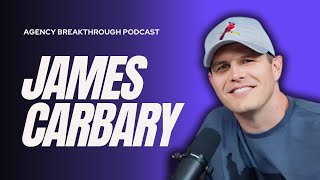
This is a YouTube video titled "From podcasts to media brands (+ company pivots and brand villains) | Agency Breakthrough Ep. 3" published in August 2023. It features a conversational podcast-style discussion among multiple participants including James Carbury, Gray Mackenzie, and Kuba Sell. The conversation centers on James Carbury's journey with Sweetfish Media, the evolution from podcast production to building comprehensive media brands, challenges in market positioning, and strategic insights on content marketing and audience building. The discussion also includes personal anecdotes and light banter, providing a mix of professional and casual dialogue.
So when you look at podcasts specifically, they don't have the benefits of YouTube or social or even now with tools like Beehive, what newsletters are going to become. They're stuck in this channel. And unless you can get somebody to talk about your show to somebody else, it's very hard to grow that show. And so we're able to produce these shows and the content, you know, can. Can be really good, but if nobody knows about the show, then it's not going to go very far. And so as we tried to start solving this problem, we realized that, man, we, we don't need to just produce a podcast for someone. We need to produce a media brand.
Well, hello. Hello, everyone. Welcome to Agency Breakthrough Gray. How are you doing?
I'm doing excellent. I'm turning on my do not disturb right now. A little low on sleep. Ready to go. Ready to roll, though.
Yeah, I noticed. Am I right in not assuming but, like, observing that we both had a dentist appointment this week?
Well, you would think that, but we did both. This is a confusing story. So my wife had a dentist appointment, same dentist, earlier on Monday morning. She went in, she asked some question about my appointment, which was at 1pm and they said, oh, I don't think he's on the schedule for today. She's like, no, it's on our calendar. They're like, nope, it's not here. So anyways, I had a dentist appointment, but they did not know that I had a dentist appointment. So I did not have a dentist appointment.
So you ultimately did not have your teeth checked out or anything?
Correct. I was not as cool as you this week.
Ah, okay. Yeah. Well, I did finally get to the dentist after I think, a year and a half of my mom nagging me about it. My mom is not a dentist, but she's a dentist assistant. I'm not sure.
What do you mean, a hygienist? Like, she is cleaning people's teeth or she's an assistant. Like, she's scheduling and more secretarial admin work?
Both. She can do the teeth cleaning thing, but I think she had extra training for that. So primarily she's the assistant. So, you know, she's. She really cares about the health of our teeth, mine and my brother's. And she just kept telling me, get the scan, get the scan, get the X ray of your teeth. You don't know what's happening there. I was terrified going in this morning, but it turns out more or less all is good. So I have that to say to my mom and make her proud.
Good for mom. That's awesome. Did I tell you what they said to me when I went in? I went in and they said, and I was looking at my phone. I'm in the waiting room and I'm just thinking about a whole bunch of different things. Probably trying to reply to your slack messages and a whole bunch of other people's slack messages. And she, the hygienist, opened up the door. Samuel McKenzie, which of course everyone goes with my first name. So I had to wake up to that. And the first thing that she said after we started walking back down the hallway was, are you nervous? You look nervous. I was like, well, I was not nervous until you mentioned that. Now I'm a little bit nervous. What should I be nervous about?
Yeah, that's a great way to just put that in a person's mind, right? Are you nervous? You're feeling stressed, anxious now? Yes. All three. Right. As of this moment.
I have a very good friend. He'll go nameless on the podcast. He's not a sim pilot, but in college and it was during finals and bumped into a friend of ours who was studying in the library, getting ready for finals. And my friend said to her, what did he say? He said, why? I think he said, why do you always. No, he said, are you sick or tired? Something like that. I was like, oh, that's not a. That's not a great start. And obviously that was taken as, you know, why do you always look sick and tired? Like not. Not really the right way to. To lead off. So, yeah, there's some questions. Just not the right way to start a conversation.
Exactly. But we don't know these questions or we're not going to use them today because we're about to have an excellent conversation with our guest. You want to. While we still have a few minutes before they join, you want to tell the listeners about our guest today?
Yeah. We are bringing on James Carbury, a company called Sweetfish Media and a couple of their ventures, which I'm not sure if we'll get to today on the podcast or not, but James actually Kuba talk about, because I just recently had. I finally met James for the first time in person at an event here a couple months ago. But I know that you've also followed his work for a while. What do you know about James?
Well, being completely honest, the main thing that I know about him is his book, Content Based Networking. And that's kind of the main reason, one of the main reasons that I'm excited to actually meet him Today for the first time. And to have that conversation. I don't know if it'll revolve strongly around content based networking, but I do recommend it. If you're listening to podcasts, you probably actually are consuming content based networking content because the approach is all about making connections by inviting people to podcasts or getting them to contribute to your blog or various other ways. A quick read. And it's more than just a marketing strategy. It's a life philosophy which really had a huge impact on me. So I'm excited to talk with James today and just to share that I'm a big fan again. Right. We had Marcus Sheridan in the previous episode. Now again, I'm the fanboy on the call, but I don't mind. I don't mind. No, no, no.
How many books do you read in? You pick the time period. But I think most people put this into a year.
That really varies from year to year. Honestly. Some years I get really excited and then I can go through, I want to say like 20. I'm not one of those a book a week people. I couldn't. Other years it might be, you know, more in the realms of like eight, for example, sometimes because I like to consume something at a given point in time. But you know, on one week or one quarter, one season, it might be a. It might be books and then I might switch over to a podcast and then it's, you know, a particular YouTube channel that I love to consume. So it's. But it's around that kind of 8 to 20 range. How about you?
I'm kind of same, but mine is maybe not year to year as much as era to era. So pre kids, Post kids. Pre kids, you know, was around 40 on average. So not quite a book a week, but close to it. I really enjoyed reading. I almost said enjoyed reading because there is an element now where like it's. I still enjoy it, but it's rare and I feel like I have more stuff that I'm trying to get through than versus kind of picking up a book and enjoying it in a lot of cases. Post kids. Yeah, like I'll be doing good if I read a dozen books this year.
Exactly. Yeah. And you know, over time I switched my mindset from, you know, how many books can I read to how much can I actually get from a single book? That really resonates with me. How deep can I. I go? Do I take notes, put them in my second brain? Do I try to kind of put my own twist on it and post about it on LinkedIn. Just going deep into one subject area for a longer time, I think leaves a more lasting impact on your skills and your knowledge.
So don't tell James this. Good thing we're not recording, right? I have not read Content Based Networking. Familiar with the principles. Principles. But I think you're the first one who even let me know that he had a book. I was familiar with the agency with Sweetfish, and actually I found out about him. My good friend James Robert Lay runs a super cool agency. He'd be upset that I said agency, but out of Texas. And he's focused on like the financial services sector. And he runs this show. Let's see. It's not Banking on Chains. That's the name of one of his. Name of one of his books. It is. I'll find it eventually. But anyways, he worked with Sweet Fish to produce that Pot, his podcast, and I think he just hit maybe 300 episodes. But he has loved that relationship with Sweetfish. And so that was kind of the first place I found it. Digital Growth Institute is the name of James Robert lay's company. And I'll find eventually the name of the show anyways, just got rave reviews. I heard that from a couple other people. I was like, I need to meet this guy. And then turns out he also has a book.
Yeah, yeah. Well, like I said, I'm a big fan of the book. I wonder what James is going to say once he joins the call about this.
Banking on Digital Growth is the name of James Riverlay's podcast.
There you go. There you go. Okay.
Let'S see. I've got a handful of kind of random questions to throw at you at some point. But let's. On the book theme, I have not asked this question frequently to people, but sometimes this is like a, you know, the oddball question. I'll ask them, what was the worst book that you read last year? Does anything stick out as the worst book that you've read over once?
I don't usually go very deep into bad books, you know, so nothing really presents itself.
Are you fine quitting a book early when you're like, ah, this isn't working?
Yes. Yeah. Ever since I read a blog post that just said I needed to find. It was a Medium article, I remember. And it's, you know, the whole read just boiled down to it's okay to not finish books. And that's what I took away. And I said, hey, yes, it is okay to not finish books. I'm just gonna do that. You know, these days when I. When I encounter a new book. I, you know, look through the chapters, see if something resonates from that, and then I decide if I want to go deeper or not. What I'm struggling with, though, and maybe you have a good tip for that, is revisiting books. Like, for example, I revisited the Ask youk Answer recently, and I'm looking at this revised edition. Right. And I'm not quite ready to just read it, like end to end again. If, when you do that, do you jump through the chapters? Do you have a different approach here?
I don't have a good solution for this. I've got a couple key books that I've read through cover to cover multiple times. Most books I read once. And then if I took notes, which I've been really intermittent with right now, I use this tool. I think I mentioned this last I might Reflect Reflect app. Maybe it was the site is what I'm using. It's got my second brain or my journal or whatever. And, and so I've gotten better at taking notes there. So if I have notes and it's, hey, here's the chapter that was helpful before I find a specific concept, I can flip right to that. But no, I don't have a good systematic way for knowing, hey, am I going to read the whole book or just read a chapter or what am I going for? All right, we're live. James, welcome to Agency Breakthrough. You've got your Cardinals hat on. You've got your Cardinals colors. How many MLB stadiums have you been to?
27.
What are the three that you have left?
So I've got Seattle left, Cincinnati and Pittsburgh. I'm going to Pittsburgh in a couple weeks.
That's right.
So I will soon have two left. And I just went to St. Louis, hence the Cardinals had last week to see some friends and we, we knocked out that ballpark. And it is a beautiful. And you can see like the St. Louis. What's that thing? The arch. The St. Louis.
The arch.
Yeah.
Yeah. You can see it from the stadium. And, and that stadium was packed. It was like a Tuesday afternoon or a Tuesday evening game.
Yeah.
And I don't know, man. I, I've got to, I've got a take on the pitch clock. I think the pitch clock is fantastic for the game of baseball, but the three games that I've been to so far this year have just, the pace has been incredible. Anyway, it was, yeah, I, I, I don't, I'm not like a massive baseball fan, but I love going to ballparks. Yeah. And, and, and it was, it's. It's been a blast. Trying to check off as as many of them as I can.
I think that's so cool. I got hit. You probably can't see it at all. It's not really bruised, but on my eyelid, which is probably great video, right? Everyone, look at everyone looking for his island. Got hit in the face with a ball from Josh Naylor last night in Cleveland. Not a. Not a hit. So what happened was, end of the inning, they're running off. I took my parents. This is like. My dad is a huge Red Sox fan. They're playing the Red Sox, opening up the series last night I was pumped. Shane Bieber was throwing for the Guardians. And so we're sitting, you know, we're in row FF. So however many rows up, that is. Yeah, 30 rows up or so on right, right down the third baseline. Come off after the inning, they throw it over the 30 foot netting and it stands the, you know, just the ball from the first baseman. So Josh Naylor throws it over. It's coming literally right at me. I was going to stand up. My dad's sitting next to me and he is pumped. He's every inning he's been standing up, like wanting to get a ball. And they never throw it that high. Finally threw it that high. Perfect. Come right to my dad. My hands are up, like right behind the ball. I've played baseball forever. I coach baseball. I play like a ton of. So I'm like, oh, this is awesome. My dad reaches up in front of me and totally botches it. All love and respect to my dad, but this was not his finest baseball moment. Rips off his hand, ricochets right into my left eye socket.
Oh, my.
I was just watering for like four innings after that. Totally fine today. We're all. We're all good.
Did you get the ball?
No. So then it ricochets right down. That was impressed, too.
You didn't even get the ball.
But I was pumped. A guy and his fiance from Atlanta were up visiting. He got the ball and he could not have been happier. So all's well that ends well. He was. He was through.
You're too kind that you're genuinely happy for the guy that stole the ball that gave you a black eye.
He was crazy.
So, hey, if you make an error, you don't deserve to keep the ball. Next time I'm just gonna shove my dad back down and be like, I got this.
That's hilarious. That's.
It's still.
I still have a hard time calling Your team, the Guardians, that's. That's a tough one.
Trying to adjust to that. Yeah. And the number of Indians jerseys last night. Yeah. Still far outpaces the. The Guardians jerseys. Yeah, I think it'll.
It'll eventually shift, but, man, that's, that's, that's gonna be a. That, that's gonna be a tough one to transition.
Yeah.
Name change.
Two. Two years? Yeah, two years. Two years. Yeah.
Yeah, two years.
I love that you're so into. Into baseball and stadiums. I need to get my game together and act together to go see stadiums.
It's just an excuse to go hang out with friends all over the place. So you should, you should definitely do it.
And those memories. So my parents talk a lot about two types of fun. There's type one fun, which is fun in the moment. It's like, you know, this is fun in the moment.
Yeah.
Type 2 fun is like, hey, it was horrible. It was not that fun in the moment. And it's a great memory later.
Yeah.
And so getting hit in the eye is like an awesome example of Most of the 90% of the night was type one. That was type two fun. But down the road, those are the best memories regardless. So either way, it's a win. Win.
Yep. I love it.
Stealing that model. Totally. Yeah.
Oh, man, that's awesome. Well, let's talk about your story. You've got an awesome breakthrough story that does not revolve specifically around. Around baseball. But let's talk a little bit about the agency. Give people a picture of Sweetfish and what you've built.
Yeah, so we, we. I started Sweetfish in 2015 and we were a blog writing agency. So I, I just knew content marketing was a thing. I had had a failed startup that was. It was technology product. We didn't raise any money. And bootstrapping a SaaS product, I should have known at the ripe young age of, however young I was at the time that that wasn't going to work. But it didn't work. But I, through that process, realized that content marketing, this idea of like creating content that was so good that made people want to come to you as opposed to you having to go to them and twist their arm into buying your thing. I was like, this is the way. And that was right when HubSpot was. I mean, it was the early days of them creating the inbound movement. So I was heavy on that train. About a year into the agency realized we just weren't making any money and so we weren't charging enough. So many things that you just don't know what. You don't know when you're first starting off. And so we decided to pivot into becoming a podcast agency in 2016. And the main reason was that I had been doing a podcast with a buddy of mine, and I realized that anybody that I asked to be a guest on the show would say yes to being on the show. And I was like, man, this is a fantastic relationship building tool. Regardless of whether the content's good or not, you can ask anybody to be a guest on your show and they're going to say yes. And so I was like, surely people in the B2B space, where relationships are worth hundreds of thousands, if not millions of dollars, surely they'll be hip to this. And so I started talking to, you know, VPs of sales and people that were overseeing sales organizations at B2B companies, and they looked at me like I had 16 eyeballs. I mean, it was like, what, what are you talking about? This is a marketing thing. And I'm like, it's not a marketing thing, it's a relationship building thing. So we ended up starting, we, we started B2B growth in January of 2016, right when we made the pivot into becoming a podcast agency. And for the first 150 guests that I had on the show, we were interviewing VPs of sales. And none of them gave two turds about what we were doing. They just did not care. And, but I kept hearing like, oh, let me connect you with my marketing counterpart. And so because I'm dense and very dumb, it took me 150 conversations to finally go, you know what, we just need to make B2B growth about marketing instead of sales. And it's so funny now because we still get pitches all the time for people that are like sales experts wanting to be on the show. And I'm like, we haven't talked about, we, like, we haven't been a sales show in approximately like 3,000 episodes. So I, I don't, I don't think you're going to be a fit. But anyway, we pivoted into B2B marketing, and that's really when it started to take off because we were getting the right kind of guests on the show, building the right kind of relationships, and being really known as the company that could produce a podcast. And we really rode the, if you follow the. I think it's Clayton Christensen. You have the innovators and then you have the early adopters. And now I think we're more in the, like, early majority for podcasting but we capitalized on that those first two stages of the product adoption life cycle, and we're really winning. I mean, I would say that we, I mean, we were, we were the name. I think Chat GPT still pulls this up. If you say, like, hey, who's, who's the go to agency for B2B podcasting? You know, we're, we're in, if not the only result, one of one of the three results that it gives. And so really just kind of defined what the B2B podcasting category was and kind of wrote the playbook on how companies can do it. And over, over the next six or so years, it was going well, we were growing. And then we looked up and there were a lot of other B2B podcasting agencies kind of all around us. And so we went from kind of creating our own category, playing in a very blue ocean. Didn't really have a lot of competitors. We were doing the Christopher Lockhead thing and it was working to a T. And we look up one day and we find ourselves in much. I don't want to say it was a, you know, a dark red ocean, but it was definitely, it was definitely more red than it was blue. Lots of competition, people driving, you know, being competitive with price. You know, we didn't, we didn't want to have to compete on price. And, and so we made the, the decision to say, hey, we. And it was more so just about market dynamics and more really trying to figure out, like, how can we add the most value to our clients. And, and what's happening is we're getting shoehorned into a particular channel that has not figured out how to do distribution beyond word of mouth yet. So when you look at podcasts specifically, they, they don't have the benefits of YouTube or social or even now with tools like Beehive, what newsletters are going to become. They're stuck in this channel, and unless you can get somebody to talk about your show to somebody else, it's very hard to grow that show. And so we're able to produce these shows and the content can be really good, but if nobody knows about the show, then it's not going to go very far. And so as we tried to start solving this problem, we realized that, man, we, we don't need to just produce a podcast for someone. We need to produce a media brand. And so about a year ago, we started talking about this language of, you know, starting to build media brands for our clients and, and that it would be a distinct and separate brand from the corporate brand. Because so often your positioning for your content is around your product and it's, it's very closely tied to the thing you do, but we realized is like, if you, if you want to attract your, the entirety of your market, you have to be talking about things that the, that the market wants to talk about and is interested in learning about. And, and that's more often than not not going to be related to your product or service. And when you think about the fact that only 3% of your market is in market to buy at any time, you have to be creating content that is ready to attract the 97% of your market that's not ready to buy today. And so you need to have a separate and distinct media brand and it needs to encapsulate a newsletter, a podcast, YouTube and social. And that can be really overwhelming for people. And so as we started to, to kind of rebuild our team, we started bringing it. We brought in our creative director who has incredible background in social, where we're looking to bring on somebody that has a lot of YouTube background right now. Newsletters we've been good at because we've done a lot of copywriting in the past, like blog writing and that kind of work. And I think that's going to translate pretty well to newsletters and then podcasting. Obviously, you know, B2B growth has been a number one ranked podcast in the marketing category multiple times. And so we've got a lot of internal chops on podcasting just because of the business that we've built for the last eight years. And so all that to say that's been the journey. And the real breakthrough is to say that man, our clients need to be adapting to the world that we live in. Um, which is the fact that your, your buyers are consuming media everywhere, not just in podcast channels. And we want to create top of funnel content that can reach them across this kind of new media landscape. And, and, and making that shift has been much, much harder than I thought it would be. Just getting the internal troops aligned on that direction. Um, it's, it's funny, it's seems like it's been easier to get the external market aligned to that. Thinking that it has been our own internal team because you're, you're just used to doing something. We did it that way for six or seven years and so it's, it's, it's tough to start. Like people still default. You know, we're a year into this and they're still saying podcast. I'm like, podcast, it's a media brand. And so anyway that's, that's where we're at.
We just covered a lot of ground just in one fellow swoop.
I'm a talker. You give me the mic. You give me the mic. I'm going to talk.
Yeah, go for it. Yeah, I know, I know what that's like. So I've got a question and an observation. I'll start with the observation. Isn't that the true status symbol these days? You no longer say you're, you know, top three in Google is just, you ask ChatGPT. We're in the top three. Right.
It's been, you realize that low key flex for sure.
Yeah. And my question was actually related to that. If you could do a little bit more low key, high key flexing, you know, for the people first meeting Sweetfish Media, you know, what's the scale? You know, what makes you kind of a big player in this, in this market?
Yeah. So we've got a team of, I think we've got a team of 24 right now. We did 4.4 million in revenue last year. We'll do a little bit less than that this year. And so we, we went through. Last year was a really, really tough year for us with kind of the, the economy talks and marketing contracting their budget and us making the shift into media brands from podcasting. We had, we had a crazy amount of turnover on our team and so that's always hard contraction in business. And so it's the ugly stuff of running an agency that you hope you never have to deal with. We had to deal with a lot of those things last year just. And so, but we actually installed a new CEO recently in, in this past March. So I'm, I'm just sitting in the visionary seat and Jeremy Wellman is now stepping in as, as, as our CEO and integrator. We're an EOS shop, so, so yeah, really excited about moving forward. But that's, yeah, that's a little bit of context about kind of the scale and where we're at. We were at 45 employees about a year and three months ago and then had to go through some layoffs in March of last year. And it was after the layoffs is when kind of, you know, that always obviously breaks trust. And so we've been rebuilding our culture for over a year now and I think we're in a good place now. But, and last year has been hard as hell.
Okay. Understand. So if you don't mind me continuing, Craig.
Yeah, go for it.
Okay, so what we're trying to give the listeners here is the story of the breakthrough moments. Kind of the one change that changed everything. And you mentioned that that change was switching to this not building podcasts, building media brands approach. So I wanted to kind of zoom in on that and tell it like Hollywood story know. So can you share more about kind of what was the thinking that led to this decision, kind of in more detail and kind of what was the mood like, you know, on the team before that decision and then how it happened and the consequences of that? Let's do like a, like a three act structure, you know, gives you a lot to dance.
So.
I mean, for years I've talked about this idea that our clients don't want a podcast. Our clients want an audience. They want thought leadership. And for their thought leadership to actually be impactful, you need an audience to be able to influence.
James, can I interrupt you?
Yeah.
Why do they. I'm sure some people are saying thought leadership. I think most people aren't saying thought leadership. Like where does that insight come from? How are they expressing that they want thought leadership?
Our clients, because we're working with like mid market B2B SaaS companies, our clients actually are using that language.
Yeah.
And so they're, they're coming to us saying they want thought leadership. Which is another honestly reason that we had to, we had to think really critically about the types of shows that we produce because the, you know, obviously a show is still part of a media brand, but we were, we were exclusively doing interview based shows for the entirety of our, of our time being a podcast agency. Because those, those interview based shows, it was the relationship with the guests that was really the strategic objective. When we shifted and said, hey, there's actually one fewer people are saying yes to being guests on shows. Unless they're actually larger shows, they have substantive audiences. So it's becoming less effective as a relationship with building tool because few people, you know, I'm, I'm a big advocate for remote, have been a huge advocate for remote. But seeing the power of what can happen whenever you get your team under a single roof has been pretty like, I've been pretty blown away by it. It's, it's wild how many, how easy it is to be disconnected and not aligned whenever, whenever you're in a fully remote setting.
Yeah, I'm noticing. Sorry. Craig, go.
James, can you. So this may, you may not have gone to this level because your team all gets how it plays out, but when you say, hey, we're building a media brand, you mentioned earlier some of the components that hey, you got a podcast, you got a YouTube channel, you got social, you got email.
Yep.
Is there more to it than that? Like how do you see, you know, way back in the day with our agency. Wow. Actually talked about the content branching system, it was like, hey, we're going to take, you know, this is the old HubSpot playbook. We got the ebook that carves out 10 blog posts. Each of those carves out our social media posts. And it's like everyone kind of disseminates down, someone learns more core insight. How do you see that all playing out? And if you could just maybe put a little bit more legs on that or paint the picture for everyone listening, like, okay, media brand sounds cool. James thinks this is the future. This is working for them. They've grown, they validated this. What does that look like?
Yeah. So I think that at the core of it is the show. So that is very convenient for us because we've been producing shows for the last seven years. But what the show allows you to do if it's formatted correctly is spin off content that works really well on social, that performs on YouTube and that also can, can become newsletter content. And so I'm thinking of the show as like how the content gets made and then the newsletter is, and this is a, this is another recent revelation for us as we've started the B2B Growth Newsletter. And I'm starting to do this with separate media company that I'm building for local, like a local business news network. And so the, the thing I'm thinking seeing with, with newsletters specifically is their ability to, your ability to grow an audience. Collecting first party data with a newsletter. That's not possible with like growing an audience in a podcast. Like you can do programmatic advertising and get Apple podcast followers, but you don't know who those Apple podcast followers are. You can get a bunch of social media followers but you don't necessarily know who they are. You can't, you can't take, you can't take a social media follower, enhance the data and then go run a retargeting campaign that against those same people. It's, it's much tougher to do that where with an email you can enrich that data, you can do retargeting campaigns against that data. You can push other elements of your media brand to, through the newsletter to those people that you have access to to be able to contact whenever you want. And, and the, the thing that I think is the most strategic about Building a media brand is that, I mean, you, these companies that we're working with, they're spending hundreds of thousands of dollars a month on paid media. Every single month they're having to pay to access the people that they want to talk to. And what we're not saying is that you should stop doing paid media and just build your own media brand. But if you can carve out just a percentage, you know, 5, 10% of what you're spending in paid media, it doesn't even require net new spend, but carve out 10% of what you're currently spending in paid media to build your own audience and start filtering people from like using, you know, those paid media dollars. Get them over to up, you know, your newsletter, ultimately your podcast, YouTube, social. Get them in, get them swimming in your ecosystem so that you're not a slave to that hamster wheel of constantly having to pay 2, $300,000 a month to get your position or your, your point of view in front of the exact people that you're trying to influence.
Is huge. Actually, I'm not, I'm not sure if you would agree, Gray, but I think it validates some of the things we're doing here at Zone Pilot, so that's good to hear. So, last question about the breakthrough story before we transition to the crisp cornucopia. Next, I wanted to ask about, we talked about how, you know, managing that change internally, what worked and what, as you mentioned, didn't. Tell me more or like, tell me about what was hard about communicating this externally and kind of informing the market that you're no longer about this, you're now about media brands, something that was hard and how you navigated that so that, you know, listeners with a similar challenge can, can learn from that.
Yeah, I, I think it's. The thing that was really hard was figuring out what our villain was. And so what was the, what was the thing that we were trying to unify the market around that we could all rally against? And I'm not, I, I'm typically like a, I want to, I want to build things up. Let's build things up together as opposed to tear things down together. But it's just impossible to look at the market and see that, you know, the way Drift did it with forms. In any classic brand story, there is a villain that you're trying to attack. And in our case, that villain was commodity content. But it took us a lot of workshopping and talking. And this was not just like, I didn't have a two hour calendar block on my calendar one Wednesday to say come up with the sweet fish villain. Like, it just, it doesn't work that way. It's lots of conversations, it's lots of feedback on LinkedIn posts. It's, it's, you know, hours long conversation with different people on our team where we're just trying to wrestle through what is the thing that we are, that we are trying, that we are ultimately fighting against. And, and so that was challenging. I mean it just, I did not expect it to take so long. Even though, you know, intellectually, you know, you need to develop this, this villain, but took way longer than I thought. But when it did and, and with the market started to embrace the language of commodity content, I just saw an influencer. She, she included it in part of her post yesterday and I sent it to our team. I was like, there, there's a, there's a marketing influencer using our language in how she's articulating a problem. And so it's not easy. And, and you, you listen to Christopher Lockhead talk about this and you, you listen to these really smart consultants, the Andy Raskins of the world. You know, you, you listen like, it seems like it just flows out of them like honey. And for it does it. This, this process takes a long time, but it's worth the, the pursuit of it is 100% worth it because once we had our, once we had our villain established, we actually started really, we talked about the villain long before we talked about the solution to the villain. We still didn't have the wording for what a media brand was. We just knew that like, we've got to be able to engage people wherever they are on the Internet. It, we've got to break out of this box of only being able to communicate to somebody when they're listening to a podcast, because the reality is they are, they're hanging out in a, in a bunch of other places. We've got to figure out what are the, what are the places that are most strategic for brands to create, create content and then distribute in those places. And, and, and so we ended up coming up with the language of media brands. But media brands is, is a solution to the villain. And I think that order of things ended up being the right step. Figure out who was your villain first and then, and then address the solution to that. You already may know what the solution is in our case because we were pivoting. We hadn't quite found the language for it yet, but a lot of folks, you're not pivoting your entire company like we did. But, yeah, that was incredibly challenging, and it just. There was no clean process for us to go through to land on it. If somebody's got one, I would love to hear it, but, yeah, I'm glad we're on the other side of that now.
That is such a huge tip. I love that. And I thought of something that might make you happy, might not, but I had heard of commodity content, and I. It got so far that I didn't even know that it connects back to y', all actually, you know, which is great.
I mean, my. My friend Jay Akunzo, who we hired as a consultant last year, he helped us really define the. The brand story for Sweetfish. And. And he. His. His thinking got us really close to where we were. I don't know that he came up with. I, I think I forget who it was or if it was Dan or me that came up with the. The specific phrase of commodity content. But the language that we've started adopting from Jay is affinity over awareness. And so this use of the word affinity and wisty has been talking about affinity for a while. But when I was asking Jay because a lot of his language favored. He talks about being someone's favorite a lot, and we've adopted a lot of that language. And so as I've talked to him about it, I'm like, hey, man, I don't want to. I don't want to feel like I'm stealing your, you know, your idea. And he said he heard something from Simon Sinek a while back that was like, the validity. Like, it's. It's a. It's a. It's a good thing. When people are using your language and they don't even know it is from you, it means the idea resonated so deeply that. That it just intuitively made sense to them to use. And so the woman that used commodity content in her. She likely has no idea that it came from us. But I think what a cool contribution to the space that we can give language to a problem that so many people feel that now there's a word for it.
Yeah. Yeah. That is huge. And wow, that is a great kind of finishing point to the Breakthrough Story. Thank you. That. I think that could be very educational to our listeners, hopefully. Awesome. Let us know. Let us know by sending an email to breakthroughampilot.com. thank you ever so much. Now for this next segment, because I heard somewhere on LinkedIn, it's good to have these kind of more definite segments. There was a guy named James. I've shared about that. So what we came up with is something we call the Crisp Cornucopia, which is a series of recommendations of various things that we'll get into that we wanted to get your recommendations for. I like. I'll start with something super basic. No, I won't start with something super basic. I'll start with something fun. What is. We'll cut it out if it doesn't work. But what is the type of sandwich that you most recommend?
Type of sandwich. What a fantastic question. I think I'd have to go with, with, with a club. So the roast beef, the turkey and the ham, the combo of the club mix mixed in with mayonnaise. So I'm trying to be healthy so I can't eat a lot of mayonnaise. But if this is like a dream scenario, I'm going to go a club with mayonnaise. Lots of feedback on LinkedIn posts. It's hours long conversation with different people on our team where we're just trying to wrestle through what is the thing that we are, that we are trying, that we are ultimately fighting against. And, and so that was challenging. I mean it just, I did not expect it to take so long. Even though, you know, intellectually, you know, you need to develop this, this villain. But took way longer than I thought. But when it did and the market started to embrace the language of commodity content, I just saw an influencer. She, she included it in part of her post yesterday and I sent it to our team. I was like, there, there's a, there's a marketing influencer using our language in how she's articulating a problem. And so it's not easy. And, and you, you listen to Christopher Lockhead talk about this and you, you listen to these really smart consultants, the Andy Raskins of the world. You know, you listen like it seems like it just flows out of them like honey, and it doesn't. This, this process takes a long time, but it's worth the, the pursuit of it is 100% worth it because once we had our, once we had our villain established, we actually started really, we talked about the villain long before we talked about the solution to the villain. We still didn't have the wording for what a media brand was. We just knew that like we've got to be able to engage people wherever they are on the Internet. It, we've got to break out of this box of only being able to communicate to somebody when they're listening to a podcast, because the reality is they are, they're hanging out in a. But in a bunch of other places. We've got to figure out what are the. What are the places that are most strategic for brands to create. Create content and then distribute in those places. And, and so we ended up coming up with the language of media brands. But media brands is. Is a solution to the villain. And I think that order of things ended up being the right step. Figure out who was your villain first and then. And then address the solution to that. You already may know what the solution is in our case, because we were pivoting. We hadn't quite found the language for it yet, but a lot of folks, you're not pivoting your entire company like we did. But yeah, that, that was. That was incredibly challenging. And it just, it was. It. It. There was no clean process for us to go through to land on it. If somebody's got one, I would love to hear it. But yeah, I'm. I'm glad we're on the other side of that now.
That is such a huge tip. I love that. And I thought of something that might make you happy, might not. But I had heard of commodity content, and I. It got so far that I didn't even know that it connects back to y', all actually, you know, which is great.
I mean, my, My friend Jay Akunzo, who we hired as a consultant last year, he helped us really define the. The brand story for Sweetfish. And, and he is. His thinking got us really close to where we were. I don't know that he came up with. I think I forget who it was or if it was Dan or me that came up with the specific phrase of commodity content. But the language that we've started adopting from Jay is affinity over awareness. And so this use of the word affinity and Wisty has been talking about affinity for a while, but when I was asking Jay because a lot of his language favored. He talks about being someone's favorite a lot, and we've adopted a lot of that language. And so as I've, as I've talked to him about it, I'm like, hey, man, I don't want to feel like I'm stealing your, you know, your idea. And he said he heard something from Simon Sinek a while back that was like, the validity. Like, it's. It's a, It's. It's a good thing when people are using your language and they don't even know it's from you. It means the idea resonated so deeply that, that it just intuitively made sense to them to Use. And so the woman that used commodity content in her, she, like, she likely has no idea that it came from us. But I think what a cool contribution to, to the space that we can give language to a problem that so many people feel that, like, now there's a word for it.
Yeah, yeah. That is huge. And wow, that's a great kind of finishing point to the, to the breakthrough story. Thank you. That, I think that was very. That could be very educational to our listeners. Hopefully. Let us know. Let us know by sending an email to breakthroughampilot.com thank you ever so much now for this next segment, because I heard somewhere on LinkedIn it's good to have these kind of more definite segments. There was a guy named James shared about that. So what we came up with is something we call the Crisp Cornucopia, which is a series of recommendations of various things that we'll get into that we wanted to get your recommendations for. I'll start with something super basic. No, I won't start with something super basic. I'll start with something fun. What is. We'll cut it out if it doesn't work. But what is the type of sandwich that you most recommend?
Type of sandwich. What a fantastic question. I think I'd have to go with, with, with a club. So the roast beef, the turkey and the ham, the combo of the club mix mixed in with mayonnaise. So I'm trying to be healthy so I can't eat a lot of mayonnaise. But if this is like a dream scenario, I'm going to go a club with mayonnaise.
James Carberry recommends club sandwiches on split and like.
And you got to like, cut it down the, like if it's, if it's on the, you know, it's on the white bread. You got to, you got to cut it from, like, from corner to corner so it's like two little triangles.
The sale.
So it just makes it taste better whenever. Whenever you're eating a triangle sandwich.
Definitely. Okay. And I'll sneak in one recommendation of mine. If any of you is a fan of Keanu Reeves, I recently read an AMA with him and his favorite type of sandwich is peanut butter and honey.
It's out. That. That's from Keanu.
Yeah. It makes you go, whoa. Okay, great. You've got the next one.
All right, I've got. I pulled up my inbox. James, I was looking for an email from you, and I found this. Jul 30, 2015 at 5:28am My friend was either up early Grinding away or this is automated. Holy cow. Creating blog content can be really tough. I've got some blog topics that I think would do really well for you. Can we chat for 5 minutes? Keep being awesome.
James Carbury.
This is old outreach. I was a terrible friend. I did not reply to this. I don't think I've ever seen this before, but I've got your whole sequence here, which is great. We did not hire you both. You probably should have. We could have used help building the media brand at Zenpilot earlier on. @ that point we were still running do inbound. So anyways, you were a service provider. We missed out on who are the best service providers you've worked with at your agency. And I asked this because you already mentioned Jay, who I just interviewed recently and loved connecting with Jay, but kind of outside of this thing.
Sorry, Craig. Go.
James, can you. So this may. You may not have gone to this level because your team all gets how it plays out, but when you say, hey, we're building a media brand, you mentioned earlier some of the components that, hey, you got a podcast, you got a YouTube channel, you got social, you got email.
Yeah.
Is there more to it than that? Like, how do you see, you know, way back in the day with our agency blogs, we talked about the content branching system. It was like, hey, we're going to take, you know, this is the old HubSpot playbook. We got the ebook that carves out 10 blog posts. Each of those carves out our social media posts. And it's like everyone kind of disseminate sound learns more core insight. How do you see that all playing out? And if you could just maybe put a little bit more legs on that or paint the picture for everyone listening, like, okay, media brand sounds cool. James thinks this is the future. This is working for them. They've grown. They validated this. What does that look like?
Yeah, so I think, I think that at the core of it is the show. So that, that is very convenient for us because we've been producing shows for the last seven years. But what the show allows you to do if it's formatted correctly is spin off content in. That works really well on social, that performs on YouTube and that also can become newsletter content. And so I'm thinking of the show as how the content gets made. And then the newsletter is. And this is a, this is another recent revelation for us as we've started the B2B Growth Newsletter. And I'm starting to do this with a separate media company that I'm Building for local like a local business news network. And so the, the thing I'm seeing with with newsletters specifically is their ability to your ability to grow an audience. Collecting first party data with a newsletter that's not possible with like growing an audience in a podcast. Like you can use up as like someone's got a terrible accountant or you know, they ended up having a massive tax bill programmatic advertising and get Apple podcast followers but you don't know that. You know they like came out of nowhere and, and, and so like accounting bookkeeping which is different than taxes but like is a who those Apple podcast followers are. You can get a bunch of social media followers but you don't necessarily know who they are. You can't take a social media follower, enhance the data and then go run a retargeting carry integral part of making sure that the tax process happens correctly. And we've been using a firm that was suggested to me by my campaign that against those same people it's, it's much tougher to do that where with an email you can enrich that data. You can do retargeting campaigns against that data. You can push other elements of your media brand to, through the newsletter to those people that you have access to to be able to contact whenever you want. And, and the thing that I think is the most strategic about building a media brand is, is it, I mean these companies that we're working with are spending hundreds of thousands of dollars a month on paid media. Every single month they're having to pay to access the people that they want to talk to. And what we're not saying is that you should stop doing paid media and just build your own media brand. But if you can carve out just a percentage, you know, 5, 10% of what you're spending in paid media, it doesn't even require net new spend kind of agency mentor Drew McClellan over Agency Management Institute and it's Kaufman CPA. So it's K A U F F M A N and they've just been fantastic. I mean they've, they've been essentially an extension of our team for I want to say four or five years now. And it's, it's just reliably good service. They're responsive. But carve out 10% of what you're currently spending in paid media to build your own audience and start filtering people from like using you know, those paid media dollars. Get them over to you know, your, your newsletter, ultimately your podcast, YouTube, social. Get them and get them swimming in your ecosystem. So that you're not a slave to that hamster wheel of constantly having to pay 2, $300,000 a month to get your position or your, your point of view in front of the exact people that you're trying to influence.
Is huge. Actually. I'm not sure if you would agree, Gray, but I think it validates some of the things we're doing here at Zenpilot. So that's good to hear. So, last question about the breakthrough story before we transition to the crisp core Leucopia next. I wanted to ask about, we talked about how managing that change internally, what worked and what, as you mentioned, didn't tell me more or like tell me about what was hard about communicating this externally and kind of informing the market that you're no longer about this, you're now about media brands. Something that was hard and how you navigated that so that, you know, listeners with a similar challenge can learn from that.
Yeah, I think it's the thing that was really hard was figuring out what our villain was. And so what was the, what was the thing that we were trying to unify the market around that we could all rally against? And I'm not, I'm typically like, I want to build things up, let's build things up together as opposed to tear things down together. But it's just impossible to look at the market and see that, you know, the way, the way Drift did it with forms you. In any classic brand story, there is a villain that you're trying to attack. And in our case that villain was commodity content. We've got, you know, we've got multiple people on their team that are now kind of just connected in. It just feels like they're a part of the Sweetfish team. And so, but it took us a lot of workshopping and talking and this was not just like I didn't have a two hour calendar block on my calendar one Wednesday to say come up with the Sweet Fish villain. Like it just, it doesn't work that way. It's lots of conversations, it's lots of feedback on LinkedIn posts, it's hours long conversation with different people on our team where we're just trying to wrestle through what is the thing that we are, that we are trying, that we are ultimately fighting against. And, and so that was challenging. I mean it just, I did not expect it to take so long even though, you know, intellectually, you know, you need to develop this, this villain. But took way longer than I thought. But when it did and, and with the market started to embrace the language of commodity content. I just saw an influencer. She. She included it in part of the. Her post yesterday, and I sent it to our team. I was like, there. There's a. There's a marketing influencer using our language in how she's articulating a problem. And so it's not easy. And. And you. You listen to Christopher Lockhead talk about this, and you. You listen to these really smart consultants, the Andy Raskins of the world. You know, you. You listen like, it seems like it just flows out of them like honey. And for it. It does it. This. This process takes a long time, but it's worth the. The pursuit of it is 100% worth it. Because once we had our. Once we had our villain established, we actually started really. We talked about the villain long before we talked about the solution to the villain. We still didn't have the wording for what a media brand was. We just knew that, like, we've gotta be able to engage people wherever they are on the Internet. We've got to break out of this box of only being able to communicate to somebody when they're listening to a podcast, because the reality is they're hanging out in a bunch of other places. We've got to figure out what are the places that are most strategic for brands to create content and then distribute in those places. And so we ended up coming up with the language of media brands, but Media Brands is. Is a solution to the villain. And I think that order of things ended up being the right step. Figure out who was your villain first and then. And then address the solution to that. You already may know what the solution is in our case, because we were pivoting. We hadn't quite found the language for it yet, but a lot of folks, you're not pivoting your entire company like we did. But, yeah, that was. That was incredibly challenging. And it just. It was. It. It. There was no clean process for us to go through to land on it. If somebody's got one, I would love to hear it. But, yeah, I'm. I'm glad we're on the other side of that now.
That is such a huge tip. I love that. And I thought of something that might make you happy, might not, but I had heard of commodity content, and I. It got so far that I didn't even know that it connects back to y', all, actually, you know, which is great.
I remember it being a very, very painful thing before we found that partnership. And so super grateful for Kaufman.
That's an awesome recommendation. I Don't think anybody has. Has mentioned them yet. I'll get one more Kuba, then I'll let you jump back in. But when I hijacked you at the EOS conference and didn't let you escape for hours talking about some of the.
Shows, but yes, I will.
Some of the shows that we like.
Let that be your narrative.
We talk about some of the shows that we liked. And we both listened to my first million.
Who at the end, my friend Jay Acunzo, who we hired as a consultant last year. He helped us really define the brand story for Sweetfish and his thinking got us really close to where we were. I don't know that he came up with. I think I forget who it was or if it was Dan or me that came up with the specific phrase of commodity content. But the language that we've started adopting from Jay is affinity over awareness. And so this use of the word affinity and wisty has been talking about affinity for a while. But when I was asking Jay, because a lot of his language, he talks about being someone's favorite a lot, and we've adopted a lot of that language. And so as I've, as I've talked to him about it, I'm like, hey, man, I don't want to feel like I'm stealing your, you know, your idea. And he said he heard something from Simon Sinek a while back that was like, the validity. Like, it's, it's a, it's, it's a good thing. When people are using your language and they don't even know it is from you. It means the idea resonated so deeply that, that it just intuitively made sense to them to use. And so the woman that used commodity content in her, she, like, she likely has no idea that it came from us, but I think what a cool contribution to, to the space that we can give language to a problem that so many people feel that, like, now there's a word for it.
Yeah. Yeah. That is huge. And wow, that's a great kind of finishing point to the, to the breakthrough story. Thank you. That. I think that was very, that could be very educational to our listeners. Hopefully let us know.
Media brands podcasts that I love watching.
What Vidyard's doing with Sales feed. I think they're executing a media brand in a really, really cool way. They've, you know, they're, they're a SaaS tool that does, you know, video, email. But they've. Their, their media brand is all about the sales professional. And so they're Doing funny content, really helpful content. And it's all under the umbrella of Sales Feed, not Vidyard. And you know that there's a tie between those two. But, but it's, it's a separate media brand and so I, I love their execution of that. I also love seeing what peer signal. The peer signal is the media brand for a new data provider called Keyplay. And so where most data providers are like, they try to lock you into long term contracts. Keyplay allows you to build lists like your target account.
Let us know by sending an email to breakthroughampilot.com thank you ever so much now for this next segment. Because I heard somewhere on LinkedIn it's good to have these kind of more definite segments. There was a guy named James shared about that. So what we came up with is something we call the Crisp Cornucopia, which is a series of recommendations of various things that we'll get into that we wanted to get your recommendations for. I'll start with something super basic. No, I won't start with something super basic. I'll start with something fun. What is. We'll cut it out if it doesn't work. But what is the type of sandwich that you most recommend?
Type of sandwich. What a fantastic question. I think I'd have to go with, with, with a club. So the roast beef, the turkey and the ham, the combo of the club mix mixed in with mayonnaise. So I'm trying to be healthy so I can't eat a lot of mayonnaise. But if this is like a dream scenario, I'm going to go a club with mayonnaise.
James Carver recommends club sandwiches and split.
And like, and you got to like cut it down the, like if it's, if it's on the, you know, it's on the white bread. You got to, you got to cut it from like from corner to corner so it's like two little triangles the sale. So it just makes it taste better Whenever, Whenever you're eating a triangle sandwich.
Definitely. Okay. And I'll sneak in one recommendation of mine. If any of you is a fan of Keanu Reeves, I recently read an AMA with him and his favorite type of sandwich is peanut butter and honey, if you haven't handled that one before the show.
Yeah, that is weird. But it works. It checks out. That. That's from Keanu.
Yeah, it makes you go, whoa, you know, okay, great, you've got the next one.
All right, I've got. I pulled up my inbox, James. I was looking for an email from you and I found this Jul 30, 2015 at 5:28am My friend was either up early, grinding away or this is automated. 20 years coming. Holy cow. Creating blog content can be really tough. I've got some blog topics that I think would do really well for you. Can we chat for 5 minutes? Keep being awesome.
James Carbury.
This is old outreach. I was a terrible friend. I did not reply to this. I don't think I've ever seen this before. But you. I've got your whole sequence here, which is great. We did not hire you, but we could have, we could have used help building the media brand at Zenpilot earlier on. @ that point we were still running do inbound. So anyways, you were a service provider. We missed out on who are the best service providers you've worked with at your agency. And I asked this because you already mentioned Jay, who I just interviewed recently and, and loved connecting with Jay. But kind of outside of working with Jay, anyone else stick out? This is one we talk about. Not that this is a super reactive topic. Everyone asks the proactive, who are the books? Who are the tools? We've got those questions too. But this is usually a very reactive topic where people are, hey, I need somebody to help me with this. Do you know somebody? Do you have any favorites? And I also, I, I mentioned this to Kuba earlier as I'm giving you a second to think about this. James Robert Lay like raves about you guys.
That's awesome.
At Sweetfish. So that's like a recommended, you know, hey, here's a service provider who I absolutely love is working with the Sweetfish team that helped me hit over 300 episodes of.
I love watching what he's been doing. He's. He's going all in on YouTube too. I just noticed we haven't worked with him, I think for maybe about a year and a half. But we got his show up and running and kind of got him on the path to. He was going to do great stuff anyway. So that's awesome that he still sings our praises. I think a service that in the agency masterminds that I've been a part of. It seems like accounting always comes up as like someone's got a terrible accountant or they ended up having a massive tax bill that, you know, they like came out of nowhere. And so like accounting bookkeeping, which is different than taxes but like is a very integral part of making sure that the tax process happens correctly. And we've been using a firm that was suggested to me by My kind of agency mentor, Drew McClellan over at Agency Management Institute. And it's Kaufman, CPA. So it's K A U F F M A N. And they've just been fantastic. I mean they've, they've been essentially an extension of our team for want to say four or five years now. And it's, it's just reliably good service. They're responsive. We've got, you know the, we've got multiple people on their team that are now kind of just connected in. It just feels like they're a part of the Sweetfish team. And so that was, it hasn't been a pain point for a long time because they've been on our team for so long. But I remember it being a very, very painful thing before we found that partnership and so super grateful for Kaufman.
That's an awesome recommendation. I don't think anybody has, has mentioned them yet. I'll get one more Kuba, then I'll let you jump back in. But when I hijacked you at the EOS conference and didn't let you escape for hours. Talk about some missions.
Yes I will.
Some of the shows that we like.
That be your narrative.
We talk about some of the shows that we liked and we both listened to my first million. Who else like who else are you following or kind of looking up to in terms of media brands, podcasts, that type of thing?
I love watching what Vidyard's doing with Sales Feed. I think they're executing a media brand in a really, really cool way. They've, you know, they're, they're a SaaS tool that does, you know, video, email. But they've, their, their media brand is all about the sales professional and so they're doing funny content, really helpful content and it's all under the umbrella of Sales Feed, not Vidyard. And you know that there's a tie between those two but, but it's, it's a separate media brand so I love their execution of that. I also love seeing what peer signal. The peer signal is the media brand for a new data provider called Keyplay. And so where most data providers are like they try to lock you in a long term contracts. Keyplay allows you to build lists like your target account lists. But you can, you know, you can do it, you can do one off list so you don't need to buy a subscription. And their data set really clean and so instead of just ripping directly off of what LinkedIn says, they've gone in and like recategorized based on like, is this a fintech company? Well, LinkedIn would tell you that it's computer software, but Keyplay tells you that it's fintech or health technology or what. I mean it's, there's nuance to the way they've cleaned the data that's really compelling. But their media brand is, is basically research. And so it's just really in depth research that they've done on all of these different industries and how, how many, you know, everybody says the sky's falling and that everybody's having layoffs, but we see that there are 342 companies right now that are hiring. And so because of the, the advantage they have because of their product, they're obviously very much in the weeds and, and enriching this data and looking at all these numbers. So they figured out a way to turn that into really compelling media and it's a separate entity. So they've got, they've, they've got Keyplay as the company and then Pure Signal as the media brand. So I'm looking at them a lot, I'm looking at a lot of consumer media brands. So see what Daily Wire is doing where they're really taking the, you know, they've really villainized, you know, wokeness. And so speaking about what we were talking about earlier and like finding a villain, obviously there's a lot of people in the world that don't like what Daily Wire is doing. But to their fans, their fans love them. And so looking at what they're doing from a monetization perspective, like how they're, how they're funneling people into, how they're funneling people into subscriptions, how they're creating separate product companies that are all like basically kind of anti, like anti woke. Like you can buy a razor or you can buy chocolate and they use what, what they use to build product companies are, are, you know, obviously their audience from Daily Wires. They've got millions of people that are tuning into their content. But as soon as a company does something that they would deem to be woke, they just say, hey, we're going to build the anti woke version of that. So Hershey's had that stuff that went on a few months ago. So they were like, hey, we're starting a chocolate company now. You don't have to buy your chocolate from quote unquote, a company that hates you is the way they framed it. So that's really interesting to me. I'm looking at, at that they're obviously doing media at a very high level. Barstool Sports is another one where you just look at the, the variety of the shows that they have, the type of talent that they're, that they're bringing into that, their ecosystem, how they're distributing that content. It's. It's a much more. It seems like a disjointed. Like, visually, you look at it and go, man, this seems really scattered. But I actually think that the more we've dug on it, it's. It's really purposeful. So my friend Anthony Canada and I started. Started a show together called OWN that his company, Audience plus, produces. And so we break down a lot of different. We. We break down a lot of different of these consumer media brands and, and try to bring the learnings from what these consumer media brands are doing into beauty. And so if anybody's interested in that, you could, you can go to audience plus.com and find that show. But. But, yeah, that's who I'm looking at.
Okay. Yeah, that was an answer and a half. Thanks for that. So I had two short ones to finish us off here in the Cornucopia section. First off, you mentioned quite a few shows, podcasts, etc. And also on the subject of peer signal, I've heard of Pure Signal, but not kind of the attached company. So it's very true that these media brands, they got much bigger reach. So I wanted to add that. So first, quick question. Do you have a favorite fictional podcast or 3?
Fictional podcast. Let me pull up. I just made the switch over to Spotify, by the way. I was using Castbox and I did a survey on LinkedIn. I was like, what podcast app are you using? And like, overwhelmingly people were saying Spotify. So I was like, okay, I gotta figure this out. Fictional shows.
I still can't use Spotify for podcasts. It's like I'm listening to a playlist. I'm in the middle of it. If I start listening to a podcast and I lose my place in the playlist. Nope. Yeah, Church and state. I'm keeping those separate.
I think I had to get over that too. I don't think I have a single fictional podcast.
Do you listen to fictional podcast?
Very myopic focused.
What do you listen to? Do it.
Well, I really recommend. If you're into horror, there's this podcast called the Magnus archives. Yes. That's 200 episodes. Each one is a separate horror story. But very gradually, you know, like after like a hundred episodes, an overarching story pops in, you know, and it's just epic. It's so Much content. If you get into it, you've got something to listen to for a year. I know I did. I really recommend it. I did not ask that question to have an excuse to plot Magnus archives.
Although, no, I do not. I'm just a super boring guest that does not listen to any fiction podcast.
Do you read books?
I read business books.
Yeah. So that was my very last question. James, you're the author of one of my top three marketing books, Content Based Networking. Feel free to talk more about that for a minute if you want to. But from the author of one of my favorite books, what are some others that you recommend?
So I really love the Advantage by Patrick Lencioni. It's all about organizational health. So that's a big one for me. I love the book Love does by Bob Goff. So that really informed a lot of my ethos around company building and wanting to care for people. So Love does big one for me. Some recent ones. Simon Sinek's newest book, the Infinite Game and just the mindset of business is not a game to be won. Business is a game to continue being played. And so if you play the game to continue playing it because you enjoy playing the game, stuff starts to change and you don't, it just gets a whole lot more fun. So. And then personally, a book called the Intentional Father by a guy named John Tyson. My son is 20 months old, so but this guy has basically defined kind of a playbook for, you know, it's a Christian book, it's a pastor that wrote it and you know, a journey from like the age of 12 to 18 that fathers can walk through their sons. So just really intentional discipleship and doing it in community with other, with other like Christian fathers and their sons. And so he's laid out kind of a path for, for what that can look like to like help turn your boy into, into a man over like a six year window. And so that was really powerful for me and something that is getting me excited for JJ to obviously I don't want time to go any faster than it's already going. It seems like he went from zero to 20 months in six seconds. So I'm not looking forward to the day that he is old enough to go through this, but I am looking forward to getting that time with him when it does come.
That's so wild. My son is 20 months old too.
Really?
September 2021.
Yeah. Yeah, September 16th.
Oh my gosh, he was September 18th. So your son is two days older. That's wild.
That is super wild. I'M glad I asked the question just for that. Thanks for sharing, James. Of course. That's huge. All right, I think our time is coming to an end here, Gray. Do you want to finish us off.
Or let's wrap it up. Yeah, we're. James, I tell everyone we're going to get you out of here on time. And Kuba and I are pretty good at running it right to the wire. But thank you so much for coming on. Thanks for being able to share today on Agency Breakthrough. This was awesome.
Yeah, this is. This has been a blast. Sorry, we were. We. I know we were all over the place and I tend to be long winded, but hopefully, hopefully your audience can get some value out of this and. Yeah, happy to. Happy to do this anytime.
Awesome. Cool. We'll make sure we. We list out all the places folks can follow you in the show. Notes. What's your favorite social platform, though, for folks to chase you on LinkedIn?
Yeah, I think LinkedIn is probably the one that I end up being the most active on. I'm starting to do with Orlando business that. That other show that I'm starting to build. I'm hanging out on YouTube and Instagram a little bit more, but LinkedIn still dominates, so you can just find me on LinkedIn.
Go search James Carbury Connect. Awesome. Thanks, James. This was awesome.
Later, fellas.
Thank you, James. Lovely. Okay, so great what just happened on Agency Breakthrough.
That was awesome. Episode with James Carberry was amazing. I've got. I normally really dislike typing while I'm doing a podcast. You know, I'm shaking my desk and whatever else is going on, but I typed up a bunch of things. James has given us by far the most, like, tactical recommendations. I mean, he can go forever on books and brands and podcasts and whatever else.
I've got a couple shows up on shows.
I've got a couple. I am also. I've got like four questions jotted down that we didn't get a chance to ask that I came up and I usually just put like a couple keywords. He mentioned beehive at one point, and I wanted to go deeper on how they're using and applying beehive. We see that more and more frequently. I wanted to ask about podcast distribution and how do folks. So if you're listening to this and you've seen podcast distribution done well, what would be most helpful in terms of getting this out to more folks? Like, how should we distribute the podcast? So I think Episode was awesome. Some of the books that James recommended would also be these should make our list of hey, here's the the 25 books that agency owners should read over the next year. 18 months. You know, we talked about how many books a year we read. So some folks would be on the three year plan and some folks will be on the six month plan. Read the podcast. So I think Episode was awesome. Some of the books that James recommended would also be. These should make our list with those books. But I think the Infinite Game by Simon Sinek is a great one. The advantage of hey, here's the the 25 books that agency owners should read over the next year 18 months. You know, we talked about how many books a year we read. So some folks would be on the three year plan and some folks will be on the six month plan managed by Pat Lencioni is also a great one. But let me, let me pause there because I've got a whole bunch of stuff jotted down. Big takeaways from your head.
One of my big takeaways riffing off of what you said is I need to maybe reconcile with Simon Sinek if James says the Infinite gig.
Wait, you don't like Simon Sinek?
I currently don't. I just started reading Start with why.
And I love Content Loud did not like Simon Sinek. I think anytime someone's known as being an optimist, you're just not allowed.
I didn't get the memo. I am so sorry. I started reading Start with why and he was, he was praising Apple so much at the beginning of that that it turned me off. And hey, you were saying, have I ever put down a book that's. That is a book that I disliked actually, because, wow, we've come full circle because I just couldn't get through that, you know, I mean, I'm currently saying this looking into my MacBook. Right. So things have changed since then. The Infinite game, then I didn't get it so much into it. The irony being it's on my bookshelf because I got it through Secret Santa. So given how much like of a story arc there is behind this, I bet it's gonna be a book that I'll ultimately love once I get around to reading it. So that's one takeaway. Second, the thing that stood out to me and that's because I just, I have an obsession with heroes and villains in general, but the issue of villains and, you know, in building your brand. And it was so interesting how James mentioned starting with the villain and that's what resonated. You know, people don't want to be for something they want to be against, something that really stuck with me. And I think we need to carry that through to even what we're doing here at Zenpilot. Talk more about Phil. And I want to do that now after this.
His example of the Daily Wire. And you can see, I mean, you can pick whatever your brand is with whatever political affiliation you want to, but in politics, people get this super, well, hey, don't write about what our team is doing. Write about what the other team's doing that's so despicable and abhorrent that, you know, we can't help ourselves but be outraged and therefore the solution. We don't actually need to put that much thought. Like it can just kind of be there, but it just needs to be the opposite of whatever is happening on the other team. Yeah, as. As the playbook. That's an interesting piece. I don't necessarily love about human psychology, but it's also a part of human psychology, so. So it's there. What's the villain in the Zen pilot ecosystem?
Okay, so up until recently, I would say that agency chaos is the villain. We want to turn that chaos into clarity. And if you're feeling overwhelmed, if you can't find the right information, if you're just stuck in this loop of where was that task or that subtask? Or why is this board organized in one way? And this is not a board, it's a list. It's got different statuses, different custom fields. That's what we're pushing against. That's what we're trying to solve. I would say that's the primary villain. And it's got henchmen, you know, and one of the henchmen, I would say, is tool hopping. You know, like, that's one scenario that we are also kind of really against is like, you know, we've seen agencies just change tools and thinking that's the ultimate solution. Or like reset. Okay, we tried this tool. This tool did not work for us. Reset again. Right. It's not just the tool, it's the processes and the habits too. And that's what we're trying to make agencies see. Not to get too self promotional here, but that's kind of how I feel it after just a few months here.
Yeah, I'm trying to come up with a better name and maybe it's because of my love for alliteration, but a better name for tool hopping. But there is, you know, that typical agency changes their project management tools more than every 18 months, which is kind of crazy. That Every year and a half, we switch and we switch and we switch and we don't find, you know, I thought that Asana was the answer. I thought that mavenlink was the answer. I thought that, you know, whatever else was the answer. And it's, it's just a part of what's needed. So I'd love to come up with a better way to name that. And also what's most emotionally resonant does that experience of, hey, we plugged in this tool and I was so excited. We got the. It's very emotionally deep. You get the high highs of, Yes, I just discovered this platform. And you get the low lows of and, and you've got the whole journey and ups and downs of, ah, it can't do this. Oh, actually, I was wrong. It can do this. Oh, but it can't do this. Oh, but it does this other thing. And then ultimately, hey, our team's kind of back in the same slog that we, you know, we're in a slightly better place. But it didn't solve all the things I thought this was going to solve. And so, and that's, I mean, why a Zen pilot exists to begin with is, hey, ClickUp is, you know, this incredible piece of software, but you take your same bad habits and your same bad processes and you go plug that into ClickUp and you've got just a slightly faster, nicer ui, you know, better interface on the same bad processes and bad habits. So it's not gonna, not gonna change things, you know, the way that you need them to change long term for lasting impact.
Yeah, it doesn't matter what kind of house you're living in if you just can't keep your space tidy and you just bring your mess to a different place. You know, to use an analogy, that's not perfect, but maybe fitting and gray. I had another question for you. We shouldn't make these segments.
I don't think too, you know, better interface on the same bad processes and bad habits. So it's not gonna, not gonna change too long.
But one thing that James said that comes to your mind that you have a different take on, is there anything.
Oh, that's a good one. Oh, well, Spotify for podcasts, I don't use Spotify, I use Overcast. That's a very, a very minor thing, I think. You know, what I wanted to mention, but I knew that we had some time was. And James even alluded to it, to it himself. He said, media brands, what's the core piece? Turns out it's this podcast, and you always have to. Who has the quote that says it's something like, you know, basically it's impossible to get a man to understand something that his paycheck depends on him not understanding. That's. I horribly butchered the quote. But somebody has hearing that actually. So basically, hey, what your incentives are like, People will completely turn a blind eye and not even want to know the actual truth if their income depends on them not understanding or believing that thing. Okay, so podcasts were the big thing. James built a company around that. I think that was a great insight that there's a big opportunity in the market. Now the turn to media brands. James is betting again to stay out of. Commodity content is also commodity podcasting. Kind of the playbook that he built and a lot of other people built off of. There's the natural need to innovate. And so the one thing that I probably would push harder on, and I'm not actually sure what I think yet, would be, you know, should we be leading this with podcasts at all, or is there a different type of content that comes first? I mean, you think about this conversation right now, it's such a personal conversation. Hopefully the folks who are listening to this are enjoying spending time with us, but they're not getting the most polished version of Kuba and Gray. They're getting the very off the cuff, rambly. I've gone on longer than you would like in this answer itself version of. Of us. And so is that our best content to lead with? I think hopefully for connection and for entertainment, there's some value there. But in terms of just pure educational value per minute or per second or whatever, this is not the best ratio format.
But you know what it is though? It's, I think, the most personality kind of concentration per minute of content. And I think kind of, if I were to challenge that, I would say it's not. It's not even the podcast that is at the center. It's the hosts. It's the people, the personalities. That's what people get hooked on. That's why people get hooked on YouTube channels, you know, because they want to hear from this one person through their kind of own unique lens. And it just so happens that a podcast or like talk show that's on tv, let's say, is kind of the perfect vehicle to. To express this kind of maximum personality of the people, and that's what you get hooked on. I feel like this might be a piece that I would kind of add to the conversation here. And like you said, this Part, it's a little bit rambly, but at the same time, it's not something that would fit into a blog post or a short clip or anything else that might be ironic. We might end up making a clip out of this, I don't know. But what I'm getting at is I think that's kind of the. The uniqueness of this format and just being a fly on the wall, listening into a conversation, that's what people get hooked on. And maybe that's why they love podcasts. But it's not the podcast format itself that to me almost seems like oddly specific. It's just that people want this personal connection.
Yeah. Did you have anything else you disagreed with?
Disagreeing? Yeah. You know, it sucks of me to ask this question because not much comes to my mind other than, well, interview based shows. Right. This conversation was a whole trip for me because I first kind of met James through content based networking. The book. And the book is like absolutely pro interview based shows. It was written in a different time, one might argue. Right. Because back then it was more of a blue ocean and it was easier just to kind of get these guests on your show. It wasn't such a popular play. Now it's a much more popular play. I'm not surprised that James and Sweetfish now are looking at these media brands. And I absolutely agree on this thought leadership piece that I ran this playbook, the content based networking playbook at my previous company. It was always a guest on the other side, very rarely somebody from that company. And I ran into the exact same problem. I don't know if this is something that I agree or disagree on. I don't think we need to be entirely anti having guests, but it's about kind of the balance of power kind of shifting a little bit more from, you know, the guest is totally on the pedestal and we're just here, you know, enlighten us to it being a little bit more on the same level. And it's, you know, you know, we've got our own unique sauce. Add another ingredient that is the guest, and the thoughts are from all three of us. I feel like that's kind of the best recipe here. So agree or disagree? I think ultimately I end up agreeing with James. So sorry, my answer sucks as well, but that's what I wanted to add.
Disagree into an agree answer.
Yeah. Disagree to agree. I do that a lot.
Anything else as we wrap up here?
No. This was an awesome episode. I'm really looking forward to the next ones. And hey, maybe we'll do one where we don't have a guest. Maybe we'll record that in five minutes and publish it a week from now or something.
Let's do it. Awesome. All right. That's it. That's the show. Thanks, y'.
All. Yeah. Thanks, everyone.










