From White House Writer to Agency Founder: John Corcoran’s Playbook for Podcasting and Growth
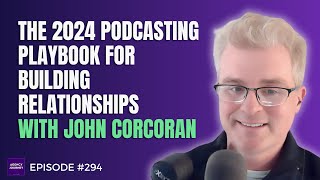
This is a YouTube video titled "From White House Writer to Agency Founder: John Corcoran’s Playbook for Podcasting and Growth" published in May 2024. It features an interview-style conversation between Gray MacKenzie, host of Agency Journey, and John Corcoran, co-founder of Rise25. They discuss John’s career evolution from a White House writer to a podcasting agency founder, the strategic use of podcasts for B2B growth, insights on podcast formats, and the value of entrepreneurial peer communities like EO. The content is a detailed, single-speaker interview with John Corcoran as the main guest and Gray MacKenzie as the host, focusing on podcasting and business growth strategies.
Welcome back to Agency Journey. I'm your host, Gray MacKenzie from Zen Pilot. This week, I've got the pleasure of bringing on John Corcoran from Rise25. And if Rise25 sounds familiar, they've actually produced this podcast for us. And you will have heard John's business partner Jeremy on the podcast before. We'll link up to that as well. But, John, welcome to Agency Journey.
Great pleasure to see you again. Thanks for having me.
Yeah, I'm excited to dig in today. There's a couple different topics that just ran by you that I want to cover today, but could we start with Rise 25? It's been a while since we had Jeremy on the podcast. Let's talk about Rise 25 and what you all do.
Yeah, sure. So Rise 25 is. We don't. We don't always call ourselves an agency because we have a technological platform that we built, digital platform as well. But effectively we are an agency. And. And we help B2B companies to get clients, referrals and strategic partnerships with done for you podcasts and content marketing. And Jeremy started his podcast in 2008. I started mine a bit later in 2010, and we've been doing it ever since. And we built an amazing team of over 50 people all around the globe, and we're really focused on B2B companies and agencies and helping them to. To use a podcast to have amazing conversations just like you do.
Yeah. And we got a lot of friends in common who, some of whom you and Jeremy have introduced me to, but other folks who I just bump into and like, oh, who produces your podcast? Like, all right, it's 25. I'm like, okay, this felt like you had a structured. Press the record button flow, and you've got a structured. What happens afterwards? And you kind of got your fingerprints all over it, which is just been really fun to see, kind of just pop up organically in the space.
Yeah, I mean, we're a classic case of we try to create the solution that we didn't have when we got started. You know, when I started my podcast, it was me figuring it out and RSS feeds and all that kind of stuff. And even to this day, you know, our goal really is to be like the WIX or the Squarespace for B2B podcasting. You know, it used to be 25 years ago, it's hard to start a podcast, start a website, build a website. Now there's WIX or Squarespace, different, excuse me, solutions. And yeah, you know, that is not the case in B2B podcasting. And so, so that's really what we're, our goal is.
Yeah. Can we talk about the podcasting format for a little bit? Like the James Carburet on the podcast and he has written, you know, he put out kind of a whole book and a whole series of content around kind of this interviewing folks who you'd like to be your clients at some point and kind of using podcasts as a way to get in front of folks. And there's a handful of different ways to use the interview format to make sense, but he's talked and we've, we've gone back and forth on some different podcast formats. Have you seen a shift in either preferences or like your own personal preference in terms of how podcasts are formatted? Do you still like the largely interview based format? More commentary based? Like what are you seeing working now or that you personally are into?
Look, I mean way before the word podcast was even a thing, there were people around fires in rural communities having conversations. I think we're hardwired for a two way conversation between two people. And it's far more interesting to listen to two people having a conversation than to have one person just boring on one voice, one lecture, that sort of thing. In addition to the fact that from, you know, creators perspective, those types of podcasts don't last very long. If you try and start a podcast where it's just you talking to a microphone, they're very rarely do they last very long. So yeah, I think that interview format episodes where there's two people having a intelligent conversation on a variety of different topics, for sure. I don't see them going away at all. And there certainly have been other forms. There's talk shows, there's radio, there's ham radio, there's been all kinds of different mediums. Podcasting is just the newest technology to embrace that form or that, that style of, of content.
Yeah. Is there any commonality you get to see and start up a lot of podcasts as well? Actually. I'll ask you what's more common. I assume it's more common if folks already have a podcast and they bring it to you because they're struggling to get it out. But maybe that's not. Is it more common that you're launching a show or that you're taking over someone's show.
Yeah, it's actually probably about 80 to 90% don't have a show and are launching a show.
Interesting.
You know, there's, there's plenty of people that started a show and then gave it up a couple years ago and they want to give it a try again. They enjoyed parts of it and didn't like other parts of it. In fact, that's a very common scenario where people just didn't enjoy, you know, doing the show notes themselves or doing the editing themselves or uploading it to their website. And frankly, if they have a B2B business with a high client lifetime value, they shouldn't be spending their time on that anyways. And so those types of, you know, if you put all that stuff on your shoulders, you're more likely to fail. So there are, there are a lot of people that have, you know, have started a show before and then gave up on it and want to give it another go.
Yeah, that makes sense. Are you seeing anything? So if you're with so many folks starting new shows and you're looking at growth, obviously there's probably external factors that would even be more impactful. You know, what kind of audience do you already have? I assume your show would grow faster. I'm curious if you've seen any correlation between show types like interview based versus kind of expertise like one person talking head type podcast, or we're highlighting our own expertise or two hosts from kind of the same company batting back and forth. Do you see any correlation between those formats that people choose and the rate.
Of growth, the rate of growth of their podcast? Of their podcast? You know, not necessarily. And honestly, let's talk about that. The growth. I think what you're, you're talking about is like downloads or subscribers or something like that. I think a lot of times people over fixate on that. I look at it this way. I mean, I've been doing a podcast for 13 years and I love listeners, I love having people listen to it. But I would do it even if no one was listening. And I say the same thing to our clients. I want you to do it even if no one is listening. Because if it's such an amazing tool for having really high caliber conversations with referral partners, strategic partners, clients, that sort of thing. And so I think a lot of times people focus too much on that, on that, you know, downloads or things like that. And frankly, just because you get downloads or subscribers or listeners doesn't guarantee that it's going to lead to actual results for your business. And so oftentimes people give up in spite of that. I've known lots of people, I've known people that start a podcast, got huge downloads, listenership, and you know, they gave up on it and they're driving for Uber I literally know people like that. Or I met a guy a couple years ago that had really proud of the fact that he had over a million downloads on his podcast, which is amazing. But he was working in an Apple Store. No offense to someone working in an Apple Store. But what it said to me is that the guy hadn't figured out a way to monetize it. He hadn't figured out a way to actually get, you know, revenue out of this thing. So just because you get a lot of growth or downloads or subscribers, those are kind of vanity metrics. A lot of times, it doesn't mean that you're going to get the types of concrete results that you want for your business or for your agency. So we're more focused on that piece. That's really, I think, the metric that you should be focused on.
Yeah, I think it makes sense. I think that, like, the pushback on that would be. Yeah, if you don't have a way to monetize it, then, you know, who cares what those numbers are? But assuming that you've got.
Yeah, and I'm not talking about someone that's creating a hobby podcast or a passion project or True crime podcast or something like that, who hasn't figured out how to monetize it. We only work with agencies or B2B companies that have an obvious way to monetize it, which is by getting clients, by getting referrals, getting, you know, engagements, that sort of thing.
Right, right. I'm curious what, you know, like, I think typically you think B2B website, if you looked across a wide enough swath and just said, hey, what's the conversion rate from a visitor to a customer at some point, like, you're going to be at 1 to 3%. Most likely. I would be curious about the same stat on the podcasting side. And obviously there's outliers on either side, but, you know, across enough large numbers, like, there'll be some average that probably works itself out.
I don't know in terms of the listenership, but I just know from my own personal experience, you know, having started a podcast to support my, you know, my. My legal practice. I had a boutique law practice, you know, 13 years ago, and I was struggling with going to networking events and lunches and meeting people for coffee, and you'd have, you know what this is? Like, you have like a coffee or something, and you're like, oh, I'll refer to you, you refer to me. And then you go your separate ways and nothing ever comes from it, you know, and you're kind of wasting your time, you know, having coffee with the person in the first place. Instead of doing that, take your time, focus your energies on having conversations, maybe even with people that are a higher level up, that don't have time for coffee, but that would carve out time to be a guest on a podcast. So these are higher caliber people that have higher caliber referrals and then deliver value to them in the form of interviewing them, giving them exposure, putting them on a pedestal, taking interest in them. And when you do that, people are far more motivated. They want to repay the favor to you, they want to pay it back. Now, when you do that, if you're interviewing the right people, if you're treating them in the right way, if you're publishing these episodes, if you're promoting them, when you do that, some of those people will turn into clients. And if you have a high client lifetime value, if your clients are worth 10 grand, 50 grand, 500 grand, whatever it is, you don't need to get that many clients out of it for it to be a, a home run. Great use of your time. Phenomenal roi. And so whether you have a million listeners or a thousand listeners, I don't know, I don't care. Because if you're just focused on having great conversations with the right people, some of those people will turn into clients or they're going to be a champion of yours. They're going to be referring business to you because they understand what you do and they're grateful to you because you took the time to promote them, to put them on your podcast.
Yeah, definitely true. You mentioned your stint as an attorney.
Yes.
But even before that you were a writer. You worked in the White House. I'd love to dig into some of the background because you get such a fascinating kind of personal story. So what is that? What's the John Corcoran, like, career evolution look like?
I guess you could say I've jumped around to a lot of different careers. I guess one fun fact about me is that at different points in my career, I've been, you know, paid by President Bill Clinton, Steven Spielberg, and Warren Buffett. Those are three different engagements. So I did. I started my career in politics. Even before that, I actually had worked at DreamWorks, which was kind of the Tesla of its day when it was getting started. And then I worked in politics. I was a writer in presidential letters and messages in the Clinton White House, which I'd gotten after being an intern in the White House speechwriting office. It was amazing opportunity. You get to meet with work with incredible people, really high caliber type of people. And you know what, what can I say about that? It was just, you know, incredible being there in Washington D.C. it's a totally different culture now, unfortunately, you know. And then I came back to. I'm from California. I came back to California and I was a speechwriter for a governor of California. And then I ended up going back to law school because a lot of the people that I worked with were lawyers and I would always lose arguments to them. So I was like, well, let's go to law school so that hopefully I can win some arguments. And then I did that for a couple of years. And that's what drew me into podcasting, is I was looking for some kind of tool that would support my business, which wasn't very big at the time, that would get me into high caliber conversations with the types of potential clients and referral partners that I wanted to be talking to. I wouldn't have to waste my time going and, you know, talking to tire kickers and going to coffees and stuff like that. So that's how I ended up getting into the world of podcasting.
Wow. And was the like treating podcasting as a business? Was that a. You and Jeremy. I don't actually know this part of the story. You had both started doing that independently or was that independently?
Yes. Yeah. So. So he had started before me around 2008. He also was senior producer for one of the very early business podcasts, put a lot of their systems in place. You know, I mean, later people like, you know, Tim Ferriss and, and others actually, you know, modeled much of the work that he put in place early on. And so some of the, the, the very successful business podcasts that are at the top of the charts today modeled some of the early work and systems and processes that he put in place very early on. But he started his podcast in 2008. I started mining 2010, been doing it ever since. But he and I had started a different business together. We were doing more events together around the country at different conferences. And I frankly was tired of traveling around, having to get on a plane in order to get paid. And I was seeing the success he was having with his podcast. He put much better systems in place. I was, the bottleneck with my podcast was, was preventing me from getting episodes out. And there was a year where I put out no episodes. I did some, I did interviews, but I didn't put any episodes out. And I turned to him, I was like, can you help me put better systems in Place, which he did. And the very next year, I put out 52 episodes, one per week. It probably was less time consuming and certainly got much better results for me. And so after that, we had more people coming to us and asking us, you know, hey, can, can you help me to start a podcast? And of course, you know, people were focused on the wrong things. They were like, I, I just need to know what microphone to buy. That's all I need to know. And it was like, that's not the biggest challenge that you have. There's a lot of other challenges that you need to focus on. And so, you know, we realized that the right combination was giving people the right strategy, not, not dissimilar from what you guys do. Giving them the right strategy, holding them accountable. So we build a client success team and then finally handling all the production pieces for them so that they can really focus on, you know, having the relationship, having great conversation, and then all the other details around it. They don't have to worry about it and they can let us, let us and our team handle that stuff.
Right. Wow, that's awesome. I didn't know that the backstory and I knew that you had the podcast for a long time, but I didn't know that's how you guys made it happen.
Yeah.
And I had heard about the, the event side of the business before, and this is one of the things I wanted to ask you about was kind of in person groups, peer groups, making connections. In your involvement with eo, could you lay out what EO is and how you got connected and what that looks like today?
Yeah. So I first joined EO Accelerator Program, which is an amazing program designed for businesses that have gotten to about a quarter of a million dollars in top line revenue and that want to get to over seven figures. And at the time that I joined, Jeremy and I were in business together. We've been in business for a couple of years and I was just kind of feeling frustrated that we hadn't gotten great results. We'd worked really hard one year and financially it wasn't a huge success. People liked the events that we did. And we still get people emailing us now saying, when's your next event? But the funny thing is, is like, yeah, we could go and do an event now, but it wasn't giving us the financial results or really the lifestyle that we wanted because we had to travel and things like that. And so, you know, we joined Accelerator Program. It's an amazing program. I did it for three years and it really helped us to really focus our business on, on what we should be focusing on, strip out other stuff that we shouldn't be doing and then eventually graduate into EO. And EO is a global peer to peer community, about 18,000 members worldwide in a hundred something different countries. It's very volunteer run. It's actually a non profit comprised of entrepreneurs. So I kind of love how everyone's profit focused but it's a non profit. So it's very much people are trying, they want to connect with one another and it's, it really is designed to help entrepreneurs which is, can be a very lonely profession because there's a lot of stuff as a, as a founder of a business that you can't talk to your spouse about, can't talk to your business partner about, can't talk to your investors about, can't talk to your employees about, you know, highs and lows. And this gives you that vehicle to talk to others who know what you're going through and you know, you can really talk through those challenges and those opportunities together. And so I'm actually on the board, I've been on the board for a number of years now of our chapter here in San Francisco and I've been a, I've been a moderator for, for my forum. And so it's, it's been a community that I've been, you know, very involved in and I love being a part of it.
Thank you for the overview. Have you done, did you look at any of the other communities like Vistage or anything else at the, at the time?
Yes, I did. And there's also Dan Sullivan's community Strategic Coach and there's a lot of people that, there's a lot of overlap. People that tend to be attracted to those other types of communities maybe also attracted to eo. So there's, there's people that do both. I've never actually done Vistage or.
Strategic.
Coach, although I've, I'm somewhat familiar with the format of both. There are nuances and differences to them. Yeah, EO to me, just kind of spoke to me. And since becoming a part of the community first in accelerator and then in actually eo, it's just been my tribe. It's been the people that I want to hang out with.
Yeah. The forum is your group, right? The group that you meet with monthly.
Yeah. And there are other communities like YPO and Tiger 21 and things like that have similar formats. Vistage is run by a paid leader who's usually a successful entrepreneur who's sold their company and it's usually a larger group like 12 to 14 or something like that, as I understand it, and more focused on business rather than personal. For, for eo, it's about, you know, with the entrepreneur. There's, there's multiple sides to us. There's the personal side, there's the business side, there's the family side and all these things are interrelated. If things are not going well on the personal side, it's going to affect the business. And things are not going well on the business side, it's going to affect your family. And so a lot of times your, your forum is your group of about 8 to 10, 7 to 10 peers that know what you're going through and that can help you not with therapy, but can help you in a group format to get through those different challenges that you inevitably go through.
Yeah, that's cool. I'm not in EO yet, but I've looked at eo, I've looked at Vistage, ypo. Have you seen Hampton?
Yes. Sam Parr started that. Yeah. And I know, actually I had a guest on my podcast who's an EO member who's in Hampton also, and she was saying very good things about it. So I've heard good things about Hampton. Yeah.
Yeah.
I think it's a little bit more focused on kind of tech companies and a, in a, kind of a larger companies, I think their goal is like 5 million and above in a re in revenue is kind of what they're focused on. But I don't know exactly.
Yeah. Yeah. But anyways, that was one of my, one of the things that I'm kind of walking through right now. So it's top of mind for me as I'm looking at, hey, what group? There have been a handful of things in different training programs that have been a part of over the last couple years. And so I would like to do one of these in 2024. Who knows, maybe we'll do two at some point in time, but one seems like plenty for the time being. And so anyways, eo, Hampton and Vistage are going to look the top three on the, on the list that I'm looking at.
Yeah.
Right now.
Having something that you, that you have to support you is so valuable, you know, whatever it is. And sometimes it takes a little while to try these different, you know, formats out and see whether it's a good fit for you. You know, I, I, I've joined a couple of other ones where I was in for a couple of months and I just kind of felt like it didn't, wasn't the right thing for me. The other thing is that you was frankly very affordable. There are plenty of communities out there where it's like $25,000 a year or something to join to it. And you get three events a year and you have to fly off to that event, you know, and I've got young kids and I, I don't want that, you know. And EO is, it varies by chapter, but I think it's in the neighborhood of 11, $12,000 in your first year, including initiation fees and then in renewals. It's like six grand or something like that a year. And with that you get access to a global community of, you know, 10, 18,000 members, high level of trust, so you can reach out to virtually anyone and they'll, they're happy to support you. You've got your local forum that usually meets on a monthly basis. You got local learning events which are, you know, can be super valuable and interesting. Different speakers on different topics. And you've got regional events as well that you get access to as well. And then they have conferences. Like I went to Seattle and about, about a month ago for an event that was the whole US west region and I went up to the top of the Space Needle and then we had an event at the Experience Museum, which was the Paul Allen Museum, which was really cool. Sir Mix a lot, who is from Seattle was performing at that event, which was really cool. So you get kind of some of these cool experiences, you know, and once in a lifetime experiences like we went up to the top of the Salesforce Tower, which is the tallest building in San Francisco. We shot hoops on the floor where the Golden State warriors play once, you know, see get kind of cool stuff like that as well.
Well, that's awesome. Okay, I did not prep you for this, but I ask every guest this, this question and the question is what is your number one tip for agency operators? So that's the answers have kind of spanned the gamut with folks who take that really high level and philosophical and folks who take it super practical and say y, you need to do this one practice or one tool. So I'll throw it over to you. What is your number one tip for other agency operators?
Well, at the risk of sounding self serving, I guess I would say, you know, do what Gray is doing right here, which is create content, but also use it as a tool for networking and delivering value to the people that you want to meet and have conversations with. And it doesn't have to be hard in fact, I, I firmly believe that it, if you do it right, it'll save you time for many different reasons. But I highly recommend doing that being strategic. So I went from, you know, before I was doing this, you know, where I, I was growing my network rather haphazardly with any other lawyer in my community who was not so busy that they would decline an invitation to go to coffee with me, which didn't really help my business at all. Two, creating content that lives on forever on the interwebs and using that as a tool to get higher and higher caliber conversations. And I've had everyone from the co founder of Netflix to Kinko's to the founder of EO on my podcast. And you can't just reach out to those people and say, hey, I'm curious about you. Will you hop on a zoom call with me so I can ask you questions? But when you're doing it for the purpose of creating content that gets distributed across the interwebs, it's an amazing tool for getting those types of people to say yes, to have a conversation with you. And then that gives you the opportunity to get to know them in a deeper way. Right.
It's a great tip. Well, I'll make sure that we link to the website, the Rise25 site. But John, where else should we point people to follow you, your journey and what you all are up to?
Yeah, Rise 25 is great. Smart Business Revolution is the name of my podcast and Dr. Jeremy Weiss, my business partner, he mentioned his is called Inspired Insider. We've got a couple of other podcasts which you can check out on our website as well. And happy to answer any questions. You can connect with me on LinkedIn or email through the website. And happy to answer any questions.
That's perfect. We'll put all those in the show notes. John, this has been awesome. Thanks for joining me today on Agency Journey Link.
Trey.










