Grow Your Agency Using Inbound for Cold Outreach with Alex Berman from Experiment 27
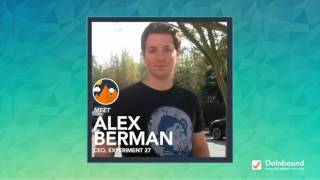
Alex Berman from Experiment 27 shares how he grew his agency through cold email outreach and niche selection. He discusses moving from junior sales to agency owner, practical client acquisition tactics, and how to nurture leads for maximum ROI.
Welcome to episode 94 of Inbound Agency Journey. Folks, this is Andrew. I'm a co host here on the podcast and really excited to have you on board for a conversation that I have today with Alex Berman from Experiment 27. Alex and the team over at Experiment 27, they are essentially the outsource marketing division for digital agencies. In this interview, Alex breaks down his agency background and kind of what led him to start this new agency for agencies and the number one problem he sees with agencies when it comes to their sales process. Now, there's some things in here that are kind of going to stretch inbound agencies outside of their perhaps their comfort zone, but that is perfect. That's what we need at times because Alex talks about the importance of finding an agency focus and why that is so critical to helping you accelerate your sales process and really leverage a lot of tactics out there that you can use to grow your agency and grow it fast. So before we get into that interview with Alex and I, this podcast is brought to you by Do Inbound. Do Inbound is project and process management for the inbound agency Pro. Just like you, it's designed, designed from the ground up with agencies in mind to extract the processes out of your key team members. Mind the things that are driving every aspect of the agency, putting those things down in a repeatable, documented way, putting it into a system so that you at any point know the status of your campaigns, deliverables and tasks across all of your clients and across your team members. Do Inbound is designed just for inbound agencies. So if you're looking for a tool to help you kickstart your growth, help you hit the ground running fast with pre built, proven templates and a team behind it that's dedicated to serving the inbound community. Check out do inbound@doinbound.com now without further ado, folks, here we go.
Welcome to Inbound Agency Journey. This is the show where inbound agency leaders share the strategies, shortcomings and successes they've experienced in their journey toward building their dream agency. Now here are your hosts, Andrew and Gray.
Alex, welcome to Inbound Agency Journey. So excited to have you here, man. You want to introduce yourself to the listeners and just kind of give us a little bit of a background on your story and how you got to be where you are today.
Sure. Thanks for having me, Andrew. Really good to be here. So I run this company called Experiment 27. Right now we're an 11 person agency. We've been around for about a year and a half now and we do Marketing. But we only do marketing for other agencies. So anyone that does mobile app development, iOS development, UX, UI design, that sort of thing, we work with them. And I started out, the reason why I started this agency is I was a junior sales guy at this company called Dom and Tom in New York. They were a digital agency. There were about 50 people. As a junior sales guy, the only thing we were doing was inbound. So we would only take calls that came in. And we were only seeing between the three of us, 14 leads a month coming through the site. So not nearly enough inbound to fulfill us or hit our goal. So I had to put a lot of stuff in place to basically sell more. I started a meetup, started doing all this stuff and ended up actually that first year as a junior sales guy, being the number one sales guy at the agency. So I even beat both founders who were selling and the director of sales.
Dude, that's awesome.
Yeah, man. And we can get into a little bit about what I did if you want later. But after that year I realized that we really needed to change our marketing at the company. So I presented to the founder what we needed to change. And politics wise, like, there was no way he was going to let me run the marketing team and be a sales guy at the same time. So I had to become an independent contractor. And Tom, who was the CEO over there, I think he was just smart enough to pay me just under the amount I'd need to survive. So I was forced to get other clients. That's how X27 started.
Dang, that's cool. So you kind of went, your employer was your first client essentially.
Yeah. And we actually ended up delivering a ton of value for them. We went from 14 leads a month to within the first 30 days, over 40 leads a month. And then within the first six months, our leads turned into over a million dollars in closed business. So 16% of their company came from, came from us in that first six months.
Dang, dude, that's awesome. Congrats on that.
Yeah, man. And now they're. Now there are about 98 people. We're still working with them, we're still doing cold email and cold calls for them.
Dude, that's great. I love hearing that and I love that the kind of the idea for the agency just sprung out of a natural need and it's just woven into the journey. That's really cool. Do you. Well, I guess before I want to get into like a little bit of your blueprint and like what is working, what did you use what are you leveraging with clients? But first, before we get into that kind of our teaser, what is with that one client? How did you make the transition from junior salesperson to now business owner, where I've got to go out, get more clients and build a team and actually grow an agency here.
So I made that transition. How did I make the transition? So first I had negotiated a contract. So literally I was just at drinks with Tom and I kept showing him these plans. Like, I wrote up basically what I would call a proposal, but. Or what anyone would call a proposal, but I would just call like a marketing plan, basically what I thought we needed to do. He asked me for a budget on it. I put a budget on there. And then, yeah, he just kind of offered me the job. He's like, yeah, if you don't want to report to the director of sales anymore, you could just report to me and you could just take this on. So I kept working from their office for the first month and I just started coming in really early, like about 7am every morning when our normal office hours were at 9. And I would cold email other startups. So originally we weren't just focused on agencies. We were just focused on doing cold email and cold calls and that sort of stuff for everybody. So I would just go on Angellist and email startups from there. And that's how I found my first, my second and third clients in New York.
Nice. So you're just going out there, beating the streets, making it happen. How did you make the agency connection and say, hey, let's focus on just agencies?
So I was just trying to think about what worked, man. It came from a lot of failed projects. So, like, I had a bunch of, like, SaaS companies, B2B SaaS as clients. And it didn't matter how hard I tried. Like, I could book meetings for them, but I could not get them to show an ROI. Like, no matter what I did. And I had one B2C client. It was a magazine that was like Seventeen magazine, like that teen magazine. It wasn't them, though. It was like somebody that was trying to do what they did okay. And I just couldn't get them. Like, we would run ads for them and they would get a lot of traffic, but there was no clear revenue. So I was just thinking about. This was like, February of 2015. I was just thinking about, like, what are the most successful clients we have? And Dom and Tom was the one that popped into my brain and I was like, all right, yeah, I guess we'll just clone them and try to get as many clients like them as possible. And now we're able to. Now we're able to show a real roi.
That's. That's awesome.
Yeah.
So go ahead. Go ahead.
I was gonna say a lot of it, if you're trying to get meta on it, is just finding, you know, what you're most successful with and then trying to scale that out.
Yeah. Because I got a ton of agencies that are listening right now are at that point where they're out there servicing anybody, and by being so broad, they really serve nobody and they're having a heart. Like, a lot of people talk about selecting a niche, but then when it comes actually down to doing it, it's hard because you're saying no to business. You're like, you know, you're not pursuing opportunity in certain areas, but, you know, it is worth it to push in and make those type. Those kind of tough decisions.
Yeah. And what I've actually found is it's not really saying no to business at first, but you'll want to. So basically, we. We made the transition to agency, and we still had a bunch of inbound coming from these B2B startups and stuff like that. Because I was chief marketing officer at this other company called Inspire Beats, which did sales for startups, and then they went under. So I was getting a bunch of leads from that, from YouTube. So I was still working with a bunch of those clients. So it didn't really. We didn't really need to say no to them. But naturally, as we got better and better at agency marketing, we wanted to say no to them. Because I knew, I knew if I brought on an agency, there was maybe like a 98% chance that they'd be successful, whereas if I brought on a SaaS company, maybe it was like a 40% chance or 50% chance. So naturally, you know, you'll start gravitating towards those that you really like. But. But it's like, I think that's something that a lot of people, that stops a lot of people from niching like, hey, I have to say no to all these clients. I didn't say no to a lot of those clients. But eventually you get to the point where you just naturally will just start saying no to them.
Yeah. Yeah. So you're. I guess the decision just gets easier as you roll through and you find success with a certain niche. That's really good. So now let's pivot. Let's talk about how, like, what are some of the ways that you were able to grow, grow agencies. What kind of tactics are you seeing working or strategies on a higher level? Are you guys seeing winning right now?
So our number one strategy for client acquisition at experiment 27 is cold email. Still, we get about 70 to 80% of our clients from cold email and cold calling. So I've got two sales guys full time now. They. They do 150 touches a week, both cold emails and cold calls to these agencies. And that's been really successful for us, and that's actually been successful for a lot of our clients. Dom and Tom's re engaged with us this year on enterprise cold outreach and normally like our approach when we're trying to sell as an agency, trying to get them more business. What we'll do is we'll hone in on one case study, and then we'll build an entire marketing system around that. So Dom and Tom built this app for University of Oklahoma called OU Bound. And it was like a new student onboarding app. So what we did is we made a list of all the universities in the United states. There's about 407 of them or something like that. And then I literally had Leticia, who's our cold caller on the team, just start calling all these agencies. And we basically just started with nothing. And we're trying to iterate as quick as possible. So she started with an assumption that we should call tech, and basically after about 100 calls, all these tech people were like, hey, that sounds interesting, but you should talk to admissions. So then we started rebuilding the list, and now we're talking to admissions. And it is just kind of like an iterative process, and it requires just reaching out to a lot of people and rewriting a lot of scripts. I can go over some more best practices if you want, though.
Yeah, I love the idea of picking the niche, defining the list. So you shrink essentially the pool of people you're going after, but you can get really, really targeted in that list and create a list of 400 names to go after. That seems like less overwhelming for people than trying to reach everyone in the world.
Right. And the reason why I shrink the list, it's to make it less overwhelming, but it's also to reduce the workload. So, for instance, the way that we like to pitch apps and also the way that we like to pitch marketing at experiment 27. But I'll just use apps, as the example is we always like to come in with a specific ide or a specific value add thing to show people. So if I can go to a university and Say, hey, University of Virginia, here's this app I built for University of Oklahoma. They're a new student onboarding. Their new student retention is up by 11% just by using this application. I think you guys might find some value in it. Would you like to see? It is a lot easier of a pitch than we do iOS development and Android development. Do you have any projects for us to work on? Yeah, so, yeah, so by niching it down, I can use that same ou bound idea on all 407 universities. I don't have to come up with a new idea each time.
Gotcha. So that really your niche gives you the hook every single time when you're crafting those cold outreaches.
Yeah, exactly. And my bet, or the bet that I always bet on is if one company in the niche is having that problem, a lot of them are probably having the problem. Right. OU invested a significant amount of money in this custom app, probably because their students like they were seeing some issues with their students getting onboarded. So I'm assuming other agencies have it. Same with X27 companies invest in us as their outsourced chief marketing officer because they don't have the time to focus on it themselves. Similarly to probably what a lot of the listeners on this podcast have. So I assume, yeah, if one agency has that problem, then they all probably do and it's seeming to be true so far.
Gotcha. So when you guys are working with a new agency client, what are some of the typical things that you see them doing wrong? When you come in and kind of look at their activities right now, what are the first things that you're kind of crossing off the list and identifying?
All right, and you might hate this for me, but I think you might hate me for this, but I think a lot of it is the HubSpot methodology of MQLs and SQLs and all of those, all those acronyms. So basically we just started working with this other agency out in Boston and one of the things, they had just come from another marketing company. They've been working with them for a full year and they ended the year with, I don't know, a few hundred email addresses and a few meetings on the calendar, but there was no real business closed. And I think that's taking it to the extreme of what HubSpot can generate. And that's, that's the biggest mistake. So the biggest mistake is not focusing on ROI generating activities. So when I think about marketing and agency, I always like to think about how can I turn this into money as quick as possible. I don't want your email address. I want to get you on a call and see if you have money right now. If you don't have money, yeah, let's email drip to you every few months. But first step one is to get you on a call. And then step two should be all the normal marketing stuff. So all of the marketing that I like to do is driving people to that initial phone call as quick as possible.
Gotcha. What are you and is the niche like the niche focusing on a case study, getting kind of aligning everything around, hey, here's what someone just like you is doing. You should check this out because you're probably missing the boat. Is that how you're able to get someone who's never heard of you onto a call, giving you that time in that short period of time?
Time with cold email? Yeah, that's what's working. And actually in the middle of last year, I started sending these cold emails out. We generated $400,000 in annual recurring revenue in 30 days because of it. And basically, yeah, the email we were sending out was, hey, I found you on Clutch. Really, really like the work you did with Tyson. So just something like that, you know. Hey, my name is Alex and I run experiment 27. We do marketing for digital agencies. In the last 12 months, we've generated over a million dollars in closed business with Dom and Tom and have worked with, fueled, impeccable and like, list a few other agencies that we worked at. Your agency structured very similar to a few of our clients and I'm sure we can show a really good return. I'd love to hop on a call and give you some specific ideas on how you can improve your marketing. Does that sound interesting? If so, I can send over a few times. So that's email number one. And you see how that's very agency focused. Right. But you can take that and use it for any cold email. Right. If you're targeting universities, you can mention other universities there and the results you've had for them. If you're targeting fintech, you can talk about banks, but that general structure is what I like. And then the second email, I'll dig even deeper and I'll actually put ideas in there. And this comes back to selecting your niche. So the second touch in our Experiment 27 Cold email campaign is like, hey, I'll just jump right into it. Two ideas off the bat for you to improve your marketing. Number one, if you're not on, let's say I'm reaching out on agencies that are on dribble, I'll say, hey, if you're not on Clutch co, a lot of our clients have gotten onto this directory and if you can get on the front page, you can get about 100 or so leads pretty easily every month. So it's worth looking into. Number two, if you get a lot of poor leads, so leads that can't really afford you, you should look into setting up a partnership program where you send agencies your work that of the people that can't afford you. And we, we've set that up a few times. If that's, if that's interesting, you know, it's still up to chat, let me know and I can send over a couple times. And the, the important thing about niching down like we were talking about before Andrew, is I send those same ideas to every single agency and I know they're going to resonate.
Yeah. So number one, we're hooking. We're letting them know that we work with people just like them. Number two, we're kind of doing the cold outreach, but we're doing it with that inbound flair where we're kind of delivering value for them, giving them something they might not have thought of. But I guess it also hits on them kind of subconsciously that, wow, these guys really do know the pain I'm going through. They know what I'm trying to accomplish. And I can see that they've done some stuff that works for people just like me.
Right. And also cold email is working for Experiment 27 because I know that agency founders read their emails non stop. Right. And if you're going and you're thinking about your inbound marketing strategy, you know, as you guys, as you know, Andrew, the most important thing is to figure out one, who is the customer I'm targeting? And then number two is where do they live? Right.
Yep.
And, and a lot of the time that answer might be they live in their email. Right. For us, our second biggest channel is, is YouTube, but it's YouTube that's promoted. So I would actually say that our second biggest channel has been Reddit because every time we post a really good post up on the, on Reddit, on slash our startups, we end up getting a bunch of leads. One of our posts is, is one of the top posts of all time in slash our startups. And that one generated a bunch of leads and still generating leads for us because apparently agency founders like reading, like reading Reddit. Who knew? Yeah, who knew? And then for Dom and Tom, one of the quickest wins, one of the first wins we got was was Quora actually. So when you googled top or when you Google best app developers in New York, what happened before is it would link to one specific Quora question. And I think the core question was like, who are the best app developers in New York? So I wrote an answer for that. We got everybody on the team to upvote it. We got like 23, 24 upvotes and it shot up to the top and we were getting 40 leads a month just from that one answer.
Oh, cool.
Yeah, but that's not to say Quora is the thing to do. Right? It's whatever your target audience doing, you know, wherever your target audience is, that's the channel you should be mastering. If it's trade shows, you should be at trade shows.
Gotcha. So when you guys are working, when you're working with a client who has a completely different niche from you guys, how are you going through the process of getting to know that niche enough to kind of figure out what channel they're spending time on? You guys doing like discovery surveys, you know, what does that process look like when you're onboarding a new. A new agency?
Sure. So in the first month we don't do any marketing at all. We do an in depth review where we look through everything that they've. We try to find everything that they've ever done since they've been around. So we look at their Google, Google Analytics and we see where has any traffic that's converted in the last two or three years come from? And even if it's like one piece of traffic that's converted, we want to see how can we optimize and how can we get on that site and is it worth getting on. The other thing I look at is we talk to three of their clients. So we try to figure out why their current clients are buying from them, would they buy from them again, how do they see the agency, that sort of thing. And then we also dig through the case studies and we try to find which of these case studies are the strongest. Yeah. Because the number one piece of pushback we have when we start niching down agencies is what you originally said, which is, hey, we can do development for everyone. So yeah, you know, so why would we focus on one?
Gotcha. Very cool.
So, and I've also. Okay, actually just another quick note on that. I've also seen this go horribly wrong. So I've had one agency that tried to niche completely down onto MedTech, but they didn't go all in. So they Were just writing a bunch of content for the medical industry. But, like, if you're going to go all in on a niche, you have to at least, like, you have to either do a microsite or at least go, like, at least go all in on the niche, right? Like, don't just write a bunch of blog posts about medtech, but rewrite the headline on your site and say, we only build apps for medical technology. Like, go all in or else this isn't going to work. If you look at the Experiment 27 site, our headline is, I think it's, we exist to drive more leads for digital agencies. Right. If you come on my site and you're like in medical technology and you're looking for leads, or in solar and you're looking for leads, you're not going to stay around very long. But if you're a digital agency, you're going to keep reading.
Yeah, it's pretty clear right away. Who am I talking to? And again, I guess that goes back to the point of people, like, being afraid of turning people away. And I was talking to an agency owner just this morning. We were talking about the idea of selecting a focus idea in a niche. And they were worried that if I, you know, all my, all of my clients today are local clients and they're kind of all over industry. If I pick a focus and go broad, am I going to isolate those people? And again, it goes back to your goals. What are you trying to be? Who are you trying to grow into? You know, if you, if you can't be everything for everybody because you're just gonna stay the same size you are right now.
Right. You're also not gonna lose those clients. It's not like if you put, if you publish on your website, you only do work for manufacturing. Like, it's not like all your publishing clients that you currently have are gonna leave you.
Amen.
You're still gonna have them.
Yep. Awesome. Okay, so I'm hearing so far, cold, cold email. Well, first of all, select the vertical, then build a list in that vertical. Any tactics, tools or tips you'd share for people on how to go about building the list in your verticals.
Yeah. So the number one thing, most important thing is you, if you can, you want to find people that have the problem you have and that are expressing it online. And the example I like to give for this is for experiment 27. We're only helping digital agencies, but I wanted to find digital agencies that have had issues with marketing in the past or that aren't getting A good ROI for marketing. So the channel that I found is any directory, right? If an agency is going through the trouble of listing themselves in a directory like dribble or behance or even sponsoring on clutch or on top interactive agencies, that means that they're at least dabbling in marketing. Like they're at least trying it. So that is a decent lead, right? Like that's a good start. So I always try to find people that are expressing some kind of need online or whether that's through a blog post that they published or whether they've, whether they're looking for certain people on a job board or even just their company being a certain size and you knowing because of past experience that a company of that size is going to have certain issues.
Sure. Okay, gotcha.
And I always try to find, I always try to find like pools of leads and then I can have like outsourced person dig through them. So like Flutch Co is a really good pool for digital agencies for universities. It's for the university's niche. It was a little different because we knew that all the universities in the US are probably going to have this issue. So we just went after all universities.
Okay, cool. So once you've got, once you've got your list established, you've got your vertical lockdown. You go through the cold email process. Are you guys, if you, if you get someone like, they're, they're replying but they're not on a, they don't want to get on a call with you yet. Are you throwing them into a nurturing sequence to kind of keep them on the radar or are you just kind of moving on and the focus is just get people on a call and those are the only leads we're going to pay attention to.
So I do a nurturing sequence, but not in the traditional like HTML5 email sense. I like to use yes where and basically I have a series of cold emails set up where it'll follow up with them. So let's say, hey, yeah. Let's say they say, yeah, we're interested, but like hit us up in three months or something. Like if they say they're not interested, I'd never email them again. But if they say email us in three months, I'll put them in a yes where sequence where it'll send them an automatic email in three months saying, hey, you want to hop on a quick call? Like that is literally the first email I'll send them after six months. And a lot of the times they'll say yes, that That's a really high converting email. And then the second email, third email, fourth email, fifth email. I'll email them about once a month after that with yeah, the traditional nurturing stuff. So like, hey, we just made this YouTube video on how to qualify inbound leads. Thought you'd find it interesting. If you have any questions on marketing, let me know.
Gotcha. Very cool. What do you. How about nurturing or working through a list of leads that an agency already has? Let's say an agency has been around for a while doing inbound marketing, but has not done a good job of working the database that they do have. Do you. Is that part of your strategy at all to kind of evaluate the leads that are in a current agency database or is it always looking for additional external sources?
So, and again, I think this is going to sound really apocryphal. I don't try to validate them at all. So if I want to get a quick win from a big pile of leads that is just sitting there, I'll cold email all of them manually or I'll put them in a mail merge and I'll say something like, hey, notice you've been subscribed for a while. Would, would love to learn a little bit more about your goals and what you're trying to get out of an agency. Are you around for a quick call? Like, and we did that to our lead. So I hired this guy to do our marketing internally. So we have, we have one marketing guy hired a second marketing guy and the second guy was HubSpot trained. And so he implemented all these systems for us. He built all these free courses and everything. And I had to sit him down and talk to him about 30 days and I'm like, alright, we haven't seen any ROI from these, these email addresses. What are you doing? How do we, how do we pay your salary? Basically, how can we pay your salary?
Yeah.
And then what we ended up doing is cold emailing everybody that was in a, in the courses. And we close deals now from that. So just being super aggressive with the people that are, you know, Maybe not even MQL's just people that have signed up will, will show results. And I know a lot of salespeople will say, hey, I don't have time to take all these calls. But if that's true, then hire a junior guy to take the calls for you. Right. Like using computers to validate leads when the deal size is $10,000 or more. I don't think it's worth the effort. Right. Because you get one deal. It'll pay for your salary for two months.
Gotcha. Yeah, just get them on the phone and get a person to person, like specifically for the agency model. We gotta understand their problems and then help them understand how we help them solve them. So that has to get to a phone call at some point.
Right. And you can hire a guy for $3,000 a month to just do that. You know, a sales development rep or a business development rep, like they call it in software as a service. Like somebody whose only job is to get budget and to qualify. And if they're disqualified, then you pass them on. You know, you don't need to use a computer to do that. And I think that's where a lot of agencies get tripped up.
Yeah. Alex, this has been awesome. You just shared some awesome actionable tips for folks. Any other just kind of quick takeaways or any tips you'd share for agencies who are, you know, most of the listeners here are HubSpot partner agencies or inbound agencies of that, you know, that content mindset. Anything that you would do to rattle the cage and get them to kind of think outside the box.
Yeah, I would think about pure roi. So starting from the ground up, assume you had no HubSpot training and there were five companies that you really wanted to work with. How would you get in front of those clients? And that's, that's the way that you should be approaching all of your marketing.
Awesome. Bring it back to the roi. That's perfect. Alex, if anyone has any questions or they want to follow up with you directly about services or anything like that, what's the best way for them to get in touch?
Sure. So all of our services are up@experiment27.com there's a contact form on there too. And then if you want B2B sales training, we do three times weekly YouTube videos. You can find those@B2Training.org it'll redirect back to the YouTube channel.
Awesome. We're going to link all that stuff up in the show notes. Alex, thank you so much for your time. We've loved having you on here, man.
Thanks, Andrew. It was awesome.
Thank you for listening to Inbound Agency Journey. You can find the show's notes for Today's episode@doinbound.com podcast again, that's do inbound. All one word. If you enjoyed this episode, head over to itunes to subscribe or leave us a review of the show. Until next time. Remember, life is a journey. Keep moving forward.










