Growing a 300-Person Global White Label Agency with Damian Papworth
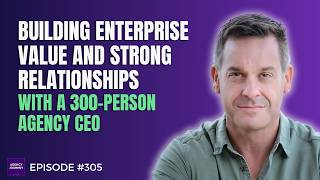
Damian Papworth built Globitol into a 300-person white label agency across multiple countries. He discusses how to structure a distributed team for profitability, why enterprise value matters more than revenue, and how AI is changing what agencies need to do to stay competitive.
Hello, hello, hello, everyone, and welcome back to Agency Journey. I'm your host, Kuba Greitzer, and with me on the call today is Damian Papworth, founder and managing director at Globitol and my first ever guest from Australia. I had to say that right at the beginning there. Damien, how are you doing today?
Great, mate. How are you?
You're overdoing the accent, aren't you? I'm great. I mean, it's the morning for me. Bit of a different recording slot than usual because usually I record Americans. You're from Poland, so it's a little bit later in the day. I've got the morning energy, I'm ready to go.
As you can see to all your listeners then. Big G' day from Australia.
Exactly, exactly. Wow. That's a good dose of positive energy to start this episode. So we're going to talk about what we love to talk about here on Agency Journey today, so all kinds of agency stuff. There's a bunch of topics that I want to kind of ask you about, about your experience growing your agency. But before that, we'll let the watchers and listeners know you a little bit more from the personal side. I wanted to ask you, Damien, what is the most fun thing you've done this year thus far?
Oh, the most fun thing. So it would definitely be in March. So back in March, I do free diving, so. So that's like scuba, except none of the equipment. You just hold your breath and go underwater for extended periods of time and as deep as you can. Now, in March, I went to Finland and did that, except to throw an extra variable I did under the ice. So. And on my last day diving under the ice, on single, single breath, I did it with no wetsuit.
Oh, gosh. Okay. What was the.
What was the temperature of the water at the surface? So the. The ice was probably around 50 centimeters thick at the surface. And it's about one degree a little bit. One degree, a little bit less. But as you go deeper, it actually warms up when you get away from the ice. So it goes. It gets up to about 4 degrees as you go a bit deeper. And the, the deepest we went, we had about, about four different courses. Some was just going under and along the ice and some was doing depth. The deepest we did was about 20 meters. So. Yeah, but that was just a lot of fun. Good group of. Went with about 20 friends which were all into free diving. So really good sort of a week together and a lot of fun. And I can imagine all doing this crazy thing that are on some people's bucket lists, but not many people. Just if you're crazy enough, I think.
Yeah, Yeah. I mean, part of that is on my bucket list because I do want to visit Finland, definitely. That's because I'm a big metal fan and the metal scene in Finland is, like, legendary. So for different reasons, maybe not to go. To go diving there. One thing I'm curious about. So how long can you actually hold your breath underwater there?
So without swimming and not in the ice? Um, I've held my breath for 4 minutes, 22 seconds. Um, yeah, so that's with my face in the. Let's call it static. That's. That's kind of. That's. That's not massive. In the freediving industry, they. Or the freediving sport, they get a lot, lot better than that. Um, but I've. I've swum to just shy of 40 meters down and up. And in a. In a pool. I've done 110 meters swimming in a pool.
Wow, that is super impressive. And funny how the definition of fun changes over time, because for some people, it would be just like an excruciating physical challenge. But, yeah, overcoming challenges is what we like to do. That is, I think, part of the personality that makes people become agency owners in the first place. They want to have that challenge. Right?
And it's just amazing. Like, obviously, business, it's our mind, but with pastimes like this, it's our body and just how far we can. We can go, how far we can push ourselves, how well our bodies and our minds adapt to different scenarios and different stimuluses. And. Yeah, I just think that as. As creatures, human beings, we're just. Just amazing, amazing creatures that can, you know, do such amazing things and create such amazing things and opportunities and. And outcomes.
Yeah, that's true. We like a challenge, don't we, as. As a species. And definitely, you know, what I like to. Of my working day is close the laptop, pick up my dumbbell, do a little bit of a workout there. It's like, let the mind rest and let the body do its work. That's a nice balance, and I love to have that during the day. All righty, Damien, let's get into agency stuff then. From here on out, I'll give you a chance in a moment to talk about you, to talk about your agency, to talk background. But what I like to do here on Agency Journey is to give some value up front. So first we'll do a little bit of a segment called the number one tip. The traditional Agency journey question. So Damien, you're getting it. Now. What is your number one tip for agency operators?
Okay, so I've got, I think my tip's a bit of a broader one, but if I can distill it, I'll distill it down to a simple answer and then there's a broader one. I'm really a strategy guy, not a tactical guy. And listening to some of your old podcasts, I was happy to see that there are quite a few there around strategy rather than tactics. And what that means is what I look for more is enterprise value creating enterprise value in my agency rather than operational value and operational value, enterprise value are sometimes they conflict and I always default to enterprise value. And what's enterprise value? That is how much you're going to sell your agency for when you're finished with it rather than how much you're making today. And the one tip out of that is focus on profit, not revenue. Whenever I speak to agencies in our network, they always talk about I did this this year, this this year. And it's always revenue based. Which means that their goals are probably revenue based. We want to double our revenue this year. We want to go from this revenue to that revenue. It's the wrong conversation. You should be talking about profit because if you sell your agency, you're going to sell it on a multiple of profit, not a multiple of revenue. So start right day one. Start with a real strong focus on profit and let revenue drive that. But talk about profit, focus on profit, make strategy around profit, become exit ready based on profit and you won't be caught with your pants down when you're ready to sell. You won't have to do anything else because it'll already be in place.
Okay, I love that, I love that. I want to dig deeper into this. So you were talking about this tension between enterprise value and operational value. Can you give some examples of decisions agency owners make that kind of make them steer maybe away from enterprise value? Or what kinds of trade offs are we talking about here? If you could kind of put it in more specific terms.
Yeah, sure. So a great, a really good example would be the use of contracts that quite often an agency will, will say I'm not going to tie my clients into contracts because one, it makes it harder to close a deal. Two, you know, our, our service and our results stand like, you know, they stand for themselves. That's what will keep our clients not, we don't want to time to contracts. We want our service and our and the results to keep our Contract, sorry to keep our clients coming back and staying with us. But if you try to sell your business and you've got no contracts in place with your clients, a purchaser's going to look at that as a big risk. And because you've got a big risk there, they'll discount the price that they'll give you for your, for your business. So your enterprise value will be reduced, even though it may work better operationally. And you'll find this tension is in many different areas of your business. And sometimes there might be. So I guess the idea is to be aware of where there is that tension and make really deliberate decisions in awareness of whether you're erring on the side operation or enterprise value and know that you can change it at any time.
So I wonder because, I mean, we're looking at this from the position of leadership, right? And there might be an organization of a certain scale. So then how do you steer your team and talk to them about is it a matter of setting the right KPIs? I'm trying to guess here, but I obviously want your answer like, how do you steer your team towards enterprise value versus operational value, you know, to kind of steer them away from the short term view and more towards, you know, focusing on what will ultimately help the agency sell for more, for example.
Yeah, I think the, I think the question typically is a strategic question to answer. I don't think necessarily it's an operational thing to answer. I think that sort of comes up to a second point about me. I'm very, very focused on strategy, not tactics with the work that I do. And I'd like to see more agencies do more strategy before they do the operational and tactical stuff. So what happens is that you have a strategy. Part of the strategy is where do I want to be? What does it, what does it look like we want it when I want to get there. And then that drives all the, all the operational tactical decisions from there. So, you know, if we are creating a business that for example, is I want to actually give this to my executive once I'm finished with it so that they can take it where they want to go. Okay, maybe operational and enterprise value aren't. There's not so much tension there. Or I want to pass it to my family so my son and my daughter can run it because it's an inheritance thing, maybe it's not so much of an issue, but if it's definitely going to be, I'm going to sell it at the end to the next person or to a listed company or whatever. It's then it's a decision that you make at a strategy level and then it's, I mean, let's face it, if we decide contractually we want to get our clients on six 12 month contracts for our SEO campaigns, then it's just putting an operational process around that when you're doing sales and, you know, training as salespeople and not accepting no contracts.
Okay, okay, Gotcha. Gotcha. All right, so put a pin in that for now. I did promise and I do want to give you an opportunity to talk about yourself a little bit more, to introduce your agency and your background. But definitely later on I think we might dig into either strategy or profits, building a profitable agency a little bit more because I'm keen to hear more. But for now, the watchers and listeners to get to know you from the business side, can you kind of introduce yourself, talk about your agency and kind of the road thus far that brought you here?
Yeah, sure. So Globe, we're a white label agency. So we are, we do digital marketing, fulfillment just for agencies. And this is one of, here's a good example of the difference between an enterprise and an operational value thing. We decided somewhere along the way that we are only going to serve agencies and not sell direct. So we don't. So if a dentist comes to us and sees we got, you know, we do SEO, we'll send them to one of our agencies to do SEO strategy and then hopefully our agency will give us a fulfillment work on the back end of that. A lot of white label agencies also sell retail to so sell direct for us. We could get a bigger client base by doing that. But enterprise value is, you know, it's probably a listed company in business process outsourcing would find our business attractive and they'd find the specialization on the digital agency industry and that niche as one of the attractive factors. And they'll give us a high multiple on profit because of that, that niche purity that we have for us. Also, there's things with conflict of interest. I don't want to be competing with my clients. And there's various elements there too, which is why we chose to only serve agencies. But there's some real benefits too. So one of the things, so at the moment we, we invoice on a monthly basis probably about 250 agencies.
And.
That'S across six countries, seven countries, maybe eight. We have some agencies that come in and out of places like the UAE and Singapore and Netherlands that are with us for a project and then drop us. So it Changes sort of each month. We've got very, very strong presence in six countries and two or three others that come and go. But that, you know, we're. We're actively managing fulfilling on about 2,000 marketing campaigns. So one of the real benefits that that gives us and one of the reasons why I'm here talking to you today is it gives us a, like a perspective of, you know, a step back, higher umbrella perspective of the industry and what's working and what's not working. It was really handy in really good example of that is when Covid hit, you know, we could have. And we. So when Covid hit we did a focus call for our agencies with a business coach who was specialized in the industry too, to keep everyone moving every single morning for I think 76 mornings in a row. So we just wanted to keep the energy moving, recognize how everyone was very afraid. And there was campaigns dropping like flies. I think we lost in the first six weeks, I think we lost over 100 marketing campaign. 126 or something like that. But what we got, what we could see is by looking like at what was happening across the board, we could tell our agencies these industries are stopping their marketing campaigns. These industries are starting their marketing campaigns. This is the people that are buying. So we could get everyone focused on the industries that are actually buying marketing, even if it's not niche at the moment, you can actually, you had direction where to go. So it's quite handy that we get that kind of perspective from seeing the macro, what's happening in the industry and then can pass that to the industry through podcasts like this or through our email campaigns and so forth.
Yeah, perfect. Perfect. Oh, so many interesting threads to pull on here. Before we move on, one extra question about your agency. Can you tell me about the scale of your team so that people can have a better. Yeah, sure.
So we've got probably around, I think around 300 at the moment. 300 staff. So we'll. We've a lot of those are in Pakistan, a lot of our back office people in Pakistan, wherever there's language involved like English and so forth. We've got a good team of writers and brand style people out in South Africa where English is obviously a first, a native language. We have. Our administration staff are in the Philippines and then we have one person in Mexico, three here in Australia, one person in Croatia and that's our team.
So it's really distributed. I imagine you didn't just wake up one day and decide to hire so many people out of Pakistan. Philippines, South Africa. So how did that actually end up happening that you went that route?
So the journey was a long one. So I was a digital agency. I started being a digital agency back probably around 2003, 2004. To put that in a little bit of perspective, I started doing email marketing and a bit of SEO. And the SEO work was a little bit more challenging because Google hadn't really hit its strap. We had Yahoo and MSN and Jeeves and Lycos and AltaVista and there was, I think there was eight or nine search engines we're dealing with back then. So that's when I got into the industry and you know, building a couple of websites. I did a bit of, a lot of like affiliate marketing basically arbitraging. At some point I was arbitraging buying leads through using Google Ads and then, you know, getting paid more for those leads than what it costs with the, with the Google Ads. Friends in small business worked or heard that I was doing this kind of stuff and they asked me to build websites and starting to do marketing for them. And I had an accidental agency which did, you know quite well. I always used like an outsourcing model and sort of over the years like when I got busy, I'd bring in resources. I think Elance was the main source that I used back then to find the people that I, that I needed support with. But you know, I, I experienced an extraordinary amount of pain by outsourcing work to subcontinent Asia and so forth just based on, you know, different socioeconomic realities of the different, different countries. And it's all the same stuff that people, that you would, that people would complain about. You know, they promise the world and then they disappear and you don't hear from them and you know, they, they give dates and they don't tell you when they slip, quality differences and so forth. So I wrapped up the eight that agency around 2013 and solved that with the idea of fixing, free, fixing outsourcing in our industry. So fixing what? The white label model. And the idea was that. So I was using the team in Pakistan as a people that I was outsourcing to at that time. There was about 15, 20 staff in the office then. And the idea was that I put, you know, Western corporate governance over the top of the outsourcing model. And I'm the boss so they have to follow my lead and I'll, then I'll layer what they were doing with, you know, our concepts of quality control, client services and that kind of thing. So we did a bunch of Stuff like certifying, like getting ISO certification with everything we, that we do. So that's a, you know, quality control that engineering companies use. So just putting the team through that and making them recognize these, you know, you know, understand the need for these quality control processes just really lifted the level of quality of the work we did. You know, implementing Net Promoter Score and having the, the operational teams manage that and was really good because it broke the nexus of, you know, clients would give feedback to Head Office and we give feedback to the operational teams and they complain about Head Office, always complaining. So we took ourselves out of that mix and had them do Net Promoter Score and then they got direct access to the clients and the client's direction and the clients, the things that the clients need and weren't happy with. And over time they just keep implementing improvements, improvements, improvements, and made a really good model.
Right. So you plug them right into that feedback loop. I can totally imagine how that would end up working. What an interesting story and an interesting trajectory that you followed here. So another thread that I wanted to pull on based on what you said a little bit further before and also I wanted to mention about South Africa. I have worked with writers out of South Africa and if watchers and associates, you haven't tried that, it's great, actually. There's some super great talent there. Even a few years ago, even early in my marketing career, I ended up doing that. And it's definitely a market worth exploring. So I just want to add that in and kind of confirm it from my experience. Now you mentioned something really interesting, that your kind of position on the market gives you perspective on what's working versus not working for agencies. You mentioned Covid times and definitely that was a big disruption on the market, but now we're. Well, the time's a little bit different now. I'm sure you would agree. So how would you comment on like the current landscape of agencies? You know, from your position of perspective, what's working, what's not working, where do you see things going? I mean, AI is bound to be mentioned somewhere in there. Right. But anything else that's kind of. That you see as a, like, as a strong trend.
Yeah, sure. So I think, I think, I mean, you've got AI, but I'd like to, I think AI is part of the biggest thing for our industry at the moment, which we can probably label as uncertainty. So I think most agencies would agree that the last 18 months have been very hard. So we've seen, we've certainly seen through our clients a degree of contraction with the number of clients and projects that they've got. We've seen our agencies are struggling with cash flow. I'll see that by. I think, you know, we. One of those, the pieces of data that we measure is average debtor days is. So we'll invoice. So our sort of theory is agencies invoice in advance. We'll give them 30 days to collect money from their clients and then we invoice and give them seven days notice so that they hopefully have the money already to pay us when we invoice them. So we want to give them that grace. But we've noticed that the days that it takes agencies to pay us has slipped by about 10, 15 days a month. And that's just. They're struggling, they're not trying to be mean to us, they're just struggling with cash flow themselves. So I think there's definitely been recessionary pressures. We've got AI as a disruptor to the industry. And we have some pretty big elections going through the Western world at the moment this year.
True.
So there's definitely a lot of uncertainty. Cost of living is challenging in most of the Western world with high interest rates and inflation and so forth, which makes times at home challenging. So I think putting all that together as one topic, um, I don't think it's a time to be jumping down a barrow chasing shiny objects, you know, and that's what AI is. AI can be a real distraction. Um, so. And I, I think we have to acknowledge it's here. But once again, this is an area where agencies should try to be strategic rather than tactical. And it's going to be a prolonged journey. But I'd be thinking about and sort of the discussions I have with my team is, and what are we good at and what do we do then from that position, what does that look like in an AI mature world? So if I look, for example, what we are, we do fulfillment, we don't do marketing strategy. We expect our agency to do that. We do fulfillment. So what does fulfillment look like in an AI mature world? And having that sort of process and conversation stops us from, you know, chasing every new AI widget that turns up. Because I mean, one of the risks too is we have. So just going back a step, I've sort of, it's already sort of backflipped and double tend. I see more of my thoughts doing the same at the moment. But you know, the alarmism in our industry from talking to people, I think between March and probably September, October last year, was quite intense. I go on LinkedIn, I can't see anything else other than AI. And I'm glad that settled down, put that in perspective. You know, AI in our industry is pretty much about content at the moment. You know, from March to September last year, through this alarmism, we're doing about 700 pieces of content through our copywriters in South Africa a month.
Okay.
We got to September and like, so we, in May, we introduced some AI assisted pieces where we'd bring in, you know, AI tools and very transparent about it. And using the AI tools, we could reduce the prices of those pieces by 30%, pass that on to our agencies, and they could do what they want with that. When we got to September, I think there was 12 pieces a month out of those 700 being done by AI. So.
12, you say 12, so that's not a big proportion.
No, it's, it's. So it's, it's slowly becoming adopted, but the alarmism of. It's gonna take everyone's jobs. It wasn't, it wasn't the case. So I think we've got time to think about it. But. So, yeah, so getting back to shiny objects, I think shiny objects are big in our industry anyway. And I think the best way to deal with that, if you're someone who gets caught up with that, and I'll give this, this tip all the time, is put it in your profit and loss. Call it R and D, research and development. Give yourself a budget, both in time and money, and don't go outside that. So you can spend this amount a month, a month of your time, and this amount a month in dollars, and use that to play with these things to see where they take you. But don't do outside that because it'll break your business.
Yeah, okay, I hear that.
Yeah. So. And outside that, what I think the time to do today is just to knuckle down and focus on getting clients in and keeping clients happy. And you just have to work hard with that and not be distracted by that, because that's the time we're in.
I hear you. So very interesting to hear your perspective on AI and everything that you're seeing here. A question that comes to mind here is. So you mentioned this mood or this environment of uncertainty, and I wanted to ask you, is there something more to talk about here in terms of. Okay, so what are you seeing in terms of the agencies that are navigating this uncertainty? Well, managing to grow despite uncertainty or maybe ride the wave of certain changes? Maybe in some cases, what Are they doing differently as opposed to the agencies that are being kind of swept away by it?
I think one thing that I've noticed is in our network, the bigger agencies suffered more than the smaller agencies over the last 18 months. And what I think that is about is bigger sales teams that are churning numbers rather than the smaller operators who are creating relationships. So I definitely think, you know, building relationships, you know, if you're, if you are servicing an area, you know, developing your local relationships, if you're serving, serving an industry, you know, developing relationships in industry bodies and podcasts and things like that. People who have done that well over the last 18 months are the ones that seem to have done better.
Yeah. That's interesting. So what this brings to mind. Okay, well, first a question. So you're talking about building relationships as opposed to kind of churning through, you know, through a lot of. I see it as like numbers based sales. So what does this building relationships look like? Kind of, I'm tempted to say on a tactical level, hope you don't mind, but like, what specific activities here are different that allow these relationships to kind of get built?
So I think, I think there's a number of different angles you can take. I think it definitely starts with being like self aware, spending a bit of time in awareness of what you do and who you serve and what you're really good at. I saw one of your earlier podcasts, had J.C. hyde on. We had him as a webinar that we did that we had also. And I loved his approach of really getting down into what drives retention for agencies and really understanding that and through that awareness you can create your strategy and your activities from there. I was speaking to one of our agencies recently, so just last week who's on the. He works in a surf beach on the. Australia's surf coat. Sorry, Australia's east coast. So he's about an hour and a half south of me.
Um, okay.
And so literally as an agency on a surf beach and in a small country town and his, he wins a lot of awards with his marketing through, you know, the, the east coast and even down to Sydney, New South Wales. But he has struggled to get new clients, but he's done very well over servicing his existing clients. But he recognized true, that he, he had to stop chasing, you know, the, the clients that wanted an entry level SEO campaign. He wanted bigger clients that wanted three or three or four campaigns that he could do a proper marketing campaign for and get a real result. So one of my friends in the US has been done a lot of specific work around podcasting and that's worked very well for her and that's like a macro way of building relationships because people understand what she's about, what she stands for, what her agency does. And I remember when I started the best, the best marketing I had was doing the BNI groups because that's when you develop the real one to one relationships for the smaller agencies. Three or four campaigns that you could do a proper marketing campaign for and get a real result. So one of my friends in the US has been done a lot of specific work around podcasting and that's worked very well for her. And that's like a macro way of building relationships because people understand what she's about, what she stands for, what her agency does. And I remember when I started the best, the best marketing I had was doing the BNI groups because that's when you develop the real one to one relationships for the smaller agencies. And you know, you had a team behind you that was making referrals to you and you know, bridging that gap of trust between people who don't know you. So it's, it's a warm lead, not a cold lead. So there's plenty of things we can do. But I think, yeah, this is one of the things too with challenging times for an agency is, and I know it's hard, and this is sort of a bit of an offhand comment that it doesn't play out in a day to day, week to week basis during tough times. But it does over a 6 month, 12 month, 3 year period. And that is the numbers we need to make our businesses work aren't so big that we can't just go out and do it. We're not like, you know, we've got theme parks up the road here on the Gold Coast, Dream World and SeaWorld and so forth. And they need 5,000 people through their front door on a daily basis to make break even. You know, we, if we lose a client, you know, we need two clients or three clients a month for us to work maybe a little bit more if you're a bit bigger, if you're a one man band, maybe it's only one a month and you need to replace what you lose. So the numbers aren't so big that we can't just grind it out and make it work during the tough times.
So what you're saying is there's room within our space because each relationship is so much more important to just focus on one to one, one to few activities like that because it's about, not about the number, but about the depth more. So am I getting that correctly?
That's what I've seen. I've seen that the, the agencies that had depth of relationship did better in the last 18 months than those that relied on, you know, the, the sales team with the churn metrics and so forth. But once again, then all of a sudden you've got that tension between enterprise value and operational value, don't you? Because for an owner to sell his business, he doesn't want to be involved anymore, which means how do you actually delegate that relationship piece?
Okay. And is there, I mean, the question that kind of asks itself, is there a key to that? Because I understand what you're saying is like, you know, if everything revolves, for example, around the owner, and the owner's got, you know, a great connection with, like, the biggest clients or, I don't know, maybe the most important subcontractors, the owner leaves, then a lot of that leaves with him or her. So how, how does that, how do you kind of translate that operational value into, into enterprise value? How do you actually make that turn in the other direction?
Yeah, so that's, that's exit planning. And okay, that's, that's a process. But for me, in that specific example of transitioning the owner out, that's, that's a leadership team. That's, you know, you're, you're C suite executive, so you need to get to a bit like it's, you need a plan to get there, but you need to get to a scale where you can call someone the chief operating officer and they, they own those relationships.
I gotcha. So the conversation went in a very interesting direction, I think. And the main theme that's kind of emerging for me is, as I mentioned, this theme of depth. Here's something that popped in my mind. You're mentioning times of uncertainty. And I'm trying to think of. And I've gone myself even through some times of uncertainty. I mean, Covid is a great example. Right. I was there. You were there. And I think in those times, we do turn to the people that we have the strongest relationships with. That definitely tracks. It's like, okay, I don't know what's going to happen, but I know there's a few key people that will always be in my corner, whether personal or in the world of business. I'm just going to focus my efforts there and let the kind of looser relationships kind of go their, their own way. So that's. That. That feels to me very true. Of, you know, how to. And, and also another thought, a great example, right? I was there, you were there. And I think in those times we do turn to like the people that we have the strongest relationships with. That definitely tracks. It's like, okay, I don't know what's going to happen, but I know there's a few I saw out there was, you know, there's a big focus on brand awareness, strategies and tactics and not enough of a focus on. You mentioned this yourself, which is why I'm bringing it up. Not enough of a focus on trust, on building trust and actually building something deeper. And I wanted to prod a little bit more. Maybe there's more here, maybe there isn't. But in terms of building a strong pipeline of not just clients coming in, but actually being able to build that trust gradually over time. What have you seen work for yourselves or what have you seen work for the agencies that you're in contact with? In terms of, I'm talking about building pipeline, but not just sales, but something that kind of lasts and leads into strong retention as well.
The thing that I think worked really well for us was Net promoter school. And just because the teams and having the teams, our operational delivery teams own that piece of customer service in the business. So they had that direct feedback. So they believed it, owned it. And it's really interesting because when we started it, we, our clients didn't trust it. You know, the feedback we're getting through was very flippant and not useful and you could just tell it was a lack of trust. But we persisted and over, I think it was probably six weeks before we started to get good feedback from it and we started making changes and the more changes we made that reflected what the consistent messaging we were getting from our client, you know, the more they trusted the process and the more they trusted it, the better feedback we got. And you know, that's probably a two year, three year evolution now. And that was really important. So I think demonstrating, so getting back to building that trust, demonstrating to clients through actions that you're listening to them builds and they don't always get what they want. But you know, that's, that could be a conversation. Obviously Net promoter score, a lot of the stuff is anonymous. But you know, when we have direct conversations and people are asking for things that we can't give or it doesn't make sense, that's a conversation and we explain. So we treat them like, like partners. So I think that's, that's part of it with trust. But, you know, also Relationships. You know, here's a. If there's something that everyone can do tomorrow, you know, we, I think as agencies, because we, we, we in our day to day, we develop leads. That's what we kind of do. It's our job.
Right.
We're always focusing on developing leads. But you know, if you've been in the industry for six months, 12 months, two years, five years, whatever, you've probably got a lot of leads there that you tried to sell to and failed. And they might be sitting in your CRM and you email, you email them every now and then. But you know, if we go back to the leads that didn't buy from us 12 months ago and start giving them a call, it'd be amazing how many people will be going, I was just thinking about you the other day because I had this engagement and it didn't work. I chose someone else and I need to move on. You know, if you just start re engaging some of those, you know, in a, like just a maintaining relationship sort of a thing, you know, I would start giving them a call. It'd be amazing how many people will be going, I was just thinking about you the other day. Cause I had this engagement and it didn't work. I chose someone else and I need to move on. You know, if you just. It'd be amazing how much business you can drum up from people that didn't choose you 12 months ago. So don't treat those needs as wasted and don't treat them as leads, treat them as relationships. And it'll be, you'll, you know, you'll be quite amazed on what business you can drum up with that type of strategy.
Exactly, exactly. And the thing that's always in the back of my mind is, okay, you're talking with somebody who might become a client, but there's always the possibility of they know of somebody to refer, you know, like they're never an individual. Kind of out in the void of space, they've got connections of their own and you never know who they've encountered on their way. For example, during those last 12 months. You're really, I feel put on the spot here right now because what you're mentioning is something that I should be doing a lot more even personally. I mean, I'm building. I've been the host of Agency Journey now for a few months and you know, I'm obviously focused on bringing in new guests. I know this is not the exact same situation. Right. But nurturing the relationships also coming from a podcast is something that can be challenging. As it kind of builds scale, but it's extremely rewarding. One of the favorite things that I do that I like to do done it in the past. I'm planning to do so again this year is to take some previous guests from the podcast and for example, run like a mini conference or like a small event. You know, you've had your episode but now you get like a 15 minute speaker slot. And we were focusing it all on the last one is about AI and agency operations, for example. Right. So I think what I'm. What kind of what's emerging in my mind from what you're talking about is like there's too much focus on like call it the top of the funnel, call it, you know, brand awareness, but not enough on kind of on the work in the middle. That's maybe not as glamorous. It's not like big marketing campaigns, but just a lot of conversations, a lot of calls and a lot of hard work. Really?
Yeah. So I mean, there's a couple of things there I wanted like I could unpack a little bit too. When you said.
Sure.
When you said before or people that they know that is, that is key. I had a personal experience. I was over in the Philippines in May. We've got a. That's where our virtual assistants are. And I wanted to speak to a bunch of people in the industry over there. So I spent, I don't know, three weeks before just doing cold outreach on LinkedIn to try and get just some meetings with VA business owners over there. And when I was doing the coal outreach for the first week, no one was getting back to me. So I changed my messaging and saying this is what I'm looking for. Do you know anyone like that? Then all of a sudden they were, they'll get in back with, hey, that sounds like me. So it just not only does that open their mind to introducing other people, but it's also, it tones down that I'm trying to sell you from their perspective. They don't feel like they're being sold to if you're asking to introduce someone like them. So that's interesting. So what was the other thing? I can't remember the other thing. There's too much, but gotcha.
Gotcha.
So that's interesting. So what was the other thing? I can't remember the other thing. There's too much, but gotcha.
Gotcha. But I'm glad we can kind of bounce off of each other in that way. And speaking to what you mentioned, an episode of Agency Journey recently published that I Keep recommending is the one with Kurt Schmidt because we had like one episode all about networking and going into the details of how to run these conversations, the kind of tactics of like. But I'm glad we can kind of bounce off of each other in that way. And speaking to what you mentioned, an episode of Agency Journey recently published that I keep recommending is the one with Kurt Schmidt because we had like one episode. I'm looking for X. What are you looking for? You know, down to like, the exact things to say or like how to structure this in like a spreadsheet, et cetera. That was such a, such a great class in that. So I recommended that to any watchers and listeners who want to go deeper into networking. Now as for myself, I wanted to spend a little bit of the rest of our time looking less at the aspect of building pipeline and looking more at the kind of inner machinery. So you've got an agency of a large scale. That can certainly be said. And I wanted to talk about your operations for a second. All about networking and going into the details of how to run these conversations, the kind of tactics of like, I'm looking for X. What are you looking for? You know, down to like the exact things to say or like how to structure. I mean, here at Zenpilot, we're super big into operations. That's what we help agencies basically solve. And we do like agency operations, makeovers on top of, on top of ClickUp, not just the tool, but also like the habits, building out processes, sops, we help with all of that. So kind of out of that position of interest, how do you make, you know, an agency of your scale run smoothly, deliver results and like, what are the most key pieces here in terms of maybe tools, maybe processes, maybe like rituals and habits that you've got. What's working here for you?
Yeah, sure.
So I think this in like a spreadsheet, et cetera, that was such a, such a great class in that. So I recommended that to any watchers and listeners who want to.
Once again, it comes down, you have to start with awareness. Awareness of who you are and what you're doing and what your product is. So, and this was, this was something that was really key for us to get right at the start. And, and even the team, even the team that was doing our fulfillment in Pakistan didn't understand this. So this was something that I had to educate them on. And so what we are delivering is not brilliance. You know, we're not, we're not the people that are going to come and do that, the most amazing job possible. That's not what we're delivering, what we need to do because we're white label.
We'Re go deeper into networking now. As for myself, I wanted to spend a little bit of the rest of.
Our an outsourcing company. We agencies take our staff and resell it. So what we need to do is add a product and a service that's consistent, it's consistently good. But if we're brilliant one day and we can't repeat that and keep that consistency of that brilliance, then the agency gets that brilliance, has an expectation set in their mind. This is what I'm going to get every time. And then they're going to sell that.
To their client, looking less at the aspect of building pipeline and looking more at the kind of inner machinery.
And then they're going to get something that's consistently good after that and it's going to be a problem because they're selling something else. So having that real awareness is we need to be consistently good all the time with the fundamental stuff. We're not going to do strategy, we're going to expect our clients to do the strategy and then we're going to fulfill on their strategies. For us to be able then to scale with that, we need processes, we need strong processes and documented processes, processes that live.
So you've got an agency of a large scale. That can certainly be said. And I wanted to talk about your operations for a second. I mean here at Zenpilot we're super big into operations. That's what we help agencies basically solve. And we do like agency operations, makeovers on top of ClickUp, not just the tool, but also like the habits, building out processes, sops, we help with all of that. So kind of out of that position of interest, how do you make an agency of your scale run smoothly, deliver results and like, what are the most key pieces here in terms of maybe.
Tools on the computers of our fulfillment staff or our teams. So, you know, we've used different software to do that when using Basecamp. Now. Um, so basically what happens is processes will end up. One of our team members will log in, this is a list of things to do today and do the things. You press finish and then that'll go to the quality checker, it'll sit on their computer, they'll do quality check and they'll go finish, it goes to the next person and so forth. So we're very, very strong on processes and that's where our ISO certification comes from. That's what ties everything Together. So we have processes that then bleed into the processes of our clients. So through Basecamp, they get communication about what they have to check, when they have to do their brand checks and. Or at the start of processes, we got very clear briefs that they have to fill out. So we get the information we need to go forward, and they get used to all those processes, too. So as far as getting stuff done, getting that down pat is really important to us. One thing that we try to do hard with or for our agencies is to reduce their risk of running the business. So we do things like we only charge our clients in their local currency. So we'll, you know, so they don't have any currency risk. Most outsourced businesses will charge US dollars, which for you in Poland and me.
In Australia is not great processes, maybe like rituals and habits that you've got. What's working here for you?
Yeah, sure. So I think once again, it comes down. You have to start with awareness. Awareness of who you are and what you're doing and what. Because we have a currency risk. And if, you know, if it's. If our operation outsourced to 30% of our business, that could be quite a big risk. But, you know, other things too. So we try to, you know, when one of the risks that we take away from agencies is the product is so. And this was. This was something that was really key for us to get right at the start. And agency that would use us heavily if they. We basically tie their cost structure with their revenue structure so as their revenue goes up, they can use more of our resources. And if they go through a time that's tough, like the last 18 months, and they contract and, you know, some of our agencies contracted 15, 20%, what happens is they let go of projects with us. So their cost structure and even the team. Even the team that was doing our fulfillment in Pakistan didn't understand this. So it shrinks along with their revenue as it contracts. And they don't have to worry about the headaches of letting, you know, team members go, who they've become loyal to and, you know, creating that kind of heartache at home. And what we try to do is we try to absorb those ebbs and flows in our budgets because we don't want to let people go on that kind of thing either. We want to try to maintain our, you know, our core working group so that, you know, that. So we smooth that out for our. For our agencies.
Okay.
Unfortunately, this is something that I had to educate them on. And so what we are delivering is not brilliance. You know, we're not the people that are going to come and do that. The most amazing job.
We're almost arriving at the end of our time here and there's so many more things that I want to ask about. I will ask about one extra thing also on the, on the level of operations also something that's kind of close to our hearts here because I wonder, like I'm imagining, you know, your large scale, the distribution, everything remote and kind of high stakes because your, your agency clients kind of depend on you to do the fulfillment possible.
That's not what we delivering what we need to do because we're white label, we're an outsourcing company. We agencies take our staff and resell it.
So what we need to deliver consistency. I wanted to ask you about accountability. How do you like, is there anything that you've implemented that helps team members be accountable, be like you mentioned, consistent in delivering their results? Given that there's so much distance of time, time and space, you know, it's.
It'S so, so far to do is a product and a service that's consistent, it's consistently good. But if we're brilliant one day and we can't repeat that and keep that consistency of that brilliance, then the agency gets that brilliance, has an expectation set in their mind, this is what I'm going to get every time. And then they're going to sell that to their client and then they're going to get something that's consistently good after that and it's going to be a problem because they're selling something else. So having that real awareness is we need to be consistently good all the time with the fundamental stuff. We're not going to do strategy, we're going to expect our clients to do the strategy and then we're going to fulfill on their strategies. For us to be able then to scale with that, we need processes. We need strong processes and documented processes, processes that live on the computers of our fulfillment staff or our teams. So, you know, we've used different software to do that when using Basecamp now. So basically what happens is processes will end up. One of our team members will log in. This is a list of things to do today. Do the things you press finish and then that'll go to the quality checker, it'll sit on their computer, they'll do quality check and they'll go finish. It goes to the next person and so forth. So we're very, very strong on processes and that's where our ISO certification comes from. That's what ties everything together. So we have processes that then bleed into the processes of our clients. So through basecamp, they get communication about what they have to check, when they have to do their brand checks and. Or at the start of processes, we've got very clear briefs that they have to fill out. So we get the information we need to go forward. And they get used to all those processes too. So as far as getting stuff done, getting that down pat is really important to us. One thing that we try to do hard with or for our agencies is to reduce their risk of running a business. So we do things like we only charge our clients in their local currency. So we, you know, so they don't have any currency risk. Most outsourced businesses will charge US dollars, which for you in Poland, I mean, Australia is not great because we have a currency risk. And if, you know, if it's. If our operation outsourced is 30% of our business, that could be quite a big risk. But, you know, other things too. So we try to, you know, when one of the risks that we take away from agencies is if agency that will use us heavily if they. We basically tie their cost structure with their revenue structure so as their revenue goes up, they can use more of our resources. And if they go through a time that's tough, like the last 18 months, and they contract and, you know, some of our agencies contracted 15, 20%, what happens is they let go of projects with us, so their cost structure shrinks along with their revenue as it contracts. And they don't have to worry about the headaches of letting, you know, team members go, who they've become loyal to, and, you know, creating that kind of heartache at home. And what we try to do is we try to absorb those ebbs and flows in our budgets because we don't want to let people go on that kind of thing either. We want to try to maintain our, you know, our core working group so that, you know that. So we smooth that out for our. For our agencies.
Okay. Unfortunately, we're almost arriving at the end of our time here, and there's so many more things that I want to ask about. I will ask about one extra thing also on the level of operations, also something that's kind of close to our hearts here because I wonder, I'm imagining your large scale, the distribution, everything remote and kind of high stakes because your agency clients kind of depend on you to do the fulfillment, to deliver consistency. I wanted to ask you about accountability. Is there anything that you've implemented that helps team members be accountable, you know, be, like you mentioned, consistent in delivering their results, given that there's so much distance of, like, time and space, you know, it's. It's so. So far removed, so remote. Do you have any advice or examples for that?
So we've done. We've done a lot. I'll try to touch on a couple of things quickly. One of the things with Net Promoter Score we did is we. So if you don't. If people don't understand what Net Promoter Score is, go have a look at it. It's a really good way to do your customer service. Yeah, but you get ratings. And what we did is we have an overall rating, but each of the teams have ratings also, and we publish them so that there's a little bit of, you know, healthy competition about improving scores because everyone can see what's going on team by team. So that was quite cool. Honestly, leadership is the biggest thing developing leaders. So with the accountability, with consistent service, consistent fulfillment, you just need good leaders. I'm not in the office in Pakistan. I need good leadership in Pakistan. So I've spent a lot of time developing leaders. So we did all our human resource structuring and employment and position scorecards based on book called who by Jeff Smart. So that's.
If you're in that one. Yeah, yeah.
Great. So it's a really good book. Top Grading is another one. We used who. But outside that, one of the. Probably the best things that I did, which held everything together, one of the pivotal moments that changed the way our business worked is I went and found a corporate executive coach. So an executive coach that helps big corporates. This guy was in South Africa. He was coaching managers and executives in, you know, the top 30 listed companies on the Johannesburg stock exchange. So really big corporate executives. And I got him to coach my executive independent of me in the room. So I said, matt, I want. I want you to coach my senior management team. So they're very effective executives. I don't want to be in the room because I want them to fully trust you and not think that you're just a patsy who's doing what I'm like, trying to back me up. I want you to actually develop these people. He's still engaged with us, and I do a bit of strategy work with him myself now. But the first two years, he coached them completely independent of me and that investment in our executives, and it really changed our business. So, yeah, to scale, you need good leaders. And as the head or the owner or the founder, your Job. My job now is doing strategy and leadership and that's it.
Okay, I see that. Well, that's amazing. And also nice and practical example that you gave there. One last little piece that I'm curious about here just popped in my mind. I wonder if this is going to prompt anything on your end. So when you do meet with your leaders, what is something that is almost always part of the conversation, like a question that you usually ask or something that you focus on?
So I meet with my executive team individually every week. So. So everyone gets one on one with me and we meet as a overall team once a week also, I think. So we've, you know, the meetings. Cause they, you have to keep them regular. One of the pieces of advice that I got which was really handy I think is you're at your capacity of leading a team when you can't have a one on one session with anyone else in that team that week. So for you leading a team, how many one on ones can you have? And I think that's a good rule of thumb to keep your leadership tight. So obviously those meetings become rhythmic and they live. So it's just not a brand new meeting each week. This week's meeting is following up of last week's meeting and I'll have a shared iPhone note with each of the individual executives. So, you know, we keep, we both add to the notes so we know what's on during the week. But I think the biggest thing that I do is I focus on them. The one question I ask everyone each week is how can I help you? What do you need from me?
Yeah, so I'm not there to keep.
Them accountable or tell them what to do. I'm there to support them.
Exactly. I love that question. Asked it myself very often when I was in a team management position. 2 what it does is it kind of, I think it makes them think of their own resources. It kind of makes them filter out the kind of challenges that they can handle themselves and just think of like, okay, I'm getting the kind of the benefit of time with my leader, my manager. How can I maximize the benefit from their investment? Cool.
So when you're developing leaders, you're not trying to get people to do stuff. What you're trying to do is give them skills, then give them space to grow into. Because then the job gets done. Because I can't grow if I'm doing the same stuff that I was doing last year. So for me to grow, I need to give them space to grow in so that they're Doing the stuff that I was doing last year and then I'm doing something different. That's my. That's my yardstick for a good year. Am I doing something different this year than what I was last year? If I am, I know the business has grown, my leaders are growing, I've grown. And that's it. That's my personal KPI.
Perfect. And with a team of strong leaders to kind of circle back to the beginning of the conversation, I wonder if you would agree you're focusing on building enterprise value. Right. Because you've got those people on the team. If you move out, then these leadership team members are going to stay. And I think that's really strong from the perspective of a purchaser. Am I on the right track?
100%. So when I go on leave, I don't talk to anyone. The business, so. And it runs without me. I could leave for six months and, you know, maybe we would start to lose strategic direction, but certainly operationally we wouldn't miss a beat. Tim Ferriss and one of the. His recent podcasts, I heard he had the idea of mini retirement where he'd deliberately retire from his businesses to force them to operate without him. Yeah, And I'm certainly in that position. I know my CEO recently took two weeks off too, and I think we only need to speak to him twice. So he's got a really good senior management team under him now also.
Yeah, perfect. Perfect. Wow. And what an achievement to be able to do that as well. Awesome. Perfect. So I regret to say we're kind of out of time for this episode, but this has been. We've covered so much. We've kind of gone here and there and I felt like. Great advice all around. So thank you so much for sharing your knowledge here today, Damian. Thank you. And now for the last thing I wanted to ask you, like, where should the watchers and listeners follow you? Do you have anything, anything to announce, anything to share so that people can get more value from you potentially?
Yeah, sure. So we. One of the things we understand at Globitel is sometimes shifting or looking at an outsourcing model is a bit of a change to a business model, and it does have some risk. And people have had bad experiences with outsourcing before. So what we do is. And we'll get. I'll give you a link that people can follow to access this, but we offer a credit of a thousand dollars to new agencies who have clients already to try out the services to see if it's a good fit. And, you know, it's not a, it's not really a gift. It's just really an opportunity for you to see if this fits your business model. You know, some agencies use it and they stay with us as clients forever. Others use it and think this is not a really great fit and we're happy to say goodbye and part as friends for those too, because, you know, if it's not a good fit for them, rather than get tied down to six months of pain together and then break up anyway, let's, you know, let's just, you know, it's a good spend to find out something's not a good fit as it is to find it is a good fit. So if anyone wants to have a look and see what we do, follow the link and have a look on us.
I'll put that in the show notes. Definitely got the link already in my notes. So you'll find it in the show notes. A credit of $1,000 for white label digital marketing services from Global. What about following you following Global? Which platforms are you on most active? Is there a newsletter or anything like that?
Cool. Yeah. So you can access. So I'll sign up to our newsletter on the website globaltelmarketing.com I'm on all, let's say I'm on LinkedIn and Instagram. That's where I spend most of my social media time. I go through stages where I just don't do social media. So if I don't, I've enjoyed Instagram the most. But if you connect with me and I don't get back to it for three or four weeks. That's right. I will get to it, I promise.
Okay. Okay. Beautiful. All right, so we'll link to your LinkedIn, your Instagram as well down in the show notes. And I guess that's it for today. The time really flew by for this one. Damien and I thoroughly enjoyed the conversation. So thank you again, my first Australian guest for coming on the show. And for you watchers and listeners for more Agency Journey, don't forget to subscribe. Follow rate us and subscribe to the ZenPilot channel on YouTube as well. We've got more Agency Journey episodes coming. Definitely some episodes with guests like Damien here, some episodes with our CEO Gray. We're doing more of those to teach you more about the Zen pilot way as well as ClickUp tutorials, webinar recordings. I don't know if you know. So definitely a good follow there. And that's it for this episode of Agency Journey. Thank you so much, watchers and listeners for joining us here today. And, Damien, any final thoughts before I press the button and end the recording?
Fair income. It's been great. Sorry I had to do some Aussie lingo for the listeners, but thanks for having me. Cooper, it's been really good to. To meet you and hang out for. For an hour or so.
Yeah. Lovely chatting with you, Damien. Thanks so, so much, everyone, and we'll see you in the next one. Bye. Bye.










