How Agencies Can Dominate Video Marketing with George B. Thomas from The Sales Lion
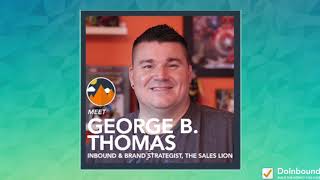
This is a YouTube video titled "How Agencies Can Dominate Video Marketing with George B. Thomas from The Sales Lion" recorded in October 2017. It features a podcast-style interview between host Andrew Dembski and George B. Thomas, discussing video marketing strategies for agencies, including video production, distribution channels, content creation, and client engagement. The conversation covers practical advice on video tools, scripting, workshops, and the importance of video in modern marketing.
Hello, neighbor. This is Andrew, and Welcome to episode 126 here on the podcast today, we've got a fun conversation with George Thomas from the sales line coming back to the podcast for round three. And in the conversation, he breaks down some amazing video information. George is great at dropping some knowledge bombs, and he does not hold back in this interview, so check that out. But before we do, I want to let you know that today is the official start of season 10 here on the podcast. When Gray and I started this thing two and a half years ago, we would not, could not have guessed how amazing of a journey it would be and how many phenomenal conversations and relationships would spring out of this. So I just want to lead off by saying thank you so much for your loyal listenership. It's so fun to be able to be here inside of your headphones, in your car, at the gym, at work, wherever you find yourself today listening to this podcast. Thank you for the opportunity to, you know, join you on this journey. We're really excited for where you're going and that you've tapped into the. The podcast here to help you in that journey. Something big that's happening this season is we're shifting the name of the podcast from Inbound Agency Journey to Agency Journey. And the reason that we're doing that is we found a lot of people are already listening to the podcast who do more than just inbound. Inbound might be a part of what they do, but it's more than just an inbound marketing agency. As the system continues to evolve, we want to open it up to. To be more applicable to people who are coming into this place. So what does that mean for our content? Absolutely nothing. We're not changing our strategy. We're not changing the type of guest that we bring on. We're gonna keep everything the same, but we're changing the name so that if someone doesn't necessarily have Inbound as a part of their agency services today, they won't feel intimidated about subscribing or checking out the podcast when they discover it right there. That's the only change. We got some new branding that goes along with it that we're pretty excited about. So you can go over to doinbound.com to check that out. You probably see it on your podcast player right now anyway. But we're really, really excited about that. So welcome to season 10 here on Agency Journey. So excited to have you here. We got some fun changes coming up here with a new segment on Agency Journey that Gray and I will be Rolling out on Fridays. So some more information on that coming out soon. But in the meantime, let's get right to the conversation with George at the sales line. How do you build an agency that allows you to live the dream that you have for yourself, for your family, for your community, for your team, while at the same time helping your clients knock it out of the park and doing it all profitably? These are the big questions that we tackle here on the Agency Journey podcast. I am your host, Andrew Dembski. Now let's get to it. All right, guys, welcome back. Excited to have George B. Thomas on the line with us again for podcast round number three. George, I think it is.
Yeah, buddy, giddy up.
Well, really, really excited to have you back on and excited to dive into today's topic about seeing you online or hasn't caught any of those previous episodes.
Yeah, definitely. Andrew. First of all, thing, I dove in head first, feet first, cannonball, whatever visual representation you want to use into the pool of video. And man, man, do I love where we're at.
Dude, that's fantastic. And that's where I want to spend the time today is just jumping right in. And let's talk about it first from a marketing perspective for the sales line. Where are you guys at right now in terms of video? What are the channels that you're leveraging and how are you seeing that impact the business coming into the agency?
Yeah, definitely. So channels all. Anyway, I know that's a bad answer, but for sure, YouTube, without a doubt, Facebook. Every single opportunity we get the chance. If we can do some things micro on, like Instagram and Twitter and Snapchat, then yes, we will not so much Snapchat, to be honest with you. But yes, we'll go with those micro moments because we have a strategy that kind of plays in all of these places. Like, we'll tease out our YouTube video on Facebook, on Twitter, on Instagram, or we may even do some little standalone pieces of content for, like, micro education. But what a lot of agencies might want to know about us and why we may do a lot the same as they would and a little bit different. Different is our entire model is around education. We have to present ourselves as the ultimate educators in the space because we're not like the typical agency, Andrew, where we do the work for you. We just teach your people the work that they should be doing and how to do that work. Great. And so all of our play socially and on our blog, video wise or textual, is, man, these guys are awesome educators. And we need to get Them on board with our team today.
That's awesome. Can you separate for me what are from your, from your strategy standpoint, what types of videos do you say this fits our YouTube strategy versus this fits our Facebook strategy. And on the Facebook side, is it uploaded video or is it live video?
Yeah, so we definitely upload a video to Facebook. A lot of times if it's a bigger piece of content, educational content that lives on YouTube, it will be like a teaser pushing them to YouTube. We're really all in on our YouTube channel from a social video perspective. However, we're also all in at the same time on our website with using something like Wistia or Vidyard or brightcove and being able to measure the results that we're getting over there as well. But you know, I don't want to answer that question and not say that we also do Facebook Lives because Facebook Live is very powerful. But I am going to warn anybody who is thinking about doing a Facebook Live, I used to say, Andrew, oh, everybody should be doing Facebook Live. It's so easy. Well, it's easy if you're a great communicator, right? It's definitely something you can leverage if you know how to already get in front of the camera and feel super comfortable. If you don't, don't worry. Sometime during this interview we'll probably talk about a workshop that going out and giving to not only companies, but agencies and allowing people to get great in front of the camera as well as great behind the camera. But that's, that's not the thing. If you're a great communicator, then yes, Facebook Live is definitely a jam. I mean, they're giving like special treatment to Video Live. And when your Facebook Live is over, you can boost that content as well and throw some money behind it. And here's the thing. I love getting so nerdy about this part because there are softwares like let's say EK Cam Live that you could download for your Mac. It's like $29. It allows you to do not only a normal Facebook Live, but allows you to play videos inside of it, allows you to pull graphics inside of it so you can have a great like just experience for the end user that is almost like a production quality Facebook Live video that then you throw like 5, 10, $50 on a targeted market. Like yeah, I want anybody who has liked Inbound or HubSpot or Marketo because I want them to see this thing. I mean, come on.
That's insane. That's awesome, dude. Okay, So I kind of get the differences right there. Now I need to think about how do I go about making video. Give me the whirlwind tour of if someone's just getting started, what type of tech should they get into? Whether they got like all in house or they're spread out across the US like you guys are, what's the best way to kind of approach your tools to get video going and start playing?
Yeah, so the first thing, and here's what's funny is in that question, you literally just gave me like several divisions, right? So there's insourcing versus outsourcing as far as a model and so many other things like gear and what type of gear? Like mobile gear, prosumer gear, professional gear. Like I could segment down that. What I want to do before we get too deep into this, because I'm going to answer both of those, is I want to talk about how the first thing they should do is they should take a video assessment. Because if you're trying to reach a finish line, you need to know where the starting line is. And what we did at the sales line when we positioned 24 months ago, like, hey, we're all in on video. And we were going through the struggles of learning within the first three to six months. We're like, you know what I. We wish that there was an assessment that we could have taken to kind of tell us like, this is where you're pretty good and this is where you totally suck. But like maybe you want to do something over here for a little bit. And so we created an assessment and it's got guys, gals. First of all, I know when you get there you're going to want to be like, oh, George, you're like the ultimate marketer. There's. There should be a form in front of this where you ask for my first name, last name, email, listen. So I don't get the emails. We didn't want it to be a lead generating opportunity. We just wanted it to be a free assessment. And you can go over to the sales line.com assessment and you can take this just easy about 20 questions video assessment. It's going to spit out scores for pre production, production, post production, all of the things that you'll answer in there and you'll be like, oh, well, this is my weak points. This might be one. I know what I want to work on here. We're already strong so we're kind of good to go. But we may want to grow in the future. That's the first thing that I would do. Now back to the original like seven part question. Insourcing versus outsourcing. We at the sales line preach insourcing versus outsourcing because of a couple main reasons. One, you can create video faster. Two, you can create video cheaper. And three, you can create video in much the same way that you have created blog content or textual content, meaning you can do nifty things like, like newsjacking and like in real time type creation. And it just gives you the ability to be like you're having a conversation at the water cooler and you're like, yeah, it's like this show we watched the other day. And then the person you're talking to is like, oh, you know, we could do a spin off of something like that. Really fun for our marketing. Now if you're outsourcing now, you've got to find a production company, you've got to find when they're available in their timeline. You've got to wait two weeks. Now the idea kind of gets moldy and crusty where with insourcing, you just went into your like studio area, AKA an empty office with like a camera and some lights, and you just start creating that piece of content, right? So, so insourcing for us is huge. Not saying that you can't outsource, but if you want to save money, save time, do it faster, do it cheaper than, you know, insourcing. The other piece you said was gear. This is the number one question we get, Andrew, is like, what camera should I buy? Or what's the best camera? And as dumb as it sounds, I'm gonna repeat everybody else that answers that. And it's like the one that you have, like it's either the one in your pocket because it happens to be also your mobile phone, your cellular device, your iPad, whatever. Although iPad in a pocket would be really weird. But the camera that you have, you guys get the idea. It's the camera that you have. And really what it has to boil down to though is the goal that you're trying to achieve. Like, are we trying to create a video that has like this amazing bokeh and you know, it's nice and blurry behind the person they're really in, you know, crystal clear. And it's kind of that mood. Well, then we probably need something that's like a DSLR, you know, a Canon Mark 4 or Mark III, whichever, maybe even not a mark, it's just, just a Canon or an icon, something that gives you like the 50 millimeter lens that will give you that bokeh or are we just trying to create like a video that we can actually drive revenue for our company? And is our cell phone, when focused on great lighting and great audio, enough of a camera? Like we teach in our workshops because we do production workshops as well where we talk about gear and like the rules that you should follow when creating videos. We do a whole section on what we call gorilla gear. And it's a way that you can wrap technology around your cell phone that allows you to put like a Canon 50 millimeter lens at the end of your cell phone and sit there and nerdily shoot at like 1080p or 4k. Which by the way, if you're like, what the crap was that? Don't worry, you'll learn about it. But it's just simple resolutions that you could be doing with your video. So there's just, it's such a wide gamut. I would say it comes down to what goals are we trying to treat, achieve, what look, feel are we trying to get and what camera do we have that will allow us to do that? The least amount of hurdles because what can't happen is gear can't be a paralyzer. You have to just be like, hey, video is important. We're going to create video. Nothing is going to stop us from creating video. Because here's the stat that scares the crap out of me, Andrew. And then I'm going to be quiet because I think I may have possibly answered the seven part question fully is that by 2019, 80% of the consumed content on the Internet consumer based, right? People buying stuff will be video based content. And that if you, if you're sitting here listening to this and your agency or your clients that you service do not have a video strategy in line now you should be like crap. Because in 16 months, 15 months, 12 months, depending on when you're listening to this, like all heck's about to break loose. Which by the way, this might be the most opportune time to say if you're an agency and you want to implement video, I actually do go out on location to agencies and I can give a talk that is transforming your agency into video based services. We can talk about all the nerdy gear, we can talk about all the nerdy rules. We can talk about if it's points or if it's dollars or if it's, you know, the videos that you should have all sorts of places in your funnel. Like I could just help you immediately become really great at what you need to provide for yourself and Your potential clients.
George, you just broke that question down and knocked out of the park, dude. Well done.
Thank you. Thank you. I may have done this a couple of times.
It sounds like it, bro. I want to break. I want to break the video strategy question down. This is going to be kind of a bridge between what you guys do internally and how you help clients here. When you're helping get someone off the ground for the first time.
Yeah.
What are the elements that go into that video strategy? Do you start at the bottom of the funnel and work your way up? Is a lot of it. Just sit in front of the camera and answer questions. You know, how do you begin to put something on paper to position someone to have a successful video strategy?
So the answer is yes, but let's dive. Yeah, let's dive deeper. Do we do FAQs? Absolutely. Do we do interview styles? Most definite, a company that is has written a book called they Ask youk Answer and focuses on the big five, which is the five major ways that people search before they buy. Do we create videos that are very bottom of the funnel for ourselves and for clients? Yes, yes, yes, and yes. Now let's actually kind of break down though, what that looks like. Because this is what I think is more important to those people who are like, where do I get started? Is there are a couple fundamental elements that happen before any video, whether it's bottom of the funnel or a top of the funnel fluff piece. And that is that we have to have some goals that we're trying to achieve. So the first thing we have them do is we have them fill out what is a pre production checklist. And if you folks are like, well, what does that look like? No problem. You go to thesalesline.com checklist and you download it. But it's gonna talk or walk you through in this checklist of what is your major goal? What is your call to action? What are the things that you're gonna provide for the audience? What are the things that have to happen inside of this video for you at the end day to call it success? And then once you have that kind of baked out, the next thing we want you to do, and there's a big battle on this is should we script or not script? Like, I don't know, like, it depends how you're scripting. So we have a script template and you can go to the sales line.com script and you can download that and see what that's like. What I will tell you is that we have never ever really told A client or ourselves. Script this out word for word.
Gotcha.
What we have said is, hey, this is a script template. And you need to put the bullet points that you want to achieve. Because here's the thing. The reason that video is so important now, the reason that video is going to be so magical for your agency and for the clients that you service, is because it is the most human way that you can communicate online, where they can see your face, they can see your eyes, they can hear the words coming out of your mouth. And if you have a script that is word for word and all of a sudden you start to sound like this because we have a great offer, you might as well have not even created the video. So it's got to sound like it's you. It's got to sound human. And that's. That's with all the flaws. Like, look, on this podcast, I've probably flubbed up words like two or three or four times. I'm not saying, hey, Andrew, can we start over? Can we redo this? And I wouldn't do that on the video either. Like, if I fumble over one or two words, that video, that makes it real. Like, the audience realizes, oh, like, this isn't like a huge produced piece where, like, there were seven people paying attention that he just said the wrong word. Like, they're just trying to help us right now.
Yes. Break it down, make it real. That's huge. I think that, like, that that might help people, and you probably see this a lot, that might help people get in front and start a little bit earlier to just say, it doesn't need to be perfect. What we're trying to do here is capture the essence of who we are. And we're not trying to be a Hollywood production company. We're trying to communicate with people. And like we were saying before recording here, connecting that divide between marketing and sales and using it as kind of that bridge to help them get to know you a little bit better.
Yeah, totally agree with you that what we just talked about and the fact that you can get training, There are techniques that we can teach during a content workshop that actually help you communicate in more of a human way. Be quote, unquote, likable, which is huge on camera. Those things can be taught. It's mind blowing to what we can do in half a day with sales and marketing professionals and CEOs, with the way that they present their. Their hands, their face, the. The voice inflection, the mentality behind. Yes. And. And not being able to do a restart. But Absolutely. Being able to do a take two and so many other things that we could talk about that would just blow your mind where you're like, wow, I used to think that I wasn't good on camera, but man, I'm really good on camera.
Nice, dude, that's awesome. And that's a good kind of transition here into, I mean, you guys are, you're a different type of agency. Like you said earlier. You're not out there fulfilling services for people. You're teaching and kind of leading with that. But can you pop the hood a little bit and walk us through what a typical client journey looks like for you guys when they want to engage with video? What does the workshop look like? What does the retainer look like? And how are you guys supporting your clients through kind of through the whole journey here of getting them from 0 to 100?
Yeah, definitely. So the first thing that you mentioned is the workshop and actually there are workshops and if you're curious, like, if you're like, hey, let's go find out if a workshop is right for us, or you're the one guy or gal on the podcast going, ooh, let's go steal their ideas for workshops, whichever, whatever, I'm not mad at you, I'll still love you. But you can go to the sales line.com video and you can see how we've created a pillar piece of content around video marketing. Down towards the bottom of the page, you're gonna see the four major workshops that we give and many of these workshops, or actually three major workshops that we give and, and monthly training around this video topic as well, that you can do a retainer based, you know, educational system slash consulting system. Like, I'm gonna just stop for a second. Just because you're an agency doesn't mean that you have to do work to get paid. You have a brain that knows what good things look like. You can get paid to consult on the strategies and the look feel of the video content People gladly pay to look good online. You guys need to leverage that, pay attention, rewind that last part and really think about video consulting retainers as a bump in what you're already doing for the work that you're providing anyway. There's three major workshops you'll see down there. They can be for companies, they can be for events, they can be for agencies. Because we can continue to teach the same things over and over. A workshop really needs to be first because then we get the buy in from all the people that need to be in front of the camera. The people who are going to be doing the work behind the camera. After that, then we'll move into, like, here. Okay. For the next, you know, three months, six months, we're going to do depends on the client, by the way. We're going to do a video retainer. We're going to talk about tools that you should be using hooked up to YouTube. There's probably two or three that people don't know about as an agency that they should be using to get the best out of YouTube. We're going to talk about, you know, how you should be using Wistia Vidyard on your website. We're going to talk about the 80%, which is what are 80% of the questions that your sales teams are already getting and how we can turn those into videos so that we can answer them better. Like, a lot of what we're going to talk about is how, like, video is the bridge between sales and marketing. And there are seven, if not more, tactics that I could tell you right now that you should be implementing as a marketing team or as an agency for your sales team and for your client sales teams to take them from, like, holy crap. They get the fact that they need to sell in a digital space completely different than how it used to be.
Can I get like one or two of those?
Oh, the, the tips you just dropped, you.
I mean, you teased seven, which is fantastic. Can I get one or two of those? If you want all seven, you got to pay George. But if we.
Yeah, yeah, yeah. So, yeah, I'll give you. I'll give you two. I'll give you two. Because I'm just a guy. I love to give back. And one, if you as an agency or your clients do not have email video signatures, meaning at the end of your signature, you can't click on a video and immediately tell, I like George B. Thomas or I like Andrew or I like Gary or I like Gray or I like Bobby or I like sue, because it talks about what they do at the company as well as who they are in life. Like, you immediately in the inbox should get a vibe for that. It's the most used marketing tool ever. Gmail, Outlook, whatever your ESP provider is, like email signatures, number one, don't have them do it today. Now, the second one, I'm going to just go back to what I said before the 80% videos. Ask your sales team what are the questions we get 80% of the time. Create that list. It's probably going to be anywhere from 25 to 75 questions. That they repeatedly get over and over and over again. And you turn those into one and a half, two and a half, three and a half minute videos. However long it takes to answer that question, you answer it in video. Because now Instead of a 15 minute email, it's a two minute email with a link to a video that teaches them or answers the question that they have. You know what, forget it. I'm going to go ahead and give you three. Because the third thing that you should be doing is also creating teaser content for every single blog article that you potentially ever written. I would go in and say, hey, what are the most high performing articles in the last 60 days? Okay, maybe 50, maybe 25, you know, start low, maybe 10, I don't know. But I'm gonna see what blog articles are performing the best first. And I'm gonna create teaser 45 second to minute and a half videos that are in zone one, the very top of my blog articles. Now I'm also gonna though do a search in my analytics, in my measurement, in my nerdiness of what are the top 10 or 15 pages that have the highest amount of bounce rate on my website? Because I'm going to create a 45 second to a minute and a half video, put it at zone one, the top and now what happens? They get there, they watch the video, they're there for 45 seconds, a minute and a half before they actually get into your textual content was which was allowing them or having them bounce historically, but now they've reached the pat. The time past the bounce rate. Anyway, those are free tips. If you want more, you got to come have us come out for a video workshop. Andrew, I'm going to throw this in there because I feel like it's the right time. If you want to know more about those workshops. I know I said it once before, I'm going to say it again. Thesalesline.com video go there. You can reach out to us. We love answering questions.
No, that's perfect, George. You just, I think you dropped four there. That was fantastic.
You know, I just, I just, I get, I get crazy with myself sometimes.
It just starts oozing out. I can't control it. There's one question that I get is when, Okay, I get to the point where I've got some gear to record. I just start with my iPhone or I've got a camera here, I can go use that. I'm comfortable in front of the camera so I can talk, I can communicate that way. What about editing? What about post production? Is that something that should intimidate people today, or is it not as big of a deal as some people make it out to be?
Yes. No. I'm just kidding.
Great.
What kind of answer was that? No. So here's the thing. It depends, right? If you immediately think editing and you think that you have to jump into something like Final Cut Pro or what we use, which is Adobe Premiere or Adobe After Effects, you know, hand in hand. And if you're using Final Cut Pro, you're probably using motion. If you immediately think, well, that's what we've got to do, then, yeah, it's probably gonna be scary. Unless you're kind of a crazy type person and you're like, this isn't scary. But this is cool because now I get to educate myself. I need to. I need to go over to, like, somewhere like Lynda.com and watch some tutorials, or I need to go to, like, video copilot.net and watch some trainings and get some tools on After Effects. Like, if that it's either exciting or it's fearful, that's up to you. Like, I think it's the same emotion, but just in the. In the way that we position it and look at it. Me, I get excited. However, if that doesn't excite you and you're like, man, I just want something, like, simple, well, then great, because you can use something like Animoto to create quick win videos. Or you could even, let's say you. You started this question with like, I pull out my cell phone and I start shooting the video. If you're already using your cell phone and you're kind of on this mobile level, then you should look up lumafusion. If you have an iPad, download Lumafusion. It's kind of like a Premiere, but for an iPads, meaning it's very powerful, but it's super simplified and it's an app type technology that you're kind of used to working in. And I've taken something that I shot completely on my cell phone, airdropped it to my. I had thrown it in Lumafusion and exported it out as a complete video. Like. And lumafusion is 19.99.
Dang, that's awesome. All right, there you have it, guys. No excuses left, George. That's a job.
No hurdles. Look, if anybody knows me, like, my, my one of my major goals, well, I have to. Well, I have more than two, but when I'm talking on podcasts or I'm speaking like, I'm trying to do a Couple of things with the information that I'm providing to you. One, I want you to be able to take your hurdles and turn them into hustle, which hopefully after this podcast, you'll be able to do the other thing on a. On a. I just have to say this because you're gonna do these videos and I just for a brief second said that it was about being, you know, human. Be human in front of the camera. These videos are really about the human side of your brand. And so, you know, it's. We talk about how the education and the understanding is gonna be painful. Well, you just need to turn that pain into passion, right? So take your pain, turn it into passion, take your hurdles, and turn it into hustle. And then you guys and your clients are going to be absolutely a. Okay, 100% crushing it with video marketing in your marketing strategy.
That's awesome, guys. If you want to learn more, if you. If you're loving what George is sharing and you want to implement it for your clients, reach out to them. Go to thesalesline.com video, check out some of the stuff that they've put together. They are awesome contributors to this community. And, George, you shelled out a lot right here. If anyone wants to connect with you personally and say, hey or follow any other stuff you're putting out, what's the best place they can go to say hi?
Yeah, definitely. So if you just want to say hi, ask questions, then there's two places I'll send you one. Oregeb Thomas on the Twitters to Mr. GeorgeBThomas on Facebook. But then I would really suggest if you just want to learn more and you're not like, well, I'm not really ready for a workshop. I want to kind of be like that, that stalker educator. Like, I just want to be behind the scenes and see what you're doing, then I would suggest you just go to YouTube and search the sales lion and you will end up on our learning channel and you will see all sorts of video about everything, video marketing, everything. HubSpot, HubSpot, CRM. Like, there's just a lot of educational content over there on our YouTube channel. Hit that subscribe button and make sure you like and share it out. Because, you know, that's what we do when we love what people are doing.
Beautiful, George, thank you so much for coming on, sharing so much awesome stuff. As always. You the man.
Thanks, Andrew. Totally appreciate it.
All right, guys, hope you enjoyed that conversation with George Thomas from the Sales Lion. He dropped some amazing video insight there. So make sure you take action on that stuff and figure out how you can bring video into the marketing life of your agency and your clients before we head out. A quick message here. This podcast Agency Journey is brought to you by Do Inbound. Do Inbound is project and process management software for agency pros just like you. If you want to streamline your processes and get ready to scale your business to the next level on a foundation of repeatable systems and processes, head over to doinbound.com you can check out a video there about everything that happens inside of the platform, a little bit of the methodology behind it all, and some of the story about how we launched that company out of our own agency, Guavabox. So until next time, I am your co host Andrew, and we'll talk to you soon.










