How LegalZoom Standardized and Scaled Their Creative Team's Efforts Using Our ClickUp System
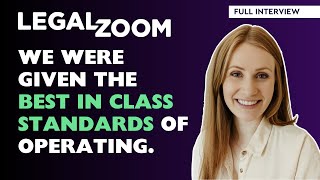
This is a YouTube video titled "How LegalZoom Standardized and Scaled Their Creative Team's Efforts Using Our ClickUp System" containing an interview conducted on April 19, 2024. The conversation features Melanie Brook, principal creative operations at LegalZoom, discussing her role, challenges, and the transformation of her team's project management using ClickUp with the help of Zenpilot. The discussion covers operational strategies, resourcefulness, and the impact of adopting best practices for creative operations within a large marketing department. The content is a single-speaker interview with a host, not involving George B. Thomas.
Once we got ClickUp up and running, there was immediate improvement because there was clarity for everybody about where the projects lived and the general timeline it was going to take to complete them, and then who was responsible for each step. But that was just scratching the surface, Right. What was nice about talking to Zenpilot is that all of the past experience that you've had setting up other people's ClickUp spaces, I just feel like I was given the best in class standards of operating. They're like, we've tried it a million ways. You don't have to go through the hassle of trial and error. We've already done it for you. Like, here's how you should set up this part. Here's how you should set up this part. And it has been a game changer ever since.
Hello, everyone, and welcome to a very special Zen pilot story. With me today on the call is Melanie Brook, principal creative operations at LegalZoom. Melanie, how are you doing today?
I'm doing great. The sun is shining. Today's a great day.
Yeah, spring has come hard and fast. I'm not sure if that's the case for you, but for us, we got like, okay, I'm on Celsius, right? But we jumped like 10 degrees up. So it really makes you think that all we need is a little bit of sunshine, right?
Exactly.
Okay, awesome. So the purpose for this call and this recording here is really twofold. One, I did want to ask you about, you know, your story working with Zenpilot, get a little bit more detail about that and to have our watchers and listeners hear about the story. But also I wanted to ask about your work as principal creative operations. Get a little bit of advice for you on, you know, how to run operations. That's what we're all about, you know, that's the kind of overarching goal of Zenpilot, to help, well, companies of various kinds run better, departments of various kinds run better, and that all comes down to having watertight operations. So anybody I can get a call with? I do ask about that advice and I want to get some of that advice from you as well. And I hope that sounds like a good plan. But first, I've got a little bit of an icebreaker question for you. I wonder what you're going to say. So, Melanie, what is the most fun thing you've done this year thus far?
My husband and my 4 year old are skiers, and the most fun thing we did was check out my. I'm a pre. I pretend to ski. I don't really know how very well, but I can keep up with my little kids. Um, but we took our two year old out for the first time and so we had all four of us on skis together. It was a wild adventure, but it was very fun.
So how was that? The two year old's first time skiing?
Yeah.
Okay, I can imagine. How, how, how did they react?
Um, I mean, they basically just hold onto an adult the entire time. She's just getting used to basically being sliding on the snow. Right. Because it's a weird as a child who's only ever walked on their feet to figure out how to be on skis and kind of sliding down the stuff. So it was really fun.
Yeah, I can imagine. Oh gosh. I mean, I've got a two year old of my own and like, I don't think he's going to be going skiing anytime soon. We don't, we don't normally do a lot of that, but I imagine he would find that a lot of fun. Although honestly, being 2 year old, any kind of physical activity, they do tend to get into that, don't they?
Yeah, they just want to stop and eat the snow all the time actually, but whatever it takes, you know.
Yeah, yeah, exactly. Exactly. Awesome. Oh my God, that made me smile just so much. Thank you, thank you for sharing that. That is a great one. And I'll be thinking about that for the rest of the day. Okay, so let's give our watchers and listeners the Melanie Brooke story. First of all, I wanted to ask you, you know, in your own words, how do you usually explain what you do, your role as principal creative operations, and by all means also tell the listeners about LegalZoom, what you do and who you serve?
Sure. Am I describing it like I would to my parents who don't really understand what tech companies do, or am I describing it to other ops people?
I assume other people. Ops people might have a bit of a higher level of knowledge maybe. Let's go with that.
Okay. So I manage the operations for the branding creative team. So Our team at LegalZoom consists of copywriters, graphic designers, web designers, we have a couple of freelance animators, and we also have some in house video editors. So it's a whole collection of a variety of skill types and I'm just trying to make sure that our team operates smoothly. So because we're such a cross functional group, the vast majority of the projects that we work on are being requested by other teams. So my operations actually extends beyond just our little team to making sure that the people requesting work do it in a certain fashion that is conducive to our team receiving information well and then knowing what they need to work on. But with any ops role, I mean, I love that the design ops assembly group, they, they call this position the Chief of Feelings. Right. Because you're, you're constantly trying to navigate and assist people in all kinds of things. Not just how they're using the tool, but how they're feeling that day, how they're feeling about their work, and it's all navigating all kinds of fun stuff. So legal SIM is a pretty large, a fairly large company. We have 1200 people, but our brand team has only, I think we have 18 people total. And then within marketing, we service primarily the rest of marketing and collectively we have about 60 people. So it's a decent sized operation. But we don't have. I am the only. When I was first hired, I was the only operations person in the entire marketing department. Like so of all 60 people, only one person. And as you might guess, we were not operating optimally and people were literally emailing each other about projects, which is something that doesn't typically happen in 2024. I mean, I guess I started in 2022, but still, the sentiment still exists. And since then we now have one marketing ops person and the operations effort is growing, but it is slow moving. And I think that that stems from we just had a company that was very much product focused and marketing came second. And so they weren't really worried about the operations around here. But as the demand for marketing projects with scaling, it was crucial to have some sort of operations role in there to make sure that it was scaling at a sustainable rate and also like a sustainable method.
Yeah, yeah. You know, I can really relate to, you know, your role and your whole story. We're going to get into the details of it, of course, but one thing that I've got that I did in my previous role was that I was leading a small team in the marketing department. We had next to us a product design department and basically we kind of borrowed their time for internal marketing needs, you know. And actually, actually we're going to talk about ClickUp in a moment, of course, but like, that's one of the cases where I managed to get them from. Why would we need to log into ClickUp anyway? To get, you know, briefs from. From you, to help you to the product design team saying if it's not on ClickUp, we basically don't look at it. So please put it on ClickUp So those kinds of transformations do happen. That's right. And one thing that my mind won't let go now. So how do you explain it to your parents? How do you simplify it?
I basically tell them I'm a project manager and they don't know what that means exactly. But I say I make sure that all of our creatives, I manage their time, so I make sure that they have the projects that they need and the information that they need to do their projects. And that usually is enough information to satisfy their curiosity.
Okay, Awesome. I just do herding cats for a living. Right. That's the metaphor that I've heard most often. Alrighty. So now tell me before we dive into the story between LegalZoom and Zenpilot, I've got somebody here on the call, meaning you so experienced in creative operations, and I bet some people on the call are thinking, I wish I could pick her brain about just how to excel in this role, what are the typical challenges, et cetera. So I just wanted to distill it into my favorite question. If anybody's watched any of my shows. Melanie, what is your number one tip for creative operations? What is the key to excelling in this area?
I do want more than one. I feel like you need more than one tip to excel.
Yeah, you know what, that happens sometimes. Yes, by all means.
I would say that the keys to success in an operations role, I mean, anybody. There are a lot of organized people out there, so being organized is not going to cut it. I think you have to have a deep understanding of what the creative team does and how they function just as individual people. Like, what are the steps that a designer takes when they are designing an email template? Like, if you don't know those steps, Even though I'm not a designer, I need to know what the designer is doing so that I can create a workload around their project. So a deep understanding of the. I say process, even though I'm the one that creates the process. But I mean the actual steps that a creative needs to go through to do their thing. So a deep understanding of that and then a innate sense of resourcefulness. Because inevitably we live in a world of scarcity. We don't have enough time, we don't have enough tools, we don't have enough people. There's just always. You could always point to something lacking, but if you have a resourceful mindset, you can find the resources you're looking for somewhere, or you can be flexible about how you're approaching certain projects to really make sure that everything can be accommodated the way that it needs to. So I would say that those are the two biggest really innate sense needs of the creatives and, like, what they need to be successful and then also being resourceful.
So the needs of the creatives and understanding the process, if I'm getting that correctly, it's like, I don't know, you're talking with a copywriter and they say they need to do two hours of research. Your job is to also understand, like, how this research gets done, where they go, what they look for, the, like, to that level of detail.
Yeah. Because what if you have a copywriter that says, I need two hours for research. And you're. And you know, in the back of your head you're like, I know that you could find this information in 30 minutes. Like, we're, we don't have the luxury giving you two hours for this. Like, this needs to be a faster thing. Or you could say, or you say you're getting too much information. Like, I know that you can get the details that you need in 30 minutes. We don't need to spend summit time. Or you could say, I don't want you to cut corners. I know that this is going to take more like four or five hours to research because you need to, like, really become an expert on this, whatever the topic is. So the better that you understand the creative needs to execute things, the better you can estimate time for projects when you're building them. And then the better you can also coach creatives because there are some creatives that always say, I need two hours for everything. It's like, not, not every step of the process takes two hours. And then you can help push them to improve or to work faster, whatever you need. Not like I'm a drill sergeant or anything, but just making sure that you understand what creatives need so that you can be a sounding board for them.
Yeah, Yeah, I can absolutely feel that. Like, my background again, at my previous company was a software development company. Right. And you know, talking with developers is very different when you know what they actually do to create the code versus when you treat them like a team of wizards. You know, like, I need three days for this. Well, okay, I know nothing about what you do. So that sounds, you know, that sounds about right. And it's only when you actually delve into the nitty gritty, you manage to build up a little bit of a, of a detector of whether the estimate is accurate or not. Okay, One final thing about what you mentioned. So knowing how the work gets done, that's one thing I'm taking away from this. The second is you mentioned this innate sense of resourcefulness, let's say asking for a friend. There is a person that right now doesn't feel like they've got this sense of resourcefulness. If the resources aren't there, they just throw their hands up in the air. I'm blocked. What can I do? What would you say is the key to building, to becoming more resourceful? Is there a way?
I'm not sure how you would unblock yourself for that. I do know you could look at somebody who, if you've ever worked with somebody that was resourceful in the past, you could say, what would this person do in this situation? You could try to recall, oh, maybe they were more flexible with their timeline. So then they asked partners, they just asked for more time. Or maybe they started booking live meetings so that you didn't. Because sometimes the async work can sometimes take longer than if you just were to put people in the room and get them to crank it out. So there are. You can come up with little tips and tricks to make things go faster or be smoother. So I would probably try to document the things that you found as helpful, resourceful tips in the past. And then also, if you could find somebody that you've seen do it successfully, just try to think, like, what would that person do?
Yeah, that's great. Especially. Well, like all of what you just said, I love you. Reminded me of one of my favorite books. It's called the Alter Ego Effect by Todd Herman. And in there he mentions research that, you know, just asking yourself what a creative person would do makes you more creative. Just wearing the, you know, the coat of a creative. If you are told this is a painter's coat, that makes you more creative. If you're told it's a lab code, it doesn't make you more creative. It makes you better at solving logical puzzles. So, like, just this idea of trying to get into somebody else's shoes, that actually works to unblock you. I love that. That is a great answer and thank you so much. I'm personally helped by what you just shared here. Awesome. Alrighty. So I'm sure we'll learn more from you and about your role as we dive into the Zenpilot story now. So I wanted to ask you, can you tell the watchers and listeners, like, what was happening in your life at LegalZoom in your department before you engaged with Zenpilot? You know, what was the problem you were grappling with at that Time, Sure.
So, as I mentioned, when I started, there were no Ops people, and really there were very little processes. When I look back on it, I am really stumped as to how the team accomplished as much as they did without any processes. It was just kind of a free for all. I think that the creative team said that, said, hey, we need a project management tool. This is before I started. They went to our internal people that research tools, I guess, and said, hey, we need this tool. And then when they were vetting all the different options, they're like, actually, it'd be great if all the different departments could have that could all share a project management tool. So they selected Qlik because they felt like it had the best use cases for a variety of different teams. So when I was first hired, I was definitely an Asana person through and through. But then they said, hey, just so you know, we just got this new tool, but we aren't letting the team touch it until the Ops person comes because we want them to set it up and make sure that the team uses it appropriately. It's like, great. So now I gotta learn how to use ClickUp. So I dove in. I watched as many tutorials as I could. And because a lot of project management tools, they're trying to accomplish the same thing. So if you can navigate one, you can navigate all of them. But ClickUp is a little bit unique in the sense that it doesn't come up with a. A generic template of here's how you use it. It's really a blank slate. Like, you have to set it up how you want to use it, but it feels like a chicken and the egg thing because you're like, I don't know how I want to use it because there's nothing here to guide me. So I was feeling, basically, I set it up how I previously had been using Asana, because I just pulled from the knowledge that I had. So I set it up with the foundational things I got. Our team all adjusted to using it, and I feel like I was just barely scratching the surface. So, sure, everything was more organized, but I just felt like ClickUp had all these bells and whistles that I didn't know how to use because I was so unfamiliar with the tool and I didn't have anybody internally that I could really lean on for support because we had no other people. And then one day I was watching a webinar that Gray was on, and it wasn't even a sales pitch for Zen Pilot, but they were promoting a particular creative agency, how they were utilizing their project management tool, and I didn't even know it was going to be ClickUp. But I'm always curious how other teams organize their project management tools because it feels like a black box. Right? Like, we don't all look at each other's setups and so we don't know what they look like. But I'm always wondering how I could make mine better. And so I attended this webinar with that in mind, and there was just one small comment where the agency owner said, the best thing that I did for my team was hire zenpilot because they set up my tool. And I was like, that's what I need. I was like, I need somebody to set up ClickUp like, how it's meant to be set up. Because I'm really struggling with, like, trying to make it look like Asana. Because it's not Asana. It's a different tool.
Yeah, yeah.
Um, so honestly, I was so grateful. That was like, the answer that I was looking for in that moment. Um, and I'm like, I want to talk to experts who know exactly how it should be set up in this specific tool, not just any generic tool. And then I also. What was nice about talking to zenpilot is that all of the past experience that you've had setting up other people's ClickUp spaces has now helped. I just feel like I was given the best in class standards of operating. They're like, we've tried it a million ways. You don't have to go through the hassle of trial and error. We've already done it for you. Like, here's how you should set up this part. Here's how you should set up this part. And it has been a game changer ever since.
So I've got one specific question about that. When we talk about LegalZoom and we look at your case versus the typical Zenpilot case, there's one thing that stands out as a point of contrast, and that's a lot of zenpilot clients, one might easily say the majority are agencies. We come in and we help the whole agency organize everything on ClickUp. Now, in your case, it's, you know, one particular internal department. I want to ask about how that went. I'm honestly quite curious about, you know, what made you decide that despite, you know, this, despite of this, one might say, agency focus, you still thought this, this was a good fit and basically how much was that a factor and what was in your mind about that at the moment?
Sure. So our internal creative team operates Kind of like an internal agency. So a lot of the standards and the operating practices were perfect for us. The one that was the main one that we ignored was all about billing. Like, we don't bill our clients because we're all in house, so we didn't have to worry about any of that part. I will say that I was very sad that we didn't just onboard all of LegalZoom to operate in this way. But unfortunately we weren't able to do that because like with an agency, they all are kind of servicing the same thing and so they could have the same statuses, you know, like to do in progress, blocked, whatever. But when we are dealing with like a finance department and a legal department and a product development, like, they all operate so differently that there wouldn't really be a use case where we could have every single team have all of the same statuses. Really create a universal system that way. But what's nice about within Marketing is I'm able to spread that through the rest of our marketing teams. So as they've seen our team operate, like really. Once we got ClickUp up and running on like the bare basics that I had started when I first joined LegalZoom, there was immediate improvement because there was clarity for everybody about where the projects lived and the general timeline it was going to take to complete them, and then who was responsible for each step. But that was just scratching the surface, right? So once we got Zenpa in there and we really organized everything where every single step of the way there was a best practice, like, here's where you put this piece of information and here's how you log this. There was a noticeable change. And so all of our. All of the sub teams within marketing outside of Creative were reaching out to me to say, like, hey, how can we make our space in ClickUp look like yours? Like, how can we make our projects operate more smoothly like yours are? And internally, I'm not sure how much I love this name or not, but within Marketing, everybody calls me the ClickUp Queen because I'm. Anytime a new person starts, I train them on how to use ClickUp, but it's just because ZenPilot armed me with all of this really stellar knowledge. Now I can share that with the rest of our departments. And I'm actually really happy to just be the source of information for them because then I can help them train them on how to operate the way that our team is operating. And the more people that are operating the same way, the smoother the experience is, right? Because as you know, a creative team is very cross functional. So I'm not kidding when I said it was a game changer. It really was. It was the boost. The. We were just kind of like climbing at a steady pace and then with Zenpilot we like shot up and then now we're operating at just a more robust way of operating.
That's great. That's a clip in itself. I'm going to clip that for sure. Thank you. I was called the ClickUp master at my previous company when I was self implementing, it was like, oh, master of ClickUp, enlighten us in your ways. And I did not have the Zenpiler framework to lean on at the time, so I just, I winged it and that wasn't the best possible outcome for my team, now that I think about it. You know, I wish I happened upon this, the Zenpiler framework sooner, but anyway, that's from my past. Right. So does anything come to mind often within these stories? There's a particular moment, a particular part of the Zen pilot process, maybe the migration or particular feature that once you got a little bit more training on it, that it was an aha moment. Does anything stand out to you that was kind of a breakthrough within your story of getting to learn the Zen pilot system or something in particular that stuck with you and, you know, brought you a lot of benefit?
There are probably a couple, but one that comes to mind as you're asking that question is when I first. So as, as you know, ClickUp is very customizable. You can set things up a million different ways. And so when I first started, as I was researching on my own and trying to take classes online, like I learned, okay, great, there are probably five different ways that you can set up your own to do list.
Yeah.
And I didn't want to come to the team and say, hey, here's how you need to set up your to do list. I was like, here are some options, like which one resonates the best with you? And I was trying to kind of meet them where they were. And part of that was because I didn't have the confidence to say this is the tried and true way. Tried and true way to do this. I just said here, according to ClickUp, here are the options. You can pick which one you want. And the nice thing about zenpilot is they're like, listen, we've tried all the ways and here's the best way. And so what was great about that is that not only did it give me the confidence to go to my team and Say, guess what, everybody's going to look at their to do list the same way. And within this way you can customize a little bit. But ultimately like you need to look at this view so that you don't miss anything. Like this is the catch all for your to do list. Then I had this whole Zen pilot agency worth of knowledge behind me saying we've tried all the ways, this is the best one. And I just loved that. It gave me a clear path. It just like eliminated the fluffy other options that might work half the time, but not all the time. And they were like, no, here's the best way to operate, here's how you need to do it. And so then I could come to my team and be like, hey, it's not me. This fancy agency that loves ClickUp knows how to do it and this is how they said to do it. So we need to follow their rules.
I mean, you say it this way, but actually I think it's quite useful to have an authority to call upon in these processes. Because one thing that I was struggling with as the quote unquote ClickUp master, I mean people called me that, but they were constantly looking at whether what I was suggesting was working. And anytime I suggested something that long term did not work out, I lost their confidence. And that was really frustrating because then you happen upon a different way of doing things. There's a 2.0, but because 1.0 did not work out, they don't want to continue to listen to you. That is quite frustrating. So yeah, that does stand out to me as well. And what you mentioned about the pre made choices, some of them can be quite surprising. Again, I'm still almost a newcomer here, only been at Zenpilot one year and I'm still surprised by certain choices. Like Jeff Seifer, our productivity professor, just recorded a video about tracking goals and KPIs in ClickUp and there is a goals feature. We recommend not using it for that. It just doesn't integrate well enough with the rest of the system. So it's those kinds of things that are pitfalls or potential inefficiencies that we help look at. But anyway, enough about my commentary there. So I wonder if there's anything that you would say to somebody who is considering this process. And I do appreciate candor here because I know that there's a lot of work to be done, et cetera. So what would you say to somebody who's thinking about engaging with a company like zenpilot with Zenpilot ourselves to prepare them for the process or otherwise to help them see the benefit of the transformation.
Well, you can reach out to me and I can show you a before and after if you want proof of transformation. I would say if you have the budget to do it, do it. Because there's always room for improvement. And in our work life, we're just like. So in our tool and in our team, we forget to look outside and be like, is there a better way to do what I'm doing right now? And the nice thing about zenpilot is that's all you've ever done is try to figure out the best way to do certain actions within a tool. And then you've tested them with a variety of agencies. And then each time you work with a new agency, you improve your practices. So I bet that even if we worked with you again a year later, that we would probably learn something because in the last year that we, we worked with you a year ago, but in the last year your team has continued to learn. Right? So I think that honestly, if you have the budget, do it because there's always room for improvement.
That is always excellent to hear. Thanks so much for mentioning that. Melanie, before we say goodbye, is there any place people can follow you? People can follow LegalZoom any place you want to direct our watchers and listeners?
Yeah. Well, you can learn all about LegalZoom@legalzoom.com It's a great place if you want to start your own business. If you want to form an llc, we got you of all the business formation and business compliant products. We also have personal products, so wills and trusts and even prenups if you live in certain states in the United States. But yeah, if you want to connect with me, LinkedIn is the best place to do that.
All right, Melanie, thank you so much for the time for this interview here today. Love listening, loved hearing from you. And yeah, now I'm going to be thinking about my two year old skiing all the rest of the day. I want to see that. I want to see that as soon as possible. All right, thank you. Thank you so much.
Yeah, take care.










