How Messaging Apps Can Grow Your Business with Dave Gerhardt from Drift
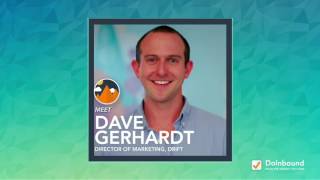
Dave Gerhardt from Drift explains how messaging apps let businesses talk to customers in real time instead of waiting for email replies. He covers why live chat beats traditional contact forms and how companies use it to close deals faster.
All right, welcome back to Inbound Agency Journey. This week, I have the pleasure of bringing on Dave Gerhardt from Drift onto the podcast. Dave, you have a voice that probably a decent amount of listeners are going to recognize from your days at HubSpot and also on the Seeking Wisdom podcast. So welcome into Inbound Agency Journey, man. Glad to have you.
Thanks for having me. When you reached out, I was excited to do it. You've been writing some good stuff and saw you gave us a shout out the other day. So I appreciate you having me on and I'm excited to be here. Hopefully it is a familiar voice, but it's always fun to do stuff like this, so I'm here.
Awesome. Well, I want to get into. As we go on here, we'll dig into specifically what you guys are doing at Drift and then kind of on a higher level live chat, which is a topic that's come up a lot in conversations lately in and around the podcast. But before we get there, talking about your background and the time that you spent at HubSpot, you just want to kind of give us a quick rundown. This is the 92nd version, however many seconds it takes. But your career path to get to Drift. And then we'll dig into Drift a little bit more from there.
Yeah, sure. So I sum it up by saying I've spent the first six and a half, seven years of my career just happened to work at SaaS marketing companies. And that's a product of. There's a bunch of really great, you know, B2B marketing companies here in Boston. I actually started off my career right out of college. I was a. I worked at a PR agency. So I started off in marketing communications, and then from there I went to Constant Contact. That was the first, you know, SaaS marketing company, public company, amazing learning experience there. I worked for three years there. I did marketing communications, and then I was on the product marketing team. After Constant Contact, I did a brief. I spent a year at a company called Privy, and that's where I met Mike Volpe, who was a CMO at HubSpot. He was an investor and advisor to us at Privy and had an opportunity to join his team at HubSpot in 2015. And on the side, I had started my own podcast called Tech in Boston. Just had wanted to do a side project that I went around and I interviewed founders and CEOs of companies here in Boston and that thing started to blow up on the side and it really taught me, like, how to do marketing on my own for the first time. And so Mike actually hired me at HubSpot to launch their podcast, the Growth Show. And then after about a year of doing that, I met David Cancel and Elias Torres, the founders of Drift, and just was blown away by them and their vision and they were looking to bring on somebody to run marketing and be their first marketing hire. And fast forward 18 months later, it's already been an amazing ride and that's where we are today, man.
That's a great journey. So the SaaS being with all these SaaS companies, that was not intentional from the beginning. It just kind of happened from where you got started.
It was definitely not intentional. And I would have a hard time believing anybody who says that that they were. I mean, like I'm, you know, like I grew up and I, all I wanted to do was play sports or be in the NBA, but I'm, you know, a fight, you know, five, eight or you know, pitch in the major leagues or be a professional golfer. Like I was, I wasn't like a 16 year old kid sitting there dreaming be like, man, one day I'm going to be in SaaS marketing. But yeah, so I really got into SaaS when I was at Constant Contact. I had no idea, you know, I didn't really know what it was or business, the business before. And it was there that they had just acquired a company and I was working on the PR team and so my job was to like manage all the communications and press around that. And so I had to do a ton of research and really learn about these, these founders and the team. And like, that's when I really started to get interested in entrepreneurship and SaaS businesses in general and just kind of was able to dig in and just learn a ton from, from everybody there and started reading, you know, TechCrunch and Techmeme and those every single day and just kind of opened me up to then at the time HubSpot was blowing up around Boston and so I realized that that was kind of the stuff that I was interested in and was lucky enough to find a home at a couple of just awesome companies right here in Boston, where I'm from.
Yeah, man, that's awesome. It's crazy how things transition and to hear your path. But also Drift has had from afar what doesn't look like a completely linear path from getting started, figuring out exactly where the product's going. And then now that, now that there's clear product direction where you guys are going, it seems a lot more linear from the beginning. Yeah, I mean like that initial period.
Part of that is like I think the mission, the mission actually has never changed. So when David and Elias left HubSpot to go start Drift, you know, they always had this vision of like, you know, we've always, the two of them, and I'm speaking as them is like, you know, their, their thought was like look, we've always built things that were in the, at the intersection of businesses and customers. And so they knew they were going to do something in that space. And then what happened right around the same time is this was in October 2014 when they, when they raised their money messaging, it just exploded. Right? This is like an every team started to shift over to maybe they were on hipchat, but most companies were using Slack. Slack now messaging just like absolutely started to take over our lives, you know, even more so like than it did before in 2014. Looking back now, that seems like fore ago but you know, not everybody was using messaging then and they saw that as a big trend and you know, they weren't 100% sure of which form that it would, that it would take, but they knew that this would be a very real thing that would like change the way that we did marketing. And so, you know, it's taken a little while to like for that to really crystallize and you know, we've had that vision from day one. But you know, slowly more and more businesses have started to figure out this is a very real thing and it's time that we make a change too. And the last year at Drift has just been absolutely incredible to figure out exactly what the problem that we're solving is. But that was also part of the luxury of those guys being two well known founders with a reputation of building companies together that when they raised money they knew, hey, we don't necessarily have the perfect idea, but we're going to figure it out by doing what we do best. And that's go out there and learn and talk to customers.
Right? Well, I'm glad that you laid it out like that because I think that's an important point to emphasize for any business model, not just in the SaaS space, but understanding what makes you different and figuring out the mission that you have and the customer base or audience that you're trying to help and then adapting the services to that. Messaging didn't have to be what Drift became all about or one of the central pieces of it. It could have taken a lot of different forms. I think the same thing in the agency space. You can't just get locked into, listen, we're Just going to build. There are plenty of agencies who've died by sticking to. Listen, here's what we do. We build static HTML websites for people and never adjusting to, like, hey, our mission is actually to help our customers grow their businesses and the services. What that looks like may change.
And this reminded me because Mike Volpe, the former HubSpot CMO, he's actually still really close friend to us. He's an investor in Drift and he's an advisor. And so I'm lucky enough as a marketing person to be able to have him to bounce things off. Off of. And we had him in our office this week to just kind of hang out with the team and just share a bunch of stories. And, you know, the one thing that I think he. He got right, more than so many other marketing people, marketing leaders that I've seen, which is a great lesson for agencies, is like, giving his team the power and the freedom to, like, run tests and fail, right? Because the reason that his team was so successful wasn't because they invented anything brand new, but they were just willing to try new things. And that seems so obvious and corny, but, like, how many people are doing that? And so from an agency perspective or marketing perspective, it's like, let's try video, let's try podcasts, let's try building websites, let's try selling Snapchat filters, let's try doing events, like, and giving people the freedom to, like, figure those things out, knowing that they're not all going to be a success, but really the goal is, like, to be early. There's such an advantage if you're the first mover, if you're early on one of those channels. Like, they started a podcast, HubSpot TV, back in the day. You know, Mike's like, first or second year in the company when nobody was doing podcasts. And so as a result, they all look at him and say, man, you. You basically, like, invented podcasting. But he'll tell you, like, no, that's not true. They were just one of the first people to hop on that channel in the marketing space, right?
No, I think that's awesome. I think that kind of shines through into a lot of the different things that you guys have done and are continuing to try. Like, you can see that philosophy echoing through. And what you guys are doing at Drift, where you've invested in content from the beginning, but then you guys launched the podcast video is a push for you guys right now. You've been active on Snapchat and on different and new social Platforms. On the marketing side, how do you, as you're, as you're testing out these different mediums and choosing different things to invest in, how do you kind of pull that whole pull all those different experience together into a coherent strategy? Dave?
Yeah, so, like, we try not to plan. So we try not to get so rigid in the planning. And we will sit down and talk about the big themes that we want to get done this month. So right now it's like the end of March. Right. And so we're thinking about what are the three to five big things that we want to get done in April, whether that's an event we're running, update to the website, you know, two or three big content themes. But we. What I. What happens, like I started to notice, happen to me all the time is I'm super type A and so I try to plan everything. And then whenever you get a new idea, especially as a marketing person, I always just fall in love with the new thing that I'm working on. And so what would happen is I might create something and then I'd be like, okay, I'm working on this for Tuesday. And then I have another idea and I'm like, ah, I want to do that thing for Tuesday. And so we've tried to just like made that part of our culture and part of the marketing team here at Drift. And so we have a plan, but it's less about, you know, this thing's gonna go out on this day in two weeks from now. We might plan things within a week, but looking a month or a quarter out, we just try to pick a couple bigger themes that we're working towards.
Right. Yeah, that makes a lot of sense. And that lines up with one of the operational models that's been really growing the agency space, the EOS entrepreneurial operating system, and these themes of quarterly rocks, like, you've got these big things, they're going to be smaller pieces that aren't always known. So, like that. And you guys have talked a lot about having specific goals, the one thing, or having a singular goal and singular focus, and ultimately everything needs to add up to be impacting those numbers. And I think that measuring results is. If you're not going to have every single activity planned out in an action plan in either way, you need to. But measuring results and understanding tracking progress as you're moving towards that, I think is a big key here as well.
Yeah. And this, you know, honestly, a lot of it comes from. I'm lucky enough that my boss, David, our CEO, he doesn't care about the vanity metrics. He, you know, he gets marketing in the sense of like, he's like, he's like, dude, I don't care if six people read our blog, if five people download our podcast, but if you can deliver enough leads for sales to hit their number, then great, we're in good shape. Right? And he, he obviously knows, like, that doesn't work. It doesn't work like that. Like, we need to have a blog and we need to build a brand in order to get people. But he's not like hammering me on like, what's the ROI of this podcast episode? Or like, how many leads did you get from this specific blog post? So we really do try to, as a marketing team and just a company, you know, report back on the one or two key metrics that really matter. And at the end of the day, that's revenue and new customers.
Right? Yeah. Makes a ton of sense. Well, Dave, let's, let's move the conversation a little bit into live chat because that's where we've had a lot of questions here recently, is a lot of agencies. So I'm just going to paint the picture for you. We'll see where this conversation goes.
Sure. Can I start by telling you that the term live chat makes me itch.
Itch. I love it. Tell me why.
I don't know. Live chat, to me, like, granted, that's what a lot of people know it as, but live chat to me is like, you know, what, what existed like 10 years ago. Or live chat is like when you go to comcast website to try to write in, like. So we're trying to, we're trying to reposition live chat a little bit, but that's definitely what people know, you know, know it as. But live chat is what sales reps hated because it was very reactive. And so like no sales rep wanted live chat because what ends up happening is you just get this flood of support questions and live chat is typically a support channel. So there's my, there's my two minute rant on live chat.
Well, I like it. So I haven't thought about it from that perspective, but I've always thought the name was a little bit oxymoronic because, like live chat, like, is it a chat if it's not live? I'm so confused. Isn't that just email at that point? Like, but exactly. But anyways, whatever. So whatever we call that thing that everyone else calls live chat, whatever we choose to go.
I had to say that because if I came on this Podcast and our team heard me being like, you know, I love live chat. I would get killed.
We got to spread the word, we got to start the movement.
That's good.
No more live chat. But agencies are realizing this is, this is obviously what customers prospects, this is what people want is they want to be able to communicate with you right now and not have to wait not to fill out a form, schedule a call and then try and jump on a phone call when they could just get an answer right now. So that's what people want and agencies are recognizing that. But the picture is I'm an agency with five to 10 people on the team right now. There might or might not be one dedicated person in sales. And the holdup is, first of all, I'm not 100% sure what platform to use, but largely who's going to take point on this and how are we going to make this feasible for us to actually do and do well? We want to get back to people who deserve our attention quickly. But everyone else is just asking random questions about this blog post that we published or whatever. That just seems like those requests are going to overwhelm us. I'm sure that you've heard that before and that's a part of, I mean even some of the stuff that you guys are building. But what do you tell those types of. And obviously that's not in like any of your account based marketing stuff. Those the 5 to 10 person agency isn't the target. But how would you respond to those people listening?
Well, I think first I would rewind back and I think it really starts at just thinking about there's a disconnect, right? So as people, you and I and people that run agencies, like not as our, not in our business, but like as just humans, right? Like we expect answers in real time and we expect things to be easy. And we expect because we use messaging all day like we expect to be, that's how we communicate. And so when we go to a website or we deal with a business that doesn't match the way that we communicate as people, we get frustrated, right? Happens to us all the time. Like a couple weeks ago we'd start to get more people on our webinars. So I needed to upgrade our webinar software. So I go to the website and the only option was for me to call sales and I'm like, these guys already have my credit card. Why can't I just message them right now and say, hey, I need you to add 200 seats to this. And it didn't happen. And that was so frustrating. But then, like, we all go to our jobs in sales and marketing or running agencies and just business, and we rely on all the methods that we hate. Right? So this is why, like, something has to give because traditionally we've had to deal with this. Because you're exactly right. Like, oh, I don't want to talk to everybody. So the solution has been throw up a form or throw up gated content or fill out this form and wait until I'm ready to get back to you. But now, like, customers today have all of the power, so the balance of power has completely shifted. Where, you know, forms and nurturing and all that stuff and waiting to talk to sales. Those are all company problems. Like, those aren't customer problems. And really the solution is being customer focused and matching your business to the way that customers actually want to communicate. So I just wanted to start there because that's kind of the core of the way that we think about things. Drift. And that's the big disconnect that we've seen and why the company exists in the first place.
Right? No, I. I totally agree. We all know what we like. And then from. From different perspectives, then we want to impose other standards for other people.
Totally. And so, and so to answer us. So to answer your question on, like, how do you. How do you solve for that? Well, there's. There's a couple different ways. And the thing that we built in Drift is drift gives you a dial to control the volume and the quality of the leads that you're getting. And so maybe you do want to talk to everybody that visits your website because maybe you don't have a ton of traffic or you don't have a ton of traffic, but it's really high value. You have a high contract value. And the people that visit your site, they have to go out of their way to find you. So you do want to talk to everybody. You turn the dial all the way to the left or you turn the dial all the way to the right and you say, I only want to talk to the 10% or the 5% or the 1% of people that come to my site. And that could be maybe your list of already your list of existing customers, or it could be a list of people that you know are coming from certain domains, or it could be list of people that are just based on firmographic data like revenue or company size. And so, like, this is why we don't like talking about live chat. Because, you know, the thing that's different is, like, now, now, messaging has gotten so good, and the tools that we're building at Drift, you know, specifically, is like, you have the tools to actually manage the quality and the quantity of the. Of the conversations that you're getting. So I think that, you know, that's. That's where I would start. But, like, the basic answer is like, even just to take Drift out of it for a second is like, just really think about, you know what? I think people underrate the copywriting and the call to action on messaging when they're using it on their website. And so I talk to a lot of people who say, I don't have enough website traffic. I'm not getting enough engagement. And the example that I always give is, I bet you if you went to your website and you changed the call to Action to say, I'll give you 500 bucks for free if you start a conversation with me right now, you're going to actually get people writing in on your site. So I think the principles of marketing still apply, and you need to figure out where the best places for you to have messaging across your website are to start and what you're trying to accomplish. Of course, if it's a sales channel, you don't want to have it on every single page, Right. Maybe you only have it on your pricing page, or maybe you only have it on your pricing page on the third time that somebody visits your website. So there's a ton of flexibility around, like, when you want this thing to appear. So it's not just like you're opening the floodgates for the entire world to.
Talk to you, right? Yeah. Well, that makes a lot of sense. And I think that that is almost all like, most of the chat platforms that I'm familiar with have that kind of functionality where you can pick and choose what pages to throw it on.
Yeah, it's. This is like. It's like if you're. If you're in your house, right, and it's freezing out and you open the window all the way, what's going to happen? Right. Your whole house is going to get cold.
Right.
It's the same thing. It's like if you have a lot of traffic and all of a sudden there's a way for people to contact you directly, then they're going to do it.
Yep, absolutely. Well, let's move out of. Away from the hypothetical space of if you were an agency, how would you think about this and into how you guys handle live chat internally, not in terms of the filters you have set up or necessarily like, here's what pages this is on. But in terms of someone on whatever page it is, we can, we can pick a specific example or just go vague. Someone starts a live chat through Drift with you guys. How does that get routed? And what is. Are there any goals around response time? Or what are kind of the guidelines internally that help you figure out how that gets taken care of and resolved?
Yeah, so it starts like the first question that we ask, you know, is, and this gets done by Drift, obviously, is, you know, is this a cut? Is this a customer? So is it a paying customer who should be routed to our customer success team? Is it a free user? We offer different support. So we try to get back to free. You know, we have thousands of free users on Drift and we try to get back to them within a day. Or is it a sales, Is it a good lead? Is it a target for us? So free people go into one bucket, customers go into another bucket, and then sales leads go into this middle bucket. And so, so just to give you an example, so we know all the email addresses of our customers and so those conversations will get routed to customer Success. That's a little easier. But really just to use sales as an example, we've just shifted our entire culture and our entire team to focus on real time selling. And so here's an example. Last week we launched a new feature on Product Hunt called leadbot. And Product Hunt, if you can do it right, can drive a ton of traffic to your site. And we got just around 7,000 unique visitors just specifically from that page on Product Hunt on the day of our launch. And so volume was, was way up. But that day we had our sales team just literally hanging out on that page and they booked 34 meetings with Enterprise level businesses. So that's people, you know, that would be paying us like $1,000 and above in real time from people who saw that launch. And that's like, to me, that was like, oh my God, this thing is so real. Because that was the most. As a marketing person, I'm like, wait, this is like direct response marketing. Again, we did something, people were on our website and sales was there to help them. And the example that we use is like, you wouldn't get all these people, like if you had a brick and mortar store, you wouldn't get all these people into your store and then ignore them when they were there. Right. But that's what we all do with all of our marketing. So with Drift, our approach is like, okay, marketing's job is to get people into the store. And then once they're in the store, it's sales job to tell them to talk to them and make sure they can find what they need.
Yeah, I think it makes a lot of sense. And the launch thing, we've seen that play out internally here at Do Inbound. But I think that the launch itself, that's just one kind of short term ROI example of how powerful it can be. But you can even just targeting specific pages and specific users or from specific locations. I think there's a ton of potential there.
Yeah. The other thing is like we can see, you know, we, you can see like if you're inside of Drift, you would see exactly where, you know that you know the domain and revenue of any of these companies. And so we would be able to say, oh, this is somebody that's on our target account list. Or I know that this is Brendan's lead or I know this is Danielle's lead. And so, so we're able to just ping each other in Slack, let people know. And so the sales team now instead of dedicating X amount of time in their day to making calls, now they just dedicate that time to using Drift and reaching out to the people who are already on our website. So they have the same hours in the day. It's just so much more efficient and they don't have to do that thing that everybody hates, which is pick up the phone and cold call.
Right, right. It makes a lot of sense. A couple specific questions that I think that will probably be thought by people listening to this. But I'm not sure the preface is. I'm not sure how important they actually are. But I hear these questions a good amount.
Sure.
The first one is, let's take the sales leads for an example. Is there one point person at any given point of the day? So maybe schedules rotate or whatever. Who? That's the person when a qualified lead comes through, who you want to talk, you want to have a conversation with, they're clearly the first person who are going to be jumping in and responding. Or is that a little bit more loose among the sales team to communicate through that or do they get auto assigned to specific people?
It's actually not a person, it's the bot at Drift. Inside of Drift there's a bot, we call it Driftbot and the bot will actually be the first to respond. So I think earlier you mentioned how do you set expectations around response time and all that. How is the bot is able to hop in and say hey when somebody says hey back and ask who they're looking for and then be able to assign that lead to the right person. But also we do have, we have somebody on our, on our sales team, Connor, who does, you know, spend a good, a good portion of his day like you know, responding to some of those, those better leads. But what we've done now is just set expectations with the messaging and the bot. Like, hey, what's your question? Somebody will get back to you. Right. And so the bot can help route those people to the right. Right. Reps on our team or actually just do the whole qualification process for you. And so that way if we are going to tap somebody and are, are going to grab a sales rep in the middle of the day, we know that this is a, like a conversation that has a high propensity to actually turn into a real sale.
Right? Yeah, that makes a lot of sense. And I think that having, having Driftbot, that's one of the things that sets you guys apart in this space. And some of the automation stuff that you guys are building out right now is really powerful. But to have that and automatically parse through what people need and what they're looking for and start to set some of those expectations I think is really helpful. And that's a great tool.
Yeah. And it really just starts with. It starts. All you have to do is ask the same questions that you would ask on a form. So how many, which industry are you in? How many employees do you have? You can ask that all but have it inside of a conversation. And we've been able to see people basically triple the amount of engagement when they're using it in a conversational interface versus having to send people to a form.
Right. Makes sense. I have two also relatively technical questions here before we wrap up, Dave. One is. Oh, one of the, I know get worried. One is are there any messages on specific pages? I guess like the specific way that you ask a question or what. The actual message that pops up in that is in the chat interface is that just kind of creates non proportionate disproportionate amount of conversations, has really good returns based on either maybe not the phrasing but just like the way that you're setting up that conversation rather than just the classic hey, do you have any questions chat here?
Yeah, I don't, I hate not answering this but that's like asking me like which what should my email subject line be like? I don't know, I have no idea. Right. I don't know what email you're sending. I don't know what the goal is I don't know when you're sending it. And so sure, I could, I bet you right now I could spend 20 minutes and write, write headlines that get, you know, 70% click rates on all of our pages. But is that what we really want, is that it's going to say, hey, click here, I'll give you a free slice of pizza. Right? Like, you know, I could make any stuff like that. And so, and to me, this is like really the reason people ask this is the same. It's, this is like the time tested thing that they've been asking forever, which is like, which time should I send my email? When should I post on LinkedIn, when should I post on social media? How long should my headline be? It's like it goes back to all that same stuff. And the answer is like, I don't know. There isn't a cookie cutter approach. You have to do what's working. And I've seen some of our customers that have literally the most generic messages on their website, like, hey, let me know if you have any questions. And they're telling us like, that's a sick, they get 60% engagement rate. And I've also seen people that, you know, a message that looks amazing, copy is great, it's in the right place and they can't seem to get people to click on it. And so I've seen both sides. So I don't want to cop out and not answer your question, but I think that's really just comes down to, you know, in marketing, like what do you, how are you going to figure out that problem? Like, marketing really is just problem solving. So don't rely. If everybody tells you that the best time to send an email is at 9am on Tuesday. Why would you send your email at 9am on Tuesday?
Right? That's the one time not to send you.
Exactly, exactly.
Yeah. Well, I think that's good and that's, I'm glad that you kind of went off on, on that and on a couple of these other things because that's ultimately like, these are the questions that people are asking.
But yeah, I just, people, I don't know. Like my, one of my biggest frustrations.
Is that's good and that's, I'm glad that you kind of went off on, on that and on a couple of these other things because that's ultimately like, these are the questions that people are asking.
But yeah, I just, people, I don't know. Like my, one of my biggest frustrations is that we all look for this like cookie cutter approach. And it's like, here you go, here's how to get leads, here's how to, how to do marketing. And all of the best companies that, that I look up to that do marketing so well, they're so good because they don't do it like anybody else does. Right?
Yeah. It's just try. The ultimate answer is figure out who your customer is. Make an educated guess about what you're trying, about what would suit their needs best, and then try that out and measure the results and then try something else out and measure the results and keep going with whatever works best and keep making educated, educated guesses. Like that's ultimately all this is about. It's not that complicated.
Exactly, exactly.
That's awesome. Well, good. Well, so Dave, real quick here. As we're, as we're wrapping things up, I. You don't even need to plug these because one is. If you guys are listening and have not checked out drift yet, drift.com is the place to learn about the actual product Seeking Wisdom, which I think you guys have posts and notes, everything at Seeking Wisdom IO. Is that right? Yeah.
But here's the, here's my. This is a, this is a two second beef I have with podcasts. I love them. I'm a huge advocate. I just wish Apple gave us all a better way to get people to listen to podcasts. There isn't that one place I could send you to our blog? I could send you to our blog. I could send you to Medium, I could send you to YouTube. But at the end of the day, everyone listens in different places. So my call to action on the podcast is always. It's called Seeking Wisdom. Pull out your favorite podcast app and search for it and you'll find it.
I like it. Cool. Anything else, Anything else you want to hit on here as we're wrapping up? Any other places for people to follow you guys learn more about what you're up to?
No, I mean you're going to ask a marketing guy to plug. To plug my stuff. Obviously I'm not going to not do it. But you got the website, you had the podcast. Check out our blog. A lot of people come to us for our blog content. We have amazing team here who just creates content that we're really proud of. And our mission is to do marketing that, you know, other people would actually think is. It is interesting. Which I don't think a lot of. A lot of marketers have empathy today. So, yeah, that's it. I'm gonna, I'm gonna stop plugging my stuff. I appreciate you having me on. It's, you know, always good to meet new people and talk about marketing, so thanks for doing it.
Awesome. Well, thanks for coming on, Dave. We really appreciate it. And best of luck with drift.
Yeah, man, I appreciate it.










