How the Modern Marketing Manifesto Can Transform Your Agency
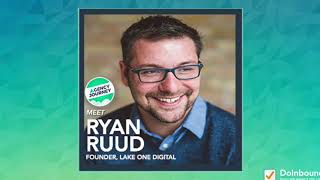
This is a YouTube video titled "How the Modern Marketing Manifesto Can Transform Your Agency" featuring a podcast-style interview recorded in December 2017. The host, Gray MacKenzie, interviews Ryan Rood, founder and CEO of Lake One Digital, discussing the agency's background, remote team structure, common services, and Ryan's Modern Marketing Manifesto which emphasizes data-driven decisions, creating great experiences, kindness, and learning from failure. The conversation explores agency growth, client relationships, and marketing philosophy.
How do you build an agency that allows you to live the dream that you have for yourself, for your family, for your community, for your team, while at the same time helping your clients knock it out of the park and doing it all profitably? These are the big questions that we tackle here on the Agency Journey podcast. I am your host, Andrew Demski. Now let's get to it.
All right, welcome into another week of Agency Journey. This week on the podcast, Ryan, I have my man from Lakeone Digital here. How you doing, Ryan?
I'm doing well. How are you, Graham?
I'm doing well. So I've gone back and forth on this podcast with a couple different formats. One is trying to give kind of my own little brief bio for people. The other one is just shut up and let them give the bio, which is usually the better, better solution. So if you could just take a second to introduce yourself and then let's, let's talk about before we even get into what Lake One Digital is today, let's talk about the background and just your career, how things progressed to bring you to where you are with the agency now.
Sure. So my name's Ryan Rood. I'm the founder and CEO of LakeOne Digital in Minneapolis, Minnesota. I started my career as a journalist, as a broadcast journalist. So I spent about 6, 7 years as a radio broadcaster. And if you Google me, you'll actually find some soundtracks out there as a top 40 DJ. So don't hold that against me. I took a hard right turn after my years as a DJ and as a journalist and pursued a passion for technology. So I started to marry up this love of storytelling with this really insatiable curiosity for technology. Right around the time as social media started to grab hold in the business world, as the mobile craze started, the iPhone had just dropped and I got an opportunity to work with a company here in Minnesota that was on the forefront of pioneering mobile advertising, specifically for mobile gaming. So they were one of the first companies that were working on kind of how virtual currencies inside gaming worked to incentivize advancing gameplay. So started a career working with a bunch of different technology companies here in Minnesota. High growth technology companies, really loved kind of the startup world, the passion of founders that led through the next seven, eight years. The last startup that I was at was a financial services marketing firm. When that was closing down, the board of directors there turned to me and said, what are you going to do next? I said, you know what, I don't know what I'm going to do next. And they said, well, our industry, financial services, specifically credit unions, we don't really get this digital space. And you seem to understand it really well and we could use your help still. So why don't you start a marketing firm and help us understand it. So that was the genesis of Lake One and it's evolved over the next four years to really focus on helping startups, social enterprises, and what I call growth driven brands seek growth through what I call data driven and our modern marketing manifesto.
Okay, that's awesome. So a couple questions before we get to the manifesto because I think that's really interesting and I want to dive into that. Maybe let's first start off with just what Lake One Digital looks like right now. We have folks on here who have huge teams. We have folks who are solo shops. People have in office or in person offices. People have remote teams. What is the team and what is the structure of the agency look like?
Yeah, so our team's remote. This also kind of lends to the culture. So the name of the agency, Lake One is an actual place here in Minnesota up in the boundary waters. So anybody that's familiar with Minnesota knows that there's the metropolitan, the Twin Cities, and then the further north north you go, you get lake country where our 10,000 plus lakes exist. And there's an actual place called Lake One on the edge of the wilderness. So for me, when I started the business, I really enjoy being able to take the time and have kind of this balance in life. So it was important to me to build the company to allow anybody that works with it that same flexibility. So our team's all remote. So we have five people spanning design, development, content and marketing generalists as well.
That's awesome. So the follow up question to that is kind of around. So for anyone who wants to see the website and this will be linked up in the show notes as well. But it's lakeonedigital.com and the one is spelled out on the services page. Ryan, you guys have nine different services outlined there. It's so hard to make that decision. I've been through that running our agency, Guavabox. Hey, do we put the 27 different things that we do here on the services page or do we say we help you grow and we let you kind of figure it out from there? How much do you highlight the tactics versus just the strategy? But as we're looking at the mix and it's a lot of kind of familiar digital agency, from strategy and search and social to the tech side and the content and Content marketing side of things. Talk to me about the, I guess in terms of the business, what are the most common services that you're providing? Is it typically, you know, a retainer or content or inbound type partnership where you're bringing all these together or is it more scattered one off pieces, website design? What's the breakdown in terms of business? So we kind of understand, and we don't have to get specific with we make $200,000 a year in this, so we make $500,000 a year. But in terms of the common services that you're providing, so we can help understand kind of what the common services that you're doing are.
Yeah, so that's a fantastic question. And we actually relaunched and redesigned this website earlier this year. And the debate or the question around how do we break down these services, how do we represent the work? Literally kept me up at night probably for four weeks. And it ended up getting to a point where I'm like, I'm spending way too much time thinking about this. And I looked at the business and I looked at the conversations that I have with clients and at the end of the day, almost 90% of the business comes from retainers. And I thought through how do my prospecting and sales conversations evolve? They either evolve where somebody reaches out with no expectation or assumption around a specific service set. They reach out with a problem. So we need more people to know who we are, or we need more sales or leads or revenue, whatever it is. I very rarely have somebody say, hey, we need email marketing or hey, we need paid advertising. So as I was thinking about that, I realized I'm just going to focus on the tactical components that make up the retainers so that people kind of see what the pieces are. So that by the time I have that conversation, I'm starting to talk about some of the same language that they've probably already seen on the website. So I looked at, I made that decision or thought about that decision as a, this is a touch point so that by the time I'm talking to them, if they've seen the services page, I'm referencing some things that they've already seen. The only thing on here that really are one offs is there may be occasionally some folks that engage specifically on technology consulting or paid advertising because we do have some capacity in the paid media space beyond just like paid search where some people have some additional needs, but that's a very small percentage of our services.
Gotcha. That's awesome. And so with most of the retainer clients are they all on similar programs. HubSpot kind of preaches their whole method of marketing and kind of gives you a baseline for what a retainer might look like or could look like. Are most of the servicing, I guess, the strategies and the tactics similar, or do you have a mix?
So for the most part, they are. What's kind of interesting is when I set out kind of to build Lake One, at the beginning, I didn't think of myself as an inbound agency. And as I. I think back on my career as a marketer, I never really thought about what I did as inbound. And I think a lot of it comes from my time as a journalist. I always kind of thought of myself as a brand storyteller, as somebody trying to attract rather than selling. So it was very natural for me, I think back to the mobile advertising company that I worked with back in 2008, 2009, when we were just starting to explain to people, what the heck is mobile app monetization? A thing that at the time, everybody was like, what? That's a thing? It was just very natural to me because of being trained as a journalist. So, yes, there's some components that fit very well and are prescribed, as many of the HubSpot partners are probably familiar. But then at the core of everything that we do or that we really work with our clients heavily on is this concept of what I call digital pr, this evolution of taking whatever your content campaign is, whatever the thought leadership is that we're putting on our client site to attract prospects and reaching out into the world, finding bloggers, finding media opportunities to also extend our thought leadership and really leveraging that. That's been hugely successful for our clients to the extent of like 400% growth in lead volumes. When we're able to get some of.
Those placements, that's awesome. I think that's what we're going to see more and more people going to. It's not a new strategy, but it's still not used as much as it. And we sometimes refer to it as like the piggyback technique, but basically, like, you take all this time and effort to completely organically try and build your own audience, or you can go try and piggyback off the people who already have an audience by adding value there. And there's a million ways that you can do that. So that makes a lot of sense. Ryan, I kind of want to transition from there into what you've branded as the modern marketing manifesto. And there's four pillars if anyone wants to check it out. Just from the website, you can click on the manifesto or click on about and then check out the manifesto. I think it's linked up from the homepage as well. But talk to us about the manifesto, how this came about, and then we'll hit on the individual pieces as well.
Yeah, so the manifesto came about out of my career, leading up to actually starting Lake one. As a young marketer, as I grew and took on leadership roles, I just kind of looked around and realized that there's a lot of noise and a lot of chaos in the marketing world. And I got a lot of feedback as my career evolved from people that really appreciated my approach to trying to measure everything and having a kind of a question and answer session when people would brainstorm around marketing ideas or tactics or big ideas, and always having kind of this question of, okay, how do we. How do we measure it? What kind of experience are we trying to create? And what's, you know, what's the lesson or the thing we're trying to learn out of it? What I realized out of those conversations was that that wasn't happening elsewhere, that people weren't experiencing that, whether it was from other marketing leaders that they had worked with in the past or other agencies. And for me, it just. It seemed weird because if you're. If you're going to spend. Spend money, you should have some sort of tangible way to either determine why something didn't work or to be able to measure what did work and be able to replicate it. So over time, I just kind of kept track of what. What were my kind of pillars in that. And as we relaunched the website that evolved into the manifesto and what the four pillars became.
Nice. That makes a lot of sense. I think anybody's scaling an agency eventually figures out. I think in the early days, it's just kind of like there's so many times I was just actually in a meeting with a prospect yesterday, and he was saying, like, I'm glad that I'm not. You know, I've been there as a business owner where you promise something to somebody and you say, yeah, we can do that, we can do that, we can do that. And then you go back and you're like, okay, now we got to figure out how to do all of this. So I think that's pretty common at the early stage of an agency is you're so focused on just trying to deliver what you promised to deliver, that the time and even the thought process sometimes to go back and measure, you know, we got all those deliverables we promised our job's done. Instead of realizing that's the goal is not getting out the deliverables you promised, the goal is producing results and eventually 100%.
Yeah, yeah. And that, you know, what you just said is so, so critical. I think back to, you know, being client side and working with agencies. The best agency relationships that I always had were the ones that were less focused on, you know, the volume of the things that they were going to do. And really actually just had a conversation with the CEO, former CEO of one of those agencies recently about this. And I remember him saying early in the quote, unquote pitch process, which, by the way, I hate pitch processes because they're all, they're all focused on. Yeah, yeah, yeah, we'll do all of that. His pitch process, which has always stuck with me, was focused on how can we be a partner with you and help you figure it out. Figure it out. Because it's not about just creating pretty things, but it's about everybody trying to solve the same problem and achieve the same goal. And it's everybody. Every journey is different for every business. That's the thing. And we're all, all trying to figure it out together.
Definitely. So I feel like what we're talking about here kind of is it's related to all four of these pillars, but number one and four especially. So I'm just going to read these real quickly. One is let data be your guide. Two is create insanely great experiences. Three is be kind. And four is fail up. I've got a million questions about these. I'm going to try and try and condense them down here. One is, is there a reason that these are in the order they're in? Is there a method to the four or was it like, we've got four points and here's how we're going to lay them out?
Yeah, no, there's definitely a reason for these. So first and foremost, I strive in my, in the decision making as a marketer, and I try to drive this thinking with our clients that data needs to drive all of our decision making. If we get stuck in a world where we nitpick colors and wordsmith everything and I can probably feel nodding heads right now going, amen, preach. Things never get out the door. And I'm a firm believer in progress over perfection and getting something out the door so that you can measure it and see what actually works, rather than somebody just having opinion that this is going to be better than that, because data is always going to be our bellwether. So that that's 100%. Why that's at the top of the list. And as you kind of filter down through this, the fail up is at the bottom here. That at the end of the day, as marketers or as business owners or as business people, we have more failures than we have successes. And the important thing is that as we look at those that we're in a position to be able to learn from those that that's kind of why that's at the bottom because that you can't fail without first trying something.
Right, that makes sense. The second pillar on here, insanely great experiences. Yeah, that. So obviously it's number one. Sounds idealistic. So I'm curious about how you, I'm sure that you hear that or people are like, oh yeah, well doesn't everybody want to do that? And some people are more driven towards that, some people are less driven towards that. So I guess I've got a couple questions. One is just kind of the general, can you tell us about what that means? But secondly, I'm curious to know one of the challenges that almost every agency runs into is as much as they want to do that, how do you extend that experience from the pieces that you control with the marketing, sometimes touching some of the sales to the whole organizational culture, you know, if there's a service or product being delivered, how do you touch those other pieces? So if you also kind of give us a sense of how far does that reach go, how do you kind of hand off that, you know, with any client you're not going to be involved in 100% of their operations. So how does that, how does that kind of get trans. That whole philosophy get filtered down to the rest of the. Everything downstream from what you're working on?
Yeah. So first I have to cite that source because that concept of great experiences or insanely great experiences is not my own. That is from the late great Steve Jobs, which was a mantra that he instilled at Apple. And I always appreciated to your question as an agency or as a consultant, somebody that's coming in to work with a client. I think it's something that needs to be a North Star at the beginning of the engagement and helping the client understand that back to helping them understand the role or the mechanics of marketing can only do so much. And that at the end of the day, you know, the description that I have here is that we can do all the right things in terms of getting the right message and the right channel message fit. We can get the prospect of the site, get conversion going. But if the experience sucks. We, as a marketer or an agency or a consultant, can't really fix that. So having that conversation early on, whether it's in the prospecting and the sales or in the onboarding process, is good in the sense that it helps the client know whether or not there needs to be some cultural change. So that's where the agency comes in.
That makes more sense. It's less about trying to fix what's broken and more of a filter for how you, I guess, select clients. Is, is this somebody who already cares about that? Are we aligned on that point?
100%. So let me just tell a quick story about how, how this is actually applied. So I had a client a couple years ago as a SaaS client, and this, we had this kind of conversation up front early on, went through the marketing operations process, continued to see incremental growth and lead conversion rate, but we just continued to see stagnant sales conversion. So we started doing some surveying with the leads and doing some auditing of sales calls. And what we realized was that the assumptions between the marketing and the product, once they actually saw the product in the demo, there was a misfit. So there was an assumption that the product was more. More advanced, more modern, some, you know, the better user experience. And what we realized was, okay, we should probably hold off on spending any more dollars right now on marketing because we're just driving people to a demo into a sales process where they then see a product that looks antiquated. And that, I mean, sometimes that's a hard part as an agency owner to actually say, you know what, maybe we should stop with the retainer right now, use these dollars to improve the product or improve the custom, and then go back to turning on the marketing machine. Because we know we can drive leads and sales opportunities into the business, but let's do it when we have a product that people are actually wanting to buy. Right.
That makes sense. That's a hard decision to make. I think that's like another level of maturation in the life of. Hopefully every agency owner is going from the point where it's, wow, we can make this much money to. It's like, hey, we're responsible for this spend that these people are investing in us. How do we give them the confidence that we're either using that the right way or telling them this? From our vantage point, this isn't the best investment for you to make right now. So that makes sense. And that's directly related to your third pillar here of be kind, treating people the right way this largely kind of revolves around the golden rule. Treat other people the way that you want to be treated.
100%.
That makes a lot of sense. Well, awesome. So. And I can see how, you know, the insanely great experiences. All this influences the work that you do with customers, but it also speaks to the own culture that you guys have internally in the filter by which people are brought onto the team and decisions are made. Is there anything with, with putting this together and kind of putting it new? Has there been anything about that process that's surprised you, either in it resonating with people or not coming up that frequently or changing? Has it changed decisions that you made or has it been more kind of a codifying the culture that was already there internally?
Two things. So one, it's amazing to me how I, I put it off for the longest time doing it and when I did it, it just having it there and seeing it in black and white became such a North Star for me and the organization. It's like once it's out there, it just reminds. It's a constant reminder of you, of why do we exist? And this is how we operate. The other part is the feedback on it. And I mean, this kind of language oozes its way through our content, through our proposals, everything. And the feedback has been extremely positive and kind of for all the same reasons that led to me actually drafting it, because people looked around and saw the same things that I saw in the years leading up, to me starting like one and to me documenting this, that, you know, why should marketing not be accountable? Why should marketing not be a business partner? Why should marketing not, you know, it's okay to fail, but if we're not failing and learning from it, what's the point? So it's been a very positive thing, right?
That makes a lot of sense. Well, this has been awesome. This has been a fun conversation for me, Ryan. I always enjoy learning. I've got questions. I could keep talking your ear off, but we are up against the time, so I'm going to go ahead and end the podcast here. But I really appreciate you coming on. And for folks who want to, number one, check out the manifesto services and the site, I'm assuming the best place to send them is to the homepage lakeonedigital.com yeah. Okay. And then for anyone who wants to follow you, you're just. Ryanrude R U U D Ryanrude on Twitter. Is there anywhere else that you direct people who might want to reach out or have follow up questions?
LinkedIn's a great place. I'm pretty active there as well, so.
Awesome. Well, Ryan, thanks so much for spending some time with us here. Really appreciate it.
Awesome. Thanks so much.
Want more great episodes like this one? Hey, I'm Gray MacKenzie, a host here on Agency Journey. I don't know about you, but sometimes I get a little overwhelmed when I find a new podcast. There are so many great episodes and great guests, it's hard to know which ones to listen to first. That's why we put together a list of the top 10 most downloaded episodes of Agency Journey. And you can get a copy of that list plus all of our notes and takeaways just by texting the word do inbound to 44222. Again, that's do inbound all one word to 44222. Standard text rights apply. You don't want to miss these great episodes. Text DO INBOUND to 44222. Now.










