How to Boost Your Content Marketing Results with Simon Thompson from Content Kite
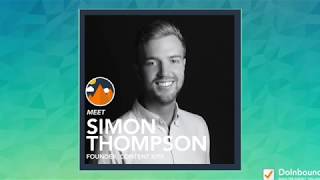
Simon Thompson from Content Kite discusses content marketing strategies for inbound agencies, covering niche targeting, creation, promotion, and repurposing to improve lead generation and marketing results.
Foreign. Welcome to Inbound Agency Journey. This is the show where inbound agency leaders share the strategies, shortcomings, and successes they've experienced in their journey toward building their dream agency. Now, here are your hosts, Andrew and Gray.
Hey, there. Welcome back to Inbound Agency Journey. This is Andrew, and I'm excited to be chatting this week with Simon Thompson from contentkite, and we're gonna be talking through some marketing strategies and techniques that you can employ to actually market your agency for a change. So many times it's the cobblers. Kids have no shoes here in the agency space. So I'm excited to dive in with Simon and chat about some techniques that you can leverage to actually start opening up your lead pipeline and moving things through the process there. So, Simon, welcome aboard. Would you kick us off by just sharing a little bit of your background story with the listeners and kind of let us know how you got to be where you are today?
Absolutely. First of all, thanks for having me, Andrew. Really excited to be here, but, yeah. So my background story, I started in the world of advertising and marketing and media in a fairly uninteresting medium, being print. So we were working on advertising campaigns for construction and architecture magazines, and we were getting in adverts for hexagonal screws that were being used in industrial complexes. So it's pretty dry kind of stuff. So I got out of there as quickly as possible. It was a good little resume booster, I guess. So that put me in a couple of roles that I was much happier in. Long story short, wound up at a company called Mi9, which in Australia is a joint venture between Microsoft and one of the main broadcast networks there, Channel 9. And the combination of the two, they were the biggest media network in Australia. So we were working on content projects for l' Oreal and Nissan and BMW and Mondelez. So that was a pretty good place to be. Really enjoyed the role, just sort of as a side hustle. I was doing this audio editing work because that's sort of my background. I had a musician background and I was just helping out a couple of friends in bands and friends who had podcasts, actually, and just doing their audio work for them. And I sort of. I really enjoyed the, I guess, the entrepreneurial aspect of it and, you know, just being able to, you know, work my own hours. If I didn't have the day job, I'd just have complete freedom with that. So one day I just decided, yep, I'm going to give this a good go. And obviously I had this background in marketing, so I had A really good idea of how to acquire customers and things like that through content. And so I started doing that and what I sort of didn't really think about at the time was in my day job we had huge teams of writers and strategists and we obviously had a huge network to promote the content over. And all these things I didn't have in my little business. So the time commitment of it all became very apparent. And so I noticed a lot of other companies were having this problem because a lot of the solutions involved, you know, things like upwork and finding a freelance writer and that handles the writing component of it only. And that in my experience is about 30% of the time commitment they're actually getting the content created. So there were all these other components like promotion and strategy and coming up with the topics and repurposing the content, et cetera, et cetera that weren't getting covered by, you know, these providers unless you're going with like a full blown agency and paying like retainers of five to $10,000 a year. So that's where the idea for Content Kite came and yeah, sort of slowly transitioned towards that over about a three month period. And then yeah, it became, you know, my full time job after about three months. So it's a fairly long preamble. But yeah, that's my background.
No, that's fantastic. It's great to, I mean you kind of come to the space. Understanding the pain. Can you share with me a little bit more? How did you transition from just audio editing for bands and some podcasts into kind of an agency for agencies on the marketing side of things? What did that journey look like and how did you realize this niche?
For sure. So the first part, how did I transition from audio editing to marketing? I just enjoyed the marketing more and to be honest with you, it was also a bit more lucrative and there was more creative work to be done. Audio thing, while it is kind of cool that the process gets fairly repetitive the more and more you do it and why we decided to work with agencies. I mean so my background when I was working at the Digital publisher at Mi9, we were primarily working with the agency as opposed to the client. With the client would get involved from time to time. But I sort of knew how agencies worked and like the kind of people the work at agencies. So I had a fairly good, you know, idea of who the audience was. And secondly, it's just an easier sell given the average price point of an agency project. So I mean if to, you know, to try and Demonstrate an ROI to a SaaS company that's charging $20 a month. We need to generate a hell of a lot of business to make that, you know, to get a positive roi. Whereas for an agency, like if their average project at a minimum tends to be like $5,000, but you know, usually much, much higher than that, 10,000, 20,000, up to 100,000 and more than that sometimes, then if we can say to them and demonstrate to them that hey, we just need to get you one really solid decent lead per month, then this is going to be really profitable, then you know, that's going to be a much more fruitful venture for all parties involved. So that's why we decided to niche down.
I think it's fantastic. And that's something that a lot of agencies are scared to do. They're scared to niche down because they think that they're kind of like clearing work off the table rather than adding more work onto it. But I think like the point that you brought up of like looking at the value of the lead that you're going to provide, you're going to generate and weighing that heavily into what industry should we choose? Because you might have success in the past in you know, say a SaaS model or like even like, you know, more like a plumber's model or something like that, like more local based businesses. But if you have that alongside of something that's a little bit more high ticket, where a lead might be worth 5 or 10,000 instead of 5 or $10, that's a huge consideration to take into play.
For sure. And yeah, it's a constant battle we have with new clients because a lot of the work that we have to do is around how are we positioning the content for these agencies. And a lot of the time we have these fairly in depth kickoff calls when we start an engagement. Cool. Who's your ideal client? And in more or less words, it's anyone with a checkbook. So we have to do a fair bit of work of deciding, you know, they don't have to exclude any clients if they don't want to. But we frame the question is who's your best client at the moment and who would you like to continue doing more work with? If you could only work with one type of client, who would that be? And then we tend to focus the content around that.
I think it's a great place to start. So are you like, aside from just like the monthly deliverables, the content that you create for people, what kind of, I mean, I imagine a Lot of legwork needs to go into the strategy component, like walk us through that kind of kickoff call and how do you begin to narrow them down on enough of a point of focus where you have kind of a target that you're going after and enough, enough of a unique position to set them apart from all the other agencies out there, even just the other agencies that you're creating content for. I think it would tend to get repetitive unless you really find a way to hone in on what makes you different from everybody else.
For sure. Yeah. And you're not the first person to ask that it doesn't tend to get repetitive because I think a lot of people might think that if we're working with agency after agency, we're going to be writing about web design, web design, web design, web development or app design over and over. And that's sort of not what we recommend doing if you're an agency. So we recommend writing about the problems you're customer has first and you know, if it should relate to you in, in some way. But that's not the primary focus. So for example, if you're an agency and you're creating apps for the, I don't know, for a furniture store or something like that, that's a terrible example. But run with me. You shouldn't really be talking about the progressions in the coding language of Swift or something that's really technical because a furniture store owner, it probably isn't going to find that particularly interesting. And the audience of a furniture store isn't going to find that interesting. We always say write about the problems your customers are having rather than about yourself. So I mean, to answer your question of what do we do in the kickoff call, we're very upfront that we're never going to know your business as well as you do. But before we get to writing a single piece of content, we'll have a month of calls and industry research and going over competitors content and seeing what the industry publications are writing about. So it's a very thorough research process. And then we tend to follow this model of, it's called a hub and spoke framework, which we didn't come up with, but that we follow for most of our clients. And it's essentially just you come up with a central idea or topic or a solution to a problem that your business solves and then you schedule 12 topics around that and you sort of keep that going. So if you think of, yeah, let's take the example of a furniture store, you know, it's like what Are the problems that someone buying furniture has. So terrible example. Again, but start with the central idea and create the topics around that rather than writing about what you're doing within your own business.
That's a powerful transition because again, the content that you're creating, you're putting out there. The idea is put that at the awareness stage because that's when your prospects are thinking about the pains and challenges, trying to come up with the solutions, and you want to be there providing the help for them as they're walking through that pain. Can you share with us, Simon, like the common things that you see agencies messing up? I mean, we're all like, if you're working with a marketing agency, they should or a digital agency, they should be pretty savvy at marketing. So why do I need to partner with somebody else? But I know I see it all the time on agency websites, like, tons of mistakes that people are making. What are like your top three or four most commonly seen things that agencies are missing that you kind of pull out of those initial kickoff calls?
For? Sure. Great question. So the first one is what I mentioned just before writing about themselves as opposed to the problem their customers are having. So as a rule of thumb, we say your content should solve the exact same problem that your solution solves, but it should be in the customer's words. So that's the first one. The second one is not probably leveraging the content and creating a way for readers to come back into your realm of content. So the best way we know to do that is to create these content upgrades, which for listeners who may not know what that is, it's basically a really specific lead magnet. And if anyone doesn't know what that is, it's basically a downloadable piece of content. So a gated piece of content that you offer in exchange for the email address. So if you're writing a post about top 10 apps for e commerce stores, you might have a content upgrade of a downloadable cheat sheet or checklist or something like that that just sort of summarizes the article and then people can download. And if people say, where's the value in that? What I would say is most people probably won't read your entire article in full, especially if it's 1000 words, 1500 words, they tend to skim it. And so if they see a downloadable takeaway that summarizes that article nicely, that can be fairly valuable in a lot of cases. And what we see is when you contrast that like the content upgrade with a more generic lead magnet, the email subscription rate can go up from anywhere between 2x to 10x and we've seen it go higher than that before. So it's really, really effective in collecting an email address. I mean, the benefits of collecting email addresses is probably the topic for another podcast entirely. But the main crux of that is you are giving yourself a way to continue to communicate with your customer or your audience. Because the likelihood is that if they come across a blog post, it's very likely they're not going to be super engaged with with your content on a weekly basis and just keep coming back for more. They've got other things to do. So if you've got them on an email list and you can keep reminding them of your content and keep them engaged, then that's a really good thing to do. So I guess if I had to sum it up in a nutshell, is give yourself the best opportunity to keep communicating with someone who's reading your content. And the best way to do that is to capture any knowledge.
Tons of upgrades. I think they, what helps them be so successful is the context that they bring to the situation. Like it's actually extracting some of the content from the article that got them to click and show up on your website in the first place. And it might be a few more minutes of extra work or an hour of extra work to put that together. I think it's definitely worth the time there. And that's the one thing like the agencies lack at least what I see from my perspective. I know this because I've done it myself. So you put together a piece of content, you work hard on it, you press publish and you move to the next thing on the list. But you don't really take the time to say like, how do I optimize this? How do I get the most out of the visits that this is earning? And then how do I go and then promote this to make sure that more and more people are seeing it over time?
For sure. Yeah, it's a really good point because when someone comes to your post, the only thing we really know for sure that they're interested in is that piece of content. So if you're offering like a generic lead magnet or saying, you know, sign up to our newsletter, that that's really like, it's really vague and generic. But if you offer something that's hyper targeted to that blog post, then we know that person's interested in the blog post if they're reading that blog post. So why not give them something tailored to that?
Now how about that third piece the promotion piece of it. What are some of the tangible strategies that agencies can start doing for their clients, but more importantly for themselves, to make sure that the time that they do spend creating content is we get the most value out of it by promoting that content? Well, what's kind of the workflow that you guys follow and what would you share there?
Yeah, for sure. So to preface this, as we mentioned before, the creation of the article is about 30% of the time commitment. The rest or most of that 70% that we've got left over should be spent on promoting the article. So for starters, assuming you've got an email list and a social following, send it to your email list and post it on your social networks. One little tip I would mention for sharing it on your social networks is do it more than once. Kissmetrics, I'm sure the listeners are familiar with, did a study on this and maybe we can link up to this in the show notes. But rather than just posting once on Facebook and once on Twitter and once on Google or whatever it was, they ran a few tests and they found that they could double the traffic coming from social platforms if they did it in a certain cadence. And so in this particular test, it was posting twice on Facebook. So once on Publish and once a month later, six times on Twitter. So on Publish, two hours later, the next day, the next week, the next month, and the month after that, and then three times on Google, they were able to double the traffic coming from social platforms. And I mean, that's obviously going to change depending on what your social following looks like and how engaged they are. But it's a pretty good benchmark to work off. The main objection we hear about that is I'm spamming my audience. And first of all, you should have a different headline and have a different take on it each time. But spamming the audience. People aren't following your social platforms as much as you may think they are. For starters, Facebook's only going to show 5 to 10% of everything you post to your audience, so they're probably just never going to see it. Secondly, honestly, your audience just doesn't really care if they see it again and if it's got a different headline. So yeah, I wouldn't have too many hang ups about that. The next piece of that would be earning another audience. So we call this blogger outreach, or you might hear it called influencer outreach or something like that, but it's essentially just trying to get you shared by other publications and blogs and influencers. So whether that be a link in a roundup post that they've got coming up or sharing you on Twitter or Facebook or whatever it may be. It's going to vary depending on who the blogger is and who their audience is. There's a ton of content about how to do this on the Internet and what it's looked like for most of the time it's been out there is you write an email and go, hey, I noticed you wrote an article about X. I just wrote an article about a similar topic. Let me know what you think about it or would love your feedback. Which is code for can you please share this? People get tons of these emails a day and there's not really any value being provided and they know that you're just trying to get a share out of it. How we've sort of tweaked that is, as we're writing an article, we'll start reaching out to these bloggers and influencers that we're linking to and we'll ask them if they can provide a quote or an additional piece of insight or an extra data point that may not have been included in their original article. And so what this does is it positions them as an authority and an expert within that article. So they're getting something out of it. And all they have to do is send you a 10 word email which you put into block quotes and say so and so from this publication says this. And so they look really good in that article. So that's great for starters, you get an additional piece of insight in your article and that's really good. But when you do eventually publish the post and you go back to that person and you say, hey, we just published the post, your quote is listed halfway down. Check it out. If your audience would find this valuable, would you mind sharing it? And they're much, much, much more likely to share that because A, they look like an authority and the expert in that article and people share stuff that makes them look good and B, they're invested in the article and you've already had that touch point with them. So you're not just going straight for the kill, you're sort of, you have some sort of a relationship with them and you're making them look good in your post. So the success rate of them sharing that article from, from that point is yeah, much.
Also like, they almost help you create the content too. So you're kind of pulling one layer. And I mean like a podcast interview style is kind of the same way where you bring a guest on, they talk for an hour and then you get to share the podcast they share with their audience. And you know, that's, that's been a really good model for a lot of people, ourselves included, because you're, it's a win, win, win. You know, you're creating content, you're speaking to the pain that your prospects are feeling and you're helping them solve that pain. And then you're helping promote your guests. So whether that's quoted in an article on a podcast video, whatever it is, I think that's a powerful strategy to kind of reach those pre established audiences that are already out there.
Definitely.
On the idea of like content repurposing, do you guys recommend anything beyond just content upgrades? Are there any other strategies, mediums or channels you guys are seeing success with right now that make it easy to help agencies get more mileage out of the content they're creating?
For sure. So, yeah, I guess to preface this, people consume content in many different ways. So using this hub and spoke framework that I mentioned before, that sort of means that each post we create. So let's say we've got 12 posts and they're each a thousand words. We've got 12,000 words on a particular topic. So that's, I mean, that's ebook material. So we always, at the end of a certain time frame will repackage that into an ebook. And some people just like the design and the visual elements of an ebook. And you as the content producer are able to offer that as a download in exchange for an email address. That's really great. People consuming it can download it, do whatever they want with it. But the crux of it is people like to consume content in different ways. Not everyone likes to go to a website and read a blog post. We don't necessarily do this with our clients. But if you have a podcast going, you can weave in the topics of your blog articles into podcasts or vice versa. If you've done a podcast topic on X, you can write a blog post about that. There's a ton of ways you can repurpose that. You can put things into slides. So there's a million ways you can do it. And you're going to attract different types of audiences depending on how you repurpose that content. So yeah, it's definitely something people should think about. Obviously, it's a ton of work to do this kind of stuff. So I'd say pick your battles and try and figure out exactly how your audience likes to consume content and then maybe focus on one or two mediums that you can Repurpose your content into. But yeah, it's super important.
I think the most important step to this whole process is the first one and picking out who are we talking to and what pains are they feeling? Because once you put like a laser focus at that phase, everything else gets so much easier because you now have influencers and specific people that you can reach out to and get quotes from. You know, you've got those people you can interview and bring them on and share and have them share with their pre established community. What if you're trying to go after everybody? You know, where do you start, what influencer do you start and how do you show them? Here are the other people I'm talking to. It just seems like the first step is the most important. And once agencies can get there and they know who they're trying to help and they know the questions that they're asking, they're going to be leaps and bounds ahead of where they were trying to reach everybody.
Yeah, absolutely. So I mean like to anyone who may say, I don't want to eliminate 90% of the audience, just remind yourself of how huge like how many people there are in the world. So I mean, you know, for us to focus on digital agencies, like I've just eliminated, yeah, 95% of other industries, much more than that actually. But there's still like probably hundreds of thousands of agencies in the world. Like I haven't, like there's no way I could ever service a, even a small fraction of all of those. So you're probably not taking out as much of the market as you think. I mean you could probably get ridiculous and go super, super, super niche. And there's like literally only like 10 companies and you may only get like you're only 10% of the competition in that market, but in most cases you're not. And I mean like you probably just have so many competitors as well. So if you're not specializing, it's really hard to sort of sell yourself in against someone who is specializing. Yeah. So I'd say it's a really important thing to do and it just helps define every other piece of your marketing puzzle, content especially. So yeah, cool.
The last thing I want to focus on here is kind of more of the operations behind how agencies go about delivering their own marketing. Obviously, if you're a young agency getting started, one strategy is you just wake up earlier, you go to bed later and you create content that way. Number two is you go and you hire a full time person to take point on that. And you know We've had tons and tons of guests on the podcast here. That said, when they made that switch, that's when things started changing is like the owner, you pull yourself out of that, you stop becoming the bottleneck, you invest in that, you see success there. And the third is to work with someone like you, where you kind of come alongside them just the way they would come alongside their clients. Can you kind of walk us through the commitment, the operational side of it? How does your team work alongside an agency to streamline the content creation process? And just what if someone's interested in working with a partner rather than hiring full time or doing it themselves? What would that journey look like for them?
For sure. So the first thing I would say is like, content marketing is not for everyone. If you're an early stage business or, you know, maybe you, you're getting all the growth you need from referrals and other channels, then I would say to you, don't focus on content because it's a really slow burn. And if you're as in, it's going to take three to six months until you start seeing results. It's a ton of work. And if you're outsourcing it, if you're outsourcing it effectively, there's a fair cost involved. So I'd say if you're growing at the rate you need to at the moment, then it's probably not worth focusing on. Content is really great in that it sort of smooths out this feast and famine cycle that a lot of agencies have. So, yeah, there's no one I would say content is bad for, but it just may not be the highest leverage activity that you can do at a time. So to answer your question though, how should agencies approach this? Yes, I mean, if you can, if you're able to focus on creating content and promoting it and repurposing it and doing all these things that we see as really important if you don't have other areas of the agency that you need to focus on. So you, you know, got someone handling sales and marketing and doing the client work and that kind of thing. Sure, you can do it yourself. And, you know, obviously you know the business better than anyone, so you'll be able to write really great content for the audience. Hopefully. Another option is hiring a freelancer. So, you know, using something like upwork or inbound.org or a bunch of job boards. Anyone who's done this before has, well, there's a 50, 50 chance, maybe more, that they've been burnt on this before because you don't know what you're getting. But the other piece of that is you're only covering, like I said, about 30% of this content marketing puzzle. It's just like if you outsource that to a freelance writer, it's not like, oh great, okay, now content marketing is done. No, there's still a ton of work that you have. So the third option would be to use a service like contentkite or to outsource it to a full blown agency who is going to handle all of these components. Because all of these other components, aside from the writing, is really, to use a cliche. That's where the magic happens. They need to be in place for content marketing to work. In our opinion and in our experience, the guys who do really well at content marketing, putting in a ton of time to promote it and repurpose it and create content upgrades and collect email addresses and do all that good stuff. So I guess the main point I would make is just know that it is a, if you're doing it properly, it is a huge time commitment or a fairly sizable cost commitment. But you know, if you are at a stage where you can put the resources into that, then it can be very, very fruitful for an agency that is going through this sort of feast and famine cycle that so many agencies do go through.
Well, Simon, thank you so much for coming on and sharing the tips and insight. I think there's a lot of actionable things that people can kind of take away from here and put in today, but also some bigger picture things that they're going to chew on and think about how it can affect kind of the growth trajectory that they're on right now. If anyone is kind of intrigued about what you're sharing, wants to learn more about what you guys are up to, what's the best way for them to reach out and connect with you?
For sure. So we actually put together a seven part email course that goes through all these elements, some of which we touched on. So creating a strategy and outsourcing it to a writer and creating content upgrades and promoting it, all that good stuff. So that's all in this email course which people will find@contentkite.com email course and they can sign up for there and get the first lesson straight away. If anyone wants to just send me an email simonontentkite, ask me anything about. We've talked today, we'd love to chat. Perfect.
Well, thank you so much. I appreciate your time and we'll chat with you later, man.
Awesome. Thanks so much, Andrew. Cheers. Thank you for listening to Inbound agency Journey. You can find the show's notes for Today's episode@doinbound.com podcast again, that's doinbound all one word.com podcast. If you enjoyed this episode, head over to itunes to subscribe or leave us a review of the show. Until next time. Remember, life is a journey. Keep moving forward.










