How to Build a Hubspot Platinum Partner Agency with Charles McKay of Synx
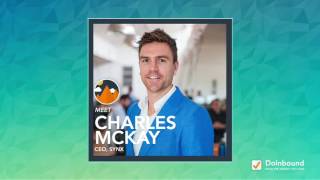
Charles McKay built Synx into a HubSpot Platinum Partner agency starting from a farm in Australia. He discusses scaling an inbound marketing agency, aligning sales and marketing teams, and the operational tools that made it work.
Foreign.
Welcome to Inbound Agency Journey. This is the show where inbound agency leaders share the strategies, shortcomings and successes they've experienced in their journey toward building their dream agency. Now, here are your hosts, Andrew and Gray.
All right, welcome back to Inbound Agency Journey. Excited to have you guys here and excited today to bring on Charles McKay from syncs onto the podcast. Charles, welcome in, man. Glad to have you here.
Thanks very much for having me, Gray. Pleasure to be on and looking forward to having a chat.
Yeah, well, I'm excited. So we're doing this right now. It's 5 o' clock on a Sunday afternoon for me here in Western PA and it's 7am in the morning for you. Now you're in Port Melbourne, is that right?
Yeah, that's right. So in Melbourne, Australia. And yeah, I'm in Port Melbourne, just right near the bay, which is nice and fresh for sort of kicking into the cooler months.
Nice. Hey. So, I mean, I think we all know, judging from the accent that you're probably an Aussie by birth, but did you grow up in Melbourne or where did you grow up?
Yeah, so I grew up two and a half hours west of Melbourne on a small farm. So we had a mixed enterprise property of about two and a half thousand acres. Wow. And yeah, so, you know, pretty much grew up in the middle of nowhere with a town. I think the town itself had about 100 people that lived in it and the community, you know, four to 500 or a little bit more maybe. Yeah. So very different to what I do today.
Wow. Well, I mostly want to talk about what you do today and your story getting here, but now you've got me all curious. So two and a half thousand acres, I mean, I'm assuming agricultural farm.
What are you guys doing? Yeah, so we had my grandpa's soldier, settled the farm in the 50s and after the war with my grandma, and they obviously started to clear, you know, clear the place out and clean it up. And it started off with mainly being a sheep property, so which led into fine wool merino. So that turned into a stud. And then, you know, as wool or the, the world progressed and people wanted more and more, we had to move into, you know, to feed the sheep. So that meant grain production and cropping. And then as the sort of 2000s came in and we also had a bit of beef, so a bit of cattle as well, and then some fat lambs. So fat lambs are, you know, meat production, sheep. And then, you know, started to move more into grain production with canola a lot of wheat and oats and. Yeah, but still have the sheep, you know, find more merinos. But yeah, so being a mixed business or mixed enterprise and where we were in the western districts of Victoria, you sort of have to do that. Although if I went out there today, there's a hell of a lot more acreage being farmed for grain and canola, etc. But yeah, in the, I suppose the late 80s as well, with the wool crash, it forced a lot of people to move more down the grain production as well.
Right. Wow. Wow, what a background. Well, that's awesome. So, yeah, this is kind of perfect. I mean, that's where we start anyways is kind of with your personal story. What gets you from a farm growing up there into running an agency.
Yeah, it's an interesting one. So after, I think I got to year 10 and you know, I was pretty much addicted to sport and I'm actually dyslexic, so the classroom and I were not the best of friends. I may have been a pretty annoying disruptor in the classroom, but I think it's sort of where a lot of the stuff that I do today has come from. And, and on the farm as well. And after I, you know, left school at home where I grew up, Lake Bolak, I went to boarding school and that was another step up and another challenge. And dad and I actually sat in the car park at school and he said, you know, what do you want to do? And I'm like, I don't know. But I'm not going home, that's for sure. I want to have a crack at something of my own. So we sort of said, right, you know, we'll put a 10 year plan in place that you're gonna build your own career and do what you want to do. And then if that doesn't work, you can come home and take over the farm. And then long story short, you know, I was actually overseas in 2007 and I rang home for my birthday and dad said, oh, we've had an offer on the farm. And I said, oh, is it good? And he's like, yeah. And I said, take it because, you know, at that stage I couldn't retire him. You know, the capital to get into the farm was way more than what I wanted to invest and just the return as well. The return on that investment is such a long term thing. So farmers are obviously asset rich, but money poor. It's, you know, it's hard to get cash. So, yeah, so then I moved to Melbourne and You know, I didn't, I didn't want to go to uni just because of my background and I'm such a hands on guy and what I love to do is find out how does someone does something and then cut it in half and make it easier because I think just because someone did Something one way 10 years ago doesn't mean it should be done that way today. And obviously that's happening everywhere now. But I always had that methodology. So whether it be drenching sheep to pretty much anything I do today, there's always got to be a simpler and easier way. And obviously technology led into that. I then morphed into an IT career and worked as a consultant for about four years and then moved my way into a large family business where I worked in a whole series of roles throughout that business. And before I finished up there, I actually ended up running their construction division in Queensland where I had 60, 60 guys under me and huge budgets and you know, project managing, 60 story towers to be painted. And from that I then morphed into starting an IT business. Just because I always wanted to do my own thing. I suppose growing up on the farm I knew that I could do my own thing. I didn't have to do what everyone else did. I started an IT company and learned a hell of a lot after not doing a lot of these things, but got that going. But then three years into that, I started an entrepreneurial journey. And I didn't self sabotage the business, but I probably did. I just lost the passion. After being in technology and it for nearly 15 years, it was time to do something new. And the biggest theme I saw throughout this entrepreneurial journey was every business has got ideas, but all they do is talk about their product and service. And not many people could sell it or market it very well. And that's where the inbound journey started. So I started looking around at what platforms existed because from an IT background I'm like, well, there has to be platforms that do this better than people. Once you've got the platform in place, then you can align the people and process over the top. So yeah. And that's how I found inbound.
Wow. So what year is this then that you are doing this research and looking for platforms?
Yeah. So that would have been 2014, midway through 2014. And then I actually came up with an opportunity to sell a platform and I just wanted to broker the deal. I didn't even want to implement or service the deal. But obviously once you start getting into those partner programs, you realize that that's not possible. So I was like, okay, so I'm going to have to build another service based business here. And I sort of started that journey then.
Wow. Well, that's quite the road to get to the agency that you have now. So now we kind of have your personal background. If we look at syncs, how do you, if you had to give that to us in a nutshell, how do you describe where you guys are at today?
Yeah, so I think in that. So I think it was 2015, February 2015, we committed to becoming a partner so of HubSpot. And you know, did I really know what that meant? I had a little bit of an idea, but reality, it took about six to eight months to get through all the certifications and I'd sold a few licenses, I'd implemented a few, few series of the platform. And initially I could implement the platform and I could do some consulting along the way. But I realized very quickly that I was leaving a hell of a lot of services on the table, which meant cash on the table as well. So I was like, well how do I layer up these services on top that part of the training of HubSpot's onboarding, et cetera, that I'd learn about. But I'm like, oh, this is going to be really hard to deliver. And so I think in that two years, so what are we at April 2017. So in two years I've done a lot of the playbooks and I think now we're starting to morph into the playbook. That's more got my articulation and my voice to it than just out of the box ones. And it aligns much more with probably bigger businesses that have been around a lot longer where you can just make dress. So like I said before, where businesses are already set up and they have processes and services in place, but you can just cut them in half and make them more efficient. I suppose that's where we're at today.
Right, that makes sense. So have you seen then? I mean it sounds like from starting this thing out a couple years ago to today, maybe the target business or the business you can help the most has kind of moved up market from a smaller business.
Yeah, it has. Although you can still help those guys. I prefer to set them up for success. So give them the tools and give them the scope to do it where they can. Just because most of the guys obviously listening on this podcast are going to understand what's involved in delivering these services and people think it's really easy. But when you Break it down and pull out all the head count and work out who's involved in what and how that happens. And even how one simple blog can be written. When you do it in the right way, it's a hell of a lot of work. And I think the value of that has been diminished slightly. And what is that real value? What does that really mean to a business? And, and that's, I think the biggest lessons that I've had is how do you articulate your value and not talk about what you do? Like I said before, and I think it's really interesting, we're in that nice middle place where a lot of people have probably going through that similar state is like, cool. This is the playbook we've been told to sell. But how do you articulate that value when other people are trying to sell that for $4 an hour?
Yeah, yeah, that makes a lot of sense in terms of the services that you guys are providing. Just to get a sense for where the agency is now. Like on the site, talk about inbound marketing, obviously talk about sales enablement and platform migrations. And those are three that are highlighted. Obviously at the end of the day there's like maybe an ideal client or a typical client may be using all of those services. But what's kind of as far as breakdown of the business, Is it like very heavy still on tactical inbound marketing? A lot of the pieces that HubSpot's teaching or has it shifted to the sales side? Is it kind of overarching? What does the service breakdown look like?
Yeah, so most of the work now is more morphing into how do you enable the sales team to do more deals? Because at the end of the day that's going to give you especially depending on the stage of the business and where they're at. But most of the time it's a big shift to go from an outbound marketing strategy to an inbound marketing strategy or no marketing strategy to an inbound marketing strategy. So you have to what I find you have to get some quick wins on the board as quickly as you can and to convince that change. So like most of this stuff, it's all change management and managing those stakeholders to understand that we're here at the minute and we need to get to there. And if that's to happen, all of these things in the middle have to happen. So obviously the platforms, you can show some huge wins by changing some internal processes with them. And then we focus on the sales team. So how can we help the sales team do More deals. Where are they frustrated? What processes do they not like? What systems are they using that they just don't use? After implementing so many bigger, older CRMs in my day and trying to force sales guys into using systems they hate, that's not going to make them do more deals. So, yeah, that's where I focus heavily now.
Yeah, that makes a lot of sense. Well, I want to pull out one thing that you said there because you brought up the concept of quick wins. And this is something that agency after successful agency has realized and it's kind of turned the corner on is I don't know what it was like as you were getting up and running with HubSpot specifically, but when we joined the HubSpot partner program at our agency, GuavaBox, back in 2012, essentially you're selling people these inbound marketing services. Obviously HubSpot's the software is an annual commitment, so we were taught to sell annual contracts. And you kind of also brought up the subject of how long you kind of repeat what's been fed to you versus when you find your own voice and find what actually works for you. But the way that we were taught to sell inbound is set the expectation that, hey, we're going to do this. The results because of creating content and the timeline involved with that and the timeline to rank in search engines and all those things in order to really see a positive art. Like, don't expect that until month six or month nine or month 12 or whatever. And while the activities that were being described did take time and did actually produce results, there are very few business owners who want to buy into something and say, I'll invest $30,000 and wait nine months and then see whether it pays off or not. So finding ways to create quick wins and positive ROI early, that then builds trust. All trust is is simply setting expectations and meeting or exceeding those expectations. In relationships, everything about relationships and trust comes back to expectations. So setting expectations and producing on those earlier is going to produce that trust sooner than is going to allow you to convince change that actually does take a long time and make those bigger investments. So I think had we known that earlier in our process, we would have grown a lot more quickly in those first couple years. So I think that's big that you pulled that out and wanted to highlight that here. That's a huge takeaway for agency owners. Any business is just figure out how you can give your customer a taste of what this is going to be like and then convince them to make the bigger commitment as you move from there.
Yeah, I totally agree. And those two components of setting expectations, that's massive. But the other one is what is the problem you're solving here? And then what does that problem mean to that business? Every business is not a cookie cutter. They all probably have. I'll just rephrase that. Every business probably has exactly the same problem, but what they see the problem to be might be completely different. So you've got to know how to ask the better questions to get them to tell you what their problem is. The sooner you solve that problem for them, the quicker you have their trust. And then they can start to listen to you from a bigger picture of where you're trying to go. But yeah, I think those two components are massive. What's the problem? And then set the expectations around that. And that's, I think, where we've done quite well.
Right. I think you're. That's. That's a great way of putting it. Just that a lot of those problems, the underlying problem is the same or roughly the same. But the way that everybody describes it, everyone thinks it's a unique problem because they describe it differently.
So, yeah, I like that a lot. And where I'm starting to see, and especially with my background, is some pretty big gaps starting to pull between the sales market. HubSpot's obviously talked about this marketing and sales and marketing alignment. But I think there's a big gap between the IT team as well. And that's the gap I actually really work on because traditionally IT guys can't talk to marketing and sales teams. They dislike those teams. So how do you talk to those guys when you're not a technologist? It's really interesting.
That is a big gap to fill. So I'm assuming because of your background and the types of businesses that you're working with, you guys probably go through those kinds of like, are fitting into that hole and helping to bridge that gap. Right now, are there any customer stories or wins from bridging that gap and what that looks like practically?
I probably have a few stories. It's hard to probably articulate it, whether that's been the defining factor or not. But being able to talk to technically to the IT guys what they want from probably traditionally the marketing division coming with I need this and this. And they can't wrap their head around why IT can remove a bit of that internal conflict. But the bigger and more enterprise sort of deals you start looking at, it's where this obviously comes into play. So a bigger business understands that if they're going to implement a system or a platform, they're investing in that for five years. They're not going to just change it after two years or even one year. You see these obviously the SaaS model, it's all about reducing the churn. So they make obviously to get into the platform so easy. But then how is that platform actually implemented so it won't be churned? I think that's a really big component of anything when it comes to software is if you're not actually solving the problem initially, then it's probably going to churn. So you've got to look at that implementation strategy, make sure that it's right and then the business will obviously invest in that for a lot longer because they know the. If the business is bigger, they will know the cost to implement a platform because it comes to. It's not just the consultants time, it's the internal time, it's the internal training, it's all of these components. They're not going to want to do that every 24 months, that's for sure.
Right?
Yeah.
The activation is huge.
Yeah.
Well, so I think that's helpful for just to understand kind of that gap from your perspective and how you guys are helping to work on that. So kind of on the flip side aside that and the sales side of things, something that you guys are doing a lot of and doing well right now on the. Not like a weakness, but in terms of goals for improvement here in 2017 or an area where you are struggling right now and working through, are there any areas of agency, operations or client journey stuff where. Where you're focused on improving right now?
Yeah. So obviously part of this process of being sales and marketing, there's really subjective components to things. So design and content are so subjective and I'm really looking to try and build out something that shows that and proves that quicker because we've found that when we have the license. So obviously you guys would have heard of the growth driven design methodology. And that's definitely where we're working towards is having that quarterly or month, quarterly or annual goal to work towards and the client potentially not even knowing what we're doing. We found that when we had early clients where they didn't really get what we were doing, we would get better results until when they started to get involved and take it over. And that's when everything gets so subjective. So content, writing, design, etc. Gets so important to them. So that's something that I'm trying to work out how to probably articulate and manage internally better because what that does is slows everything down. So if you've got multiple revisions, everything slows down and then that eventually is going to affect the client's results at the end of the day. And then the other thing that really trying to work on is replication of services because I suppose growing and learning so many things so quickly, how do you replicate those things and make it more not transactional, but we'll become better at those services along the way. That's the key two focuses for this year really.
Right. When you say replicating services, is that I guess like productizing your services almost or like putting them in a package where you kind of have these deliverables or campaigns that you're going to launch and then that's a simple item for clients.
Sort of like my playbook. So depending on what the stage of that business is at, whether they want sales and marketing alignment, whether they want growth, whether they want more conversions, you know, we'll standardize those playbooks internally for our own side of things. You know, there's so much content out there, it's just about right. You know what works for us and then you know it's not going to work for everyone. But majority of the time if we do 80% of that playbook, it will make a pretty big difference to that business.
Right, right. That makes sense. Well, awesome. I've two questions for you here that I like to ask folks. One is a super hands on technical one. One is the opposite of that but the first one is in terms of the tools that you interact with on a day to day basis are there outside of the standard go to tools that probably most agencies are using. Google Apps, HubSpot, Slack, Google Analytics, those types of things. Are there any not necessarily lesser known tools but it could either be like lesser known tools that you use or just tools that you use in a distinctive way that you think might be helpful for people to hear about.
Yeah, for sure. Two definitely. One is Bugherd. I'm not sure if you've heard of that one. But for Q and A of sites or bugs on your site is easily the best tool under the sun. There's probably others that do it, but I use that all the time. And then another platform I use quite a lot is lucidcharts. Just to mind, map things, document things, get it out of. I'm a very visual person so I need to see it. Obviously One thing that HubSpot finally built was the visualization of their workflows so that made things a lot easier. But when that was just in a list that was just a nightmare. So yeah, very visual. But those two for sure, I use them nearly on a daily basis.
That's awesome. I'm so glad you brought up Bugherd, because that has not come up on the podcast before, but I love just how simple that is to use and having a chrome extension right there. It's definitely one of the easiest tools that I've experimented with for being able to get feedback just so quickly.
Yeah. And especially once it's really interesting. So many people would understand this. When something is designed and then it is built, what was in the designer's head, depending on what his notes are and everything on those files to them, what he's built. It can also be so subjective. So just rather than slowing that down by toing and froing by email or Google Sheet, just bug it and we'll fix it.
Right. That's awesome. Well, here's the opposite question of the technical one and that is kind of around your typical morning or what? What gets you going? What helps you be productive throughout the day? That first, it doesn't have to be first hour or first two hours or whatever, but are there any keys? What are the building blocks, I guess to a productive day for you as an agency owner?
Yeah, sure. So I think this one I've always been pretty routine based. I like to talk about a lot of, you know, you don't know what you don't know until you're aware of it. So a lot of these things I was doing without being aware of it. But at the minute I'm actually doing a 12 week program which it's three times a week. We get up at 4:30 and we go to the gym for an hour and get absolutely hammered by a pt. But it's actually built for me which has been really cool. But on top of that, if there's no movement or actual gym exercise, I'll always go for a walk and I'll do the three, three, three. So three things I'm grateful for and then three things. I don't know if I'm spiritual or not, but just to be aware of and why I do what I do. And then my three to do's for the day and then without a doubt every morning I'll have a cold shower just to really spark me into gear before I put my clothes on and go to work.
That is awesome. It's always fun to hear what people are doing whether they are kind of habit driven or not. So that's always fun to hear where people are at, what they're doing. Well, this was really helpful, Charles. I appreciate you coming on and being willing to share your story, your experience going from growing up on a sheep and grain farm to here running a platinum agency in Melbourne. So that's awesome. Appreciate you coming on and definitely wish you the best here moving forward.
No, thank you very much and I appreciate you for reaching out to me and yeah, more than happy to share. And you know, anyone out there that gets stuck on these things, it's, it's, you know, it's, I think a big takeaway that I've had in the last few months is we've got time. You know, it doesn't have to happen in a month or three months that you've got time. And you know, people can massively overestimate what they're going to do in one year and massively underestimate what they're going to do in three and five years. So it's all about that journey.
So true. Yep. Well, the notes resources that you mentioned here, your website, which is just syncsynx.com au all those things will be in the show notes@doombound.com inboundagencyjourney or podcast. You can grab the show notes there. Charles, thank you, man.
No worries. Have a great day.
Thank you for listening to inbound agency Journey. You can find the show's notes for Today's episode@doinbound.com podcast again that's do inbound@doinbound.com podcast Again that's doinbound all one word.com podcast. If you enjoyed this episode, head over to itunes to subscribe or leave us a review of the show. Until next time. Remember, life is a journey. Keep moving forward.










