How to Build an All-Star Remote Contractor Team
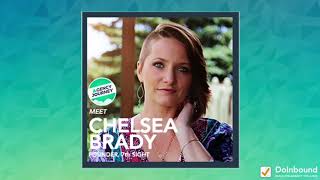
This is a YouTube video titled "How to Build an All-Star Remote Contractor Team" published in March 2018. It features a podcast-style interview hosted by Gray MacKenzie with Chelsea Brady, founder of 7th Sight, discussing the evolution of her agency, team building with remote contractors, project management, compensation models, and future directions including a mastermind group for client support. The conversation covers practical insights into running a creative agency with a distributed freelance team and the challenges of scaling and leadership roles.
How do you build an agency that allows you to live the dream that you have for yourself, for your family, for your community, for your team, while at the same time helping your clients knock it out of the park and doing it all profitably? These are the big questions that we tackle here on the Agency Journey podcast. I am your host, Andrew Demski. Now let's get to it.
All right. Chelsea Brady is the founder of 7th Sight. Chelsea, first of all, welcome to the podcast. And I'm gonna. Before I even give you a chance to say anything else, did I do you. When you're talking about the business to people, do you talk about it as seventh site, or do you say seventh site, brand Collective?
Hey, Gray, great to be connected. I say. I normally just call it seventh Sight, but if I need to explain a little bit more, I'll kind of. We'll give the full title.
Talk about Brand Collective. That's awesome. Well, I'm excited. I'm grateful to you for coming on the podcast. And probably the right place to start is with kind of where did seventh Sight come from? My understanding, based on some research ahead of this, is that you're three plus going on four years with the business here. But what's the background story and kind of where are things at today?
Sure. Yeah. So 7site has been around for, I guess, three or four years, which actually seems longer to me than it always goes that way. I know things move so fast, but I've been a freelancer for about the last decade, a freelance graphic designer. Kind of really just. That really just happened as well. I met. Once I moved to Boulder, I met a really great group of other freelancers, copywriters, developers, and we decided to create another business back in the day. And then that was maybe three years that I worked with a very small team, kind of did all of our web work together and really just taught ourselves, you know, to design, to write, to develop as a team. And we kind of outgrew that. You know, we all kind of wanted to be leaders in our own right and moved on to. To separate freelancing careers. And then I would say of maybe a couple of years later, a few years later, I was just really missing having a team and having that support and, you know, knowing that kind of at the end of the day, somebody's always got your back. And so I started looking for other teammates to kind of bring under one roof. And I also know that it's so much easier for my clients when I don't have to say like, oh, I'm A graphic designer and web designer. And you can call that guy over there for development, this girl over here. It's so much easier for them if everything is just under one roof. So that's kind of where seven site was born from.
Yeah, that makes a lot of sense. So in terms of obviously agencies at least typically kind of start off with what were the founders, what were those initial skill sets? And then they kind of run their course of kind of steering towards what those early clients need and then the direction they want to go, what services they think make sense is graphic design. Still, are the services, I guess the seventh site offers, are they largely still in the graphic design space or is that kind of branched out into copywriting, development, all the different kind of pieces in the digital space?
Yeah, it definitely started in graphic design, web design, web development, and it has really branched out. I'm really starting to think of us more as like a media company or at least that's the direction that I'm hoping to push in. Just kind of make sense with, you know, where social media is going and where a lot of my clients are kind of moving into as well. So I'm bringing on more photographers and videographers, a lot of great copywriters, content creators that have experience in writing video scripts and you know, creating kind of brand platforms and marketing platforms that are probably more digital media based, video based.
Right, that makes sense. So one of the, sometimes a struggle, this was a struggle for us at Guava Box and struggle for a lot of agencies is when you have this diverse set of skills, which is what you need to be a media company, to be a, to really be an agency. Figuring out how to package those together. It's. You're either typically, you're kind of stuck somewhere in between or kind of fluctuate back and forth between the projects. Were able to kind of use most of the tools that are in the toolbox. And then the people who come to you just for like a one off piece, they just want a video done or just want whatever else done. Is there a typical type of client relationship where they start off with one thing and you move them into something else? Or is it more of people come to you on a project by project basis, you're evaluating and picking out the right tools to address that problem.
You know, it really is a mix at the moment. I definitely have some clients that I'm working with on a longer term basis where we might, you know, plan to work together for the next nine months or year on a project and we're Moving from, you know, from the very kind of ground up with their brand strategy and, and initial brand identity and then moving into videography, photography and then web, possibly helping them build out some online courses or landing pages for courses or books or workshops, things like that that they're launching and then helping them do the marketing elements of that as well. So in some cases it really does get to be this beautiful integrated process and I would love for that to happen all the time. It's not always within my client's scope or budget to be able to do that. And so then we kind of just, we still always think about big picture and where we're wanting to be in the next year or you know, even couple of years. But we just kind of give them bite sized pieces of the project that just kind of what really needs to happen right now. Right. And then in that case, sorry to cut you off.
Keep going.
Oh, sorry. No worries. That normally looks like just working on their like Brandon website to get them going and maybe kind of helping them with one offering that they've gotten to hopefully start generating some more income so that they can dive in a little deeper.
Right. Okay, that makes sense. So as far as the way that the team is put together and as you're putting together the team, why don't you share with us kind of where, where the team is at now and the transition that you're going through right now?
Sure. It's quite an exciting time for us right now. It's really in the last few weeks, to be quite honest, that everything has kind of come together and everyone has come together. It was for a while me and Jennifer Bryant, who is a brand creator, content creator with us, just kind of, we were running the show and Jason Lang, who is an amazing developer that I've worked with for, for 10 years on the Daily and now we're bringing on two new designers and three photographers, videographer, a social media marketer, a couple more content creators, kind of the whole, you know, creative gamut as far as our projects are concerned. And so it's, it's really exciting and it's a lot that's happening too.
That's true. I think with, and especially, and I don't know whether this is the situation in your case. It sounds like a lot of these folks might be people who, you know from locally, but with so many agencies going remote, that really lends itself to the contractor model. And there's so many agencies who are moving into building a team of contractors versus you know, in house employees. As you're setting that up and there's a lot of different ways people approach that. Are you setting up any type of. I guess. How do you manage setting expectations in terms of here's what your workload is going to look or do you even have those conversations and set those expectations with the team that you're building right now?
Yeah, I've definitely had those conversations with everyone as I've been creating this onboarding process as we go. I also have this amazing project manager, Lauren, who has been kind of my right hand woman through that and she's been helping me actually create systems for everyone so that I can have kind of an initial conversation with each teammate and then we're giving them some documentation to kind of back things up. Which I think especially for freelancers that haven't worked on a big team before, I think it's kind of help settle them and helps them understand what they're getting into. With such a big team, the way that it's kind of working is I may have a more core team that I work with kind of on a daily basis that's more just like designer, copywriter, developer, one photographer. And then when projects call for it or when we have, you know, a bigger client base, all of us will kind of be more busy ideally. So my, my whole team is. Everyone is an independent contractor and pretty much everyone has their own, you know, solid freelancing business already. So they're not looking to get all of their worker income from seventh site. But it's certainly a great, you know, potential for growth for their businesses as well, for sure.
So I have a, this is a question that usually makes people a little bit uncomfortable. We don't have to get super into the details, but this is the question. I think that this is the question that comes up when I talk about this with other agency owners who are going through this. And it's always like, hey, if you don't mind sharing, can you tell me about the financial piece? So with these, with these contractors, I'm going to ask the question and see if that gets me into too much trouble with you. But are you setting this up as are most of these contractors being. We don't need to get into specifics, but is it going to be based on hours? Is it negotiated on a project by project basis? Is there some kind of base level for being, for being available as a contractor? Here's a base level payment. What does the structure look like if you're willing to get into that?
Yeah. So at the time being, I mean, we're still very much defining what are like, what each one of our offerings is going to look like. I'm getting together with each one of these freelancers and where we're taking what I've always done and adding to it, of course. And I really want them to have a lot of say in what their projects look like and you know, I want to know what feels good to them, make sure that they're getting compensated in a way that, you know, fits their lifestyle and you know, their financial needs as well. So some of this may shift as we have more of those conversations. But so far almost everything that I do is project based and so I assume that it's going to continue to be like that as well. We may just have kind of packages, maybe three tiers of packages for design and development or three tiers for photography or videography so that in most cases I know what I'm selling, how much of that income is going to, you know, seventh site to me for sales and project management to the designer or photographer. And so I think that those percentages should be able to, you know, be pretty clear and consistent and everyone should know what they're getting into when they say yes to a project.
Right, that makes sense. And it is kind of that constant state of flux that you're talking about. I remember when we started Guava Box and we were all started out of college, but I went full time right out of school. My business partner Andrew was working full time at another agency when we initially started and another one of our partners, Brandon was still in college and when we first started and then we had a fourth partner at the very beginning as well, who's also still in college. And so even though we were set up as an agency and we were all had ownership in the agency, it was really a loose collection of basically freelancers that were just kind of tied together and working together at the very beginning. And I don't know if I ever shared this before, but the way that we had things set up, a lot of pros and cons, but it was like any, any revenue that came in 10% that was like our tithe that went to the company to take care of whatever operating costs, which were incredibly small early on. Everyone had different responsibilities, but basically any project that came in, we just kind of negotiate. Whoever sold it would be the point person on negotiating through, you know, hey, this is a web design project. So that was my skill set. So I might get a, a decent chunk of that project and take on most of that work. And we kind of Negotiate through it. And that's like a super primitive way to set things up. But early on, that actually worked out pretty well. Obviously it didn't take too long before that needed to morph and it was just we were spending way too much time trying to talk through how to break down projects as the project load started to build. But I think that's a good approach early on is just to say, let's kind of figure this out as we go and we'll just treat it. If you're not bringing somebody in full time, treat it on a project by project basis and figure out what is this like to work together, what are the right numbers and percentages and the more that everybody can have an understanding on the front end of. We're playing the long game, not the short game. So some of these numbers, these numbers are guaranteed to be wrong in one direction or another. And let's just bank on us working through it and trusting each other that, that we're going to make them right in the long run and not get too concerned about the very first project that comes in. Whether we get it right or wrong.
Right. Absolutely.
And as long as it's not abused, you know, as long as it's not always one person who says, oh, sorry, it looks like they just keep shaking out the wrong way, we'll get it right eventually. But you know, as long as when you're in a situation like you're in, when you have good relationships with the people, I don't think that's how it works. And, and that's a good approach. So that makes a lot of sense.
Yep. You know, in the past, kind of my downfall, maybe just as a human, but as a business owner, is that I'm always an over giver. And especially with freelancers, like, I want to make sure that everyone is so well taken care of and that it's so beneficial for them to be doing the work and to be on the team that I haven't always, you know, taking care of myself in that. And I'll end up, you know, doing a lot of sales or project management or, you know, just putting in a lot of time, creative direction, whatever, and not compensating myself as well as I can for that. And so I've been really upfront with everyone on my team as well that like, this has been the way that I've, you know, kind of gotten myself into a sticky place, you know, that doesn't feel so great for me in the past. And so we're really just keeping an eye on taking care of each other and making sure that everything feels great and that open lines of communication are always there.
So I'm really glad you say that, because that is a ton of agency owners, especially business owners, I think, who have a strong technical skill and who also enjoy the work. They're not just doing it for the purpose of making money. They're doing it because they actually really enjoy what they're doing doing, and they're good at it. I think that's pretty common, is they put themselves in the shoes of the contractor and say, what would I like to make if I was doing this and pay that? And I guess in my experience, I don't think that that's wrong. I think that the answer isn't you need to pay the people less. I think for most agencies who I've worked with, the answer almost always, even though it's really challenging, comes down to charging more. And so I think if you're listening right now and that's a situation that you're in, I think that's. That was never, never what I wanted to hear, because early on at any business, sales are. Sales are not easy. And then you think, I'm going to increase the barrier to sales even more by increasing my pricing. But I think that a lot of times solving a lot of those problems boils down to. To sales and charging more, which is challenging, but that's not 100% of the time or the cases. I think that's always helpful. But a lot of the times I think that you do tend to underestimate because it's familiar to you too, kind of underestimate. At least I would have a tendency to underestimate the true cost of trying to run all the operational components that make this work as a business, because you just look at a project and you see, well, we already have the project. Now it doesn't really make sense for me to keep 50% of that, does it, if they're doing all the work for it? But the reality is there's a lot of work to get those projects. And so the sales side of things can be undervalued, I think, as well.
Yes, absolutely. And now I'm really stepping out of the designer role that I've always been in and just leading the team and doing creative direction, which I'm so excited about. And that's a big edge for me because I've always just made my money off of design of brands and websites and creative direction, you know, feels like it's something that's harder to charge for. But what I've been finding in these new projects is like it's so incredibly beneficial to a project to have me there, kind of weaving all of these pieces together and being able to lead the way there. When I've, you know, if I step back on creative direction, I know things that aren't actually as, you know, successful in the end. So that's kind of my, like, what I need, what I need to be able to do here is just say, like, creative direction is just as important as every other piece of the puzzle here. And so it's, you know, just as valuable.
Right. That's another good point. I feel like I keep interrupting just to kind of highlight what you've just said is just as the owner, as the founder, as a member of leadership, your role changes over time. And at one point it was to do a lot of the design and at some point that shifts into leading the direction and then at some point maybe that shifts again into more of. Depending on how I think how large a business grows or what the dynamics of the team are. I think at some point that kind of shifts again to training the next people to take over. There are too many projects to be leading creative direction on each of them. So maybe the next evolution is training those next people and then essentially being like the team builder and the cheerleader and motivator for the team and making hard directional decisions. So I think it's interesting to see how like you come into agency life or into this services life with one skill set. And now those skill sets really need to change and evolve as the business grows and evolves.
Mm. Yep.
Well, that's awesome, Chelsea. I appreciate you being willing to share. So I went to your story. I've got a question for you that I did not prepare you for at all, like most, like most of my questions. And that is you're making a huge shift here, obviously team wise and a big step. Is there anything else moving into 2018, whether it's different services or an emphasis on a specific industry, or just trying to keep things, trying to, trying to get this all together and bring it together. Is there anything else as you're looking forward into 2018 that you're planning to move? 7. 7. Sight forward.
That's a question with so many answers.
Just an easy one.
Oh, which one do I choose? I think that what I'll. One of the other pieces that I'll share is that I'm also working with this amazing business coach who has been my client for about four years now. And we've always been really interested in each other's work and trying to figure out how we can collaborate. And she's moving more into the realm of how to not sound too woo woo here but of like healing work and really helping people take a look at what it is that keeps them from stepping out into the world. You know, stepping out with their new brand, stepping out in their kind of, in their most vibrant, visible way. And I see that that's a big kind of pain point for a lot of my clients is it takes a lot to rebrand yourself or brand yourself for the first time and build this big web platform and say, hey, this is what I have to say. A lot of interior stuff comes up for all of us during that. So we're creating an awesome kind of mastermind group that will take people through that process and give them a whole lot of tools to be able to work with as they're figuring out what's their vision and what do they have to say, how do they want to build their businesses so they'll actually have more like emotional support and coaching support as they move through all of this. And I think that's going to be a huge hit for a lot of my clients.
Hmm. That's awesome. I feel like we could do another whole interview around that and just dive into what that looks like because I think that's, I don't think it's. I think more and more people are realizing it's becoming more common for people to feel comfortable talking about it or hopefully become more comfortable. Just that most of our limitations are self imposed and it's just like we bring, we all bring personal baggage into what we do that usually just serves to kind of hold us back. So how do we, what is the process for, for getting past that and moving past that. And I think there's a ton of different answers and approaches that different people, different people have and try and I know even just different framework questions like Tim Ferriss will talk about asking the question like what would this look like if this was easy? And oftentimes just really simple questions like that. There's a whole, I think background process that needs to happen along with that. But I think just kind of moving beyond our own limitations is a very interesting topic that we should probably all spend more time on. So that's cool that you're already moving in that direction and working on the mastermind group. Well, Chelsea, this has been really fun. I appreciate you taking the time to come on and share your story. For folks who want to. We'll definitely link up the website in the in the show notes here for this, but is there anywhere else that you would ask people to follow you or connect with you online?
Sure. So our biggest kind of social media push is going to be happening over on Instagram. So it's just Instagram seventh site. So number seven T H S I G H T. There'll be some fun stuff happening over there soon.
Perfect. Well, we will link that up in the show notes as well. Chelsea, thanks so much for coming on.
Thanks so much, Gray. It's been great chatting with you.
Want more great episodes like this one? Hey, I'm Gray MacKenzie, a host here on Agency Journey. I don't know about you, but sometimes I get a little overwhelmed when I find a new podcast. There are so many great episodes and great guests, it's hard to know which ones to listen to first. That's why we put together a list of the top 10 most downloaded episodes of Agency Journey. And you can get a copy of that list plus all of our notes and takeaways just by texting the word do inbound to 44222. Again, that's due inbound, all one word to 44222. Standard text rates apply. You don't want to miss these great episodes. Text DO INBOUND to 44222 now.










