How to Build an ROI Driven Agency with Christopher Antonopoulos from Measured Results Marketing
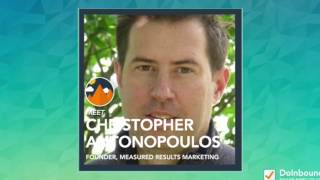
Christopher Antonopoulos built Measured Results Marketing by focusing on ROI and technology integration. He shares how the agency measures client success, picks partners, and scales operations while keeping results at the center of everything they do.
Foreign.
Welcome to Inbound Agency Journey. This is the show where inbound agency leaders share the strategies, shortcomings and successes they've experienced in their journey toward building their dream agency. Now, here are your hosts, Andrew and Gray.
Welcome to this week's episode of Inbound Agency Journey. This is Gray. And this week I have the pleasure of bringing on the podcast Christopher Antonopoulos from Measured Results Marketing. He is based out of Northern Virginia. Christopher, welcome to the podcast, man.
Great. Thanks for having me today.
I'm excited to bring you on and talk through some of the things that you guys do differently from a lot of other agencies with the way that you're structured and set up. But before we get to that, what's the backstory on the agency? How did Measured Results Marketing come about and what's kind of your personal story? Did you start it? What's the backstory?
Yes, it's really interesting. I've been in this technology space trying to figure out what technology stack works for companies. I worked for a really large, I worked for smaller companies that kept on getting acquired by larger ones. And I started a job hunt and really all the offers that I got from companies were to do positions that I felt I'd get bored with in 12 months or less. And so after rejecting nine different job offers, I built a business case to start this company. And I was quickly able to acquire some clients in my first month. I guess the rest is history now.
So with those first. Well, I guess first of all, what's the time frame here? Was this last couple years or going back farther than that?
Yeah. So December of 13. So we've been running for about three and a half years now.
Okay. Well, there are probably a lot of people who are jealous of, especially for folks who are maybe younger and didn't have as much of a professional network built out, but people who are jealous of the fact that you're signing up clients right away in that first month. Was that from pre existing relationships or just the way that you were positioned? How are you getting those clients?
I mean, a lot of them was LinkedIn. That's still a great tool. Again, I'm lucky to have a professional network in the D.C. metro area, but it just really started with sending emails directly out to my network talking about essentially I'm doing the same thing that I was before, just in the context of an agency. And it was really, it's that hard work of people laugh at this, but it's having lunches, having coffees, getting out there and going to every event under the sun. I think we did eight or nine events my first month. If I thought people were there that were interested in selling, purchasing what we were selling or the services, I was just at every single event that I could get to and that's where I reconnected and got those first clients.
Right, well so with those first clients because one of the things, and I kind of want you to, I want to ask more about the services that you're providing today. But maybe the bridge into that is are the services on the website and for anybody who wants to check it out, you can find the link from the show notes or just go to measuredresultsmarketing.com but you talk a lot about demand gen, marketing automation, that type of stuff. Has the service offering changed a lot since I guess very end of 2013. And what did you guys do at that point to what you do today?
Yeah, so I think it's really fundamentally the same. There's a couple of small changes, but for us it's really you have a marketing automation tool, sales CRM, some sort of software to run events, a finance system on down the line. With software you need to get your job done. I think for us it was trying to figure out how to stitch all of those things together to figure out how many leads you need. What's the qualification criteria, did someone in sales follow up and then what's the marketing attribution or what revenue is tied to those marketing activities. From the very beginning we were a technology agnostic company. I was fortunate to use a lot of CRMs and marketing automation tools. I think where we've expanded is we're doing more on the CRM side to build out reporting and helping companies with their sales process. Fundamentally we're a technology, you could call us a system integrator, infrastructure company. Helping organizations make all the technology work properly so they can figure out what they need to hit their revenue target.
Right, that makes sense. So one of the questions. So I guess the background is a lot of agencies are realizing and HubSpot is teaching their partner agencies. I mean overall people who especially young agencies are realizing we can't just touch one piece of the process and expect to be kept around for the long term until we can tap into ROI and helping people get the most out of things and to get the most out of stuff, whether it's us or through partnerships. But we need to have some visibility and transparency and involvement in what the whole process looks like. And that's a lesson that we went through me personally, Andrew, at our agency Guavabox was starting off with doing all these one off pieces and then wondering why we weren't being treated as. Why we were being treated as tacticians instead of strategists. But. But one of the big hesitations or objections or things that scares people away, aside from the fact that not a lot of people have your background where they've been involved in the whole kind of that whole infrastructure and everything from the very top of the funnel to the, to the back end of things. But the challenges with building a team or finding people with a skill set to be able to touch all those different pieces, and having you mentioned being kind of platform agnostic or tech agnostic, finding people who can work in all those different platforms. How have you guys dealt with that problem of trying to have the right skill set and talent base on the team to be able to service the width and breadth of what you're delivering?
I think for me it's sort of. I was Eloqua's third customer, as an example, one of the first, probably 50 or 60 for HubSpot. And so I guess for us from a talent perspective is that we've always focused on this space. And so our resources are engineers. I studied quantum mechanics. I have a microbiology researcher that I've converted to a marketer. It's just a very different skill set of resources. I've been lucky to be in this space for a while. I think if a company is in a position where they're wanting to put these pieces together or seen as an expert, I think the first step is really to partner with a company that has those resources and then figure out do you want to invest in those really hardcore technical resources to do that work, or do you want to partner with an expert just like us? We don't build websites, write white papers, do any of those other pieces, or are experts in SEO. And so we partner with companies who have that expertise that can help other organizations. But we learned early on that we couldn't do it all as an agency. We couldn't take on the design work and the technical side of it. And so we gravitated toward the technical side.
Okay, that makes sense. I think that's helpful too, to kind of understand how you guys approach that and have dealt with that. So, Christopher, on the kind of shifting into the story side of things, I guess. Are there any. I know this is always a little bit tricky to ask people to talk about client work, but any good examples or recent success stories either from stuff that you've done internally for the Agency or with clients where you've kind of been able to bring these pieces together to deliver a lot of value.
Yeah, I think I can't tell you the client name, but we're finishing off a project where for one of our clients, we're figuring out what their 12 month rolling forecast is. That might sound like something simple, but it really for us made us look at every single element of that company's business. They're a software as a service company, they're based in Boston. And so in that process, what was really successful is that we had to map out from a marketing perspective how many leads and of what type they are. How many of them are getting qualified and sent to sales. From the sales side, we actually had to re engineer their entire process to figure out what's an opportunity and how they're tagged in the system. Then we even had to change how fields were used. They weren't using standard fields for forecasting. We had to actually switch those fields around so that they could actually figure out revenue. I think what's fun in that and what's the success story is now they know how many leads they need, what level of qualification and they can start to forecast beyond three months, which is all they could do before.
Right. Okay. I think it's helpful to kind of have that example too of how you're working with them and that sounds like a really cool engagement. You mentioned partnerships. So from that point where you guys have helped them figure out, here's the number of leads you need to generate, here's what you kind of need at each step in the process. So are you involved then in most cases with hooking them up with another partner who's going to help with some of the tactical execution to get the lead generation to where it needs to be, or do they often do that on their own? How does that part of the relationship work?
Sure, it's not just me. It could be sort of Mike or Lauren or Vanessa or anyone sort of managing that project. But essentially we help them identify the gap and then we've run a lot of campaigns through our professional careers and for clients. So we essentially say based on the conversion rate and the leads you need to generate, let's just say they need a social media campaign to drive awareness. Then what we'll do is we'll look at our set of partners who are expert in that area, recommend that partner and then project manage what the results are for that campaign and report them all back to the client. That's typically how we work, is identify that need for the type of campaign or a type of content and then work with a partner who produces that and then tie it all together with reporting and results. So where that. I don't like this terminology, but we use it a lot. We're sort of the one throat to choke for the client. I think that's one bit of advice I'd say for agencies or companies wanting to get into the space that it's okay if you don't have expertise in all these areas. Find someone that you can work with, but the end client is always going to hold you responsible for the results, whether you're the one doing the work or not.
Right? No, that's a good point. And that does simplify, to be honest. That adds value to a client's life if there's just one person who's going to be responsible for the success or failure of what's going on. So rather than having to try and hunt through three or four or five different partners, if there's one kind of lead agency or partner that they know is ultimately responsible or, or at least is willing to accept that responsibility, we work.
Yeah, I mean we work both ways. I mean there's, there's a, there's a partner that we work with where we do all the infrastructure pieces. So we do the. Yeah. In this case it's connecting HubSpot to Salesforce and building out some of the reporting and assignment rules. They're doing all the campaign execution. In this case they're doing all the project management piece of it. So we're were essentially an extra set of hands to help them do this piece and then it works the other way around with content, website build and those other bits. But it makes you a lot more valuable as an agency.
Yeah, that makes sense. Well, Christopher, as you look at the landscape for the rest of this year and coming up into next year, combining the future opportunities with kind of the self assessment in areas of weakness or where you're comparatively not as strong in the agency right now. What are some of the things that you're seeing and have identified as kind of focal points for improvement here the end of this year and moving forward?
Yeah, so one of the big things is improving who we choose to work with as a client. So I think that might sound a bit funny, but really picking companies who are in it for the long haul, they have a project champion within their company, are really excited about getting this work done and have an incentive within their organization is really important. I think some of the mistakes that we've made are Picking companies who are initially excited about doing this work but really have a champion or sort of see it through to the end.
That makes sense. So you mentioned. And I guess that kind of leads to another question about the agency itself. You'd mentioned working with a SaaS company as one example. Are there specific verticals that you're primarily focused in or is it more about some of the things that you just described with the personality or I guess the traits of the organization itself when you're talking to them during a sales process?
I mean, they're all B2B software as a service, professional services and manufacturing companies. I think it's important when you're trying, it's important to figure out what your niche is in terms of who the company is selling to and then knowing a bit about that industry. So early on, we made some mistakes in terms of trying to take on organizations who are selling to consumers instead of other businesses. And we just didn't know enough about that model to be as helpful as we could have been.
Got it. That makes sense. From the website, there's an obvious question here that I need to ask. It's the. Not quite the elephant in the room. It's the yeti in the room. So there is a yeti featured prominently on the Measured Results marketing site and in your branding. The obvious question here is what's with the yeti?
Yeah, so it's actually a fun story. So when we first started out, a lot of the initial conversations were we knew someone like you existed or has been there, but we can't find it. We have Stephanie who did the design of the yeti and some of the branding pieces. I told her I wanted something between a squirrel and a unicorn, and so she came up with that YETI design. We wanted to be sort of intelligently approachable so that this technical stuff is hard and it's detail oriented and people are not too comfortable with it. So we wanted something relatable. But I think now it's become that everyone has their yeti, which is the marketing problem they're trying to solve or the technology problem they're trying to solve. They know there's the answer to it and they just can't figure it out. So now we use it for our clients as what's their yeti? Their YETI might be marketing attribution or tying systems together or figuring out how many leads they need, but we're having a bit of fun with it now in terms of everyone has their yeti, we can help you find it.
That's Awesome. I love it. I love the design. So I've got one last question for you, and that's around this whole concept of roi and the way that you guys help determine that, show that and approve that for clients is kind of a central. That's even in the business name, measured results marketing, a more core theme to your agency than a lot of other agencies out there. And I'm curious about the way that you guys are measuring that and presenting that back to customers on a. Well, whatever that basis is, whether that's a daily, monthly, weekly, quarterly, whatever that basis is. Are there a specific subset of tools that you're using where. Here's how we always showcase it. Is it manual where you're kind of extracting that data and presenting it back to them? Or is it all. You talked about systems integration too. Is it all just kind of within the context of what tools the customer's already using and then you're building it into their CRM platforms or whatever platforms they have for that. How do you guys handle, I guess, the actual presentation of that ROI on a consistent basis?
Yes, unfortunately, it's different for everyone. I'd say that the way that we start is we benchmark exactly where they are. I think we're spoiled in the sense that we have access to their CRM systems. We can actually run the reports and see how many sales a company is making and what the revenue is and by product. So we're in a good position to benchmark it when it starts. I mean, typically it's a Salesforce report or Microsoft Dynamics 1. Sometimes we'll use a initially, it usually is through Excel or an export, I think, to showcase it. Going forward, it's really about building out those reports and either within their CRM tool or within an add on something like Funnel Wise, Insight Squared, Bizzible or one of those other tools to show what the growth is and what the gaps are and then match up the campaigns from the marketing automation tool to say here's a campaign that either generated that lead in the first place or influenced it in that buying process. But it's typically monthly, it's not sort of as aggressive as weekly or every other week. I think most of these companies understand that just because you ran a campaign, sent out an email, people registered for a webinar or a lunch and learn or something, that's not going to automatically translate into an opportunity. And so we're seeing it as monthly reporting is what the cadence is against what the benchmark is. So your goal is to generate 1000 marketing qualified leads. Our expectation is that's going to turn into X revenue. Did we do that? Did they get a score of 100 or greater? And then did a salesperson follow up within that first 24 hours? And then we sort of look at it that way. So the way we present it is a funnel and say, here's your benchmark, here's the goal for that month and that quarter, and here's what we look like against it. It's tricky to do if you don't have access to their CRM.
Right? Yeah. Without that layer of visibility, that definitely makes it a lot harder. That's. That's helpful to kind of have that breakdown and that I think the ROI piece is, I mean, the whole move towards the web in general, this is obviously not a new thing, but ROI has become easier and easier to see in a shorter and shorter time frame. And so I think we're going to continue to see more and more of an emphasis put on more companies will understand the ability to measure and the importance of measuring roi.
You won't get. I mean, the big thing now is for marketing is that especially as an inbound agency that provides that service, all of the budget now is going to be tied to how many net new leads you're generating, are they getting qualified and at a minimum, how many are getting sent over to sales. And that sort of table stakes today, in order to get more budget or scale retainers, you're going to have to prove that those leads turned into revenue. If not, it'll be more difficult to get to grow a retainer or get additional projects or revenue from a client.
Exactly. That's awesome. Well, Christopher, I really appreciate you being willing to come on and share your experience and expertise with us today. Other than the website, is there anywhere else folks should go to check out what you guys are up to?
Yeah, I think indyour yeti, we do a lot of posting there and then connect with us on LinkedIn. We like to think we do a good job of introducing people and building connections, but those are the main places to connect with us.
Awesome. Well, Christopher, we'll definitely include those in the show notes. Thanks so much for coming on. We really appreciated it and enjoyed having you.
Great. Thanks a lot, Gray.










