How to Build Your Digital Agency, Create Products, and Grow Your Brand with Mike Rhodes
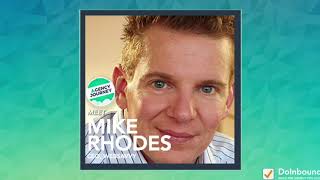
Mike Rhodes from Web Savvy talks about building a digital marketing agency, how AdWords has changed, and why he created training products for other agencies. He covers hiring, finding clients, and scaling from zero.
How do you build an agency that allows you to live the dream that you have for yourself, for your family, for your community, for your team, while at the same time helping your clients knock it out of the park and doing it all profitably? These are the big questions that we tackle here on the Agency Journey podcast. I am your host, Andrew Demski. Now let's get to it. All right, welcome into Agency Journey. This week my guest is Mike Rhodes from Web Savvy. Mike is in the land down under right now. Mike, welcome to the podcast.
Thanks for having me, man. It's great to be here.
So tell us maybe first of all, because I should have done more of my research and known exactly where you are in Australia. Where are you located?
We're in Melbourne, Australia. So down the, down the bottom of Australia, 36 degrees Celsius, that is. What's that about 100 Fahrenheit today, Middle of summer, coming up for Christmas. Life is good.
This is. So we have right now as we're recording this here, we have a little over a foot of snow in Western pa and we're a little bit on. Actually, it's a warm day today. It's right around. We're probably close to 34, 35, but Fahrenheit, not Celsius, which, believe it or not, makes a big difference.
Yes, I love freezing. A nice warm day.
Well, you've got an awesome story. I'm really excited to dig into it here. There's a couple different things you have going on. I think people are going to be interested in learning about some of what you've done on the training side in addition to the agency. But before we get into that or with that little tease for what's coming up, let's talk about web savvy and where that came from. What kind of brought this whole agent. How did the agency start, I guess is a good place to start.
Wow. Yeah. So I was born back. No, I always knew that I was going to have my own business, so I started my first business in 99. It was was an Internet cafe. We've just been chatting off air before this about New Zealand. Funnily enough, I had left the uk, I was backpacking through New Zealand, saw an opportunity, started an Internet cafe down in Queenstown down the bottom of New Zealand. And that went pretty well. Right at the beginning, a mate of mine handed me two books and these two books changed my life. The E Myth by Michael Gerber and Cash Flow Quadrant by Robert Kiyosaki. And Cash Flow Quadrant was essentially the why you would want a business behemoth was the how. So I read those two books, devoured them, ran that business, worked in it about 12 days in the year and a half that I had it and then sold it and moved to Sydney back in 2001. Thought I was semi retired or something. I don't know what I was thinking. Decided after a little while that I probably ought to start something else again. Had a couple of little false starts and ended up starting websavvy around about 2006 when I moved down to Melbourne. And it started because I saw a presentation by Perry Marshall back in 2004. It's a fabled event here. This guy, Simon Chen had got together Perry Marshall, Armand Moran, Alex Mendocian, Declan Dunn and a bunch of other guys. This is 2004. Brought them all out here. Never made money on the deal as far as I know. And 150 of us sat there in this amazing resort up in Queensland just being blown away by all of this stuff that was happening on the other side of the world. And I remember sitting there going, holy shit, this is the future. This is exactly what all of my. I had been an E Myth coach for a little while up until that point, because E Myth had changed my world. And I ended up flying off to see Gerbert two days notice and going and training with him in California. That's a whole nother tangent, which we won't go into today because he ended up becoming a client last year. And anyway, yeah, there's stories on stories here, but where the hell was I went, this is it. This is the future. This is what all of these small businesses that I've been going and seeing, this is what they need. They don't even know they want it yet because they don't even know it exists. But I can see that they're wasting money on TV and radio and yellow pages and letterbox drops and they don't measure anything. And here's this measurable thing, and you only pay if. If someone clicks your ads and you're only showing ads to people that are searching for exactly what you want. Oh, my God, this is. Yep. So started doing that. Went back to my mastermind group. I was still in Sydney at this point, and one of the guys in my mastermind group said after maybe a few weeks, couple of weeks of me talking about this, he said, right, I don't want you to consult me and tell me how to do this stuff. I'm going to give you half of my business. Will you come into business with me and help me sell this stuff. At the time he was selling, I won't go into details about it, but he was selling this particular apparel item. It's not going to hurt anyone. Now if I talk about Ugg boots. He was selling Ugg boots and he was selling about two pairs a week. And three and a half weeks later with a new AdWords account, we'd sold 100 grands worth of stuff. Oh, this stuff works. We should. Yeah, okay. Now there was a whole customer service problem that I didn't know I was getting into at that point. And the next three months were hell. But we'd clearly seen the power of this thing and then that led to more and more mates going, hey, can you help me with this? And so for a slab of beer here and you know, thank you here and there, I started helping people out with it and fairly quickly after that decided that there was probably something in this and decided I should probably set up an agency which happened at the end of 06. And then I got married in 08 and went oh shit, now I need to be serious about this and actually go build a business. And then we got pregnant in 2010 and went oh shit, now I really need to get serious about this. And that's where everything started.
Wow. So you're there very, very early on in the AdWords days. As far as that, how that's mapped to today, my understanding is that's still a big part of what you guys do. How does that line up with. Obviously the whole environment and landscape is radically different, but in terms of services today, what does the agency look like?
So we are still predominantly an AdWords agency and that's probably just because I'm stubborn and it took me a while to see that all these other things were worth diving into. I think I was probably the anti social media guy for the longest time until maybe two, three years ago. But we now offer. We're basically an acquisition agency. So we help on the paid traffic side. AdWords, Facebook, we don't do a lot of Twitter, LinkedIn, Pinterest, more and more, YouTube, a lot of Google Display, but predominantly those two channels. I mean that is what, 90% of the market anyway. And then on the other side, which is relatively small at this point, but growing and I think it's going to be a big focus for us in 2018. 19 is the conversion rate optimization side. I'm loving playing with Google Optimize at the moment how well it integrates with Google AdWords and analytics. So yeah, I've obviously grown up on the AdWords side. I guess 13 years is a long time in dog years, so that's still where I love to play. I still don't understand Facebook near as well as I probably should. They are such different beasts. But obviously AdWords has grown immensely over that time. So now we've got shopping and we've got remarketing and we've got Google Display, which I absolutely love, and YouTube. So AdWords covers a lot. And I think when a lot of people talk about AdWords, at least outside of our circles and outside of the agency land, I think most people tend to mean search when we talk about AdWords. They don't realize it encompasses all these other things. But yeah, we love playing with, with all of those tools. Anything that makes my clients money, basically.
Right. That's awesome. So as an acquisition agency, obviously with your personal background, how do you have. How is the team structured right now? Or what does that look like? Is this like, do you guys have an office in person? Is it a remote team? What's. What's the structure there?
Yeah, I didn't go the virtual route. I mean, we were talking a little bit about software before and I did have a team in Manila, very successful, completely virtual agencies. My mate Ralph Burns has built one of the most successful that I can think of. It just. I love coming into the office and the buzz in the office.
Yeah, that makes a lot of sense. It's funny that you mentioned that because I was just talking with Andrew, my co founder here and we are remote, but just talking about the differences in energy and the different needs that that creates as a founder or as a leader, when you have a remote team versus kind of the way that we grew up, which was being face to face and some of the hard lessons that we've had to learn about, like it's almost a completely different skill set when you are remote.
So it's very. Yeah, it's a totally different business, isn't it?
It really is. Um, I'd be curious about. So you mentioned Michael gerber. That was 2010, Christmas break, I'm home for break and I don't even know. Unfortunately, I can't remember who recommended or who gave that to me. I think I might have actually gotten that from the public library where I grew up and that was the first time that I read it. It's been reread many times since then. But that was one of the, one of the fundamental. I mean. And that story, I'm sure you running in those circles for as long as you have. You've heard that story over and over and over. But that was one of the fundamental stories or books and influences as we started our agency and obviously has impacted what we've done here at doinbound as well. So I'd be curious about because you mentioned that that kind of prompted this question of who is there a typical type of client? Is it? People classically break it down into Is it B2B? Is it B2C? Is it E commerce? But is there a certain type of client or ideal fit that you guys work with?
There really isn't. We've really sort of avoided doing that, going just dentists or just cosmetic surgeons or whatever it is. And again, there are tons of agencies that have managed to do that very successfully. We definitely lean very much towards B2C.E com has been a growing part of the business, I guess, since Google Shopping became a paid platform. I'd say probably close to half of our book now is E Comm and then the other half is Lead gen. But we're pretty much equally split between Australia and the US we have all of the clients that I guess you'd expect, from info marketers to builders to fast fashion retail and a bunch of stuff in between. Lead gen is very, very varied. We don't have anymore is lawyers. We have a no dickheads, no lawyers policy. We found the Venn diagram of those two overlap quite a bit.
That's hilarious. Oh man. Well, I want to shift gears completely then. That's a C Is it E commerce? But is there a certain type of client or ideal fit that you guys work with?
There really isn't. We've really sort of avoided doing that of going just dentists or just cosmetic surgeons or whatever it is. And again, there are tons of agencies that have managed to do that very successfully. We definitely lean very much towards B2C.E com has been a growing part of the business, I guess, since Google Shopping became a paid platform. I'd say probably close to half of our book now is E comm and then the other half is lead gen. But we're pretty much equally split between Australia and the US we have all of the clients that I guess you'd expect from info marketers to builders to fast fashion retail and a bunch of stuff in between. Lead gen is very, very varied. We don't have any more is lawyers. We have a no dickheads, no lawyers policy. We found the Venn diagram of those two overlap quite a bit.
That's hilarious.
Oh man.
Well, I want to shift Gears completely. Then that's a, that's a great transitional point. And talk about what you also have going on in addition to web savvy, which is agency savvy. And we'll link up all this in the show notes. But websavvy.com I guess that probably redirects to dot com. I always have to remember.
No, it doesn't actually.
Oh, okay.
Somebody in the States has had. Somebody in the states has had that.com for about 15 years and they still have the same website as when I first saw it. So websavvy.com au is the. As the, is the done for you part and then agency savvy is the, is the training and the community side of the business. So we have a community with a few hundred very smart. Well, there are many, many very smart marketers in there and there are people that are just beginning their journey and I'm really, really proud of it. I just, just before we jumped on the call, I was just doing one of my Q and A calls with the group. So I jump on every month. Trevor jumps on every month and does a Q and A around Facebook. Katie does one around shopping every month. We've got a really, really active Facebook group as well as a forum. I do a new course every quarter to that group. So mainly my side is I cover the AdWords and Analytics, Google Tag Manager, Data studio, All of the stuff that an agency would need as well as I guess a lot of the stuff that you guys do with Agency Journey and Inbound is how do you build the business of an agency, how do you get clients, how do you build a team, how do you systemize and productize? So we talk about that a lot. And that's what agency Savvy sort of grew out of me running a course with a very brave group of 10 people back in 2014. Um, that. How do you build your agency? That, that was a core part of that and then the other part of it was, was on the AdWords side. So I'd started working with Perry Marshall and his team, I guess shortly after maui, which was 2010. So I'd been doing, I've been doing the, all of the, the AdWords training for them for I guess it's roughly about the last five years now. And back in 2013, they asked if I would help them rewrite the book the ultimate guide to Google AdWords, which I obviously immediately said I would love to help. Yes, sure. This is the world's best selling book on AdWords. And I didn't have anything to do with the first three. But if my name's going to be on the fourth version, sure, that sounds good. But what I noticed with that is even as we were going through the writing process, we'd submit it all to the publisher and then a month later Google would change something fairly major and then we'd rewrite three chapters and submit that again and just about squeak it in entire. And then two months later they change something else. And so that's why I created the training course, because the book I knew was going to be partly out of date the day it was published. And as much as we've tried to keep the book very evergreen and very strategic, obviously there's a lot of tactical bits and pieces in there that change. So we created the course which has grown into the community and the follow on courses to address that. So I want it to be the most up to date resource for how to learn how to do particularly AdWords. We do have Facebook training in there now. We've got bits and pieces around analytics. The Amazing Julian from measureschool.com has added some tag manager training and I've added bits and pieces around shopping, Data Studio and so on. But it's the ongoing Q and A. It's really just that support community of oh, I've got this new client and they want to do that. This what the hell do I do? Or how do I put up fees or how do I break into this market or how do I do gdn? I've never done GDN before. I know Facebook inside out, but how the hell do I do gdn? And so we got all of that training materials there in one place with the support and the Q and A.
So one of the reasons that I wanted to talk about that was there are so many agencies. I mentioned this to you before we jumped on, but the common question of, you know, I'm thinking about I'm running an agency and agency life is hard. I'm thinking maybe I should turn this into informational products where I sell courses to my clients. Maybe I can monetize a much larger portion of my database or the classic I want to build a software or whatever else. So at the end of the day, I think the realization ultimately comes down to certainly there's pros and cons of each business model, but every single one is going to take a good amount of work and you need to serve people well and do the right thing and provide commensurate value. I'd be curious to know with the now, fortunately, or I think what it sounds like from your story you've done right is the recurring trend is when these things go well, it's typically kind of an out. It's not, hey, this is how I'm trying to build my entire business necessarily, but it's an outpouring of what you've already learned and, and you're still actively learning and building. So it's not I the driving factor wasn't I really want to build an info product or I really want to build a community. It was I've got this stuff, I'm learning it. People are asking anyways, I can and I can build this new it. But anything that you've learned from that experience that has surprised you? That's a super broad question. I'm sure there's plenty. But what sticks out you when you think about that experience?
I'm really glad that we didn't try and build a software business. We started down that route for a while or as you say, like many agencies go through. I think it's probably 2011, maybe 2012 of I was speaking more and more on stages at that point and people saying how do you do this and how do you do that? And realizing that the way that we went about it was maybe a little different. And yeah, how could we productize this? Because we've built all of this stuff. I've got a team in the, at that time at a team in Manila that were building this internal tool that we use and I think that's probably how you guys started and how many software tools have started made of mine. Shawn Bond has PVC Samurai, which is a fantastic tool that help me automate stuff. Lucky enough to know Fred Valle's really well over at optimizr. That's how they started building their own tool for their own use. And I guess it was probably seeing Optimizer and chatting to Fred back in the day and this is probably going back five years. I looked at this tool and went, oh my God, it does 90% of what we do, but it's about 1,000 times more beautiful. And he's got really, really amazing dev team. These guys are ex Google. How the hell do we compete with that? I'm just not going to try. And I think pretty much shut down the development side of the business that week because you've got to have the point of difference. You know, it's great to go, I'm going to productize, but what's going to be why are people going to want to. Why people going to care. Why are they going to come to you instead of all the other million places that they could get that. That thing? So I'm not really answering the question, but I'm just. We didn't go that way.
Yeah, Even that is helpful for people to hear that you started down that route and moved away. That could be a whole nother podcast. But I'll let you get back to. We'll course redirect here. Back to the information. Well, course, community side of things.
Point of differentiation, I think was huge. And then, yeah, I think if people recognize that and I think most people know this if they sit down and think about it, but it is often the case that the grass is always greener. Yes. What you're doing at the moment probably feels hard. And there's that ultimate business model of if I didn't have to deal with customers, everything would be amazing. And then you get older and you realize that all businesses have to deal with customers. And there is no such thing as a business that doesn't get to deal with customers. And it's always going to be hard. So it doesn't really matter which one you pick. Know that it's going to get hard. So you might as well do something that you're bloody good at. You know, I really strongly agree with those people that, that say follow your passion is crap advice. Read a book by Cal Newport called so Good They Can't Ignore you. And it basically says, like, follow what you're good at first. Get really, really, really good at it. And then you'll start to see over, over the fence at the edge of that field. And then you'll see, you'll work out what you're passionate about because what you're passionate about will be tied to what you're very, very good at. And follow that, but get really, really good at it first. I've wandered off on another random legend now, but on the productizing side, I didn't. Yeah, I didn't do it to try and create a pile of money. I did it because I knew that we had a bunch of stuff that people wanted. I mean, I knew the book had sold 100,000 copies, but I knew it was going to be out of date the day it sold. So how do we address that? How do we make. Make a resource that is never out of date and that it can always be an amazing resource where people can get up to date information and get a bit of support in that. Because it's bloody hard whether you're a one man or one Woman band running a consultancy or whether you've got an agency with 20 people like it, it's hard, Yacker. It's going to be hard work. And it's. It doesn't hurt to have a bit of a support network around that and just the confidence that that brings. You know, you set up a new thing, could be just a new campaign or you're in a new industry for the first time. Just being able to ask people that have been there, done that for a bit of advice. And even if it's just reaffirming what you did and just getting a pat on the back and an attaboy, you know, it's like, oh, cool. You know, because it's. I think this is a very human thing. But we don't tend to value what we're good at and we don't tend to value what we find easy. And if, you know, if this stuff is, you're naturally good at this stuff and you love it and you finding it relatively easy, it's really hard to price yourself for one. I mean, most agencies are chronically, chronically undercharging because it's like, oh, really, I could do that in 15 minutes. Yeah, but what's the value to the business that you just did that for? Now they're going to have good data for the next three years. They're going to make better decisions on, and they're probably going to go on to make another few tens of thousands of dollars based on what you just did, even though it took 15 minutes. Charge appropriately for that, at least double your prices. And then when you get comfortable with that, double them again. Right?
That is so true. The problem, there's a whole host of problems with just hourly rates and pricing, but it just doesn't tend to incentivize the highest value creation. It's just incentivizes obedience. And whatever the client says, that's what we do because they're paying for our time.
It's reactive, it's not strategic, it's not creative. Well, it's somewhat creative, but yes, you're right, it's not usually strategic and well thought out. And how can I deliver the best result? It's doing what they've just asked for and most of the time they don't know what to ask for. If you're doing a job well, you know far more about this area than your client does. I think most of us tend to. This is definitely from experience. We tend to look at our client and why didn't they reply to my emails? Instantly. I replied to his instantly. Why didn't they give me the answer to that question that I need in order to carry on and build this campaign? It's because of their day. There's this tiny little bit over here in the corner which is called marketing. And of that, there's this tiny little piece within there called AdWords. They've got all this other stuff to do with and they've got putting out fires and they're dealing with their own stuff. They don't know this stuff, and they don't want to know this stuff. And sort of to go full circle on that. You were talking before about the productizing and people want to create a course and sell that. I found really, really early on when I was starting out. And yes, AdWords was a very, very different beast a decade ago, but for every 10 people I would ask, one would say, oh, that sounds amazing. Teach me how to do that. Nine would go, I don't care how you do it, just do it for me, please. And that's why I started Agency Savvy. Not well, why I started Web Savvy first, rather than Agency Savvy, because I'm a teacher at heart. I realized that fairly early on. But clearly there was a lot more value to be added out there in the world if I just did this for them, if I learned how to do it and they just did it. And I think that's probably where most agencies are at for sure.
Wow. Well, Mike, there's a million questions I could continue to ask you. I'm gonna. I'm gonna wrap up with one last one, and that is around client acquisition for you, specific to Web Savvy. So one of the. I think one of the common trends for a lot of agencies, especially when the goal isn't necessarily, how can I grow the fastest I possibly can? That's not the singular focus, which is. It's not for a lot of agencies. There's a bunch of things they're trying to balance sometimes. And as you become more established, as your network grows, as the word of mouth grows, assuming you do good work, the referral percentage of referral business continues to grow, and the value of your existing clients also tends to grow. Are you currently. How is most work? Is it finding you? Are you finding them? Is it all through paid search or is it primarily word of mouth or different methods?
It's basically all through word of mouth and referral. So, yeah, I guess somewhat consciously, but mainly through doing good work and having an amazing team, we built a really good reputation for ourselves out in the market. I don't speak. I'm definitely not a professional speaker. I've got mates that are who speak 100 times a year. I speak four or five times a year maybe, but that has been really, really good for business. And that was because of Robert Kiyosaki. I remember I can tell you the table I was sitting at back in 2003 with him sitting opposite. It was at a small event that he did here in Australia with about 50 people and I was lucky enough to have lunch with him and he said selling one to one is too slow. You need to sell one to many. And that means you need to be able to, you need to do public speaking. I took that advice to heart. I ended up running a mate's business for a year and a half because it gave me the opportunity to put myself on stage and go bright red and do a 40 minute talk in about 18 minutes and rush off and get it horribly wrong the first few times. And it took a while for me to get good at that. I'm not naturally comfortable standing on stage in front of 200 people, but I learned to get good at that and that has been amazing for the growth of web savvy and for our reputation. And lucky enough now to speak at events all over the world. I'll be back in San Diego in February. That's probably been the single biggest thing for the business. And yeah, just our referral network. We're very lucky to have a number of other agencies and other types of business that regularly point people in our direction and that's where all of our new business comes from.
That's amazing and great advice too. I think the speaking thing is not only is it good experience and tends to stretch all but the few who are just naturally really oriented towards that. The vast majority of that's the misconception is there's so few of the best public speakers to whom that came 100%. Naturally it's way more.
A tiny percentage it would be, yeah, right.
The people who just struggled and struggled that pushed themselves to go through it and grew because of that.
And I did. I remember I'm sort of looking towards Richmond out the window here. I remember going into like a free thing at the Richmond Public Library here down the road because someone had a little group that they got together every month and they invited me and said would you come and talk to us for a two hours? Which turned into four or something, you know, on a Wednesday night in the pouring rain. 4, 3. With a few people Sitting around or plastic chairs and a whiteboard at the front of the room because it was good practice and doing all sorts of weird, crazy things like that. And said, I guess most people outside of the speaking world don't know it, but you know, you rarely, rarely get paid to stand on any of these stages. You're paying your own airfare and your own accommodation. You do it to get known. Because I've always said that whole saying of it's not what you know, it's who you know. It's rubbish. It's who knows you. And so it's getting known. And that, I think, is why so many people will pick a niche, be it dentists or cosmetic surgeons or builders or whatever. That's a great way. If someone's listening to this and going, how the hell do I get clients? Is be a big fish in a small pond. Get known. How do you get known? Well, it's much easier to get known in this small little space here. Instead of all E Com businesses across North America, what if it was just this little slice and maybe just your local area, just in that state? So you can pick local or you can pick a vertical, but go and be the guy talking about AdWords or online acquisition or whatever at the Cosmetic Surgeon National Conference. Don't go and speak at Digital Marketer. That's insane. And there's lots of us already there. But you're talking to a bunch of your peers at that point. But go and be the guy at the industry events talking about this stuff that still, still 90% of those businesses out there don't really have a clue about and desperately need. This is still something that's going to make a massive, massive difference to their business. Go get known.
Definitely. Mike, there is a lot of good advice here. I appreciate you being willing to come on and share. Outside of the websites websavvy.com and agencysavvy.com is there anywhere else that would make sense for people to follow you or reach out with any questions?
I guess just hit me up on Facebook and let's be friends, as they say. So. Facebook.com mikerods R H O D E S yeah, I don't really use Twitter much these days at the Google guy. It still exists, but I don't tweet much at all. I used to get all my news from there, but not so much these days. So, yeah, just hit me up on Facebook. Probably the easiest way to start.
Well, good, Mike, thanks so much for your time. I really appreciate it.
Great. Absolute pleasure. Thanks for inviting me on.
Want more great episodes like this one? Hey, I'm Gray MacKenzie, a host here on Agency Journey. I don't know about you, but sometimes I get a little overwhelmed when I find a new podcast. There are so many great episodes and great guests, it's hard to know which ones to listen to first. That's why we put together a list of the top 10 most downloaded episodes of Agency Journey. And you can get a copy of that list, plus all of our notes and takeaways, just by texting the word doinbound to 44222. Again, that's due inbound all one word to 44222. Standard text rights apply. You don't want to miss these great episodes. Text do inbound to 44222. Now.










