How to End the Chaos and Build a Profitable Agency
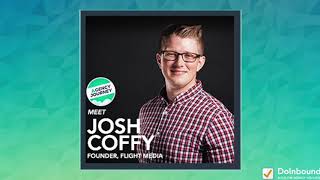
This is a YouTube video titled "How to End the Chaos and Build a Profitable Agency" published in March 2018. It features a podcast-style interview hosted by Andrew Demske with guest Josh Coffey, founder of Fight Media, discussing the journey of scaling a freelance business into a focused, profitable marketing agency. The conversation covers topics such as agency focus, client selection, scaling challenges, lead generation strategies, and service offerings. The content is a single-speaker interview without George B. Thomas involved.
How do you build an agency that allows you to live the dream that you have for yourself, for your family, for your community, for your team, while at the same time helping your clients knock it out of the park and doing it all profitably? These are the big questions that we tackle here on the Agency Journey podcast. I am your host, Andrew Demske. Now let's get to it. All right, Josh, welcome to Agency Journey. Really, really excited to have you here. Excited to share your story this week. Kick us off, share with everyone listening a little bit about who you are, how you got the agency up and running and where you're at right now.
Awesome. Awesome. Thanks, Andrew. Who am I? So I'm Josh Coffey. I like to tell people I'm like to drink, but better. I'm very caffeinated all the time. And actually that's my business title. Legally, fully caffeinated founder. That's a little side not so I'm kind of the founder of Fight Media. I'm more of the visionary for what we do. We're an inbound marketing and design agency, but we do a little bit of sales consulting, which I'll talk about in a little while. I started the agency. We just turned four in October, so started the agency. Just like a lot of you guys possibly listening. You may have listened to a lot of podcasts and gotten so inspired. I think I was listening to the Smart Passive Income podcast when it was episode 12 and I was crazy inspired by all this make money online stuff. But there were so many angles to take on it and it was just a matter of which one did I want to do. I'm living with my parents at the time, man, that's pretty sad. But I was living with my parents at the time and I listened to a lot of stuff. And one time I was on vacation in the Poconos in Pennsylvania. And before I went, I had my mentor tell me, maybe you should check out this website called Elance, which I think is called Upwork or Freelancer.com or something and just check it out. On vacation, I made 1000 bucks in the week. I was on vacation just doing random crap for all kinds of different people. And I realized there's some potential here. And then in the next 45 days, I think I made over six grand. Went in like hardcore submitting a million proposals on all these projects. But at the time it was just miscellaneous crap. Like I would literally write marketing plans for people. I would manage their WordPress, I'd manage their social media, I would edit videos, I would do I would literally do anything for anyone at any price just to get. Just to generate some degree of income. And so I kind of realized potential. This was four years ago. Fast forward. Now I live in Scottsdale, Arizona. I work out of our office here. We have an office back in Ohio. Nice brick and mortar, cool downtown building. We have a team of between, I forget what it is, 10 or 11 people. Now. We just had someone leave for another position, but we're 10 or 11 person team. We've scaled dramatically. We're very profitable as an agency. And the coolest thing is we sell much bigger retainers and we're incredibly focused in what we do. I don't just sell anything to anyone. We tell a lot of people no, and we only say yes to the people that we kind of like and we know we can help.
Gotcha, man. That was not. I didn't increase the speed on that audio at all, guys. That is just pure, pure caffeine at work. Josh, tell me, walk me through how you got to a point of focus. Was that hard for you? A lot of people listening are freelancers right now and they're trying to figure out, do I take this freelance business and just keep running with it, or do I switch gears and build an agency? What would you say to someone in those shoes, having gone through it yourself?
I'd say, and I apologize, I do talk incredibly fast, so feel free to slow me down. But really it comes down to, you have to ask yourself, where do I see myself in 10 years? In 10 years is far enough out where it's not like super close, but it's still pretty far out. And you got to ask yourself, do I want to? If you're a freelancer right now, let's say you're working with yourself. Do I want to be doing this like selling the accounts, doing the bookkeeping, doing everything, implementing the campaign, dealing with the clients, Dealing with the clients who don't pay their invoices on time. Do I want to be the person doing this in 10 years? And I'll tell you what, some people, they do, they really do. They're like, I'm a hands on person. I want to be doing everything. I don't want to scale big. I want to make 150,000 or less. If I made 150,000 or $100,000 a year personally, just doing it all myself with no office overhead and all this stuff, I would be happy as long as I could work from anywhere in the world and sip martinis on a beach, which is a terrible Representation of the American dream. You will never sit martinis on a beach and just work from your computer guys for four hours a week. It doesn't happen. But if you want to do that, that's okay. And I've met people that. That's all they want to do. And they want to do that the rest of their lives, and they're okay with that. Me, I'm not like that. I'm a visionary. I'm thinking, okay, what happens when I get my first employee and then 5 and then 10? What happens if I don't have to talk to a client again, if I don't have to sell the account, build the account, manage the account and service everything? What would my life look like then? And fast forward four years, and that's what my life's been like for a year already. I actually don't sell it. I don't do the sales, I don't do the billing. I don't do the management of it and the servicing of it. I'm just the visionary developing our team and where we want to go. And so you got to ask yourself, where do I want to be in 10 years or five years from now? Do I want to be doing this or do I want more? If you want more, then you're going to have to realize you're going to have to endure a lot more and you're going to have more of a roller coaster ride. But in the end, it could. It's really, really worth it, and it's much more profitable. It's just a lot more challenging. But you have to focus.
Gotcha. Walk me through what your journey was like. Transitioning from just doing freelance stuff by yourself now to a team of 10 or 11 people.
What.
As you look back on that now, and it's. I mean, you guys have hit this pretty quickly. But what are, what were some of those low points where you, you learned lessons that changed things moving forward? Because everyone talks about the highlight reel, but are there any kind of failures that you went through or learning experiences that you had that really kind of shaped the vision that you have that you're kind of fulfilling right now?
Yeah, a couple. A couple. A lot. A lot. And in fact, so for us, when I was a freelancer, and I guess what is technically a freelancer and entrepreneur, I guess a freelancer is an entrepreneur. Right. But when I was a freelancer, I decided, I made that decision. Where do I see myself in five, 10 years? And when I decided I wanted to scale this baby, what I did was I wrote A list of what I call MBUAs, minimum wage activities. What are the things that are not scalable if I'm doing them, and what are the things that I least like doing. Then once I created a list that I determined how long is this going to take to do, and then I began, I hired a virtual assistant, who now four years later is our marketing director, has her MBA and she runs our entire team. So I created a list and that's how I started scaling. I mean, guys, you probably do a lot of stuff if you're just freelancing right now. You're probably crazy in the grind and you're so focused and working in your business. Like, they always say that you're not working on your business, which is scaling. And so my advice to you is if you want to scale and you do decide to, you need to write down everything that you don't like doing and that can be easily trained on someone else. Bookkeeping, for example, that can easily be trained or outsourced and create that list. And that's how you begin to scale. And you find someone that can help you with that part time and then shift into full time and then you just continue growing from there. But as far as like realizing, I mean, at first, guys, we sold everything that you possibly could because I wanted to generate revenue. And so I sold literally anything that I could for a price that I thought was kind of fair. Now as you start to do that, you realize you become a monkey to a lot of clients and they just tell you to go there and you go there and you do whatever they want. And the other challenge with that is because we were doing everything. When you do everything, you're known for nothing. It's that whole jack of all trades, master of none. And so what happened was, because we were doing all these different things, it hit me one day that we do so many things that we don't get any consistent referrals for anything in particular. We get referrals for all kinds of random things. And so it just perpetuates this random business that we have. You know, you want photos edited, you want, you know, graphics, designed a WordPress website, thrown together, social media, PPC, you know, we would literally do anything. And because of that, it perpetuated all the random crap because everyone who's doing random stuff with us would just refer all their friends for the random stuff that they were doing and it would just continue perpetuating. And what you'll realize real quick is if your number one goal from the beginning is to Scale that is not scalable because you're using different software for every single thing. The processes look different for every single thing. And if you're always doing everything different, then it's going to be challenging to scale. So one day I was sitting in my office in Ohio and I realized, holy crap, we do way too much. No one knows us for anything because I get a new request for different stuff every day. It's time that we stop a la carting everything that we do and we focus in on less than three services.
Was that getting to that point? Was that a hard decision for you to make? Because when you say yes to three things, you say no to 97 other things and that can freak a lot of people out. What was that journey like for you guys?
Oh my gosh. It was the worst quarter of my entire business career. It was horrible. So what happened was this was in 2016, actually. So a year ago this quarter. So Q4 of 2016, it was October 1st. And we told our clients a few months before we said, we are completely selling. And at the time it was only two things. You either do inbound marketing with us and our retainers start at 3,000amonth or 4,000amonth. And you either do inbound marketing with us or we design website or we do your website design or we don't work together. And in hindsight, it was probably a bad transition, but we cold turkey dropped, I think over $10,000 in reoccurring revenue in one month in October. And so what we for the transition, it was very scary. And so because we said no to that, we had to say no for a long time. And I would say for the first six months it was just, it was a nightmare. What happened was we took the transition. And not only did we take the transition, but because we had to focus and we realized we need to, we had to let the low hanging fruit clients, the ones who paid us like 2, 3, $500 a month and were just a pain in the neck, we had to let a lot of them go. We lost over 10,000 in the first month of revenue. So in hindsight, I would wean off of them one at a time. I would not cold turkey all of them because in three months that's over $30,000, guys. And so we cold turkey dropped all of them. That was a bad idea. Don't do that. But it was good though, because we started doing that. And for the first six months we only had like, I think four or five inbound retainer clients at a time. Paying us 4K plus a month. And so we were able to barely sustain. In the first three months, we hit a huge negative. We lost 30,000 DOL revenue. I actually had to take out a line of equity. It was terrible. It was horrible. So don't do that. But we ended up making it. We ended up making it through by a thread. And in the first six months, because you make the decision to not sell anything else, you are going to say no to a lot. When someone comes to you and says, hey, could you manage my social media for $800 a month? And we say, well, we start at 4,000amonth and we do all your email automation and your CRM and we do all this stuff. There's a lot of business left on the table, but you have to stick it out. And I will say this after the first six months, the last six months have been incredible because now that's all the referrals we get. It takes a while to transition, but that's all we do. Someone comes to us, it's either you're in or you're out, and that's it. Those are the only two options. Either you can afford us and you believe in what we do and you see the value in what we do, or you don't. And if you don't, that's okay. We'll give you a high five and we'll point them in the right direction. But yes, you leave a lot of money on the table and you have to get over that fear. It's more of, like a mental game than it really than a physical game. Like, you're going to lose a lot of work, but you're focused for a greater purpose and revenue.
Yeah, I remember the very first sales conversation where I had to say no to a $15,000 WordPress build because we were moving away from WordPress design. And just like, what a tough pill that was to swallow. Because, like, our agency started in college and I think our first website was like 500 bucks or something like that. So you're looking at this thing only a few years later, that's 15 grand. You're saying, no, that's not a good fit for us. You're just like, the inside voice is.
Like, what are you doing?
Stop doing that right now.
But the. You're right.
The, the. That's the cost of focus, essentially. And there's going to be that learning curve where you're training yourself and you're adjusting and it's cool. Here you say you would have done it differently, but it's worth it on the other side, even when you didn't.
Do it the way you would do it.
Now can you share with us how you got to decide the three services that you did pick? What did that process look like?
We kind of looked at two things. When we looked at everything, we realized, okay, inbound marketing, everyone knows it, it's a buzzword, it's actually kind of annoying. I think inbound methodology just kind of makes me vomit inside a little bit because everybody knows it, they see it, but nobody actually does it. But inbound marketing is what we decided to do and it kind of encompasses everything. So if you guys aren't from, well do inbound, everyone's probably listening to this, is familiar with inbound marketing, but with us it's basically inbound in my perspective is just literally when you do everything. So we really just took everything we were already doing and we just repackaged it into a much higher price item. So rather than working with 40 clients a month at a time, which we used to work with at an average price point of like 500, 800 bucks, we're working with 10 clients, 12 clients at much higher price points. So we really didn't completely change everything. We just decided what's everything that is necessary for a client to succeed, what is absolutely necessary. And everything is necessary. When we were doing just social media by itself, there were no metrics. Our clients would be like, oh well, so what are the results of me paying you $800 a month for social media? And I would say, oh, we got you 842 new followers, 22 likes and 114 link clicks. Because that's all Sprout Social told us. And there's no bottom line of that. No one gives a crap about followers. In the end they care about sales, qualified marketing, qualified leads and customers and revenue. And so what we realize is when you don't track the whole cycle, when you don't control the whole beast, you can't control the outcome. So we just took everything and we just repackaged it into inbound marketing and we sold them starting at 4k a month on 12 month retainers at the time. Now we don't do that anymore, but we used to sell them on 12 month retainers and then we decided, okay, the other thing that we already is web design. We do WordPress custom web design development. So we don't just grab a theme and do whatever, but we decided let's sell WordPress, let's host their websites to create recurring revenue. We've already Been doing that. We launched it two years ago, so we're going to continue. And then the third thing that has evolved in the last six months has been sales consulting. Or some people call it sales enablement. I don't, because I think that that's also a grody word. I think it's just a buzzword that everybody uses. Like sales enablement. Like enable me to make more sales. No, you're getting consulted on how to operate as a sales team. So we've started transitioning to. Those are the three things we do. The first one is just a repackaging. The second one we were already doing. And the third was an evolution of what all our clients dreadfully needed. And that was they needed a good sales process and they needed integration of everything and training for their salespeople.
Gotcha. So it's kind of a necessity. Brings you to where you are today.
Yeah, exactly.
Awesome. So what did talk to me about how you, when you made your switch here, how you kept the doors open. I heard you mention that you get a lot of referrals. Are referrals driving a large part of your growth? Is it agency marketing? How are you guys generating and processing leads right now?
I would say, I mean, there are really three ways guys that you're going to grow in. Two of them are kind of out of your. Well, they're in your control, but they're also out of your control. There's three ways in my eyes, how you're going to generate new business, especially ones that are going to pay you what you deserve to be paid and they're not going to complain about it. The higher quality clients. And so there are three ways that we generate leads. First, we do have inbound leads. I think we get, I don't know, 250 to 300 inbound leads per month. You guys that don't do your own content creation and don't manage your social media and you're not heavily active on all your stuff. That's the first step. The first thing is to practice what you preach. Way too many agencies preach and they don't walk the talk. Super like. It's kind of a pet peeve of mine when I talk to an agency and they're like, oh yeah, we're an inbound agency. We do paid ads, we do email, automation, CRM, blah, blah, blah, inbound blogging, content, social media. They say all these things and then I go and I look at their social media and they have like 112 followers and they haven't posted in 17 days. And then I go look at their blog. And they blogged a month and a half ago. One time, that entire month. And then I never see their ads. And I say, well, you know, do you use. What advertising do you do? Well, we don't do a whole lot right now. It's mainly referral. But you're not practicing what you preach. That's the first step. In my eyes, guys, the first thing, if you want to get serious and treat this like a business in scale, is you have to practice what you preach. We get over 10,000 visitors a month from other Google to our blog every single month because of efforts four years ago that we still do every single week. We blog two to three times a week. And we've been doing that every single week for four years. And so it's been growing well, three times. It's all been really consistent in the last two years. But we started it four years ago. So you got to practice what you preach. We have a huge social media following, email automation. We run paid ads. We do all of that. That's the first thing from doing that. You're going to generate inbound leads, and then as you convert customers, word of mouth is huge for us, and that'll grow over time. It's not as much of your control, but that's where a lot of our business comes. But outside of inbound is probably, I would say inbound leads are probably 40% of our business. Referral is like 40% of our business. And then I would say the other 20% is what are called target accounts. And these are simply clients that fit your vertical or your niche that you work really, really well in and go after them. We have what are called sales cadences for our sales team. And what we do is we leverage LinkedIn to connect with people that fit our verticals, and then we go straight after these people with everything that we have because we know that we can help them. And that is also a way to generate a good chunk of income as well, or a good chunk of new business.
What verticals are you guys focusing on?
This is the question that a lot of agencies struggle with that I know, including ourselves. And focusing on one or two verticals only is challenging. There are a lot of businesses that come to you that you know you can help. I would say that out of all of our business, we work very well with keynote speakers and authors because we're incredibly good with product launches, book launches, getting speaking engagements of $5,000 a speech or more. So it's a really interesting vertical. We do a lot with keynote speakers and authors. The other vertical is insurance. We do a lot in the healthcare and insurance brokerage field and just regular insurance stuff and lifetime long term care and a lot of stuff like that. So we have a lot of clients in the insurance and then a lot of keynote speakers and best selling authors. And so those are like the 2 Prime, I would say. But we do work with clients in a lot of other verticals. But we're starting now to tailor all of our content and our offers and everything we're doing in our webinars to those two verticals because we know what they need, we have case studies and we know how to speak their language.
Nice, I like that focus. Would you be willing to walk us through, like what is your, what does your funnel look like? Like from paid traffic through webinars, through bringing the client on. What are those main phases that you like to bring people through?
So webinars are definitely one I would say. I'm not gonna dive into webinars because I think everybody's heard, you know, there's always a webinar, funnels, every webinars, things like that. We do webinars, but I would say the greatest source for us honestly are just ebooks and guides. Like the ebooks, the guides, the templates, the things like that work like gold for us. We generate, I mean we write, we have a lot of ebooks out there. And when you're running paid ads to them and you're having ebooks and using optinmonster and pop ups on your website and you have them integrated through your blogs and stuff, it really starts to add up. And when you have like let's say 300 or 200, make numbers easy, 100 ebook downloads a month. By the time you weed out a lot of the freebie seekers and worthless ones that aren't really relevant to you and they're not really going to become a customer of yours, you'll find 20, 30, 40 of them are decent and worth reaching out to. You reach out to those you're going to get some appointments. That's kind of our flow. Ebooks are our greatest source as far as inbound leads goes. What we do is someone downloads an inbound lead, they download an ebook, they become a lead, they get enrolled in our CRM. If you don't have a CRM, highly recommend you get one. We use HubSpot for marketing and for the CRM they get uploaded into our HubSpot CRM, it's just right into our pipeline. As someone to talk to. And as soon as the lead comes in, we have an automated sequence that our sales guys will send out to them. And the whole goal is to get them on a call for a free assessment. Once we get people into a free assessment, I mean, the rest is history. We close, I'd say easily 40 to 50% of anyone who actually gets on a free assessment. With us, it's really, really high because we have the scripts down to a T. And so our entire purpose is to push everyone, no matter what they're doing, into a free assess. Whether they come through a webinar, we offer a free assessment at the end of the webinar, whether it's through the ebooks, free assessment, someone fills out a form, we try to give them a free assessment, whatever that is, free assessment. So you want to make sure that all your efforts lead toward the same thing. So the messaging is the exact same and you don't get confused about what the next step is. Once you get them as a lead, next step is always a free assessment.
And then how are, where are you taking them from the assessment? Is that kind of picking one of those three buckets? Or do you have any discovery projects or anything that you're pointing them through to start working with them?
Yes, yes. Okay, so this is actually another interesting topic. And I guess I could say that we offer four things, but the intro project, I guess you could say is part of kind of diving into the inbound. And so what we do is we do not spend 30 hours getting on a million meetings with different people and leaderships and all these different people that are making a decision together. We do not spend 30 hours going through this. By this end of the first 30 minute meeting, we know if they're going to become a customer or not. What we do is we sell what we call a flight Media Runway, which is basically, it's gaining a lot of popularity now. A lot of people call them roadmaps and things like that. But basically what we do is we sell Flight Media Runway. It plays off the whole flight pun. And what it is, is it's like a 50 page document we draft. And it is gorgeous, by the way. I could send you an example if anyone wants to look at it, steal it, use it as a template, I don't really care, just, you know, don't put our name on it, just use your own. And so what we do is we sell them for between five and $7,000, depending on the size of the company. And it outlines 15 points, everything we need, their barriers and their challenges, their buyer Personas. Everything we would normally do in a retainer in the first month, we basically draft all of their strategy for the entire year. All the email drips. We don't write them, but we outline them, and they're beautifully designed in this huge PDF. And then what we do is we print that out. We get a hard copy bound book to it. They get a hard copy book because it is 50 pages. And then we have plan for what we need to do. We walk to them at the end of this Runway process, and then we hand them a proposal and say, hey, this is what it's going to cost to do everything in this proposal. Because the problem is, too many agencies will just quote someone and send them this contract and say, oh, It'll be for $3,000 a month to do all this stuff. And then you dive into it, and you realize, holy crap, this client is needy. They're a bad fit. We hate each other's guts. And now we're in a contract, and it takes a lot more to do what they were hoping to accomplish. So in this way, we outline all the goals, the revenue that needs to happen. So we know if we're a good fit with these people, if we'd like them, and if we would work a long time with them. And then we also know what we need to do. So we're not just submitting a proposal for whatever. It's very specific to them. We intimately know them, and the probability of them closing is like, 80%.
Nice, man. So I'm just feeling I'm here in focus kind of at each phase of the funnel here, which is a great takeaway, guys. As you listen to this, think about what are the services that you want to offer? Check out the excess. Focus on what you do best. When you think about your verticals, focus on where you've seen some success. And then when it gets into your funnel, focus on that central point of attention, which for you guys, Josh, is your free assessment. And then going into your. Your Runway. I love that. I love the analogy. And the playoff you've got right there, that's been awesome. So I just want to thank you so much for laying out everything that you have so far. If you've kind of perked anyone's ears and they want to reach out and say, hi, maybe grab a copy of the plan you offered, what is the best way to get in touch with you?
They can send a smoke signal or a homing pigeon. Those are the two primary ways. Outside of that, just follow me on Instagram, Oshcoffee C O F F Y or just shoot me an email. JoshLightMedia Co I'd be happy to respond to anyone's emails, anyone's direct messages, or what have you. I'd be happy to help you guys. I have a lot of agency friends. I do a lot of work and mentoring with some agencies. So if you guys need any help, any direction or feedback you'd like, I'd be happy to help anybody listening.
Awesome. Josh, thank you so much again for coming on Agency Journey, sharing your story. Really appreciate everything you delved into right here. We'll check in soon. Man.
Awesome.
Want more great episodes like this one? Hey, I'm Gray MacKenzie, a host here on Agency Journey. I don't know about you, but sometimes I get a little overwhelmed when I find a new podcast. There are so many great episodes and great guests, it's hard to know which ones to listen to first. That's why we put together a list of the top 10 most downloaded episodes of Agency Journey. And you can get a copy of that list plus all of our notes and takeaways just by texting the word do inbound to 44222. Again, that's do inbound, all one word to 44222. Standard text rates apply. You don't want to miss these Great episodes. Texts do inbound to 44222.










