How to fix chaotic project management at your agency: Q&A with Jeff Cypher
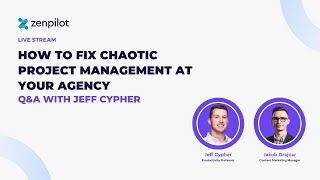
Jeff Seifer and Kuba Grajar walk through how to diagnose and fix broken project management at agencies. They cover ClickUp setup, standardizing statuses and custom fields, centralizing communication, and getting teams to actually use the system through training and a ClickUp Champion role.
Chapters
Testing, testing. Hello, hello, hello, everyone, and welcome to the zenpilot Live show. So good to have you with us here today. My name is Jakub Kuba Grajar, content marketing manager at Zen Pilot. With me is Jeff Seifer, our very, very own productivity professor. Jeff, how are you doing today?
I'm great, Kuba. You know, the American football is starting up tonight. We have the. What is it called? Hall of Fame game. So I'm pretty excited, really excited for the NFL to get started. So that's just making my day that much better.
Okay. I wonder if any of the watchers and listeners are excited about that. I personally, I mean, I follow League of Legends more than American Football, and I don't even follow League of Legends that much. I once went here in the Polish city in Katowice. I saw some of the teams playing live, and that was like, when it happened, like 10 years ago. Anyway, welcome, welcome, everybody. Definitely let us know if you can see us and hear us. We're coming to you live. Whether you're watching live or you're watching the recording, though, still super excited to have you all the same. So let us know that you can hear us and see us. That's the first thing, because this is being recorded. We want to make sure the recording is all well and good. In the meantime, Jeff, I wanted to ask you, I mean, today we'll be talking about, generally speaking, how to fix chaotic agency project management, kind of the beast that, that we tackle every day here at Zenpilot. And I wanted to ask you, who do you hope is tuning in? Who will benefit the most from listening to this conversation? Who do you hope is coming in with questions for you to address?
Yeah, yeah, good question. So, honestly, today I think it's going to be very helpful for, I don't know, agency owners, if anyone has started their agency and they're just trying to get some sort of project management system set up for their team? Like, maybe they've hired some project managers, or maybe they're just in the state of, like, they keep bringing on clients and they need help just figuring this out, especially with ClickUp or teamwork. So agency owners, any project managers out there that are working in teamwork or other project management tools and just trying to get some tips and insights on how to make it better for their agency, as well as chief operating officers or anyone in operations, to be honest, that they're kind of the ones that are in charge of all this and how it all works. But honestly, also just anyone that's like, just really trying to be more process driven or have more of a systems mindset. I think this is one of the things that I've especially developed over at working at zenpod and working with a bunch of teams on building out processes, you become really process driven and you're always focused on, okay, we've done that a bunch of times. How can we turn this into a process and have templates for it to make the next time go that much faster? And then you can also delegate. So anyone that's trying to get that mindset and trying to get additional tips on how to really build out their processes or systems, I think would benefit greatly from listening to this chat here.
And I remember having conversations, for example, at my previous company where, and it's really funny to think about it from our perspective where, you know, somebody was trying to do X, for example, I don't know, publish something on the website and they did it kind of by themselves. And then somebody came to them and said, do you actually know that we have a process for this? I didn't know we had a process for this. That just doesn't happen when you're on zenpilot because there's a library where all the processes live. But anyway, you want more details about that, we will be sure to give them to you. This is a Q and A session. I've got questions prepared for Jeff from my own bag of curiosities, but if you have questions yourselves, definitely use this opportunity to ask our productivity professor. These are his offers hours. I'll start with a question for our audience though. Let us know in the chat, in the comments on YouTube and LinkedIn where we are streaming what project management tool you're currently using. We're super curious at Zenpilot, we're super excited about ClickUp and teamwork, but we've had tons of conversations about Asana Notion Monday. Accelo, I think, is one of those as well, which I haven't personally ever used. But let us know and let's get that conversation going. And still we want somebody to let us know that you can see us and hear us. So if you either of those is fine, leave us a comment. Okay, let us then jump to the first question that I've got prepared for you as we wait for comments to roll in. And the first question that I've got for you, Jeff, is my favorite question. Oh, some comments are coming in. Lester is saying ClickUp. Candice is saying ClickUp. We'll let those build up a little bit and then we'll review after I ask you my favorite question. So Jeff, what is your number one tip for agency operators?
Yeah, that's a good question. I mean there's a lot of things that you can think of. But I would say, at least in my experience, the big thing is really always be thinking of your team. I think a lot of people kind of forget the whole aspect of training and opening up multiple avenues of communication for the team. Like I've gone through, I've come from a spot of no project management to chaotic project management to very organized project management. And honestly like a lot of the chaoticness is going to come from not getting your team involved early on. So I would think one thing especially when you're thinking of the team is you always need to, throughout this whole process you need to keep communication open from them. So if that's forms that they can fill out every day whenever they want to, just kind of leaving that open for like give us some feedback or advice whether it's on a process, whether it's something that we're doing. That way maybe either a can be anonymous and they're not afraid to fill that out. But that way you have a way for them to communicate consistently to you. You can continue to collect that feedback and that's a great way. When you open up those methods of communication for your team then they'll be able to see that and you'll continue to get that stream of feedback for you. Also things like surveys on a one to five scale or sort of more open forum on that, that's a great way to pull in feedback. Having team meetings as well as one on ones. I think a lot of people just focus on team meetings to collect feedback from their team. But if you open up different channels that's going to make it so that the people that are more quiet, they might be give all their feedback in a one on one instead of a team meeting or maybe in that survey or form. So you have to really get your whole audience, you have people that are going to speak up way more than others. So be able to open up different channels for those different sort of personality types in terms of how they want to share their feedback. So always be focusing on the team, also be consistently training them on what you're doing, what you're trying to do. This is one thing that I've seen is a big reason for turning to chaotic project management is because people don't train their teams. They don't provide whether it's documentation, they don't provide training courses, they don't provide even just Open methods of Q and A or ways of walking team members through how to use ClickUp or whatever other tool it is. I think that is one of the biggest reasons that a lot of implementations or project management fails is because the team doesn't know how to use it. And then additionally, as you get that feedback, continue to optimize over and over again based off that team's feedback. So always be thinking about your team, be asking questions, be proactive, get in front of them, figure out what they need, how you can support them. And I think that's a great way to get the most out of either ClickUp or any other project management tool that you might be using.
Yeah, yeah, that's great. And you know, at some point in my career I might have been surprised by your answer because, I mean, we started the question and, you know, we started maybe revolving around, you know, the tool, but the people piece is so important. I mean, even in my own experience at my previous company, I was the driver of adopting ClickUp and I noticed that it's just, it's such a big responsibility you're putting on yourself and you get, I mean, it's a nice situation when you get questions. The worst situation is when you've got this silent death of adoption where you think, oh, our marketing team is running on ClickUp. And then less and less people are doing it every day. They're starting their own personal to do lists and it's just getting worse every day. So yeah, definitely you're highlighting a very important piece here. In the meantime, in the comments Here, we've got ClickUp answering the question what PM tool you're using? ClickUp. ClickUp. I was saying ClickUp and Anne is also saying, Big fan of ClickUp. So we know what we have here in terms of the PM tool representation. If you're using something else than ClickUp, now is the time to comment and throw that in the bag. I do wonder watchers and listeners what you would say about your usage of ClickUp. Are there particular issues with it or questions about it that you want answered here today on the stream? Don't be shy to ask. The Q and A is ongoing. We're not going to wait until the end to answer your questions. So if you've got anything. Oh, Emily is saying Nifty pm. Have you ever used that?
That's actually a new one to me. I don't think I've ever heard of Nifty pm, but I'm sure Gray on our team has tried and tested it out because they've gone through basically every single project management tool.
Oh yeah, yeah, yeah, that's the story. We've checked over 70 of them to land at ClickUp and teamwork being optimal for agencies very well. So remember, the standing question is if you've got any comments or questions about ClickUp, your usage, what you like, what you dislike, what you would like to know more about. Definitely happy to help here. However, we are addressing an even larger problem here, talking about chaotic project management in general because the story often starts with the tool, but then it gets much deeper. Well, actually that was my next question for you, Jeff. Having defined this kind of problem that we're tackling, chaotic agency project management, I mean, you know better than anyone, having helped over 100 agencies fix this problem, what does chaotic agency project management look like? What are the kind of surface level symptoms of this?
Yeah, that's a good question. Let's see if I can categorize it. Well, I mean I would say the first one is probably going to be around not having any structure whatsoever. So I mean I've seen teams that either a. I mean if you're in clickupper, let's just use the spaces and their kind of hierarchy structure here. But like a lot of times people won't have any set clear structure with its spaces, folders, lists or tasks and subtasks in it. It really leads to complete chaos there because if you don't have that structure and people don't know where to put a task or they don't really care about where they're putting a task, then that's going to lose all the visibility and anything that you want in the future because you need to think about, okay, if I want to get some reports on profitability or anything like that, I need to actually get my business into the tool and reflect it that way. So a lot of times at zenpod, I'm sure you've seen a lot of our content. We have a space for growth, which is your sales and marketing. We have a space for delivery, which is all your client focus work. And then you also have operations, which is going to be basically everything else. Hr, finance, things like that. And when you put it in that hierarchy structure that allows you to know where a task is going to go. Because then I know, is it for sales and marketing? I can put in the growth space. Is it for client work? I put it into delivery or if it's for operations, then I have sort of my section there. So just getting the tasks in the right place is going to make it super Easy. And that's just going to help you have somewhat of a structure for the team team to follow there, especially when you're trying to get reporting out of it later on. Also thinking about not having standardization when it comes to things like statuses or custom fields, oftentimes I'll get into a ClickUp workspace and they have different statuses for every client or every different space in their ClickUp workspace. In that, like people don't think about it now and then when they go to create a view at the everything level or they go to a dashboard, they're like, oh wow, this is way harder than I thought it would be to actually get a good view because I try to filter or sort or add some settings within that view. And I'm like, there's a hundred different statuses because they're different every single location within your ClickUp workspace and that is just not what you want to do. So if you have statuses out the wazoo and there's just no standardization there, then it's going to be. It's going to be very chaotic. Also people start relying on statuses for like fully showing where work is. So I've gone into a ClickUp workspace and I've seen. Let's use an example of blog posts being the deliverable and then maybe they have a SEO audit. Essentially that blog post in that SEO audit might have different statuses because maybe the blog post needs creative work and the SEO audit does and they're using the statuses to kind of label where that is. So maybe InDesign versus something else. Those statuses become the source of truth for where a project actually is or a deliverable. So when it's in the writing stage, the status of that blog post becomes in writing stage. Instead of actually having tasks for all of that work, the status becomes that truth. And within that, that's how things slip through the cracks. Because essentially the layout becomes one task for a blog post. You're using the status to mark where it is and then you're reassigning that and switching the task back and forth. So then when you're tracking time, you again don't get any good visibility into that. You don't really know where it is. You don't know if it's in client review or in our teams review. And that's how things really start to slip through the cracks. There is using statuses like that or just reassigning work or even having multiple signees. The biggest thing I think here, having multiple Assignees on one task is going to lead to failure. And let me tell you why. If you have two assignees on a task, each of those people are going to be very nervous. They're going to go into that task, be like, I don't know if I can close this. I don't know if this person is the one that's actually in charge of this work. And that's how things are going to slip through. So if you have any tasks in your system that have two assignees on it, something's going to fall through the cracks. I can just tell you that now. That's just people get stressed. They're like, I don't know if I can close this. I don't know if that's supposed to be me. So yeah, Scuba put their multiple signings equals accountability, confuse, killer and confusion. Definitely don't have multiple signees on a task there. Also, again, a big one is just obviously not having processes built. A lot of people will just implement ClickUp or any other project management tool and expect the technology to solve all their problems. But if you don't actually have any processes or standardization in that way, you're not gonna be able to sign work or maybe you're gonna create a bunch of tasks just kind of one off and there's gonna be no sort of workflow there for things to run smoothly. So you need to have a lot of standardization. You need to have the processes built out for this to actually work. You also need to have a central source of truth. So ClickUp really needs to be that central source of truth. So whether it's communication, whether it's task progress or sort of client information, if that's all over the place, then things are going to get lost. I've dealt with communicating with clients in Slack, in email, text message, or even calling them. And then when you do something like that, then no one has that context unless everyone's taking very detailed notes and putting it in a central spot. So if you run into the situation where you're sending emails and there's always the classic like, oh shoot, I forgot to cc you on this email. And then you don't actually get the context to them, that always happens. And it's like sometimes email can be disaster. So even opening up a Slack channel or keeping communication on a deliverable in one spot, oftentimes I'll use the parent task for that. And ClickUp, that's something that you definitely want to do.
But I would add, this is huge actually, what you mentioned here, because you never Know who might appreciate the additional context I've dealt in my experience with. I mean, dealt with. I actually appreciated a situation where our social media posts were being created in ClickUp and I had a person writing the posts and I had, you know, one of the team leads that was reporting to me who was reviewing the posts. So, I mean, technically, I had nothing. Well, maybe not nothing, but I had little more to do with that process. And still, I really appreciated seeing those conversations in ClickUp comments, you know, okay, you know, for this draft, you might, you know, take this in more of an informal direction, or have you noticed this? I. I could see both. How my team lead was giving the feedback, how the individual contributor was reacting to the feedback, how that flow went. And honestly, I saw a lot of just positive interactions between them. You know, thank you. This is so much better. No, thank you for your diligence and work on this task close, post, ship. It just feels great when you can see that. And, you know, I would not be privy to these conversations if this hadn't been kind of out in the open. So, yeah, for sure.
There's nothing like closing a task, too. That's always just so relieving. You're like, I finished this. Close it. It's a little adrenaline rush and it just keeps the momentum moving.
Yeah, I think that that's part of what I like about the Zenpilot methodology, that it's, you know, subtasks should be one person, one sitting, because then they become a lot easier to close, basically. You know, it's more granular, for sure, but when you just manage to close these tasks, multiple tasks per day, it just builds this huge momentum. Speaking of granular, have a question coming in here from Lester that I think is a perfect time now to address. So here's one for you, Jeff. The Q and A begins, I feel like. And Lester says, I feel like we have gotten too detailed and granular with our ClickUp implementation. It feels like we need to find a happy medium. What can you suggest?
Yeah, and that's a great question. I feel like that's something we often get because you always want to find the happy medium. Like, oftentimes people have no granularity, and then sometimes there's way too granular within the task structure. And again, this is, I think, going back to my first point about, like, focus on the team. So open up those. Those forms, open up surveys, or just have team meetings one on ones and ask these questions of like, okay, where do you feel like this is too granular? Because I think That'll be helpful insight from the team's perspective of where it is too granular versus where it's not. But I mean, I would look at also your task structure and if all of the subtasks underneath, let's say a blog post are all like five minute bites, I think that's when you know that you've gone too granular and you can merge a lot of those tasks. I think the biggest things that you need within a workflow are like the main review and right, let's just use the blog post example. Like the big things are going to be writing the copy, someone needs to review it, someone goes back and makes edits off of those review cycles, things like that. Also sending it to the client, getting it back from the client. So I think when you just get those main pillars of, you need to know when that piece of work is done, that's what you need as well as in your process. Let's say you have two subtasks in a row that are done by the same person often and maybe they're both like 15 minutes apiece. Oftentimes you can just merge those two subtasks together and then use a checklist of those items. So then you'll just name the subtask differently and use the subtasks or sorry, checklist to say don't forget to do this and this. So I would just say go do sort of an audit of your processes that you have developed if there are subtasks that are done by the the same person. Like if there's three subtasks in a row or two oftentimes see if you can merge those together, especially if they're 15, 30 or even an hour, merge them together and utilize those checklists to be more of the process or the action item, slash the don't forget to do this, this and that. Because I think that's a good way of doing it. Because again, a lot of times the subtasks is do this, but the checklist can also fill that role. And if it's assigned to the same person and they have a bunch of tasks in a row, oftentimes those can be merged together. So hopefully that answers your question. This is one that I feel like we can get into a lot more detail and go through specific use cases. But I would just say, Lester, skip, go through sort of your processes and look where there are subtasks assigned to the same person in a row. If they're pretty short, then turn that into a checklist and merge the subtask into One.
Yeah, it's funny because even for this very live stream, I remember I gave you a subtask and I didn't make it super granular in the subtasks that you should check your audio equipment and post about it, et cetera. I think I called a task run through, guest checklist, something like that. And within that checklist you had these kind of granular points, or even for myself, promoting this, there's a bunch of things that you do around the live stream to make sure that more people show up like you, the watchers and listeners. And it's communicate to the team on Slack, post about it on LinkedIn. Some of these, when you can make them happen through one person, one sitting, then you can roll them in. Yeah, that's excellent. I would say, if I may add 2 cents here, I do feel the way we approach ClickUp is rather on the granular side. But all of the granularity is explained by the upside of additional reporting, additional insights, additional visibility and data that you can have about what you're doing. So, for example, when you mark tasks and subtasks as actionable versus non actionable, that helps with reporting down the line. I mean, obviously you know the nitty gritty of this better than I do, but I think I would underline what you said about communicating to the team and explaining, like for every additional bit of granularity we're adding, we're making our data better, helping us make better business decisions down the line. And that just helps everybody grow. Anyway, Lester is saying thanks. Good suggestions. Kevin, in the meantime on YouTube is saying good afternoon from Lakeland, Florida. I don't know, Jeff, have you ever been? I haven't.
I've never been to Lakeland, but I've been to. Been to Florida. I'm. I'm curious as to how warm it is over there because I was just in Florida and It was like 100 degrees and I'm not used to it. I mean, I'm in Pittsburgh, Penn, and it's definitely, I don't know, as much as I want to be a snowbird and go to Florida in the winter times, I'm like, oh, wow, it's. It's very toasty there. So, Kevin, I hope you're not melting in Florida.
It's been quite cool here in Poznan, Poland recently. Like, we're getting. Oh, I can't talk Fahrenheit. We've been getting 20, 25 degrees Celsius. Sorry, Fahrenheit. That would be, I think, quite freezing. Anyway. All righty. So Again, watchers and listeners, if you have additional questions, please shoot them our way. We're here for you. For now, I'm not seeing any. So why don't we continue with talking about chaotic agency project management. So, Jeff, I mean, you were painting the Pict. I was wondering if there's more that you would add to the picture. What I would like to get from you is both kind of what does this look like at the surface level? And also what are the kind of underlying causes of chaotic agency project management? The stuff that on the surface level we're seeing that, for example, tasks are not moving through statuses, but what's behind it is X. So please continue to talk about that for a minute.
Yeah, I mean, I guess the, the other things I was going to add to that would be some of the common mistakes that people make when they're going into a project management platform. And the common question, I'm sure everyone always wonders is they're thinking about workload and they're like, I got a nice workload view. Essentially, this is what they do. They go into ClickUp. They're like, ClickUp has a workload view function, as does, I believe, every other project management platform. Emily let us know if Nifty PM does. I'm sure it does, but they think that that workload view is just going to populate and say, oh, my team has two hours on Wednesday, so I can schedule tasks on Wednesday. But that's not the case at all. I mean, as is every other piece of software, you need to have some sort of strategy behind it before you actually jump into it. The tool is just going to help you with the strategy that you create. So some common mistakes that I see people create or do, and the reason they don't get that workload view is they don't have time estimates on tasks. If you don't have time estimates on tasks, how are you going to populate any sort of workload view? The workload view is going to be tied to those time estimates. In addition, they don't have due dates on their tasks, which is, that's what's going to make something fall through the cracks. If we don't know when it's due, then when are we supposed to do it or when is it actually due? So that's the, the main reason that something is not going to get done is because there's no due date on it and it's not going to actually show up in anyone's view because the views are oftentimes filtered by those due dates. And then when you don't have a due date and you don't have a time estimate or you don't have an assignee, you're not going to populate that workload view because the workload view is populated from time estimates from due dates and assignees. Those are the three elements on every task that you need. Obviously we get into more custom fields that help us really filter and sort out data. And we want to make sure that custom fields are not too crazy. That's another thing that I see when I go into workspaces. You have a million custom fields in your workspace. They're all over the place and no one knows which each of them is used for. And sometimes people are like, I can't find this custom field. Then they create like a duplicate of it. It's the exact same thing, but maybe a little bit different data. And then it's hard to push those together to actually get a higher level report. So that's something that you, you need to be aware of as well. But yeah, I mean, time estimates, due dates and assignees, those need to be on every task. Thankfully, in tools like ClickUp you're able to create like quality assurance views where essentially you can go through and just make sure all tasks have all that information. You can also see sort of who created the task. So that way if I'm a ClickUp champion or someone in the system and I want to see all the tasks that don't have time estimates, due dates or assignees, I can go in that and I can also see who created it because then I can say, hey, you created this task without this information. We need that information on here, so can you please add it to it? You can leave that comment. And it just makes it easy for you to collect all that and make sure that again, those healthy habits are followed. But I know I'm like rambling on and different things, but to go back about or kind of question that you're asking me is, again, I think it's all going with the whole you need to have some sort of strategy before you jump into the tool because people just think technology is going to solve all of their problems. And that is not the case. Yes, ClickUp is an amazing platform that offers, as they say, you'll save one day per week, but that's not going to happen unless you build it correctly. So that's the reason ZenPal exists, is to help agencies build it correctly so that you can save one day per week as well as if you're an Agency owner. And you want to see how profitable you are by client, by service, line, whatever. You need to have the right structure to actually get that information. So a lot of times it's just kind of figuring out what you want, what you need, and then kind of building the strategy from there and also figuring out sort of what is. What are the friction points right now? Is it a technology problem? Is it a people problem, like within the habits, or is it a process problem? What do we not have? What are we missing? And those are things you kind of need to figure out before you jump into implementing any PM tool.
Yeah. So I have a few questions around that. I wanted to stop for a moment on the people piece, actually. I mean, during our livestream two weeks ago with Maggie, and by the way, if anyone hasn't seen that, it's on our LinkedIn and our YouTube. Maggie Cornerens, our client coach, one of our client coaches, was our guest. The topic of adoption of the tool and just how people use the tool, how they navigate the tool, it came up and it feels to me still that people think they have a tools problem, but they have a people problem. And especially with this change, they focus so much on how to configure the tool, they focus little on how to configure the people to use the tool.
Right.
Can you talk about that for a minute? From your experience, what are the popular people problems and actually what's the path to solving them?
Yeah, let's see if I can make this concise. I mean, I think the big one is people are just not using the tool whatsoever. That's the common one of you implement it. And then people are like maybe every so often they close a task because they see it on their overdues or whatever. Maybe so often they add in time tracked. But oftentimes that's always a hard thing to get people to do, is actually track time. So honestly, the first thing is just getting people to.
I've done it in a way where it was kind of passive aggressive on my end, I'll have to admit, you know, some time ago where I only tracked time when something took way longer than I thought it would. And it seemed like such a small task. And then I tracked like half an hour on it. Just be aware how long it took me. But yeah, that's not the way to do it. Just do it when you have strong feelings about it.
Yeah, I mean, I think bouncing off that, like, I would say some of this stuff to kind of bring up like a story. And when I was Saying like I had been in chaotic project management is I was actually using, using Wrike and I don't know if anyone's used Wrike out there, but it's not my favorite platform. They have their, their. I mean every tool is gonna have their pros and cons, but there was no structure. I was not given any training on how I was supposed to use it. And so I was like, I guess I'll track time where I can. But then we were moving off of Wrike into Taskray because it was within Salesforce so it had sort of the same UI and it just made it easy for us to keep all the data in Salesforce. But again, when we implemented it, all our team had was a 20 minute training with a CSM on the Taskrate team and that was it. None of us knew how to use it. Like we just moved tools. We didn't. No one liked Wrike. So the only like you need to get your team involved in the whole decision too because once they feel like they're able to put their, give you their feedback so that when you're switching things up, whether it's a project management tool, whether it's something else, whatever it may be, if they feel like you're taking their feedback and using that to make the only thing was, oh, we don't like this right platform, it's not working for us. So they're like, okay, we'll figure it out. And then they got any processes in the platform, so turn to chaotic project management. Also we were told to put those tasks. It was mainly for us to, to put a time tracked on each of those things when we had a call or did something so that leadership could see in the Salesforce dashboard where profitability was coming from. So we were not as bought in because we didn't see the benefit that it would have for us. So you always have to figure out is how can I get the benefit to you? If they feel like, oh, this is going to save me a ton of time, I can come into work and I can see all of this tasks and I know exactly what I have to do every day, that's what's really going to give them the benefits. And then even bigger is when you have those processes built out and you have all your tasks and then each of those tasks has a description of how to do it. Or even maybe a template. Like say the task is send this over to the client and there's an email template right in there and they can copy that, maybe customize a little bit and send it. They're like, oh, my gosh, this saves me so much dang time. This is going to make me way more productive. This is going to make me way more efficient. I'm going to become a better marketer because maybe you have your best practices and things within those. Those tasks. So they learn a lot too while they're doing it. The process lives where the work gets done. They're going to see those benefits, they're going to get bought in and they're going to be like, I want to do whatever I can do to make this better. And then as they start seeing all that stuff, maybe they then get the systems mindset and they're like, oh, I just did something that wasn't really. We didn't have a process for. And then they get the can I build a process out for this? And that's when you know, like, oh, this is great. We have really good culture. And then when everyone on your team starts being like, I want to build a process, I just did this. And then they're like, this was something new. Maybe they just invest, like investigated in some AI type tool and they're like, oh, this could really increase our efficiency. And then they, they take a loom video of them doing that and then they put that into the task and they build out their own process for this. You're like, wow. Like, once you get that kind of culture, then you've really definitely made it as an agency there. And that's when you know you have a good team that you're working with. But yeah, I mean, I think go for it.
Sorry, sorry to cut it. I just think it's a virtuous cycle. And I've seen it happen too, where, you know, I set up a couple templates. They were actually following the Zen pilot methodology, even though I wasn't at zenpilot at the time. But I did all the bells and whistles, you know, aside from custom fields, because we were still on the free plan. But, you know, tons of subtasks, well, within reason, dependencies between the subtasks, instructions within the subtasks on how to achieve each step. I kept refining. This was actually for live streams. And I kept refining with each live stream. Okay, so this is an additional step. This is an additional point on the checklist. Somebody saw that and they said, wow, okay, so we also do a ton of blog posts. Why don't we have something granular like this for blog posts? And then it just becomes so much easier. There's so many different things to check off on a blog post, especially technical SEO stuff to take care of that when you finally have it in one place on a checklist, it removes so much of the mental load when you have that it really leads to this. I've been thinking more and more about this kind of Zen feeling that you actually get when you follow a well built template. I'm starting to understand the name Zen Pilot more and more. So if I may hit you with another question watchers and listeners, if you have questions about anything that Jeff just said or said previously or has never said, leave those questions with us. I wonder if you're using time estimates for example, or what's your experience with that? Let us know. Meanwhile, so we talked a lot about this image of what chaotic agency project management looks like. And one thing that stood out to me is that you're really emphasizing that you need to kind of look before you jump when it comes to switching project management tools. So can you tell us more about. Okay, well, I mean we know what it looks like when things aren't working. What are the first steps towards making project management work again? What does it mean to kind of, you know, to start designing the system or like what do you need to do before you ever start migrating to ClickUp, for example?
Yeah, and I mean you, you mentioned migrating ClickUp. But even if it is a ClickUp to ClickUp implementation, like a retransformation rebuild of what you've built, it's the, the same thing goes. But I mean what I would always recommend is first you need to kind of figure out again like we mentioned this earlier, if it's a tool problem, if it's or like tool or technology, if it's a people problem or a process problem, you kind of need to evaluate those three areas. And again, this is where let's start talking to the team. Let's get out a form, let's get out some surveys, let's get out some, some team meetings going and some one on one trainings as well. Our one on one just meetings with people because then you'll be able to generate that feedback and you'll kind of figure out whether or not it is a tool problem, whether it is a people problem or whether it is a process problem because you'll start to hear common pain points from your team. So whether they're like I just have no idea how to use the tool, then that could be a combination of the technology or people, maybe we just don't have the training for them. So there's things like that where you need to figure out sort of what problem you actually have. I would go through and audit your workspace and this is where maybe even talk with someone like zenpilot to kind of walk through and see what all is happening. Because oftentimes we can kind of go through and audit a workspace and pinpoint like, oh, that's probably a reason that you're not getting what you want to see. Because if you work with someone that's seen it over and over and over again, then they're going to have some expertise. So there's a reason that like consultants exist because they've seen a lot, so they know kind of how to help. But definitely go through your workspace and kind of pinpoint maybe where there's differences, maybe where people are not maybe putting tasks in the right spot, where there's tasks that are missing some, some important pieces of data. And, and this is why we always recommend too having a champion and we call it a ClickUp. Champion could be teamwork champion could be nifty PM champion, whatever it may be someone that's constantly going through your system and trying to figure out what's going well and what's not going so well. So in ClickUp, it's nice because you can create a whole dashboard for your champion to kind of figure out like what maybe specific people or what spaces or locations within your tool are kind of failing. And over time you get really good insights into knowing like, okay, this person's just not clearing their notifications. And sometimes that's a, that's a people problem. If you don't clear your notifications, then if like an inbox, it becomes meaningless and then you're not actually using ClickUp to communicate with people. If you're, if you're not looking at your, your notifications ever. But over time you got to collect that data and just again figure out people process or a tool slash technology problem, what is it? And then from there, once you kind of figure out the pain points, you also need to set your goals. Like, what are we actually trying to achieve? Or is it supposed to be a productivity goal? Or we just feel like we're slow and we're not getting enough sort of throughput or work out there. Is it more of we're just trying to improve our client relationships right now. Are we getting low MPS scores and we're trying to figure out what that is. Maybe that's a process problem and we don't have maybe good communication with our clients or there's maybe too many people communicating with those clients and we need to figure that out. Or maybe you're just trying to get visibility in general. So as an agency owner, maybe you're just trying to figure out what the heck's going on. Maybe you're trying to create a view for yourself to see like what accounts are healthy versus not where are we spending time. So think about it. Is it, Is it a visibility problem for you? Is it you're just trying to be more productive, trying to be more profitable, or just sort of improve client relationships? And all those can be kind of bundled together, but you need to sort of set benchmarks and have some sort of goal to figure out what you're trying to achieve. Because then if you have those goals and those benchmarks, then you can actually see if you got better after your implementation is done. But then from that, I would always recommend sketch out what you want it to look like. We always use like Miro or Lucid to put it in a separate location before you start building in ClickUp. So build out sort of a technical blueprint of what does it look like in ClickUp? What are the custom fields that we're going to use? What are the views that we're going to create? What are the statuses, what the statuses are going to mean? Also, what are the other tools that we're going to be using? Slash. What are the other tools that we can kind of consolidate and how are we going to connect that all into sort of one sort of platform? I mean, it's not like you're going to have all of them fully connected, but you can through some automations and things like that. So draw out the overall technical blueprint before you jump too deep and actually dive into your product management platform.
Yeah, yeah. And actually, if anybody's curious about that piece of the puzzle, the blueprint, I'm happy to report that we'll be running a webinar specifically about the blueprint next Wednesday. The easiest way to sign up for that would be to go to zenpilot.com right now at the top bar in on our website. You can sign up to a webinar that's going to be featuring Andrew and Gray, our founders, and it'll be showing you what a blueprint actually looks like, how it helps you go through your project management implementation and increase efficiency at your agency. Also explaining a little bit of why, even more about why you build it outside of the tool first, so that when you go into the tool, there's just so much more clarity on how to build things. Well, Jeff, We've got some comments coming in and I always want to appreciate the people who are engaging with us here. Engaging with us. That's such marketer talk. I'm so sorry. Hanging out with us. And Lester is still hanging out with us. Should I say Lester or Skip? Let us know. Saying we use time estimates with ClickUp. That was about my time estimates question before. And we use time estimates with ClickUp and manage our agency's capacity and workload using those estimates and dashboards using widgets. Cool. In fact, we are so dependent on this now that when there is a ClickUp functionality failure, we have a difficult time operating. The last couple of days have been rough, I'll admit that. You know, but yes, when you are at the moment where you know ClickUp being slow affects things, then you know that at least you have this one source of truth. Then Ann is saying great advice to use a blueprint in another tool before building and ClickUp. Thank you, Ann. We also think it's nice advice. Our clients like that. Oh, Skip is saying it's Skip. Ah, okay.
Ah.
This is a rather long comment. I'm gonna give this a closer read before I pull it up, just so I'm sure what we're getting into here. And look, I wanted to pause a little bit on the subject of the ClickUp Champion. This is something that, for example, I mean, I came into ZenPilot with a quite high level of knowledge about ClickUp already. However, the ClickUp Champion piece was still one that I found really interesting, especially some of the rules that we have around who should or shouldn't be a ClickUp Champion. I'm gonna ask you a question in a second. But first, watchers and listeners, let us know if you have a ClickUp Champion on your team, who that is and how that's going for you. And if you have questions around that. And for you, Jeff, tell us more about the ClickUp Champion. Who should that be? If somebody's going to, you know, DIY their implementation or, you know, they want to improve the way they use ClickUp, like, what is the role of this person? What does it do? Who should that be?
Yeah, and I think we. We have a good podcast that Andrew Demski, one of our co founders in gray, talked about, went through ClickUp Champion. Who they are, what makes a good ClickUp Champion, all sort of their roles that they have. So we. That's a podcast as well as a blog post that we can maybe get out to everyone just so they can see that, because it's a good, thorough Deep dive into the role. And again, ClickUp Champion could be Teamwork Champion, whatever, whatever tool. And I would also recommend this for any other software package that you have. Like you always want to have someone that's sort of the expert in it, but really what a ClickUp Champion is and who they should be and what they do is let's start off with what makes a good ClickUp Champion. I would say they're one someone that knows. Or let's start with this. They cannot be the agency owner or the founder. They need to be someone that is lower on the totem pole. This could be sort of a project manager, account manager, or it's not a full time role. It's not someone that's going to be spending their whole time managing ClickUp. I would say it's about 20 to 25% of their sort of day to day or sorry, weekly, weekly capacity. So they're not a full time role of just managing your ClickUp workspace, but they do have the title of ClickUp Champion. They need to be able to be comfortable managing up too. So that's why I'm saying it's not on the leadership team. You don't want to have your leader sort of harping down and say, hey, get your ClickUp work in. You want it to be someone a little bit lower so that it's fine. Like leadership is not always the one doing everything here. It's good to have someone that is able to manage up in that capacity too. But I would say if they have a good understanding of how your agency works, they have some project management background, so they know and understand project management tools as well. Maybe some account management because they know what client questions are or what they typically like the client pain points and things like that. They just need to have a good sort of broad range of thinking there. So it's just helpful for them to know what you take your clients through as well and understand sort of the whole process. I think a lot of those buckets will help make a good ClickUp Champion. But again, we have a good blog post and podcast to talk through that. But really what they're going to do is they're going to be one that is in charge of holding the whole team accountable inside of ClickUp. So they're going to be in charge of auditing the system daily to see where are their good things happening or not good things happening. So they should be looking at again, where there's no time estimates, where there's no due dates, where there's some custom fields that are missing for tasks where tasks aren't assigned, because we need to catch that stuff. We need to make sure that all of that data is applied to every task, because that's what's going to make the system run smoothly. In addition, it's always good to have someone that's like the someone that's holding everyone accountable, because let's say someone has 20 overdue tasks, they're not tracking time, and no one says anything about it. And again, this is where it's good to not necessarily have a leader, because if it is like a coworker, as opposed to sort of the owner of the agency, it might not come. It might come across better to that person. They're not feeling like they're in trouble. They're just like, oh, I'm just going to hold you accountable, like, you need to do this. So for them, the ClickUp champion should be going and saying, hey, you have a bunch of overdue tasks and we try to get some of these done. How can I help? Is there something like that's missing that you're not understanding? Can I walk you through how to use ClickUp a little bit better? So they're really just the glue that holds the whole system together. And then we always, again, create a good dashboard because then they're also. I mean, I talk about holding people accountable, but also celebrating the wins. So a lot of times you can have. ClickUp has a widget in their dashboards called Workspace Points, where you can go through and just sort of see who's cleared a bunch of notifications, who has closed a bunch of tasks, who's been communicating inside of ClickUp. And with this, we kind of compile all that together and we have a good status update every single week in our internal Slack channel, as well as our clients that kind of says, hey, this person won the task championship and they have the most points and they did amazing in ClickUp. And then these are the people that might be struggling a little bit and things like that. It just kind of builds camaraderie and gets. It turns it into a competition. I mean, some people don't like necessarily to compete, but it just kind of gets it out there. So everyone knows and everyone's sort of pushing towards this goal of building those healthy habits in ClickUp.
It gamifies it a little bit, doesn't it? I mean, we do it ourselves at Zenpilot too. And, you know, you want to be in the leaderboard of having done, you know, quite a bit of good stuff in ClickUp It's a carrot and stick kind of approach because you want to be in the leaderboard, you don't want to be on the list of people who are struggling and behind. But yes, I think it's extremely important, kind of immersing myself into this more and more that this is somebody who you have kind of more of a peer relationship with. The word that comes to my mind when it comes to ClickUp Champions is friendly reminder. And there's quite a bit of them that, you know, the ClickUp Champion will send you friendly reminders about your usage, about, you know, offering to help exactly how you suggested it. I think another reason not to make this leadership is that there's, even though you know, it's not a full time commitment, there's a fair bit of like diligent, detailed, focused work involved. You need to actually be the person who goes through every single person's, every single task almost or, you know, or use the views that are well configured to find the problems and just summarize, you know, for this person, this many tasks overdue, that person, that many tasks overdue. So it takes a little bit of doing, but this increased visibility and just, you know, putting just a little bit of the heat on people as well, it increases the overall usage of the tool, increases the quality of your data, allowing you to make better decisions. Yeah, right.
I'd also add to that. They're always, they're subtle with it. They're always like, I mean, our ClickUp champion, I had some overdue tasks and they're like, hey there Jeff, how's your day going? Send me like a chart of my overdues, like, hey, can you please complete these? And I'm like, oh, yeah. But I mean, just to add to that, they're, yeah, they're the ones holding people accountable, but they also need to have again, that systems mindset be analytical in terms of like understanding the data and being able to make good recommendations from it. So we're seeing this. Let's try to push into that. So they need to be looking again at like time estimates versus time tracked. If there's some processes out there that the time estimates are way lower than the time tracked, they're going to be the ones that are kind of going back into the process library and adjusting those templates to make things as accurate as possible. Because the more accurate that we can get those templates, the better. Again, our workload view is going to be in the future. So they're the ones that are really, again, they're going to Be the ClickUp expert. If anyone has any ClickUp questions, the ones to answer them. And just being able to continue to optimize the system and help build healthy habits in there is really going to be their role. And you need someone in that. Otherwise, if you have no one sort of monitoring anything, then you could have a ton of tasks that get added without due dates and assignees, and those just get lost and then you go into a ClickUp workspace. I've seen this plenty of times where there's a million overdues that have just gotten put in the system. People forgot about them and then the tasks just hang out and it gets to be overwhelming that no one ends up managing it. And then they might even just put those into a different space and just make this like a location where tasks go to die and it just gets all lost and then it's a disaster.
And this is what pushes people, I think, to migrate because they're like, oh, there's just this chunkyard of tasks here. Let's just have a clean slate. But the habits that you've got got you here. I mean, the analogy I often use is that of a house. You know, you've got a house that's a little bit messy. I mean, you might be tempted to move to another house, but if you continue to have messy habits, you'll just make it a mess again. Anyway, so we've got less than 10 minutes left on the clock here. If any of you all have additional questions, Skip, I see your question. I think the shortest way to answer kind of this long question that you left there is that. Yes, things take time with that sometimes. So I thought we would keep this to kind of more general answers from Jeff. Hope you don't mind. Still great to have you here. So anyway, what I wanted to say is, right, I have one additional. Two additional questions left. If no more come in from the chat. Second to last question I wanted you, Jeff, to talk a little bit about. Well, and this is something we talked about with Maggie as well. Like the DIY approach versus making this project management implementation with somebody like Zenpilot. Like, you know, the way we've been communicating recently is that we help agencies go through their final project management implementation to fix this chaos once and for all. I wanted to ask you about, like, what is the difference that working with a company like Zenpilot makes or working with a consultant in general? Because not everybody is a fit for us in particular. But why do people turn to consultants in this, in these situations? And what difference does it make. What unforeseen problems does it actually help solve?
Yeah, that's a good question. I mean, first of all, like from a, for a marketing agency audience, it's like there's a reason that HubSpot consultants exist or we've worked with like financial planners, accountants as well. At zimpow, there's a reason all those people exist. It's like they have the experience, they do it every single day. And you can often get real good at ClickUp, you can get real good at HubSpot, you can get real good at whatever it may be, and you're just enough to be, be a little bit dangerous. But there's so much other stuff that you really need to unpack. And that's why it's always helpful to work with someone that's doing it day in and day out. I mean, at zenpot, we always talk about like our solutions team is ridiculous or ClickUp whiz words wizards. We have Gabriel, who's, I don't know, he does all this stuff and ClickUp that I, I couldn't even imagine myself doing. I mean, I've been in the tool a bunch, but it's, it's pretty impressive. But they're doing this stuff day in and day out. But I think it's most helpful because this is a project that you really cannot afford to fail or to have. Not, not necessarily fail, maybe that's not the right word, but you can't have it go like stale or anything like that. You need this to work out because you might have gone through maybe, I don't know, like oftentimes agencies can go through a new project management tool every year. And every single time that you try to switch, every single time you try to implement a new one, the momentum and the chances of you getting the team to buy in are just going to continue to slim down and slim down and slim down, unless your agency is great and everyone's like, oh, this one will work and we're going to try our best and do great. Oftentimes each time that it doesn't go right decreases the likelihood that you're actually going to get it to work and get all the visibility and clarity that you actually need. So that's why we say we'll lead your last project implementation because we're here to help people get it correct and not have to go tool switching the next year or the year after that. We're going to get it so that this is your system that you're going to use for the rest of Your agency's life, we build it to scale. Oftentimes you can build a PM system and it's not scalable. This one is. That's how we're building it, is building it to scale. So it's going to help you grow and grow alongside you. Because once you get all your stuff documented, you've just built an amazing asset for your team to use. Once you have this process documented, your agency is going to be way more valuable. You're going to be able to bring on new people so you can start hiring interns to come do this work, because you have created those processes and instructions to say, hey, this is how you do this task. Now I don't have to hire that person that's been in it for 10 years. I can hire someone not in all roles, but in some roles I can hire someone that's a little bit more new to this and I can train them up because I have an onboarding process for new employees. I have just processes and best practices and templates and how to videos and training on how to do all this stuff. So it allows you to really scale and bring in those new people, makes it easier to work with freelancers and just gives agency owners or anyone they can take time off. Finally, like, I remember last year, I was talking to an agency owner. He told me, he's like, I started this agency and I hadn't taken time off in like three years. And I finally went through this process. And he's like, I'm taking, I'm taking two weeks off and my team is going to crush it. He's like, I. This is before he took that time off, but he was about to take it. But he was like, I brought in two new hires that have never done or they've done it, but not in sort of their process. They, they're, they're brand new. They're coming in, they're not super. They haven't been in it for five to 10 years. And he's like, they knocked it out of the park. He's like, we had the checklist in there. I created some videos, put them into the process. And he's like, we didn't miss a single thing. And the client was super pumped. We got it, like, right on time, ahead of schedule. And he was like, this is amazing. He's like, I can go take a vacation and I'm not nervous that things are gonna go to hell. He's like, I have so much confidence in my team that because all this is built, all the infrastructure is there that they're going to knock it out of the park with all these clients and all the projects that we have going on. So again, I can't remember what the actual question was, but I think we're focused more on like just making sure like it's helpful to work with Zenpilot. I mean one, we have a ton of process templates that people can, can use, which is always helpful. I was talking to another agency owner, he's like, oh, we might actually expand into some additional services because we have the templates from you guys to actually to use that and do it. Obviously it's more of a starting point in a way that then you can customize it. But he's like, that's so helpful for us that we can start expanding some of our services because we got this nailed down and now we have a couple process templates from you guys to use for expanding what we do for some clients. And that was super encouraging. But it's always helpful to get some additional help of people that use that specific thing every single day, especially for making sure that this time around your project management implementation doesn't fail and you're not going to hop tools again the next year. So this is a great way to finally get the last project management implementation.
Yeah, you hit a lot of great points there, especially this kind of continuing, eroding trust. When you try to do one project management implementation, it fails and then another and it fails. It's like the likelihood of success just decreases with each instance. I wanted to say that if the picture that Jeff painted there, being able to go two weeks off as an owner or getting access to our library of templates, which is something that I don't think we even talk about enough. But like working with us means you get over 140, I think at this point templates of typical agency tasks. So you can even add new client deliverables to your roster because there's so detailed. If any of that sounds cool, zenpilot.com call is where you should go. And that will put you on the path to our full blueprint implementation and then optimization process. But actually I wanted to add in one more piece here. If any of you all listening are at an agency that's a little bit smaller in size, I need to create a banner for this a sec. If any of y' all are like within the 1 to 5 FTE range and you want to get started in a more self driven way. So for example, get dedicated video training materials from us. Also get access to the library of Templates and even a one hour consultation with us. You should go to playbook.sandpilot.com this is an offering that's relatively fresh from our end, but for smaller agencies it's perfectly tailored to get started there. Oh, comment rolled in. Okay, well, we'll take one last question from Ann, if you don't mind, Jeff, and then we'll wrap up. Just because I want to respect the question coming in, you have the time. All right. Okay, let's do it briefly. Answer that and then we'll probably be signing off. So, Ann, you made it just in time. Do you still make iterations after setting up your ideal ClickUp processes, or should it work forever? How would you address that?
I would say you're always going to make changes. No process is going to be the same for years and years to come. We build these to scale, but that's the reason that we always talk about having a process library is because then you're going to have one spot to kind of go back and make those adjustments. And then within ClickUp you're able to update a template. So that's kind of where the ClickUp champion comes into play too, is we always need to be thinking about, okay, how can we optimize what we've built? So like as Skip was saying earlier, maybe we see that these are a little too granular. How can we combine some of those tasks and turn it into a checklist? How can we add on more task descriptions? How can we add in videos, how can we add in templates? Always be thinking. Oftentimes we always say every single week, set aside an hour or two just to go through your processes. We even have a process hub a lot of times in our process library that gives you the high level bird's eye view into your processes because then you'll have them all listed out and then you'll have a, a custom field on there that says, hey, is this live? Does this need an update? Is this in the backlog or something we'll do later? So you kind of have a library for all that to have some sort of good process for updating your process templates. But yeah, none of your processes are going to stay exactly the same. You're always going to want to try to improve those. I would always start, if you're just getting implemented, build out the workflows to begin with. So that's like the paradask, subtasks, dependencies, time estimates, custom fields on that. And then once you get that good structure, always be thinking about how you can add more detail. So again, whether that's a checklist, written description, video, things like that, always be looking to make them better because that's what it's going to help you continue to build on the momentum and just build a better and better system every single day. People always say get 1% better every day. This is something you could always get 1% better every day.
Yeah, exactly. And when you put that 1% better. Thanks Ann, for the question. When you put that 1% better to towards your processes that live in your process library. Like I'm a big fan of the second brain concept and to kind of twist it a little bit. You're building the second brain of your company and honestly becoming less dependent on the brains of the people who are within your teams. Which is great because you're building this body of knowledge that you can then lean on for years, no matter what turbulences might happen. It's just great to have this certainty that, you know, we have processes for so many things now that things can run, you know, processes can be passed over from one person to the next if somebody goes out of office and all of that good stuff. Anyway, Jeff, I have a feeling we're just getting going here, but an hour has passed and we should really respect our watchers and listeners time here. Probably a lot of people are going to kind of a call they had scheduled right after this anyway, so anybody who stayed really appreciated having you here on the Zen pilot live show. Jeff, you're amazing. Awesome job. I wanted to ask if you have anything kind of extra to share with our audience. Did I forget any CTAs, anything we should add before we go offline?
No, I would just say if you want to talk more about any of this, just feel free to send me a DM. I'm most active on LinkedIn, so feel free to shoot me a note there. We also have a clicker for agencies community that if you want to join that, feel free to message me as well. But I appreciate everyone kind of coming out asking those questions. This is a great conversation and hope you all enjoyed it. But just again, continue to get 1% better every day, have a systems mindset and keep documenting and building out your processes.
Yeah, words of motivation from Jeff at the end there. This was awesome. Thank you so much everyone for joining us. Yeah, definitely look up Jeff on LinkedIn. He posts a lot of good stuff, stuff really focused on helping you be more process driven. So check that out. Click up for agencies. There's a LinkedIn group that Jeff runs. Join there and you got some insider stuff there. Anyway, well, much as I would like this to continue, we're a little bit over time and I'm gonna wrap this here. Thank you so, so, so, so much for joining. Jeff, thank you so much for agreeing graciously to be my guest here. We'll see you at the next zenpilot Live show. Remember about the webinar about the blueprint process. You can have a look at what a blueprint actually looks like and it'll be with our Co founders Gray MacKenzie and Andrew Dimsky. That's happening this Wednesday. To sign up, go to zenpiler.com top bar. You'll find a link there. This webinar will not be recorded and it will not be like an open live stream like this one. So to get it, you have to attend live. So make sure you do that. And we're finishing here today. Thank you again, Jeff. And I'm going to hit end broadcast now if you don't mind. Enjoy your day.










