How to Gain Referrals and Grow Your Network Through Podcasting with Dr. Jeremy Weisz
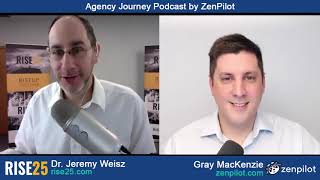
Dr. Jeremy Weisz explains how podcasting builds referrals and business relationships. He covers hosting strategies, what metrics actually matter, and why video amplifies a podcast's reach beyond audio alone.
Foreign.
We're diving into today's episode of Agency Journey. Let me tell you real quickly about our sponsor, Aribi. Aribi is a super cool, all in one marketing analytics tool. They've got Google Analytics squarely in their sites right now. And I can remember setting up Google Analytics as a sophomore in college and thinking this was just the coolest, coolest platform. And as it's matured, it's still super powerful, but it's become so complex to deal with. And Aribi has a value prop totally aside from this. But what I absolutely love about my experience plugging Aribi into zenpilot.com is I didn't have to mess around with setting up what events I wanted to capture and tracking all my changes. And if I messed up a view, then it would. It would delete all the data that I had. I just plugged it in, it crawled it, captured all of our events, made it super easy to see our funnel, and it just works. I love being able to see, for example, how many people read the definitive guide to click up for agencies, a blog post that I wrote, I don't know, six months ago. See where those folks come from, how that influences the buying process, the funnel, the way that it works out. So super excited to have Aribi as a sponsor. You can check it out. Go to Aribi IO AgencyJourney. It's all one word. If you spin up a free trial there, use the coupon code agencyjourney, same thing, all one word. That'll give you 20% off any plan, which is super generous of them. And remember, they can track all of our conversions, so check them out. That's a ready IO. We appreciate their sponsorship. Let's get on with the episode. All right. Welcome into another episode of Agency journey. I'm Gray MacKenzie here from Zenpilot. I'm really excited to have Jeremy Wise, Dr. Jeremy Wise from Rise 25 on the podcast. Jeremy, thanks for joining me today.
Thanks for having me. My pleasure.
So it's been fun to get to know you a little bit more over the past probably six months or so since we initially connected. But we share a couple of clients and you guys are in the podcasting space. Is it fair to call you like a done for you mostly podcast provider?
Yeah. Yeah. I mean, fully done for you. I mean, even to the fact of sometimes we even host people's shows for them. So, I mean, it's totally hands off what started.
So you guys will do everything from finding the guests, booking the guests, getting them in, doing the interview itself, doing the Post production, doing the promotion, the whole. And obviously, I would assume there's the show setup part as well that you guys are doing.
Yeah, I mean, it's kind of like if you compare it to Zen Pilot, it's like the. One of the most important pieces is the strategy, the foundational strategy of why are you doing the podcast? How do you set up the podcast? What kind of guests do you have on the podcast before? Because people, you know, anyone could hit record and post something online, right? But setting it up, just like anyone could probably sign up for ClickUp and create a board, but are they going to do it properly? That's going to make sense for their business. And so the. The first part of everything is the strategy, making sure it's on point. And then we do ongoing, just like you do, like support and strategy, because there's always optimization to be done. I mean, when are we not, you know, trying to nurture and give to our relationships in our business? Like, it's an ongoing process. And so we feel like. I feel like I've been podcasting for over a decade and helping podcasts for over a decade. It's the last thing I would ever stop doing because it's a way that I can give to my relationships and, you know, and just profile them like you. Like you do as well. And so with that comes the strategy piece, but then the execution piece, which is like, okay, as a business owner, in my opinion, you should be building relationships and running your business and not doing anything else. So in our process, it's very simple. It's like we create a portal for someone to upload the file, like, after they're done with using Zoom. And people ask about technology setup, which we can always get into, because people like to hear, like, they ask questions like, what microphone do I use? How do I get download thousand subscribers? Like, those are the common questions. Like, we can answer that in 30 seconds, right? This is a blue Yeti. I think I've had this for about 10 years. I have a one over there. And this is like, you know, $100, $120. And then it's a USB mic. You plug it in the computer, it's done. And then I have an ATR 2100 over there, which is like $70. It works great. Plug it in there in your computer. And I used to use Skype, like, years ago with ecamm call recorder. And now Zoom is just so easy. Everyone's on Zoom, we're on Zoom. So you could literally just use Zoom. So you. You Know the, the process is very simple. They upload that folder or that file, get it to us and then they're done. So we basically take it and do all of the writing. We have developers that go into the someone's website to post it. We distribute it across all the channels. And the key point is we were talking this before we hit record is making people, you making your guest aware that it's live. Making people aware that it's out there is key. Like people drop the ball. It's like they're on the one yard line and some people never even form the guest it's live or give them an asset for them to make it easy for them to share.
You know, so where did the. So I want to come back to that in a second, but where did hosting podcasts come from? Was that something you guys wanted to do because you love it so much or I would assume that maybe came from clients.
Yeah, I mean, listen, it's recommended. So when we are working with someone, one of the things. And I could talk about this, there's. I consider those kind of five types of episodes when you're looking at content for your, for your podcast. Okay. There's one of them is thought leadership episodes. So your internal thought leadership, which is not external guests. What I find with thought leadership you can, you know, you could turn the mic on, start talking about, you know, how to have a smooth onboarding process and everything. But the thing is it's more engaging to have a conversation. So when we're working with clients, we actually interview them for the thought leadership episode. So we map out and of course we've, we've helped people create hundreds of courses. So you know, there's clients that we will record with and they end up turning that into a course or even turning that into a book or something like that. So we want to structure the thought leadership piece so we will be the guest interviewer. So we're not hosting the show for those pieces for. So those are the thought leadership kind of types of episodes. It's important because you have a lot of good webinars out there and it shows your authority, expertise and people can learn from you and get value from you before they even talk to you. So it's really powerful. And then the other pieces are having on potential referral partners, just relationships that you want to really give to and people you admire, companies you admire. That's why I had you on because I really love what you guys are doing in, you know, with Zenpilot and helping agencies and so you could have referral partners, collaboration partners. You could have, you could profile your clients, you could profile potential clients. You know, you could profile other authorities in the space who are speakers, authors, and maybe they have communities of people that would, you know, get value from your expertise. And so under those ones, external interviews. Yeah, like, it's not, I recommend someone from their team is hosting their show, obviously, because they're building the relationship. But there are people like, listen, Jeremy, you guys have done thousands of interviews. I don't even want to show up. You know, you handle it. And then in that case, we, you know, that's not the norm. I would say Maybe it's like 10% of cases where, you know, we will actually be the host of their show as well. And then we just, you know, pass that relationship back off to the company, go, hey, you know, you guys chat about XYZ from the interview.
So that's interesting that it seemed strange to me at first and then I was like, oh, yeah, I guess that, like, it's a huge time savings, but.
And if you think of TV shows, great, you know, like they all have different hosts. There's different hosts on the new. I mean, it's not like the, the head of NBC is like hosting these different channels. I mean, so it's done in other mediums as well. It's just not as common in the pod, in, in the podcasting.
Yeah, for sure. So we've got a couple of shared clients who are agencies. Obviously that's who we work with. You work with all kinds of folks. What. And maybe feel free to talk through what percentage of your client base is kind of an agency space. But what are the things that agencies. So if you're mapping out what's the most common strategy is the short way of the question that I'm trying to get to for, is it primarily that we're bringing on our target prospects or we're trying to bring on the influencers of those podcasts. If you had to start one place for an agency.
Yeah. So there's a long term and short term approach. Right. So one, you know, a way to give to your current. Sometimes we go to the new and shiny. I want to have this huge authority in the space, so I break it up into warm and cold. Right. And so what I think a mistake people make is they kind of chase these newer, shinier, maybe bigger name people in an industry and we have some amazing relationships. So why not just feature the people you know and the people who know like and trust you? So featuring current clients you know, I, I basically feature my, our clients all the time on the podcast and I get to profile what they're working on and I get to also it helps me just ask more co op, ask more questions and learn more about their business. So I think, you know, having your current clients on, right. You know, and obviously they're going to be on like oh my God, it was amazing to work with Gray. Like the onboarding, I mean I was interviewing someone the other day and I didn't ask them to say anything nice about me, but like, oh my God, the onboarding was so smooth. It's been great working with you. I'm like, yeah, thank you. And this was all, it's on the podcast. So it's, you know, again, the podcast is all about their story and them, not about me. But to answer your question, low hanging fruit is like, why not have clients.
First with you or clients mixed in there.
Yeah. And then the. So do you have, you're saying, do you have partners, potential clients, authorities. So like for me I prefer like a longer term approach is to have like my favorite people. Collaboration partners, strategic partners, collaboration partners on. Because it's a two way street. People when they think about this and we are looking at our, our list of guests and maybe let's say like 60% of them, let's say have referred us someone or have become a client. But on the flip side of that, probably, you know, 50% of our clients, we become their client and we refer them clients. So because I mean that's what a collaboration is like we refer people to them. So you know, you think about it, you know, there's people in their mind and by the way, it's table stakes that the, the content is going to be good. Right? Because if you have people, experts in your industry on, they're going to know what they're talking about. You have someone who's been in the industry, like agency industry for 10 years, they're going to know what to do. Like, you know, I noticed you had Joey Gilkey on who's a mutual friend and, and again like he's been in the space a long time. He knows a lot of people. He also is a master at sales, so he's going to produce. But he also probably knows people who should be doing ClickUp integrations.
Right.
So it's like this. When you think of that kind of Venn diagram thing, it's you have a great collaboration partner. Okay. And that person, that person, the collaboration partner for you may also become a client like Joey for All I know is thinking about doing ClickUp and he could become a client of Zen Pilot. And then the third piece is amazing content. Right. And he's going to be able. Because he's been in the space so long, he's being able to give some tips on how do you close more sales or training salespeople or whatever it is.
Right, right. Yeah, that makes sense.
So I go for the longer term approach, which is you can have potential clients on. I mean, I had someone a couple months ago say, jeremy, this person wants to start a podcast. You should talk to him. And I go, hey, let's not even have that conversation. Why don't you just. They were amazing entrepreneur. And I go, let me just have them on the podcast. Forget about. So it's almost like, I don't know if you. I don't know if it's like dating. It's like, let's say you're dating and a girl wants to kiss you or something like that, right? And then you back off, you're like, listen, no, let's take it slow. Let's take it slow. And let me take you on another, like, fine dining date. And so just taking it slow and delivering value first. And so I go, yeah, just have them on. Just don't worry about the sale, you know, Totally. We'll talk about that after the podcast. So I was able to. So that's in the case of a potential client, and that was even an incoming referral. And I just took a step back and said, let me deliver value to you before we even. I know you're even interested in it. Yep, let's do that. And then we can have that conversation afterwards. So you can definitely have potential clients on as well.
That makes sense. So what's kind of going through my head is I'm thinking of the person who's listening who's either thought about starting a podcast or, hey, that might be a. You know, obviously if someone's still tuned in, they're probably considering it or they already have a podcast. And so some of this is just kind of a. Okay, if I have a podcast right now, but there's things I need to rethink internally for us. I'm just finishing up revamping our podcast processes so that we actually get consistent with the podcast. And it's not on me to do the production and any of that stuff.
Yeah, it's not a good use of your time.
It's not the best use of my time. I like it. It's not that I don't Enjoy doing the work for it. But yeah, it's not the best place for me to spend my time. So the reason I ask about strategy, where do you start there? How do you approach it? Is maybe there's a place in this space for more internal thought leadership versus guest based interviews. Or maybe we should rethink how we're doing guests. Is there any mix that you have or that you would recommend to most people? As far as one out of every four episodes, I'm sure there's no science. There may be a science to this. There's probably science to more things than we realize. But one out of every four episodes. You should do an internal thought leadership piece or the podcast really isn't the place for that. People come here because they expect interviews and so keep it consistent.
That's a good question. I think some people go on both ends of the spectrum. There's ones I've seen that almost all of them are just their thought leadership. And I've seen the opposite where none of them are. We try and do about one a week. I mean, again, like, we're not normal in the sense of, you know, we have two. So John, my Corcoran business partner, has also been podcasting for over 10 years. So he puts out two to three episodes a week. I put out two to three episodes a week. So as a company, we probably, you know, we put out four to six episodes per week. Okay. So when I say we do one, some people only do one a week, some people only do one a month, which I recommend doing at least one a week. But we probably every week, I would say, on average do. So it's about 25%. So it's like one a week is a thought leadership piece.
I think that's helpful. I think that's one thing that Andrew and I have kicked around is we do very little of our own. We've got a lot of good stuff kind of cooking up that we should probably be sharing back in a more active way than some of that's on the blog.
I would encourage people, like, listen the way we do it because again, you're busy. And then probably by the time you guys are doing your separate things, by the time you come together and talk, you have probably have 150 things that you need to discuss. And we have found it's very simple. It's like we just schedule a block, an ongoing block, the same hour every single week. And we know the, you know, it's an hour. So the podcast will be 30 minutes. And we know we will have a buffer time to discuss whatever we're discussed. But even if you go, oh, you know, John, if something really important we got to go, is like, no, this is blocked off for this episode. After we're done with this, we can talk about this. So it's just. You have to be disciplined about it. And then you show up and you have to. It's already blocked out. You know, it doesn't matter, right?
All right, I'm going to ask you two questions that you're going to hate me for, because this is impossible to answer. I've heard this question a handful of times, though, like, what is good for? And people are thinking about metrics. I'm launching a podcast, and three months into it, everyone's frustrated. I'm at 90 downloads an episode right now, which is in reality, probably beyond where most podcasts are at three months in. If people are just organically. If you stick the average podcast off the shelf, do you have any benchmarks? If you're looking at it and you're saying, and obviously downloads is not the ultimate. That's not the ROI number that comes from it.
Yeah, totally.
How do you think about that? Or have that conversation with folks who are wondering if the podcast is going to be worth it?
Yeah, it's a great question. You're going to be disappointed in my answer. Maybe, but it's ultra simple. And I was having a conversation with someone who, you know, people often come to us, not only or starting, but they want to actually get ROI from their podcast because most people don't stop podcasting gray, as you know, because of poor audio quality. They stop because they're not getting the return for the energy and time and money that they're spending on it. And so I had someone come to me. They were getting. They had over a million downloads, okay? And they were not getting roi. And someone, they're like, what do I do? Should I talk to someone? Talk to Jeremy. I'm like, okay. I get on the phone with them. And so in their situation, this is not a normal situation. They have a ton of downloads. But my point is, they were not getting roi even with a ton of downloads. People were like, oh, the holy grail. I just need more downloads. That's not a holy grail. It's vanity metric. So what? So you have a million downloads. So what? Like, let's say 10 million people listen to Zen Pilot's podcast, the Agency Journey. I mean, you'd be able to command some sponsor dollars. That's cool. But let's say you Couldn't get a sponsor. Right. Probably less than 1% of those people are actually agency owners who could use your service. So does it really matter that a million people are listening for your business? It doesn't matter unless you're in. Most people, that's what they think they're going to monetize the podcast. So the first thing is they think they're going to monetize the podcast through sponsorship. Okay. And so, like, the companies we work with have an actual business, you know, and so do you. It's typically a B2B type of business. So they have a higher client lifetime value. So for them to get one or two or three clients for the year, like pays for us for five years. Right. So the metric is very simple. I mean, the metric is getting into conversations with your referral partners, collaboration partners, and having them have a vehicle for them to refer to you. Like, it's so much easier for people to refer to you with a podcast. Go. Oh, talk to Joey Gilkey. He's awesome. Joey may not be looking for ClickUp right now. He may have clients looking for ClickUp. Maybe not right now, but. So let's grab a coffee. Let's do it. I mean, it's. You could make that conversation and deliver value a lot more when you have that podcast. So back to your question on metrics. You know, the metric I look at is very simple. Okay. Because I also had someone come to me go, Jeremy, you know, we have this opt in box, opt in. We offer this free opt in. And we're trying to figure out X number of percentage of people get this opt in. And. And, you know, after that, it converts to our core whatever. I'm like, that's so complicated. Okay. It's very simple. Look at your podcast list. Like, if I pulled up Inspired Insider right now and I said, who has recommended and I. My metric is like, who's like just an amazing champion of me and recommends guests to me. You know, it's up to them. Once they are, let's say on my show, they hear about what we do. I mean, I don't need to throw it in someone's face. People already know what you do, right? It's like, you don't have to, like, hit him over the head with it. You have a relationship with that person. It's about creating real relationships. So I can look at my guest list and go, who's referred me guests that are awesome. And maybe they even referred clients. And maybe they even became a client.
As you guys look at this. And maybe you don't do any type of active reporting. But I'm coming obviously from the agency framework where we've got a retainer service for somebody. They're gonna ask for some type of. Or expect some type of monthly reporting. If I'm running your Facebook ads, here's your monthly report of whatever it was. Do you even give that? I would assume podcasters have access to see the download numbers or whatever if they want.
100%. I haven't looked at my download numbers in probably six years. I mean, I have no idea. If you said, jeremy, I'm gonna give you a million dollars if you give me exactly what your downloads are today, I could not tell you because it's not a metric that I care about.
So is there any ROI tracking that you do or is it. Because it sounds like it's more. Hey, this is the feel like, are you getting referrals? Are you getting. And you know where my brain is. Like, I'm very data oriented. So I want to break it down and figure out.
Okay, I mean, I could look, let's say, let's take your podcast for like, my metric is very simple. I could go on zenpilot.com. well, right now I'm on topic sales. So I'm not on your podcast page, but.
And then the interview topic.
Okay. So I can go to zenpilot.com blog and go to the interview topic. So it's very simple metric. Right. So I can click on. So I'm seeing Jordan west here. Who. That's a mutual. I know Jordan, he's awesome. But I can look and see your list. Who is referred you Someone.
Yep.
Who has become a client, who has referred you guests. Okay. So that's a trackable thing that you don't need some fancy automation or database. I could look through the past 50 guests you've had and tell you, okay, this person is actually a client. This person has become a client. This person's referred me a client or guests. And it's a very simple metric. And for you, if you get one, I mean, my opinion, if you get one or two clients for the year, it's, you know, you have a higher client lifetime value. So it's going to be worth it. And it's just, you know, year one, year two, year three, if you're having these strategic, like, let's say I have, you know, 52 people on this year and 10% of them refer me one person. That's only five people. But that doesn't matter. Then year two, year three, year four, I have another five people. Another five people. Another five people. So you don't need big numbers. It's not like a CPG company. If you're running Facebook ads, you need to generate a thousand sales at $32 to make it worthwhile. And again, that's a real ROI based people thinking, yes, you want to get ROI. But I think of relationships. Who are these people have actually become really good friends. I've become friends. You have Joey on there. I talk to him once a month. I mean, if it weren't for the podcast, maybe we'd have never talked. And we'll talk at least once a month and just chit chat about. From a personal development or professional development standpoint, he's given me some really key sales advice because we're friends. That's invaluable. One piece of advice he's given me on that is worth doing the podcast for the year. And so people want to see our eye. But. But also there is metrics that aren't tracked. It's like you may have given me one thing, like we talked about one thing on the podcast about time tracking and tracking time to projects. And I go back to John, like, you know, Gray mentioned this amazing. Like, we need to be doing this time tracking. So it's granular. How valuable is that going to be to our business when we implement that? Right, that's invaluable. That could be worth five years of me doing the podcast because of that one tip that you gave. So there is a professional development standpoint. You get to come on, you know, we are having this conversation. You go, you could ask me any question you want on how to improve your podcast right now. And so you're getting advice from people typically who've been doing something for decades.
Right.
So that's another, you know, again, I think in relationships, not like dollar signs typically. So for me, that relationship, and it's not like a warm and fuzzy like thing, it's a real thing that I can call on my network whenever I have an issue or have a problem.
Right. Well, yeah, I think the takeaway obviously is how are you looking at that? You may, depending on how people are wired, they may or may not want to have that tracked in another way. Internally in our ClickUp, we've got a database for who our strategic partners are. And you know, that's a recurring task where depending on how close we are with somebody, we'll touch base, you know, if it's Joey. And we've also got shared clients back and forth and we'll touch Base with them on a monthly basis, at least if it's someone else who maybe we're not as tight with or we're more loosely affiliated with touch base on a quarterly basis. So we're probably more organized or built like there's more intentionality to a system behind it than maybe the average person is. But I think so. People have different tolerances for how they want to measure that or how much tracking they want to do to that.
But I mean, let's say you got no clients out of the podcast. Okay. But let's say, I mean, you are having like a hiring question and you basically had on the top hiring experts on your podcast to get advice on it. I still think it's 100% worthwhile.
Right.
To have a podcast. And a lot of people I know who are successful with a podcast and do it, have been doing it for a long time, would say I do it if no one was listening.
Right.
Just for the professional development.
Yeah. Piece and the fun. It's. It's fun to talk to interesting people who know way more than you do about. I love being in those situations where you're clearly like, this conversation. I'm clearly the dumbest person on the call. And it's. Yeah. I love learning from it.
I don't know if that answers your question.
It's not.
Maybe it wasn't what you expected, but I'm not.
I'm not. I mean, I'm the common. I think feedback will come. Hey, what's your industry? What's a client worth? You know, if you're targeting clients who have a ltv, that's a thousand dollars, you need a lot more downloads, you need a lot more people listening or a lot more referrals or more. More stuff coming in. And if you're targeting a 100k sitting off your Joey's situation, you know, if their LTV's substantially higher than that, then you need. You could be fine with 10 downloads if it's the right 10 downloads. You guys do video on all your podcasts?
Yeah, I've been doing video for like 10 years. Yep.
You're ahead of the curve. I remember using Skype and ECAMM Call Recorder and at the time had really crappy Internet when we started ours. And so video off was like a mandate just so that we could have clean audio coming out of it. How do you guys leverage the video in a way that. That makes it worth the work?
Yeah. I mean, also, yeah. I was using ECAMM Call Recorder and I remember at the time the PCs, like you could really, the, the files are so big. So I bought a Mac specifically at that time because it was just better files. But, and I always recorded video with people and now it's normal, more normal because people are on zoom. But then I had to kind of be like, no, I had to like walk them through, get a Skype account and whatever. But why do video versus not video? And actually I was talking about this with a client the other day and we've been working with them for a while. They're like, jeremy, I'm thinking of adding video, right? And so I sometimes just try and talk people out of spending money with us if I don't think it's going to serve them. So I said, let me argue for video, let me argue against video. And you could decide if we should be doing video. And, and you know, because ultimately you're already, they're already producing it with zoom. And so we are just thinking what, what's the benefit? That's what you're asking. Okay. So I mean there's long term benefits and short term benefits. Okay. Now the, the, the, not the benefit of not doing it, the disadvantage of doing it is obviously it takes more time to produce. If we're helping someone, it's a push button thing, so they don't have to worry about that. But if we are doing it, it's going to cost additional money to do it. And typically when we're doing it, we will just take it, we will clean up, you know, make it look nicer, lower third, upper and all that. We'll go into their YouTube channel, post it there, put the description stuff and then embed it in the blog post. So it's totally hands off. But there's an extra cost. So the downside is extra cost for our clients because they don't have to do any extra work really the upside. So if you're, if you're producing yourself, obviously there's a time involved in doing all that in teams time, whatever. The upside of video. And this is why I do video. And I would say people, even if you're only as you do, like if you're only producing the audio, you'd still record it, the video, you should still do it on video because it's just more personal when you're talking to the person, you can see them. But why you should do video is also more a longer term approach because as we know, Google owns YouTube, right? So all the videos and things you're putting on YouTube start to rank. I, I Mean, I've. There's people on my podcast. If you search their name, I am for search results on the first page of Google. Yeah, for their name. I'm the second. I did this. I was looking up someone the other day. I'm the second. I'm the fourth. I'm a second for my website, Inspired Insider. I'm the fourth because of a podcast channel. I am further down because my YouTube video shows up in the first page. So there's a SEO benefit and I am by no means an SEO expert. I know enough to be dangerous. But there's an SEO benefit to having it. And you start ranking for. I've ranked for other people's names, their company names. So people are searching for them, they find me. And I don't think that's necessarily the number one reason to do it, but that is a big benefit. The second one is it's just more personal. Even if someone doesn't watch the video. If you go to one of my posts on Inspired Inside and you click on it, or someone shares it on social media and they go to the post, when you go to the post, it has a nicely written paragraph. It's got a video thumbnail. It's got a video there. And you could see me. Even if someone only listens to it, there is a personal connection there with seeing someone, with seeing me. Do you, you know, look at I just published Jonathan Jacobs, who's also an agency owner, he runs Digital Natives Group. And you go on there, my pick. There's a big embed code and you can see my face. You could scroll right past it and then click the audio embed, or look at the. Just read the post, read the bullets or whatever. But you see me there and there's that personal connection. And that's. For me, it's more about that personal connection than SEO or something like that.
Are you just taking those in any cases and chopping those? I mean, that's the common reason that I see people advocate for it is, hey, we can take those, we can chop it up. And if you're a massive company and if you're the ringer and you're producing content and then you want to take a snippet out of a podcast that was, hey, this piece is social media worthy. Now we're going to share it out.
Yeah.
Have you guys played with that at all at this point?
Yeah, we do that. And we do that for clients too, where we'll take all of our writers because they're writing the post. Look at what is A good section. So they'll pick out like a 30 to 60 second section that is, you know, more profound because there's a lot of stuff like in a 30 to 40 minute interview, they'll pick out that section and then we will take a clip and create like a dynamic audio from that and then we'll actually post it on social media. So we do those personally for all of our episodes and then clients who want us to do that. The thing is with that also, Gray, I would say the same thing about doing the podcast. Well, it's a way to attract, if you're putting it on LinkedIn or whatever the case is, engagement. But I don't do. That's not predictable. Let's say I have 15,000 LinkedIn connections and you have 500. Well, is it worth doing it if you have 250 connections? And I would say yes, because I'm not, I'm not basing it off of downloads or, you know, engagement. I'm going off of. This is a piece of content that the guests that you have on is going to be proud of sharing that you can now just another way of giving to your guest. So just my audience is giving to great. Like if no one listen to the podcast. Gray, I still would make introductions for you because you've been on my show and I will put it onto my, you know, one will come out of you of that short clip.
Yep.
So I mean it makes that relationship go further and of course you're going to have the side benefit of the engagement. It makes it easier for you to share.
Oh cool.
Jeremy, put out this like 30 second clip and you can easily share it on your social media.
Well, yeah, two really tactical questions of that. One is are you guys just doing the audio grams or are you actually taking the video from the podcast as well captions over that?
We do both, but most people don't do video, so. So it's mostly a, you know, kind of the dynamic audio. There's not a video piece. And even people who have video, the, you know, I still sometimes just recommend doing the dynamic audio. We're like, yeah, we could do the video part. But like, you know, when you have a 30, 60 second clip, we can just accomplish the same exact thing without using the video also. So I don't think you need video for those personally.
That makes sense. Well, yeah, even if you use video just because so much of that stuff gets consumed on mobile, you want to throw captions over it.
It has to be captioned. Exactly. And someone maybe we talked about this. John and I talked about this. We did a LinkedIn live that will be a podcast episode and we talked about this very thing, which it's key to have the captions because you may be at work and you don't want the sound blaring like. Or you may be in bed at night just scrolling through and people consume it.
Right. Yeah. As you. As you're using the or with those clips themselves, are you sending the actual video files is really technical, but are you actually sending the video files to the guests or are you just posting those and they can.
No, we post it and tag them so they can share it.
You'll have to download and re upload.
I mean, we've had. Yeah, we've had. I mean, it's rare where someone's like, hey, can I have that file to share it online? And of course, I'm like, yeah, sure, of course. I mean, people have asked for the full interview, like, can I share it on my. And they've created it. I'm like, yeah, of course. That's right. It's fine. But most of. Yeah, it's 99% of time it's just shared on ours and then make it easy for them to share on theirs is right.
Awesome. Well, this has been really helpful. I appreciate you going deep and let me pick your brain on where this goes. Folks, want to learn more about Rise25. Obviously we've got insider or inspired Insider as well. But give us real quickly links, best places to go to speak, more to reach out to you. If someone's looking at either taking their podcast to the next level or starting a podcast.
Yeah, you can go to rise25.com we have a video on there. We talk about, you know, how do you get ROI with the podcast? And you can always. There's a contact page in. Or you can go to inspired insider.com and check out some of the interviews. And there's a contact page there where you can just email me.
Awesome.
I'm happy to answer any questions.
Yeah. Thanks for coming on, Jeremy. I appreciate it.
Thank you, Sam.










