How to Get Started with ABM with Dan Murphy from Drift
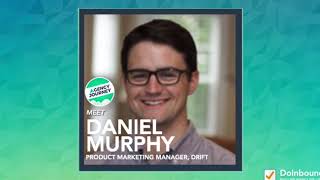
This is a YouTube video titled "How to Get Started with ABM with Dan Murphy from Drift" containing an English podcast-style interview recorded in November 2017. The host, Gray MacKenzie, interviews Dan Murphy from Drift about account based marketing (ABM), discussing its misconceptions, applications, and Drift's conversational ABM product. The conversation also touches on agency perspectives and marketing trends.
Hey there, Gray here from Do Inbound. And I want to wish you belatedly a Happy Thanksgiving. I hope that you had a good one. I realize that is an American holiday and there's a good chance because this, this podcast is, is all over the place now that you maybe didn't have Thanksgiving, didn't celebrate Thanksgiving where you are, but that doesn't change anything. I'm still going to wish you a happy Thanksgiving, hopefully. We're all grateful for what we've been given. I am. I'm grateful for the opportunity to talk to you here today and chat with Dan Murphy from Drift. We dug into ABM on this on this podcast. It's kind of a hot new buzzword. I'm going to save all the content. I'm not going to do spoiler alert beyond that. But that's what our conversation is about today. I really hope that you enjoy it. And before we dive into it, I wanted to share something that we haven't, haven't done before here on the podcast. But one of the things that's been cool as this podcast has gone on, and this is, in fact, let me look it up. This is episode number 132 right now. You'd think I would know that off the top of my head, but 132 episodes in, actually, we started with episode 000, so that'd be 133. And it's been cool to see the connections that have come out. Obviously for us as hosts, we get to talk with somebody new each week and in some cases those are folks who we didn't know before and saw they were doing something cool, reached out, had the opportunity to talk. But in some cases we already knew them and it's a way to continue building that relationship. So that's been cool for us and then to get to know you, the listeners. But what's been probably even cooler than that has been hearing from people who said, hey, I heard this person on podcast, I reached out, we got connected and this thing happened, whether it was partnership that happened this way, agency owners coming together to, to collaborate in an actual full scale work environment, people getting hired, new client work landed from the podcast. There's a bunch of different ways that people have connected. So anyways, but one of the things we haven't done, a lot of that has just kind of happened organically and relied on people. So I thought this might be helpful if we um, maybe just spread some good words from folks who've been on the podcast before. So I just real quickly here, before we jump in, wanted to share a couple job openings that are open right now. So if you are listening, you're thinking about working here in the agency space or you're looking for a new position. There's a couple positions too that are remote that I wanted to highlight and two that are in person down in sunny Florida. That's the other thing that made me think of this is right now, here I am in western Pennsylvania. We had snow, sleet, hail and rain the other day. So anyways, Florida sounded pretty good right about this time of year. So Impulse Creative Remington Bag was on the podcast quite a while ago and awesome to dive into his story from Impulse Creative. He was episode number 56 and they've got three openings right now. At the time I'm recording this, at least you're looking for a digital or inbound marketer, someone in a sales role and a copywriter. So those first two that I mentioned, those are in person roles. Last one's a remote position. You can go to impulsecreative.workable.com and see those job descriptions there. And then our friend Doug Davidoff from Imagine Business Development, they're a remote team and right now he's hiring a director of content. So if you want to learn more about that, probably the easiest way to do that is to go to imaginellc.com and either find it through the site there or jump, jump into, reach out and contact them to to see that open position. You'll see it as at the time that I'm recording this at least under open positions down in the footer of their website. And it's imaginellc.com Anyways, if you are interested, if you're looking right now, thought that might be applicable and helpful and want to help facilitate those connections. All right, without further ado, let's jump right into my conversation with Dan Murphy from Drift.
How do you build an agency that allows you to live the dream that you have for yourself, for your family, for your community, for your team, while at the same time helping your clients knock it out of the park and doing it all profitably? These are the big questions that we tackle here on the Agency Journey podcast. I am your host, Andrew Demski. Now let's get to it.
All right, welcome into another episode of Agency Journey. This week I have the privilege of bringing on Dan Murphy from Drift onto the podcast. Dan, you know, we're just chatting. If you guys are looking for him online, you may find Daniel Murphy. You might find Dan Murphy, depending on.
When you're listening or Daniel J. Murphy, that's my other one.
You'll see that throw in the middle initial to be different. But Dan, before we. I was. I was going to give a little bit of background, but actually I've got you on here, so I'm going to let you do that. Just talk briefly before we get into. We're going to be talking a lot. Spoiler alert. We're going to be talking about account based marketing, ABM on the podcast, a decent amount. Some of the stuff that you guys have launched around that and your experience, what you're seeing. But before that, just to give people a chance to get to know you, you've been at HubSpot, which a lot of listeners will relate to. OnShape now at Drift. Just kind of walk us through kind of your personal journey to get to Drift.
Sure. Yeah. So first of all, thanks for having me on the podcast. I'm excited to be here. Yeah. So I worked at HubSpot very briefly about a year and I worked on the product marketing team. Learned a lot about inbound marketing, learned a lot about marketing at a B2B SaaS company. And then I decided to take that to a company that had no marketing, onshape. I got recruited there and built out a lot of their marketing programs. I've done everything from lead nurturing to demand generation to webinar programs. And sort of the one thing that I really wanted to get back to and get more experience with was product marketing. And so that led me here to Drift and now I work in product marketing here at Drift. And I was a customer before at onshape of Drift and fell in love with the software, fell in love with the concept of conversational marketing, saw that it worked, and then decided to jump on the bandwagon and help grow the movement.
That's awesome. So obviously Drift, you guys are growing very quickly from back when Elias and DC first kind of left HubSpot and went on their own to where you guys are now. What does the marketing or product marketing team look like right now?
So we're a pretty small team right now. We're only six people or seven people.
Nice.
Yeah. We are led by the fearless Dave Gearhart, who is just a great mentor. I mean, he is such a great guy to learn from. He's done such a great job putting Drift on the map. But he's just. I was just talking about this earlier. He's like a true marketing professional in the sense of like, he's constantly thinking of marketing concepts and ideas. Like you could be at lunch with him and. And he sees some marketing idea, like an event or whatever it is, and he's like, oh, this is what we could do with drift with it. He's just like a. He's an idea guy, but he's also a really good executor on those ideas. And so he's the full package. And it's great to work with him and learn from him. We also have some other really incredible people on the team, like Eric and Amy, Jana, and now our web developer, John, that just like, it's a small team. We're trying to do a lot. We have a lot of really fun problems to solve. And so we're kind of going piece by piece here and tackling one. One at a time.
That's awesome. Cool. Well, we want to talk about ABM on the podcast, and I figured this. This made a lot of sense to have the conversation with you, so I guess maybe that's the place to start.
Sure.
Maybe. Let's start first with what the heck. For anybody who hasn't been paying attention to the latest. The latest buzzword in the marketing space.
That's right.
Kind of brief overview of ABM from your perspective. And then let's talk a little bit about what you guys have rolled out, because that's kind of going to set the stage for conversation about some of the questions that agencies have around abm, at least that I've been hearing. And I think it'd be awesome to run past you.
Sure. Yeah. So two misconceptions about abm. One is that I think, well, first of all, ABM is very new. It's a new. Like you said, it's a new buzzword. The first misconception is that people think it's just for large enterprises. I think that's false. I think any. Any organization can do abm. Any organization needs abm. And the second misconception is that ABM is one thing. Is like one is like an email to someone or like an ad on a website that drives someone to your website. ABM is a process. It's like inbound marketing. It could be a whole bunch of different things. It doesn't necessarily mean one flow or one channel. So those are my two sort of big observations about abm. I'm actually like. I'll say this, I'm fairly new to ABM in the sense of like, the last two months I've been studying it, like, as if I'm going to take an exam on it. The deep dive. Exactly. Because we just launched a drift. ABM which is what we're, we're calling the first conversational account based marketing platform. I'll talk about that in a minute. But back to abm. I've really been diving into it and learning a lot about it from great companies like Terminus that has an ABM platform demand base. There's a whole bunch of others, there's a whole movement about what they call flip my funnel, which is a great way of explaining abm. Most marketers and most salespeople think about marketing and sales as this linear funnel with a wide top and a narrow bottom. The whole concept of ABM is flipping that upside down and targeting very specific people that you think are the right accounts, the right people to buy your software or use your service, and then expanding, you know, making those people believers, making them great customers, making them great examples of your product. And then suddenly you have a process of evangelism within that customer base. So it is fairly new. And I think again, this is maybe, maybe this is my exam, you know, going through this podcast with you. This is my, my ABM exam because I've been writing a lot about it and studying it and it's really interesting and it's really evolving very quickly and a lot of different companies are doing different things with it.
Yeah. So I mean, the typical approach is kind of like, here's our target audience, here's my, here's target acquired reaching out. There's a limited number of ways to get in front of people growing. But I mean, it's pretty much email, phone call, or your good old snail mail and then, and then trying to. A lot of people have historically tried to push people back to a landing page or, or been more direct in their efforts in different ways. So before we kind of get into a couple of the specific agency questions that I wanted to run past, you just kind of share with, with people listening what the ABM product that you guys just launched does.
Sure.
And the take that you guys have on abm.
Yeah. So abm, like you said, is a buzzword. A lot of people are attracted to it. And they're attracted not because it's this new shiny toys, because it works. Right. We've also drift. We've developed a new approach to marketing called conversational marketing. And that's using conversations, real time, one on one, to talk to buyers and customers versus lead forms and email nurture and a sales call two weeks later. So we realized these two concepts work together very well. And we realized that we wanted to be able to give our customers the ability to do the account based marketing campaigns, they want within Drifts. But as we started going through it, we realized there was this one problem with the way a lot of teams are doing ABM today and that's lead forms. A lot of people are driving or a lot of marketers, account based marketers are driving their VIPs. These accounts that are perfect, they're dream customers, they know they're qualified, they want to talk to their sales team, but for whatever reason, they end up sending them to a landing page with a form which doesn't feel like the VIP experience. Right? Like if you know they're already qualified, why are you gonna ask them to re qualify themselves in a form? Right? And you're just gonna lose people in that process. Joe Chernoff, the CMO over at Inside Square, he talks about how ABM is supposed to be zero waste, right? You're not supposed to have this 60%, 70%, 80% of people that don't convert on your lead form, right? You just wanna get them into conversations with your sales team. So the Drift ABM platform is adding your target accounts into, into your Drift account and saying, okay, these are the people, these are our dream customers. These are who we want to talk to. We partner with Clearbit and with Clearbit you can actually identify who's coming to your website and send them a personalized message. So it's, you know, if doinbound.com comes to our website, it says, hey guys, or hey doinbound.com, welcome to our site. We work a lot of agencies, we'd love to have a conversation with you and you'd have that one point of contact messaging you on the website. So it's just a more seamless experience. It's faster, it's just, let's skip the forms, skip the BS and get right to the conversation because that's really what matters. Yeah.
How's that rollout been in terms of, I mean, obviously from what I've heard about it, it's gone so far, but I guess not necessarily just quantitatively, how's it been? But what types of organizations are using that? Because obviously the stigma or like I think the assumption here is for large organizations, a lot of agencies, I think there are some valid reasons why agencies say, like I'm not sure if this, you know, if you don't even have anybody who's doing dedicated marketing right now, it's hard to. You're putting resources in one way or one way or the other. But as far as types of organizations who are adopting the tool and Having success with that. Any common themes or threads there?
Yeah, I mean we are sort of a niche market is B2B SaaS companies at least that's where we've kind of put the stake in the ground and that's where we've had a lot of traction. So that's where we've focused a lot of our efforts so far. And so we've had a lot of, we have had a lot of those larger enterprise customers that have like we have one customer that has 750 companies in the world that they can sell to. Right. Like that's, those are, that's it, that's you know, who they can, you know, work with. And so of course ABM is what they want to do. They don't, you know, they're not going to run a traditional funnel. They want those focused campaigns. So they've adopted it very quickly. Right. And they're becoming successful, successful with it. We're using it here at Drift. We use everything that we, we build and, and I've been seeing some of the conversations come in and it's really fun to see, you know, personalized messages and someone's like, oh hey, great, that's perfect. You know, like, yeah, let's talk. So I think we're a good example but I think what we're going to see and this, this, this kind of happened in the marketing but I think what we're going to see is that as larger companies adopt ABM and they become maybe, you know, a company like Drift is maybe a little bit more advancing, cutting edge in how we do some of our marketing. But you know what, eventually other companies will start, you know, adopting that process. Smaller companies, small businesses will start using, agencies will start, start using that. It's, it's, ABM can mean a lot of different things, right? It can be, it can be those targeted huge accounts or it could be, hey, there's you know, 75 banks in the greater Worcester area and I do financial services of some sort for those banks. Right here are those banks. I want to know when they're on my website. The nice thing about what you're saying with resource constraints, the nice thing about something like Drift ABM is that it's a set and forget process. You build this playbook, you set up your accounts, you say this is who I want to know when they're on my site. You plug it in and then you ship it and you wait for the conversations to come into you. So it's actually not a major resource constraint and it's Just, you know, your sales team or whoever's doing sales for your agency would just be ready for that conversation when it comes in. And if the person's not there, the moment that conversation comes in, we have bots that'll book a meeting for you. So it is. I think it's a more. At least our approach is to hopefully, I mean, again, a lot of the larger enterprise customers are adapting and it's a good fit for them. But I think we'll slowly see more agencies and more smaller businesses adopt abm. Right.
For the agencies who are in the boat where, I guess where they have. There's what I'm seeing more and more. There's been this whole transition over coming from our background running an agency to building out a SaaS startup is there was like, it was content marketing and it was inbound marketing. And the whole partner or the agency ecosystem has kind of shifted through these different types of servicing, all ultimately embracing the fact that marketing and sales are. Maybe they're two different functions, but they're completely connected. And all of a sudden realizing, oh, after someone's a customer, they're still a human being and they're still the same type of relationship. Everything's becoming, I guess the realization that it's all the same relationship all the way along. There might be different people involved, but everything being integrated. So this movement towards. I just want to do marketing as an agency too. Okay. I need to touch the sales side of things towards sales enablement services. And now a part of that is I've got somebody asking me about abm. You know, do, do I. Do you as an agency offer ABM services or setup or consulting or whatever else to your.
Yeah.
To your clients or prospects. Have you, I guess if you had to approach and I don't know how many agencies, like, I would imagine you haven't had this experience where you're working with a bunch of agencies like, hey, here's how you can do this for your clients. Which is kind of why I wanted to ask you the question. Because I think from the perspective of someone who's. Who gets ABM and is involved in building tools. Any tips on how an agency should approach those scenarios when their clients are asking for that and they are probably, on the one hand realizing this is something we need to learn about. On the other hand, there's some trepidation because it's something new. If we put dollars into this, are we taking dollars away from what we're currently making? Any thoughts on all of that?
Yeah. So in my career I've actually worked with a good amount of agencies, so I have some familiarity. I've writt blog posts for them, but I've also done some freelance work. And so I know a little bit of that world. And I would say that first, the first step in sort of like the ABM expectations would be an education by the agency of what this means. Right? Like it's. If a client's coming to you with the idea of, hey, what should I do with abm, Is that something I should be talking about? Hopefully the agency can be informed as to like, hey, ABMs, you know, a lot of large enterprises are using it, but it's an approach. There's many different ways to do abm. So I think that's, that's part of it. I also think that, you know, there's, there is opportunity for agencies to use tools, integrate tools like Drift, Keto, Salesforce, and build these kind of set and forget workflows to, to help their customers start conversations or attract and have conversations with the right people. It's also really interesting, I think, the way content is being used in ABM2. It's very fascinating because there's conversation which is part of it, but also how do you use content and how do you create targeted content? Can you, as an agency create. I wrote this blog post a couple weeks ago, or actually it was a slide deck and it was talking about a couple example brands that I really admire and how they kind of went to market, how they differentiated themselves from their competitors. It was about Shopify and Trader Joe's, Clearbit, no Slack and GoPro. And so I actually tweeted and I tagged them in it. And I had the head of Shopify marketing reach out to me and be like, wow, it's really cool. Thanks for writing this like that. That's an ABM approach, right? In itself, right? Like, ABM isn't just like all these tools and whatever. Like if I was writing, you know, if I was an agency and I wanted to write about great content, I could get on Twitter and say, hey, I wrote about Shopify. Hey, here you go. And suddenly I've gotten their attention and know who I am. That's an inbound lead, right? So there's, there's many different things, and content's another good example of how you can do ABM as an agency. I think it's, I think, I think ABM's big. I think the other. You were talking about some of the movements in inbound marketing. I think there's this great chart that I don't know where I started, but it talked about in like 2000, email marketing came out and that was a big thing. And then like 2008, 2007 was content marketing maybe a couple years before that, or maybe that's inbound marketing somewhere in that range too. And then account based marketing. The other thing I would say is what we call conversational marketing here at Drift, which is that you were talking about being more human. Right. And building those relationships. Well, that's a lot of what we're trying to do here at Drift too, which is have conversations with people versus send them a lead, follow up an email that has a couple personalized attributes in it, but isn't really a personal one to one email. We're talking about having conversations in real time. And I think that's kind of another part of the movement. And coupling that with an ABM approach. We're hoping that the stars will align and that'll drive a lot of positive reactions and a lot of great leads for customers of Drift and agencies too, probably.
Yeah, that makes a lot of sense. Well, cool. Well, hopefully this was a helpful kind of like initial study pack for people or provided some ideas for folks around how they could use it for agencies who are interested, who haven't seen the Drift ABM product yet. Drift.comABM is that the best place to send them or is there a better place to.
Yeah, that's a great place to get a feel for like specifically what we built in our product. There's also a blog post that I wrote about it, which you can. Or. And there's a webinar that are linked from that landing page, which you can, you can check out, which will give you a little bit more background about thinking behind it, why it's important and then what's actually in the product and what you can actually do with Drift apm.
Awesome. Well, cool. Well, I have not personally used it yet, but I've seen it and I've talked to some folks who have started to play with it and it sounds really cool. Looks really cool. I'm excited to dig in here.
At some point we got to get in your hands. You got to check it out.
I know, right? Well, that was awesome. I really appreciate you coming on Dan and being able to take some time to kind of walk through what you've learned and share with us folks who want to follow you. I'm going to guess the Twitter handle is Daniel J. Murphy or is it more complex?
I think it's at underscore DanielJ. Murphy.
There we go. Okay, well, we'll make sure we get that linked up in the show notes. That's the one thing about my name. There aren't too many other Grays. At least it's become a popular name.
But I'm sure some people accidentally call you Gary because they look at your name every time.
Yeah. What happens is if you introduce yourself in person, they just hear Greg. Because I apparently.
Oh, okay. But in print, it's like, oh, yeah, absolutely. I'm dyslexic as well. So the first time I looked at it, thought Gary. Then again, I was like, no, it's Gray. Okay.
Nice. Well, good. Well, I appreciate you coming on, Dan. Thanks so much for taking the time.
Thank you very much for having me.
Want more great episodes like this one? Hey, I'm Gray MacKenzie, a host here on Agency Journey. I don't know about you, but sometimes I get a little overwhelmed when I find a new podcast. There are so many great episodes and great guests, it's hard to know which ones to listen to first. That's why we put together a list of the top 10 most downloaded episodes of Agency Journey. And you can get a copy of that list, plus all of our notes and takeaways, just by texting the word due inbound to 44222. Again, that's due inbound, all one word to 44222. Standard text rates apply. You don't want to miss these great episodes. Text due inbound to 44222. Now.










