How to Go From Losing Your Business in a Tornado to Building Your Dream Agency
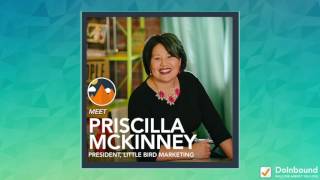
Priscilla McKinney lost her business to a tornado and fire, then rebuilt it into Little Bird Marketing, a successful inbound marketing agency. She discusses how she recovered from the disaster and what shaped her approach to growing the company.
Foreign. Welcome to Inbound Agency Journey.
This is the show where inbound agency leaders share the strategies, shortcomings, and successes they've experienced in their journey toward building their dream agency.
Now, here are your hosts, Andrew and Gray.
All right, welcome back to Inbound Agency Journey. This week I am joined by Priscilla McKinney, who's the CEO of Little Bird Marketing. Priscilla, there's a lot we're going to get into, some nuggets from your story, but welcome to the podcast.
Oh, thank you so much. I've been a longtime listener and I really learn from other people. So I hope that we can get some of the pain from my story in this and help some someone along the way.
I like it. Well, I'm excited to learn from you here. And first of all, let's without, without getting too deep in the weeds here with all the background stuff, but where did Littlebird Marketing come from? I guess I don't even know this. Did you start Littlebird Marketing or were you taking over an existing business?
You know, a little bit of both. It's interesting. I just kind of couldn't stop doing marketing. I own also a credit card processing firm, and I just was constantly working with, with the owners, talking with them about improving their business so they could improve their credit card sales. And in fact, I worked for a large corporation out in California that, like, the actual clients we worked with were like Vail, Aspen, Mount Bachelor, Mount Hood, all the, you know, all the ski resorts. Right. So in my portfolio was about the top 60, you know, U.S. ski resorts. And I was doing their credit card processing. But way back when this is over 20, you know, 25 years ago, they were rolling out gift and loyalty programs, which now everybody's like, gift and loyalty program. Everybody has one. But back then it was about a 30 to $50,000 endeavor to write the programs and incorporate them onto credit card terminals for the countdown programs, the, you know, actually establishing the gift card. So it was a big thing. And when that was, I was dealing in credit card processing with those big programs. Well, inherent in those programs, you know, is a marketing process. So, so I really cut my teeth with some of these big companies, like helping them think through what are the behaviors they need clients to do in order to get that repeat business and get the average ticket up. So marketing really related to that. And I think that I realized I really had a tremendous knack for it. I had a friend that owned a company called Grow Marketing, and she went to leave and came to me, approached me like, Priscilla, you are always doing Marketing, do you want to buy my firm? And I'm like, what? I just didn't see this coming. But sometimes other people can see in you and call out in you talents you don't necessarily identify. And she's like, you would be amazing at this. And long story short, I went for it, but it was never really mine. And I did, in the first year, end up firing all of the clients that she had and starting over. It just wasn't because it wasn't mine, you know, and then here's my, you know, we need some drama music. Can you put some in when we're done? Like, here we go. And then in Joplin, we had a, sadly, F5 tornado blow through our town, take about a little over 30% of our town out. And three weeks after that happened, our studio was engulfed in flames and burned to the ground.
Wow.
So it was a traumatic year in 2011. And what came out of that was the birth of Little Bird Marketing. Everything was gone. And I stood there and I knew that I had to either walk away, literally, this is a chance either walk away, or I'm going to completely build this. So bespoke. And just every single thing that I wanted a company to be. And this was my chance. So I took a weird, weird trip out to Oregon. I LinkedIn. You know, I'm a great, great LinkedIn. So I went and asked for favors. I just got out of town. I had to get out of town. This town was absolutely nuts at that time. And I went and asked people if I could go visit amazing, amazing agencies. And I just wanted to be a fly on the wall for a day because I needed to get re inspired. And some people let me do it. They were really gracious. And I blogged about that a little bit. But I came back and started Little Bird Marketing.
Wow.
It was crazy.
When you got back from that trip, is it still 2011?
Yeah. Yeah. I just went for about a week. I just needed to literally get a. Just a brain, you know, reset. It had been a crazy month. And, you know, luckily for me, my husband's incredibly gracious and supportive. He's one of my secret weapons in this world. And so I was able to just really go clear my mind and come back and rethink, you know, what am I about and what do I want our company to be about? And it was a wise person who stood with me on the, you know, on the sidewalk watching our company burned to the ground, who said to me, that doesn't matter. You know, your company's Your people, and you're all fine, man. And from that, I was able to build it.
Wow. So I have so many questions. What was the team size at that point?
We were, I think, eight at that time. We're actually six right now. We've been all the way up to 12 and been every machination in between. And, you know, part of that's a little bit of finding out who we are and also just responding to the market. And, you know, once people get more expertise, you know, we're quicker at things. We don't. You know, we find ways constantly to be more efficient. So, yeah, we've been up and down over the eight years.
That's. That is quite the story. So let's moving from that, actually, before we end the story, you owe me a little story here, because you gave me a little tidbit before. So you worked in a bank with Will Ferrell?
Oh, yeah. He was. He was a teller. I was working in California. I put myself through college working at a bank, and then that's how I ended up getting involved in private banking and into credit card processing, fraud management, and all these kinds of things. But once upon a time, I was a teller, and Will Ferrell and I were tellers together in California at a branch in Costa Mesa. And that's when he was discovered at the Irvine Improv. So that's my career path. There's my best highlight, I think. You know, all the other things, they're just time and chance.
Yeah, Priscilla's done this, but she worked with Will Ferrell.
Whatever.
So I'm sure you probably hear this question all the time then. This is not serious at all. This is just related to Will Ferrell. At the time, did you think, this is the funniest person I've ever worked with?
You know, I did, but I also had a roommate, and the three of us worked shifts together all the time. Her name was Jill Gable, and she was so freaking funny that actually the two of them together were just ridiculous. So, you know. Yeah, at that time, I wasn't thinking he was the funniest person I knew. I just knew that if the three of us could possibly work a shift together, this was gonna be a good time.
That's awesome. Well, fast forward into the future. Let's talk about where little bird is today. You gave us the team size you mentioned to me. You guys are all in person. Are you still still in Joplin?
Yes, we are in Joplin, and I do travel quite a bit, and we definitely. Our clients are not all here in Joplin but yeah, we're based here and we are all work, you know, together. We collaborate in person. So we're not a remote team.
Right. And talk to me about what you do. So obviously, most of the folks who come on the podcast, not all, but a lot. One of the big pieces that they do is inbound marketing, but everyone's got their own spin on it and everyone's got their own specialties. You also have some podcast that we could get into. What are the services that you're offering your clients?
We definitely are focused on being an inbound marketing agency. And, you know, that's not a really great coined phrase around here. People don't know what that is. So a lot of times I'll say we're a digital agency. The problem there is that we've earned a lot of awards for our branding, our logo work, and our web work. And so because of that, people really do see us as full service. And I'm happy to let them use the word full service, but I think a lot of us in the industry know none of us want to really be full service. We want to focus on the very best things that we do and so that we can really knock it out of the park. So in terms of our focus, we are a digital agency. We are focused on our particular products and delivering our two main services, which are both inbound services. Now, we do blend other things. We have a lot of our local clients that use us have a blend of inbound and outbound, and so we're able to blend that up. And obviously the digital online advertising is a piece of that. But for the people who are removed from us locally, we specifically go in and we do inbound for them. And we may be adding onto that, some consulting, and then we may be adding onto that digital ad management. But that is typically the, you know, we're not gonna, you know, create a commerc for a company in New York. We're only doing those kinds of full service agency things for our local clients.
Nice. I'm gonna ask you a question I haven't, I don't think I've asked anybody else before, but thinking about this recently and the question, the short version of the question is, why are the services that you focus on those? Why did you choose those? And what got me thinking about this was most people, when they ask some variation of that, when they answer some variation of that question or give the answer that at least I think they would give to that, it's all about what they perceive their clients needed. But In a lot of cases, the truth, as I've talked with more people and also realize this about in myself and our own experience, the truth a lot of times just has to do with self awareness and becoming comfortable with who we are and what we do well. So why? Why? I guess the service suite that you provide and what you like to focus on, why is that?
That's interesting. I guess first and foremost I would say I'm an entrepreneur. And so I start with the, with the needs that I have. I wanted to originally when I, when I started Little Bird Marketing, I needed the branding. I needed someone to give me good ideas about inbound. I needed someone to build up my following. I needed to have truly a marketing. And so as I learned how to do that for myself, then I became aware of how I could go about codifying that, packaging it, and then delivering that on a repetitive basis to where I could continue learning to learn and improve it. So I guess for me, I use myself as my first, you know, I'm my first patient and you know, HubSpot is, we're a HubSpot agency. And HubSpot preaches that all the time. Use your own company, your own agency as your first client. And we listened. We actually did that. And so I guess my short answer there is, it came from me as a need, as looking at it, from being the owner, what would I want to spend my money? What is valuable to me? But on the other side of it, I didn't know it was called inbound marketing. I didn't know it was called content marketing. I didn't know it was called building a platform. I didn't know what I was doing in terms of the actual, actual, you know, phrases for it. I somehow intuited, you know, inbound marketing or content marketing. And I'm not trying to make like, oh, you know, I'm not Al Gore, I didn't invent the Internet or anything, but I'm just saying that I am a bootstrapper. And I was actually. I realized I kind of came into this knowledge that I was actually doing inbound marketing before I knew what it meant. And it's just that it made sense to me. It made entrepreneurial sense. This is the first thing I should go about doing. The problem was reporting was an awful nightmare because I didn't have anything connected. I didn't have that dashboard, what I call the Fellowship of the Rings mentality, one dashboard to unite them all. So the reality was that I was seeing results for my business. And it did take a long Time. I think people who tell you that inbound is a short track to success are just lying through their teeth. But, you know, it took really 18 months of us being on the system and really building our platform, blogging and doing all these kinds of things where I saw that I was getting quality results. And so then I was able then to prove the work through, through things like HubSpot, whereas before I knew that they were getting results, but I couldn't prove exactly what it was tied to. So for me, I started offering these services and packages because it was the system in which I could actually prove the connection of my work to the results. Right, that makes sense.
That makes a lot of sense. That does. And you kind of summed up, I think, an underlying theme that a lot of past podcast guests have had, and even there's so many, especially of the, I guess you kind of look at as the biggest or most well established agencies in the HubSpot ecosystem or the inbound ecosystem who have their goal in signing up with HubSpot wasn't, I'm going to become a customer here so that I can then resell their software and service. On top of that, they're already running agencies that were doing fine. They were looking for something that would generate more leads and more business for themselves. And ultimately out of that came the results and camera, what turned into the next big evolution for their agency, I think of media junction and wider group and a whole bunch of other folks who told that story on this podcast. And so you kind of summed up, I think it's not necessarily that you look and do this huge overarching analysis of what's the single best ROI that could be theoretically provided for a company. And that's the service set that we're going to do. But it really comes out of your experience, what you're familiar with. And I think that, that ultimately in a lot of cases leads you to what's the best ROI that myself or our team are uniquely qualified to provide to people based on our own personal experiences and personalities and strengths and weaknesses and kind of all that blends together to create that. So that's interesting. And nothing helpful to hear.
Yeah. And the thing is that I think every agency also is frustrated. You do this marketing for someone, for a client, and they get these great results. And what is the next thing they typically say? Well, I don't think we really need spending more money on marketing. We're getting really crazy. I'm laughing on the outside, but I'm crying on the inside. Really. But that frustration, you know, a lot of agencies have it. And when I was doing inbound outside of HubSpot, you know, in any whatever tracking system that you have, you know, not being able to attribute it to the actual, maybe what you call like the social proof of it or the actual steps, like how did this person become a lead? How did they end up giving us $16,000? Oh, it was from this social media post, you know, being able to quantify it there. But it's like, you know, a schizophrenic being like, well, I feel better today, I'm going to stop taking my meds. You know, we all know where that goes. Wah, wah, wah, you know, so, you know, I feel like that's, you know, HubSpot and any kind of a system where you're tracking real KPIs and you're delivering, connecting the deliverables to the success is really addressing that underlying frustration that can happen between a client and an agency where they realize that the marketing and the dollars they're spending are truly, you know, yielding these results. So it's the age old, you know, nothing's changed with that. But that's for us. Why, you know, why a dashboard? Why use someone else's, you know, system? And we searched high and low. We really looked at everybody for quite a while. It was a painful process and that's really very, very painful for me because I'm a quick start. I hate doing the research, but I knew that we were, we started at the beginning knowing we were going to resell these services. So we really wanted to make sure that they were robust enough to where we were going to build our digital side of our agency on this company. So it's, it's tough. That partnership sometimes is tough. You know, it's not always ideal.
What year did you start using HubSpot?
Wow. You know, off the cuff, I don't quite remember, but let me try and guess. 2012? Maybe.
Okay, nice.
So five years in roughly, maybe four years. Yeah, something like that. But.
Cool.
Yeah, I just can't, I mean, I mean the, the learning process has been just absolutely, absolutely mind boggling.
Yeah, that's great. Well, Priscilla, we talked a little bit about why you guys offer the services that you do and how that came about in the story. One of the areas that you and I talked about ahead of time and I always loved digging into because I know that I personally can relate to so well and other people benefit from is either the struggles along the way or what you're looking at right now. In terms of improving at the agency, when you think of that, whether it's one or two things, it could be more or it could be just one. Whatever it is, I guess what lessons are you either recently learning or in the process of learning right now that's changing the course of the agency?
Yeah, yeah, that's a great question. You could just cut me open. I'm just full of them. It is such. I have never come into work thinking, oh, this is going to be a cakewalk today. I really love it. But I am always learning something and learning something I feel at just a very deep level. And part of that has to do with. I've set that tone, you know, with my team. But they're very helpful. Maybe in the last three years, the thing we've struggled with the most is really identifying where do we specialize? Because we are, you know, four to five years into. Well, really, if you don't count it with HubSpot, maybe six years in Inbound. And the question always comes up, how do you specialize? Who do you really, you know, who do you really deliver to? And we've struggled a little bit with that. Even though we know from our, you know, in the. We need to specialize. Well, we know that we are really great at B2B specifically. If I look through the analysis we've done as a team on who our best customers are and not necessarily best customers. Oh, we love how much they pay us, you know, all of our customers pay us. So I don't have to go spot through that. But in terms of who do we really know that we are delivering tremendous value based on, you know, the. Versus the cost that they're paying to us? And we know that we are really good at the B2B. The people who are business services, more higher end ticket consulting, translation services. And I say insurance, but I don't mean like car insurance, I mean more like consultative insurance, risk insurance, things like this. But I think I'm going to answer this question, but I'm going to come around a little bit more elliptically. We also had to ask ourselves, but what are we so good at? We are so good at connecting very, very strange dots that other people did not see. Making really important connections which in turn has led to us generating, I think just phenomenal freemiums or lead magnets or downloads, whatever. Free downloads, whatever you want to call them. We have very unusual ones. We have ones that have won awards. Just a few examples. For an electric vehicle initiative, we did one that was like a road trip guide. Places you could get to from here on one tank of, you know, one charge of gas instead of one, you know, sorry, one charge of your vehicle instead of a tank of gas. But we took that tank of gas mentality and, and brought that into, you know, a fun way to get people interested in applying for a rebate program. We're working on one right now that we're really getting down to the bottom of for a higher end insurance company where the really the Persona, the buyer is, I call him big Shot Bob. He's somebody who's a bootstrapper. He's built a nice empire. His biggest concerns are taking care of the employees and the benefits. And it costs him a lot of money, but he needs to really also love on his employees. And we're making this really interesting premium that does not have a name yet, but it's kind of around the idea that adulting is hard. And it's going to be like an ultimate life checklist. Going through the things that, you know, that you needed to do. Do you have your will? Have you changed your passwords? Are you managing those correctly? Do you have your college funds started for your kids? You know, just, it goes through like house inventory. Just all the things that you and I both know as adults we should have done like put a fire extinguisher in our kitchen, you know, but there's not one place to kind of put this. So we're doing this really cool lead magnet for this company who they're trying to get do something nice for this big shot owner who's going to buy hundreds of thousands of dollars worth of benefits. But it's something for him not to use on himself. But it's something for him to give to his employees to say, hey, we know, we know these things are, let's give you put this in a binder and this will organize your life. So I think we're really good at that. But to say that it is a real struggle to dive deep and find out, well, what are we really, really good at? So we can find more of those. But I would say the biggest struggle, and I think a lot of people in your audience are gonna resonate with this. One of my biggest struggles is that I'm incredibly passionate about what I do. I have all kinds of new ideas. I currently own and run three companies. And here is the quote that I have been told many times, Priscilla, you are not allowed to start a new company today.
So nice.
I just, I have to hunker down. I've got to do what we're doing well. And I really heard it, you know, through inviting really good feedback from my team. And they are very responsive and very, very good critical thinkers. But our word for this year for the company is polish every single thing we've done, every package we have, every process we have, every micro action, every, you know, workflow that we have, every email. What can we do to polish it? How can we not start something new? But how can we actually polish it? And that's our struggle. You know, we've struggled really, really long and deep in it, and then that's our answer for this year. This is how we're dealing with it. And just to give you one little example, for example, is when someone downloads one of our freemiums, we have a lot of, you know, free things that. On our website that are marketing guides. And when someone downloads those, I really do not do it as free. Great, have it for free. I'm not that. I'm not that. You know, you asked for one thing, now I'm going to attack you. They have to download three different things before I say, oh, did you need something else? You know, where I can really have just an authentic way of, you know, connecting with people. But when they download a certain thing, we say, oh, if you liked this, you'd probably like this. It kind of goes along with it. Well, we've had those emails and those workflows done for a long time, but this year we've gone through and started changing them so that they're available video of me just saying what was in the email. You know, and those are small little differences that are helping us polish it and deal with that struggle of always wanting to move on to the next thing when really everything that we have done maybe isn't done to, you know, the best degree possible that we can muster up.
Right. I like that theme. I think that's one that probably just your description of it probably rings true to a lot of people. Realization of, well, we could. Those workflows that we've had in place for three years could probably use a little bit of love and just cleaning up some of the. I think when a lot of. Especially for creative people, you look around and you see. Look at. Look at all that I've generated and that I never go back to. And the creative mind is always thinking in terms of building, not the maintainer.
Right, right. And we're always. Yeah, and you're right. You hit it on the head about being creatives, too, is that we're also always getting endorphin. Hits. Because as an agency, we're always starting a new project, we have a new client, we're starting a new project. So you get these endorphin hits by starting new projects. Well, you don't get endorphin hits when you go back and you actually rework an email. So, you know, it is a lot of energy that goes into starting something new. But we're trying to channel that energy and say, how can we go back and get so proud of this work and do that not only for us, for our own marketing, but also for our clients. We're on retainer with them. If we don't have a new project, that's fine, but we should go back and polish something that we delivered to them in the past.
Right? That's great. Well, I think there's a lot to pull out of this. Before I let you go here, one last question, and that is around your podcast ponderings from the perch. Can you just tell us briefly about that podcast and is that targeted towards. Is that like a lead generation tool or is that more of a creative outlet or brand building kind of driving towards speaking what's right? Tell us the story of that podcast now.
You just opened up another struggle of mine. Here we go. Well, my podcast really started a little bit more as there was a lot of people were following me who couldn't afford me, who were a lot of entrepreneurs who wanted to know, what are you thinking? How do you think? I want a little insight into it. And the interesting thing is my audience at that time was not anybody I was working for. So it was kind of followers. And I'm like, well, let me do them a solid. Let me give them some tips. And here's what you do next. Because it was a way that I could interact authentically with people who weren't ready really to hire an agency. But. But it was also a part of my platform. And we're struggling right now because my second title to it is It's a modern podcast for the modern entrepreneur. And we really have to go back and massage that and rework it because the reality is now we're getting a lot more interest, especially as I'm speaking this last year I was in Chicago and New York, I spoke in London, which was super fun. And as I'm getting more of that audience, I have more people tuning in for that. But what, what's still interesting is that the audience is not those high level marketers. It is other people, like a VP of marketing, maybe even an owner who is kind of scratching their head wondering what their marketing department is doing and what should they be doing. So what I've done is I've morphed it. Sometimes I do talk with my producer, and we just have a conversation back and forth that's very organic, and we talk about what I'm struggling with or what I think people should be focusing on. But more than anything, it's. It has really delivered in that it has brokered me connections with people I would not typically have had a fantastic conversation with. So, for example, so when I was in London, I'm speaking, and I want an entree into speaking to some people who are playing at the game higher, you know, higher above me. Well, a great way to do that is to say, I would love to have you as a guest on my podcast. Boom. Now we've got a relationship, and I can get something out of that. They get something out of it, and then my audience gets something out of it. And it has truly, truly been an incredible building block for our platform, and it has gotten us connected to so many more people. And I'm happy to give to someone first, and if it turns around and they then want to give you a leg up, then it's natural and it happens. And I trust you know that. But the podcast really is a great learning place where, you know, my audience can learn, but also I can learn. And. And it's just expanding, you know, the thinking of what's going on, you know, in marketing.
That is awesome and so true. The podcast can be a great avenue to. To open so many doors for you.
Absolutely. Absolutely.
Podcast is the right place for people to grab those show notes and find all the information. Just littlebirdmarketing.com podcast.
Yeah, and I think it's podcasts. Plural.
Plural. Okay, cool.
Yeah, we're on Stitcher, itunes, the works, you know, Google Play, whatever it is.
Great. We'll make sure we link that up along with everything else in the show notes@doumbound.com podcast. That one's singular. Priscilla, this has been great. Thanks so much for coming on and spending time with us today.
Absolutely. Super fun. And I'll just continue to listen because you guys deliver great insight all the time. I love hearing everyone else else's story, so thanks for having me on.










