How to Grow 2 Successful Agencies at the Same Time with Nicole Pereira
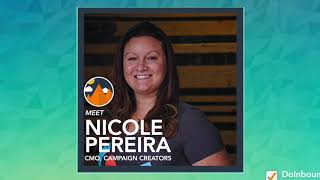
Nicole Pereira talks about running two inbound marketing agencies at once. She covers how to structure the businesses separately, why middle-of-the-funnel marketing matters, and what makes agencies succeed when they specialize instead of trying to do everything.
Foreign.
Welcome to Inbound Agency Journey. This is the show where inbound agency leaders share the strategies, shortcomings, and successes they've experienced in their journey toward building their dream agency.
Now, here are your hosts, Andrew and Gray.
All right, welcome back to this week's episode of Inbound Agency Journey. This week I have the pleasure of bringing on Nicole Pereira, and we are going to get into her businesses, organizations and background here in a second. But first of all, Nicole, I'm really excited to chat with you on the podcast. Thanks for coming on.
Yeah, thanks for having me. It's kind of funny how you make note of businesses. Probably most people you have come on here, have one business to talk about. I guess we have quite a bit cover in this show.
We have that in common, multiple businesses. So let's start there. You've been in the inbound space for quite a while. I guess that's kind of my first question for you is just what got you into this? And then we'll kind of ride the story of the businesses to where you are today.
Yeah, so, you know, seven years ago, we actually started off as a design and development firm. All the marketing we did was the marketing we did internally. And it was very inbound esque. My first blogs were sitting on webinars and then recapping the webinars because I just didn't have content to write about at the time. But I knew that I needed to write about things. And I come from a SEO background personally back in the late 90s, so I always knew. Yeah, so I knew I just needed to keep going. Whether it was perfect or not, I just had to do it. And so, you know, my contribution as a partner in the business at the time one was just getting that content, doing the SEO, making sure the website was usable. And so I was the tech person, but also the marketer. So this was really before people kind of saw the bridge between marketing and technology and how they were married together. It actually led to a really long journey of me trying to discover who I am. Am I the IT girl who's running cables down the walls and setting up print Dr. Or am I the marketer who's getting leads in the door? And it wasn't until sort of the chief Martech, if you've heard of it blog came out that I had an identity. I was like, I'm a marketing technologist. This is amazing. It makes sense now. It's so clear. But for a long time, I personally was kind of lost. And when I sort of figured that out, the Marriage between the two, I was sort of able to build marketing product or service within our agency and actually take a design and development firm into the marketing space. Right. Because they do really work well together. I think most of the people who will be sitting here, even you know, in our chats in the past you were sharing how you did some websites, but you're a marketing agency. Well, it's weird how they kind of go together. Right, right. And so it was years and years and years, I think six years of developing that sort of full stack I guess is the new word, right? Full stack, inbound marketing agency working from go to market strategies all the way to a more mature, very hyper focused social media strategy or something like that. So we did it all, but we did fall into the trap of doing everything okay. And so there was a certain caliber set of clientele that we worked well for because they paid an okay price for an okay product. And it was about a year ago that we decided, you know, there's a couple things we do really, really well and we're getting lost in the noise of the inbound space and the digital marketing space and we need to kind of solidify our identity now. Since our roots were really into go to market strategies, we knew we could conceptualize and launch a brand, take everything that we've learned as business owners and all the things we've been doing for our clients over and over and over again, hundreds of clients throughout the years, and launch something quickly and iteratively. And so that's where Deep Root Digital and campaign creators came from. We actually split our offerings and we position ourselves in the marketplace stronger. So Deep Root digital only focuses on websites, design and software and campaign creators doesn't just do any marketing, it only does mid funnel marketing tactics. So a more mature marketing client would come to us. They've already established healthy awareness paths. They're trying to solve lead generation, lead nurturing and sales and marketing technology problems within the organization. Either they have it and they need to optimize it, or they need to launch it and make better use of the brand awareness they've built over the years. And so it's interesting because it was scary, right? It's scary when someone comes to your front door and wants to give you money and you say, oh, I'm sorry, we're not a social media agency, we're going to have to refer you out. Or you know, I'm sorry, we don't write blogs anymore, we're going to have to refer you out. But at the same time it Created new conversations. Right. Going. You guys look like you're the experts at, you know, funnels. Okay. You guys look like you're the experts at marketing automation.
So Nicole, I wanted to dig into you talking about just the split, kind of the split of the two businesses. And I've got a couple specific questions and then a couple kind of higher level strategic ones. One, I guess the first one is from a, from an actual business perspective, is it two separate entities or are they just doing business? Are they both branches of the same business?
How do you handle that? Yeah, so, yeah, so right now they're DBAs, but we're running two sets of books. We're splitting out revenues and costs. And the goal is hopefully that both of these brands can find their legs independent and sort of branch off on their own. And once we get there, I think that's going to be a true testament to our ability to, you know, take what we've learned, apply the pressure in all the right places and launch two new, successful, almost totally different brands out in the marketplace. And it's going to be interesting. We're about, let's see here. We launched campaign creators last November. We've surpassed our traffic, we've surpassed our inbound client ratio. We've surpassed basically every metric we had built for the first six years in our original brand. And we've already surpassed it. And we're maybe eight months in.
That's awesome. Congratulations. So that was one of the, that's kind of like the lead into the bigger question I had, which was a lot of agencies I've talked to have considered doing this and I think people realize and there's all this talk in the agency space about niching down and finding your focus and all these things. And I don't say that to demean those. I think those are really important and stuff that we teach as well and, and advocate for. But a lot of agencies kind of feel stuck. Like I don't want to cut off this portion of services that we do or this aspect of what my team does, but I also don't want to be trying to run three different organizations. And all of a sudden I've just cut my marketing resources into thirds for each business. I'd rather kind of double down and do all that marketing in one place. So obviously you decided that splitting it up was worth it to be able to focus on these specific things and let each business specialize. And right now I'd imagine there's probably some overlap between the teams, but obviously probably long term goal is most of the team at least is you're either in this business or you're in that business. What have you. Are there any takeaways from that process? I'm sure you've got a ton you could share, but any takeaways specifically? I guess on the marketing, sales like growth side of things, has it been harder than you anticipated to try and keep up with marketing and growing two different businesses, or has that not been as challenging as you thought it might have been?
It hasn't. It's interesting because I guess rather than resource sharing, which is what you're alluding to, we're selling services to each other. So one of my clients on the campaign creator site is Deeproot Digital. We treat them like a client, we deliver services like a client, we bill like a client and vice versa. When campaign creators needs design or development work, they do the same. So I guess in theory it's resource sharing, but when you resource share, no one really knows their place. Right now you can't, Am I on this side of the fence? Am I on that side of the fence? What are my priorities? Our clients are our priorities. So treating each other like a client, you get a high degree of professionalism amongst the team importance, high priorities and things like that. There's also referral sharing. We're actually right now sort of hashing out what does it look like in terms of revenue back and forth. But they do feed off each other. Somebody comes in and needs marketing services and they might need updates to their website and vice versa. What's been hard, but this is something that we're kind of just trying to plow through right now is educating our clients on the fact that we do have two brands and they do operate together, but separate. And knowing that you have a point of contact over there and a point of content over here. That's probably been the hardest part because when people go to an agency, they kind of want one point of contact. What's been interesting is to deliver two really smart strategist level individuals to account manage on behalf. The client, who also communicate in house, is actually proven to be very beneficial for our clients. So the deadlines that their website is on to get something launched could be delayed. But it's not stopping anything that I'm doing on the campaign creator side because their deadlines are independent of mine. So we can provide a lot of value to our clients by not letting the teams bog each other down. Whereas previously, one person, one account manager, one interfacer, one conversation, trying to just get the most highest priority thing off the list now there's two conversations going on. We're getting twice as much done in twice the amount of time with the same. In the same place in the same building, but two different brands with two different goals.
Right? Wow. I've got so many questions about how to make this happen because there's not a lot of folks who I've talked to who have, who made this happen in terms of, I guess at a leadership level. Have you. Has the leadership team kind of split up? Like, hey, obviously we're all involved in both businesses and guiding them, but my priorities here and your priorities in the other company, how are you guys handling, I guess leading those and how you split up? Not that you have to like, it's probably not a point where it's like pick one or the other, but I guess how do you prioritize and distribute resources on that side of things?
Well, it's interesting and this is like the hardest thing for owners, I think it's been hard for us, but we've been pushing through it. Owners are usually both employees and like members of the board. Right. And so you have two roles that you're playing. You have the day to day operational role. And so in that sense, me and my partners kind of have picked our side. And so I have, we have. There's three of us, which actually is really beneficial. Having partners is crazy, but really, really helpful to have that support. Our chief creative officer sort of hangs out on the design and development side, obviously. And I hang out quite a bit on the campaign creator side because the marketing world's where I live. And then our third partner, our CEO, he sort of like bridges the two monitors from above, right. Making sure everything's moving forward with a unified vision. But then we also have our board sort of roles. Right. So there's certain things at the ownership level that I contribute to a lot of its process and documentation, product development on all ends of the fence. I would say big relationships and big BD would be my other business partner as well as finances, forecasting and where we're taking this ship. And then my creative partner is looking into new trends in the space, making sure our own brands are adhering to the standards that we want everybody to see. And that's to segue into something that I think is important is when we were business on Market street, we did okay marketing for ourselves. Now that we're campaign creators, we are our first priority. So we practice the best possible marketing that we could ever do. And I think most agencies will skimp on their Own marketing. And we may not offer social media services, but our social media is pretty damn good. And we may not offer blogging, but our blogs are pretty damn good. And so we have a really, really strong marketing like internal marketing engine that just speaks to our acumen. And then when we say, hey, we know everything really well, we can have a discussion with you about how we play into the bigger picture. Now we become advisors for our clients because we, we attracted them with our really, really great marketing.
Right. That's awesome. Well, cool. Well, like I said, I've got probably a full book worth of operational questions about the breakdown, but I think, I think you've laid it out well and I'm sure that's good. At least now I know somebody who is probably a good point of contact, who's had a positive experience at least so far with that split to ask follow up questions. We have bring you back on at some point, but I don't want to get lost on that because that's probably, there's probably a very, very small subset of listeners who are at the point right now where they're thinking about that. And I kind of wanted to dig into. You were talking about middle of the funnel focused services with campaign creators. So I know that obviously you guys are a HubSpot partner, platinum partner, I believe in terms of how you're doing that is HubSpot, the exclusive platform you're servicing on. What is a typical, I guess what does a typical client relationship look like there? If they're coming to you and you're not handling, they already have the awareness side of things kind of built up where the traffic is coming in. Are you doing a lot of lead generation stuff? I haven't run into a lot of folks either who have specifically said we're middle of the funnel. We're this exact stage in the funnel and that's what we're good at. And I kind of like that approach. So can you tell us about what that means and what that translates into?
Well, you know, it's funny because a long time ago people really focused on perfecting the process of creating content, gender awareness to optimize for social, to create a strong brand or to optimize for search to create a strong brand on social. And now we're at that level where those marketing tactics are mature and well documented and understood by even the most novice marketer coming into the space. And then they arrive at the point where they've done their job. People are coming to the website, they've attracted an audience and then they don't know what to do with it. We're trying to take it to the next level there. We're trying to help further enhance our customers. Customers journeys through their brand and it tends to be that there's a lack of marketing, you know, technology in place. Things don't communicate. Process and procedure. It's, it's very heavy marketing operations. Right. A new sort of field or department that's sort of popping up right now. I would say Martech came out and all of a sudden everybody was in Martech. But then marketing operations is becoming a heavy focus right now. And I would say we come in and bring efficiency and process applied to our proprietary methodology to help bring quick results for them. And they just don't seem to understand how to use the tools. They don't seem to understand how to create pathways. Even a lot of inbound agencies, specifically speaking to HubSpot, as we've shown them, the complexity of how our funnels, how people move down them, how things are triggered on and off, everyone uses those words, but very few people have it in application. Very few people know how to actually make that engine like hum. So not only will we create the assets that are needed, that's less the focal point, it's creating the pathways that are going to give us a result. We do dip quite into the sales side too, right. Making sure the handoff to the sales individuals occurs well and then that there's accountability so we can get closed loop reporting. But I think it's a lot of the technology, a lot of the nurturing pathways and then a lot of just the initial lead generation, you know, tools or tactics that we put in place to get a quality name into the database.
Right. All right, well, Nicole, don't get mad at me. You're the one who prompted this by saying we have a proprietary methodology and a lot of agencies don't know how to do what we know how to do. So when it comes to like these workflows and this automation and just the middle of funnel stuff, what are basically I'm asking you to share all your secret sauce right here, not actually just a little taste of it. What are the common mistakes that agencies are making or that people are missing out on and that you guys have figured out how to capitalize on? Is there anything kind of like the most common ones, the basics that you start with that would be helpful for us to learn from you here?
Yeah. So it's funny because everyone knows it, they just don't do it. Right. We absolutely don't reach out to have a sales conversation to somebody who has not signaled to us that they're interested in a sales conversation. I have people in my database who just finally have popped out of our little nurturing engine three years later going, whoa, you're a whole new company now, but now you're talking my language. Now I'm ready to talk to you. So we are patient and we try to just keep filling in the top, knowing that we need people to really, really, really, really churn in the middle so that we can have a good, healthy sales conversation at the bottom. And it's taught and it's, it's what goes around in our industry, but people don't do it right. We're really hungry and we're really thirsty to just, just try to make sales, but we can't force it before it's ready. And so, you know, when we first started, we've filled the top of our funnel really, really well with all this content and all this stuff. We have a vlog, so similar to podcast. Almost all of our blogs are vlog style. And we have a following on YouTube that we never thought we'd ever have. And so it's interesting. We've had a couple of blog posts go viral. We have some really, really great communications on Quora. It's very diversified awareness marketing approach. And then they get in and we have like 17 different funnels inside of our system. And things handoff and push and pull, things trigger and turn off and come and go. So that when someone's really ready to get to the bottom, they have all the knowledge and understanding of what we have to offer them. And I think that's quote unquote, what's proprietary, right? The use of the tools, the progressive, moving them along their pathway. I mean, I can give you some links so you can accompany this post to a couple videos that we've created. But it is really your standard top, middle, bottom of the funnel offerings. Following them along on social and search with retargeting if they get lost in their pathway. Progressive landing pages that continue to give offer and value as they go along. You never stop giving until they tell you they're ready to talk to you. And nurturing them for as long as it possibly is needed for them to be ready to talk to you. And so proprietary in the fact that we actually apply it and we pull it all together. A lot of our competition, we see the weakness exists because they don't want to do this hard stuff. It's a lot of brain power. We have understanding of what it is, but it's creative and different for every client. Right. The segments and how we're pulling people and pushing them are different for every client. It takes a lot of time to set this up. No one wants to do that. Right. Because it's the same thing five years ago when you were trying to sell an inbound package to clients and you had to sit there and spend months education educating them on why they need to participate in social, why they need to send emails, why they need to do a blog, and why they have to diversify their approach. Now we're having the same problem where people don't want to do that hard stuff. I'm pretty sure give it a year or two and now everyone will be doing it, and then we'll probably continue pushing the envelope. Because I feel like we were selling inbound packages and calling our roadmaps roadmaps before we ever heard anybody else who was doing it. So I do feel like we've always kind of been at the front of the trend. It's hard. We spend a lot of time educating. We started and run the San Diego HubSpot user group when it had like seven people, and now it has 2,500 people in the database four years later. And inbound marketing wasn't even a word any of the marketers used in San Diego. Because inbound marketing was an east coast thing. Right. It wasn't quite a west coast thing. It's still sort of catching on out here. So we just split. We follow the examples of the leaders in our space. When they say make education, we make education. But we also don't make mediocre education. We make damn good education. And it's costly, but that's, you know, we don't spend a dollar on paid advertising.
Yeah, that's awesome. I think you're. I think you're right on. I think that there's a couple reasons. Obviously, it takes more time. There's not as clear. I mean, it's. It's not complex, but there's not as clear of a playbook for. Here's how you produce really good sales, qualified leads, or opportunities. That playbook isn't quite as clear as here's how you get more traffic and get more people to convert and gather more email addresses. And the other thing I think is for a lot of agencies, the incentives just aren't. This is starting to shift with a move towards inbound sales, but the incentive just isn't quite right. If I can just. I can generate leads, throw in three emails that I call our middle of the funnel stage and then have my salespeople reach out because that person's a contact. Technically, as an agency, I can say that I created these sales conversations. And if the close rate isn't very good, that's on your sales team. We produce the leads for you. I think that that's. It's partially just an incentive problem as well, in addition to everything else, because as an agency, you can kind of justify it and say, I produced these conversations. Now, had I taken the time to do the middle of the funnel well and nurture these people to the point where they were ready for that conversation, the way that that conversation needed to happen, obviously your close rate is going to be way better. The ROI will be there for it. But I think in some cases that's. If the close rate improves, that's credit to the sales team. You just have a better sales team. And I've seen that in the agency space. I've seen that happen both ways where work that we did in the middle of the funnel personally have made the mistake of delivering leads to a sales team too early and blaming the sales team looking at that and saying, well, the sales team's just not very good. Look, here's another client who's. Whose close rate is much better. And your sales team just doesn't have a very good close rate. But in reality, the lead wasn't. Those people aren't ready to talk at that point in time or they don't know enough yet to be the right type of prospect. And then on the other side of, on the other hand, having a situation where you spend all this time in education and doing middle of the funnel work and the close rate's much higher and the sales team gets credit for. For how good they're. You know, we as the agency don't get credit for that. That goes on the sales team is good job. You guys are just way better, way better at sales now magically than you used to be. So I think that until those two things really come together well, and people realize it's all sales, it's all marketing. It all is the same stuff along the way. And I think that, I think it's just going to take a while for people to kind of bridge that gap and realize I need to be spending time here nurturing these opportunities and kind of tracking with people's timelines and the timeline that they personally need to get the education that they need to be in the right situation to have the conversations that lead to qualified opportunities and.
Sales ultimately do you need a job? I mean, I'm hiring and I need people who can articulate that well.
Well, I just stumbled through. I'm probably not the articulate one, but I do think that's, I mean, that's something that I've lived through personally. And I do think that's a, that's a big part of this, the problem as well.
It is. And we, we still need awareness agencies and we still need agencies who, you know, bridge the gap with sales enablement, which is a hot new term. And we still need the soil. We're all just pieces of a bigger machine. And I think what's just happening now is the all in one, we do it all agency is becoming less in demand because I think the market is just wanting more specialized services, depending on how mature their marketing ecosystem is.
Yep, that makes a lot of sense. Well, Nicole, this is going to be great. I'm going to put you on the spot here with one last question, and that is around the future you talked about, you know, needing to evolve and needing to stay up on things and figure out what comes next and kind of being ahead of the curve. Not necessarily. I'm not talking about looking two and three years into the future. I don't think that's really what it's about. I mean, it's helpful to think that far in the future, but things just change so quickly. It's pretty tough to predict that far. But in terms of either what you're investing in, just starting to invest in now or considering investing in, are there any. Not necessarily tactics, I guess, slightly higher level than that, like strategies or platforms or anything, what are you seeing as opportunities for business growth that you're investing in or planning to invest in right now?
Well, it's funny, I always revert back to SEO because that's like my longest standing relationship with marketing. But early on people were making websites just to be online. And then they were realizing they had to optimize those websites to show up well and get good results. And so I think we've all been making a lot of marketing, but now we have to optimize that marketing. And so I guess for me, a big trend that we're investing in that we're seeing is like funnel optimization services and taking something that was built either by you or by somebody else and then taking it to the next level. There's always a next level to take it. Every tactic that you're investing in, whether it's social media or email marketing, whatever, has a next level. And it's that next level iterative optimization relationship that's going to keep you relevant. People can pay you to launch a campaign or launch a landing page once it's the individuals who have the skills, the tools, the acumen and experience and knowledge to say, hey, if we do this, I think we can uptick our results by 1%. But when you're dealing with thousands, 1% matters. So, you know, I've seen it in the iterative approaches to website design, conversion rate optimization, sort of on the statistical side, but even within, you know, the majority of these agencies work in systems like HubSpot or Eloqua or Pardot. These automation systems. Taking automation systems the next level I think is going to be important. The tips and tricks that the standard user won't know. A lot of my clients can put up a landing page. You can turn on a workflow similar to what you said before. What they can't do is be able to read the data within that system and then make that email perform better the next time it goes out. And so I think if everyone in their agency spends a little time wherever their niche is and building out some sort of optimization service on top of it. No longer calling it social media management, but it's social media optimization or AdWords management. AdWord optimization. It's taking what we already know to be true and making it better.
That is awesome. Nicole, thanks so much for coming on and for sharing. I said that was going to be my last question. I'm actually going to ask you one final one here and that is folks, want to see what you guys are up to. I think it's campaign creators.com and deeprootdigital.com obviously you've got sdinboundmarketing.com I think is still the San Diego hug group Slash. I'm not sure. Is that actually the hug?
It is. It's funny, we just applied for an impact award through HubSpot and I will send you the link. But it is our case study around what we were able to do with the San Diego HubSpot user group. And then at what point we decided to turn it into a 501c3 nonprofit education group and sort of the plans for the future there.
That's awesome. Well, outside of those which will include or if there's a preferred one, any preferred ways for folks to follow you, your journey and get in touch.
I'm everywhere. LinkedIn, I post quite often. Twitter, I post quite often. I'm really open and available. I think my role with SD inbound and what we've done there kind of puts me in a place where I end up giving a lot of free advice to people, which is fine with me. I'd rather spend a little time giving free advice to somebody who's not even close to being my target and making sure that they got all they could from me and then can go off and have a good experience with me versus not giving them that free advice. I welcome many agencies to contact me. When I was smaller and when we were just starting out, there's a lot of agencies we looked up to. You know, at the time, they didn't even have Diamond Partners and HubSpot. And we tried to emulate them and see what they were doing and figure out, you know, how do we build a model that's successful like theirs? And it's funny because I feel like, you know, we're not huge, we're still boutique, and we choose to be small, but I think we're doing great things. And so there's always people who are sort of behind me that I can provide advice to. And I think it's always good to look for that kind of mentor or somebody who's willing to open up and help you. I think I've made some really great agency relationships specific here in San Diego, just having people like you who get us, who can advise us, or give us exposure to people who can help us. Early on, my trips to Inbound were only to talk to other agency owners. I didn't go because I felt like I was learning anything, because I felt like I was a step above almost all the content that was there. But I just needed hope and connection. I needed people to say, here's my problem. Have you encountered this? And then, you know, somebody could say, yeah, this is what we did. And it's amazing how much that support means when you're a fledgling business. Just trying to make it just to have somebody be like, it's okay. This is normal. You know, the chaos. The chaos is normal. And just running a business is not enough. Just talking to standard business owners is not enough. Very few people get how crazy agency life is, and only another agency owner is really going to understand and get you. So find your people and then find your mentor and kind of stick with them. Because investing in that relationship is really important, I think, for an agency and owner.
True. I like all that, and I agree. Nicole, thanks so much for coming on. This has been great. I really appreciate you taking the time to come on and share.
No problem. Thanks for having me.
Me? You're the one who prompted this by saying, we have a proprietary methodology and a lot of agencies don't know how to do what we know how to do. So what when it comes to, when it comes to, like these workflows and this automation and just the middle of funnel stuff, what are. Basically, I'm asking to share all your secret sauce right here.










