How to Grow and Scale Your Startup with Josh Harris
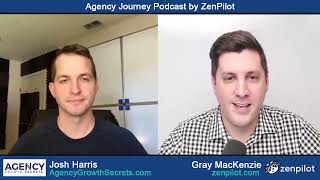
Gray interviews Joshua Harris about scaling digital marketing agencies. Harris covers client acquisition through Facebook ads, structuring offers, and handing off sales to a team. The conversation focuses on operational systems that let agencies grow beyond the founder.
Welcome to the Agency Journey podcast, where we connect with agency leaders to uncover the hidden systems and processes that drive their success. Now let's dive into today's show.
Hey, as we're diving into today's episode of Agency Journey, let me tell you real quickly about our sponsor, Aribi. Aribi is a super cool on one marketing analytics tool. They've got Google Analytics squarely in their sites right now. And I can remember setting up Google Analytics as a sophomore in college and thinking this was just the coolest platform. And as it's matured, it's still super powerful, but it's become so complex to deal with. And Aribi has a value prop totally aside from this. But what I absolutely love about my experience plugging Aribi into zenpilot.com is I didn't have to mess around with setting up what events I wanted to capture and tracking all my changes. And if I messed up with View, then it would. It would delete all the data that I had. I just plugged it in, it crawled it, captured all our. All of our events, made it super easy to see our funnel, and it just works. I love being able to see, for example, how many people read the definitive guide to click up for agencies, a blog post that I wrote, I don't know, six months ago. See where those folks come from, how that influences the buying process, the funnel, the way that it works out. So super excited to have Aribi as a sponsor. You can check it out. Go to Aribi IO AgencyJourney. It's all one word. If you spin up a free trial there, use the coupon code. Agency Journey. Same thing, all one word. That'll give you 20% off any plan, which is super generous of them. And remember, they can track all of our conversions, so check them out. That's a reb IO. We appreciate their sponsorship. Let's get on with the episode. All right. Welcome into this week's episode of Agency Journey. This week, I have the pleasure of speaking with Joshua Harris. Josh, thanks for jumping on, man.
Thank you, Gray.
I'm excited. I'm excited to dive in because we were just talking about. You're talking with a ton of agencies, and so actually, you recently connected me with an agency to talk to who needed help on the operations side. We got talking, and he said, I was just asking him, hey, how do you know Josh? What's the relationship there? He's like, I saw this guy all over Facebook. And so I'm gonna guess because you've got the marketing side pretty dialed in right now, I'm gonna guess a lot of people listening are gonna be like, I've seen this guy. So. So. Which I thought was. Was super funny. We were kind of laughing about it on the call. But first question, I have around your own business yourself, and maybe you can give us kind of the quick synopsis of the business itself. But then also, is Facebook a primary channel, or what are some of the primary channels for you from a growth perspective?
Yeah, sure, man. So I'll kind of tackle this one at a time. So my background is, like, many people. I was born at a young age, and from there, you know, just kind of got right into it. So, you know, I started my first business at 12. I had my first taste of, like, value for, like, not being connected to a time that you spent, right? So because of that, I was hooked. And after that, I was like, all right, cool. This is the game I'm playing. I'm not going to get a job. I'm in a business, right? And so, funny story 15. I started a pooper scooper business called Due to be Gone. I didn't go anywhere, and I learned a very valuable lesson that I'll tell you guys about, which is that you have to validate your market and make sure there's buyers before you build the whole, you know, build it and they will come type thing. So I've been. I guess the first question I can answer here is like. I guess, like, is Facebook a big channel for us? Is that the most important one, or.
Yeah, let's start. Let's start there.
Okay, cool. So I think I ran my first Facebook ad probably in two. Like, when they first opened up Facebook, like, I had an account, and this was before the pixel existed. Just to let you guys know, like, this was, like, brand new. Okay. And I think that the clicks were a penny. And I was like, dude, there's no way to track any of this stuff. So, you know, I'm. I don't know if I'm. You know, we'll see what we can do here. I had a guy that was like. So I messed around and I spent a little bit. But, like, I've had a business manager forever, too. And, you know, a lot of people, if you got a business manager for your agency, you can kind of tell, you know, based on how many accounts you've got, that you can create, like, how old it is. And I haven't heard of anybody that has more than me at the mall. But that doesn't mean I met everybody. But I've got 2,500 accounts I can have in my business manager. So when people say, oh, I gotta get another account or whatever, you know, I have so many of them just sitting there that we've never used.
Yeah.
So, you know, I've been on Facebook for a while. The first time I got a customer from Facebook myself, man, that would have to have been, I want to say, back in 2015 maybe, right when I was working with more direct agency clients. And, you know, I remember it was pretty magical, right? Because most of us are. If we've got our agency and it's kind of in that startup phase, we haven't done paid advertising for ourselves. It's really that big thing that differentiates you from the men and the boys, right, Is that if you can't do the thing that you're paying other people, they're paying you to do, it's like, well, you're just one of those guys that's a fat personal trainer. No offense to fat personal trainers out there, overweight ones. But at the end of the day, it's like you gotta be incongruent with what you're doing because it's really hard to say, hey, let's do something that I can't do for myself. So that was the first part of walking the walk. I got into it and I mean, I've spent one of the accounts I have right now. It's millions of dollars just in that one account that's been spent. And I've never lost money on advertising. And that's like, the cool thing is there's been times where things didn't work out as well, but it's literally been a consistent. I've never done less than 2 to 1. And I mean, we've done some insane stuff where not just like one thing, but for a period of time, we had like a 25 to 1 cash ROI on some ads we were doing. It was just like, it's crazy. It's like a slot machine to some degree, but it's like the game's rigged in your favor.
If you understand the rule as you're acquiring customers today. Obviously now you've got some of the benefits of. You've got a name, you've got a reputation, you've got referrals coming in. Is Facebook still what drives the. What's the largest growth channel for you right now?
You know, I would still say Facebook is. You know, I always like to break it down as, like, there's six different ways to get customers because a lot of people, they. They don't look at it like they think Facebook, they think YouTube, like, they have to look at these things from like, more of a, like, holistic standpoint. And so the six ways to get customers ultimately are, you know, let me just go ahead. I actually have them here kind of broken down by the types of difficulty and also how fast they work. So, like, first you've got paid media. And so in paid media, like underneath that, you've got all the different channels. You got YouTube, LinkedIn, TikTok, you name it. There's all different types of paid ad channels that you can use. Then you've got own media and own media. I see that as like any sort of lists or customers or prospects you build from doing that. Paid media, Right. So email lists, things like that.
Yep.
Then you got earned media and earned media, maybe you could say something like this is that. I mean, I can't just show up and not have anything good to say and get attention on your podcast here. So I, in a way, I've earned this media. Right. This is more of it. Then you've got below that. So those are the ones I kind of have along my top row. Those ones are kind of like more difficult and cost, you know, prohibitive or whatever. For people that are more starting out. Then below that, I've got referrals, right? And then there's two types of referrals. You've got client referrals and you've got like network referrals. People that know you or know of what you do. Then you've kind of got JV partners, which I look at as like anyone that has your customer base and they're complimentary. And dude, there's a ton of these. Like, I talk to agents all the time and I say, look, you know, how many software companies work in your niche and sell a $20 thing and have a thousand customers that can introduce you to them tomorrow if you just had a good offer to put out to them. And most people, they just. They don't. They don't even think that way. So it's like, you know, the thinking is important. And then the last one here would just be like direct outreach, which is just any sort of outreach channel where you're going direct to that person that you want to be in front of. So that's how I look at it from a holistic standpoint. Our big one is one category, paid media, paid media. But our earned media, or rather our owned media, you know, our lists and stuff over time do well. But we always test our offers on coal Because I have an audience that like literally if I said buy this water machine, they would buy it. You know there are people like that, right?
Yeah, that makes sense. Yeah, it's I think validating it to folks who aren't already predisposed to do whatever you ask them to do. You don't have that relationship is kind of the true form of validation. So as you're working with agencies right now and you've connected with a bunch of them, one of the things that I wanted to kind of walk through was just some of the trends that you're seeing in terms of what the best agencies are doing. So maybe let's start. And I want to tackle that from three different vectors where we kind of break every agency internally down into three main ones. Growth, obviously all the client acquisition side of things, Delivery, all your client services and then operations, kind of what happens back in people culture, hr, legal, finance, that type of stuff. From a growth perspective as you're working with agencies and I would imagine this, this varies, but working with kind of the norm. I don't know how to quantify this one. We should just pick some metrics kind of. But relatively early stage agency is that JV channel, the main one that you're pointing them to.
So you know, it's hard to put people into buckets here. Like I look at them as like stages, right? So the first stage of an agency, right? You look at an evolution. So I like to talk of this is like, what is the start that someone goes through all the way up to the very end. So and then at each stage is a different problem. So I kind of like start by just like high level. It's like, okay, do I want to have an online business then? If I want an online business, which model? Then they say, okay, well I want an agency, right? And the agency idea is effectively saying, hey, I want to have a service based business that works with businesses. That's it, right? B2B service based business. Cool. And I think that it should be around growth, marketing services of some sort. So then now we're into a whole different decision, which is what do I sell, who do I sell it to, how do I deliver? Like what's, what are what all those different questions. So then that's kind of like that pre market stage. So then they're at that point where they're saying, okay, now I have a strategy and I'm actively trying to get clients. And so they're doing some form of outreach or some, some form of appointment booking attempts to some level of success. They're putting some sort of offer out there. And then the first stage is, can I get calls? Then once I get the calls, can I close them? Then it's like, if I close them, then there's all sorts of economics of what the service delivery is. What is it? How well does it scale? How long do they stick? Do they ascend into services? Can I scale my team? You know, and then once that's done, that's kind of like you close that loop of, hey, I can get someone on the phone, I can close them into a sale, and I can deliver a product that they have a level of satisfaction with that they don't want to, like, you know, report you to the Better Business Bureau or whatever it is that you did. And to say something right. As I say, the sales is a promise made, the delivery is a promise kept. You got to follow through. And then it's just building up teams under that. All right, how do I scale the marketing? Hire my first salesperson so that I'm not doing all the closing, and then have a, you know, basically a director or a service coordinator. And so those are kind of the things. So it's hard to, like, pick someone in those buckets, because then I also call, like, the weird mutant agency that basically they sell anything they can sell to anyone they can talk to, you know? Yeah, they're like the wild salesman on the street.
The digital. Yes, man. Right. Yeah. Yeah, for sure.
Exactly. Whatever you're buying, I'm selling.
Yep, exactly.
So if that in that range, if they're at the point where they don't have a way to get clients because they have to have a way to get appointments, I always recommend to start with some form of direct outreach and referrals. And the reason I do is because those are the most forgiving methods, and they give you a chance to really work on your offer. And that's really the thing that's overarching with those six channels. I say all of those channels work. Right. The great thing about a wonderful offer is if I stop you on the street and you're my prospect and I have a great offer, I can literally say it to you, and you're like, huh? I want to learn more about that. Right. And so it doesn't matter what the channel is. It's just understanding which channel you maybe have an advantage in, and either knowledge or something you can leverage. And then every channel works with a great offer. And the ironic thing is I have people saying, oh, my Facebook ads aren't working, or Whatever it is my direct outreach. And it's like, it's really the offer. Because it's like if the message is getting in front of your ideal prospect and they're seeing it, they are not responding because they are not interested. That is it, right?
From an offer perspective, what are the components? As you're working with agencies to narrow in the offer side, what are the core things that they have to have? Right? And maybe if we look at a couple different things, there, you know, most offers would be we do X for Y, obviously, what's the service that we do? And some people have different formulas. You want X with I, but without the normal pain that you associated with it. Or we do X with Y. And here's the social proof of it. What are the components you're looking for? And like, hey, here's a great offer.
Yeah. So like, to me, I always like to think, like, what's the thing? That if you just described it, someone was interested, you know, because like, I always look at it this way. Like, you have to stand out from the marketplace in a way that's unique, Right. But also valuable. Right? So, like, you know, perfect example, I've heard this one before, is like a polka dot car is unique, but nobody wants one, right? So, you know, on the other hand, you have like a Rolls Royce, you know, Ghost or Phantom. It's like, that's unique and people want that, right? And the market responds to that type of thing. Which is actually an interesting point I was making earlier, is like, when I talk to people, they're like, well, we got 30 clients, they're charging 500 bucks a month. I'm like, look, I could be the top selling Ferrari salesman if I could discount at 50%. Like, you're giving away a service that's usually double or triple, right? So are you good at sales or are you just good at like, basically giving away all your margins and having a really, really high stress job? And you know that' that's an important thing to face. So an offer I think it really comes down to is like, you'll know it when you hear it. And like copywriting, it's something you have to practice and study. Right. You have to like, look at good offers out there. And if you look, you know, when you study direct response marketing, you know, every great piece of copywriting, which is like, I started studying that. That's kind of how I got into this a little bit, is I was like, oh, I'm going to be a copywriter. And then I was like, well, no, one sends out direct mail anymore. Well, I guess I got to work with websites. They're like, well, I care more about the website being mobile friendly than the copy. I'm like, what's the copy? I was like, well, maybe I can do emails. And I was like, well, what's the point of a website, emails if nobody knows it exists? I was like, well, I guess I figure out paid traffic and you know, like, that's like the evolution. Well, oh, actually this is the most incredible laboratory of real time feedback for direct response that's ever existed. How awesome is that? And then it's like, doof. It's, you're, you're like a kid in a candy store. So I think it's looking at the offers out there and it's being first of all aware of what else is being said. Most people don't do this, right? As I say, look, if you have a client, let's say you want to work with personal injury attorneys, okay? If you manage a website for a personal injury attorney and let's say you've got access to their web forms, right, you'll see the offers that are being made every day for sure. These guys. And I think that's the most, that's the thing that most people don't look at is that you need to know what else is being said so you can say something that stands out because otherwise, as different as we all are, we're all the same in a different way, right? And that we will naturally come to some of the same conclusions. So whatever you think is a great idea, are you the one that has that thought and is it actually differentiated? So that's the first thing. And there's a lot of ways to do that. You can do that. You can look on LinkedIn, right? You don't have to have a prospects login, but it, let's just say you're working with personal injury attorneys. Type in personal injury marketing on LinkedIn and look at who comes up because they rank those people based on relevance, who's getting the most connections and everything like that. Those are the guys that are doing something and there may be things you can see they're doing, right? But more importantly, you need to see how to stand out. Because if you say the same thing as everybody else, the only way you win is if you can say it louder and more often. And that's not a fun game to play when you're a startup and you don't have unlimited time resources, right?
That's, that's an expensive place to Be in, certainly. So you get the offer, right. And. Or, you know, you're working on the offer. I think that's one thing or one common temptation is you're running a business. It's crazy. It's hectic. You, if you have some leads coming in, you're trying to work leads and you're trying to deal with it on the back end, the delivery side. But it is really easy to leave that offer kind of untouched or like, just let it.
It's. It's the one thing that doesn't. And I can give you a couple examples if that'd be helpful too.
Yeah, yeah.
So I look at it like an example of this would be like, in fitness, right? So in fitness, it's all diet and exercise. Like, it's just like, this is. Your physical body hasn't really changed yet. It's all about how do we package the work into that. Right. Like, I remember years ago, one of my first people that I really studied and learned from was Evan Pagan, actually, when he went under the pseudonym David d' Angelo with Double youe Dating. And he built a massive info business. And it's funny, as you went through those products. Cause I mean, I was like, I couldn't even have a conversation with a woman. So I was like, I gotta figure this out. Someone's figured this out. I gotta learn from this guy. And I learned a lot more about his business model in the info space than I did. You know, I learned a ton from what he taught. But, like, it's funny, as you went up the ladder, his like, end product was like, hey, if you want to get a 10, you gotta be a 10. I was like, wait, what? I was like, wait. So you basically get what you deserve is kind of more or less. What it came back to is like, you can get less than you deserve, but you never really get more consistently. Like, you have to be more valuable. And like, when you realize that's the case and it's not about, like tricking somebody, and that's what everybody teaches is like, oh, trick somebody to pay. Well, then they're not going to pay you the next month. But if you just completely defang the offer and don't make it exciting, well, then you're not going to close anybody. There's a mix between there. So let me tell you a couple offers that we put together. So the first offer that I put together years ago was, you know, I would say it was around LinkedIn. So I'd figured out how to book like 20 to 30 calls a week. Like, if anyone's getting spammed on LinkedIn, I was probably part of. Sorry, guys. I was part of what really brought that a lot more mainstream, the agency space. I can trace a lot of people's stuff to, like, what I taught them years ago. And that thing worked insanely well because I can make an outcome promise that was specific. Okay. Now on the agency side, what I really started realizing is, like right before Cambridge Analytica and they started stripping away a lot of data targeting from Facebook, I started getting into like behavioral data, identity graphs, and basically contact based marketing because, you know, there's all these different ways we're starting to access the Internet. And so it was less about a demographic bucket, but a person across different channels. So I basically started getting to that, experimenting with it, and then bringing that to the agencies I work with. So they talk about that. And that was like a selling point because they weren't just like, hey, I'm do Facebook ads. It was like, hey, if we can actually identify the specific people, regardless of what channel they're on, would that be valuable to you? And so then that would be a conversation starter. And the one we're doing right now that's working insanely well is, it's funny, as you grow, you get into different things, right? So I had to write a $300,000 check. The IRS, and I was like, this is getting out of control. This is crazy, right? How is this possible? And then I had, the same year I read Amazon paid zero in federal taxes. So I'm like, all right, somebody knows something, because I don't know that. And I'm writing big checks here. So I went down that rabbit hole to kind of figure things out. And along the way, I like, discovered this whole world of tax credits where like, literally the government in their, in their code, they'll say, look, there's certain behaviors that if you do them, we're going to reward you with tax benefits. So solar, a lot of people are familiar with that. There's these solar tax credits. So if your tax bill, let's say you get a solar roof, it's 20,000 bucks. There's a 26% tax credit. So you get 5,200 bucks off your tax bill. And here's what's crazy about tax savings like that. If an average margin in a business is 10 to 20%, that means when you save someone 5 grand in taxes, that's the equivalent of giving them 25 to $50,000 with a stroke of a pen and no extra work. So I got to thinking I was like, is there some way I can get working with me to qualify for some sort of a tax break? And then I went down the rabbit hole and then I found something which, you know, I can't give all the details of here, but effectively I can get any client that works with one of my agencies $5,000 off their taxes for working with me. Meaning if their tax bill is like 10 grand, it's like, hey, 5 grand back in your pocket just for working with me. So it's like, well, that's a pretty exciting advantage where you can say, hey, listen, I've noticed xyz, but you've also, like, probably noticed here that you're probably like paying more than you need to and you're not taking advantage of a couple tax breaks that you qualify. Well, it's like, well, now, as a business owner, how many people have heard that? Very few. Why? Because, well, tax planners are terrible marketers. They're very nerdy accountant type people. And marketers have saturated offers. So for me, I'm always thinking, like, what is the advantage and how can it be communicated with just the thought of it and the sound of it? Right. If you said that to someone, like, I'm listening. I haven't heard this before.
Right.
And then if you can show it and prove it, if it comes down to a coin toss, I'm going to work with a guy that can save me five grand on my taxes if everything's the same for sure.
Yeah. I think find the unique angle and like most good ideas, some combination of a couple of things that nobody's combined yet or nobody's figured out how to say in that specific way.
But I mean, it's also important. It's like, you got to be able to deliver on that. So for us, like, I always look at it from a deliverable standpoint, like, hey, what would you do with thousands of clients with this? Because our agencies use this as their back end. And so, you know, that's always part of it. So there's really like, our business works with three stages. We have a lab where we test things because everyone's like, what about this tool? And that tool? I'm like, we test just about everything. Okay? So if it's good, we're using it, or we tell you to use it, or it's not, and we told you. Then we tested on our retail part of our business, and then we give it to the agencies to wholesale through us. And it's like, at that point they don't have to be Constantly wondering if something's actually good or if it's just another shiny object.
Yep. Yeah, that makes sense. So you get the offer in place. What are you seeing? There's this tricky point for agencies trying to hand off sales from the owner or the principal early on. And you'll hear advice all across the board from. I was listening to a podcast last week and someone said for most agencies under a hundred people, the principal's still the main business development person and didn't really qualify what was meant by business development person. I was like a hundred. That's not been my experience. Like, that's an awfully long ways. That's a, that's a real long haul for somebody to take to get that point, especially if sales isn't their jam. But what are you seeing in terms of where the principal hands off sales? Onboarding someone kind of principles of being able to hand that off and keep the agency going without the drop of momentum that often goes along with that. The tendencies. Either agency owners hang onto it because they never believe anybody could take it, or they hire somebody and they just abdicate all responsibility and they want to be out of the picture and the whole thing crumbles.
Yeah, man, it's, it's a tricky thing to, to try to exit your, your business. Like I always like to think of that, that scene from. I think it's Endgame or maybe not Infinity War in Avengers where Thor is like hanging on to try to hold that, that Star Forge open. I mean that's like literally what it's like when you're an agency owner in a business startup. And it's actually a lot harder in the beginning because you have to do all that stuff and you have to like maintain that momentum. So I mean, the one thing I can always say is like, you must maintain momentum. Like momentum. When it's gone, it's so hard to get it back. It's just, it's just the spinning plate. When the plate is spinning, it's easy to keep it spinning, but to get something going from a dead stop, it's so difficult. Right. So here's what I'll say. And this may be a bit of a controversial opinion in the space because there's a lot of different people that talk about sales stuff, but sales is the hardest thing in any service based business to hand off to somebody else. It is the, it's the one thing that has the least forgiveness. Because I like to say, listen, if you screw up for a client, right, you can run interference. You can, you can do Things like that doesn't happen in real time when you're doing marketing or outbound things to grow your business also. Right. That's. That's not as touchy. Like, it's not like you can't wait. Like, oh, I did an error in something. Like an ad has a. There's time to pause and Google. There's no time to pause and Google in a sales call. There's no time to pause and say, what should I say here? Sales is a lot more like a sport than it is anything else. And it's something that personally, I'd say in the agency space, like myself and the principals in my companies, like, we probably do more of this stuff from the billion dollar companies all the way down to, you know, smaller businesses that want smaller packages. Like, we know what works across the spectrum. But that's the hardest thing to hand off. And so to me, I found a couple things. Number one, when it comes to sales, this is the one thing you as an agency owner, bite the bullet and learn it. Because if you can sell, you will never, ever, ever, ever, ever go hungry. Right? Because that will never go away because it's such an important skill. And it's a skill that, by the way, it's like a sport. Like, you get rusty, so you have to keep that skill sharp. The worst thing you can do is if you're like a closing beast, don't sell for three months and like, don't do that. Right? You can't do that. So, I mean, I have a whole. I could talk for a long, long time. And we could be just a sales training organization with what I've learned the hard way. But what I can say is, like, that's a huge mistake, is that you take yourself off that. It's easy to hand off marketing, it's easy to hand off customer service. But having a conversation with a business owner and getting them to feel comfortable saying, all right, I believe you, I trust your promise. You give yourselves a lot of advantages with a great offer, but you need, like, that's the last thing to hand off. And so for me still, even with our teams on anything, I train with our team an hour every day. Like, they need that. Like, they're like, it's like a coach. You can't take a time off as the coach. You have to coach them, and you got to coach from the front and you got to demonstrate how to do it.
Yeah. So it sounds like the first role, maybe not the first role that you're looking to bring on in a agency. Or like one of the first you got initial service, you've got a couple of people who are helping from an individual contributor level. But the first piece when you as an owner start to hit that bandwidth that you'd pull in would be, I think you call them like director or service coordinator type of person. Is that accurate?
That's accurate. I mean here's what I can just tell you, like, just like from a high level linear thing. Here's what I look at. Okay. So when it comes to delivering services, I think that's a losing game. The last thing you should do is try to become a service like expert. You want to be a Facebook ad expert. We're dealing with a globally flat marketplace. Like anyone in the world can run your Facebook ads. And that's not a real time thing. You can hand off a lot of that to somebody else. Like one really skilled person can oversee a ton of accounts because with all the automation, everything you've got things in KPI, something's out, it can be kicked up to someone that's smart and they can look at it. There's, there's forgiveness on that. So I do not recommend building out a service delivery infrastructure for any agency that is probably doing less than 50 grand a month. Like it just, it's not worth it because of the fact that your marketing and sales are going to be built around the service offerings you have. That is the hardest part to get right initially. So when you limit what you can do based on what you've got access to offer, that's a huge bottleneck. And that like basically sends you off on this rabbit trail and then they fall in the trap where they're doing all the work, they can't hand it off to somebody else. So just never fall into that trap by doing that. So from day one I recommend like get a cert, like a resource partner that can do the work and then you focus on the marketing and sales. So first you have to crack a way to get calls, then you got to crack a way to close them. And you can build a one man agency that's doing 30, 40 grand a month, you know, very easily. I mean when I was doing 40 grand a month with my agency, before I even did any teaching with anybody, I literally worked three hours a day. I had maybe one part time VA assistant at a fulfillment team and I played golf a lot. Like I just chilled out, you know, so it was easy to maintain that. So from there I recommend once that's working, then you hire the coordinator, the person that basically Just their job is to coordinate between the service delivery vendors and the client. And then you being patched in when necessary. From there, I'm going to hand off the marketing and make sure that there's. Whatever we're doing on the marketing side. I'm going to make sure we've got other channels, other offers, and that we've also make sure we've got an ascension path, retention path for the people. Then what I'm gonna do is once I've gotten to the point where that I'm literally taking mostly sales calls, the crazy thing is like, if you're a sales guy and you're taking five calls a day, qualified as your agency, like, dude, you can be bringing in 10 clients a week. That's a lot for most organizations. They don't realize that. So, like, that's the most valuable piece. So I see often is they have these big bloated companies, they have a sales team. Like there was a, there was a group I was looking at, they were bringing in, their sales team was like four or five people. They're bringing 150 opportunities. They were closing like three to five of them. I'm just like, this is, you know what I mean? It's like the efficiency was terrible across the board. I'm like, this could be done with one guy with some qualitative optimization. So that's kind of. And then from there you start to build up those, those things. But the last thing I work on is the salesperson. At that point, you've got to have scalable lead flow.
Right.
You gotta be patient. It takes a long time to train them. But those people will be the most valuable assets. Cause if they're bringing in a hundred thousand dollars worth of business a month, that person's a million dollars a year to your business.
Yeah. So I wanna dig into the resource partner side of things because most of the folks that we've had on the podcast, you know, it's more of kind of the traditional agency model where you come into it with a specific skillset or a specific industry expertise and you figure it out, you build out the org. So when you're saying resource partner, best case in your mind is that a white label partner who's doing the fulfillment for you and it's so run through your agency. Is that a partnership where you're acquiring the business and sending it off? And that kind of resource partner is directly executing. What does that look like?
There is a diverse ecosystem of resource partners that are available, you know, and there's kind of, there's multiple different methodologies to this. But on one level, you have what I call white label companies. And unfortunately, a lot of these guys are like the McDonald's of the world. Because what's happened is because their customer base are agencies and because they don't have a way to market white labels, it kind of grows by word of mouth. Other agencies share them or their agency asks them to do other things. They grow a lot like these other Frankenstein agencies where they're the yes map. They'll literally do whatever you want. And what ends up happening is the service gets so watered down and they focus so much on the margin, they lower their prices significantly, they gut the effectiveness of it, that they basically are setting up their clientele to churn their clients, but they never churn the agency. So it's like they maintain their client base, but they never have a way to go out and really direct the development around what's really good. All right, so that's. I think that's the biggest fallback of white label companies out there. Then you have, you know, basically what I call the contractor solo marketplace. I mean, you could go to upwork. I mean, you can go into a group like the guy. It's like, this is not a company. This is a guy who's good. And there's a lot of guys like that. Dude, there's never been more guys that know how to do this stuff and they can't talk themselves out of a paper bag. Like, they can't talk to a client. They don't know how to have a conversation. They don't know how to create a bridge of value. And I think this is where a lot of people have that imposter syndrome because they feel that if they don't do the work, they're an unnecessary layer of cost. But that's like that. I got over that because I finally looked at it from the right perspective. And which is this. If that person who can offer that skill set has no way of getting in front of that business owner and then delivering on their expectations and managing those expectations well, then that doesn't happen. Right. It's not like I'm standing in front of a Walmart. I'm selling blocks of cheese for $10 and they're $5 inside, where it's like there's literally almost no value add there. The value add is you're going out and finding people that are good at something. You're then picking the companies that you believe you can help with that and doing it that way. And that's really how I solved that problem initially for myself. Instead of selling something, then trying to find someone, I found the people that were good. I asked what they could do with their eyes closed and I sold that result into my marketing. That's where a lot of people got it wrong.
Interesting. So those are. You've got the white label side, which you've seen less success with, and then kind of the tapping and building your team, the solo freelance route, which, I.
Mean, you know, there's, there's inherent issues with that. Right? There's inherent issues because, you know, people are unreliable. Sometimes people just disappear. Right. So like you need to, it's, it's not perfect, but then it's better than doing in house because you like being good at one of these things, like being good at Facebook ads. It's a full time job. Like it's changing rapidly. Like, I mean there's like the huge updates with iOS. Like all this stuff happens. Like if you're not in there every day.
Right.
You have issues like for me, like the, the skills that I continue to develop that are the most important is like the vision and viewpoint of the marketplace and understanding of my clients. And then copyright and sales, which are really two sides of the same coin. Right. It's like, how do you speak in a way that gets people interested? How do you build those bridges and that really, you know, if we have time, I'll kind of explain like how that led to really the model that we've developed, which I think solves a lot of those issues that they run into.
Yeah. So I want to come back to that in a second. Let me ask you this though. What I see primarily with agencies who are doing, you know, the agency itself is kind of the front of the house and then freelancers make up the back of the house who are doing the execution. They're primarily selling relatively, in the agency specific, relatively low ticket offers, somewhere between 1500 and 3K, 3504 grand a month. But there's very. I don't know if I've bumped in anybody who's crossed five figures on a monthly basis with that model, which to me kind of makes sense.
What do you say? Five figures on what they build.
On what they build. Correct. Yeah. To the clients.
Well, we've got a part of our business that does, like, so our agency part of our business. We work, I mean, this is how we developed a lot of our data and the tools and stuff is we've worked with a lot of very big clients. I mean, so we'll give you an example of a niche drug rehabs. Perfect example. Like this is a niche where these guys spend a ton of money. Like we're talking, you know, a new patient in their bed can be worth $30,000 a month paid out by insurance. But they have very specific criteria. They need people that basically were looking to go into rehab and they had the specific insurance so that they could cover without massive amounts of pocket to get into these rehabs. So we were running ads for them on, you know, Facebook and Google across the gambit. But I mean those retainers are start at 20 grand a month, go up to $100,000 a month just to run their thing. But we're hardly doing what you could even remotely call a run of the mill paid media or you know, organic SEO, search engine marketing type of stuff. Like we're doing some pretty advanced stuff in that scenario. Like we're doing all sorts of advanced targeting. We're doing a lot of different copywriting stuff. And then we even built one of our tools that actually is now our AI call booking setting tool. Right. So the hardest people to get in touch with, as you can imagine, our addicts. So we had to get in touch with addicts and then get them scheduled. So we built a tool that effectively does all that. And then our second evolution of it is that literally it will suggest days and times based on availability and then book it right. Like conversationally as opposed to like through a calendar link. And so, you know, we've built tools like that by working with our bigger clients that then get filtered down and then when you bring it to like a local business, it's like flying saucer going back to medieval times. It's just so, so it's doable but it's, it definitely requires a specific clientele which is really how much their clients worth. In this case they're worth a lot.
Right. So just to, just to clarify, on that side, I'm assuming like is the, from an average perspective, I assume that's an outlier on the upper side though, right? Where most clients are probably the average client who they're starting with.
Well in that niche, in that niche when we would work with them, I mean the average drug rehab, none of them paid less than 20 grand a month because they'd be, they'd have a pretty large budget. Right. But in other niches, if you're working with H Vac or companies like the average size of business there, yeah, it's going to be hard to probably tap out and hit a five figure monthly billable with those guys. You know, unless you're working with the top tiers. You know I've worked with, talking with a guy that they're one of the biggest in their industry. They do 100 plus million a year. They've got a multi seven figure marketing budget. So like with them. Yeah, they're they're paying out you know, multiple five figures a month to their agency to manage this.
Right? Yep. Yeah, I think there's probably depending on how it's set up. Um, I was just curious if you were saying something different in terms of averages kind of of in house versus versus external. But yeah, cool.
I mean I think just to, to talk on that point a little more like where you know I've got a lot of different vision components that I see in the market of where it's going. But like really what we're seeing is a more integrated, niche specific approach is ultimately I think where these things are going to go. Like I'll. Let's just take H Vac for example. I've got clients I work with where you know, they're consultants in that space or markets in that space. And it's like once you take that ball down the line and you've solved the marketing problem then you start getting the sales process. Once you have a marketing sales process in place, you effectively can grow any of these guys. So some of them, we work with them and they'll go out there and their goal is basically in the next year here to effectively acquire a stake in these companies in exchange for doing that and then merge 10 electrical companies, 10 plumbing companies, 10 H vac companies together into a roll up and they can actually walk away with very, very large exit. I think a lot of people, they don't ever look at it that way is that as you move up that chain there's a lot of other ways to really be in a lot more control your destiny and not just have to go like broad just be a service based thing because that puts you in a situation where you're really forced to be the very best and it's your client is such a big variable. I mean I put it this way, eventually your clients become the barrier and the bottleneck to you growing your business. Sometimes you get to that point, we decide to cross that line.
Yeah, well, so as we're kind of wrapping up here, you'd mentioned I kind of distracted you away from talking a little bit about the model. But let's talk briefly about the model, kind of what things look like now and then we'll we'll wrap up there.
It's like the model that we do with agencies.
Yeah, right.
So I kind of call this like the wishbone effect, right? Because I look at the market as you have two different, like factions that are not connected. You have the service providers that are these white label companies, individuals, people that do the work. You know, I call them the workers that are in there. Whatever this deliverable is, they're in there actually doing that work. Then you have this whole side of the market that's like the. I call them the business development people and they're talking about all these different ways to eat.
Yeah, right.
So I kind of call this like the wishbone effect, right? Because I look at the market as you have two different like factions that are not connected. You have the service providers that are these white label companies, individuals, people that do the work. You know, I call them the workers that are in there. Whatever this deliverable is, they're in there actually doing that work. Then you have this whole side of the market that's like the. I call them the business development people and they're talking about all these different ways to market and sell and get clients. And there's this fundamental disconnect between these two things, right? Because the service delivery people are very much clinical about what it is. It's like an engineer specifications, right? Not the other side here. Then, unfortunately, because they're not connected, they go more and more down this route where they talk about making all these crazy, outlandish promises, overselling things over marketing things. And then the delivery, it creates this cycle of churn. And it also creates this, what I call this fake guru cycle, where what you see is, guy goes out, makes a bunch of promises, gets a bunch of money from businesses, doesn't deliver on it. And then he looks and says, huh, what's the one thing I know how to do? Oh, I know how to make promises that I can't keep. So now I can sell other people on how to do the same. And instead of them figuring out how to keep their clients, they say, well, maybe I'll just charge $10,000 for training, collect it all upfront. Because I knew if I had a payment plan, no one would pay the second month. And that's this cycle that you see, it's unfortunately vicious. And so I saw a way to break that cycle because inevitably there had to be a connection between those two. So we have services in house that we do for our agencies, right? So we have our agency that does that work. And so when people Work with us, they get an integrated marketing, sales and product piece that's actually connected. So we test different offers, we validate them. And when you as an agency, you come to us, you're basically able to augment your business with either new offers you can take to your existing base or differentiated ones that you can take to that marketplace to get new clients. And so because they're connected, there's like a real revenue model and the incentives are actually aligned to work together. Right. Because the wrong incentives create the wrong behaviors. I think the right incentives create, you know, a win win. And so instead of you having to like be responsible to try to constantly sleep with one eye open when you've got aligned incentives with your partners, it's so much easier to be on the same page. And so for us, our training is very much like, here's exactly how to do it. Whereas if you're selling training, the incentive is to just continue to make more and more and teach people what worked as opposed to what's working because they're selling products that we are selling has to be working. And then because we're not just creating products that agencies ask us to sell, like most white labels, the stuff we actually bring out is really sharp. It's really differentiated and actually works. And so that's really, the model we've created here is kind of like a non franchise, a non branded franchise infrastructure. But you know, we let people, it works on a variety of different models and we get guys that are doing 50 million a year that use this as their back end. And we have guys that are pre revenue. So you know, we're kind of help them regardless of that stage. And it really just come back to that offer is what's, what's a promise you can make that's different and then our team can help you deliver on it.
So I'm assuming then the model would be, when you're talking about incentives, there's some cost from a training component probably initially, but then there's also a revenue split on top of that. Right.
Like we wholesale the different services that we do.
Yeah.
Like the tax one, for instance, like that costs about 500 bucks a year for us to provide them everything they need to be able to get that tax credit for their client.
Yep.
And then, you know, get that, that on a regular basis. You know, we have white label campaigns, they're, you know, most of our agencies, they're going to get a 40% or more margin on what they're reselling. So but it's a lot more Scalable, right. So like one of our products where we can, we literally can guarantee the cost. So like personal injury, we can guarantee a cost of application because we run so many of them so they can come back to their client say look, here's what we're getting, here's a projected number and here's our sales close rate on these things across the board. So now you have a projection based conversation how to pay us to try. It happens right away. And it's so much easier to sell someone basically a spreadsheet breaking down the ROI that they can get if you guys work together. And so that I think takes a lot of mystery out of it is just from a data point standpoint having that. But they'll go out and they'll sell that for five grand. They'll pay us maybe a grand to white label it. They'll put 2,000 that to ad spend and they'll profit $2,000 to manage that client. But 10 clients like that, you're netting 20 grand a month. That's a pretty nice business that you basically can run with a part time va, you know, so it's just about what they want and how aggressive they want to go.
Right. Makes sense. Awesome, Josh, where's the best place for people to learn more, connect, that type of thing?
So I've got an offer right now where if you go to ags, as in Agency Growth Secrets, because that's our company, but you go to ag2021.com currently there is a survey on there. So if you're interested in learning about some of these offers and put them into your agency, you can go there and there might be a survey there or there might be a video there when the time you listen to this. But for now it's just a survey talking about the stuff we talked about here and on that end on a call and we kind of can walk you through something that makes sense and then makes sense engage with you in some capacity. But that's the best place if you want to get an offer here. I'll kind of keep that thing up for a while. Is just ags2021.com awesome Josh.
Thanks for coming on and sharing with us today. This is fun.
Thanks for having me man. I appreciate it and I hope it's all helpful. Thanks for listening to the Agency Journey podcast. Visit agencyjourneyinsiders.com to join the podcast community and be sure to subscribe for future episodes.










