How to Sustainably Scale an Agency Over 4x in Less Than a Year
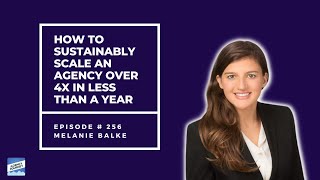
Gray Mackenzie from Zenpilot and Melanie Balki from The Email Marketers discuss how to grow an agency 4x in under a year. They cover team structure, managing capacity, and using content and SEO to generate leads for a niche agency.
All right, welcome back to Agency Journey. This is Gray Mackenzie from Zenpilot. This week I've got the pleasure of bringing on Melanie Balki from the email marketers. Super cool agency in the email and SMS marketing space. Melanie, welcome to the podcast.
Thank you, Gray. I'm excited to be here.
Yeah, I'm excited to chat. Hit us with the email marketers. I know obviously you're in the Klaviyo ecosystem and I've got a little bit of context in the firm, but. But share with us, what does the agency look like today and what are the main services that you're offering?
Totally. Yeah. So we're the email marketers. We offer email services if the name didn't tell you. So we're focused on email marketing and SMS marketing. For E comm brands, predominantly, I would say 80% of what we do is E Comm brands. We do work with, you know, probably 20% SaaS or B2B businesses that we think are a good fit, mainly in Klaviyo because of that. So we're big Klaviyo fans. And I always say, you know, I'm a big Klaviyo fan, not because I'm a partner, but because I became a partner. I became. No, I became a partner because I was a great Klaviyo fan. So Klaviyo attentive postscript, that's kind of the privy. That's kind of the regular tech stack that we work with. And yeah, I mean, we see ourselves as more of an outsourced email department rather than your traditional email agency. So our goal is really to work with brands and feel like they. They have their own little email department and the only reason they don't see us is because, you know, we're one floor up or something silly like that.
Yeah, that's awesome. How did you get into the agency space?
Great question. So I used to work in consulting. Like really traditional consulting is where my career started. Working with, you know, the back in Germany with like the conglomerate automotive, telecommunication, healthcare type of brands and loved the aspect of consulting that was like, come in, learn it really fast and then do something better than their internal team. Did not really enjoy working with big, large conglomerate companies as much because while the prestige of the name is cool, actually getting something done takes, you know, forever. And so stumbled into a startup project, fell in love with kind of the digital space, the startup space, moved to the US and then joined and ecom brand here in house. Always say, like, if not the first one of the first D2C made to order sofa brands and help them grow. They got acquired and then I just kind of felt the itch to go back into the agency and consulting realm and was following a founder at that time or the co founder of an agency was putting out a ton of good content and we connected and I eventually joined and that's how I ended up in the agency space. Then funnily enough, kind of left the agency space and was like never doing this again. Just didn't feel like the business model really made sense. Like I had worked with agencies, I'd worked in agencies and I always kind of felt like people were being shortchanged or like it was a churn and burn model going. And it just felt icky to me. And so worked freelance, worked. My original plan was like, oh, I'm going to go travel and relax and recover from burnout, but have people that wanted to work with me freelance, specifically on email. And so started that. And then eventually I have to realize like, hey, I'm hiring people, so I'm either going to accept that I'm building an agency and I get to do it the way that I envision it, or I'm going to pretend like I'm not building an agency and you know, maybe do exactly what I don't want to do.
You're so funny because you're like the combination of all three agency founder archetypes. There's, there's the anti agency agency which is like, hey, I worked in house and I hated everything about the agency experience, which isn't what you said, but is it, you know, I hated the agency experience so I thought I could do something better and I started an agency and that's, you know, every time that you go to an agency website and it says we're not your average agency, which is like 99% of agency websites, that's like that archetype is often there's then you've got the ex agency founder who's like, hey, I was at an agency and realized I could do this better on my own or make more money on my own, but came from an agency and started an agency. And then the accidental agency owners, maybe the most common one, which is the freelancer who then got too popular and had to either say no or start hiring people and started hiring people. And you've got elements of all three parts of your story, which is awesome. You checked off the bingo card.
Yeah, that's crazy. I never thought of it that way. But all those three definitely ring true for me. Like one part of me was like, I hate this concept. And then the other part of me was like, oh, I could do this so much better and this concept could work. The other part of me was like, oh, I was planning to do something totally different, but here's the opportunity. So I get to do this now. So I definitely resonate with all three.
Yeah, it's called the email marketers. So I'm assuming it started in email marketing. That's probably a lot of the early stuff. And then SMS has become just super popular as a kind of add on a clearly additive service line in the last couple years. Specifically today, I'm assuming most people are probably coming in for or finding you for email marketing and then doing sm. Like how big a chunk of the business is the SMS side of the business?
Great question. I would say. Well, email still predominantly is our biggest chunk, but I would say that right now, out of all the brands we work with, probably like 40 to 50% do SMS if I had to guesstimate. And the ones that don't do yet are still very actively interested. It just doesn't make sense yet, for example, because the list is too small or things like that. We're definitely seeing it grow though. So the majority of people that I speak with right now that are coming in new into the business, it's all about email. And sms. Last year used to be just about email. Now we're really seeing that. I'll give you a good example. Last year I would say, oh, SMS is a really great opportunity still. In the wild, wild west of sms you can make a lot of money. It's a great complimentary channel to email, yada, yada yada. And people were like, oh God, never. I would never want to get an SMS from a brand. We're not going to do that. And now I don't even have to start the conversation anymore. People really proactively ask and they go, so what does your SMS package look like? So the secret's definitely out.
Yeah. Do you think a lot of that is coming from the just the Martech platforms, Klaviyo having a solution and some of the other platforms that's probably, I guess part of it is probably us as buyers just experiencing it as well. But both playing into it are most like, what platforms are you putting people onto one of those platforms typically as they're working with you or are they commonly coming saying, hey, I'm on this platform, can you help me do it at the next level?
Both. And so we see a lot of people who come in and they Have Klaviyo in place. And like you said, because Klaviyo is pushing SMS so much and that was like a huge focus for them on the tech stack side. We see people coming in and go, you know, we want to test out SMS with Klaviyo. We already have it for email. It's cost effective. Why don't we do it? We also see people come in on Attentive a lot. Interestingly, I would say Attentive even more so than Postscript where they're already running on Attentive and they just want us to take it over and supercharge what they're doing there. And we see some people come in on Klaviyo and Attentive that want to consolidate and they want to go, well, we realize we're still a little bit too small for Attentive. We want to move kind of back to Klaviyo for now and see how that works. So we're definitely, definitely seeing Klaviyo steal quite a bit of market share from Attentive and all the other, you know, SMS platforms as well.
Yeah, that makes sense. But from a team structure perspective, how have you structured out now that you've gone from like, was in the agency world to not in the agency world, to freelancer to building and hiring people, how have you structured and designed the team?
Great question. So I think what we do a little bit differently than other agencies is when I was in the agency world, I at one point I think I had 16 clients. Right. And that's just the nature of the game. If you're scaling really fast, people are not going to say no to clients. Right. If you have just a sales team, they're not going to go and say no to clients because the bandwidth of someone is low. So I've been super hyper focused on ensuring that we grow very aggressively. I mean, we grew 4.07x this year so far. So it's super freaking aggressive. And at the same time we're really making sure that we're hiring proportionally and giving people start dates that don't overload our team. What this means is we're looking to have way less clients per account or way less accounts per share per client manager or way less clients.
Right.
You know, that way. Right. So that's something we do a little bit differently because I really wanted to make sure that we give people that time and dedication. Tlc, basically, that means also that we're like not the super cheapest agency out there. Right. You can't do that if you're charging a thousand or two thousand dollars for your service because at that point you're making money based off of quantity. We wanted to make money based off of quality. So we have teams that work together. We have way less accounts per team and I think those are kind of the two core things we've changed. We're now, when I started to. One thing I did that we're actually changing now is we used to. I used to hate the concept of like you have a project manager and a strategist. Right. I was like, we're going to put both in the same person, which worked really well as we were smaller than. But I'm realizing now our, you know, our creative and strategic brains are spending a lot of time on doing just nitty gritty project management. So we are actually now rolling out the concept that I used to not believe in, but we're doing it a little bit differently. Right. For us, the project manager is really just a project manager. It's not the client point of contact or anything like that because that bothers me. In agencies, right. When they're talking to one person and that person has actually no clue about anything material wise, they're just like managing the project but they can't actually tell you any hands on strategic or creative advice or guidance and then they have to go and communicate to someone else. Which adds just another pitfall of what's going to get missed here on this communication in between. So we're not doing it that way. We're really using it solely as a project manager.
What's that target internally for number of accounts per account manager or strategist?
Yeah, so we used to say about 5 to 6, depending on how big the account is. But we're just changing this again internally. As you can tell, we're in a massive growth and change phase and we've realized, if I look at it that way, it makes no sense because we have some accounts that are super time intensive and they're also sending like 30 emails a month. And we have some accounts that are not as time intensive and they're sending like eight emails a month. And so we're now going by a emails per manager type of deal.
Sure.
But if we were to say like per accounts, which I think makes more sense for people listening to. Think about it's five to six.
Yeah, makes sense. What does that equal in terms of like just rough buckets in emails then? So are we talking like 50, 60 emails a month per account manager?
Yeah, let me, let me do the math.
And I think this is interesting because figuring out that what's our primary metric for workload capacity or for capacity planning for people. You know, some agencies that's time estimated, in some it's number of accounts and some it's, we'll put points to the number to where people are at in stages. So when you're onboarding you're going to be heavier, you get more points than when you're in month 13 of a relationship and things are not completely on autopilot, but it's a lot easier from a management perspective. So. And then there's obviously points and there's a million different ways that you can slice and dice, but figuring out that metric is really helpful for people. So I think that emails per account manager is an interesting unit economic, basically.
Yeah, yeah. And it's kind of weird that we haven't thought of it before. Right. Because it's such an evident thing that account different accounts will have different now work requirements. Um, but just now we've gotten to a phase where like the, you know, the accounts can be so vastly different. And I see this when I look at the margins, I'm like, whoa, like we're like spending so little time on this account because we've been working with them, like you said for like a year now. Everything's such a well oiled machine. We're making great margins on this account. And then I'll look at another account, I'm like, oh my God. Well, okay, we're still in the onboarding phase. There's a lot of back and forth or we're still creating flows which takes a ton of time from us. So we are actually now, like you said, looking at the per emails metric. And you're correct, it's about 48 emails. And the other thing we're looking at, like you said again is onboarding. Right. In the first, we know that the first two, three, four weeks with a new client are super time intensive because my team is getting to know the client, getting to know the brand, getting to know their customers, doing all the research, building all the initial strategy that is all super time intensive. And I also like to think not just about time, but there's, there's this other component I think people forget which is brain, let's call it brain capacity. Right, right. You only have so much brain capacity even if you had unlimited time a day to dedicate to certain clients. So the other thing that for me is really important is to not just look at like, okay, how many emails are they making but how much of their brain is taken up by this one client. So if we have a problem client, if we have a really intense client that needs a lot of communication, a lot of hand holding, this is something we want to take into account as well. How? I don't know yet. I do like the point system, Right. That you mentioned. That could be a way where you're like, okay, this client is rated as like they need this much communication so they take up this many more points. That could be an option. But you know, to be totally transparent, that's something we're working on this quarter to really figure out and nail down.
Yeah, makes sense. How do you do client acquisition? What's, what's been the best channel? I mean for most agencies it's referrals. But also most agencies because of relying on referrals either don't have the highest quality clients, especially if they're non niche. That's an advantage for you, that you're, you're sitting in a niche. Um, or they're not growing forex if they're relying on referrals. Um, so what's working for you? I think as people hear that type of growth, the growth channel obviously is the, is the question of hops, to my mind at least.
Yeah, I mean number one referrals for sure. That's how we started. Um, like back in the day even, you know, I would be a solo consultant on individual projects and get these through these platforms like growth, collective marketer hire and whatnot. If they, if they worked longer and then they were like, oh, we need a bigger team now we can move them over obviously in an ethical and normal way. So that's how things started in the beginning. And then of course referrals through agency partners. So because we're so niche specialized, we have an SEO partner, we have a website design partner, we kind of refer to each other in that way. But for us, really honestly, the two biggest things I think were number one, content. So I get a lot of leads from LinkedIn, content from Twitter, from posting from podcasts. So I can highly, highly recommend to do that. We're also seeing just event participation. I did a couple of smaller events here and there. Definitely saw some leads come from that. We're going to be a traffic and conversion this year. I'm going to be speaking, we're going to have a booth, pretty hopeful for that. Although I don't have any results to share with you yet. I think that's going to be big for us. But besides that, the biggest, biggest thing has been the One thing that everyone told me not to do, to forget about, it's too difficult. You're never going to rank. It was SEO. So we got on surfer SEO and I heard about surfer SEO at tnc, which is like your AI type of platform to tell you how to rank better. And we just started churning out content like, like mad people. And we're seeing the results from that. And we haven't even done any backlink building. That's what we're starting to do now. So just from like content posting, we saw amazing results. And for me, like as an agency owner, I can't tell you how nice it is to have leads come in without you actually doing anything. SEO leads are usually fairly high quality leads because they're actually actively looking for the service. I can vet them beforehand. So before they work with us, they go through a type form. They actually have to tell us, you know, what they're looking for, how much their budget is. And I can kind of, if my calendar is getting really full, I could either send them to a more junior salesperson or, or I can reschedule or anything like that. But the, the feeling of just having calls pop up on your calendar is so nice. And I think it's also such an asset we're building if we're ever planning to sell the agency. We don't have plans for that now. But you know, if I were to buy a business, I would certainly love to buy a business that has built up good SEO authority over a business that just has paid ads that, you know, we might turn off and they stop working.
I'm going to ask questions on both of those. We're in the same boat. Like, SEO is our biggest inbound, is our biggest channel. So I just pulled up some of the articles that have done well for you. How who's cranking out the content for like interactive emails? What are they and why you need them? Tips and inspo. Who's writing that? Are you actually writing. Cranking that all out. Do you have someone on the team who's writing that?
No. I mean, this one was hard for me because I loved writing our content and I thought I had a really unique voice. And, you know, like, if you Google the AARRR framework, that was like one of the original articles I wrote on Medium way before our website existed and ranked super well. And it got a lot of clicks and likes and so I knew I was good at this, right? And I knew I liked doing it and I kind of wanted my voice, my really unique, silly, goofy voice to shine through. But I also realized that that's not sustainable. So this was a hard thing for me to let go of. But I did let go of it. And at first it was our. The first copywriter I really ever hired. She was writing the articles while she was writing our emails for us. And now we really have just one person hired just for our articles. So all she does is write SEO. She's part time. She's not full time, but all she does is write our blog post articles and SEO stuff.
That's awesome. And then the other one I have to dig into is social content like LinkedIn, I guess, as an, as a channel example. What's working well for you on LinkedIn?
Great question. I think authenticity, right? I still write in that. Someone once called it bro tree. Like, you know, I still write in the one line space, one line space, one line space format. I know some people find those annoying, and I know a lot of people think LinkedIn is just a way to toot your own horn and show people how great you are. But I still find that people connect with the content I write a lot about. I think the things that make us different are the things that are on my mind, right? Company culture or my journey as a female founder, or what forex growth means. Forex growth can be super tough. So I try, whatever I write, I try to make it authentic. I'm not necessarily, you know, trying to write articles that make us look good. I want to write posts that people can connect with or that add value to people's lives. So that means if one week I have nothing where I feel I have anything valuable to add, I usually don't go and post forcefully. I really only post if I feel like, hey, I have something good. I also still write those myself. You know, I thought about hiring someone to write those, but I find that a bit harder because it is such a personal voice. And if you do find someone who's really, really good at that, they're also going to charge you a lot, a lot of money. So I still write those myself.
Yeah, that's awesome. I think it's helpful feedback. I think there's. I'm sure there's other people listening who are like me and they're like, oh man, I hate social. I don't want to have to write this stuff. And then I think there's a period for most people where it's like, if you actually do it, can't get over yourself quickly. And sometimes I think just the act of going in publishing at some point, some of the feeling like it's a performance starts to go away and it can, like it may. I guess the advice for people is if it doesn't feel authentic on day one, that's totally fine. Like the, you've got to practice with anything before it can start to feel more natural. It starts to feel more authentic and like you can really be yourself. Same thing with whatever a sport or playing an instrument or something. Like you can't go in and freestyle and be like let out the voice that's really inside you musically. The first day that you sit down at a piano, it's just not going to happen. So that practice and those repetitions are what are what lead to some of that authenticity and like your true self being able to come out at some point too, which is cool.
Yeah.
What, as we close out the second half here of 2022, like what are the big priorities for you as you're growing? Obviously you talked about kind of how do we manage workloads and we're figuring some of this stuff out on the project management and op side, what are the other big priorities?
Yeah, so I just got a new agency coach for me personally who has built several agencies and grown and sold them. And as part of that, what I learned is like there's so much stuff that for me didn't come naturally. I'm a marketer, I'm not a numbers girl. I'm a people's person. I'm not a numbers person. And so I'm learning now where we get to fill those gaps and become way more meticulous around like what you were saying, like resource planning, forecasting. We had that. It just wasn't quite as robust as it was as it is now. And so I'm really stoked about getting into the nitty gritty of that and getting really nerdy around that. That's a big priority. And then our processes. So as we're growing and we're growing so fast, our processes are evolving. And my goal is kind of to build a well oiled German machine. I'm German, so I'm always like, I want to build this, you know, the way good German factory would work. So that's another focus for us. Right. Like as we're bringing in new clients, how do we consistently elevate what we're delivering while also internally elevating our processes to make it better for us to work at the email marketers. So I'm pretty obsessed with, I read like 80% of people hate their job and I'm super obsessed with creating a place where people are stoked to work. So we have a bi weekly, four day work week. We want to do that weekly by the end of the year. We have flexible work times and we're trying to figure out like, okay, but how does that work if like someone needs you right now and you were like, okay, it's Thursday, 2pm I'm exhausted. I'm gonna get a pedicure for two hours. So figuring that out more, figuring out more how we can work ahead even more so we don't have those ad hoc like fires burning and just polishing these processes. Like, I'm really obsessed with getting our project management and everything, like integrated to the point where, I don't know, I want to get really geeky about that part. Right. Numbers, processes, all that good stuff.
Yeah, makes sense. Who are you working with as an agency coach?
His name's Nick. Nick Eubanks.
Oh, cool.
Used to run from the future.
Yep. Yeah, that's awesome.
Yeah, he's great. Highly recommend.
Give Nick a shout out here. Awesome. The site is the email marketers.com the blog email marketers. The email marketers.com blog, I believe. And then if you know any brands looking for help, if it's a service you don't offer and you've got clients who could use help, I don't know if you, if many. There's many agency partnerships that have been good for you, Melanie, but obviously folks can look you up on LinkedIn or send. Send their clients to the email marketers.com book. Is there anywhere else you'd point people or refer people to?
I mean, you can connect with me on LinkedIn. On Twitter, it's mbalki4. There's apparently been four other Melanie Balkis before me. And on LinkedIn, it's just Melanie Balky. I'm happy to connect either way. Agency partnerships, always open for it. Even if, you know you might be in a similar space that we already have a partnership with. If you serve different industry clients, still happy to connect. Right? One agency might be better for e comm. One might be better for B2, B1 might be better for SaaS. So always happy to connect with fellow agency partners, even other email agencies. I'm, I'm friends with like three other email agencies. I always think the pie is big enough for everyone. So happy to connect with anyone.
Yeah. Awesome. Well, thanks for joining us today, Melanie. This is great.
Yeah, thank you, Gray. Thanks for having me. And I apologize for sounding a little bit rough, but we just survived Covid.
Good. Lot of us, a lot of us going through it, and this was. This is really great. So thank you.
Thank you, Grey.










