How to Turn Your Service into Software and Generating Leads with Quizzes
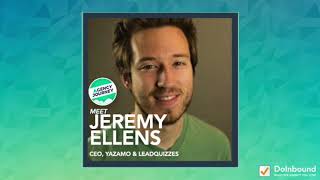
Jeremy Ellens, founder of Yazimo agency and Leadquizzes software, talks about moving from service work to building a SaaS product for lead generation quizzes. He shares how quizzes drive customer acquisition and the tactical challenges of scaling from agency to software.
Hello and welcome to another week of Agency Journey. This is Gray Mackenzie and I'm excited to share with you this week the conversation that I was able to have with Jeremy Ellens from an agency called Yasimo and their flagship product, leadquizzes. So his story is one that sounds very, very similar, very familiar to my story and Andrew's story of starting an agency in college, connecting with your co founder there in school, starting it well in college, figuring out how do we want to do things, how are we going to scale in the short term after that, and then ultimately evolving and transitioning into the SaaS space. So they've now crossed the million dollar run rate with their software leadquizzes.com Congratulations to Jeremy and the whole team on that milestone. And we talk about everything from the lessons he learned making that transition from agency to SaaS, to the tactical what makes a successful quiz, and how do you reduce lead generation costs and obviously grow the business by using this tactic of lead generation quizzes. So with that, I'll turn myself off and I'll let you tune into our conversation that Jeremy and I had with Jeremy Ellens From Yazamo and Leadquizzes.com.
How do you build an agency that allows you to live the dream that you have for yourself, for your family, for your community, for your team, while at the same time helping your clients knock it out of the park and doing it all profitably? These are the big questions that we tackle here on the Agency Journey podcast. I am your host, Andrew Demski. Now let's get to it.
Hello. Welcome back to another episode of Agency Journey. This week. This is Gray and I have the honor and privilege of bringing on Jeremy Ellens from Yazimo is the name of his agency, and then also built out lead quizzes, which we'll be getting into both of those here on the podcast. But Jeremy, thanks for taking the time to join me, man.
Yeah, thanks so much, Gray.
I'm excited to dive into the story. So let's go back. I don't know whether this is the start. Nothing's really. It's so hard to know where the start is because every story kind of connects. But here's my guess, from digging into your background a little bit, you're in college, going to school, and you start YAZMO End of 2011, early 2012, is that right?
Yeah, exactly.
So let's just kind of start there since that's at least the beginning of that journey. What was with the, with the name, with your goals? What were you trying to accomplish at that point.
Yeah. So to be honest, like, we were just. We were just trying to, like, create a. A cool company that we could, like, do full time and not have to go out and find jobs.
Yep, yep.
So that was the main thing. I was really into, like, tech at the time. I met my business partner, Donna Berry, just sitting across the table in this kind of, like, entrepreneurial setting at Arizona State, and we started talking about what each other were doing. Like, I had a. Another startup that I was getting a lot of press for and, like, it was a veterinary app. And he was working on, like, outsourcing and project managing projects through, like, Odesk at the time. And so we kind of thought we had, like, some complementary talents there. So we started working together and, yeah, started Yazmo. So we started doing some service work, you know, mobile website for someone. We did another site called Clear My Guilt, which is one of those, you know, you'd post anonymous things just for, like, entertainment. So we just started taking on whatever we could get, honestly, in like, the. The web development space. And so that's where things began.
So I know that at least. At least from the website, you talk about working with SaaS companies or maybe a SaaS marketing company. Is the agency. Or is Yazimo still an active agency today where you're serving other companies? OR Is it 100% doing marketing for your own products?
Yeah, so 100% for our own stuff right now. So, yeah, when we got into leadquizzes, we built leadquizzes through our service side. So there's a lot of things that I can go into that we did wrong on a service side. But, like, when we started getting successful, we really niched down and focused on, like, you know, a service as a product. I think the E Myth talks about that a lot. So basically what that was for us was we were helping people generate leads and we were happening to do that using quizzes. And so that got pretty, like, predictable and repeatable where we could get, you know, repeatable results for people. We could stack up a bunch of clients and it would just be easy to train people on. So what we would do is we do a quiz setup where we'd write a quiz for someone and then we would advertise it on Facebook for people. That was the recurring business model to it. That's how we get started with lead quizzes.
That's awesome. And what time. So as the agency evolves from, I guess, 2012 through. When do you guys start doing lead quizzes and maybe walk us through because so many agencies listening. I've gone through this personally running an agency. I have this desire to build, like how do I productize this or systematize my business? And there's a lot of different ways to do that. But one of the most popular ways or ways that people I think, perceive or think of most quickly is can I build a SaaS app or some kind of application? So how did I guess where does leadquizzes kind of branch off into its own thing and maybe talk about just the thinking behind making that decision as well?
Yeah, so we kind of had two phases before leadquizzes. The first was kind of that web design and web development. And that was frustrating for a bunch of reasons. You know, one, it was like super subjective. So you'd build out a design that you thought was amazing and you'd set it up, but the clients would always have their opinion about it. And so that was like pretty frustrating. We eventually were able to scale from those thousand $2000 sites to where we were charging like 20 to 40 grand for sites. But some of the pains in that model for us was there was no recurring revenue. So pretty much you would close something and then you hope you could have a team to handle everything and then you'd have to go and chase that next deal right away. So that was frustrating on our end. On the client side, they would hire us to build out this whole thing. They'd say, this is exactly what we want. We build exactly what they want. And then they come back to us and say, well, what about the traffic and what about the sales? I'm not seeing an increase. Well, that wasn't really part of the strategy. So then we started focusing on take these big 20 to $40,000 projects, just divide that in over six months. So we got it down to about $3,500 a month. So we had recurring revenue built in. We started focusing on driving traffic for people, building out sales funnels. This was pre click funnels and leadpages day. So building those out, doing like infusionsoft for people. And we were kind of like all over the place. We were doing custom stuff. We were working with custom shopping stores. And so that was pretty difficult to be able to scale and train a team off of. So we started looking around at like, what have we done? Really well. And we had one campaign where we helped a hormone doctor grow her list from basically 0 to 35,000 people in six months. And we did that using a hormone quiz. Yeah. So we did it around something like, you Know, do you have, like, low energy? It could be because of your hormones. Like, take this quiz to find out. And so we helped her build this huge list that she then launched a book too, and became a national best seller and started selling a lot more online and having a bigger impact.
Wow, what a story. That's like an awesome case study to launch off of.
Yeah, yeah. So that was really the inspiration. I mean, we just kept like evolving. I think that's one of the things that we were like, successful about is I saw a lot of our peers where they would run into a roadblock and then they'd switch into a completely different industry where we just kept like, kind of like listening. Like, what did our customers want? What did we need? How could we improve our business model? And that's kind of how we evolved into getting into the software, which I can talk more about here.
Right, well, let's go there because you guys get through. Now. This is 2015, if I'm remembering right, that you were working with. Was it Dr. Tammy? Was that the name of the hormone doctor? Okay, so how does that kind of. Where does the. Well, maybe we could even start with just kind of lead quizzes how that service works right now. And I guess to clarify, even before that, Jeremy, is leadquizzes still a part of Yazmo or is it separate entity? How did you guys structure that?
Yeah, it's like under Yasmo, but that's like all we do. So all we do now is lead quizzes. So we did Yasmo as like an agency from around 2012 to around 2015. And then we started doing like Leadquizzes as a managed service for people in 2015. And then we came out with the software January 2016.
Okay, makes sense. Cool. So let's dive into the software model right now. Somebody goes to the website leadquizzes.com and we'll have that in the show notes for anybody who's looking. You guys have either a free version or a free trial right now. But. But when folks get in there, like, how are people using? Obviously, it's a lead generation tool. What's the. What's the model right now?
Yeah, so I would say the biggest two ways, like quizzes has been around for a long time. But what we did is we started focusing on it from a marketing perspective. You know, you had quizzes on BuzzFeed, you had like the quiz hours. But what we started doing was like we would do like a quiz, whether it was a fun based one or it was a serious one. Like that the hormone example. So people would go through the quiz, they would opt in to get the results, and then on the results they would get a personalized like feedback of, you know, what their answers meant to them. If it, you know, if it was a hormone quiz, like maybe they had low testosterone or something. And then that could lead towards a specific like product or service recommendation or even just like content recommendation. And so that was really helpful for the person going through and really engaging. And from a business standpoint, you're segmenting leads, you're offering them more personalized like products and services which should increase your sales. And you're able to look at what are all their answers on that data so you can understand better who your audience is and how you can market to them. So that's kind of how it works. You know, people will put it on Facebook. It's really easy to advertise those quizzes. Websites are great places. We've seen guys like Neil Patel increase their lead Capture up to 500% using it on their website. But that's, yeah, those. That's essentially the model and those are probably like the two biggest places that people use Quizizz.
Right, that makes sense. Are there. Have you guys seen a lot of agencies or have you seen agent? I mean, it sounds like an awesome service for agencies to potentially roll out to their clients. Is there a lot of that right now or most of the. Obviously, maybe percentage wise, most of the customers are just organizations. But in terms of usage, is that something you've seen a lot? Is agencies using it?
Yeah. So there's definitely like a lot of agencies we have on our platform. I don't know of a lot that are just focused on where they're just like, you know, we're known as the guys that generate leads using quizzes. For us, we found that to be a huge advantage. We were very referable. Whenever anybody wanted some service like that or they wanted to grow their list, they knew that's all we did. So that was super helpful. But I think largely, like it's still like a big untapped market. Like even if you go like look up like how many people are searching for like quizzes for like lead generation, there's not very high search volumes yet. So it's still pretty well unknown. So like when we're marketing or advertising, we're leading with case studies that are like, educating people around how they could use them. So similar to like Dropbox for example, like when Dropbox first started, you know, people didn't know that they needed Cloud storage. It was something that they had to educate on. So I do think it's a huge opportunity for agencies to be able to sell those services. It's how we built our business to over $100,000 a month. But I don't think a lot of people are doing it yet.
Right, that makes sense. Jeremy, I'm curious to know, because you've made the transition, and maybe there's still a separate future for Yazmo outside of marketing your own stuff. Maybe that becomes marketing for other organizations again at some point. But. But I'm guessing not in the. In the immediate future. What are. What are the biggest lessons? I guess either mistakes that you made that you've learned from, or like, hey, this went really well, and this was the key to this. Obviously, having a good product is a big deal. Actually addressing a problem that people care about and will pay for, like, lead generation is a big deal. But any keys in terms of making that transition? One of the things that we see so frequently is agencies who want to do that are trying to balance a staff that needs to service clients and gets pulled hard in that direction. And there's the ups and downs, like you talked about, where there's the, like the. Just the classic ebbs and flows of, we have a client now, we've got plenty of clients now, we're a little bit lower on clients. So there's different levels of availability. It's just hard to stick with something long enough to make it work. What were some of the big takeaways from your transition from Yasimo as an agency to the lead quizzes model?
Yeah, so I think the biggest thing was wrapping our product into a service. And so we did that by offering the setup and offering advertising based around the quizzes. And so that. That helped us build case studies for the thing. It helped us build a lot of, like, expertise and domain around, like, how to make these work. So that was super helpful. But, yeah, I mean, I've seen a lot of people make that mistake, too, where I have a friend and mentor where they have about a $20 million service business, and they're trying to put, like, a product together, and so they're just sinking money into it every single month. And I think it's a lot harder because of that. You get stretched out, like, you know, like, you have to create two different teams. You're not seeing revenue come in the door. So for us, it was, like, it was really helpful to build the service around the product. And then, like, you know, as we've grown the software revenue increases, you can start to phase out like some of that service work, if that's what you choose to do.
Right. That makes sense. I noticed also on the site as I was looking through this ahead of time, Jeremy, is that you guys still have at least services listed on the site. Basically setting up the whole service for somebody writing the quiz, getting that set up. Obviously you're providing the software as well. But assuming that's still going on, it's not just purely a software play. There's also a servicing component to this. So I guess I have a broad question and then probably the question that everybody's thinking that you may or may not want to want to answer the broad question is how is that? Like I'm assuming, obviously that helps a ton with activation in addition to helping with cash flow as you're building a SaaS. So that's kind of the broad question is how is that model of having services combined with software been for you guys? And I think the specific question, feel free to address or not address if you'd rather not. But I think that the other question that would be helpful for agencies to have some idea of, and we've talked about this a little bit with do inbound is from a revenue perspective or cash flow perspective at this point, is there a rough ballpark on percentages, that's services and percentages, that's software.
How's that loaded?
Two part question.
It's changed a lot. We do offer the service still and I think it's something we're starting to phase out. But the reason we started doing that is because it was a strength. That was the background we came from was the service, the agency side being able to run ads. And so that was something that naturally we could easily just add onto it. It also was really helpful with our paid campaigns. When we started running Facebook ads, you sell a couple of these packages for $2,500 for a setup or $1,000 a month advertising campaign with these setups that pays back your ad spend pretty quickly. So from that standpoint, that was very, very helpful for us starting out then. Yeah, like the service side has become less and less of what we're doing and it's becoming less of a focus as we just focus in on like what do we really, really want to be good at. So now like the service side is less than 30% of the total revenue.
Yeah, that's awesome. I think that's that model of providing more premium or like done for you or done with you services early on is I Think a much easier way to make the transition out of agency life towards more of like the software or SaaS space. So that's really cool to hear that from. So I want to. I'm jumping around all over the place. I've got all kinds of questions written down. But from a, I guess from more of a tactical perspective in terms of actually the tangible setting up quizzes, any keys or like best practices secrets that you would. Not really secrets, but like tactical pieces that you would tell folks who want to set up or start using or even just experimenting with quizzes in terms of things that people might not think of out of the box. Like that might be things related to how long a quiz should be, which I'm assuming is kind of Persona based off of your audience and, and the specific service that you're providing and information you're trying to give. But whether it's length or offers or outcomes, anything that you guys have learned that surprised you.
Yep. So I can jump in like, I think maybe a little bit more comprehensive answer. Like the first thing we look at is like what's the offer going to be after the quiz? So we usually sell a product immediately after the quiz or we try to get them on like a webinar or phone call, depending on how you're going to sell someone. But really making a compelling offer if this is cold traffic, meaning they haven't opted in with you before, they haven't bought from you, doing a compelling offer where it's something that they're just going to see as compelling. First of all, there's some kind of urgency or scarcity built in. Maybe you offer some bonuses and then maybe there's some risk reversal like it's a free trial or a money back guarantee, that kind of thing. And then pricing like the price of your product is priced appropriately. So if it's on a sales page, probably less than $50 for that purchase. If it's through a webinar, maybe $100 to $300. And then if it's over the phone, it could be tens of thousands of dollars. It could be a huge sale for you. So that's kind of where we start. And then as far as coming up with a good quiz idea, what we usually look at is we'll start by googling what are other quizzes out there like it. We can start to look at places like Quora or Reddit to find out what are questions that our audience is having and then doing some research like that, maybe looking at like Buzzsumo or like what Are the most, like, shared quizzes in our space or buzzfeed? What are the most popular quizzes there? And then, so we'll start to write the quiz. We'll like, focus a lot of time on, like, the headline. As you may know, like, the headline can be like a huge make or break. Like, if someone doesn't click on your headline or doesn't find that attractive, any other work that you spent was like, a waste of time. So we'll spend a lot of time on that. Buzzfeed has great examples of, like, really good headlines, but you can also just, you know, there's like, some headline like, generators out there to give you different ideas, but we spend a lot of time there. And then as far as the questions and answers and, like, results, we try to keep things simple. We found, like, our having generated almost 3 million users through our software so far, the people that are doing the best and getting over a 50% conversion rate, they're keeping it pretty simple. So usually about eight questions, the questions are very short. Meaning, like, the number of words and characters is very short. They can read it and understand it quickly. The answers are very short. Like yes, no, sometimes, always, like questions like that. Not something that you have to read a ton. So you read the question, then you read the answer, and then you have to reread the question. You want to keep it super simple so they can just flow through it and get it. And so that's what we do. And then as far as lead capture, like I mentioned, like, doing that after the questions, a lot of people put it up front. It's not as compelling versus if they answer the questions first. And there's some commitment to what they're doing more interest in, like, actually opting in. So that's kind of like the general strategy behind it.
Okay, that's really helpful. And when you say converting 50% or higher, are you talking about folks who are taking the quiz and then converting at the end of the quiz, or is that folks who are taking the quiz and then purchasing something on the back end of the quiz?
Yeah, so I mean, like, 50% are like, opting in and giving you their contact information.
Yep, yep, that makes sense. Which is still. Which is still awesome for bringing people. I was like, there's no way that can be too sale, Right?
Yeah. The great thing about that too, is there's more people that want to take it. So, like, we'll see cost per lead drop or cost per click drop substantially on, like, Facebook because it's more engaging. And then same with the website, I mentioned someone like Neil Patel. He increases lead capture by 500% using the quiz. It wasn't entirely because the. Like, the lead capture of the quiz was so much higher, but part of it was because just more people, you know, wanted to actually click and, like, take a quiz like that.
Right, right. That makes sense. That's awesome. So kind of last thing that I'd be. I would be curious about knowing is kind of about the. The organization itself at this point. Jeremy, as far as. So a couple questions. This is one of the things that we get into a lot on these conversations is kind of how people have structured their teams right now. So I think that you guys. You mentioned Arizona State. Is the whole team. Are you guys remote, or is everyone in an office in Arizona? What's the geography of the team?
Yeah, that's a good question. So we tried doing, like, the freelance thing for, like, a long time, and that was pretty difficult. We realized there's a ton of benefits of having people in the office. So we do have an office in Phoenix, and we have, like, four people in the office here. We have a few people virtual, and we actually just set up an office in Serbia, which has six people now.
Okay, that's awesome. And in terms of kind of the way that you guys are structured, I'm assuming heavy on the product side or on the marketing side. Where's most of the team right now?
Yeah, most of the team's on the product side right now.
Okay, that makes sense. That's awesome. In terms of any big goals or anything big coming up on the radar for you guys, this is my last tough question. What are you looking forward to 2018 here? Obviously, as we're coming down the home stretch in 2017, which is crazy already, I feel like this year's just flown by. Any big goals for 2018? Anything that you guys have kind of in your sights as we look to the future?
Yeah. So I think we're just excited about helping a lot more small businesses generate a lot more leads for their business and predictable leads overnight. So we've been adding about a thousand users a month at this point. So we're really just looking to scale that up and help those users get a lot more success. And some of that will just be, like, acquiring more people, and some of that will be, like, coming out with more features to continually make their marketing easier.
Right. Makes sense, Jeremy. That's awesome. You guys have a great story, and it's gonna be helpful for agencies to hear and inspiring to see. Kind of where you guys have come from and where you've gone, so I appreciate you coming on and sharing. Obviously we'll link up. Definitely. Leadquizes.com in the show Notes, is there any other place that you'd want to point people in terms of following what you guys are up to or keeping track of your growth?
Yeah, I think that's the biggest thing. Leadquizzes.com if you want to connect with me personally, I mainly use Facebook, so facebook.com jelens J E L L E N S or Twitter too. I'll respond there as well.
That's awesome. Jeremy. Thanks so much for your time, man. I appreciate it.
Yep. Thanks Gray.
Want more great episodes like this one? Hey, I'm Gray MacKenzie, a host here on Agency Journey. I don't know about you, but sometimes I get a little overwhelmed when I find a new podcast. There are so many great episodes and great guests, it's hard to know which ones to listen to first. That's why we put together a list of the top 10 most downloaded episodes of Agency Journey. And you can get a copy of that list plus all of our notes and takeaways just by texting the word doinbound to 44222. Again, that's doinbound all one word to 44222. Standard text rates apply. You don't want to miss these great episodes. Texts do. Inbound to 44222.










