How to Use Discovery Projects to Land Your Ideal Clients
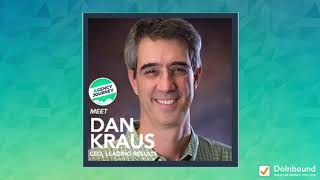
Dan Kraus from Leading Results explains how discovery projects help agencies land better clients. He walks through face-to-face engagement, using tools like HubSpot to understand client needs, and how this approach drives agency growth beyond traditional sales tactics.
Hey, what's up? Welcome back to Agency Journey. This is Andrew and I'm chatting with Dan Kraus this week from Leading Results and Dan walks us through his process for on site client discovery sessions. This is two back on back eight hour blocks where Dan and the team walk their new clients through the entire strategy process and as a result, clients walk away with a six month content plan. And those clients either move on to long term retainers with Dan and the team or they move into website redesigns or they go on and they implement the plan themselves. But in this interview, Dan breaks down how he conducts this on site in person. Doesn't matter where they are. Dan and the team are in Charlotte, North Carolina, in the States and they'll go anywhere, they'll go to London, they'll go to Dublin, they go all over the US but he puts a huge value on face to face interaction during these sessions as a great way to kick off the client engagement. And he goes deep into their process and how they pull it off. So enjoy this conversation with Dan. How do you build an agency that allows you to live the dream that you have for yourself, for your family, for your community, for your team, while at the same time helping your clients knock it out of the park and doing it all profitably? These are the big questions that we tackle here on the Agency Journey podcast. I am your host, Andrew Demski. Now let's get to it. Hey Dan, welcome to Agency Journey. Thanks for taking the time to be on here. Do you want to introduce yourself to the listeners and share how you got to be where you are today?
Sure, be happy to. Great to be here. By the way, thanks for having me. So, Dan Krause. I started leading results in 2009. I'd spent about 25 years working in high tech, especially with primarily around business software. So I worked with Gray Plain software for about nine years. I worked for a little company called SAP for seven years. And when I made the decision to get out of high tech, it was really to take a look at, you know, what did I want to do differently. And I'd always worked with channel partners, people who were the dealers, the consultants that work with our products. And what I saw was really an opportunity with a lot of these guys because they're really good technically, but marketing and sometimes sales was never their strong point. What I'd always hear from my partners when I was in industry was, hey, you know what, if you can get me more leads, I can sell more. So what they were all looking for at the end of the day was leads, and I actually have a marketing background. I graduated from UMass Amherst with a marketing degree, and I've used it at various different times in my career. So I looked at. I looked at the opportunity out there and said, hey, you know what? Let's. Let's go do something with this marketing degree and help these guys find some leads. And we started off initially as marketing consultants. So it was myself for the first six months, and then I had a couple other consultants that joined up with me when we formed Leading Results. And we got involved with duct tape marketing because when we looked at John Jansen's stuff, we realized that John had taken pretty much everything we needed to do and put it around a methodology. You know, if you're not familiar with his background, he came out of the e myth world. How do you systemize? How do you put processes around things? And really recognized that marketing was one of the things that really didn't have a lot of processes around. It was kind of this black box. So duct tape gave us a lot of the pieces. We needed to be able to set up strategy for people. And we did pretty much strategy only for three years. And we just had clients that kept coming back to us saying, hey, you know what? I love the strategy. I don't want to work with a bunch of contractors. Can you just run it for me? That's a big jump going from telling people what they should do to actually doing it for them. So we went looking around for some tools, and John and the duct tape folks have always been real big on WordPress and this plugin and that plugin, and using all these different tools. I took a look at that and said, you know what? I really don't want to be a technology company. I just gotten out of that. I wanted to do marketing. And so when we started looking for tools that would make our life easier, we found HubSpot. And so this is just the version that was all boxes to something that you could actually design with. And so we looked at HubSpot and said, you know what? This is a really good tool for us to work with. And pretty much since then, we've looked at, all right, we use duct tape marketing as a way that we help develop the strategy for our clients. And we use HubSpot as the tool that we use to execute on behalf of our clients. So if you want us to run your marketing, we do that on HubSpot. If you're just looking for strategy or a little bit of content creation, we can do that without a Tool. So that's kind of the short version of the long story. So we've been around for about eight and a half years at this point.
That's, that's a really cool balance of like tool and methodology, tool and strategy. Where you guys sit today, what's kind of the breakdown in your services? Is it mostly strategy, some implementation, an even split? How's it broken up?
It breaks down, if I look at it just from a pure revenue standpoint, it breaks down to about 30% strategy, about 40% execution, and about 30% web development. So it's actually a pretty good balance. I'm pretty happy with where the balance is right now. So, you know, we do ten to a dozen web projects every year for people that have come on with us as clients or people we've picked up as clients because they had a HubSpot implementation that wasn't working particularly well. And so we get involved with them, help them figure out the strategy, and then re implement HubSpot to make the strategy work better.
Gotcha. How has your, your agency growth changed or I guess your trajectory changed once you decided to get into the implementation side of things? As far as a team to do that mastering HubSpot as a tool, what were those learning curves like for you guys?
I was just having this conversation with somebody that growing from no employees to one employee is hard. Going from one to two is I think actually even harder, you know, or from one to two because now you got three people that all have to communicate. Right. So it's just yourself, it's easy, one other person, you can have that conversation all the time. Once you got three, you got to make sure everybody's on the same page and then it's just, it grows from there. But it's not as complicated to go to 4, 5, 6. Today we're at 10 people. And I think that, you know, the biggest challenge is trying to figure out what you want to actually self perform versus what you want to outsource. And it's trying to find the right balance between when do you do that in house and when do you take it in house versus when do you keep using some, some contractors for pieces? Yeah, you know, we've the, the Internal Developer, the COS expert for HubSpot Internally, that was a given right out of the gate. And we made the decision early on that we don't do a lot of writing ourselves, but we touch every single piece of writing. So I have a full time editor, while I don't have a full time writer.
Okay.
So my Editor is she goes through every single piece of content that leaves our organization, whether it's our own or for one of our clients. So that gives us a really good set of quality control measures around the content that gets created. And at this point, she actually looks at all the videos and podcasts and everything else as well. So.
Awesome.
She's pretty busy, I bet.
Yeah. That's a lot of touch points. How have you gone to that, Gone through that process of figuring out what do we outsource versus what do we bring in? Has it been kind of a slow drip to say, okay, we've been outsourcing this for a while, it's time to bring it in? Are you pretty comfortable, even if it means outsourcing a large volume of written copy, for example, with not having a copywriter in house?
So we've got two or three people that are actually pretty good copywriters, and I actually think I'm a pretty good copywriter myself. So we can always do it if we need to, but I don't want every piece of copy that comes out of here to sound the same. So I want to have different writers. And so it's really a matter of, you know what? I can't afford to hire three or four, so why hire one? And we keep network of four to five writers that we use on a regular basis, and we keep them pretty busy so that we're kind of their first vendor of choice when they're trying to figure out who they're going to spend time with. But we stay pretty consistent with the group we use. But that way, if I have a client who is in the business software space, I've got a writer who's good at that. I've got somebody who does a lot of environmental work. I have somebody who knows that space really well. So it's given us the ability to do some balancing with that piece of.
That's cool.
But to your question, when you make the decision to bring it in house versus outsourcing, I think it comes down to how much revenue are you giving away? At some point, we made the decision to start building our own ability to go and produce animated videos in house as opposed to outsourcing that because we were finding we needed to be able to do it on a quick turnaround and we had a large volume of it, so we started building that in house.
Gotcha.
So it's kind of a balance. And some of it's gut feel, too.
Yeah. When you just feel like you're pushing out too much and you could Just bring it in and make it better. That makes sense.
Yeah. And sometimes opportunities just fall on your lap to take it in house too. So you take that too.
Yeah. Do you guys have, like, a specific vertical or a specific type of client that you found that you guys work really well with?
So I actually target our market in a little different way. I'm not a big fan of the, you know, industry vertical approach, but what all of my clients have in common is that they sell a complex product in a complex sales cycle.
Okay.
So I look for customers who sell a product that's difficult to explain and takes a long time to sell, because I think that works really well with the inbound methodology. And it's also kind of what I grew up selling, because I was always selling ERP software, which is hard to sell, a long sales cycle, and really complicated. So. So if you looked at. If you looked across our client base, that's what they all have in common. They might be different industries, different products, but their customers go through a complicated purchasing process.
Gotcha. Being an agency that focuses in that, have you learned anything about how to get your team up to speed quickly on how a client's sales process works or how their product works in general? Any takeaways there?
So when we started engaging with the client from a strategy standpoint, we've tried this a lot of different ways. And what we found is most effective is we locked them in a room with us for two days, Literally locked them in a room with us for two days. So we spend 16 hours with them back to back, face to face, and map out their strategy, their messaging, the customer buying process, the challenges the customers have along the way. All. All the things you need to do from a strategy standpoint, it helps get them on the same page within their own team, and it definitely helps educate us as well. And so we use some of the kind of structure you see in a lot of HubSpot partners with having a strategist and an account exec or an account manager. And when we do those sessions, the person who is the strategist on the account as well as the account executive are both in the room. So they come up to speed on it pretty quickly.
Gotcha. And is that kind of discovery session, Is that something that you sell as a standalone gateway product? Okay.
Yep. Yeah, it is definitely a gateway product. And we've. We've really positioned it so that it's a way for us to try out the client, and it's a way for the clients try at us. Right. So if at the end of it, they don't feel like we're going to be a good fit for them. They've got a full report readout, strategy set of marketing sprints, et cetera, that are their takeaway. At the end of those two days, they can go get somebody else to execute that if they want to.
Gotcha. So you guys are willing to roll that dice. And I'm sure it's the same the other way too, where if you work with them and you realize these guys are, they're no fun to work with or they're just like giving us constant pushback. You guys have it out there too.
Yeah, we generally know who we want to keep working with after one of those and they generally know it too, so.
Nice. So from that kind of an engagement, do you typically roll people into kind of a long term retainer from there or shorter, shorter engagements? How do you see things rolling from that point?
So when we do a strategy work with workshop with somebody, about 70% of those become longer term engagements at some level of a monthly retainer type arrangement. Maybe 10% of them become a website only project that, that don't have a lot of follow up beyond that. And then 20% do nothing.
Okay.
We have a pretty good hit rate once somebody goes through the workshop that they're gonna become a long term client with us. So that's why we keep doing it.
Okay, cool. What does your sales process look like to get them into that strategy session? Is it a long process or is it usually pretty quick?
It depends on how much they realize they don't know.
Amen.
How's that for an answer?
Yeah, that works, man. So, yeah, is this something you guys are running on site for people or do you run these digitally as well?
No, I insist on doing them face to face. It's really a question of whether I'm going to them or they're coming to us.
Okay.
So you know, in our offices in Charlotte, we've got a conference room that's set up with one wall that's all whiteboard. And we can do a two day workshop in our place if they want to come here, if they want to, they're going to have seven or eight people and it's more cost effective to fly a couple of our people to their site. We'll go there instead.
Okay. And do you guys go anywhere kind of across the country to pull it off?
Yeah, actually we've even gone to Dublin and London to do them too.
Oh, that's awesome. Yeah, that's neat and kind of an age of digital. It's cool to hear that, like, you guys put such an emphasis on face to face. And I'm sure that does help shorten the learning curve a lot there.
You know, I think one of the things that I've Learned in the 8 years doing this is every client's a little bit different in terms of their communication style. And you know, there's some that work really well just with a phone call every week. There's other ones that want a phone call once a month. There's some that if you're not on Skype and you can't visually see them as you're having a conversation with them, you lose a lot. Because they communicate a lot through their body language, it's really trying to figure out how you match your communication pattern and style to what they need to keep that going well.
Okay. Do you follow up the in person touch points after the strategy session for those that sign up for longer term deals with you?
Yeah. If nothing else, we're gonna, we're gonna get with them face to face once a year. But a lot of times we've gotten enough out of the first couple of days that we're pretty good operating by phone and Skype for a long period of time.
Okay, that's, that's cool. And when they get this kind of deliverable out of the strategy session, how often do you guys come back and kind of reiterate the next round of content there? Is it like a quarterly plan that they're receiving or what's that frequency?
So what we try to do in the, when we're doing the workshop is we're trying to leave them with two 90 day sprints so that they've got the first six months of what they do kind of mapped out in detail, then higher level, kind of thematically. What are you going to do for the next six months? I've never written a 12 month marketing plan that stayed in place. Right. They always change. So I think that if we can get six months documented well and then we can start to move into a rolling 90 day plan so that we always know what the current month plus the next three months look like. We're pretty much staying on top because most of the clients I work with are on the smaller side. They're, you know, most of them are somewhere between 5 and 35 or 40 million. So they tend to be pretty fluid organizations.
Gotcha. And for the ongoing implementation, there are. Do you work with any clients where they're the ones creating the content or are you pretty much kind of handling that for all these folks?
I prefer to be handling it, but I have a few that insist on doing it themselves.
How's that go?
That involves a lot of nagging on our part. That's when you move from being a marketing agency to a professional nag.
It's almost like your collections on content kind of.
Yeah. We've gotten good over the years in trying to figure out how to get things out of people's mind. We'll do an interview with one of their content experts and record it and turn it into a blog for them if need be. They don't have the time to sit down and write it. As far as longer form content, we're almost always writing it, but we're using their expertise to try and create that content.
Gotcha. And so is that something. Where are you extracting any of that content during kind of the on site meetings or is that something that happens kind of afterwards?
We generally will get the topic areas, maybe some titles when we're on site, but when it comes to the more detailed content, it's usually a follow up afterwards because you get the. Well, I mean, if you spend any time looking at SEO, the way what people think folks are looking for versus what they're usually looking for are not the same. So we start with what are the topics that you think people are looking for? And then we're going to start to research against that. Once we know what it is, then we're going to go back to. All right, who's the expert that can really talk about this? Let's get them on the phone, let's interview them, let's have them do some writing. Sometimes it's a customer instead of an employee.
Okay, cool. I guess another question about your on site strategy sessions. How do you guys go about pricing them, like with travel involved and like different them coming to you versus you going to them? How do you structure pricing here in a way that's like transparent and easy to understand?
For the client, it's a fixed price plus travel costs.
Okay. So no matter if they come to you or you go to them, it's all set up the same.
Yep, gotcha.
What have you. This is like most of the times the people I've talked to, they go through this process and a lot of people are handling it digitally. So if someone's coming to you, how much structure do you give them in terms of like what those two days are going to look like? Like within the eight hours you have them in the room, but also like Outside of that, like, you know, showing them around, taking them to dinner, stuff like that. Do you guys have a process for kind of the experience that you give them as they're on site?
It varies by the client. So, I mean, we had a guy in who loves to play golf. We're in the middle of Charlotte. You know, he came in a day early so that he could play some of the. Some of the courses in the area. We set that up for him. So it really depends on the client. I mean, our offices are a mile and a half from the Charlotte Speedway. If I get somebody who's a racing fan, I have a lot of that around here.
Nice.
It really depends on what the client is, but in terms of the actual work itself, that's really structured, and we have defined what we're going to do before we get together, what they need to do and get to us before we're together. The agenda for those two days is pretty. Pretty well defined. It'll shift 10 to 20% depending on their industry, their goals, the kind of work that they've done around this before, what do we have to start with? And then the output is usually pretty clearly defined, although everybody says, hey, you know what? I'd really like this. So you end up customizing it a little bit.
Yeah. But you're kind of building off of that basic framework.
Yep.
That's awesome. Well, Dan, thank you so much for coming in and just sharing kind of this breakdown here. This has been super helpful and also just hear your experience of how to really conduct these things well on site in person and build and add value up front. If any listeners here, if they have any questions about anything, is there a way they can get in touch with you guys? Reach out?
Absolutely. I'll tell you. The easiest way is shoot me an email, which is dkraus d k r auseadingresults.com or if you go to our website, you can get hold of me there pretty easily, too.
Awesome. Dan, thanks so much for coming on.
My pleasure. Thanks for having me. Want more great episodes like this one? Hey, I'm Gray MacKenzie, a host here on Agency Journey. I don't know about you, but sometimes I get a little overwhelmed when I find a new podcast. And there are so many great episodes and great guests, it's hard to know which ones to listen to first. That's why we put together a list of the top 10 most downloaded episodes of Agency Journey. And you can get a copy of that list plus all of our notes and takeaways, just by texting. The word due inbound to 44222. Again, that's due inbound, all one word to 44222. Standard text rights apply. You don't want to miss these great episodes. Text due inbound to 44222 now.










