How to Use Software to Differentiate Your Agency with Mike Donnelly from Seventh Sense
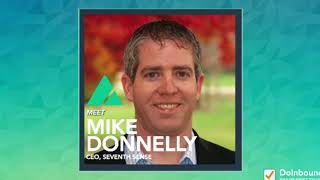
Mike Donnelly, co-founder of Seventh Sense, explains how his software optimizes email send times using data analytics. He discusses why agencies struggle to differentiate and how the right tools can set you apart in the HubSpot ecosystem.
How do you build an agency that allows you to live the dream that you have for yourself, for your family, for your community, for your team, while at the same time helping your clients knock it out of the park and doing it all profitably? These are the big questions that we tackle here on the Agency Journey podcast. I am your host, Andrew Demski. Now let's get to it.
Hello and welcome to this week's Agency Journey episode. This is Gray. This week I had the privilege of speaking with Mike Donnelly from 7th Sense on the podcast, episode number 127 of the Agency Journey podcast. Mike and I dug into a lot of different things from his background. How they started the software business, $0.07, what it actually does, how it works. We got a little bit nerdy there. We talked about some of the things that he sees from his perspective, working with a lot of agencies. What are the big takeaways or pieces? What are the insights that he has? What do people do well? What do they struggle with? So basically, what are the mistakes he should stay away from? A lot we talked about. We talked about what it looks like to build software as an agency. Dug into a lot of different pieces. We could have talked for a lot longer, but we didn't go super long. And so I'm not going to make this intro super long. I'm going to let you get right into that content. Let's go ahead and dive in right now to a conversation with Mike Donnelly from 7th Sense. Hello, welcome back to Inbound Agency Journey. This is Gray Mackenzie. This week I'm joined by Mike Donnelly from 7th Sense. Mike, I'm gonna let you tell the people what that's all about, but thanks for jumping on and joining us here on the podcast.
Yeah, I appreciate you having me on, Greg. Certainly excited to talk to you today and also to your listeners as well.
Yeah, awesome. So I've been aware of seven Cents for a while. I think it's the place I might have heard about you guys. Originally was from Marcus and George on the Hubcast. Another awesome podcast in the space. If you're not listening, recommend checking that one out. So I've seen the website. I've been familiar with it, but we actually just met in person for the first time at Inbound as we're recording this. That was just a couple weeks ago and connected really well. I really enjoyed learning more about what you guys are doing and, and just kind of the operations. Obviously we're both building software businesses, serving members of the HubSpot community, members of the agency community. So let's start first of all with Seventh Sense, where that came from, kind of how you got into the business and then where you guys are today.
Okay, perfect. Yeah, I'll try to be brief. It's been a long journey, we've been around, or at least the idea was conceptualized about five years ago. And I'll start with a little bit of background on myself so that give, you know, frame that for the audience. So I started my career as a software engineer for a biotech company. Then I decided to make the jump to the dark side of sales and was in enterprise tech sales for the better part of 13 years. And it was during the last kind of like five years of my, of my enterprise sales career that I just really started to recognize that reaching both prospective and existing customers was just getting harder and harder and harder. And some of these customers were customers that I had five, seven, eight year relationships with. And every time I would go to them and I would say, hey, Dave, the project's getting delayed. This is a multimillion dollar project. And he would say, well, why is it getting delayed? And I would say, well, because you never responded to the three emails or the three voicemails that I left you. And the resounding response that I got in every single one of those conversations was, mike, I never saw your email, Mike, I never noticed you called. And then they would go on to tell me that they receive hundreds of emails a day, etc. Etc. So what I started to do, and I think very good salespeople do this, is we pay attention to, hey, if I want to reach Sarah, I know that I can typically reach her between 9 and 11 in the morning. Whereas if I want to reach Scott, I can typically reach him between five and six o' clock at night. And even in some cases you're like, hey, don't ever call Greg because Gray plays golf every Friday. So just don't, don't, don't bother him on a Friday because it's just going to get buried in his inbox or it's going to get buried in his voicemail and it's just going to go into the abyss. And then one day it dawned on me, why am I spending my mental energy on this? It's all sitting there in the data. And so we went off, we built a prototype to analyze all of my email history. I had a bunch of psts from historical jobs, et cetera, just to see if people actually, the hypothesis was people are creatures of habit. We get out of bed, we commute, we have standing meetings we wanted to see are people creatures of habit when it comes to communication. And sure enough, they are. We took the prototype to a local company. It's a company called Carahsoft. This year, they'll do around 4 billion in annual revenue. They've got 700 inside sales reps, and they've got a pretty unique business model. We went to their CEO and we explained to him what we were doing, and he looked across the table from us and he said, guys, this is brilliant. These are all challenges that we're having. Our call connect rates are going down, our email connect rates are going down, our email marketing effectiveness is going down, all for the reasons that you say, which is people are just really, really busy these days and there's so much competing for their time. We went off and we analyzed all of their email data, all of their phone data, and they make between 30 to 40,000 phone calls every, every single business day. And then we built a predictive engine to determine, hey, when will people answer their phones? When will they respond to emails? What we found was when we built an easily deployable tool for the sales rep to say, hey, I've got to call these 50 people today. And they would click a time button, say, call these people at 9, 10, 11, so on and so forth. What we found was they connected 37% more efficiently using that methodology in our predictive engine. Then what was actually a more interesting statistic to their CEO was the talk time while they connected at a predicted time was actually 17% longer. And that was on average. And what that was an indicator was is that they were having a more valuable conversation. So fast forward, they become a customer. Both my co founder and I quit our day jobs because we were doing all this as a nights and weekends project. Then we struggled for about 10 months and finally we were introduced to Mark roberge over at HubSpot. And he said, you guys should really build this on us. You should build an integration with HubSpot. We started researching and we said, wow, we actually can do this. And we started off and we built an integration where we pull in all of the historical engagement data from HubSpot Marketing. And then rather than sending a bash and blast campaign to 5,000 50,000 or 5 million of your closest friends at 10am on Tuesday, we empower you to personalize the send time to each individual. So that was step one with HubSpot. The second component of that was we then heard from a lot of customers, hey, it would be great if you could do the same thing with my nurture campaign. So we built in a part of our system that can now interact with nurture campaigns. And then where we're at today is we then kept hearing, hey, it would be great if you could do what you did at Carahsoft to provide the same level of data to our sales team. And so we built an integration with HubSpot CRM and we're soon going to be releasing a integration with Salesforce CRM as well. So was a little bit of a long winded answer to your question, but that's kind of the history of the company and where we're at today.
That's great. So we got a couple follow up questions on that and that was really helpful to just kind of. I always appreciate, just know like obviously before like the root of any relationship is trust and knowing people's story is super helpful. So that's an awesome story and just kind of how you got there organically. I have a couple questions right now, I guess just about the state of the business today. So you're currently operating in all the different HubSpot aspects that you mentioned. And then one I guess specific question that pops. This is super nerdy, but you are personalizing the send times for and I'm sure you get this question constantly. Basically the short question is how do you personalize it? But let's say somebody obviously the longer you've analyze some contacts record, the more data you have to go on, the better. I assume that send time optimization gets. But starting off, someone comes through, they've only received two emails or something. Are you generally my guess is you're taking all the data, summing it up and saying here's generally the best time. And before you have data, you're kind of compiling that with limited data that you do have. Is that how it works to pick out the right time to send? Or is there a different answer to how you predict that and trigger those emails to send at the right time?
So I'll walk you kind of through the full process because there's actually a different. We attack it from a different angle and a much more scientific way. So say for example, a new contact comes into your HubSpot database. Your sales team has never talked to them and I'll go into why that's an important piece. Or they've never interacted with a marketing email before.
Yep.
What's Einstein's definition of insanity? Doing the same thing over and over again and expecting a different result. Pretty much all send time optimization products out there, they use generalization. Hey, generally the CEO or Within this demographic or something, they tend to interact at 10am well, that's completely untrue because again, each individual is different. I know CEOs that interact at 4am I know CEOs that interact at midnight. Totally different. And their demographics look exactly the same. So what we do is for anybody that we have zero data on, we actually randomize. We just randomly select the time. So say Sarah the CMO is a new contact this week. Sarah will get her email at 8:55am she does nothing with it. But Sarah is a 10pm kind of person. So the next week, 7 cents just randomly selects 9:57pm it's high enough in her inbox. It catches her eye when she actually happens to be sitting down to concentrate on her inbox. She opens, clicks that email 7 cents, then learns that. And then going forward, every additional interaction that we're having with Sarah goes into continually refining her profile.
Yep.
Now, over time you may say, well, let me retest Sarah so you can re randomize her and you can do this all in an automated way. Now the other component of data that we're capturing is we have connector. We have a connector for Google because if you think about Sarah, the cmo, you're not only marketing to her and she's opening and clicking those emails, but she's also. When a sales qualified lead makes its way into sales, sales has a huge, their problem is actually amplified. When do I reach Sarah? Well, marketing already generated all this data on Sarah, so that can now be easily transferred into the sales rep. But then the sales rep starts communicating with Sarah and Sarah's replying to the sales rep's email. That data can now go into being refined, refining the profile as well. We look at things like event streams, we have email reply data, we have email open data, we have email click data. And we also look at, did it happen on a mobile phone? Did it happen on a desktop? Because our algorithms are heavily weighted in targeting you on a desktop because that's where you'll convert way more often. And that's a little bit of the. It's probably a long winded answer to your question, but I thought I'd give you some more detail.
That's great. Well, even if we lost everybody who's listening right now, I, I love knowing this stuff. So that was worth it to me. All right, everyone else can tune back in now. That was awesome. I didn't, so I didn't realize that's and that that makes total sense and sounds like a good differentiator for you. Guys. But the like randomizing the times and working off of that, that seems like you get a much more diverse, accurate data stream at the end of the day over, you know, across all the context, everything. So that's. That makes sense. Let's switch gears here a little bit. I've got two kind of two avenues I want to go down. The first one is around, I guess, your observations. Having worked with a bunch of agencies, obviously this is predominantly. Or a good number of these agencies are servicing HubSpot customers. So I'm assuming in a lot of cases the HubSpot partner agencies, from your interactions with them obviously geared around email and stuff. What are, are there any. As you're looking at this as an objective, somewhat objective third party. Is there anything that you see? We'll start on the, on the negative side first, I guess where you're talking to agencies and you're like, wow, I don't like. They're just. They seem like they're missing this piece. I don't know, maybe I'm missing something. But here seems like something they could be doing a lot differently. Is there anything that sticks out to you in terms of blue ocean or opportunity for agencies or on the flip side, anything different that you see between the best agencies and kind of the lower tier earlier in their journey, Agencies? That makes a big difference largely from your interactions around the email side of things.
Yeah. So that's a fantastic question and answer it from kind of our perspective is building out an agency program. So it was probably about a year, I don't know, 14 months ago, we said, hey, you know what, we should start really trying to drive the needle and build out an agency program. And we did it and it pretty much failed miserably. We, we had really one partner that just latched on Prism Global Marketing. They did a fantastic job for us, but everybody else we struggled with and we kind of looked at why is Elise and her team, why are they latching on and how can these agencies really just not get it? Are they not seeing what we're seeing as far as email, we know their clients are seeing this problem, etc. As we kind of took a step back, we realized, you know what, it's not them, it's us. We're not really one, as an agency expecting them to go just sell seven cents to their clients. One, they don't have the time. Two, it can be somewhat complex. So we revisited things. We actually had some very interesting conversations with Pete Caputa over at Databox and love him and he just jumped in and was like, hey guys, this is all the things you're doing wrong and here's how you can, how you could transform things. And we redeveloped a new agency program and it's literally just taking off now. And part of that is what we look for, what we think the agencies that are doing a really good job, they're also the ones that have taken a step back and said, hey, we can no longer do all of this with HubSpot. This is what Elise was saying over a year ago was we can no longer do everything with HubSpot. We need to look outside or even inside of the HubSpot ecosystem to look at some differentiated services that we can deliver to our clients. Because where I see some agencies struggle, again, this is Maya, this is just an outsider point of view is the same playbook of even 18 months ago is just not going to work. I mean commodity or content is truly a commodity. You know, great content is not a commodity. But just, you know, hey, we're going to do five blog posts a week for you, we're going to, you know, redesign your website and then that's really it. And we're going to expect you to keep paying us thousands of dollars a month to do that. That doesn't really drive the needle for their clients. And that's why those clients are saying, well, this is a commodity service and why agencies are just constantly churning customers. I think where really some of the agencies that are really propelling their business, taking it to the next level or saying, okay, what other differentiated services can we deliver? And a lot of that comes down to technology because how can I drive better attention with what I'm already doing?
Yeah, that's a super common theme I think among an early stage agency and it makes sense terms of we're already always learning stuff and HubSpot has a great partner program. But we do see that a lot with, especially with younger or earlier in the process, HubSpot agencies where it's just kind of taking everything from this intense in depth program and that's the only source of input. And then as agencies start to grow and expand, and Elise is a great example because they're one of, they've won awards for different integrations and connect stuff with, you know, Inside awards from HubSpot because of the integrations that they've used with different tools. But the more you take input and feedback and pay attention to what other organizations have an eclectic or diverse mix of inputs, I think the better off that makes you ultimately and that strengthens us personally when we have a diverse source of inputs or range of inputs. But I think also from an agency perspective or business perspective, when there's competing philosophies that we have to work through and figure out, what do we actually believe? I think that's really strong. So that's one awesome takeaway. Anything else stick out to you, Mike? Where you've seen it's kind of, I guess that works both ways. Like, hey, here's what good agencies are doing. They're not fully reliant on one source. And on the flip side, that's what agencies who are struggling are probably more prone to do. Anything else stick out to you?
So I think, you know, when I look at it, there's some of the agencies that I that from my perspective, outsider looking in, where they're really driving the needle as well is they're looking, they're building out. Maybe it's hey, one employee that they just tasked with, hey, go figure out this whole ecosystem and then come back to us and tell what our clients, you know, where can we drive the needle for our clients? And where can we drive the needle significantly for our clients? Because yeah, there's all these different, you know, I get it. The marketing technology landscape has 5,000 plus vendors in it and the ones that are saying, okay, well which one of these can we apply? There might only be one or two or three extra technologies that you could deploy that the cost would just be nominal and it would just drive exponential differentiation for the agency. I think taking some time to understand the ecosystem, you've got to do it today. Otherwise again, that old playbook is just not going to work. Of, hey, I'm going to write five blog posts. They might be the best blog posts in the world, but again, that piece of it is just becoming more and more commoditized.
Right? Yep. No, everyone, everyone tried to follow the same exact playbook. Which makes sense. It's the easy thing to do, but it doesn't set you up for long term success. That's awesome. Well, I want to here before we wrap up real quickly, want to switch gears one last time. And one of the big themes, we talked about this in a recap episode that we did a couple weeks ago coming back from inbound. We actually recorded it in the car was just all these agencies we talked to who are trying to figure out how do I. Because so much of marketing for a little while there, a lot of agencies and a lot of people are still trying to do this, but trying to have that completely systematized. Here's the Exact number of deliverables you get. Here's the five blog posts a week example that you used. Trying to productize parts of their business by doing that. And now that there's this whole movement towards agile and faster iteration cycles and kind of quicker measurement and trying to implement stuff, get results and continue to increase and optimize those results as quickly as possible as the environments become more competitive and that's been more required. There's still a lot of people trying to figure out how do I productize or systematize my business so that I can run a profitable business here. And one of the first things that a lot of agencies, especially agencies who have technical backgrounds on the web development side of things or app development or anything else try and turn to seems to be software a lot. So I always like to ask people to just kind of share any major lessons that they've learned or specifically. And specifically for you, serving the agency space and the HubSpot community wonder, I guess when you think about the biggest things that have surprised you about running a software business that you didn't anticipate ahead of time, obviously you had a technical background and then a sales background, so you may have been a little bit farther along in your journey. There may have been a lot more surprises for me when we transitioned from an agency into this. But what were the biggest surprises for you starting up a software business in this space?
Really? It's a fantastic question, Greg. I mean, the number one thing that I would say is software is just, it's really, really, really hard. Building it, supporting it, et cetera. And if you take a step back, you think about it, software is built by humans and humans make mistakes. There's all these variables and inputs that go into it and you think you've got something locked down and the next thing you know, it's like, okay, we had a saying at a previous company, when you build once, once you think you're 80% of the way there, you still have 80% of the way to go when it comes to software. And so it's, it's not a while it seems glamorous. It, it's, it's a very complex ecosystem. You think about Google. Google has 35,000 of the smartest engineers in the world and their main product is search, right? You think about Apple. Apple has 35,000 of the smartest engineers in the world. Some of these guys are getting paid two, three million dollars a year. And how much has iOS changed?
Right?
It's almost the same thing because there's so Many variables that go into all of this. And so that's one piece of it. I certainly don't want to scare people away from building software. Software is very hard. I have recommendations around it. The first recommendation would be stay. If you're building your first software product, stay as far away as you can from outsourcing. You will not be happy with the results. I just firmly, firmly, firmly believe in that. It was a huge mistake we made early on. And if you're, I think if you're truly serious about wanting to get into the software industry or building a product, you've got to go find a really, really, really smart, at least one really, really smart engineer or, you know, kind of give him a technical founder, you know, title as well as, you know, equity in, in the company. I'll tell you, if. If I hadn't of. If Eric and I hadn't of teamed up, our 7 cents would have failed years ago. Yeah, with. With. Without question.
That. That's something that I hear a lot and I've seen a lot of people make this. Make this mistake. And especially it's challenging. A lot of agencies want to start software because they feel like in a lot of cases, well, it's just hard to scale any type of business model where you have to scale the human capital at the same time that you have to scale agency cash flow. So typically agency owners are either in the mode of we don't have enough work for everybody or we have too much work. We're just completely being burned down. It's really hard to find a middle ground where that's not constantly just fluctuating back and forth through your growth journey. So I think that's one of the things that's attractive about software. And that's also one of the reasons that a lot of agencies start building products is because they have, you know, we've got two developers who aren't fully utilized right now. We could start building out this software product and then what happens is then they're back onto the end of the growth stage of the journey where there's too much work and that gets like. There's just a lot that drops there and it is really hard. That's one of the things that leads people then to say, well, maybe we could just outsource this. I'd say kind of piggybacking off of that, just having the divided attention. That's one of the things from your story. You guys both quit your jobs and went full time. It's really hard to grow it without, I think without Having challenging without some kind of technical partner or founder if you're non technical or, or vice versa or some kind of good, good partnership and kind of teamwork leading it, but also without like a more full time commitment. I've lived through that for, for a while as we were starting do Inbound and that's, that's really challenging.
Yeah.
So. Well that's awesome. Well, I'm sure that there are folks who are going to want to maybe haven't come across $0.07 who want to check that out the website. Mike, I'm going to just give people the root URL and then I'll let you if there's anywhere else that they should go look or see. But it's the seventh all spelled out sense. Com so the seventh sense.com that'll be in the show notes. You just go to doombound.com podcast and grab that, that link as well. But Mike, people want to reach out about the product or about your experience building software, anything like that. What's the best place for them to follow you guys, to track you down and try and connect?
Yeah, no, so I mean feel free to just shoot me an email directly. My email is just mike, mike the7thcent.com and then our Twitter handle is owing when and those are probably the two best places to connect avenues.
Great. Well Mike, really appreciate you jumping on, being willing to share and get nerdy here and diving into how it all works and everything like that. So thanks for coming on and sharing your story today.
Yeah, absolutely. Gray, again, I really appreciate you having me on and also for the listeners for listening.
Want more great episodes like this one. Hey, I'm Gray MacKenzie, a host here on Agency Journey. I don't know about you, but sometimes I get a little overwhelmed when I find a new podcast. There are so many great episodes and great guests, it's hard to know which ones to listen to first. That's why we put together a list of the top 10 most downloaded episodes of Agency Journey. And you can get a copy of that list plus all of our notes and takeaways just by texting the word do inbound to 44222. Again, that's do inbound all one word to 44222. Standard text rights apply. You don't want to miss these great episodes. Text DO INBOUND to 44222 now.










