https://www.youtube.com/watch?v=WAdjZRw3rM4
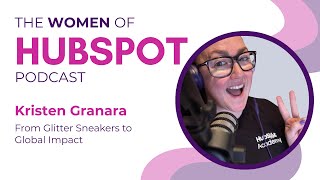
Kristen Granara, senior manager of HubSpot Academy Learning Operations, talks with George B. Thomas about her career path, how AI is changing learning and development, and the importance of networking in marketing technology.
Welcome to the Women of HubSpot podcast, the show that celebrates the voices shaping marketing technology and the ever evolving HubSpot ecosystem. Hosted by George B. Thomas from Sidekick Strategies, each episode brings you the stories, strategies and superpowers of the women driving this industry forward. It's their time. It's their mic. This is Women of HubSpot.
All right, I'm super excited. Back for another episode of Women of HubSpot where we talk to just some fascinating humans. Today, it's Kristen Granara and I'm excited that you're here because otherwise this would be boring without me. How the heck are you doing today?
I'm great. How are you?
I'm doing good. Better again, because you're here. I'm gonna be battling now, by the way, because in the green room you said kg. And I'm gonna say, I might do kg, I might do Kristen. But either way, if you know this human, you know. But here's what you might not know is, are we on the mic? This might be your first episode. By what? By the way, if it is, please go watch all the other episodes of the Women of HubSpot series that we've been putting out. It has been a truly fascinating journey to be on. Just, I can't even imagine if we would have never done this, where my mind would be. But it seems so long ago. But earlier there was a Super Bowl. Some of you may have watched it. The Phillies were, or the Eagles, I guess I should say were in the Super Bowl. My daughter brought up a conversation about how the quarterback of that team had an all women team behind him. And it got us into this really interesting conversation. And I was like, why are we not shedding more light on the amazing women in the ecosystem that is HubSpot and inbound? And so we kind of looked at each other and I immediately put out a LinkedIn post. It wasn't a strategy, it wasn't a forethought. I just put it out and I.
Said, that's the way that those things happen, right? Just like that. Organic.
It. It really was. It was just organic out of this, like, passionate conversation that I saw in my daughter, actually both of my daughters. And I was like, okay, I'm gonna, I'm just gonna put this in the world. And post exploded. And so immediately I was like, okay, we gotta dig into this. We've gotta do something with this. And so we started talking internally and here we are, the series. So without, with that kind of in play, let's go ahead and get into this Conversation. Kristen and I want to start with taking us back in history. We're getting in the DeLorean maybe, if you will. And so if you or we could go back in time and meet Young you, Young kg, we'll say just starting out, what would we see? And also what would she be most surprised by about where you are now?
I love that question. Thank you also so much for having me. I'm so, so excited to chat about this and I think there's so many incredible women at HubSpot that like they're just shining this light on them is going to be really exciting. And I'm honored to to chat about that. So if we look back at Young kg, I actually never would have thought that I would be in the role that I'm in which right now I'm the senior manager of HubSpot Academy learning Operations. And if we went back to say, college, I was in school for graphic and web design planning to be a graphic designer or an elementary school art teacher. That was like my plan. And one of the, you know, one of my fellow students in class said, hey, you're really good with the Mac. Have you ever thought about working at the Apple Store? I was like, no, but that sounds kind of interesting. Sure. Ended up, you know, doing a seasonal gig at the Apple Store near my house and my entire career trajectory changed from that moment on. So I ended up becoming a trainer in one of the stores after about six months and finished up my graphic design degree. And soon after that I was a full time trainer in one of the Apple stores and then became a corporate trainer with Apple. And I got to go out and facilitate these incredible trainings which at the time was called the Creative Strategies guest trainer program. So we got to go out and teach people how to be great trainers for Apple, how to create these great learning experiences one on one in the stores in workshop style environments. And here we are today learning how to continue to scale educational experiences. And landing at HubSpot Academy has been the best part of my career so far.
Oh, okay. We're foreshadowing into maybe a possible question in the future with that little statement. I love that it started with Apple. It's amazing. I wish I had a data point of how many people worked for Apple but now work for HubSpot over time.
So many.
I know my friend Max Cohen, like we've talked historically like Apple and then moving on from that. Okay, so it's been a journey, graphic design turned HubSpot education. So along the way you've had this journey, who are some of your biggest, like, inspirations or mentors along the way?
Love that question, too. And, you know, I've always found that, like I said, I want. Always wanted to be a teacher. I was a coach in a lot of different sports growing up, so I always kind of knew that, like, working with other people, helping them to learn, helping them to grow, has always been something I really enjoyed. And looking back, every teacher that I've ever had, any manager that I've ever had, that really, I feel like just hit and resonated well with me and helped me to grow the most, were the ones that always rooted back in helping the other people, whether it's their teammates or their direct reports, grow better and grow together. That has been, hands down, the best, I would say, learning experience, really, for me. And one of the managers that I can think of first is one of my managers at Apple at the time, like I said, I had been a trainer in the store probably about six months, and then I eventually became a lead trainer in the store. And they said, we really, you know, we nominated you for this career experience on Cupertino. And I was like, what? I would get to go out to Cupertino and train folks for Apple. And they're like, yep, we already nominated you. We think you'd be great for this. And the managers that I've had that saw something in me before I even saw it in myself are always the ones that I feel like I was able to grow the most with. And the ones that say, you can do it. Whether it was a really soft, gentle nudge of like, you can do it, or it was a shove, it was, you can do it. We've got your back. And in just kind of the, you know, say, like, essence of HubSpot. I think Anyone who knows HubSpot knows HubSpot Academy knows Courtney Sembler. So I've been at HubSpot for almost eight years, and Courtney and I have worked together. I've only been on the Academy team, so we worked together the entire time I've been at HubSpot. Courtney has been one of the most incredible managers that I've ever worked with. From being a peer, right, being ICs together. I was a learning and development specialist, she was a professor, and now she's the senior director of HubSpot Academy. She is someone who had both of those experiences with her where she's done the gentle nudge of like, you can do it. And other times where she's given me the full shove and been like, kg, you got this. Let's go do it. And again, I think what's been exciting about working with Courtney and all of the folks within HubSpot Academy is that we've all been able to grow together and we've seen HubSpot Academy go from this small team of, say, 12 to 15 people to now over 60. And having this incredible growth together and seeing that impact has been absolutely incredible. So I'd say, really, I've learned so much from not only just mentors and managers or teachers, but also everyone that I get to work with, especially at HubSpot Academy.
Yeah, I love that answer. Courtney, by the way, she's a boss player. I'm just going to throw that out there. Straight shooter. I love how she's just kind of aligned her passion and her purpose. And, like, inside of the HubSpot ecosystem and HubSpot Academy, I will say, too, there was something when you were telling your story, I'm like, man, I just want to ask all the viewers and listeners, do you see the thing that is special in the humans around you before they do? And. And are you giving those nudges? Because I think it's so important to, like, not only watch or listen to this, but take lessons away and actually transform the way that you might be somebody's, you know, future. Oh, yeah. I was this person and they did this thing. Okay, let's talk about maybe the other side of this coin because again, we're talking about the journey that is you, kg, into where and who you are now. Have there been any hurdles or maybe biases that you've had to overcome in your career? And if so, like, how did you navigate them in those moments in time?
Yeah, there's, I think, been quite a few, and I've been at a few different companies throughout my, you know, professional career. And I feel like there's been almost key moments in each one. And when I was at Apple there, it's kind of two big ones. One, I thought I was gonna be at Apple for my entire career. There was no way I was leaving. That was it. Like, that was where I was gonna be. And I'll never forget both in my training experience in the stores and in corporate. I'm from just outside of Boston, if you can't tell. And a lot of folks would say, you got to get rid of that Boston accent. You're never going to be successful as a trainer. People aren't going to be able to understand what you're talking about. And it was one of those things where it really took a lot for me. And I was like, I just don't feel like if I do that, I'm going to be able to be, like, authentically myself. Right? Like, it's just not going to resonate with people the same way. And come to find out, I was a guest trainer for three years. I got to go to Shanghai, China. I got to go to London and train across the globe how to facilitate these trainings at Apple. And every one that I talked to would say, I love that you get up in front of a classroom and that Boston accent comes on and you're dropping eyes all over the place. And I was like, wow. If I had listened to that advice from people that said, you don't sound intelligent, it's really hard to understand. I feel like my whole training career would be different. And that's one that I feel kind of stuck through, really, throughout my career, where it's really being authentic. And, you know, a lot of people, as they, I think, grow through their professional career, feel like, especially for women, you have to wear a blazer and you have to look fancy. Anyone that knows me, if you see me in the office, I get on a HubSpot Academy T shirt, jeans, and probably glitter sneakers, because that's just kg, right? Like, that's what I got on. And we could go have a really deep discussion about adult learning theory and then go talk about the Boston Bruins and, you know, have a beer in the kitchen that I feel like, if, again, if I had listened to that feedback back in the day about, you know, really outgrowing my Boston accent, I don't think I would feel as comfortable as I am today as a leader to say it doesn't matter what you wear, what you look like. If you can have those great conversations and have an impact on people, that's what resonates, and that's what's going to help people to learn, not only from you, but with you together. So I feel like that was really probably the biggest challenge for me. It was really almost like struggling with that, which sounds almost kind of silly, right? The small piece of, like, your accent, but it's a core piece of who you are, where you come from, what you're passionate about. And I feel like so much of that, like I said, at a few different places I've worked, really thinking about what you want to bring to the table. And again, I think that's a lot of the conversations that I've had with folks at Academy, where any professor that's listening will probably laugh but you know, the golden thread for me of learning outcomes are so incredibly important and having those pieces that anyone who talks to me about learning, education, training and development, instructional design knows we're going to talk about learning outcomes, why they're important. How do you make those impactful learning experiences for people? Again, because it's genuinely what I'm passionate about and care about. That's going to be to me, the biggest, I think, thing I've overcome and the thing that I feel like now I'll never let go of.
By the way, we've officially hit the rewind spot. There's so much good in that of being your authentic self, showing up as a whole ass human, like just defining who you want to be in the world and like, listen, I totally get you. I get it. By the way, I love the Boston accent. When I, when I first went to inbound in 2012, his first time in Boston, and I heard him say like kah. And I was like, oh God, what is happening right now? Right? And I was like, amazing. Like, give me, give me a beer and let me just like talk to some humans. Like I'm sitting here, right? I'm the 53 year old guy on the, on the episode. I should be wearing a suit, jacket and tie and I choose to go hats and hoodies. And I just need you before I ask you the next question because I can't even say it like you did, but I about lost my dang mind. Before I ask you the next question, can you just say glitter shoes again?
Glitter sneakers.
There it is. Oh my God. Okay. All right, so let's move forward. Let's move forward.
And I get em in every color.
So there you go. I love it so much. I love it. Okay, so along this journey, have you, have you ever faced a moment where you, Kristen, felt underestimated, overlooked, maybe even like out of place in, in this industry that we're in now?
Absolutely. And if Courtney is listening to this, she's going to know exactly the moment in time that I'm talking about here. And one of the things that I've realized so when I joined HubSpot Academy, I was the first learning and development specialist that the team had had. It was professors, it was editors. We had a content manager at the time. And a lot of what I was trying to bring to the team was process methodologies around great learning experiences. And a lot of what I was really passionate about, I could tell wasn't fully resonating with other folks on the team outside of our team. And I was like, but if everyone just could hear how important this stuff is, it'll make a difference, and we'll be able to create all these great things. And a lot of it was because I was coming from a whole different career, a whole different industry, a whole different field, and finding the right way to talk about what you're passionate about at the right altitude with the right people can make such a difference. Because I remember sitting in a conference room with Courtney Honesty on this podcast. I was bawling, and I said, I don't know if I can do it anymore. I don't feel like the people that I'm talking to that I'm trying to help are getting what I feel like they should. And I said, I know some of that's on me, and I've got to change some of that, but I don't know how to do it. I don't know how to break that wall that's happening. And we had a really great conversation about, okay, so if we step back and started from scratch, what would we do differently and how we can make everybody think about instructional design? And Courtney said, what's your goal as a learning and development specialist on this team? And I said, I want to make every single professor on this team the best instructional designer they could be. So if they decided to leave HubSpot tomorrow, they had the skills, they had the tools, they had the resources to be a great instructional designer, trainer, facilitator, whatever it is, I want to make sure they leave this team feeling like they grew in their role and that we gave them the tools to do that. And she said, okay, so go do that. And I was like, well, now what? And she was like, you have the passion, you have the ideas. Go make it happen. And then when people start to see the impact that can change people's perception, and then they start to ask more questions. Hey, I heard in Weekly Delight you got a lot of delight around the feedback you were providing about learning outcomes. Tell me more about that. So it was almost kind of like I didn't have to create more exposure. I didn't have to create visibility around what I was doing. I was making an impact underneath. And then the visibility kind of came on its own, right? And those were the moments. I was like, okay, so I shouldn't have to stand on top of my desk and yell, this is what this means and how it works. It was, you get in. You get in the weeds sometimes, and you make the impact. And anyone that's taken a HubSpot Academy course You know how incredible our professors are. They're so passionate about creating great experiences. And when you give them those little nuggets of getting them excited, that flywheel, if you will, right. Just kind of spins and spins, and then the incredible things happen on the other side. So I. I really think it was that moment with Courtney where I was like, I don't know, I. Maybe I don't belong here. Maybe this isn't the right role for me, or maybe I just can't have the impact that I thought I could. And she was a. Take a step back. What is it that you want to do? And why is that impact important to you to have on other people? Reframe it and go do it.
See, where my brain goes is, it was like you fundamentally cared about the humans, even past the job. That is HubSpot. But, like, even if. Like, that's the. Like when you said that, even if they go past, I want them to have these skills. And then just the. What I hear, too, is like, hey, go do that thing. There's going to be some use cases that are going to pop up. It's going to show the impact. Then all of a sudden, it'll just light its own fire and it'll roll, and it's. It's so, so good. Okay. All right, let's keep going. This one. Sometimes this gets difficult. And so, you know, not only being authentic human, but being able to be a vulnerable human, I find that gets us to the magic places in life. And I'm super curious if you've experienced which, again, you're human. So we probably all have a significant failure or setback. And if you think about that failure or setback, like, what did you learn from it?
I think we've all had a lot of those, right? When you really look at. Sometimes they're really small, and sometimes they feel really, really big. And I would say, for me, the story that I just mentioned, I would say, typically, I probably, a couple of years ago probably would have said that was a failure that, like, I felt like I wasn't making an impact. Whereas now it feels more like a challenge or just a pivotal time for me. And I feel like one of the things that just in my life, I would say more than a challenge, has really changed my mindset. And I'll put a little bit of a trigger warning for everybody listening here. But when I was at Apple, I worked at the Boylston street store in Boston, so just a few blocks down from where the Boston Marathon bombings were in 2013. And it was the first time I had ever taken the day off. It was a great time to work at the store, and it was always quiet, you know, so everybody liked to kind of hang and watch the marathon. And that year, I had some friends running, and I was like, I'm taking the day off. I'm gonna go have fun. Went to the finish line, and one of my friends was a little bit behind. So I said, you know, I'm go to this store. I'm gonna hang there, we'll meet up, and then we'll go back to the finish line. So I left the marathon finish line at the store for maybe 10, 15 minutes, and we heard a loud noise, and we were all like, what the heck was that? Now, if you've been to the Boylston Street Apple store, it's a giant glass front. So we ran to the front of the store, looked down, obviously saw some commotion, and the second explosion went off, which was just a few stores, few storefronts down from us. So we saw it, and it was one of those moments that was scariest moment of my life. Right? The way that the team and the store came together, the customers that we had, it was, again, very scary. But it was a great reset in humanity for me in that moment. And the reason I share that is for two reasons. One, like I said, I thought I was going to stay at Apple forever. I really thought that was going to be where I would retire. And that was a big change for me. Where my brother was actually in the military, had just gotten to Afghanistan a few days prior to. And I had to, you know, standing in the stairwell of this Apple store, had to text my family and say, I'm okay. And they said, what are you talking about? I said, I'm at the Apple Store, but I'm okay. I'll text you when I have some more information. Cell service goes down, no one knows what's happening. And it was a moment for me where I said, okay, there's so much going on and having to process all of the emotions of that day. I said, life is too short. I am done thinking about these little stressors and all these things that, you know, you're in the weeds at work and you're really frustrated. And I just had this whole change of mindset for me where I was like, you know what? I'm done. I don't want to work, you know, a closing shift and then an opening shift the next day and work in holidays and weekends. I said, I have to find a better place that I feel like I'm still living my life. I'm spending time with the people that I care about and still making an impact on the job and the career that I want to have. Like I said, I would have thought it would have been with Apple forever, but it took something really scary and really traumatic for me to say, like, I can do, I can do hard things, I can change my career, I can go somewhere else, I can have an impact and still live a great life outside of work. And it took a couple. I ended up at two other places besides Apple before I came to HubSpot. And you know, you kind of go through those moments where it's like, oh, should I have left Apple? Maybe that wasn't the right decision. And I got an email from Mark Killens and he said, we have this new role, we think you'd be great for it. I was like, you know what, Maybe this was it. Like, this was the time I got some, you know, shook off those cobwebs. Leaving Apple. Now I actually get to have my dream job to help scale education and help improve instructional design at the, at this company. If I hadn't had this really horrible life changing experience, never would have ended up where I was at. So I'm thankful for that. But having the mindset of you can do whatever it is that you want to do if you take the jump to go do it to go try to make a, you know, make the difference that you want to see. And it was probably a couple of years after I had been at HubSpot and we were doing a weekly delight activity and I had put out a loom to the team and, you know, we talked about being vulnerable and things like that. And it was the first time I had shared my, you know, Boston Marathon story and the amount of support that I got from the team that were like kg, I had no idea. I didn't know that that was why you ended up where you were and like how those kind of chips fell for you to land with us at HubSpot Academy. And it was the first time I felt like, wow, you can be at a company and again, be authentically yourself, be vulnerable, tell something that's really freaking scary to people and share. Yes, I was diagnosed with ptsd, but here's how I get through it and here's what happens when I get really stressed or here's how I come through and work through some of those tough situations. And having being on a team where you can have those vulnerable moments with people because again, you care, right? As a human and say, I understand where you're coming from. I hear you. I see you can make such, such a big difference. This year, actually, I ran the Boston Marathon and completed the Boston Marathon, which was a huge redemption tour for me. And, you know, if I hadn't shared that story with the team a few years ago, I think the support that I got from the team this year was, like, bar none, incredible. I had teammates that were on the course. Courtney was there. Some of them walked me to the finish line because it was a really tough day. Anyway, I sent out a note a couple days before, and I said, if anybody wants to send me an audio message, send me a note. I put it in my playlist so that when it's shuffling people's audio messages was pop up throughout the race. And again, when you're authentic and when you're vulnerable with your team, even when it's something really, really scary or really personal, your team will show up for you if you, again, kind of are willing to show up for them on the other side.
I love it. My brain is going so many different directions. One, I wonder how many people are watching this and listening to this. And, like, I want to work at HubSpot Academy, like, immediately come hang with us. Right. The other part is I love Mark Killens. When. When I ended up in the inbound ecosystem, it was Mark, Sarah Bedrick, and Chris La Dolce on the world's largest webinar that we actually won tickets to in 2012. And. And so I even, I think in 2016, I got a chance to sit down with Mark and get interviewed for, like, a whole. Anyway, not why we're here, but just the. The amazing humans that have been in your life. Mark, Team Courtney. But what I really take away from that last section is the power in sharing your story and the camaraderie that happens when you do that and you just kind of just show up again, how we're kind of talking about as who you are. Okay, all right. This is so, so good. So let's keep going. I want to talk about empowerment.
Ooh, one of my favorite words.
Yeah. So. Well, good, because the question is, what does empowerment mean to you and Christian? How do you pass that on to others in your field?
That is such an impactful question. And I don't know if my answer is going to be different from other people's, but I would, I think, pretty much double down on this. I think empowerment is different for everybody. And I say that because when you think about it from a learning and development lens, Right. How you empower anybody is going to be totally different from the last person that you worked with. So if you don't figure out what it is about George B. Thomas that gets him excited and inspired, that's not gonna happen. Right. So I think that's what I love about teaching so much. At the core of it is figuring out what's that little spark of inspiration for someone, for any of our Disney fans out there takes one spark of inspiration, Right. That that little piece will be what happens. And I think a lot of times people say, like, how do I go empower someone versus saying, I actually need to go find that little switch and turn that on for somebody else? They're going to be excited and inspired and empower themselves. And that is so much more powerful and impactful than trying to figure out how do you do that for everybody. Right. Because what's exciting and engaging for you is going to be different than what's exciting engaging for me. And even what's exciting for you today might be different than tomorrow. But if you can get somebody excited about something, doesn't matter if it's today, tomorrow, or three years from now, if they're excited and inspired by it, that empowerment almost kind of takes care of itself. And again, I think that's what learning is all about, Right. How you get people to want to continue to learn and be those lifelong learners of life, not just about a particular topic or, you know, tool even. Right. How do you get someone to just love and crave learning and they're going to be able to really empower themselves to do anything?
Oh, man. So good. Okay, so now that we know what you think about empowerment, I'd love for you to share a moment in your career where you felt especially empowered and maybe even proud of what you achieved based on that.
Yeah. And I think even just the learning operations team for HubSpot Academy in general has been a very empowering experience for me. So, like I said, when I joined the team, it was myself, one content editor, a content manager, and that was it. That was our content team. We had professors and we had managers, but our small group was teeny tiny. And I remember when I first became the manager of the team, Courtney said, what do you want this team to look like? I said, you know, I really think if we can find all the ways that we can operationalize and put process behind methodologies and marry those two things together, it's gonna ignite something big for Academy. And she said, what do you mean by that? Like, tell me more and I said, well, I think there's. Within Operations, there's all these different pie and things that we can do, right? At the time, the professors were doing everything. They were creating all the content, creating their videos, uploading everything into the Academy app, creating their own reports, like, everything. And I said, what if in operations, we had a way to kind of like, take some of those pieces off, improve the processes and help the professors to move faster? And we found ways to get the right people, as Courtney always says, in the right seat, on the bus, going in the right direction, and give everybody what they need so that they can focus on again what they're most excited about. So we can say, hey, professors, all you've got to worry about is creating great content. Then you hand it over to operations, and we got you from there. We'll get it into studio, we'll do all the content management, we'll do all the reporting, and we've kind of, over time, built all these different roles, and now we have 16 people within operations for HubSpot Academy. And it's crazy to look back at that and say, wow, Corey, I was just talking about it recently, and I said, I can't believe that the team is so big and there's so much that happens through our. What still also sometimes feels like a tiny team, right? We have a couple of editors, we have a couple folks in each different lane. But the impact that they have because they're so focused on certain areas, we're able to scale. And now with AI, we're adding a whole new layer into how can we work even faster, how can we make sure we're still really accurate, but we can be as efficient as possible? And again, we have kind of these little groups that then all work together to make it even more impactful. So it's really, I would say the last three years within Academy, I think, have been the most empowering for me. Where it's been, okay, we're seeing push, we're seeing drive, and the amount of content that HubSpot Academy is able to put out in the last couple of years has grown exponentially. And so much of that is because the entire team, everybody works together in a way that feels smooth and can still continue to improve and get better, right? So we're always looking at saying, what. How can we, like, tweak this even more? And again, because the whole team is focused on how do we. And the three things rest this year is accuracy, efficiency, and speed. So every conversation is okay. Within operations, anything we're working on should Touch one of those three, if not all three. And what's the impact on the professor team and the output from that group and our programs group to make sure that they're going to be successful? So, again, seeing the impact of that work, I think has continued to, like, push that momentum of feeling really empowered and again, really excited about the impact we could have on. On the whole team.
I love it. There's so many operational nuggets along the way that I hope people are writing down in their notepad. All right, so I'm, I'm. I'm super curious on this one. And this kind of gets to the crux of, like, the conversation. If you could change one thing about how women are supported in this industry, kg, what would it be?
That's a deep one. That's a deep one. I don't know if I would say support it, because I think that's. There's a lot of legs to that and a lot of different elements to it. What I really hope for, hope for any woman that's listening or for anyone that's really feeling like they're not being heard. I want everyone to feel like they can find a way to stand in what they're passionate about and really double down on why it's important to them. Because like we talked about earlier, when you have something you're really passionate about and you know you can have an impact, finding the way to do that, where it almost becomes your voice and your actions pair together and this magic happens, right? So having people, no matter who it is, advocate for you, whether you're in the room or not in the room, but not just saying, like, I really like, you know, George B. Thomas, or I really love working for Courtney Sembler or Yamini's. Incredible, right? It's. Are they talking about the work and what you're doing and the impact you're having? Because that can fly so much faster and people will get, again, excited by excitement, is something I think people don't talk about enough and people don't attach to enough is like that passion and excitement can spread so fast. So if you feel confident, whether it's starting your own podcast, posting on LinkedIn, speaking up at a meeting, raising your hand to lead a training, whatever that is, to share your passion and make sure that your voice and your impact is being heard, I think that's the most powerful thing that we can help anybody do.
Preach. I'm just saying we should just preach that one all day long. I love it. Okay, so this is the women of HubSpot series. So this question will tie into the HubSpot piece. Are there any particular tools, strategies or trends in HubSpot that are happening right now that you. By the way, speaking of excitement, that excite you right now?
Yes. And I'm sure this is going to shock everybody listening, but AI and it's funny and I, I say my team will probably laugh because initially I was like, I'm not getting into the AI game. I'm going to give it some time. No one has time. You got to be on board, you got to figure it out. And there are, I think, especially for us in operations, the potential that's out there for AI within learning operations is massive because there are so many different pieces. Like I said, we kind of focus a lot on methodology and strategy and tech, stack localization, you know, publishing, content management, all these different data, all these different elements that when you really look at how AI can support what you're doing, it can be a true game changer. And at the end of last year when we were talking about planning for this year and I said I really think three pillars for us can be accuracy, efficiency and speed. Because we always talk about, okay, if we have to have some kind of goal, what should it look like? And I said I really want us to focus on those three things. But finding it to be more of it's very easy in I think operational type roles to focus on rules. Right. And structure and feeling very rigid. I said I want us to find a way that we can almost have these. I kept thinking of thinking of them almost as like little levers, right where it was like this lever goes up and down, this one goes up and down and then sometimes they're going to be balanced, sometimes we have to really hit it on speed and efficiency. It may not be super efficient, but it's going to be fast. Or we could say it's not super accurate, but it's going to be iterative and that's okay. Or we can say this is so critical it has to be accurate. We're going to sacrifice speed right now. And I think AI and all different automations and tools that we have at our disposal, at our disposal now that we didn't have before is going to allow us to do that. And we're already seeing that in terms of how much content our team is able to review. I think it was like the amount of activities reviewed in a quarter or a quarter last year has been about the same in a month this year.
Wow.
So I mean we are like condensing timelines and able to get so much more out because one, because we're implementing AI wherever we can. But two, I think because we really had a really clear focus on those three things, accuracy, efficiency and speed. So I think the pairing of those two has been huge for us and we're already seeing a big impact and it's only May.
Yeah, it's so good. And. And things are moving so fast in HubSpot Academy. HubSpot in general, the world of AI, like, it just feels like we are on like a sprint to somewhere. I don't know where.
Yeah.
But along the way, hopefully we have some humans along the way with us. Which leads me to this next question. And that is networking. And this could be KG networking in general. But I like the position of like the importance of networking with other females. A how important that is that to you? And are there certain types of strategies you use to maybe kind of build connections along the way?
Yeah. And I think networking is sometimes a scary word for people where it's like, oh, I have to go to, you know, a networking event and talk to people. But there is so many, to your point, different ways, whether it's on LinkedIn or whatever your social platform is that you like getting out to any kind of social space to just talk to people. I mean, I'm an extrovert, so I love to talk to everybody and I will talk to anybody at any point in time. When I was a kid, my mom used to say, oh, Kristin will be fine, she'll talk to a wall. And that's also not the case for everybody. Right. So finding the ways and places that you feel comfortable and that you feel confident because those two things aren't always the same. Right. You could be very comfortable in a space, but not feel confident to share what you're passionate about or what you're excited about. Or you might be really confident and also not like super comfortable. So finding the places I think that you can hit both of those is some of like that magic, magic sauce. And finding the space that feels relevant too. Right. Like, you know, if you're going to go into a community or you're going to go to an event, you know, finding something that again is relevant is going to get you excited. Makes a big difference. And putting it out there and going to, whether it's again the online place or the physical place of what do you want to get out of it? And saying, okay, my goal today is to go make one new friend. My goal today is to go talk to one person that I don't know. And if you don't feel comfortable finding ways that you can say, okay, what is this going to look like for me? In a way that would feel maybe semi uncomfortable, but I feel confident enough to make up that gap and then hop into a conversation. Courtney tells me all the time. She's like, you got to get on LinkedIn more. And I'm like, okay, I will get on LinkedIn more, I promise. It's hard, right? Like, there's, I think sometimes those feelings of like, who wants to hear what I have to say about xyz? And then you find the right spot and someone's like, I would talk to you about learning outcomes all day long. And I'm like, oh, okay, great. There's plenty of people who want to talk about this stuff. So again, it's about finding, I think, what's relevant, what's exciting, and then again, finding that nice balance of comfort and confidence, or finding a place that makes you maybe pushes you out of both of those comfort zones and confidence zones to build it so that you can continue to grow in those network areas.
Yeah, listen, just so you know, as somebody who's created, I think maybe over 4,000 HubSpot tutorials interviewed, I don't even know how many people, if you were putting out content around that on LinkedIn, I'd be following you, that's for dang sure. Because I'm always curious about that kind of stuff, like, and trying to get better at what we do. So earlier in our talk, I said, I think you might be foreshadowing to a question. I think I know the answer to this, but I might not know the answer to this. So therefore, I'm going to continue to ask this question. And that is what has been the most rewarding aspect of your career so far.
The amount of people that I have had reach out to me over the years from Apple, from the other two places that I worked, which were Brain Shark, and at the time it was Partners Healthcare, which is Mass General, Brigham Women's Hospital, all these incredible hospitals in our area. And then now at HubSpot, where anyone who's reached out to me and either said, I was in your training, I was in one of your classrooms, I took one of your courses and said it helped me. End of story. Those are the best messages I ever have gotten. I recently got a text from someone who I worked with at Apple and we were in this training class together and it was out of nowhere. I haven't talked to this person in years. And she said, I just want you to remember you had an incredible impact on a lot of people. Don't ever forget it. And I started crying. I lost it. I was like, that just hit so deep. Because knowing that whether it's, you know, helping someone to find their career path, helping someone to find their passion of teaching, helping someone to be excited about instructional design, being able to have an impact on anyone, big or small, to me is what it's all about. And whether it's, you know, I'm a cheerleading coach, I've coached Taekwondo. And then being in this training and development space for the last lot of years, I won't put. Put that number out there is incredible. And why I've still stayed in this field, that was one of the things that I think I've probably. The question I would say I get the most is how do you stay in this field and not get burnt out when you're teaching the same things? Instructional design hasn't really changed that much. Don't you get bored? And I was like, no. Because one of the things that I feel like is the most empowering and important things to learn as a teacher of any kind is this might be the 500th time you've taught somebody how to do X. It could be their first time learning it. So, again, if you want to get them excited, you've got to teach it like it's your first time teaching it. And you are so pumped for them to learn how to do this and spark that inspiration for them. And if you have that mindset as again, any kind of trainer instructor, whether it's sports or technology. Right. Whatever it is, that is going to be what impacts people. It's going to be what to your question, or that's what empowers people when they get excited and motivated by something. So I think anytime I have those conversations with folks, whether it's from, you know, 20 years ago or it's from last week, that's what keeps me motivated to do it and is 100% what is my favorite moment in all of this career field.
Yeah, I love this so much. We are definitely kindred spirits. You talk about impact, I always call it the ripples. I just want to see the ripples at the end. You know, what dent did I make in the universe that I've been part of? Also, I did jot down a note. Note to self, do not pick a fight with kg. I heard Taekwondo in there and so I'm good. I'll just. Will not do that. Will not do that.
I'll talk to you, don't worry.
So let's, let's do this. It's time to give a little bit of advice. And by the way, we're going to start to land the plane here and get you back to your daily and also the viewers and listeners back to their daily stuff that they love to do because they're super passionate about it. But what advice would you give other women who might want to choose the career path like this?
I would say two pieces that I think are the biggest ones. One, don't be afraid to change. If you feel like you're not passionate about it anymore, if you feel like it's just not what you want to do or you feel like you're not getting the impact that you need out of it, don't be afraid to make a change. Or if you are afraid to make the change, do it anyway because the impact on the other side is going to be huge. And I wish more people talked about that. Whether it's leaving the company, leaving the school, leaving the field, or just saying, I don't want to do this anymore, I want to go become an instructional designer. Do it. There is a great big beautiful tomorrow for our Disney fans out there. There's so much more on the other side of that, you know, fear and change that you can bloom and grow from. And the other one is going to sound super cheesy, but always find an opportunity to learn. There's always going to be something you can learn in every way, shape or form. I just actually did my master's degree in instructional design in 2023. Three I graduated and it's again one of those things where I was in the field for a long time and I was always like, I'll get back to school, I'll officially get my degree. And then eventually I hit a point where I was like, I've been in the field so long now that like, I don't want to go sit in, you know, a semester long instructional design 101 class. Like that's not going to be helpful for me. And, but I said, but I always wanted to get, you know, because my initial degree, my bachelor's was in graphic design, but I really wanted something around education and teaching since that's now where my career is and it's not going anywhere now. So I found Western Governors University and their entire program is competency based. So it's all online. You can go through it at your speed. So I was able to work full time and you can kind of take as Many or as few classes as you want in there, like six month long semester. And I was like, this is it. This is what I needed. I needed to find the right program for me. I could pass through all the courses that I was teaching and creating and working in for years. And then I still was able to dedicate the time to the things maybe I didn't learn on the job or things that were a little bit more in that academic space of adult learning. And I was so excited to do it that when I finished I was like, hell yeah, I did that. I'm still learning and I'm still learning new things and having that mindset that there's always something new to learn, whether it's a new process or how you can evolve or change your current processes, that is going to keep you moving. And that is key when you think about like as a human, right. They say body in motion stays in motion. A brain that keeps learning is going to be excited to keep learning. So I think if you can have those two pieces, don't be afraid of change or change through it, even if it's scary, and then always finding a way in place to learn that you feel good about, you'll be able to go so far.
Yeah, I want to go write a blog article now. The power of the leave or the power of the pivot or something along those lines. Because I, I agree with you. So many more people need to get comfortable with that. I have a buddy who calls me a transition specialist because he's seen me go from this to that to this to that, through life. And it just is, it can be a superpower. It's so good to hear your story because there's so many things that I just believe people can learn out of it. Like, I mean, it might have been a question ago. Like, I can't get it out of my mind. It's like it's somebody's like day one, right? And just even in the, the thing that we were just talking about, it's this idea of like 1% better each and every day. So now I have to ask you this question. Like, you got your master's. What's Kristen's long term goal or goals?
I feel like I have so many, so many. And really, I think on a personal level, I just achieved a really big one which was finishing the Boston Marathon. And funny enough that you just said one because there was a group of people that were running right before me, right in front of me in probably a natick, around the root and the back they had bright red T shirts in the back. It just said in big letters, 1% better. And I was like, I literally people the whole time, I go, 1%, 1%. Because it really is like, if you can just focus on doing things 1% better every day, every week, however long that is, you're going to make a difference. And what I like about the goals, for me, when it comes to work especially, I want to make sure that we can continue to improve our processes for Academy and finding a way to make everything feel smooth. We were actually at the Product Summit out in Dublin in March, and one of the quotes from Brian Gorbutt, who is the head of our Academy product group, and he said, a lot of people want to move fast. They always move fast, fast, fast. And he said what a lot of people forget is that slow is smooth and smooth is fast. And I was like, tattoo it on my forehead. Oh, my God. As if that, like, that's it. Like, finding those ways to make everything feel smooth.
Yeah.
Is a big, big piece for me. I was even over the next, like, two, three years for Academy. Right. How do we continue to find every little nook and cranny that can get smoother and just feel like we're gliding on glass? So you're always going to hit speed bumps, you're always going to hit friction. Right. But where are those places that we can be in ops, like, 10 steps ahead and remove the blockers for people before they even come up? That's what I really want to continue to focus on is how.










