🚀 Human-Powered, AI-Assisted: Mastering AI for Marketing with George B. Thomas | 2025
Samantha Roy and George B. Thomas discuss how to use AI as a tool for marketing without letting it replace human judgment. Thomas, founder of Sidekick Strategies, explains why the best approach keeps humans in control and AI handling the grunt work.
Good afternoon, everyone. Welcome to our first pharmacy, marketing and sales webinar of 2025. My name is Samantha Roy. I'm the marketing director at RX Insider. And today I'm so excited to host Human Powered AI Assisted with George B. Thomas. George is the founder of Sidekick Strategies and a creator of the superhuman framework with 42 HubSpot certifications and expertise in AI inbound marketing in content strategy. George, if you want to join us.
Yep, yep, I am here and I'm excited to get this going.
Yeah. So I was lucky enough to hear George speak at Inbound in last fall, and I can promise you you'll leave with valuable information and you'll have fun in doing it.
Yeah, we'll definitely have fun along the way, without a doubt. So, Samantha, you want me just go ahead and get into it so folks can start.
All right, the chat and the Q A are on, so if you have questions during that, you want to pop in there so you don't forget, you can do that. And we will get to them at the end of the presentation.
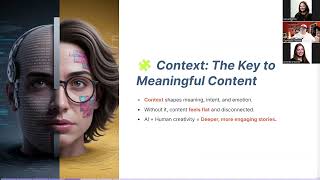
Awesome. All right, well, everybody, welcome to our little AI plus human chat. Today, I. I hope that you're ready to have some fun, because I love to have fun when I'm talking and teaching and. And. And I want you to put in the chat pane real quick. When it comes to AI, when it comes to AI and content creation, where are you at? Nothing yet. Beginner, intermediate, or advanced AI Ninja. So, nothing yet. Beginner, intermediate, or advanced AI Ninja. Find that chat pane and let me know because I am super curious who I am going to be talking to today. We've got intermediate gym. We got beginner. All right, so I'll let those flow in. I'll glance over there in a little bit. Just so you know, this is me, George B. Thomas. You can go to Sidekickstrategy.com. you can go to GeorgeB. Thomas.com. and those are the socials. Man, that guy. Look at him. All right, anyway, let's just keep moving forward because that's not why we're here now. We're going to get this party started, and I personally am genuinely excited to have you all here today as we dive into a conversation that goes way beyond tech, way beyond algorithms, way beyond the latest AI trends. You could find that stuff on probably multiple YouTube channels. Today's discussion concerns something in my mind much deeper than those, but also it blends those advancements that we've had over the last couple of years with your human creativity. That's the True heartbeat behind everything that we create. When it comes to content creation, and I might even dare say it, it's what everything we do, it's about being the human and bringing us to the table. And listen, right now there's a lot of buzz around AI. Some see it as the silver bullet for all of their content challenges, while others fear it like they're. They fear it that it's going to overshadow what makes our work uniquely human. And the truth is it's not a simple like yes or no. It's more of like maybe not even an either or. It's kind of about integrating both mindsets, but coming out in a way where we know that we're heading in the right direction. Magic happens when AI's efficiency meets our human creativity, intuition and strategic insight. You're going to hear me say the word human a lot today. It is one of my most favorite words in the dictionary or the language in general. So today we're going to be exploring together the mindsets, the methods, as well as some tips and tricks along the way. Because I do like to get hashtag nerdy that let us harness AI without losing the authenticity that drives meaningful content that we're putting out there to serve. Hopefully you have this human centric value first understanding of content creation and how AI can be an ultimate assistant to that. By the end of this session, you'll see how mastering this balance isn't just about AI efficiency or using AI effectively. It's about empowering ourselves to, to work smarter, using AI as an assistant and not fearing it as a replacement. I want you to take a moment and I want you to reflect on your organization and does any of this sound familiar? You're sitting there, you're striving to scale content creation and keep up with the demand because it feels like we just live in such a fast paced world, especially as marketers and social media and SEO and all the things. Yet yeah, as you're creating the content, something feels off. Like the, the soul of your content is getting lost. Or, or maybe, maybe you've even experimented with full automation, letting AI churn out the content to hey, I'm gonna save some time. And sure, the output is fast, but it often lacks again, that human touch. The connection that resonates with your audience. Resonates with your audience. FYI, if it doesn't resonate with your audience, it doesn't even matter if it's been created anyway. I digress if that scenario or scenarios ring a bell, trust me, you're not Alone. It's a challenge many brands right now, as we sit here, are grappling with. And that's why we're on this journey, us personally as an organization, and us together in this event today to. To discover what might be the sweet spot for you and for us, where AI and human creativity don't just coexist, but they elevate. Dare I say augment. That's a key word to pay attention to as you move forward, that they. They augment each other. Okay, so I want to talk about what might be one of the top three words pertaining to content and AI that we need to focus on moving forward. And that is context. For us humans, context is everything. It's how we interpret meaning, understand intent, and build deeper connections. Without context, without it, conversations typically fall flat. Decisions get made based on assumptions, and we know that what that does. Here's the thing. The same goes for creating content with an AI assistant. Whether it's a conversation, a blog post, or marketing campaign, understanding and leveraging context is key to bridging the gap between human creativity and AI efficiency. Context is more than just background information. It should be the lens through which we understand meaning, intent, and emotion. So I want you to think about a time that you got an email. We all get emails all day. But this, this particular time I want you to think about is when that email didn't sit quite right. Maybe the tone felt off, or you couldn't decipher the sender's true intent. That's what happens when context is missing out of the content that we're creating for us humans. By the way, context clarifies intent and allows us to connect more deeply with our audience. And it ensures our messages land as we intended them to land. To make this point clear, imagine two pieces of content. The first is a straightforward list of facts. Informative, but it's forgettable. The second weaves those same facts into a narrative. Guiding the reader on a journey. Guiding the reader on a journey with tension and resolution. And here's the thing. The content is the same, but the second example resonates. It resonates because it's rooted in a rich context that speaks to the audience's experiences. Listen, in 2025 and beyond, speaking to experiences and leveraging context will be key. Trust me when I tell you that. Now, now, we've covered how context drives human communication, but let's discuss how it works for your little, or maybe not so little as you'll see, AI assistant. Unlike us humans, AI doesn't intuitively grasp context. You see, it needs clear data, it, it needs clear structured instructions and, and it needs specific parameters to navigate the world that we as the humans are asking it to interpret. Well, at least for now, today, as we speak during this presentation, who knows about the future? But, but for AI, context is critical for accuracy, guiding responses and enabling personalization and, and forgetting the output that you're looking for. Context. We'll talk about some other words as we move forward here. But when we provide as the human clear context, target audiences, details, specific goals, examples, AI can deliver more relevant and personalized outputs. And it's our job to feed AI the right context up front. In a little bit we're going to talk about context that's even out of the chat pane, things that we should do before we even start to have a conversation. But when we get this context up front, it's transforming it from just this simple tool, AI as a tool, into a powerful human powered AI assistant that scales our efforts without losing our a very important human touch. Now, I want you to know I'm choosing the words that I use very importantly because everywhere you go on the Internet, you see AI powered, AI powered AI and it frustrates the crap out of me because we should be living in a world where it's human powered AI assisted. And I want you to grab that into your mind as you move forward with your assistant. Now let's get real because there's some common traps, there's those potholes, there's those, you know, just things that get in the way. I want to break down a couple big ones so we can just put them to bed and move forward. Ladies and gentlemen, I'm here to let you know, and not that you may think this way, but AI is not an easy button. It's not a simple magic solution that eliminates all your content challenges. Now yes, AI can save time and boost efficiency, but only if you work to set it up correctly and refine its outputs and guide it with the right strategy and humanize it along the way. AI is not a replacement for you. This makes me so freaking frustrated. Of all the people that are living in this realm of fear of getting replaced, like it's not coming for your job. The truth is AI is here to amplify what we do best, not replace us. You'll still be the expert. You, the human, will still be the storyteller. You, the human, will still be the strategist. AI simply gives you leverage to scale those strengths faster. And AI is not a silver bullet solution. AI isn't a one size fits all. I can teach this today and my hopes is that each and every one of you will use it in a different way. I'm not giving you like the step by step blueprint. I'm giving you things for you to think about and move forward with. It has to be fit for you. Your organization, your strategy, your process, your audience. It will not automatically know your brand, your audience, your strategy. So you have to teach it, refine it and iterate constantly. And I'll show you a place where I love to iterate and add things as I move forward. Now, I've worked with brands before that initially thought AI could handle everything end to end. And they quickly learned that the, the content just felt off brand and flat and honestly, like you can smell it a mile away. You've been there, oh, this, this smells like AI. And that's because we're missing the strategic human input. Now, when they reframed it as the AI is the helpful assistant, they found the balance that they needed. Using AI to draft. Then they refined before publishing the results. Faster production with no dip in quality. Again, we'll talk about these things along the way. And, and AI is easy once you get comfortable with it. It's powerful and it becomes an amplifier when you're using it strategically. And I hope that that's what we're going to learn again, some of those tips and tricks as we move forward. So what happens when we don't approach AI with the right mindset? Again, we've all seen content out there that feels robotic, soulless and just frankly, awful. The key is to start with a human first approach. When you're planning content, consider the people you're creating it for. This would be the buyer Persona or the ideal client profile. Profile or icp when you're thinking about them. First of all, have you thus far, and I'm curious, you can put this in the chat if you want to. Have you, have you thus far used your AI assistant to help you build a buyer Persona or set of buyer Personas and then enhance those buyer Personas or ICPs. If not, that is a great thing to play with and kind of mess around with. But you've got to understand this buyer Persona or ideal client profile, their needs, their emotions, their pain points. AI can handle that heavy lifting of helping you, but you have to ensure the output is truly speaking to the audience or really reflects the audience. If you're building these out and, and again at a human level. Next you can put AI to work where it fits best. Handling repetitive tasks. It is one of the fastest dopest typists on the planet. If it's typing the right thing, it can look at data and make data driven processes and suggestions quicker than any mere mortal I've ever met in my life. And it can help scale your creative vision. But remember, it shouldn't be the one making the decisions or driving the brand messaging. That's your job. So we've got to shift your mindset. Rather than seeing AI simply as like a little assistant, think of it as something that we as the humans are powering. We're the strategists, the creators, the visionary AI works for us, not the other way around. We are driving the vision. AI becomes a powerful extension of our capabilities. Now, I talked about Personas or ICPs. I wanted to give you an example of what you can do. This right here was with the help of an AI assistant me human powered AI assistant. One of the things we do is we teach about HubSpot. And there's this thing called a super admin, it's the CRM administrator. And we wanted to create an educational Persona for when we're creating content that we truly knew what the super admin was. And you can see all of the context, every one of these numbers, every one of these bullets is context to who this human is as a super admin of their HubSpot portal. And so when we say, hey, we want to write content for super admins, here's the Persona and we paste it in or upload the document, the amount of context and understanding we're giving before we even create a lick of copy is astronomical. So make sure you're building out these Personas to be able to use in the conversations that you're creating. And again, I like baking it out this way because I can see and tweak and add and remove things that do or don't make sense for the people that we're creating content around. All right, as you can see, that's a ton of context. And there's other ways that we can get more human powered AI assisted context. I'm going to show you a couple different ways. Once you think about what makes you tick as a human, we'll get there. But here's the thing. I want to give you a framework where you can start to kind of make a decision or decide where AI fits into your content strategy and where you know and the content creation process. And it really, it's kind of a decision tool, if you will. Centers around two simple questions. Does this task Require creativity, empathy or human judgment. If yes, that's where you, the human, should lead, with AI supporting where needed. The second question is, is this task repetitive, data driven or time consuming? If so, prime territory for AI to handle, freeing up more time for strategic human led work. That's you. And so by categorizing, you know, tasks this way, you can deploy your AI assistant where it makes the biggest impact while keeping your human creativity and strategic thinking at the core of the thing that you're doing. And when you get this balance right, you avoid disappointing results that happen when AI is simply misused. And instead of unlocking its true potential, like it just turns into a. Well, not a good scene. But here's the thing. Don't. I don't want you to just take my word for it because here's the thing. Bill Gates said this and I just really resonate with this quote. Bill Gates said, generative AI has the potential to change the world in ways that we can't even imagine. It has the power to create new ideas, new products, new services that will make our lives easier, more productive and more creative. What resonates with me here is, and, and I hope hopefully with you as well, is how Gates kind of frames AI not as a threat, this is a key word, but as a force multiplier. Again, AI isn't about replacing what we do. It's not about replacing who we are. It's about amplifying, streamlining, augmenting and empowering our ability to push boundaries, spark innovation and unlock creativity on a scale we've never experienced or had the chance to obtain before. And I'm going to show you a real world example of like, oh my gosh, how did we just do this? This historically was impossible. We'll, we'll get to that towards, towards the end. But I do have a story now. Samantha said, hey, I saw George at Inbound 2024 when she was introducing me. I want to tell you a story because I think it just resonates how it's time to wake up and how everything has changed. So when I was at Inbound, I was sitting at a keynote where they were releasing some new features and it was all about the AI powered product updates. I hated the title, but I love the technology because again, Even in the HubSpot CRM it should be human powered and AI assisted. But what I did is I pulled out my phone because I had chat GPT on my phone and I hit the little dictate button and I let it listen to the keynote. And as I stood up to walk out of the keynote, I hit the button and I let it go to work and it started to map out all of the information that had been said during the keynote. And I got out to the big area where I'm looking at like different booths and like where I'm going to go next for my thing and I see that it's done and so I tell it use this information to write a rough draft blog article and I get it to do that. And then I send that rough draft to my content strategist who's back at home and I say, hey, here's a rough draft. Finesse this, humanize it, let's get it out to the world. I wake up the next day, I have to speak on stage to talk about how to human powered, AI assisted. And I have the ability to have this published article less than 24 hours later on our website because it was AI assisted, yet the strategy was human powered. The final product was human powered in real time content creation. As you're walking down the hall at an event, this is what we can start to do. So and again I get excited about this, but to me, an exciting part about this is when we embrace AI as a creative partner, it multiplies what we're capable of as humans. I like to think of it as rocket fuel for creativity, rocket fool for strategy, and definitely, if we get it honed in right, rocket fuel for productivity. Those three things that we can really empower ourselves with is and with AI handling the heavy lifting again, those repetitive tasks, that data crunching, we're freed up as humans to focus on the aspects that only we can do. Connecting, storytelling, innovating, and the winning organizations. As we move forward, they won't just be faster, they'll be smarter, they'll be more creative, more impact because they figured out how to blend AI's capabilities with what makes us uniquely human or what makes our brand unique. Now, as we continue today, I challenge you to think about how you can combine your human potential with AI strengths and, and how you can use AI to push beyond what you thought was possible, making your work more creative, more human, more impactful than ever before. So who is ready to get AI nerdy? I want to see it in the chat pane. You guys didn't hit me up in the chat pane with the last thing I asked about, but I need a emoji, thumbs up, a fire. Who, who wants to get AI nerdy today during this talk? Go ahead and hit it up in the chat pane. All right, so here we go. I love. Oh, alien emoji. All right, all right, so let's go ahead and bring this onto the screen. So I did a little work so I can kind of tell a story, but you can learn some things on the way. And so what you're going to see, and I'm going to try to actually minimize this and bump this up a little bit so hopefully you all can see this screen a little bit more. Give me a thumbs up because I realized that I might want to make the text bigger so that you could see it. I mean, that's human powered right there and just keyboard assisted. All right, look at this. Create an ultimate guide. By the way, I'm doing. When I'm. When I'm doing this prompt here, I'm doing deep research, but I want you to get a notebook, a document out, because when you hear me say certain words, I want you to realize the importance of those words. Create an ultimate guide. That's an important part to pharmaceutical marketing. This should be in paragraph style 90% of the time. Paragraph style 90% of the time. And bullet point should be used only when needed. Sometimes I'll even put the word in here. Extremely needed. Sometimes I'll even say, don't use any emojis. Like, you gotta think. And by the way, I'm. I'm communicating with my assistant. Right. Please use short, medium and long sentences to add perplexity and burstiness. By the way, in the chat pane, I want yes or no. Do you. Have you used or did you know about perplexity or burstiness before today's session? Thumbs up if you knew about it. Thumbs down if you're like, I gotta Google that when George is done speaking today. But use short and medium and long sentences to add perplexity and burstiness. I gotta scroll down. I gotta scroll down. No, no, no, no. Okay, beautiful. This is gonna change that line right there. That line right there is going to change your life. All right, so use the voice and tone of George B. Thomas. By the way, it's the first time I'm going to lie on this. This training. I am not a pharmaceutical marketing expert now. I'm a marketing expert. But I said in the voice of George B. Thomas as a pharmaceutical marketing expert in first person in a very engaging and conversational way. In a very engaging and conversational way. Adding perplexity and burstness in short to medium and long sentences. Okay, you'll get. You get it. You get it. Ensure. This is for marketers to learn how to Market that's meta to pharmaceutical companies. Make sure not to use source and source links in the sentence or paragraph. Sometimes this works, sometimes it doesn't. I'll show you what I mean by that and add them at the end of the ultimate guide. Make this lengthy like blog style or pillar page. All right, so there are some juicy nuggets right there for you as you move forward to create content. One of the other things I love to add, depending on what I'm writing, is the word as an encourager, as a challenger. Leading them to insights, giving them reflections. Play with those words in the way that you're writing and use them in combination to see what happens again. A human strategy powering your AI tool. So here's the thing, because I'm doing deep research, it asked me who's the target audience, key topics that you want to cover, Tone in depth. So we're working together, right? It's assisting me, the human that is powering it. And so I give it some answers. Hey, I want it to be about marketing agencies. I wonder why. I want it to be about marketing agencies looking to sell services to pharmaceutical companies. I want it marketing strategies, branding, lead generation, lead nurturing. I want it to be high level overview for beginners, intermediate guide as long as it can be, needs to be add value but with no fluff. Please. By the way, I'm polite to my assistant. I say please and thank you because that's how I talk to humans. So why wouldn't I talk to my assistant that way? I mean, I've onboarded it like an employee, I've taught it like one of my kids. So why wouldn't I treat it anyway? All right, got it. I'll create an ultimate guide. So here we go. The ultimate guide to pharmaceutical marketing for agencies Introduction to pharmaceutical marketing. I'm just gonna go right here. Now watch this. Breaking into pharmaceutical marketing. You feel like it. And entering a whole new world. And in many ways it is for marketing agencies. Pharma companies represent big opportunities the healthcare and pharmaceutical industry spent. That's a lot of money. But I want you to look through this and notice how there are short, there are medium and there are long sentences so that it actually writes like a human talks instead of a human rights. By the way, this line right here, I want you to try this later today. Please create this piece of content using short, medium and long sentences to add perplexity and burst ness so that you're writing like a human talks versus writing like a human or an AI and see what the Heck, output you get when you do that. Now, I'm going to fast forward here because you're going to see if I keep going through the role of regulation and compliance impact of digital transformation, marketing strategies that work for pharma companies. Content marketing with a pharma twist. Notice how it's having a little fun there because it might know something about me and how I communicate. We're going to go through it. Even added a little image here that I could take as like a reference or here's where I was asking it to try not to do. Right. I wanted these at the bottom because if I copy and paste this and start to humanize it, I got to get rid of these little links. They show it up as links. So sometimes it'll not do it and it'll do at the bottom, but you'll have these. But here's the thing. How do you know it's telling the truth? You can go to the site, you can literally go to the citations, the sources of the thing, because it's showing where this stuff came from. And then again, again, you're not copying and pasting this and publishing it. You're humanizing it to your brand. You're using it. As. You'll see, you'll see, you'll see. All right, so if we scroll down, you'll see that this is. Oh my. OMG Document A Pharmaceutical Ultimate Guide to Marketing. And I'm just going to keep on scrolling down until I get to the next piece of the. Okay, so I get to the end of it. This is a prompt that you will not see very often from many marketers, but it could be around the business mission, the business vision, the business core values. But I'm asking it, do you know my core values, mindsets and beliefs? If it can answer yes, it has to be stored somewhere. I'll talk about that later. Do you have, by the way, I want a yes or no. I want a yes or no. Do you, in your AI assistant have your company mission, your company vision, your company core values, the thing you're selling, your proposition, right? Unique selling proposition. Does it. Did it. Does it know any of that to be able to pull context when you. Later today. I will. Let's go, William. Like, does it have any of that information for you to say, do you know these things? And then to bring it into the conversation? Because, by the way, when it's in the conversation, guess what it is? It's context. It's learning, it's understanding. And so I say, do you know my core Values, mindsets and belief. These 10 core values shape how you lead, coach and serve Authenticity, purpose driven living, Passion, Persistence, Love, growth and development. Empowerment, Integrity, Holistic, well being, human humility. Your 25 key mindsets. Purpose has a compass in your life. Love is the ultimate driver of impact. Persistence at the key to I won't read all of them to you. There's a lot of them. What is Superhuman Framework Cornerstones Love, Purpose Passion Samantha mentioned that I built an actual personal growth framework, the Superhuman Framework. So it's giving me the 10H pillars and the four cornerstones. It knows that about me. Sweet. I want you to look at the deep research we did and give me three blog articles we could write based on the information provided. Please. And now we're getting ideas. We're ideating together. By the way, when I go to actually create this, I'm going to be like, I like this idea. Can you make sure it aligns with my mission, my vision, my unique selling proposition? In my case, my mindsets, my beliefs, my core values. But look at this. It's giving me Pharma Content marketing is secret to engaging doctors and patients without breaking compliance. Lead generation for pharma companies, how to attract and nurture high value clients and target audience angle Key topics to cover Sweet. It even gave me a bonus. Each of these articles could be turned into a pillar page, a video or webinar LinkedIn article. I said, please create the detailed outline for this article. I picked number two. I copied the context of number two when I'm telling it what I want it to do. Boom pharma. Boom Outline. By the way, notice this. I said outline. I didn't say write the article, I said outline. So now it's giving me the outline. Here's the introduction. I can say, you know what, I want to add two or three things or I don't want to talk about something. I'm human powering the outline and adjusting it before we start going straight to creation. And so I go through the outline and I'm like, oh, this is pretty dope. We're going to pretend that this is best outline ever. I would probably tweak some things and add some personal stories and add some personal business things. But what I can do is I can get down here why this article works. It's telling. Okay, can you, can you please create and show me a Persona? Oh my gosh. You mean you didn't say start writing the intro? No. Can you please create and show me a Persona for pharmaceutical marketers? Since this article is going to be targeted at them. Sure. Pharmaceutical Marker Persona Sarah the Strategic Pharma Marketer Is there a Sarah on the call? If so, Sarah, it knew you were going to be. I'm just kidding. It didn't. It didn't. Okay. Job title, company type, Roles and responsibilities, goals and objectives, pain points and challenges. What motivates Sarah? Where does Sarah get information? How does she make by the way, I'm reading this in the real world and I'm actually making tweaks or adjustment to what I believe to be true about my Persona, Sarah. Then I come back and I use it. Key Messaging for Sarah Final Thoughts Sarah represents pharma marketers who are eager to innovate but limited by regulations and corporate red tape. She needs strategic, compliant solutions that drive engagement without creating legal risk. If you can position your agency or services as a partner who understands both pharma marketing and compliance, you'll have a strong chance of winning her business. Okay, so now I go. I want to write the article targeting that Persona and use the voice and tone of George P. Thomas. Can you give me a summary of his voice and tone so I know that you are headed in the right direction? Absolutely. George B. Thomas Voice and tone blend of expertise, authenticity and high energy engagement. You've been with me for a while. Do I have high energy engagement? I think so. Perfect for marketing. Complex topics like pharma content marketing, actionable, even exciting. Here's a breakdown of how I'll approach. Boom. Now it starts to give me how they're going to approach the article. The tone of George B. Thomas Examples of the right voice and tone George, let's be real Pharma marketing. Is it for the faint of heart? No, it's not. How will this show up in the article? Bottom line. Now here's where it gets on. Please start by writing a section of the article. Make sure it's highly engaging. Highly engaging. I'm repeating myself. Much like you have to do with interns sometimes or people who are just getting started or it's their first time doing it. Short, medium and long sentences. So we write it like a human speaks versus writes. Please make sure it's 90% paragraph style with limited bullet points, no emojis and write it in a canvas. I'll talk about this in a minute. I also want you to write each section in a new canvas when I ask you to. This is important to remember. I'll show you why and I give it the introduction. Okay, so now it's in a canvas in chat GPT. I can open this up. Pharma marketing is not for the faint of heart. Unlike consumer brands that can push bold, flashy campaigns with little restriction, pharmaceutical companies must navigate a world of legal red tape, regulatory oversight and high stakes. Every word, every claim, every piece of content is scrutinized, not just by inter. Okay, I'll quit reading. So why did I do it in a canvas? Because what I can do here, and I'm going to kind of minimize for a second what I can do here is I can say, hey, I want you to suggest edits or I want to make it a little bit longer or I want to. Not that you would dumb down the reading, but I want to drop down the reading level or I want to add some polish to it. I never hit this button. Whatever. Okay, So I can say, hey, let's make some suggestions. It's going to look at this canvas, it's going to look at this intro and it's going to say, hey, here's some suggestions that we could do to make this better. By the way, in the chat pane, while this is doing this, have yes canvas or no canvas, have you been using canvas or not? Been using yes or no or a thumbs up or a thumbs down to that. So now when I get my suggestions here, I can read it and be like adding a brief introductory sentence. Yeah, yeah, I like that. Okay, I'm gonna go ahead and apply it and it's gonna go ahead and apply that change. Now here's the other thing. Maybe I decide there's a section that I want to add an H2. I can actually come in here. I don't have to go to a word Doc, my H2 here. And I can literally type in this doc and I can say, hey, I want this to be an H2. And I can start to format this to what I want it to be. Again, I'll just say I don't want to take these suggestions because I have limited amount of time, but I can finesse this to what I want it to be. I can also say I don't like the word paradox. And I can say, come on computer, I can say, chatgpt, please simplify this word so I can get like scalpel strategy instead of sledgehammer strategy when it comes to like the thing that I'm doing with my AI assistant. And so instead of it being paradox, it's. It's a dilemma and I like that much better. Now I can copy and paste this into my document. I can continue to humanize it. But notice what I did. I Went ahead and I got to. I have a second canvas. So here's the first one. That's the introduction we just did. Then I have a second canvas, which is the next part. Oh, I might have accidentally dumped into the wrong canvas, but you get the point. There's multiple canvases for each section that I can do. So now where does this get exciting to me? I can say, hey, comma, what are two videos I could create? And it's going to give me some ideas for videos. Now I've got this deep research. We're going to pretend that I've written the article. Now I'm asking for two videos. I might say to it, let's go ahead and write one of these. Now I'm going to, I'm going to do this and you're just going to have to forgive my typing for a second. This is why I buy Grammarly, by the way. I'm going to say something like, let's write this script. Script. Actually, nope, nope, nope. Let's. Let's write this teleprompter ready script. Yep, yep, that's what I want. I'll fix it. Don't worry. I'll fix it with Grammarly in first person with only the words I need to speak in the voice of George B. Thomas and engaging, challenging, and fun marketer. Use short, medium, and long sentences. All right, who cares? I'm like, just going to go to Grammarly. Bam. All right, there we go. And I am the best. Oh, it's saying I have all the words in the dictionary and I don't know what this is. Teleprompter ready. There we go. Now I'm gonna, I, I don't want to hit enter because I asked it for two, but I'm just gonna go ahead and grab this one right here and I'm gonna say, please write this script for me and I'm gonna paste it in now, by the way, after it writes the script. What's the thing? What are you, two viral 90 second videos from that script we could write. Boom. I'm asking it another question, right? And so look at this. It's got the intro, it's got the words that I need to speak. I can literally get it to stop doing this too, if I want. I'm just going to copy this for a second, I'm going to stop, and I'm going to say edit and I'm gonna say shift, enter. Please do not add things like this. Boom. I'm gonna hit send and we'll let it do its thing. Maybe, maybe, maybe. All right, I'm gonna, I'm gonna get you. I'm gonna get you. Because we're on a, on an event here. Let's just go ahead and, and let's try that again. There we go. Now we're getting it. It's going to open up canvas here in a second. You can do it. Boom. Now notice what it did. It's just giving me the words that I want to speak for a first person teleprompter ready script. Now, I could ask for a LinkedIn post for this video. I could ask for viral videos for this. You get the point. I'm literally layering the things that I want to create based on the deep research that it started. And you're able to create amazing content at scale, which again, you're seeing how I'm humanizing it along the way. But before this ever gets in a teleprompter, I'm adding things. Like at the end of all my videos, I say, don't forget to be a happy, helpful, humble human and do some happy hub spotting along the way. Or at the beginning of my videos, like, after the hook, I go, hey, you know what time it is? Like, I'm not expecting my assistant to write those things in, but I have a time where I can humanize that as we move forward. Okay, so I want to show you. I want to show you another piece of this that gets real interesting, George. You talk about adding your core values and your mindsets and your beliefs. I want you to see the process that I went through. I'm using a podcast that I did to show this, but I want you to think about the content that you've created for your organization or the pages that you have or, or interviews that you could do with the internal team, the CEO and you could. You could ask some questions. So if I just open one of these, you're going to see what we did here is we said visit the provided URL or review the given transcript and extract. Summarize the most relevant structured information into clear, well organized paragraphs. Focus on the following key areas. Here's the real prompt, purpose and key themes like, like, you can see all this. This is like massive. It's outline of mindsets, beliefs and philosophies. Highlight notable personal stories and examples. Actionable advice and practices. So I'm asking for all of this. Use cohesive conversational and aspirational language. And so what do we get? This episode. The power of language. Choosing your words to shape your destiny. It literally writes it out it shows some other things that go along with this. What stories does George tell in the episode? Oh, the turning point was self overcoming self doubt, captain of his ship metaphor. Oh my gosh. What mindsets must George have based on this episode? Well, based on this self accountability, growth oriented thinking. I won't read them all. What beliefs must George have? Word shape, reality, self talk, drives, behavior. I won't read them all. And so I get all of this and you see that I have all of these in here to which and I can ask it by the way, this is projects. If you're not using projects, projects are dope. I at the beginning of this mentioned context for your content, anything that you create in a project, you get cohesiveness. It can see the conversations in the entire project. So now I can come in here and I can say to this thing that I've been asking about all of the beyond your default episodes based on all our conversations in this project important. What are the top 25 mindsets that make George who George is and interact with the world in the way he does? Well, I'm trying to get this information because what I want to do is I want to have a document when I go to create a piece of content. Hey, here's George's core values and everything that you need to know about him. Hey, here's the 25 mindsets and everything that you need to know about them. Hey, here's the 25 beliefs and everything. And when I add these three documents and I put the line in my prompt that says make sure the content we're creating aligns with George's core values, mindsets and beliefs, you can better believe that something that is output is way different than I say, can you please write me a blog article? As a matter of fact, when you do that, you can start to create the ultimate guide on anything that you want to create and it just comes out different. So here's the deal. Let's go back a few layers and I'll come back to this. Here's the deal. How do we get there? Inside of ChatGPT, you're going to understand that there are custom instructions. If I go back here and bring this up and come in here and go customize Chat GPT, if you open yours and you don't have this, this, this or this filled out in a way that makes sense for your organization and for you and what you're trying to do, that's a great place to start. So you'll see back here on the slide deck, response format, tone Detail level, types of suggestion. By the way, this one right here, it's a different GPT, a different account that I have, and this is my SEO ninja. This is, this is the person that like, it's a next layer. I've got the draft, I've humanized it. Let's put it over here and see if we can SEO optimize a little bit without ruining it for the reader. So what traits should Chat GBT have? By the way, you can use this with any system that allows you to do custom instructions. So the next thing is anything else Chat GPT should know about you, Professional role, current projects or challenges, specific interests, values and principles. I prioritize organic growth, adhering to ethical SEO practices without sacrificing content riches. Without sacrificing content riches. Learning style, background, goals. All right, so you got to get your instructions in there. You got to get your instructions. Oh, can everybody hear me? Give me a thumbs up if you can hear me because Lindsay can't hear me. Can everybody hear me still? Thumbs up in the chat pane. I just saw that chat come up. Yes. Okay, I'm going to keep going then. Sorry, Lindsay. Well, you didn't hear me say that. Anyway, there's the recording. Okay, so the next piece that we have. Oh, by the way, you can work with your Chat GPT or your, your system to actually help you build this out. You just got to ask your questions and have a conversation with it. Now I'm trying to be this type of person doing this thing, and this is how I believe about that thing. Can you help me build some custom instructions? Okay, you get phase one. How can I actually make these better? Can you ask me seven questions that I can give you the information to, to actually make this custom instructions better? And you can literally iterate through that process. Or no affiliate, by the way, But I love AI Advantage. All right? And they've got a ChatGPT business blueprint thing that it's like a cheat code. It's a cheat code to like those custom instructions. But before you go do that, try to build it on your own. Now here's the next thing you got to do. And, and if I show you where this is, if I go into Chat gbt, let me go ahead and make this, get rid of this. And it's going to be settings and then there's going to be personalization and manage memories. Okay, Now I cleared some out for what we're trying to do today, but I want to show you in a real another chat that I have look at this. This is what it remembers. This is where the power comes in. And you can say, by the way, don't put anything into memory unless I tell you. To memory, to put it in memory. There, there. Otherwise sometimes it'll just start grabbing everything. Or you can say, hey, we just created that. Can you add this Persona to memory? And in this case, George has provided a document. Who is George B. Thomas? Which outlines George B. Thomas roles, accomplishments, values. Has provided a document. George Core values, 25 beliefs, 25 mindsets, refers or prefers the word flourish instead of thrive. By the way, if I keep going, you'd see a line down here that says prefers the word humans instead of people. So now when it writes, it's paying. Prefer single person teleprompter scripts in paragraph style, staying away from bullet points for an audience of marketers, content marketers and small business owners. The script should be use the voice and tone of George B. Thomas. Educational, conversational, and a little fun. Wondering why some of that stuff was spitting out the way it was? Because I taught it. I said, remember the important things about me and the thing that we're trying to do. So where does this go? I literally have like a couple minutes. I want to leave some, some time for questions, which by the way, start thinking of the questions you want to ask me. But where does this go? I said I'd show you an example of like unbelievable, unscalable. You didn't think it would ever happen in your lifetime. Here, here's this. Ask, learned, ask, learn, execute, grow, anytime, anywhere. George B. Thomas AI clone your ultimate HubSpot helper. You can scroll down this page and you'll see at the bottom of it, there is the George B. Thomas HubSpot helper clone. You can call it, you can text it, it'll give you suggestions around. I started using HubSpot in 2013, ladies and gentlemen. I've created podcast, video tutorials and blog articles the entire time. And I've been able to get them into an closed AI system to help people. And so what does this really look like? Well, it looks like a world where you can actually do something like this and we'll see if technology is good or not. As far as you guys being able to hear this, I'm gonna start the call. Oh, I gotta allow it. Hey there. I'm George B. Thomas, your go to HubSpot. Give me a thumbs up if you can hear it. Whether you're diving into CRM, marketing automation or sales enablement, I've got you covered. How can I help you grow better today. Yeah. George, can you tell me why I should use HubSpot or why I should use Salesforce? All right, let's break this down. HubSpot and Salesforce are both powerhouse platforms, but they're built for different kinds of journeys. All right, George, like, you're all in. George. Actually, you know what? I'm doing an event. I'm talking to pharmaceutical marketers, and I. I was talking about human powered, AI assisted. Can you give me your thoughts on human powered and AI assisted when we're doing marketing content, please? Oh, man, I love this topic. So when we talk about human powered and AI assisted marketing content, it's all about finding that sweet spot where technology amplifies human creativity, not replaces it. Think of AI as your trusty sidekick, like Robin to Batman or Chewbacca to Han Solo. It's there to enhance your abilities, not take over the mission. Here's the deal. And there you go, ladies and gentlemen. That's. That's the future that we can get to. Like, some of those references are super crazy, but I want to leave some time for questions.
Thanks, George. I definitely just learned a bunch of things that I can't wait to go try. But we have a couple minutes for questions, so if everyone throw them in the chat, we can get to them. But I'll start us off with one, and that is, do you have any secret prompting tips?
Yep. So the secret prompting tip that I love to give people is quit trying to do prompting. My secret tip. And as you saw, today, I just have a conversation. And so here's what I would say. I did give you some prompting tips, like 90% short, medium long. But if you think back of everything that I was, I was having a conversation with my assistant. And here's one thing that I believe about prompting or conversations is if we as humans focus on being great communicators, it'll work with humans and it'll work with your AI assistant.
Big one question came in from Vic. What engine did you use for the AI clone?
Yeah, so if you're talking about engine, the technology wise, I maybe I'll answer that. But here's what I think is more important than the technology wise of that. What the engine of what you saw was is the content that I've been creating over the years. Meaning if I were to open the back, you know, pop the hood of the tool that I'm using, you would see that there right now as it stands, 5,762,000 and some words around HubSpot. Tutorials, podcast episodes. Everything that we've created has gone into to create the engine to provide the experience. Now, as far as the tool in this one, we use Delphi AI.
That was really cool.
Thanks.
Doesn't look any more questions, but I know people might start using it if they're beginners. So, you know, I'm sure this was information overload and they'll go back and rewatch it and try things out. So can you remind everyone where they can find you, where they can chat?
Yeah, yep, absolutely. You can head over to Sidekickstrategy.com you can head over to GeorgeBThomas.com you can hit my socials there. Most of them are George, George B. Thomas. Facebook's Mr. George B. Thomas. But let me be honest with you. You could actually head over to georgebthomas.com forward/ helper. That's where the clone lives. And you could even ask that jerky some questions. But if you want to talk to a real human, just reach out on social. You'll find me. Or go over to one of the websites and hit me up. And I'm always down for helping you get to the next level with either AI, marketing, whatever it would be.
He's very quick to respond too. Thanks, but it was awesome having you. I learned a bunch. I'm sure everyone listening did too. As always. We'll send the recording out this week to those that attended. If you have any further questions, contact George, contact myself, and thanks for everyone for joining us.
Thanks, everybody.
Bye. Have a good day.










