Improving CRO With Justin Christianson
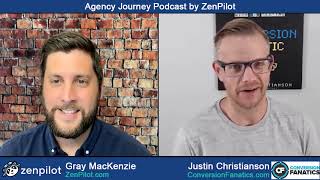
Justin Christianson discusses how his agency Conversion Fanatics approaches conversion rate optimization, client onboarding, and scaling. He covers what actually moves the needle in CRO work and how agencies can structure their hiring and sales processes to grow without burning out.
Welcome to the Agency Journey podcast, where we connect with agency leaders to uncover.
The hidden systems and processes that drive their success. Now, let's dive into today's show. All right, welcome back to another episode of Agency Journey. This is Gray MacKenzie. This week I've got the pleasure of bringing on Justin Christianson, who's a co founder. He's the president at Conversion Fanatics, which I think, Justin, you guys are the first 100% CRO. I'm going to feel bad if I mess this up 220 episodes in, but I think you're the first CRO kind of exclusive or primarily focused agency that we've had on the podcast. So welcome aboard.
Very, very cool. I'm happy to be here. Thanks for having me.
So when you started Conversion Fanatics, which. Well, maybe we should probably get a little bit of the backstory here, you said you've been in marketing for quite a while.
This is year 21.
So 21 years ago, CRO was, and I'm sure that stood for something else, but it wasn't either Conversion Rate Optimization or Chief Revenue Officer at that point.
No, there was very few acronyms.
Nobody knew what a conversion rate was.
At that point we did. So it was straight out of a page of. I started digital. I basically started in network marketing. So bumping into people and trying to get them to buy my potions and lotions and quickly figured out that I wasn't very good at that and found Internet marketing and lead gen be like, what is this lead gen stuff? So I figured out how to generate leads online. It was before AdWords was even a thing, way back when. So we just created basic landing pages, kind of went the info affiliate route, became the number one affiliate for a company that I eventually became partners on. We grew it like 500% the first year, you know, topped out at close to 10 million in revenue, sold it back to them. My partners, like 11 years ago now kind of went into private consultancy from there and then just spiraled into what's partnered up with my longtime friend and spiraled into what's now Conversion Fanatics. But I'd been doing optimization for myself forever, like, just literally splitting the AdWords campaign into two separate landing pages because there was no software to do it or creating two different pages and then, you know, running separate campaigns to it. And, you know, there was just all sorts of things. But I quickly got fascinated with what makes people tick in the psychology of a conversion or, you know, psychology of a desired action that you want taken. And really, you know, what do you mean I can change a button and I can get 15% more people to do what it is that I want them to do on the page. And that's kind of what evolved into conversion fanatics. And really everybody was preaching traffic and you just need more eyeballs on it when the other side of it is conversions. And it's not the sexy fun topic that the latest Facebook ads hack is, but it's necessary. You can't have one without the other. And so many people weren't talking about it, at least at the level that needed to be talked about it. So I've been preaching the same thing for a lot of years. Were you.
So at that point, after making the sale and then starting this up, were you trying to build an agency?
No. So I basically went into private consultant consulting. I just, I was lost essentially. It's like I'm good at stuff. I got out of that relationship. Things weren't going well at that time. You know, I got out of there, had a few kind of ideas fall flat, you know, failures in business, who would have thought? But then I, a friend of mine just kind of rely revived my confidence and I started a private consultancy, basically setting up sales promotion campaigns and building landing pages, doing some basic split testing, running email, just kind of being a jack of all trades CMO kind of executor that I was really good at. And I took on nine or 10 clients at a time at that time with just me and an outsourced designer is essentially what had happened. And I, I had no intentions of starting an agency. And in fact conversion fanatics didn't even start as that. It was my longtime friend Manish, who's my now business partner. He had a team and was kind of doing the same thing as we were. Like we were talking off, off air is he's just an absolute, just wizard when it comes to like systems and processes. So he's all about let's just offload that to somebody that's can focus on it and not be the jack of all trades. And I'm the opposite. I'm like, if it's going to be done right, it's going to be done by me. So we kind of partnered up and said, well nobody's teaching this stuff so let's use our info backgrounds and let's teach optimization. And we literally started something called ROI society and roi, like boot camp type thing and did a webinar and did the whole funnel and did all of those things that we were good at. But we figured out that nobody Wanted to buy it and learn it. So they, everybody was just like, can you just do this for me? And then we started, you know, as kind of a JV partnership. And then we formalized it and then called it conversion fanatics because he had literally. We didn't even. He already had the name and he didn't even know it. He actually sponsored an event, built a one page website, had his designer at the time mock up a logo, which is our, our logo still to this day. And we just ran with it and, you know, we each threw 750 bucks into a bank account and just kind of shook hands and said, let's go at this. No ego, just do what it takes to, to make it happen. And we figured we would be 10 times further than where we are even today. Four years ago, given the scalability of B2C markets and direct to consumer markets. But agency life is not the same.
Very true. So if we zoom forward to today, you guys are positioned as CRO, but there's a lot of services that tie into that. Are you doing maybe just walk us through average or typical services that you're providing to a client?
We are almost exclusively user experience optimization. So on site, what happens after they click on that ad through checkout? That's our domain. That's it. Like literally, that's it. We don't do traffic anymore, we don't do email marketing, we don't do web dev, we don't do any of that stuff. Even though we do design and development and strategy and all of those things. That's all coupled into how can we split test? And that's really it. We're just, we're a split test company and we provide the muscle as if it's an extension of the marketing, not just some third party. And I've kind of dubbed myself, sorry, other agency owners on here, but I've dubbed myself the anti agency agency. Um, and it's starting to stick a little bit more because I honestly think the agency model is inherently broken. Um, and it's served us well. So that's. I'm just gonna keep doing what's working for us and just keep evolving that.
There'S a lot of things to pull on there. But let me ask you this, are most of these relationships retainer relationships then?
They are, yep. It's just as if. So we work on a flat retainer model. We don't do a percentage of upside, we don't do any of that craziness because we're in it for the greater good. And scalability and growth of the business. Not that, hey, we need a quick gimmick or trick or tactic. I want long term partners. As if you're going to hire somebody in house to do it, you're going to hire us to do it, but we become an extension instead. And just like if we don't perform like an internal employee would we get fired. So we just do on a flat retainer model. No long term contracts either. We do a minimum. I think our standard is a rolling three month agreement.
Sounds. Does your sales process start? Are you bringing someone in directly to a retainer and does that mean, hey, we'll do a quick look at your site with you or we'll do a run through. Is that a two call, three call process or do you start with a discovery project?
No. So we don't do the foot in the door thing. We don't do. Well, we kind of do, but we don't charge for it.
Yep.
Again, I'm kind of going against everything that anybody's ever taught in the agency world. But we do. We used to have the big sales team, we used to have the strict outbound campaigns and direct mail and cold calls and social touches and you name it. I probably mailed seven oh God, I don't even know at this point. 150,000 plus contacts in terms of our outbound, probably more than that. It's probably quarter of a million now, you know, in SEO and all of those things. But our strategy in our process is pretty simple. It's most of it is referral slash inbound at this point. Right. But we also sponsor some podcasts and we do some kind of non orthodox and now we just started a YouTube campaign again just to bring awareness and just kind of be top of mind constantly. But other than that, that just comes in be like, hey, you reached out great, let's chat. We have a, you know, 15, 20 minute discovery conversation like because my biggest thing is I got to find out if I can help. If I can't, I will be the first to tell them I told somebody no this morning just because you're just not a fit and I'm not going to be able to produce the results that you're expecting me to. Then we get access to analytics and we take a deeper look and that's really just me or somebody on the team doing a video. It's going through what we see from the data, firsthand, glimpse, unbiased, raw, uncut. And then we jump over to their website and we do their user experience walkthrough it's about a 15, 20 minute video. Then from there it's just answering preliminary questions and additional details, sign, contract and setup period.
And there.
And we don't even charge for setup. Like we just, I want to get up and testing as quickly as possible and if that gets delayed from some technical issue, then we're not charging them to be testing. So the first test live basically triggers the contract right. To get started. So yeah, we keep it very, very simple. And one thing it's, believe it or not I found is and I laughed with a company this morning actually literally before we started recording this. And I said I could, I could create you a fancy polished presentation, but I said you're not going to read it anyway. And that's typically the case is no, I found that we would come up with this 15 page kind of document and they'd glance at it and be like. And then have 40 questions related to what you told them. Right. And so instead I just said, let's just skip this. It's easy for me to flip on the camera in 10 minutes. I can give you everything that you'll need to know. And they actually watch it, they consume it. They'd be like, oh my God, this is the greatest video ever. So I found that the simpler I make it, the easier it becomes on us. Right.
I would assume when you're saying no to people, obviously you have people who look, I don't like what you're doing. I don't want to work together. We've all got those folks that we bail on. I would assume most people who you're saying no to or who aren't a fit for your services have too low of a traffic volume. I would assume more frequently you're running into too little traffic maybe than too well optimized of a setup. Currently.
There's never. The latter of that is never happens. There's never a perfectly optimized site. It's constantly going. But yeah, usually they're smaller companies or they're just not the right fit. Like it's even funny. I've got a strict no assholes policy. It's on our website. I get called on it a lot is we just gotta have fun doing this and we gotta be able to. If somebody's not gonna go with what they hired us to go with, then we're not gonna do it. And I'll tell em firsthand like this just, this isn't gonna work. You know, I, I've got another company that, that would be a good fit. But the Red flags are starting to pop for me. They keep asking the same questions over and over again, and they keep asking for more information. They keep asking for, you know, references and case studies. And I mean, it's gone. This has gone on for weeks now, right? And it's like, I. I'm not going to help you because you're going to fight me at every step of the way, and I just. I don't have time for you to hate me at the end of three months. So we just have gotten really good at being like, hey, we can help, or, hey, this is in our alley, or we'd be doing something seriously wrong if we couldn't help this company. And if we don't have those, then we just don't work with them. Because, as you know, in the agency world, I mean, you can't. You can't please everybody. And, you know, you. You have to. And my reputation, after doing this for so long is I. I just don't have any time to force a relationship. And luck. Luckily, I'm at a place in the business where I don't have to force relationships and be the money grab and be like, oh, it sure be nice if I have that. That next retainer, right? Yeah, you. It's still in the back of your mind and be like, the money's there. Let's just go get it. But there's something liberating about that, too. And then your team doesn't resent you for, you know, working with per. Not perfect fit, right?
You said something I thought was interesting. Most of your business is coming through referral and through inbound, but you didn't specifically call out partners. But I would imagine being solely focused on CRO and being less of a. That's one of the nice things about being more niche is you're less of a threat to any potential partner agencies. There's all kinds of reasons partnerships don't work. And you guys charge more than someone else who's doing what a client might see as more. There's a million reasons that partnerships don't work. But are partnerships with other agencies a significant piece of deal flow, or is that actually pretty minor?
Coincidentally, it's not that big of a piece. We've tried it. Like you said, we like, hey, you're an influencer agency, or, hey, you're a Facebook ad agency or an SEO agency or whatever, and they talk a good.
Game.
But when it comes down to brass tacks, it just doesn't happen. And it's kind of weird because it's kind of like, you scratch my back, I scratch yours. But I know 700 Facebook ad agencies and it's like, oh, just send us your leads and stuff. And it's like, I've only got a few that I trust. But at the same time, it's not always the right fit. And whereas we're pretty siloed again, so it's hard to scratch the other person's back. So for me, it doesn't really work. But we do get kickback from my consulting agencies. We do get kicks over from, you know, Facebook and email agencies from time to time. Yeah. But for the most part, it's mostly chatter, like in the Shopify forums and, you know, in the other e commerce worlds and all of these other things, our name gets brought up a lot. You know, even in like different mastermind groups or different crews, our name gets brought up a lot. And that's from years of building up to where we are now. So where we, you know, and mailing all of those people and doing all of that outbound and sponsoring the dozens and dozens of events that we had been to.
Right.
You know, and had a booth at. In the thousands of copies of my book that I've given away, you know, all of these things just kind of built up to what they are now. So it's definitely not been easy by any stretch. But I like where we're at and where we're going currently.
You mentioned the book Conversion Fanatic. You wrote it in 15.
It was published late 2015. So yeah, September or October, I think, of 2015.
Can you tell me a little bit about the experience of writing it? Kind of what you were hoping for and what the result of that have been?
Terrible experience, consistent with what everyone says. It took me over a year to write it. It's only 150 pages. But I wanted to write a book that wasn't fluff, that wasn't just because you read any personal development or any other type of book and it's three golden nuggets and 600 pages. It's just fluff. So I wrote it with everybody in mind and I wanted to write it so it was timeless and that I didn't need to do a revised version, that you could still glean some insights from it years later. Just like I had pulled ideas and strategies and concepts from 10 years prior to me writing it. They're timeless. You know, marketing hasn't changed in my hell in lifetime. It's just the mediums change and the methods and the technology changes. So it's still people it's still psychology. So I wrote it in that sense. But it was painful. It was absolutely painful. I vomited probably 250 pages onto a sheet. And luckily for editors to make it readable, I still find a couple typos here and there in it once I flip it open. But in terms of the benefit of it, greatest business card ever. I was lucky that it became a bestseller at the time. It still sells to this day. I've given away more copies than I've sold just because it's a great business card. It's literally a little over two bucks to print one. I've gotten speaking engagements from it where I've flown out to speak to entire executive boards for a four hour training on a paid, paid deal just because my book was sitting on the CEO's shelf. It's been passed around Fortune 500 company marketing departments. It's been, you know, it's gotten me other speaking and trainings and you know, countless, countless clients and I can't even think about. Well, would I ever write another one? No way in hell.
That's. That's awesome. I love that you got it built out. I think I'd be and so where's the best place to get Inversion Fanatic? The book?
Just Amazon. Yeah. I think it's free on Kindle if you're a prime member. And then I don't know, there's even used copies floating around but I don't even know what it's priced at. 10 bucks maybe. Yep.
Makes sense. I would be remiss If I had Mr. Ciaro on the conversion fanatic himself. And I didn't ask about the conversion fanatic site. So I go to the homepage scrolling through. You've got a consistent single call to action free proposal. I'm sure you've tested this. This reminds me a little bit of. I think Jonathan Dane at ClientBoost was.
One of the where we stole the idea from.
Okay, awesome. We talked a little bit about it when he was on the podcast. But then you're grant kind of proposal page you're digging into what are people actually looking for and you've got some, some questions to qualify maybe. So I'd love to hear anything that you're willing to share around thinking behind it results from that and in the workflow and then does that lead to. I'm assuming if I finish this up this would lead me to a 15, 20 minute discovery call as a. Yep.
It actually doesn't even have a. I don't even think we have a calendar on the back end of that, okay. It literally it kicks them out an email, like a welcome, thank, canned thank you email. And then it kicks over to us to then kick it into the sales process or our team. Right. But in terms of the website, that's about our seventh or eighth website in eight years. I used to revise that website about every other day. Like it seemed like I was creating something different constantly. And then a couple of years ago, we haven't touched it in a couple of years other than team and maybe adding a couple of logos here and there. But we tested, we still, we still test and manipulate stuff and we got some secondary landing pages and such. But if it isn't broke, don't fix it on this particular site, on our main site. But we did that whole. We had the free analysis, free audit, we had the free book, we had a bunch of different bribes and different things, but free proposal actually doubled our conversion rate to people reaching out and we just used Lead formally the app to do that actual proposal page. And we've tested a bunch of stuff on those actual action pages and very simple in the number of questions we ask and we're constantly kind of tweaking that. But for the most part the website in and of itself was, instead of me changing it, we actually went the route of we went through 99designs and paid a whole bunch of money to have a bunch of concepts and brand created and, and went the, you know, the proper route to, to build a website. And that's what we ended up with was what's there now. And. But yeah, we've tested pretty much everything in between all around there. But again, it comes down to being very, very simple is I wanted it to be kind of tongue in cheek. I wanted it to express our brand and our personality. We're very fun, we're very sarcastic, we're very all of that. So we kind of wanted that to convey but at the same time we deliver serious results and we work with some serious players. So we wanted to be very heavy on that. Education is a small piece of it because CRO, it's kind of a boring topic and most people don't truly understand it at this point. So it's educating them on some of the key benefits of it and being very benefit focused. And then again that singular call to action. We don't have anything outside of get your proposal. It's not opt in for a free ebook. It's not. It's like you're here to do this or not. And. And we got a Lot of lurkers, but it is what it is.
Right? Makes sense. And then I'm assuming off the proposal side, obviously you can retarget people who don't wind up converting.
We do and we don't at the same time because I'm, I'm so simple and like literally I've gotten, I don't know, call me the grumpy old man in the industry for having done this so long and so much automation and so much junk that I see as people just try so hard to over automate and add all these complexities to it. We use a very simple CRM. We use a very simple autoresponder, leads are kicked over into slack, then they're, you know, they're manually added into the CRM. It's not even anything crazy because the more stuff, and I see it too often with clients is the more stuff they try to add an app for or do something, the more stuff breaks. So I just keep it as simple as possible. Like here's what we're going to do, here's who we are. Take it or leave it. And I think that attitude has served us well in that hey, we're no fluff, we're just this is it. I'm not going to try to sugarcoat any of it and I've taken that stance and I've gone, I've leaned more into it I guess probably in the last year or so and it's proved us well. I mean we see triple digit growth pretty much every year.
That's awesome. One thing you'd mentioned to me was the anti agency but you love agency life so much you just can't get away from it. You want to experiment with. Well, you mentioned you've had a lot of success on the recruiting side and are building out a service based business around that side. What prompted you to say we're going to take the leap from hey, we've gone through the bumps and bruises and figured a bunch of stuff out.
Still bumps and bruises but we've basically realized that our market is limited in conversion fanatics world. It's hard to scale an agency of this stature. Not everybody needs it or not everybody wants it, but everybody needs it type situation. So it limits. We're not going to be the 500 client agency. We're not going to grow to the big enterprise level. We've got a lot of clients and I'm very fortunate for that. But that next tier is just, it's going to be a lot, it's going to be a lot of work. So we just during that because agencies are very people heavy. We'd gotten really good at hiring people, particularly entry level people that have the gut that can be trained and molded into what you need them to be to be an A player. Um, we use top grading as our kind of philosophy to hiring and finding the right fit for roles and responsibilities. But we figured out we're really good at cause we tested it. It's really just comes down to we tested what ads worked, what headlines work, what you call a position and how it works in the ads and basically doing it better. And then we figured out how to do test tasks and certain level and right ask the right questions to get to basically disqualify themselves from a situation and find really good quality candidates that are a good culture fit that are. You know, fit that in our interview process and questions there kind of prelim stuff really helps that too. So we're dabbling with actually launching it as a service. We're in the beta kind of solution right now. Or the process of placing a creative head of UX for one agency, one large agency off the east coast and then going to get them a developer after that. And then I think they got six or seven more positions that they want to fill. But we just got them two interviews scheduled for next week out of 120 some odd candidates. I think we narrowed it down but we've gotten really good about focusing on that. We don't want to be, you know, sea level. We don't want to be, you know, the headhunter that's going out and finding it. It's. It's just helping somebody streamline their placing a job ad and streamlining their hiring process and working with their HR director that might be slammed or in that. That's the case we're working with right now. Right. To just build up that case study example. But it's. Everybody needs hiring. You know, as you said, even offline when before we started recording, it's like you get hit up a lot about all of that and it just. That's it. Nobody is immune to needing to hire people in any business, particularly in creative and tech. So we're just can. We've gotten really good at that and got a great system and process behind that. So we're dabbling with the idea and kind of make it a different, different type of solution. That's what's out there right now.
So I think, I mean this comes up all the time. I always joke with my business partner Andrew, that whenever we get bored of doing what we're doing currently. And I've got bandwidth, which there's a lot of room to just keep doing what we're doing better right now. That a recruiting firm makes a ton of sense. And I know not that much about what it looks like to run that type of business. I'm not the right person to do it at this point in time, but it, it makes a ton of sense in every agency. There's never been a better time to grow than the past year we've had for agencies. There's a client acquisition, but we've also seen unprecedented employee and team turnover. So it's always harder to hire for most folks than it's been previously.
It is. And the thing is, I don't know all the answers to starting it either. We just have a process that we can adapt. Yeah. And. And we're dumb enough to try it. It's pretty much what it comes down to. It's like, sure, yeah. And that's how we built our until. That's how we've grown conversion fanatics too. As I mean literally from 1500 bucks in an idea to, you know, a multi million dollar company.
Yeah.
And it's, it's just because we haven't been able to. Afraid to try stuff. Right. I mean I've. I've been dumb enough to. To mail crisp $100 bills to CMOs like on a test campaign when I didn't have the thousand bucks to try it. You know, it's just we've taken that risk and that gamble, I don't call it a gamble really, but that calculated risk, I guess, or that measured and weighted risk to really grow. And that's what's proved us, you know, well every single year. And why we keep getting the referrals and why we keep doing that is because really, at the end of the day, Conversion fanatics has grown on just trying to beat our high score from yesterday.
Yep.
Like that's it. It's just, how can we be a little bit better? And I put my feet on the floor every morning. How can we better communicate and deliver our product to our clients? That's it. And the rest of it just seems to take care of itself. Right.
I should never say the number out loud, but I've got three quick questions to ask you as we're wrapping.
So it's never three, then you're saying, well, the challenge.
You say three and then your mind is working in the background to try to remember all three at the same time. Which, which distracts you so first, first one is you mentioned a test project being part of your approach. So you're figuring out how to optimize job titles, how to post posting on ZipRecruiter, whatever the, whatever the platforms are. Are you giving people that test project? Like does it go connect quick connect call and a discovery call initially and then to a test project, does it go directly to some type of small test first?
Directly to a small test? Yeah, I, I don't have time to do an interview on somebody that's not going to one be willing to do it. And I know you look at any of the job boards on Facebook or any of that and people are just pissed because they have to do a two hour test task. It's like, I'm not going to hire you if you can't do the work or at least show the initiative to do the work or the capability to do it. And it's not necessarily that you have to complete it. It's did you seek the answer? Did you show me your methodology on how you sought it? It's the process of it. And I've had people that have spent 15 plus hours working on it and that shows a lot of initiative. One, how fast can you complete it? Because I know how fast everybody else has been able to complete it. And can you do the job? That's really it. It's a good measure, It's a good test. And we have several different benchmarks within there too. Like, you know the, it's the cliche one where you ask the question or reply back with this in the subject line. Include your, you don't. And include your resume. I don't care about their resume. Right. You know, typically most people don't, but can you follow directions and if they don't respond with the resume and don't respond to the subject line. Okay, you're done. Next. Right. You know, it's, it's easy to sort them that way.
All right, is it a two step process for you where they go application, like an easier application and then a test assignment that comes automated email or whatever. Or is it a one step, here's the application and oh by the way, here's the test you need to submit.
Nope, it's two step. Yep.
Smart.
Yep. So it's come in, apply, can you follow directions? You're disqualified. We'll weed them down. Say take a hundred, down to 50 out of those 50, we'll send a test task. Half of those won't respond. Handful will actually do it. From there we'll ask some Prelim follow up questions like how long did it take you to do it? You know, where did you find. And then we'll actually review the test task and then we'll interview them and then we'll pass them over to the final interview. So internally how it works is that. And then we'll do a team, like a team interview of them with the top level. And then they come to us, usually myself or my business partner for the final interview to make sure so we can kind of get the sense of what the team does. And we do. Yeah, we're, we're crazy when we come to our interviews. So it's, it's weird how we used to do it. I used to intimidate the shit out of people with. I would sit in the corner when we were doing in person interviews. I'd sit in the corner on my phone and literally wouldn't make eye contact and literally sit there while my business partner's grilling them. And then I would say the different thing and I would literally judge their outcome and their response. And then we would do simple things like drop the F bomb or things like that to gauge their reaction to certain situations. And we do that now. But on virtual where we'll literally have somebody jump on the conference call and drop the F bomb and then we gauge. Gauge there. I know it sounds really weird, but that's our internal hiring process like that. Because we have to gauge how well they're going to be a culture fit here. Not to say that we're running around dropping F bombs, but it's how do you play in that environment and that stressful situation and still see the light on it and have fun and joke and play around. Because we're very sarcastic at our company. But that's what's been the hardest is to adapt it to trying to fit those pieces in. Because not everybody's going to want to have somebody hop on a conference call and drop the F bomb. Right. It's just not the way it works. But that's how we do it to kind of define the culture fit. So we don't have that. Right. Toxic. And we can adapt that obviously for the, it's. It's more so the disruption and keeping them on task. So that, that's kind of where it, where it flows from there. And I don't know if that answered your question or not. I tend to ramble.
Yeah, no. Well, I was curious about the whole process, so I appreciate you breaking that down. I think there is that element of you're trying to figure out, especially for someone if, if they're in account management in any world, you're going to be interfacing with clients most of the time. So figuring out what does it look like to handle real world situations where someone is trying to get you off task, someone's trying to knock you off your feet a little bit and take you aback with something or unintentionally or intentional.
It is. And we've had the journey where we've had the toxic employees that make everybody else rubbed wrong. I had one employee one time, I answered a client question once and she was the account manager. She literally stormed into my office. You're like, you're undermining my authority. I'm like, hold on, check yourself because your name's not on the company. We've had that kind of toxicity and it's getting rid of that makes everybody else happier. And I even set the stage when they come because I'm not the funnest to work for. I'm pretty intense. That's really it. I'm fun, but I'm very short to the point. I'm very intense when it comes to the work because I've just got so much to do. And I preface that with everybody. I'm like, don't take it personally. I'm not after you. Just. And I make sure everybody knows that coming in. So when I am short with them, they're not like, oh my God, Justin hates me and the world's crashing down and you know, they get so stressed out that they quit. But it's not in a high stress situation. You got to find light in it for sure.
Makes sense. Well, awesome. Well Justin, I appreciate you being willing to come on and share. Walk us through your story, stuff that you learned, hiring process. Obviously the website we've mentioned a couple times here, conversion fanatics.com we'll make sure that's in the show notes. Is there anywhere else do you want to point people to the recruiting site? Is there anywhere else you'd want to point people here to learn more?
Yeah, we don't even have a recruiting site up yet. That's how new it is. But you can. I'm pretty available. I'm pretty out there. So you can go to1spotsocial.com Justin Christiansen all one word and that will give you a YouTube channel, it'll give you all my social channels and hell, I think my phone number is up there.
Awesome.
If you really want. But my email, everything. If you have questions, anybody needs anything, wants clarification on something, just email me. I'm pretty responsive there and I'm happy to help in any way that I can.
Amazing. Justin, thanks for coming on and being willing to share, man. I really appreciate it.
Thanks for having me. Thanks for listening to the Agency Journey podcast. Visit agencyjourneyinsiders.com to join the podcast community.
And be sure to subscribe for future episodes.










