It's the HubSpot Helpline! Get answers to the questions you have.
Rob, George B. Thomas, Kyle Jepson, Chris Carroll, and Casey Hawkins cover HubSpot updates including a new AI email preview feature on contact records and a default-property-value setting. They announce the Inbound Correspondent program is open through April 15, then spend significant time on AI governance: semi-autonomous versus fully-autonomous modes, feeding brand voice into AI assistants, and establishing guardrails. Validation and testing are now the competitive advantage, not just generating ideas.
Chapters
Admin, call in, then tune in. You can't miss this. Every Wednesday at 10, streaming straight from LinkedIn, helping with HubSpot. Building community is our philosophy, and we're so proud to be bringing you with HubSpot. Aren't you so glad that it's time for the HubSpot Helpline?
Second week in a row that I've been on mute instead of saying hello. Welcome back to the HubSpot Helpline. My name is George B. Thomas. Uh, George B. is back, so shout out to George for taking some much-needed and much-deserved vacation time. We were very sad. The show almost didn't continue, but as Kyle Jepson knows, the show must go on. We're also joined by Mr. Uh, LinkedIn Live himself, the man, the myth, the legend, the writer of Value First, Chris Carroll, who set a Guinness World Record, I believe, with being live for 508,000 shows last year, and he's, he's looking to double that this year. Casey Hawkins is here with a bunch— the, probably the only useful stuff you'll get, uh, will come from her feature updates, quick wins of the week, and just general HubSpot expertise. And last but definitely not least, you know him, As the man in the orange hat, he's got some orange hat alerts for us today. I've heard Kyle Jepson. How's everybody doing this week?
You actually just solved a puzzle for me because I was— before the show started, I was talking about how seasonally this, this orange sweater is about to go, uh, but I, I believe orange hats are appropriate year-round, so I may just start wearing that, even though honestly I've never worn it in a social setting before, and I think I would feel really self-conscious. It's one thing to just put it on and shout at a webcam be a really different thing to hang out with my friends while wearing that thing.
Kyle, if you do it, I'll grab mine. I have one too. It's not as cool as yours, but I, I do have it. It's more of a— actually, you could help me identify what kind of hat this is. More of a bowler, I think, than a top hat. But I do have a very orange hat as well.
Are you guys gonna make me shop on Amazon for weird orange hats later tonight?
No, let's, let's not go all in on hats. People won't watch the show. We're all wearing goofy hats.
George, if anyone was going to wear an orange hat, it would be you. So I don't even know what you're voicing a concern about.
I'm— it was not a concern. I just was trying to figure out if I was mapping out my evening, uh, festivities on the couch later of Amazon and orange hats.
Oh, I figured you had multiple orange hats with different shades of umber and, uh, burnt, uh, clementine, whatever color this is. I feel like George has got it. Chris, how are you today?
I'm doing good. Excited that the, uh, the correspondent, um, uh, program for inbound opened up this week. We'll be talking about that a little bit later, but, um, yeah, our first show transition, uh, inbound 26, Road to Inbound.
The inbound, uh, correspondent application opened up Monday. Thanks, Chris, for the spoilers. Um, I believe Chris is going to show this link on screen. That's your cue, buddy.
Correspondents before? Yeah, amazing. Everyone but me.
Well, I mean, I think that's probably fair. Isn't that your full-time job, is to just correspond on everything HubSpot and inbound?
Yes, they give you a ticket either way, don't they?
Yeah, yeah.
That would be funny though if Kyle was like not selected to be a correspondent this year for whatever reason. Uh, here it is, audience. Uh, now open— mark your calendars. The apps are open and they close, I believe, on Tax Day. So April 15th is when they are closing down. Can somebody double-check me? My eyeballs are not very good. Yep, April 15th.
There we go.
So don't stop watching this, uh, show, but right now open up a separate tab, click on that link we'll try to make it available to you in the comments. Go apply. Being an inbound correspondent is, uh, pretty awesome. Uh, it led me to my— this will be my 5th time as mayor of inbound, which there are no term limits I'm aware of since it's a made-up position. It's been one of the most fulfilling titles I've ever held. Uh, Casey, was, was last year your first year?
Last year was my first inbound. Um, and I was a correspondent. Um, I think the correspondent program's great for, you know, small, small little, uh, people in the ecosystem. Uh, inbound's kind of expensive. Inbound's kind of expensive is what I'm trying to say. And yeah, it definitely helps, uh, helps get more people there who may otherwise not have—
oh, that's what I see where you're going with this.
Yeah.
Although a lot of the expense of inbound is not the ticket, it's the flights and especially the hotels.
I will have a roommate.
A correspondent frat house. Just take over an Airbnb somewhere and split it 17 ways.
I feel like that should be the next Netflix or Hulu show. Like, you've heard of Big Brother, you've heard of Love Island, but have you watched Inbound Correspondence 2026?
I will be the executive producer of Hub is Blind. Just sign up if we want to do this and find two inbound correspondents that make their way to each other forever, and I will help co-produce. Actually, Kyle, we've got somebody that's pretty, uh, pretty deep in the weeds with actually making something to— for people to watch. Joan of Arc is gonna— we'll have updates on that later. But, uh, TL;DR, if you're just tuning in to the HubSpot helpline, the unofficial one— I don't know if there's an official one— Inbound application— excuse me, inbound correspondent applications are available starting on Monday, so they're open now until tax day, April 15th. As somebody that's been there and been a correspondent I think 3 or 4 times now— Casey, you said last year was your first inbound and first time as a correspondent, so maybe you can't weigh in on the like improvement of the correspondent program, but it is It was amazing last year. It was a lot better, a lot more access. They made time for, um, people to create content. Chris, you can kind of speak to that, but they do provide opportunities. And like, like I was matched up with Jay Schwedelson, who I would've found and talked to anyway, but they, they do provide avenues more so than in the past for you to, to meet, to network, to have access, to make content.
So I was also paired up with Jay Schwedelson, who I would not have talked to otherwise.
So I, I gave Jay Schwedelson a high five in the hallway. Does that count? Yes. Okay.
All right. Yeah, it was a dramatic, uh, uplevel, I would say, um, from previous years. And like, there's a, uh, you know, you can see who, who is all— like, this was kind of a new thing, like, just like, you know, adding a little more meaning to the, the phrase inbound correspondent. Like, you get a tag on Reddit in the community there. And all these lovely people were a part of the program and they gave us opportunity to record media in the Media Network studio, which we were able to record 3 shows of the Wake Up and Morning Show, which was fun. The opportunity for every correspondent to pick from this list of ecosystem celebrities, basically, to be able to interview and then share stuff on LinkedIn and whatever social network of choice. As you're looking at this, if you feel like you are a part of the community and you participate You know, these are guidelines, I'd say more than anything else. Like we just, or Gabby and the team just wants people that are gonna show up at inbound, participate, you know, share their story. And it doesn't mean you have to be like 10 years, like in the space and have this big brand or anything like that. Um, so all are welcome if you're willing to, you know, show up and —and correspond, right?
Yeah, I can speak to this directly. Uh, there are a lot of criteria there. I'm not saying they're relaxing that necessarily, and I don't know if this is a weird privilege, but my life has been changed, uh, for the better because of HubSpot in a weird way. And I'm not a hug leader, I am not a founder, like, I am not, I would say, the typical person that they'd want an inbound correspondent to be. But I freaking love HubSpot, and I owe a lot of whatever quote-unquote success I have, especially in this ecosystem, to them. And I've, and I have been a correspondent and probably will be again this year. So they— that message should be received as, if you're interested in promoting, spreading the gospel, if you will, of HubSpot and how it's impacted you, and you're willing to make content, either written or video, about it, you should apply. It's really cool. You'll get to meet me, which is, I mean, worth the time to submit the application alone. And, uh, some really cool memories and things have come out of it. George, anything to add?
Yeah, I mean, I've done it for several years, um, maybe 6-ish or so. I'm trying to remember, like, maybe as long as the program has existed, potentially. Yeah, because when I was corresponding, like, it was literally— we did like Twitter audio. And yes, it was not X, it was Twitter, like Twitter audio interviews. And it was, uh, Christina Garnett was the person that I was, uh, chit-chatting it up with and, and getting stuff put into place. And the late night show, uh, basically, you know, starting in audio. And, um, it has come a long way. The team is doing a great job. I'm super excited to see what they pull off this year in Boston. I can't believe nobody has said that this entire time.
I put that on my form. Yeah, by the way, spoiler, it's back in Boston this year. San Francisco was lovely, I guess. It's my first time there, don't really have anything to compare it to, but my— I freaking love Boston. So it is back in Boston. Uh, shout out specifically to Gabby Herrera for heading up the correspondent program. Gabby, if you're watching, you're freaking awesome. Um, thank you for all of the work that you and your team do to make this possible for people like me. Also, George predates the flywheel, as we found out again. So he's been involved in the ecosystem so long. I don't even know if you had dial-up back when inbound marketing was introduced.
We had the original inbound methodology when I got started. Mark Killens, Sarah Bedrick, Chris LaDolce, like, come on now.
Yeah, he is a wealth of orange and information. He, he, you should pay attention to George and follow him if you don't. Uh, so any other inbound-related updates, Chris? I think that is a no.
Yeah, no, I think we're good there.
Uh, one small additional update. You should be getting excited now because it is, as George, uh, reminded me, in Boston this year. Let's go! We are going to transition now. Pause for production. Still no production. It's all right. We're gonna pause for— we're gonna not pause for production for our highly anticipated feature of the week. And ladies and gentlemen, I gotta tell you, my mind was blown. Casey sent this only to me, so I alone know what her selected product update is. But tiny spoiler: you may or may not be able to watch American Ninja Warrior live out of a coffee mug that you order on HubSpot Swag Store.
What? That's it. That's it.
Pass it over to Casey now for the actual update.
Nailed it. Wow. That's it. Um, so this was a packed week of updates. We had updates across file management, data restore, big week for WhatsApp, uh, scoring threshold updates as well as default property values, send time optimization, and the sales workspace has some upgrades coming next month that were announced this week. So a lot happening. But, uh, when I was reviewing the updates, uh, there was one that I kept coming back to, and it actually ties into something we talk about all the time on the show, which is the gap between marketing and sales, as well as, uh, people's trust in AI, really. Um, so the update of this This week is, drum roll, you can now view personalized emails on contact records. Love it. And I know when we covered this on the show, I think it was actually just yesterday, no, Monday, George, you were really excited because you rightfully called out that one of the many reasons why people are afraid of using AI to customize their emails is there's this unknown, there's this black box of what is it gonna send? Do I trust it? Does the messaging align with what I have, what I would like to see? Yeah. And that's now possible. So you can actually see the view sent email on these personalized emails and that's gonna open up a preview of the email that was actually sent. So you can make sure that the prompt was followed in the way that makes sense for you and your brand. This is available if you're using smart content, dynamic tokens, or AI-generated text. And also, of course, the sales team is going to be able to see exactly the messaging that was sent rather than just like the template that was sent there as well.
So yeah, it's, it's so good. And by the way, if you're somebody that's sitting on the ledge of like, I don't trust AI that much. It's not the right question or statement or thought. It's like, do you trust yourself enough with the instructions that you give it to get the output that it needs to give? I've been absolutely amazed in multiple different directions on multiple sites of like, hey, put together this 5-part email series based off of these instructions that I'm going to give you when somebody does X, Y, Z. Also give me a place where I can preview them. Now HubSpot is giving you that. And then when I read the emails, I was like, my goodness, like, um, my lack of needing to control actually took us in way more special places than I might have ever gotten to by just giving it the infrastructure and instructions to just be dope. And so, like, lean into that with HubSpot.
Yeah, I mean, we talked about that today too, George, because we were looking at the optimized Email send. And I think humans have this, you know, we want to control, we wanna know when things are being sent. But is there a right answer? I go back to this a lot of times in marketing, like, is adding a period at the end of the subject line gonna make a difference? Or if I don't use a period, like, you know, all this stuff that I've spent my whole career losing sleep over sometimes. And does it even matter? I made a joke with the email send time, like, does it matter if I sent the email at 9:35 or 9:36? Probably not. But now we have tools that kind of, I think, take the weight of some of those decisions off of us. But the trade-off there is we have to give up some of the control that we've been so locked into for so long, which, by the way, like, and then I'm going to shut up.
This could be a HubSpot conversation or this could be a life conversation because us as humans, we probably try to control more than we're supposed to. Don't get me wrong, there are still best practices that you should be following when it comes to marketing, sales, service, martech, RevOps, whatever, insert thing here. Um, but there's also a new flow that you really need to start paying attention to. And I said this this morning, I'll say it again, uh, if you have issues with control, you might want to try to look deep into that in the next 6 months, 12 months, 24 months, because it's all changing, ladies and gentlemen. It is all changing.
Yeah, I'm curious, Kyle, if I do have issues with control—
I mean, if my friend does, what do you— what should that person do?
Fix it. That's the guy who, uh, interrupts Chris Carroll. We are going to answer my question. Go ahead, Chris.
Uh, I'm curious, Kyle, if you got any— if you remember any feedback related to this back at Inbound, because I remember seeing this at Inbound. And the thought of any HubSpot admin or user being okay with, I'm going to send an email out to 1,000 people that I haven't read. Right. And I— and it's like non-deterministic guardrails for AI. I was like, wow, I don't know if anybody I've ever seen is going to relinquish that control. Yeah, you know, it gets, it gets to the point of like when that's your role, like similar to deliverability, like how, how is that gonna work, you know? And we know the platforms are cracking down, but even like going to the, like the wrong contact, getting that thing that you're not, like it's on a list somewhere that if you ever do this thing, like 10 demerits. And not being able to control that stuff, right? Yeah. Did you get any feedback? Do you remember any feedback back then?
If I can step back and based on my own observations, talking with people both at inbound and on the internet since then and stake a bold and extremely generalized claim, I think humility demands that we all admit we are approaching AI wrong. The people who are really, really deep in AI advocacy should probably slow down a minute and consider downstream effects, right? The people who are absolutely opposed to AI, never going to try it, don't want to touch it, don't trust it, you should probably give it a try because there's a lot of cool things happening. And I feel like I personally kind of vacillate between those two poles. And I think when I'm on one side, I'm doing it wrong. And I think when I'm on the other side, I'm doing it wrong. And I think this kind of gets at that, right? If you go straight from I've never used AI before to I'm just going to blindly send emails that were generated by AI, you're, you're going to cause more problems than you're going to solve, right? And you won't even know what problems they are. But on the other hand, if you're like, whoa, Kyle just said AI isn't trustworthy, I'm going to keep writing all my emails by hand. You're gonna get left behind, right? The, the right answer is somewhere in the middle, and it's going to be different not just from person to person and company to company, but from email to email, right? Some of these you need a very personalized touch on, some of them you absolutely do not. Um, and I've been really delighted— I think HubSpot has been trying to put good guardrails in place. When Prospecting Agent first came out, I— the first thing I always showed everybody is there's fully autonomous mode and there's, uh, semi-autonomous mode where it like Generates emails, but you have to review them before you send them. Like, everybody should just do semi-autonomous. Please don't turn on the fully autonomous mode, right? Maybe once you've trained it for a little while and you've got a good place and you find you're just approving emails because they're all good, then maybe you can go over there. But never start there. And I think, I think we have all— HubSpot as a, as a platform, all of us as users have been kind of inconsistent in the, in the ways we apply AI. Some of that is because of inherent weaknesses in the way the tools are designed. And some of it is just we aren't— we've never been here before. Humanity has never had systems like this at their disposal. We don't have good intuitions. We don't have best practices. We don't know what we're doing. And so we all need to hop in and be okay with making mistakes. If to Robin's point in the chat, you send an email you haven't looked at to 80,000 people and it turns out it was totally wrong, All right. Lesson learned, right? Maybe do something different next time. But it's only by enough of us making those kind of mistakes and sharing what we learned that we can start to understand what it is we need to do. But I think a lot of times I wonder if it's hard for people to read my stance on AI because I have a brother who is like totally anti-AI, will not touch it, thinks anyone who touches it is like Dumb. And he talks to me like he expects me to agree, right? Like, oh, can you believe these people who are using AI for stuff, right? And then I have friends on the other side who are like, you know, by next Thursday, AI will have completely revolutionized the world and we won't have money anymore and we'll all live in peace and harmony on the beach somewhere. Right, Kyle? I'm like, no, I'm not in that camp either. You know? So I think there's a lot to think about. And especially as the technology evolves, there's going to be more and more to think about. And the things If we amongst ourselves right here decided the exact right approach to AI for today, March 25th, 2026, it'll be wrong tomorrow, right? Like, we have to be so agile, we have to be so adaptive, and we have to be incredibly humble and open to the fact that the things we feel passionately about right now is just— each of us, we're just guessing. We're doing the best we can. And if you've had good results, great, good on you. You don't get to rest on your laurels. We, we've got to, we've got to work together on this. I don't know if that answers that question.
Clip that and put it on the internet. I swear to God, like, clip it and just have that be a video on loop. Because here's the other thing that I'll throw to that, and Kyle, I love when you get into preach mode. Like, you're just like, like, the other thing I'll throw in there, I don't know what it is. Yeah, so here's the thing that I'll throw into this is even if we did figure it out right now and it was like, this is the way to use it moving forward, and like you said, Kyle, tomorrow to be wrong, let me just say that it'd also be wrong for anybody listening because AI is such a thing that has to be personalized to you, to your needs. Like, how is it augmenting you as a human? How is it augmenting your organization? Like, that's the one thing that has been the hardest part for me to teach in a 12-week course that I'm teaching about AI content system for solopreneurs is like I'm giving them threads to pull not a blueprint to follow, because they need to create their own blueprint on the threads that I'm giving them to think about.
Like, that's when it'll work. Yeah. Yeah. And it, yeah, it's so important. I, I, I've loved, I mean, Casey has shared a few times, like, I did this thing in Claude, right? And like, I can guarantee you, especially if you've never used Claude before, if you copy pasted one of Casey's prompts that gives her great results into your brand new Claude instance, You would not get anything useful, right? Because, because Casey's been working with Claude. She's taught Claude a lot of things about her process, her personality, her goals. If you just go Claude.ai, sign up, new account, drop in Casey Hawkins told me this prompt would solve all my problems, it won't. And so it's much more like, I don't know, like, weirdly to say this, and I hate to say this because people are actually doing this in a literal way, but it is like building a relationship with something, right? And like, you can ask people how they manage to get along with their roommates or how they've made their marriage last for 60 years or how they get their, their, the employees they manage to respond to their feedback, right? But your circumstances are inherently different because you're a different person dealing with other different people. And AI is more like that than learning to use a new email tool, right? Where the results are pretty much the same no matter who's doing it.
Yeah, I'm sure I've said this here before, but I remember a couple months ago I mentioned to someone how funny ChatGPT is, and whoever I was saying it to was like, what are you talking about? And I was like, you know, it just like sometimes it'll respond and it'll like say a funny joke with the response. And the person was like, well, uh-oh, is that the punchline?
The person will say Just kidding, I'm not frozen. Oh man. Oh, what is the person to say? Tune in next week when Casey tells us— no, I'm just kidding.
I don't know. My internet just was like, nope, we're done with that. That was quite the cliffhanger. That wasn't—
it doesn't want the people to know.
It was because I had trained ChatGPT to be funny. I, yeah, it knew I like, I like jokes.
Here's, here's, I want to, I want to piggyback on that because Casey, you had trained it, okay, to be funny. I sent something over to Chris the other day and I was like, oh my God, um, because I was literally giving it like this whole identity thing of me against this book that we're working on together. And one of the lines in it was like Oh, here's something. You're funny. Yeah, this book is not. So let me go ahead and rewrite the book to add some actual humor, style of humor that you usually use. And I was like, oh my God, like, for it to pick up that based off of what I had been training, it was like mind-blowing.
It was so good to read through that. It was basically like Send this back. I don't see George anywhere in this, in this transcript. Yeah, here's the 7 things.
Not look, see, smell, or nothing.
It's not George. But that, in that, that world you described, Kyle, of like, even if we figured it out today, we will not know tomorrow. Like, this was the part that frustrated me when people missed about loop marketing and the, the delivery of that at the same time as the ability to send out these emails in this way, right? Like, loop marketing puts you in a position to be agile and, and leverage AI in this way throughout the journey. So imagine you figure out your brand voice and you give AI the guardrails, You send out some emails. Now it comes over to the contact record. You can see what was sent. You've got sales talking to that people, to those people, and they're like, yeah, that's not me, or man, you guys really nailed that, right? It's in the system. It comes back in, you look at it, and then you update the emails, right? So we're not in the mode of sending out to thousands at a time, but you can iterate at the individual level which is what you need to do because AI is changing every day. HubSpot's changing every day, and it's— you gotta throw a lot of what you've been taught out the window. But if you can now put yourself in this reactive position to be like, any signal I see— by the way, all these buyer intent signals coming into the system also— it's like, oh, this whole segment got all this government money now. I guess we better go update this, this email that's being sent to that segment, right? And all of a sudden, 500 people are getting a much more relevant, timely email than they would have gotten, you know, yesterday. It's the difference between, oh, this person doesn't know me, and man, man, these people are on top of it, like, let's do business with them, right?
I have so many Notes from that, uh, conversation. Speaking of, uh, Super RP Clay doing a webinar for you, plug to that. It's in 15 minutes. I don't know if you'll be able to sign up. That's not one of the things I had to say. Going back to what started all this and Robin's comment, try 80,000 people. This was about a feature of the feature update of the week, personalized email. So George, you mentioned like 10 minutes ago, giving it instructions is more like the, the thing that's in your control of how it operates. That's less in your control. Just wanted you to maybe not do a workshop on how to, you know, like how to address, uh, Claude or GPT or Perplexity or whatever. But Robin brings up a good point, like some of that discretion in the instruction is like, now that you have access to personal emails or can access them in contact records, that might be a big thing that you need to pay attention to, is spamming 80,000 people their personal email as opposed to their work address. Like that, those types of precautions and parameters need to be put in place. Yes.
Well, for sure you have to put that type of parameters in place, but I don't think that's where I would start to answer your question. Like, I would start to answer your question of, you know, does your AI assistant— and I'll go broad up like umbrella, don't try to correlate the words coming out of my mouth to HubSpot currently right now, although we do have brand voice in there— but like in, in, um, umbrella arching, like, does your assistant know your core values, your beliefs, your mindsets? Like, does it know how you would interact with the world? Does it know the places you would go and the things that you wouldn't talk about? Does it know who you're actually helping? Personas? Does it know what those personas' problems are? Have you created instructions that says, hey, make sure when creating these emails or this email series based on AI that you're paying attention to my voice and tone, my core values, my mindsets, my beliefs, the way that I show up to the world as an organization or an individual. Like there's, there's this foundational part that everybody's skipping that I'm like preaching from the mountaintops of like, you've got to give it this information. Chris and I were just talking about how I added in a timeline to like the identity docs that my AI assistant has because Now it knows when I was an employee, when I was an owner, when I was a cook, when I was in the military, and it can put the context to the thing that I'm talking about in the time frame to who I actually was then. Like, like the granularity of this stuff. And so when I think about HubSpot in these emails, it's like it has to know at a very deep level, and HubSpot is working their butt off. If you haven't gone to AI data sources and started to fill all of that stuff out in your HubSpot portal, hit the brakes after this show, take a day off and go— no, don't take a day off, take a couple hours off and go do it. Like, you know what I mean, from whatever you were gonna do. Um, because if you give it that context and then you give it the instructions that it needs, it will write dope emails, it'll do dope things, but it's got to understand the granularities in context to construct the thing that you're trying to get it to do. So, right, I guess if I wrap that up into a thing as we're like running outta time, think deeper, build better foundations, then get it to go do the thing.
And if you've never done that before, here's your shortcut. Because the hardest thing about moments like this where we're happy to see the outcomes and we hadn't been able to see like, okay, I fill out my AI data sources here and my brand voice, And that now what's gonna happen? How is it gonna write the email? How is it gonna do this? Like, go, if you've never done this before, any of this, go through the setup of customer agent. That team has done a brilliant job. Yeah. And guess what? During that process, you can see how it's gonna respond to chats. It can also send out emails for the help desk. You can see how it's gonna do that. And it will help you set up AI for the rest of your HubSpot. And it's a, it's a smooth process to go through. I don't think there's any gaps at this point in the kind of foundation you need to set up. Right. So just go through that. If you haven't tried it, I think it's still, is it still like free for 30 days, Kyle? I think so. Yeah. Right.
At least I think, yeah, basically. Right.
And the testing is free anyways. Yeah. So like that's your, if you know nothing about what we're talking about, that is I think the quickest path for anybody to be like, oh, cuz the granularity, like you say, George, is so important, but it's the thing that overwhelms people too. If you go over there and do that, I think that team has just done a great job of, you know, helping you build that foundation you need if you're asking AI to do things on your behalf.
Yeah, so this goes, this goes against—
it doesn't really go against your point. I think it actually kind of helps it. Um, but I had 3 other takeaways for this. One is that ideas and building are not the moat anymore. Like, validation is. So you can, you can teach whatever, you can build a website in 10 seconds, but in order to get it right, validating that what it knows is what you want and approximating the two together— validation and testing is the actual time moat, which I think people conflate now. Time to value of a test that took, like Kyle's, like Google Doc and, and whatever he did that took weeks, and now with AI it took him seconds. That time to value for an individual does not equate to the time to impact externally, because you have to test and validate all of that stuff first. And not only first, to your point that I agree with, you have to set that up and continue setting it up and continue adding in new things for it to know and continue adding granularity and examples throughout. And Casey meant, like, I just don't think Casey talking about results and her training and GPT being funny, like, there's an element of patience that seems to be antagonistic or like an oxymoron with AI because you don't have to wait. But you need to be able to have patience for the types of results and outputs you have because the loop that we talk about is very tight. If you're the only one programming this and you— it's a very tight loop between you and Claude or GPT or Perplexity. But the, the impact outwardly is something that you have to test over and over and over again. I just think that ideas are not, not the differentiator anymore. The actual validation of them is. And are you willing to do that? Go ahead, Casey.
I, um, I was working with a client last week on using AI to help expedite their email campaigns. Um, they have blogs. How can we get email campaigns out based on blog content, a fairly common cycle. Um, and one thing that came up was, uh, their leadership team will send feedback on the emails. And, uh, my client asked me, they said, should I send that feedback to Claude or ChatGPT, whatever I'm using? And I said, yeah, yeah, for sure, for sure, you should be sending that back because if you don't send that back, then the AI is going to keep making those same mistakes. But what she was doing was she was taking that feedback from the leadership team, applying it, and then publishing the email, like moving on without taking that extra step to go back. And to your point, Rob, like the patience, it seems like an oxymoron because it's supposed to make you faster. And so sometimes in those early stages, it almost makes you slower. Because you have to go back and like take this extra step to go back to the AI and give the feedback. But in the long run, that's going to help. Like, you know, George, you say all the time, it's another teammate. It's like you would train— you wouldn't just not tell your employee who's writing your emails this feedback that's coming back. You would tell them so that they learn from it.
And it's the same. Yeah. Yeah, like the amount of time I've spent onboarding my assistant. Yeah, it is ridiculous. Like, but, but the things it can do now are ridiculous.
That's fair though. I mean, think about the time you've spent onboarding your life and new stuff you had to do. It, yeah, it learned— it can learn whatever as quickly, and it's trained on a lot of stuff, but not new. Like, the new examples in context are the things that you have to update, like the feed feedback Casey was talking about. And that concludes our segment called Today I, which is brand new, uh, sponsored by Kyle Jepson and the Orange Top Hat. Um, wanted to get to quick win of the day or of the week featuring our very own Casey Hawkins, if you have one. I am ready, Chris.
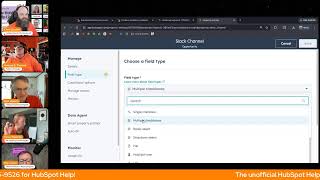
So this is a fairly new one, and it could have gone in the update side too, so I decided that it was the quick win though. So then I got the best of both worlds. I got updates and I got quick wins. And that's the default value, um, which is now available on property records. Um, so if you didn't know, you can now set a default value to a property. I actually just used it this week. Um, it came up on a client call and it was the perfect solve. Um, it's my favorite thing when a client asks me for something and I'm like, there's an update for that. Um, But in this case, you can take any property and you can enter in the default value. So this is a Slack channel. Maybe my default Slack channel is general. Whoops. General. General. But maybe I have specific Slack channels for specific opportunities or whatever. I'm just in an opportunity record. But most of the time it's general. So then I can save this, and then the default value on all my opportunity records, also known as deal records, will be general. And then I can always go and customize it if I need to. Um, the amount of workflows I've built to get to this result is kind of insane. Um, so I'm very happy to see this update, and I think the use cases are kind of endless in many ways.
Yeah, key point, uh, when it's— when a new record is created. Yes, from anywhere, uh, not a backfill for empty, empty fields.
And also it's just certain field types, right? So like text is good, I assume any enumeration property like a dropdown. Yeah, multi—
uh, radio selects I can do. Um, multi-checkbox, I'm guessing. Well, like files. Whoops, it's not even— that's too big of a change. My guess is, yeah, any of these. Some of them don't have it, but yeah, but a lot, probably even date. Yeah. Um, but yeah, I think it's single and then some of like the check. Yeah. Kind of is my understanding. Anything that's not going to give me a danger when I go to edit it, you try to change it, it's like, whoa, that's a big change.
Thank you for the quick win. We had the personalized email thing that spawned us into the AI conversation, which was great, and now default values in, uh, in HubSpot is the quick win of the week. Speaking of quick, I was trying to figure out an eloquent way to get to March Madness as we close. Anybody have a bracket that's still alive or, or not so much? March Madness.
That's basketball, right?
Sorry, basketballs are orange. I figured there was a chance.
I mean, later bring it in. Yeah.
Wow. Y'all, anybody go to college? No. Huh, wait, well, uh, Rob takes a quick loss of the day, uh, right after the quick win.
How about you, Rob? Do you have any brackets that are still alive?
Yeah, I had Claude fill out a bracket and I didn't specify, and it mixed men's and women's and, uh, some like the Corgi Super Bowl race. So the context is important, uh, just make sure you know your parameters before you're asking it to do something. So I'm not going to win the million this year. Wouldn't have— if I'd have picked it myself, wouldn't have done any better at all. Um, we'll give it to Mr. Kyle for the final word of the day before we come back next week. Actually, next week is canceled, right? What's next week? April 1st. Yeah, we're definitely not showing up. The joke. Yeah, that's—
I don't know if we can count on, uh, that kind of joke for this. Yeah, show up next week. We'll be here next week for sure.
We'll have a joke next week, not now. Kyle, send us out.
Uh, uh, so I mean, something I was gonna say earlier, just circling back to what Chris said about customer agent, uh, you can set it up without paying anything. Once you turn it on, you're— it's a 28-day free trial, and if you can spend all the time you want configuring it for free, then 28 days of it working for you for free. and when 28 days is up, it pauses itself. It turns itself off. So this is legitimately not HubSpot trying to trick you into sign up for a subscription, first month is free, but then we'll charge your credit card, right? We legitimately just want you to try this. And Chris is right that if you go through that flow to set up Customer Agent, you will have done a lot of work to get AI working well for your company in HubSpot. So really nothing to lose. Go for it.
Thank you, sir. This has been the HubSpot Helpline, helping you know better so you can grow better. And to finish that ChatGPT joke, Casey, just remember— hello.
Wow. And send us the outro music.
It's Rob, it's George, it's Casey, Kyle, and Chris. Admin calling, then tune in, you can't miss this. Streaming straight from LinkedIn, helping with HubSpot. Building community is our philosophy, and we're so proud to be helping you with HubSpot. Aren't you so glad that it's time for the HubSpot Helpline?
Hello.










