Justine Gaignard on Confidence, Conversational CRM, and Sales Workspace | Woman Of HubSpot
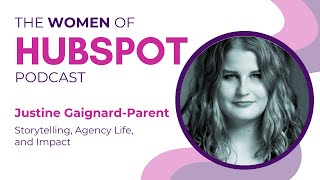
Justine Gaignard Parra, founder of Gay Pard in Quebec City, talks about building confidence as a young woman agency owner, why she trusts her gut, and her plans to expand into French-speaking markets. She's enthusiastic about conversational CRM and HubSpot's Sales Workspace.
Chapters
Welcome to the Women of HubSpot Podcast, the show that celebrates the voices shaping marketing technology and the ever evolving HubSpot ecosystem. Hosted by George B. Thomas from Sidekick Strategies, each episode brings you the stories, strategies and superpowers of the women driving this industry forward. It's their time. It's their mic. This is Women of HubSpot.
All right, happy hubspotters. It's your boy, George B. Thomas. And we're back with another episode of the Women of HubSpot podcast. I'm super excited because, well, we have a guest that I think is going to give us journey information nuggets that we're going to be able to use. Now, if this is your first episode, I got to give you a little bit of backstory. It was now over a year ago. It was the Super Bowl. The Philadelphia Eagles were actually in the Super Bowl. And I started to have a conversation with my daughter, or she had a conversation with me about how the quarterback had an all women's team. I saw her face light up. I was like, this is interesting. We started to conversate and I, with no strategy, ran over to LinkedIn and said, hey, let's shine the light on Women of HubSpot. The post went bonkers. I mean, bonkers. Probably my all time engaged with LinkedIn post. And so we looked at each other and my other daughter and my wife, and we're like, we need to give space for these stories. And I said, I'll be that guy. Like, let's do this. And so the Women of HubSpot podcast was born today. I'm here with Justine now, Justine, I can't do justice with my American accent. I went to your LinkedIn. To be honest with you, I listened to the LinkedIn, you know how it tells? Like, here's how you say. I'm like, yes, my American accent will not allow me to say that in that. So can you just, at first, can you tell people who you are, what you do and where you do it, please?
Yes, for sure. So my name is Justine Gaignard Parra. So this is the really French way of saying it. I'm actually based in Quebec City in Canada, and we have been a HubSpot partner for nine years now. So the name of my agency is also a really French name. Okay, so it's Gay Pard. It means cheetah, like the animal. And so I'm the founder and I'm the sole owner of the agency.
So I feel like there's a story there. So talk to me about how we Ended up naming the agency based off of an animal that is Cheetah.
Yeah. So it's actually a wordplay with both of my last name. So both of my last names, it's. And the first three letters of those two words together, it sounds like so, like the animal. So that's actually kind of a Easter egg in the name of the agency. And then after. Really love the idea that the cheetah, like, it's an animal, all about performance, but performance doing right, like, done right. So when the cheetah starts to run, that's because he knows he's gonna catch its prey. Like, it runs at the right time at the right place. And I really resonated with this idea of healthy performance.
I love that my inner nerdness loves the idea of an Easter egg in the name, loves the idea of tying it to performance. So, okay, that was a little bit of a side tangent. So let's go ahead and get into. I've got some questions that we've been asking the guests we're going to ask you today. And I can't wait to see what we learn and kind of the story of you and what we learned from you. And so let's start at the very beginning, Justine. If we could go back in time and meet the young version of you. And by the way, this can be wherever you want. This can be like before HubSpot. This could be grade school or just starting out in business. But if we could go back in time and meet the young you, what would we see? And what would she most be surprised about where you are now in life?
I actually used to be a journalist, so if I were to go back in time, I would probably go back to the time where I was in university, learning about my future career, or at least what. What I thought would be my future career at that point. So I think that would be the most surprising thing because I really thought at that moment I would be working in the media. And then when I got out of school, I started working for media, and I really had a terrible experience, and I was so disappointed, and I did not expect that. But what happened afterwards was really great. Just to tell you a little bit about why I was disappointed. My first job was, and I did one day at that job, I had to create one News article every 30 minutes. So I was basically chat GPD with a terrible prompt at that point. I was taking, like, a news release and creating content from it, so I didn't have time to research it and anything. So I hated that. And I hated the impact I had doing that. And I think that, like, what was really important for me was to create good content, research content, and that's what I ended up doing afterwards when I started working with companies and creating content for them. So I went from a journalist to a content marketer because of this experience. And I realized I could create really good content when I was working with brands, which was totally surprising to me. I wouldn't have expected that at all.
I love that so much. There's. There's so much wrapped in there of this idea of not being a conveyor belt of news, but being a value in the content you're creating for organizations. I love, too, that you like one day. And I knew it wasn't for me. This is not my purpose. This is not what I'm passionate about. And so being able to pivot, which, by the way, if I go back in time, this was a time frame where I was working with Marcus, and we were saying to a lot of people who are coming out of journalism school of like, hey, you need to go into marketing. You need to be content marketer, you need to be a writer. We were talking to organizations about how they needed to hire these journalism folks to be in their organization. So it maps that you ended going in the direction that a lot of journalists were going in that time. And I'm glad that you didn't get stuck in kind of that conveyor belt. Like, I love how you said chatgpt with a bad prompt in there as well. Okay, so you've had this journey. You started out, it's journalism, content, you know, strategist, writer. We now know that, obviously, agency life. So there's a journey that we got to go through to get to kind of where you're at today. I'm curious, who are some of the biggest inspirations, mentors that you've had along the way to get where you're at today? Like, who are they and maybe what did you learn from them?
So I think, like, one of my biggest inspiration as someone who had a really huge impact on me was my first boss. Actually, when I was a bit before I became a journalist, I was working in the tourism industry. I was actually doing ghost tours. So if you can imagine. And I learned everything about customer experience, how to make sure people had a great time, how to pivot in, like, a really quick manner. So her name is Annabelle Sirois, and she had such a great impact on my career because every day now, even though I teach people now and I guide people in the HubSpot universe. I feel like the skills I learned guiding those tourists in the old Quebec is really important in the way I succeed right now. So I know it's a strange background to have, but I feel like it's so similar and I'm really glad I had this experience. And I would say I learned everything from her.
It's funny. Ghost tours, tourism, storytelling, being in front of an audience. Right. To journalism, being able to tell the story in word or in. In video. So it's funny because there is kind of this like red thread that we're starting to find that's happening along the way. And also I'm learning a lot about just you in general from like ghost tours, storytelling, journalism, content, and then into agency life. So, okay. Along this journey, Justine, have there been any hurdles or biases that you've had to overcome in your career? And if so, how. How did you navigate those biases that you've bumped up against?
So when I started the agency, it was in 2016, so I was pretty young. I was 25 years old and I. So we became one of the first HubSpot partner agency in Quebec at that time. And there are not a lot of women owner of HubSpot partner agencies. I don't know, like, you probably notice stats. I think I heard 3% one time, but I don't know if it's a real stats right now, but so there are not a lot. I was really intimidated the first inbound I went to. I felt so small in this universe. So I guess one of the things that I struggled the most throughout the year was really building this confidence and just to be able to take my place into the this universe and being able to just say, hey, I have something to say. I have something to show people. And also I can have impact. That's probably the thing I. I struggled with the most at the. At first, I think I got better.
So let's dive into that because I love this idea of like building confidence and take your place. How did you navigate that and actually start to get to the point where you like, I am who I am. I'm. I'm designed for this. I'm going to take my place. Like what mentally had to change or what things fell into place where you're like, I feel that now.
I think it was because of the results we had with our customer. So I started to understand that I had kind of this superpower where probably because of the background in tourism, I connected really well with people and was able to get like their frustration with HubSpot and what made them not use it as much. So I think it really gave me an edge regarding adoption. So we had really great. We had, like, sales team adopting HubSpot, which was something I know is more difficult, I think, right in the. In our universe. And those results gave me the confidence, like, say, oh, okay, we're doing something right. We're doing something different, and it works. So I, like, I have something to say and I have my place.
I love that we're doing something right and we have something to say. And I'll tell you what came to my mind when you were saying that section is like, this level of empathy that you felt and being able to see that if we say these things, people are buying in, they're using the tool, and growth is happening, which growth is always empowering. Always empowering. Okay, Justine, take me back to a moment where maybe you felt underestimated, overlooked, out of place could be in this industry. Out of this industry. But take us back to that. A moment in time like that. And. And how did you handle it? How did you get through that or past that?
So at first, since I was so young, when I started the agency, quickly I started to hire people that were older than me, and some of them were men. And I think one of the things that caused me the most distress was when I went into a room, people always assume my employee was the boss. So when I was with one of my male employees, and if. Especially if they were older, like always, all the time, I was not the boss, they were. And one time I heard someone tell one of our customer, actually, I think he didn't understand that I was the owner, but he said, one of my employees, we must be really proud of her. Like, she's. She's doing a really good job. And it was a compliment, but it felt. I felt really small again. I guess I took confidence in just telling people, oh, actually, that's my company. And then it became kind of a pride thing. Like, I was proud of telling them, no, you know what? I'm the owner. Like, this is what I built. And just seeing them realizing, like, what they did, it was not in bad fate, but I love seeing people starting to see things differently because of those moments. So I think that's probably how I managed to go past that.
I love that so much. Again, because. And what I try to do during these conversations is really think about the people that we're talking to, the people who are listening to this interview. And you said something in that last segment where you're like, I was proud of what I had built. And I'm going to ask you, the people who are watching this, like, when's the last time you slowed down from the conveyor belt of your life and business to be proud of who you are, where you're at, and what you've achieved? And I would just say today, please take time to actually do that. Justine, let's go ahead and talk about maybe life during this journey if you had the experience of what I'll call a significant failure or a setback. By the way, these are We're. We're in the valley questions. I promise you, we're going to get to the mountaintop questions here in a hot minute, but have you experienced a significant failure or setback, what I would call a gut punch in life, and what did you learn from it?
I think there are some moment where I didn't listen to my inner voice. So, like, if I. I were to point out one moment, especially when I remember not listening to my gut feeling. There was one time, like, I know a really great friend of mine actually has a HubSpot agency, and one time I realized I trusted his judgment more than mine, even if we have, like, different agencies. And what happened is that, like, he decided to downsize his agency, and he had someone from his team that I always felt a little bit like, I don't know, there's something. I. I don't think I would work with this person. And then when he downsized, I hired this person, and it was a huge mistake. I didn't trust myself. I trust the judgment of the other person more, and I really regretted that. Not because it's a bad person, but just because we were not a good fit, but because someone else decided to make the decision, oh, I'm going to hire this person. I. I kind of put my judgment aside, and I trusted this other person judgment more. And that's when I realized, like, I should have listened to my gut feeling more, because I know this, like, you know it inside of you.
Yeah. There is a superpower in trusting your gut, especially when it comes to business. Okay, let's. Let's start to crest up the mountaintop here. Justine, when I say the word empowerment, what does empowerment mean to you, and how do you feel you pass that on to others in your organization or in the field in general?
I think what really empowers me is being part of the story of so many great business that are having an amazing impact in the world. We have customers from all industries that decided not to Niche down. I so we have customers that work in the space industry. We have customers that created a product to help people with Alzheimer. We have so many great people we work with. And when I see that what we're doing actually has an impact on their mission and what they they are doing, I like, that's the moment when I stop and I'm like, wow, like I'm part of this. I. We did help them. And this is everything for me.
I absolutely adore that because I live my kind of life very much in that way where I'm always talking about, I want to see the ripple effect. Who have I helped and what ripples has that then caused to who they helped. And so I love that so much. But now we have a kind of unified understanding of what you consider empowerment. So I'm super curious, like, was there a moment in your career where you felt especially empowered or proud of something that you had achieved?
Yes. So a couple of months ago I was invited to speak at an event. It was a huge event in Quebec. It's called Rendezvous Numeric. And it's about like, we talk about everything related to technology. And I was invited to speak about how AI could be used in a cell process. And the room was full. They had to ask people like to stop trying to get into the room. And I had such great feedback. So I had this full room listening to what I was saying. And then afterwards it had this ripple effect where people really resonated with what I said. But also I was talking about something like really useful tips that I could use right now. So it was not theoretical ideas. And so many people wrote to me afterwards, tell me. Okay, I. I tried this that you talked about during your speech. And I think that moment, being in front of that crowd and like it was full, that was probably one of the highlight of my career.
I love that because I've had those moments where it's like standing room only. I love that you even talked about, hey, it wasn't like pie in the sky Strat. It was like super tactical. They could use it then. And to get that human feedback that you're adding value to the world. You should definitely be proud of that moment. I love that. Justine, if you could have a magic wand moment, if you could change one thing about how women are supported in the industry, wave that magic wand, what would change?
I would give them more space, especially in more male dominated space, like more visibility. I think sometimes we're quieter or. And I think we have a voice that needs to be heard. So I Wish like there was more space that we could have, especially like with initiative like your podcast. I love this goes in this spirit. I think it's really good that you give women the opportunity to talk about their stories.
Oh, well, thank you. And I agree we need to give more space and give voice to the smart humans that are definitely in our ecosystem and just even on the planet in general. Okay, so this is literally called the Hubs Women of HubSpot podcast. So I have to at least ask one question around HubSpot. So are there any particular HubSpot tools, strategies, trends in HubSpot or. Or the inbound ecosystem that you're like, excited about right now?
Yeah, I really love that more and more we're able to be conversational with our CRM. I think that's always something I was dreaming about and I felt that a lot of people needed to be able to tell our CRM to do something. I think that's amazing. The moment we are in regarding CRMs and also would say the sales workspace. I know like, it's a specific feature. I such a huge fan of it that we have now all the sales tools at the same place and it just works pretty much out of the box with the automation related to the lead object. Like, this is so exciting to me because I felt like it was really needed by a lot of sales team and I just can't stop talking about it. That's the feature I speak about all the time. And I, I love it. I really do.
Yeah, the sales workspace is super dope. I mean, it's one of the things that when I'm training people on HubSpot, it's just a joy because it makes those folks lives easier to have it all in one place. And I do love, love, love the fact that you mentioned being more conversational with your CRM and being able to ask or tell it to do things. I think we're at the very beginning of what that looks like. I do believe there's a day where you log into HubSpot and literally on a mic, you go, HubSpot. Can you please create a report that tells me the answer to this question? And HubSpot's allowed to tell you I don't have the data for that, or here's your report. I think we get there eventually. And I'm excited about that as well. Okay, so you've had this amazing journey again, ghost tours, journalism, you know, owning an agency. I'm super curious, like, what is, like what's been the most rewarding aspect of your career so far, I think it's.
Really, like, the impact we have, but also getting the chance to learn about so many topics. So earlier during the conversation, I told you I decided not to niche down. So not choose a specific industry. And I think, like, it's an advice that we hear a lot in the HubSpot ecosystem. You should choose a niche. And I don't want to. I don't want to. I think it was such a good thing that I didn't do that, because now I get to learn about so many topics. And I think, like, the thing that is common to all the jobs I had and all my background, I really love to learn about something and then teach people about. About it. And now I get to learn about all those industries and be part of the story. And just this is, for me, like, it makes me so happy.
I think it goes back to following your gut, because we didn't niche down either. And we'll get asked that question all the time. We'll get asked if we work with a certain industry or something like that. And I have to explain, like, no. Like, we've got clients that do this and do that and do that. And for us, it keeps it new, keeps it fresh. Right. And I think that helps. Helps us love what we're doing for that. So I love the fact that you're like, no, we didn't niche down. I followed my gut on that, and I get to learn. And also, this is tied to, like, you have a growth mindset. You want to learn things. You want to become something different the next day based on what you're learning. Okay, so, Justine, what advice would you give other women who might want to choose this type of career path? Whether it's HubSpot, whether it's creating their own agency, like, what advice. Go and go into mentor mode. And what advice would you give?
I would tell them to just speak up and say, also when something is not right, just don't be afraid to speak up in a positive way. Also, like about positive topics, like, I think we know more than sometimes we like the imposter syndrome. I think it's really. Well, a lot of women have the imposter syndrome. I think so. And especially when we're in a room with people that speak really loud and have, like, this huge confidence, it can be easy to just stay in the corner, don't say anything. But I. I would say to all the women listening to this, like, you have something to say. I'm sure you have great skills. You. You should Be confident and proud of sharing them with the world. So don't hesitate. And like, some people are speaking loud, but it doesn't mean they know more. And yeah, do it.
Yeah, I say hashtag preach to all of that. And by the way, us guys, we have imposter syndrome too. Even when it's a guy speaking loud or whatnot. So, Justine, we've gone through this journey in life and what you've kind of gone through, you're now where you're at. I'm curious, what are your long term goals?
So in the last year, we've started expanding in the other French markets. So we started having customers in France and Belgium. And this is really what I have in mind in terms of expansion. So I want to be able to work with customer everywhere in the world. We're going next to Africa, French speaking countries in Africa. And I love having this chance to, to travel and meet new people, new culture. And I'm really excited about that.
Love it. So we have two questions as we kind of land the plane here left because we have learned a lot about you. But I'm curious, what's a surprising or little known fact about you that people might not expect?
I would say I love history and museums. I love this industry too, that like, if I like, there's an industry that I haven't had the chance to work with, it's the museum. I would love to have a museum as a customer. And yeah, I think that would be probably it.
Very cool. So if you work at or run a museum and you're listening or watching this, you know who to call. Okay, last question. Justine, finish this sentence for me. Success to me means blank.
Success to me means like just being happy about the impact I have, knowing that I have a purpose and I've helped people and they are happy with what I did. I think just this is for me like the most beautiful thing.










