Lauren Ryan on Legacy, Leadership, and Leap-of-Faith Moments | Women of HubSpot
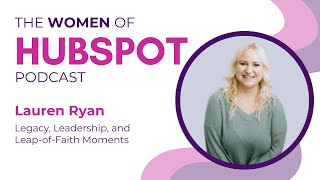
This is a YouTube video titled "Lauren Ryan on Legacy, Leadership, and Leap-of-Faith Moments | Women of HubSpot" published in June 2025. It features a conversational interview hosted by George B. Thomas with Lauren Ryan, a marketing technology professional deeply involved in the HubSpot ecosystem. The discussion covers Lauren's career journey, challenges she faced as a young woman in business, mentorship, empowerment, AI in marketing technology, networking strategies, and her personal aspirations. The interview highlights her experiences building a consulting business, overcoming setbacks, and her current role at HubSpot, emphasizing themes of leadership, legacy, and support for women in tech.
Welcome to the Women of HubSpot podcast, the show that celebrates the voices shaping marketing technology and the ever evolving HubSpot ecosystem. Hosted by George B. Thomas from Sidekick Strategies, each episode brings you the stories, strategies, and superpowers of the women driving this industry forward. It's their time. It's their mic. This is Women of HubSpot.
All right, I'm super excited to be back here for another episode of Women of HubSpot. And of course, excited because Lauren Ryan is here. Lauren, how the heck are you doing today?
I'm doing good. You know, it's my son's six month half birthday. It's almost halfway to a year, so big day here in the Ryan household and I am stacked with demos today. So having a good Monday.
There you go. Good Monday. And you should take all of those days of all of the children and make them special because, trust me, as a kid guy who has kids that are like adults now, time flies by. So let's go ahead and set the scene a little bit because obviously we're digging in. We're. We're finding out a little bit more about you, what makes you tick, why you are so amazing at HubSpot or in HubSpot. Because we put out a post a while back and we're like, tag somebody who's amazing that uses HubSpot and your name came up. So here's where I want to start. If we could go back in time and we could meet young Lauren Ryan just starting out one, what would we see and what would she be most surprised by? About where you are now.
I first started using HubSpot and Salesforce, actually on the same day at an internship I had. I think I was 19 at the time. So about 11 years ago, I was working for a 3D printing company and I was helping leverage tools to assist sales reps on the road as they went to different roadshows, trade shows, et cetera, using the tools, I would be really surprised that I had a career in this field. So at the time, I was a psychology major. My bachelor's degree is in psych and my master's degree is in business with a focus in marketing. So at the time, I had no idea what my future looked like career wise. I had started school wanting to be an attorney. I had pivoted to nursing briefly. Didn't like that. And I had chosen psychology because I loved connecting with others and, like, really seeing how the human, like, psyche worked. And then I kind of saw a parallel, parallel between that and marketing. And my dad always said, do something in business. So here I am during that position and others, I started to see, like, the interconnect between psychology, marketing, business, all of that, and kind of ran with it as I built my career closer to, like, marketing. I did event marketing, I did email marketing. I've worked in different industries. But I think what will be most surprising to me, like day one of HubSpot and that internship, is that I have built my entire career around HubSpot. So one, that's pretty surprising. And two, the fact that I'm in marketing technology. And three, of course, I'd be shocked that I actually work at HubSpot now.
I love the journey. And it's funny because everybody that we've asked that question to on this series, it ends up being like this bowl of spaghetti that ends up eventually straightening out and getting you to the place where you are. And it's so amazing. Speaking of journeys, like Lauren, who are some of your biggest inspirations or mentors along the way, kind of from there to getting where you're at today?
My grandfather passed away when I was 13, but he's very much been kind of like a guiding light throughout my career. He spent his life taking care of others and putting other people first and left a very strong legacy in that way. And so as I've grown throughout my career, I've always kind of lived from a principal perspective the way that I think that my grandfather did and the way that he would respect that I lived as far as. More tactically. I've had some amazing managers along the way that have pushed me to deepen my knowledge in HubSpot. I had managers that took me to my first inbound conference in Boston a while ago, and that really blew my mind stepping onto the show floor for the first time, especially since I was in trade show marketing at the time. I can speak to a few HubSpot agency owners at Connor Jeffers, Trish Lasard have been really helpful for me in my agency days. I'd say Jilly Frat from HubSpot has been a huge, huge, huge proponent of my success, both in the HubSpot ecosystem and also the person who referred me into my current position. So I wouldn't be where I am today without her specifically. I can say that. And I would say that my sisters, my little sisters are always like my motivation. Like, I have five younger siblings. And whenever I look around, I always want to make sure that I am succeeding, excelling, setting a good example, and building a path that's unique enough to be like Interesting to follow, but also like repeatable enough that it might inspire them to do something similar.
It's interesting to hear you go in that direction because I've heard you like listening backward, dad, grandfather, but also then projecting forward like the little sisters. And also five big family. That's amazing. I thought we were killing it with four. Two boys, two girls, but you guys are crushing it over there. You also did a great job dropping some names. Connor Jeffers, Trish Lassard. I love both of those folks. And Jilly Frat. Oh my gosh, Goat. We'll just throw that out here. I need to get her on one of these for sure. As you've kind of gone through this journey, you've had these mentors, but I'm super curious. Has there been any hurdles or biases that you've had to overcome in your career? And if so, how did you kind of navigate those moments in life?
The easy way out of the question is I'm a young woman woman. And there's a lot of hurdles that you overcome coming up in the business world, especially owning your own business and entering different rooms and being maybe the only woman there or the only woman on the trade show floor, the only woman on the sales team. Like, there's different ways that that's impacted my career throughout the years. That's definitely the easy answer. I would say a harder answer would be trying to start a business in my 20s and not seeing the forest for the trees. Like not seeing the big picture, not seeing where it's going. I started my business on a whim. Whenever I started Coastal Consulting in 2021, I had had a series of bad managers and my last manager was the most toxic of them by far. I had a really terrible conversation with him. I went out and I had a surgery. And then while I was recovering from that surgery, I decided that my well being was worth more than this job. And I quit my job and I started Coastal Consulting that day. And so I didn't really have a business plan. I'd just been freelancing for years. And I was like, you know what? People need help with the HubSpot salesforce integration. I'll do it full time. And that grew and grew into becoming a diamond partner and winning a technical expertise award and eventually being acquired by Rev Black recently. And it grew to a lot of great things. But I very much made every decision by this is the next best decision. There was no business plan. There was no formality. Even Coastal Consulting. I now live in central Tennessee. So naming something from where I lived at the time. There was just a lot of things that I didn't see. And I think that that created a lot of challenges while I was in it as far as who I hired, what I chose to do next in the business, how I chose to allocate funds. Like, there's a lot of things that I was just naive about, and there's a lot of things that I learned along the way. So I really think that my, like, naivety is just like a young business owner definitely presented some obstacles, but I definitely have had, like the time of my life solving them and figuring it out. And I decided to put that aside now that I'm a mom and focus on something where I can really grow within a structured organization. Because having very little structure in your work life and also raising a baby, there's no structure anywhere. And I really need some structure somewhere.
I love that answer so much. It might be a rewind point already, by the way, for people watching or listening. This because there's so many good nuggets of like, I just took a leap. I valued myself. You know, I figured it out along the way and, and so, so amazing. Just to kind of get to know you a little bit deeper in the. The journey that you've been on, I. I want to dig in a little bit deeper, kind of in the same vein, and I want you to take me back to maybe a moment where you felt, just say, underestimated or maybe even overlooked or out of place, maybe even in the industry as you're kind of getting, you know, psychology into marketing. Take me back to that time and maybe how you handled it.
I think the best example of that is just like the last exchange I had in my previous job with my like, last boss, before Coastal, before HubSpot, I had essentially started at a company I was hired to implement HubSpot. HubSpot didn't have SoC2 yet. HubSpot does have Sock2 now, and it's great for financial services, but it wasn't at the time when I worked at a credit union. And so we ended up having to choose Salesforce Marketing Cloud, which I didn't have experience in at the time. And so I was hired as a HubSpotter task with marketing cloud. I've had to teach myself how to use the platform from the ground up. So I learned ampscript coding, I learned how to do SQL, I learned how to integrate with our core system and financial services cloud. Whole thing built it out. And I presented to my boss who had changed from the time that I had started the company to. When I left, all these things that I'd learned and these skills, like upskilling I'd done and like, kind of did a market comp analysis on my role and had shown that, like, I was basically being paid 50% of what I should be in this role. And I asked if there's a way that we can build a plan to get closer to that. And he said that, like, my value to the organization would stay as it is today and that wouldn't really change is the value for this role and that he would appreciate it if I would stay there for two more years and then he would write me a recommendation for my next role. I definitely felt undervalued in that moment and also completely misunderstood by management. If you've implemented a tool like Salesforce, Marketing Cloud or even HubSpot, integrated anything with Salesforce, you understand that there's a level of complexity that goes there. And also if you have a deep expertise in one platform and you're tasked with learning a new one, there's a lot that goes into that. And to be able to present all the data, not just saying like, oh, I think I should earn more presenting the data as far as the positions and just being dismissed entirely, I think that will always stand out to me as a pivotal moment in my career where I learned exactly how not to lead people, how to be kind of forced to make a decision like, whether you're going to stand up for yourself or not. And thankfully I was able to make that like, shit switch and leave the company and stand up on my own and move forward. But, yeah, that, that's always going to stand out as a moment for me where I felt very underlooked, underappreciated, and definitely challenged as far as my value.
Yeah. And I mean, shoot, if we put the layers on it. You started out with like, psychology and then you were listing out those things and I'm like, oh, plus nerdiness. Like, okay. And you brought data like that conversation. Listen, if you're listening to this, I literally like bowed my head. But if you're watching this, you saw the visceral response that happened when, when you were telling that story. Because it's just. It's crazy. This next one, Lauren, it can be business or it can be personal. I know I have personally had what I call those, like, gut punch moments in life. And it's interesting. You have to have the valleys to get to the mountains. But have you kind of experienced a significant failure or even what you might call A setback, a gut punch? And if so, like, what did you kind of learn from it or what happened during that time?
December of 2022, I had grown my team at Coastal to six people. I don't believe I've told this story before, but I'd grown my team to six people. And I absolutely loved the team that I had. I had such a diverse group of people, like thinkers, people that would challenge the status quo, like great executors and HubSpot and Salesforce. And we had a very large client that was set to pay. They weren't happy with something that was going on in the work that they had. And so they decided they wouldn't pay for an additional month. They're essentially saying, no, we're not paying for a month. And there's not much you can do whenever you're a small company and a larger company just decides not to pay you. And so they had essentially come and said, we're not paying. At the time, they were by far our largest client. And we didn't have, by we mean me. I didn't have the reserves financially to cover the team that I had. And I ended up having to do layoffs in order to cover like the gap, essentially. And I remember the day that I had to lay off the majority of my team was like probably the worst day of my adult life. And I don't laugh as if it's funny. It's just nervous laughter because it was truly just like the worst day. Like having to sit down and tell people that I've like curated, like worked so hard to find, like, I can no longer keep you because we don't have payment was pretty terrible. And it taught me one, that there's a lot more that needs to go into the financial planning for a business for sure. And that you never want to have all your eggs in one basket, especially in the consulting world. And usually we didn't usually were diversified, Usually we had more pipeline. The economy at that point, if you're a HubSpot partner, the end of the year, 2022, kind of everyone was doing layoffs and I was like refusing to follow suit. Like, I was like not doing that. And then middle of like second payroll cycle, December, I had to lay off my team. And it was truly, truly terrible. And it took me about a year to bounce back confidence wise from having done that. And it was truly a pivotal point for me as a business owner of like, okay, I don't want to have that level of responsibility, at least for a while. Like, there is a possibility that I'll work for myself again in the future. But there's a lot of planning that I want to put into it beforehand because I, like, never want to relive the weight and, like, sadness of that day.
Yeah, those are good words for that. It's something as a business owner that I don't fear a lot, but I fear that conversation ever having to be reality. So when you say, wait, I can totally understand where you're going.
So.
All right, let's shift gears a little bit because I'm super curious. Again, part of the reason I'm doing these interviews is because it was super bowl, it was the Eagles versus, well, I don't even know when somebody will be listening this. Anyway, the moral of the story is I was talking to my daughter and the quarterback of the Eagles has an all female team, and we were talking about how cool that is and how she loved the fact that here was a person who was empowering women to be the team that drove, like, his social and all the things that he does. And so I've been asking everybody that, we've been interviewing this question and the responses have been very interesting. So I'll just go ahead and ask it of you. What does empowerment mean to you and how do you pass that on to others in your field?
I think of empowerment and enablement very similarly. So if you're in the HubSpot world, you are very familiar with sales enablement as far as, like, giving people the tools they need to do their job. I feel like empowerment is giving people the tools they need to take whatever next step they're looking for and also being the champion that they need to get there. So, like, I'd say Jilly Frat empowered me in the HubSpot world. I started HubSpot. I'd never had any sales experience before. I started being a HubSpot partner as soon as I became like a freelancer working on my own. And she taught me how to build out a sales pipeline, how to run like a discovery call, how, like the basics of sales. And so in that aspect, she gave me the tools to do my job. But for the past over four years now, she's been like, almost a daily cheerleader of like, hey, I know you're going through this. Like, let's do a pipeline review. Let's see what we can do is like, hit up your install base, see what we can do here. And so not only did she give me the tools, but she was also, like, sidelined, like in the trenches, like coaching me through it and, like, giving me motivational calls at night when I was going through these layoffs and these different things to, like, keep me motivated to move forward. Partially because she was my cam and my pipeline was her pipeline, but much more so because women helping women. And, like, she really wanted to see me succeed. And I really feel like she is a great example of empowerment. But that's kind of what I see empowerment as. Like, it's really giving people the next step they need if they have a goal, whether that's business, personal, otherwise, and then also, like, kind of holding their hand and empowering them to do it. Like, I've told you what to do. You're gonna do it on your own. But, like, I'm right here with you so you don't have to do it on your own.
I love that so much. And I want to kind of dig in a little bit deeper to maybe, like, a specific moment. And you kind of just shared, you know, what you're going through and. And, like, how Jill was helping and. And stuff like that. But I still want to see if there's a thread that we can pull here because we kind of talked about the flip side of, like, being overlooked or something like that. And so I'd love to know if there was a moment in your career where you just felt especially empowered or proud of something that you had achieved.
I'm the proudest of. As far as, like, my career. Deliverables has very much been the integration course I developed for the HubSpot Salesforce Integration. I spent probably five months ideating this course and talking about all the time, like, we need a low entry cost, like, thing for people needing help with integration, people who need to solve it themselves, people who can't afford an agency, whatever. And I spent hundreds of hours of my life putting together this course. The resources, writing the scripts, getting it filmed. And I remember whenever I did filming, I didn't, like, skimp on filming costs, just something I probably would do if I redid it. But I rented a beach house. I brought my whole team together, and we had a week where we played, like, Dungeons and Dragons at night and, like, made breakfast together. And me and, like, the other leader on the team, like, split a bottle of wine on the back porch at night. Like, it was just such a nice, like, connected feeling of, like, this you don't really get in life. Like, I think college is kind of the last time. We really have that type of feeling of really connected and trusting and leaning like friends that are working towards a goal Anyway, leaving that week where we were filming the course was one of, like, the proudest moments of my life, of just being able to bring these people together, have created something that could financially sustain, creating a course like this. And also the feeling of, like, all the impact we were going to have on people who started their career, like me not knowing what to do from a technical perspective and like, knowing that we had created from these, like, great minds that I'd found this awesome resource that's going to help people moving forward. And I really felt like I was going to be able to empower others with this integration and kind of help them move forward and be there and like, assist them on their way. But really that feeling that I got in the beach house that week, like, like I had my birthday that week we were filming the course. It was just such a awesome moment. We also celebrated one year in business that week. So it was a really cool time.
Yeah, the stars were aligning. I love the fact that it's around. You were bringing something to the world to empower others. And I'm telling you, I've learned so much about you. Psychology, a little bit of nerdiness, some Dungeons and Dragons, a little bit of wine. Like, this is, this is shaping up to be a pretty cool little interview. So I, I love, I gotta say.
I gotta say that was the one and only time I've played Dungeons and Dragons.
That's right.
That is not part of my story. But it was important to me that everyone felt represented on that trip. So we had two super nerds that were in a Dungeons and Dragons. So I had them like, I can't even think of the word, but build out a world and give us roles and stuff to play. So it was super fun.
I love it. Okay, that's so fun that you're like, hang on a second. I've played, but not all the time. So if you could go back and you could change. Well, not even go back. If you could change one thing about how women are supported in the industry that we're in, what would it be?
I think there's a really good opportunity for mentorship, like in every respect. Like, I've always, I did big brothers, big sisters in college. I'm a huge advocate of the, like, power and value that mentorship adds in the world. And I really think that at every company, in every agency, farm wide, whatever industry like, position, there should be a mentor for you. This is somebody that's not your boss, like someone that could be same level or above. I always think that There should be peer to peer women, like female mentors that are helping you drive forward, helping you bounce ideas off of, like, helping you build a plan towards what's next. I think that it's so easy, especially as a woman, to undercut your value or understate your worth. And it's so powerful to have a mirror next to you saying, like, hey, no, like, you actually did a really good job on this. You should add this to your resume. Or, oh, I would actually position this this way when you're applying to that job or did you see this position open up? You'd be great for it. Like, it's really important to have someone stamping you and someone that you're attached to, whether you find them or they're assigned to you. Mentorship is so important, and it's very rare that you reach out to a woman that's in your ecosystem in some way and ask for mentorship and they're like, no, I can't. They might say they're too busy, but as far as, like, not interested or not, like, worth their time, that's never a response that I've gotten.
I love that mentorship and I think if you are listening to this or watching this and you haven't historically done that, figure out a person that you can ask, go through that process. The more that you do it, the easier it is. And it is by far one of the most impactful things that I've been able to do as well. Just like having a mentor and somebody to help. Guide. I'll use the word guide. All right, so let's get a little bit nerdy because we are on interview around HubSpot, women of HubSpot. And so I'm super curious right now, Lauren, are there any kind of particular tools, strategies, trends in HubSpot and I'll even say HubSpot or inbound ecosystem that are exciting you right now.
I'm super excited about AI and I know, like, who isn't? It's the buzzword of HubSpot and what not only HubSpot is a product, but also just like the ecosystem around AI. It's been really cool, especially in this new role that I'm at in HubSpot to see how I can use AI to really superpower my work and what I'm doing at work. My main role right now is doing product demos of HubSpot to help people see if it's the right technical future for them or not, and using AI to kind of present, like my demo story and like everything that I have coming up and having AI challenge me on some point to like give me some ideas of other things to like show or ask. It's been so cool. It's just like if you really use it correctly, it's kind of like you have an extra coworker that's just dedicated to you all the time and giving you feedback. And I think that initially AI was presented like as a threat or as something that's kind of just like Google, but really AI can be a teammate. And it's really cool to turn it into like your own like train to think and look for the things I'm looking for. And it really saves time. Especially like if you just upload call transcripts and run through it. Like, AI is super, super powerful. And HubSpot's really leading the way in the CRM space as far as like making AI like agentic and like working for you to help not only like HubSpotters internally be AI forward, but also HubSpot customers be AI forward. And I think it's really cool to be a part of that. I felt like I'm part of HubSpot for years, but now actually working like on the HubSpot team and like kind of seeing the inside of it has just been such a cool like time of discovery for me as a HubSpot nerd.
I love it. This idea of being AI assisted an additional co worker. The fact that you kind of were leaning into like, like powerful for, you know, analyzing or even personalizing at scale if you will. So super amazing. Now let's go back to humans for you. How important is networking with other females and are there any certain strategies that you use to kind of build connections along the way?
Networking has always been very important to me throughout my career. The type of person and the type of networking that I do has changed greatly throughout the years. So when I first started, I was just looking for like women with a job. Like, let's just start very broadly, like who's gonna find someone with a job? And I really think that the trend has been looking for someone that's where you wanna be throughout the years and like always just like a few steps ahead. Not someone like, I wouldn't look at like Yamini as like a direct mentor for me, right. Because she's the CEO of HubSpot, I might look at like a sales leader and start there. And so I think that it's important to kind of level set when you're looking for a mentor. Like, what is my next goal? You should always know that before you find someone, because it's never the mentor's job, like give you the path, it's their job to say like, oh, you want that? Like here's what I can do to help you get there. But like right now the biggest thing that I've looked for in recent history is moms. So I had a newborn, I need to find a mom with a three month old, like tell me what's coming, like am I going to get my life back? Answer is maybe, probably not. And now that I'm like, I have a six month old, like I'm looking for moms with like a one year old. And like in general, like in my neighborhood, I just moved to a new place, I'm looking for people who have kids at all. So the type of network I'm doing right now is very much focused on like how to be a mom and how to be a working mom. And that's really who I'm drawn to at the moment. Whereas in the past it's been like female business owners or when I was looking for a job over the past year, the last year, trying to figure out what I wanted to do next, people with who had changed jobs or people who had sold their agents, like different people like that. So I really think that networking is very important and like how you go about that is very much dependent on your goal from networking. You should always have some sort of outcome. And not that people are means to an end, but to find the right person for you to talk to at the time, you really need to have an end goal in mind of what you're trying to achieve or the area you're trying to grow in.
Yeah, I love that you tied it to goal. What I really love too is the entire time you're talking about that, the freedom to have flexibility, to be networking with the people that you most need in your life. I think that's super powerful. I've got a couple more questions and as we land the plane here, let's go ahead and dig into these. It might be a little bit of reflection, it might be a little bit of inspiration, but I'm super curious, like what has been the most rewarding aspect of your career?
The most rewarding aspect of my career has been seeing the aha moment for people. Something that I've been uniquely skilled at in the HubSpot ecosystem is taking really complex situation systems and breaking it down to in terms of non technical people can understand. And I've done that through social media courses, learning, consulting and in all of Those different venues. I've been able to see things click for people, like, oh, okay, that's how I'm supposed to do this. Or, oh, I've been missing that. Like, just like, the light bulb turns on, the door opens, everything's great. That combined with people coming up to me and saying how much, like, I specifically have helped them in their job. Like, going to Inbound. I didn't go this past year because I was pregnant, but the year before I went and I was live filming sessions. Like, I would go into a session and live recap it and post it on TikTok and LinkedIn or wherever else. And I would have people come up to me while I was doing that, and they're like, oh, my God, your content's been so helpful. Like, it helped me get a promotion or it helped me solve this challenge, or it's. We've had, like, ROI because of this. And the fact that I've had been able to impact people enough that they would, like, go up to a stranger at a conference and, like, interrupt what they're doing and say something about it has been really, really rewarding for me because whenever we're in this remote culture and you're working from your computer, it's hard to see the impact you're having beyond the screen. And so many times you just feel like someone that's sitting alone in a room and just, like, pushing stuff off into the void. And so whenever you have moments of connection and people come back and say, like, thank you, like, I subscribe to your blog. I follow you on LinkedIn. I do whatever because, like, your content is helping me move forward. That's incredibly rewarding.
Yeah, I love those inbound moments where you get a glimpse into, oh, this is why I do what I do the rest of the year. So that's. That's amazing. Lauren, what advice would you give other women who might want to choose this career path? And what I mean by that is either working at HubSpot or something in marketing. But what advice would you give them?
I think that everyone needs to be a content creator in some way right now. I think you need to find a way to get your message heard, whether that's small, like through LinkedIn posts, or if you have a whole platform that you own. I think finding a way to take your message, your thoughts, your value prop and start putting it into word video content in a way that connects other people is essential to succeed today. I think that people who are able to take big things and interpret them for others are invaluable so if you have like a computer science tech background and you're trying to get into the CRM space right now, specifically I would take like a psychology class or a teaching class, something that allows you to connect with people more. Because the more that we've leaned more into technology and more into solutioning, some people in this industry have lost that human element and how to connect with others and like have lost the power of a story and storytelling. And all of that is so, so, so important, especially in CRM. Because if you think about the stakeholders in a CRM, you've got sales, marketing, leadership, end users. There's so many people that you have to engage as part of the CRM ecosystem. It's really important to be able to connect with and resonate with people and not just build technical solutions.
So good, so good. Just rewind it. Dang on it, ladies and gentlemen. All right, curious. You've talked about being a mom, we've talked about your career, but when you sit back and I asked this question that you had no clue I was going to ask you, what are your long term goals?
I would love to own a plane someday. My husband's a private pilot, so that's a big part of our life is travel and journeying. So like long term vision would be like condos throughout the world and like a plane where he flies us around, that would be great. But as far as like long term vision for my career, I think that leadership is something that I'd like to be in in the future. I'm really loving being an individual contributor right now because it's very like, this is your job, like get it done focus. Which is what I need right now because I need heavy structure at work. Because again, when I walk out of this room it's just like the chaos of a teething six month old. But in the future I'd really like to step back into a leadership role and help champion others and help grow ideally within the HubSpot ecosystem. HubSpot has always been a like, I don't even know the term for it, but like a moonshot company for me as far as getting an opportunity to work here. And so now that I do, like, I'd love to stay here as long as they'll have me. And so ideally I will have more of a leadership position in the HubSpot landscape like in the future to help the company keep growing and the people inside it growing as well.
Yeah, I can see that happening in the future without a doubt. Okay, I'm super Interesting. On this next one, I think we've got this and maybe like one more question, but I'll tell you why I'm interested. You've mentioned owning a plane, we've mentioned Dungeons and Dragons. Let me just get to the question. What's a surprising or a little known fact about you that people might not expect?
Grew up on a farm. I think that's kind of surprising whenever I'm in like tech and I carry around Kate Spade versus. But I grew up on a farm in Tennessee. I used to be a show jumper, horseback riding back in the day. So that's always like different from my childhood. I was a cheerleader in high school, but I think that that goes better with like sales and speaking. So that's more like believable. But earlier in life I was really into horses, being out on the farm, being more like country grown. And then I moved to New Jersey. So for a long time all of my concept had Manhattan in the background. So that's usually surprising to people when they find that out. If that's not surprising to you. I'm also first generation American on my mom's side. She is British, so first gen on that side.
Very cool. By the way, I love the little known fact because I grew up in Montana and a little unknown fact is I have in my life been a certified Western and English riding instructor for people who ride horses. So anyway, that's a lifetime or three ago. So let's land the plane with this last question. Finish this sentence for me, Lauren. Success to me means blank legacy.
Success to me is how people speak about you when you're not in the room. Making sure that you've left behind like a legacy of like giving and support and helping others. To me, success is very much a reflection of how you've impacted others and how you've moved their lives forward or the mission that you're a part of forward. I think success also means like able to support yourself, stuff like that. But for me, when I look at being successful in the future, my goal is really making sure that I have supported others in ways that are memorable and tangible. To know that really I did what I set out to do, which is I try to be a people first leader, a people first employee. I really focus on helping others and driving changes.










