Lead Scoring | HubSpot Admin HUG | May 9, 2023
Ryan Durling from HubSpot walks through lead scoring setup and best practices. The session covers integrating scoring with your marketing funnel, defining buyer personas, setting up automation, and handing off qualified leads to sales. Includes live Q&A with the HubSpot pro services team.
Hi all. Well, welcome to the HubSpot Admin Hug. Today's hug is lead Scoring with Ryan Durling. He's our inbound consultant at HubSpot. Ryan is going to walk us through some best practices for setting up or optimizing lead scoring, including how to integrate scoring with your marketing funnel, leverage scoring for successful sales handoffs, and identify trends in contact behavior using HubSpot reporting. So, Ryan, go ahead and take it away.
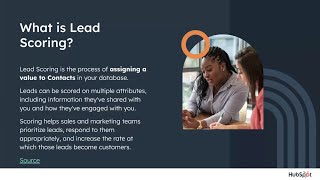
Cool. Deanna. Thank you very much everyone. Thank you for carving out the time to be here. Very, very excited to have the opportunity to talk to you all a bit about lead scoring. You know, kind of how how I coach customers on scoring. So I'll skip over the title slide and that I have a very high bar. So this is not the best meeting that we've ever had. Please feel free free to flame me in the chat. I won't see it, so it's totally fine. I am Ryan Derling. I'm a senior consultant at HubSpot. I've been a HubSpotter for about two and a half years. Actually, I think today is two and a half years on to the day, which is kind of cool. Prior to joining HubSpot, I worked with a solutions partner in Portsmouth, New Hampshire called Raka. I was with Raca for about five years, did a lot of paid media and own content. At that time didn't have as much to do with scoring as I have as a hubspotter. So I've learned a lot in the past two and a half years and excited to share a lot of that with you here in the next 45 minutes or so. I am, as I mentioned, I'm based in New Hampshire. That's in the U.S. for those of you who are not domestic, I'm a big reader, a big runner and hiker and a Boston sports fan. As you can probably get from behind me, if you want to flaming about the Bruins in the chat, feel free to go ahead. Just tread gently because I will hear about it and it makes me very, very sad. I'm also a really big fan of fried pickles. So if you have any fried pickle recommendations or recipes that you love, please share those and I will implore my team to save those recipes so that we can go through them down the road. On that note, I do have a handful of folks from our pro services team here who are watching. So if you have questions in the chat they will and answer as best as they can. Deanna, of course, if there's anything that you feel like warrants conversation, you know, feel free to just let me know and, and I can switch gears quickly to answer those questions. So just a quick kind of bit about our pro services team at HubSpot. So our pro services team works alongside our customer success team and our contracts team. We are really here to be strategic consultants for customers who are using HubSpot. We're really trying to maximize the return that they're getting from their software. We are not salespeople, we are not account management people. We are just an extra layer of support to everyone who's using HubSpot is doing so in the most intelligent way possible. So if you have questions about that as well, feel free to throw those in the chat. I'll talk more about services too at the end as well. But without further ado, Deanne, I believe you already started skip past the slide. You may have noticed I'm a fan of the office. You will see folks from the office pop up throughout the course of this slide deck. So hopefully we all have something, some shared experience there. We're going to talk about a handful of things this morning. First, we're going to kind of define lead scoring because I think it means different things to different people and I want to make sure that we're on the level before we get into actually talking about action. We'll talk about how scoring works inside of HubSpot, what you need to do in order to really launch a successful lead scoring effort. And last but not least, we'll talk about how to talk about how to build a successful scoring model. So we will get into that right now and of course, as questions pop up, as I mentioned, team, if Deanna, if there's anything there that you you want to flag for me, just let me know and I'll get to that live as quickly as I can. Lead scoring is the important word on this slide is process. Lead scoring is a capital P process. Assigning a score to an attribute or to a behavior by itself is not going to be sufficient on its own. We'll discuss more about that as we go through here. The most important thing to understand with lead scoring is that it does not exist in a vacuum. Any successful lead scoring model will touch on virtually every aspect of a company's marketing efforts, of your sales process as well, and in certain instances it might even touch on service process. So it's very important, and we'll talk about this a lot too, that before you embark on any sort of lead scoring approach that you have, buy in from everyone who's a stakeholder who is going to be involved. That's not just the salespeople, it's not just the content team. It's not just the folks who are responsible for reporting or operations. It's everybody. Everyone. So I always say to customers, the biggest lift in lead scoring is not defining how many points something is worth or creating Those attributes in HubSpot in the score property. It's making sure everyone internally is aligned before you even put pen to paper, so to speak, to actually get the scoring process started. So one thing I want to level on, if you're listening and you have marketing hub enterprise, you also have access to HubSpot's predictive lead scoring tools. We're not really going to talk about those today. This is about lead scoring strategy and process. If you're comfortable just leveraging HubSpot's AI to score context for you, great. You're more than welcome to do that. But this is going to be a conversation more about the folks who want to do the manual process, the manual scoring, making sure that everyone's bought in, how to, how to make that all happen spot. So let's get started. As Michael Scott said, explain this to me like I am an 8 year old and do my best. So there's a few different rules to be mindful of when you're starting scoring. Some of you may be experts in the scoring HubSpot already, so this may be very redundant. Some of you may be totally new to it, in which case some of this may give you a bit of before we even get too far into it. First and foremost, anytime you create a scoring property or you assign even a single attribute to a to a scoring property inside of HubSpot that is going to score every single contact in the database. There are things you can do within the scoring to set filters. There are things you can do within automations to level how that score impacts the database in terms of actionability. As I mentioned a few minutes ago, lead scoring by itself doesn't really do anything. It's the automation that's built off of lead scoring that really drives the value of this whole project. So by itself, lead scoring will set a score on every single contact in the database. But it's not going else unless you instruct HubSpot to do so. That's one number two, scoring is additive. So what I see a lot of customers do is they'll create a lead score property and they'll have three different attributes that for example are if a contact has opened more than two emails, give them one point. If a contact has opened more than five emails, give them two points. If a contact has opened more Than 10 emails, give them five points. Because lead scoring is additive, if a contact were to get to 10 email opens, they're not just going to have five points, they're going to have the two points for when they open the fifth email and the one point for when they open the second. They're actually going to have eight points, which is very important to be mindful of when you're defining relationally how those scores are set up. So we'll talk more about that in time here, but, but important to keep that in mind. Scoring is attribute based. This means that when you're setting up rules for scoring inside of HubSpot, whatever you're scoring on needs to be defined inside of HubSpot. That could mean it's a property and it could be a native property. It could be an event. You know, if you create a custom event, it could be an action such as an email open, but it needs to be based on something specific in order for you to score it. And you can layer things just as you might layer, you might have four or five different filters for a list. You might have four or five different enrollment triggers for a workflow. You can do the same thing in lead scoring, but after a certain point, you have to be mindful of what you're doing because you do only have 100 score attributes per property. So you want to make sure you're mindful of all of that. And then as I mentioned a second ago, scoring by itself is not actionable. Assigning someone a lead score inside of HubSpot is no different than saying you, you know their country is Canada, you know their, their, you know their time zone is Greenwich. It doesn't do anything on its own. You need to build things around it to make scoring actionable. So all of these things, they're just important to be, to be mindful of as you're going through the process. So what do we need to do before getting started? As I mentioned again, lead scoring is additive. So if you assign a point value for 3ml3 email opens and another point value for 5 email opens, you're going to see the sum total of points for a contact who hits X number of email opens. Lead scoring is addable, which means that multiple score properties can be aggregated together. We'll talk more about that down the road. But typically what we recommend as consultants is that contacts have both a. Contacts have both a score property for behavior, meaning website visits Page views, email opens, things of that nature. And also a separate score property for kind of Persona or who they are, job title or job level, company, industry, things like that. So we'll circle back to that. Lead scoring is relative. This, I think is one of the biggest things that's important to be mindful of when you're scoring. When you're, when you're setting scores, it's important to have most desirable attribute. If that's, if it's behavioral, that most desirable attribute is usually a form fill, usually a lower funnel form fill. If it's Persona based, it may be job title, it may be industry, it can depend on exactly what you're trying to do with scoring. But we'll talk more about that, about that as we go too. Just as important, lead scoring is pragmatic. I've had a lot of customers come to me and say, okay, what do we need to do to get contacts to 100 so that they can be an MQL? My response is always, why does a contact need to have 100 lead score? They don't. I have a lot of customers that I've worked with whose threshold for becoming an MQL is 10 points or 15 points because they have a very few specific actions that they're scoring on and they don't need to just go totally nuts and lose the forest for the trees. So the output score for a required action needs to things you're scoring on are. And that will be a threat as we go through here. And as I've kind of already mentioned, lead scoring is just a number. So what is lead scoring? Not again, it's not actionable on its own because it's just a number not relevant to contacts who are being managed by sales. Again, this is just one person's opinion. But once a contact is owned and is being worked by a sales rep, it is the responsibility of the sales rep to evaluate the quality of that contact based on the conversations that they're having and the information that they're gathering. It no longer matters again, in my mind how many marketing emails that contact has opened because they're working with sales and once it's all on sales, to push that contact through the pipeline into a closed run phase. Lead scoring is also not intended for fringe cases. So if we think of lead scoring as an iceberg, scoring is, you know, we want scoring to operate or focus on the 80% of the iceberg that we can't see. Right. Scoring is most valuable when it just runs in the background and has automations built off of it so that you know, your, your marketing teams, your sales teams can execute what they do really well and not worry about. Okay, is, you know, are the three new contacts that came in this morning, are they qualified, are they not qualified? So yes, there are going to be fringe cases where a contact you know may not hit threshold or an SQL threshold if you're, you know, if you have an SQL threshold. But because your sales team met them at a show, they walked up to the booth, they didn't, haven't come to the site, they haven't opened an email from you in the past because you didn't know they existed, they're still probably qualified lead, but they're not going to fit into that lead scoring qualification matrix. So important to use lead scoring to solve for the bulk of your database, not for the fringe cases. So things that we want to make sure that we're working on before we really push lead scoring out. Buyer Personas. Buyer Personas is a really big piece, strong need scoring campaign because in addition to giving you better context about who a contact is, buyer Personas will help you qualify and prioritize leads. And since different folks in their folks in different buyers buyer Personas will have different journeys, it's really important that you understand what those journeys look like so that you can tweak your scoring model if you need to, or at the very least create the most informed, broad based scoring model possible. So I don't recommend creating separate tracks or separate score properties for different buyer Personas because you're creating content for the masses. Typically you're not creating, you don't have one website for one buyer Persona and a separate website for a different buyer Persona. You're creating content tracks and engagement opportunities for folks that are in very different stages of the funnel and very different types of buyer Personas. And you could run into some real administrative headaches if you try to create different paths for all those folks in scoring. But it's still important to know who they are so that you can understand exactly the sorts of actions that are most valuable to them, the sorts of content that are most interesting to them, and perhaps even depending on how your routing is set up, how to most intelligently route those content contacts as they come in. Assignment rules are another they need to have in place. So I've said this already a lot, but because lead scores on their own are not actionable, a successful approach to lead scoring is going to involve automations to make sure that contacts are getting routed to the right people. They're going, they're getting nurtured with the right content and they're getting served the most custom experience that you can possibly serve them. Said differently, if you don't have a strong assignment rule or a strong series of assignment rules for contacts coming into your database, lead scoring isn't likely to be very valuable for you because you're just going to put contact, every contact into the same funnel, every contact into the same nurture flow. And eventually, you know, you'll get, you'll get some good ones that'll, that'll come through that. But eventually you'll also see a lot of folks who will just sort of fizzle out because they're not having a strong personalized experience created. And speaking of nurture flows, a vast majority of are going to need nurturing before they're ready to be handed off to sales. It's, you know, lead scoring and nurture flows really go hand in hand because when you talk about lead scoring, we're mostly focusing on behavioral scoring. And that's really important because regardless of what a contact's job title is or what company they work for, what industry they work in, you know, if they're very engaged with the content that you're sending them or the content that you're creating, they're likely to be a better fit as a customer for you in the long run. And so having nurture flows that create those personal experiences are really, really important. So I say here, you know, having automations that reflect areas of interest and qualification is a good way to maximize the value of the scoring model. And absolutely, that's really, really important. You want to make sure that you're getting as much from the scoring model as possible. But really what the scoring model and the buyer Personas are working together to do is to create the most personalized experience for your prospects. You create a more personalized experience, you create trust a lot more quickly. You create trust a lot more quickly. It's a lot easier to sell into those contacts. This is kind of a dark cloud over lead scoring, right? So a return to marketing process is really important. There can be a lot of contacts in your database, especially if you, if you're lucky enough to have hundreds of thousands of contacts in your database or more contacts who are really engaged with your content because they're a student writing a term paper and they really like the content that you're putting out there. They value it, they trust it, you know, your priority for them. But because of who they are, they're just not going to have, you know, an interest in a sales conversation. So not every contact with a high lead score is going to be ready for a sales conversation. The student example is one thing. You know, you could also run into a lot of who are maybe coordinators or analysts at their companies. You know, they're fairly junior and they're just trying to put together a presentation, you know, to prove the value of something that they were doing for an annual review. And they need some quotes or they need some data. And so they're going to keep coming back to your site, they're going to open the emails that you're sending them because you know, you're sending them quality content and that's really important. But they just don't have the authority, you know, to make a purchase decision. So those folks maybe right now don't have that authority. But if you score them as an mql, hand them over to sales to be qualified and sales says no, they're not ready, you can bring them back to marketing, you can continue to nurture them and after another 90 days, 180 days, after another year, maybe they get promoted a time or two, maybe they have some more ability to influence purchasing decisions and now they're really the right contact to go for. So having that process in place to return contacts, marketing becomes really important because your sales team is going to disqualify a lot of marketing qualified leads. That happens. It's normal, it's to be expected. Having something in place to nurture X in a different way will make scoring and will make, you know, all the content that you're putting together a lot more actionable and valuable for you. This is another place where that buy in is really, really important. If you understanding of what the handoff looks like for marketing to sales, or if you don't have, you know, a strong return to marketing process, then things are going to get very, very hairy very quickly. Sales is going to start to lose trust in the marketing process. Marketing is going to start to get really frustrated with sales for not working the leads that they're sending. It's going to become a cluster very quickly. Nobody wants that. So buy in is the single most important thing when you're doing lead scoring. And I will re emphasize that on the next slide as well. Having a shared understanding between marketing and sales teams of how lead scor works is so, so crucial to its success. And as I mentioned earlier, maybe the success team even needs to be involved here. The service team needs to. Depending on exactly how you're scoring, what you're scoring on, and what type of business you have the things that you need to make sure you have buy in on. How are scores being set, how are, how are contacts being action based on this and what are the rules of engagements for contacts who reach a certain score? So when I say rules of engagement, talking a little bit about that return to marketing, but also if a contact has a lead score, that makes them an MQL in your portal and you assign them to a sales rep and that sales rep identifies them as a sales qualified lead, but then doesn't action on them for 30 days, 60 days, 45 days, wherever the number is. It's important to have processes in place there too, to not return the contact marketing necessarily, but to enable other reps to take that contact on and to try to push them through the sales pipeline. So it's important to have kind of a return to sales square one process, just as it's important to have a return to marketing process in place. Getting these things together takes time, right? It takes meetings, it takes lots of conversation. We're not just looking to have the buy in of marketing analysts and junior business development folks. We're looking for, you know, the VP level as well. We want to make sure everybody top to bottom is in agreement on this so that we're building the most effective model that we possibly can for all organizations under our umbrella. As I said, buy in is the key to success with lead scoring. If you don't have whatever efforts you undertake to conduct scoring are inevitably going to prove very challenging at best and they may fall totally flat and result in a lot, a lot of frustration, a lot of distrust at worst. So making sure everyone for the lead scoring conversations is very, very important to the success of those efforts. So to recap the things that you need to have as part of your lead scoring strategy, buyer Personas 1. Assignment rules 2 automate kind of tied to assignment rules, but making sure that we have nurture flow set up, re engagement, set up, routing set up and also return to marketing or sales rules of engagement set up. Those are all very, very important pieces, pieces of a solid lead scoring strategy. And then of course, buy in, you know, without buy in, none of the other stuff can really exist or at least can exist intelligently. The, the giant asterisk here is I work with a lot of customers who are, you know, just have marketing teams or just their marketing team is committed to consulting at HubSpot. And so I've built or worked with customers to build a lot of lead scoring models that are really just used to serve needs. Maybe that's evaluating the efficacy of certain content. Maybe it's better understanding, you know, kind of buyer paths. Some of this was set up before we had Customer Journey analytics available. So there's, you know, there's some push and pull there. So you can use lead scoring for, you know, to just to prove the value of marketing efforts. But in an ideal world, lead scoring is being used across marketing, sales and maybe even service to make sure that you're driving efficiencies at scale but also creating really strong experiences for your prospect. I'm going to take a quick pause. Deanna, any questions in the chat that have popped up that, you know, we should take a minute or two on?
Yes, your team has been all over the question so I'm kind of just staying out of their way as to not confuse the situation. But there, there are some in the general chat but I'm going to go over to the Q A just for the benefit of those watching the, the recording and not actually here in the live. There are some live questions that will happen that you might not, you might not get to experience just because you're not here. So that's just a reminder to come live to these events. There was a question on David from David Noah about the hundred, the hundred limit on the, the fields for lead scoring. And Tom actually replied, sorry, sorry Tom, I know this sounds harsh, but maybe it's just me working with that limitation. But I typically say if you're hitting the 100 limit, you're probably doing it wrong. Lead scoring is not an exact science. So it's important to first start simple and build from there or increase the barri for entry. Typically I see customers hit that limit when they are signing points to tons of individual pages or marketing emails rather than doing something more scalable like a few key pages, number of page views, marketing emails, open and click. Do you have anything you want to add on top of that?
No, I mean, I think Tom hit the nail on the head. It's, you know, the, I think the more, you know, the more efficient you can be with lead scoring, you know, the more valuable it's, it's going to prove for you. The, you know, you can build out as robust and complicated elite scoring model as you want given the 100 attribute limit. But really what makes lead scoring valuable is how you action it. So better to have a more general approach to lead scoring and then to use filters and lists or filters and workflows to make sure that you're only actioning folks in the ways that they, you know, most need to be actioned on. That was said very poorly. But I hope that you get the gist of what I'm saying.
That makes sense. Let's see. Do lead score sync with Salesforce like Personas do or can they? From Liz. So lead scoring syncing for Salesforce.
Yeah, I mean my understanding, and I am not an absolute expert on the Salesforce integration, but lead scoring is a property. So just like any other contact property or company property or deal property, you can sync a score property from HubSpot to Salesforce.
Let's see, there was some questions about clearing a workflow and some answers from Steve. I'm going to skip that. Let's see if you have a big database and sync with an external CRM. Watch out for lead scores changes. I think that's just a response to the other question. There's a lot of responses in here, so filtering through them. Let's see. Since scores are taken at face value, if the criteria is met then it will be added, subtracted. So clearing, clearing does not work. So kind of going back to your additive nature of those properties.
Yeah. So score properties in HubSpot cannot be cleared in the event that, you know that a, you know, if you're trying to totally over overhaul what you're doing on the lead scoring side, my recommendation for customers is always just create any property. You know there, there are limits to the number of score properties you can inside the portal. I think it's five score properties if you're at professional and maybe like 20 if you're at Enterprise. Don't quote me on that. But yeah, if, if you get to the point where you've, you know, you've run into the limit of the number of different score properties you can have kind of the same thing as if running a number of different attributes within a single score property, you're just probably thinking about it a bit too much. So there's. If you find yourself running into the spot where you can't create new score properties to facilitate a total change in how you're scoring at that point, reach out to us, let us take a look at what you're doing. We have a project based service that focuses on lead scoring. I'm not here to super sell, but we have a project based service that, and we have recurring services that can, you know, make lead scoring a priority. So if you really need someone to help kind of guide your hand through it, you know, let us know. Like we're, you know, we'd be happy to help with that. Kind of thing. We have, you know, we have a lot of. A lot of us who are doing it on a daily basis.
Sure. And I'm just gonna kind of kind of tag onto that to the clearing property. There was a question about decaying over time. It would, it would like fall into that same kind of category where you would have to do a counter property. Right, right. I think they've gone. They've done a good job answering the questions over in the Q and A. So if you guys have questions and you see them over there, take a look for the responses to those. Not going to go through all of those. So I don't want to take up all Orion's time. Let's see. Yep. I think, I think you're good to keep going.
Cool. Tom, Steve, Caleb, Alexis, whoever else might be in the chat responding, thank you very much. Obliged. I will buy you all beer. All right, so let's do so now. Let's talk now about actually building the model. What do we need to build an effectively scoring model? So Personas, as I mentioned, are an important piece of. And here we're going to get into kind of the nuts and bolts. So on the one hand, what I typically recommend that customers do when they're doing a robust scoring model, they're doing the work to get the buy in. They have all the content, all the assets that are necessary. What I'm going to recommend is having two separate scores, one for Personas. And there's a typo here. Oy, apologies, but one for Persona and one for behavior. So what you would score on the Persona side are things like job level. And I'll circle back to that in just a second. I'll go through the bullets here. First, email domain, is it a free mail domain like Gmail or Yahoo, or is it main, you know, where a contact is located? Perhaps what the industry of contact is in is age, gender and income. A little more relevant for folks on the B2C side than on the B2B side, but potentially still relevant depending on what exactly you're trying to do. I do want to come back to job level here. So what I see a lot of folks scoring on is job title. And job title is if you're handing someone a business card. But if you're trying to automate marketing efforts, job title is almost meaningless because every company titles their roles a little bit differently. Every company, they mean a little bit different things. You know, one of the big things that I always go back to is in my experience working with B2B companies, the typical structure from the top down is C suite, vp, director, manager, individual contributor, and maybe there's like a contractor type situation as well. But if you work in finance, typically the way it looks is there may not even be someone in the C suite but directors. It sits above VP usually, and then you have manager, and then there's usually a lot of contractors and ICs kind of muddled together. So, you know, even just industry to industry, you know, some of those, those roles are very, very different and those levels are very different. So what I encourage customers to do is to use a job level property. This is a really good way to ask for information about a contact, for too much information about a contact. So some people don't want to give their job title, but they'll happily part ways with the fact that they're in the C suite or they're a VP or they're a director. So I typically recommend that job level or job role property be a dropdown for that drop down are C suite, vp, director, manager, individual contributor, contractor. So there's six different values that will allow you to better segment the audience at scale rather than having to figure out, okay, what does this job title mean versus this job title mean at the end of the day? If someone is a VP of marketing or if they're a VP of communications, is that really that different from what you're trying to do from a marketing perspective? If someone is an analyst versus a, you know, a coordinator, again, probably not, not that different. So that's something to be mindful of because I think it's really important when you are scoring, if you can paint with a broader brush and then action with more specific information, that's the right way to go. So job level is a really good example of that. On the behavioral side, things that we want to score. So when people talk about lead scoring, in my experience, they're talking about scoring behaviors. The Persona stuff doesn't really come to mind very, you know, all the time. It does sometimes. But what people are looking to score, submissions, CTA clicks, page views, site visits, email engagement, you know, things of that nature. And so you want to make sure that we're, we're defining a hierarchy for these things as well. Right. Typically a form submission is going to be the most valuable action the contact can take on Ta click is going to be kind of close in terms of value. Whereas a specific page view could be really valuable if it's like a testimonials page or a pricing page. But you know, if it's a Jobs page or a careers page. And I'll talk more about this in a second. You know, that value is sort of flip. It's really not. Not something you want to look at marketing for. So that's important to keep in mind too. Contacts can only hit behavioral rules once unless you do some really specific things with with your triggers. So building building score attributes around frequent actions such as email opens is an important thing to consider. I talked about this before, but you know, two email opens versus five email opens versus ten email opens. You know, should those be their own scores or should they all be kind of rolled into 1? So assigning scores and I'll show more on this in just a minute. Attributes should be scored relative to the single most desirable attribute. I typically recommend that no single action or Persona attribute more than 10 points, and I often encourage customers to use 5 points as the most desirable action because it really first and foremost makes you think about the value of certain things relative to another. So the value of certain Persona attributes relative to job level or the value of certain pages on the site relative to a Contact Us form or a requested demo form, which is a lower funnel form. Generally, if that requested demo form is worth, you know, we'll say 10 points, then everything else should scale down from there. So if a requested Demo form is 10 points, then is a view of a blog post even worth one point? Is it worth 10% of what that requested demo form is? Or should we wait till someone views three blog posts to give them that single point? So those are the things you have to think about as you're having some of these conversations. But really important to make sure that you're using relativity when you're determining, you know, what's going to be scored at what level. So I mentioned a second ago, careers pages, media pages, people who are coming to your careers page who are looking for jobs, people who are coming to a media page looking for just information about your company are generally not folks you want to market to, right? There's no value in marketing to someone who's looking for a job. There's very little value in marketing to someone who's coming to a media page, presumably because they're pressed or they're trying to write about. So you can do negative scoring based on actions like that. You can also score negatively based on location. So if someone is not in your target market geographically, you can give them a really whopper of a negative score so that you don't have to come worry about them getting to end. Well, if someone you know if someone actively unsubscribes from all email, you can give them a really high negative score so that you don't worry about marketing to them. Because really once you can't send them email, you can't do a whole lot of marketing to them anyway. Now you don't want to wholly disqualify somebody just because they unsubscribed or wholly disqualify somebody just because they're not located in your target market because people can get reinterested. They can move to different countries, different states, different whatever. So it's important to not give them a negative 500. But if a demo form is 10 points on the positive side, an unsubscribe from email could very easily be a negative 10. Maybe it's a negative five. Maybe you don't want to be quite that aggressive. But again, these are the things to have conversations about as you're sitting around the table with marketing and sales and service and making sure everyone's bought in. So assigning scores itself in HubSpot and we'll talk about this in a second. But behavior is a stronger quality of, or stronger indicator of intent and quality than the Persona based information you may have. Especially because as I mentioned here, a lot of the Persona they only going to be uncovered once a contact is engaged with sales. And again at that point their score doesn't really matter as much. What I typically encourage customers to do is to have those separate scores for behavior and Persona and then create a calculated, a calculated property that weights those two scores. So I typically do, you know, the weight, the behavioral score is worth twice as much as the Persona score. Now that's going to depend, you know, again on industry and what kind of content you have, what kind of nurture flows you have set up all of these things. You may choose to weigh things differently, but typically 2 to 1 behavioral to Persona is the kind of standard and if you want to have something a little bit more custom, of course you can talk about that internally. You can talk about that with us if you wanted to. You know, there's a lot of different opportunities to do things with waiting to make sure that you're getting the best information possible to actually action on. So setting up the actual attributes inside of HubSpot. We won't talk through this, you know, on this conversation just because I want to make sure we have time for other questions. But once you've gotten to the point where you have buy in, you've mapped out the scoring attributes and you've, you've gotten to the point where you feel really good about, you know, what, what you have. Then it's time to go on HubSpot and start adding attributes to scores. I have a note here. Take a deep breath and savor this moment because you're almost getting to this point is likely the result of months, maybe even quarters of hard work and, you know, and a lot of conversations. So yes, like, take a moment to kind of breathe it in because getting here is really, really important. It represents the fact that you've done a lot of work, that a lot of folks on your teams have done a lot of work to come to agreement on things. And you're about to make a really major shift in how you market and sell to contacts in your database. So that's sort of the, kind of the end of the strategic journey. I did want to share briefly and I'll make sure that this is included in follow up for anybody who wants to take a look at it. I have a tool that I use for customers and we'll walk through this very, very quickly. But basically what this document is intended to do, it's got a table of contents, it's actually got a tab on buyer Personas. So if you're not very familiar with buyer Personas, there's some more information on what they are and how to set them up and what kind of questions to ask. And then these two tabs here are focused on the fit and the behavior. So fit is kind of the Persona and behavior is the behavior. I really like this view just because the way the attributes lay out. When you're creating scoring inside of HubSpot, it's not super easy to see how one thing relates to another score wise. So this gives you the ability to have a place to workshop whatever you're going through and also to make sure that there's good relation between the most valuable action, for example, a primary form submission and, you know, the source that came from or something that's a much lower, lower indicator of intent. Lesser indicator of intent also has, you know, area for negative scores, if you wanted to go that route. And then finally there's a tab here where you can sort of define what the thresholds are for different lifecycle stages inside your portal. And then, you know, kind of formulaically spits out what the score needs to be, what the average score needs to be. If you wanted to do weighting, you could work that in here formulaically too. There's a bit of a workbook here for list memberships and workflow enrollment. So This, I think is a really good place to start. Whether you are just beginning the lead scoring conversation at your company or whether you're just looking for a refresh. And maybe you don't need to get this involved early on, but at least having the ability to map things out in a, you know, an environment where people can work together collaboratively, I think this is really important. So if you will get this link included in the follow up and then, or if we can't do that, at least add a link to the deck. So it's in the deck. Either way, you'll have access to it. And then if you want to talk through it in more detail with us, as mentioned, feel free to do so. So I did say a couple slides ago that you're like, you're almost done. Lead scoring is never really done. It's like anything when you're talking about automation and marketing sales process. You need to make sure that you're doing, you're doing reporting to understand the value of that lead score. You know, build a report that shows, you know, counter contacts by life cycle stage broken down by lead score are folks moving through the marketing funnel. You can just do some funnel reports to identify what the conversion rate is from one stage to another. That's another report label. You can also do scatter plots. So if you have a behavioral score and if you have a Persona score, you can put those on a scatter plot to see, okay, where are we seeing the greatest overlap between a high behavioral score and a lower Persona score or vice versa? So you can get some understanding of kind of like, okay, where, where are there opportunities for us to do more nurturing? Where are there opportunities for us to improve velocity through the funnel? Where are there just other things that we should be considering doing as part of our marketing efforts, as part of our sales efforts, within our handoffs, you know, or anywhere throughout the process. So this, this piece is a lot more open ended, right? Because you have to build the model and then deploy the model before you can get the data and see if it's actually working. But it is not. It's not uncommon for me to work with customers who will build a model, deploy it, and three months later have to go, you know, walk percent of the way back to make some changes because they just didn't account for certain things. And once the data rolled in, they started to see that, oh, well, you know, maybe our MQL threshold is too low. Oh, maybe our return to marketing process needs to keep folks in a nurture flow longer before they're eligible, things like that. So important to keep those things in mind as you're going through the process as well. Just about wrapped up. I did mention off the top. I just talk for another second about our services team. So again, our pro services team is made up of a bunch of consultants that work both on the kind of inbound marketing strategy side and also on the technical side. So APIs, Hub DB, things like that. A lot of us come from sales and marketing environments. Pretty much most of us used HubSpot prior to joining HubSpot, so kind of seeing it on both sides of the table. So if you have questions, if you want to learn more about some of those services, there's a link here, you can request more information. I'll make sure I add a link to that scoring document as well, so you have that resource to use if you'd like. But yeah, if there's any questions that anyone has about services, we're very, very happy to have a conversation, even if it's just, you know, a chat about kind of what you're looking to gain and whether or not we can be a good fit for you. So feel free to reach out. Anybody from our team would be happy to connect and chat a little bit about what you need and what you're looking to do. With HubSpot. I was told to not have a GIF on a question slide, so skipping that one. Any questions, anything that I've missed, anything that anybody wants to spend a few minutes on before we wrap up?
We have a ton of questions. Your team is like on fire with answering the questions. So I've been Anytime there was a question asked and answered by a team member, I moved it over to the answered segment. And like I said in the chat, I will compile those and put those on the community board and HubSpot so that you have access to those. If you are watching this or if you were here and you were just absorbed and listening and didn't get a chance to read all those, I don't know that we should spend too much time because they've already been answered. But maybe the team can bring up a couple that they thought were valuable for the whole group. I think there were a couple that just came in through the general chat. How can we see score triggers? So for example, how would I know in the flow what gave the plus or minus score? Now in the history, I can only see a number.
So it's a really good question. When you're looking at contact history, like property history for contacts again, you can score deals and you can score companies, too. It's just that, you know, 98% of scoring and probably more than that is dominant contact level. You can see when scores are changed, but determining what exactly was the root of that change is a little tricky because the contact history isn't that robust, you know, Team in the chat, thoughts on how to handle this more intelligently? Please feel free to chime in, but in my experience, that is a place where there's a bit of a limitation on being able to see what actions or events specifically triggered a change in a context. Lead score. Some of it you can kind of do just by knowing what your scoring model is and knowing what your attributes are. But if it were, if you're just looking at a specific contact and just trying to figure out why their score jumped from a 12 to a 22, for example, you may need to do some extra to figure that out. There's no silver bullet way to do that at scale.
Would you be interested in sharing the resource document, maybe walking everyone through the tabs, giving them a little bit of a preview of those items?
I can absolutely do that. So. So this is. Again, this first tab here is really just a table of contents that talks about, you know, what the document is, what lead scoring is.
Hold on a second. You have to share your other tab.
Oh, okay. I'm sorry. I thought. I thought I had it shared.
There you go.
That must have been kind of weird when I was sharing it and didn't realize you're good. So, all right. So this first tab is kind of a table of contents. There's really nothing here. It's all just like reading the second tab. So if you're. If you don't have a lot of buyer Personas, this matrix kind of gives you an idea of what the questions are you need to be asking to evaluate, you know, to create buyer Personas and evaluate how they map to your database as you scroll down here, I did a couple kind of examples. I just used like a hospital, a medical facility as an example, and then mapped the questions that are up at the top to specific attributes that you might score on. So this, again, there's a lot more to kind of read through here and develop your own thoughts and process on. But this is for building out those Personas. So these are the two tabs that I really talked about when I thought I was showing this tab, but I didn't. So what these two tabs allow you to do. So fit is Persona, and behavior is behavior. What these do is they allow you to see in a very collaborative space what the different weights of certain attributes are in relation to one another. So I mentioned this, but when you're building out the scoring inside of HubSpot, it's kind of difficult to see just because of the way it's built visually. It's kind of how one property or one attribute relates to another. This is just a lot cleaner way to see that. And so you can for example, define here and I have job title, but again, this should probably be job level. So this could be. You could. Job level is C suite. And of course, because you're all watching me type, I can't spell anything correctly. But if we did job level, just dealing with the typos, so you can say this is the property we're going to score on and then these are the values. So you could set those. And then again, it's a cluster, it's a Google Doc, right? It's a collaborative space for you and your team to work together, you know, at the same time if you wanted to do negative scores. So if this is, you know, analyst, you know, for example, that could be a negative. Job level is, you know, contractor, you know, that can be negative. Two contractors, kind of tough to score because you can have a contractor who's basically, you know, filling the role of like a vp, you know, in the short term or the long term. But you know, if they're still not a full time employee, they probably don't have a lot of sway over, you know, over potential purchases. So this, you know, this is just aimed to give you a really quick, at a glance look at what we're scoring on, what the details of those attributes are and how they relate to one another and then the same thing on the behavioral side. So you know, here's kind of, as I mentioned, you know, there's a primary form submission, whatever that greatest indicator of intent is, that should be worth the most points. And I never score anything higher than a 10. I try to do possible, but 10 can just be easier to show sometimes. Secondary form submission, you know, website sessions, you know, this is going to be a certain number of sessions, a certain number of page views, specific page visits, like a testimonials page or a pricing page, you know, versus a blog post, you know, CTAs. If you haven't opted into the new CTA beta, I'm strongly encourage you to do that because there's just a ton more flexibility with what you can do visually with CTAs and how CTAs can sort, sort of be deployed throughout your sites. So if you have played with that, please opt into the beta and leverage, you know, leverage CTAs, but also think about how you're scoring them. Because at the end of the day a CTA is still meant to just be kind of a guide to another page, whether it's on site or off. But a lot of folks have ignored the CTAs and scoring because the functionality just hasn't been super robust. Well, now it is. So now there's an opportunity to get really, really flashy with your CTAs, which enables you to get smarter about how you're scoring and how you're leveraging them. I could go on about this, but basically this way to see how different attributes and values relate to one another from a scoring perspective. And then this last tab is threshold. So I mentioned here there's, you know, you can basically formulaically determine what the percentage of a total possible lead score is. You can break that out into different scores on the Persona side, on the behavioral side, you can just use this workbook as a place, like a central resource to say these are the lists these contacts are going to be enrolled in. These are the workflows that these contacts are going to be enrolled in. You may choose to do this, you may choose not to do this. It's just, you know, it's a resource, right? So it's here if you want it. If you have another way of managing that internal much, you know, up to you as to how you choose to do that. So that was, you know, really, really quick flyby in like three minutes. Sorry I didn't share it previously, but hopefully this is a nice little teaser to see what you could do. You know, some of these, some of this information.
No, that's awesome. It, it really is a great tool. I'm kind of excited to share it out to you guys because I got to, I got a chance to play with it before Ryan sending out over, over to us for this. So definitely check it out. A lot of the questions you all have are amazing. They're very well thought out questions and I do think you will benefit if you have a chat with Ryan and his team. So make sure you're checking that link out when he, he shares it. Your customers, your users. Like it's important that you're using the system to it's fullest capabilities. So definitely check that out and speak with his team. Because we could spend a month sitting here answering all of these specific questions, but a lot of them are going to be very specific to your business and how you are scoring and how you're looking at who your ideal customers and who your Personas are. So definitely check that out. I am going to put a link into the survey for, for feedback if you wouldn't mind providing that. I know Ryan did a great job. His team did an amazing job answering questions. I couldn't keep up with them answering questions to your amazing questions. So thank you to all of that and like I said, I'll provide that into the community, the HubSpot hug community, so that you have a chance to take a peek at all of those. If you've got any questions, you can also submit them on the feedback form. I will make sure that Ryan and team get those feedback answers. So let us know what you liked, let us know what you didn't like, let us know what you want to hear about in the future. Let's see, let me see if I can find like one. I'm trying. They're just many, they're, they're just answering them so fast. I'm like, I can't even keep up. I can't keep up.
So while you're looking to Deanna, I will, I'll include my email at the follow up deck as well so that if anybody, if you just have a quick one off question, you don't want to go through the process of filling out a form but you still want to just chat with somebody. I'm happy to just, you know, answer questions. One office quickly, quickly as I can. You know, I'm not sure how quickly I'll be able to get to them. But you know, I try to turn emails around within 48 hours. So I don't know if every single one of you sends me an email, it's going to take more than 48 hours. But if it's a reasonable response, you know, I'll try to get back to anybody who has a question, you know, within a few days of the email.
Do you prefer email or do you prefer people reach out on LinkedIn?
I suck at LinkedIn.
Email is definitely okay, no worries. I just wanted to make sure before I put it in the chat. So I put Ryan's email in the chat. Sorry, Ryan. You're gonna get some emails. Let's see. He's got to get your LinkedIn up. You got some LinkedIn suggestions going over there.
I do, Caleb, yes, very aware.
No, I very much appreciate it. I, you know, I mean, I always say I'm not a fan of math, but this isn't math. This is like the secret sauce to making sure you know who's going on in your CRM. So like, if you, if you are a newbie, take a watch of this again. Look at those resources. If you have already got some lead scoring going on in your system, it never hurts to take another peek at it. And if you think you got this all figured out, go ahead and go into that show and tell and come back and show us some awesome stuff that you got going on in your system so that other people can take advantage of the amazing knowledge that you've got too. So let me see, I'm not seeing any questions that they didn't answer. Which Tyson. Yes, it's a, it's a Google Doc, so we'll be able to share that out. That's literally the only question I can answer on there. How about that? I did invite some of your team to come talk if you didn't fill the time in case there were some questions that they thought they would share. But I don't think we have, you know, we only got a couple more minutes. Is there any parting advice that you can give to someone just getting started? Someone's already out there doing this and someone who, you know, maybe some extra pro tips.
A small caution, I think, you know, when you're, when you get to the point where you actually start building scoring out inside of HubSpot, if you only add, you know, if you have a list of 25 attributes that you want to program. So I use program loosely here, but if you have a list of handful of attributes that you want to put in and you only get like three or four of them and you hit save, HubSpot's going to score as soon as you hit save. So I always caution customers to, you know, once you're actually ready to build out the actual score property block like two hours or however long you think it's going to take, plus an extra half hour just for buffer because you want to make sure that you're putting everything in at once. It's just cleaner. It's easier to trust the data that's coming in when you can do that. So that's something to be mindful. The other thing is, you know, lead scoring is in a lot of ways if you're newer to HubSpot or newer to lead scoring, there are a lot of parallels to HubSpot at scale, right? So HubSpot has so many different tools and so many different things that it can do that it can be very easy to get lost if you try to do it all at once, lead scoring is very much the same way. You can score in that it's very easy to lose the forest for the trees. The most important thing that you can do is go into it, you know, have a team based approach so that you have some people to validate your opinions, your thoughts, your concerns and make sure that you're just control, you can't control a lot of, you know, a lot of things like how many times people are going to come to the site or how much time they're going to spend on the site. So don't worry about scoring for those early on. You know, do you focus on scoring on the things that you're really engaged with? So if you're doing a lot of email marketing, focus your scoring on that. If you're doing a lot of, you know, you have a really strong content strategy, focus your scoring on content and engagement with content. If you're just doing, you know, HubSpot always says like, don't do cold process, don't do cold process. Cold emails, don't add, you know, contacts in your database from, you know, without their consent. And yes, that's all very true. Don't do that. But if you have teams doing some cold prospecting of contacts that have been in the database for a while but haven't been actioned on in a year and a half, well then maybe you look a little bit more at the Persona specific stuff and see if you can identify ways to use scoring to prioritize some of those contexts. So don't try to solve everything, you know, with, with one swing of lead scoring use, use it to focus on the things that you're doing really well or really want to focus on and then scale it up as you get more comfortable.
I love it. Sorry, couldn't get myself on mute. No, I, I really appreciate it that amazing details and amazing information. And again, I will be sending out the recording since you're here. You obviously, obviously get that in your inbox. It'll have those resources and the links provided to the team so that you can go ahead and start picking their brain a little bit more too. I again will post any of the questions and responses that the team shared in the QA over in the community. And Ryan, thank you so much for all of the amazing information. It I will be watching it again. Like I always say, I do. I go back and I watch and I'm like, man, I miss, how did I miss that? I was, was literally standing there pushing the buttons. How did I miss that. So don't feel bad if you have to watch it over again like I do. And I hope you guys all register for the next events. We will see you again soon. Thanks Ryan and appreciate guys.










