Managing a Remote Marketing Agency Team Across 7 Time Zones with Janet Mesh
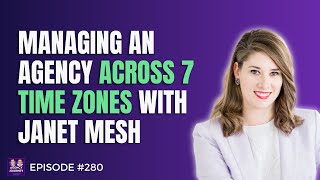
Janet Mesh, CEO of Aimtel, talks about running a marketing agency with team members spread across seven time zones. She covers how the agency stays coordinated with remote workers, what tools keep everyone connected, and why they still do in-person team retreats.
All right, welcome back to Agency Journey. This is your host Gray MacKenzie. And this week I've got the pleasure of bringing on Janet Mesh, who is the CEO and co founder of aimtel. And we will talk about what aimtel is. Janet, welcome to the podcast.
Thanks Greg. Yeah, thanks for inviting me on. Excited to talk about the journey of aimtel today.
We got a lot to dig into and this is going to be a super fun conversation. Can you tell us like, give us the profile? You guys just celebrated five years at aimtel. Um, walk us through kind of what, what does the agency look like?
We are a integrated marketing agency. Um, so we provide like full services to clients. Um, but where we niche and focus is B2B technology companies. So a lot of our clients either have like a product or a platform that we're helping them market, um, and build audiences and um, all that good stuff across strategy, growth, marketing, design, creative and content. So that's kind of on that full service nature. And yeah, we started in 2018 so a bit around five years ago, which is really exciting. And now we're kind of looking forward to the next five years. So in terms of like, I can kind of share a little bit of like high level origin story if that makes sense. Cool. So my background is I've actually always worked in marketing. I went to school for marketing degree in communication. So the focus in marketing and cross cultural communication. And I was lucky enough to actually like start my career at the last recession. Luckily we seems like we're, we're in a good place now. But I was able to start my career in marketing at a IT staffing consulting firm and they actually implemented like ERP systems like PeopleSoft, Oracle, SAP. So like big legacy tools. But I honestly just loved the industry and like the people and it was very much like as like you know, the cloud migration, adoption, like really kickstarting and that was also kind of like in tandem with like digital marketing becoming like such a massive player for organizations. Like so in my role, starting out at that organization, I was pretty much building out like what their digital marketing like plans were also with events and working really closely with their sales team. Like I remember I would like sit with the sales team and like help them build up their LinkedIn and like really help them craft like how to like market and sell online so that they got acquired and it was just like a good time in my career that I wanted to move on and so I, instead of just jumping right into a new role, I actually took four months off and um, traveled with My then boyfriend, now husband to Chile for like a few like four months. And it was like what, what have I cut? Like did a lot of that. I would say like you know, classic quarter life crisis and really reflecting on my career and like what I want to do. And I was like I really want to be able to like work in digital marketing, get like a lot more experience but also be able to work remotely. Like my partner, he was an IT developer architect at the time and he was able to work remotely. And I'm like there's. It wasn't a thing. Like it's. Which is insane to think that you couldn't have both. And I just was like, couldn't accept that. I'm like there's a, there must be a way that I can you know, work in marketing and be able to like have that flexibility and work remotely. Like I work on a computer all day anyways. Anyway, so came back to Boston, that's where I'm based and just got like a ton of experience. I worked with a couple different agencies, really kind of went deep on the account management side, client services, kind of getting more experience like kind of my niche was like social media, content marketing, but trying to like expand out to like you know, actual like campaign lead generation, paid advertising, paid media. And from that, honestly like kind of the journey, it was pretty organic where my co founder David and I, we always wanted to start a business, like a remote business but we didn't know like exactly like what the first business would be. And so I actually started having kind of my own clients like consulting, moonlighting, freelancing and that just really started to take off honestly, which is a great problem to have. And I was kind of like at the point like I need help and I think that maybe this could be like the first business and do like service based company. So that's what we did. We decided to start Aimtel in 2018. Um, and so kind of just started from that moment working with contractors to start people just kind of new in my own network and then just scaling up. As of today we're a team of around, I think we're around 18 with like full time and then some still have some contractors supporting kind of broad project based work and we're now across seven time zones and yeah, I, I think kind of going back to like that visioning work. I was like it has to be a reality. So I think I pretty much created the reality of like can really actually work in marketing and be able to work fully remote and build a fully Remote company. So, yeah, that's where we're at today. So I feel like lots of dig into, but it's been. It's been fun.
You. So you all have doubled your revenue and team size every year since 2018.
Yeah.
How does forecasting work now? So is that just the Automatic prediction for 2024? Say we're going to double again. That gets harder and harder.
I mean, I think I. Yes, I like, I think it's always like that, like, kind of pie in the sky goal. We don't have, like, we completely bootstrapped the agency. Like, I don't have investors. We don't have. We don't have any. Like, anything that we've done is just for ourselves and putting profit back into the business. So I'm not kind of like, beholden to like, some overlord on kind of hitting certain, like, goals. It's just more of, like, what we want to make sure we're having, like, a really, like, strong employee experience, really helping others. Like, our mission is, like, to help companies grow, but also help other, like, our team members grow in their career. So a lot of what we do is kind of in service to that, not kind of like, I have to report to, like, a board, for example.
Right.
So, yes, I think, if anything, it's like more of like, our own ambition of wanting to be like, okay, we want to, like, double. And we've been able to do that, of course, with this year. Like, it's been a completely different year. Like, the start of 2023 did look very different and, like, a lot of it was slow to start, so. But we're actually, like, I think we'll be on track to kind of. I would say, like, we're kind of at that point of like, a little bit of, like, we're in a good, like, maintain a little bit of a lift. But then we'll be. We're setting things up now for next year to hit that goal again.
Yeah. That's awesome.
Yeah.
What. So why is there this passion for remote work? And the second piece that I want to dig into is, like, you. Even on the site, as I was going through the latest version of your. Of your site, you talk a lot about working remotely. There's a lot of content. Like, as I'm scrolling through the site, I'm like, there's good stuff about the services, but there's also a lot for prospective team members. So where did. Where did the heart for, like, wanting to build a remote working team come from? And then kind of, how do you See that? Like, pre pandemic, I would imagine for you. Just like for us, we started full. We went fully remote in 2014. That was a huge recruiting edge for a while. And post pandemic, I still think there's a recruiting edge around. And I'm curious if this is your approach. Like, remote first versus remote by accident, or like, remote intentionally versus, hey, we're kind of forced into this, but it's less of a. People can still check that box with a ton of different companies now, so maybe I'll let you take take a stab at both of those questions.
Yeah, I was. So we've been remote since day one. Like, or even before, like, we always went in with the intention, like, we're going to build this to, like, all processes, systems. The whole experience would be fully. To have a fully remote team and working with clients fully remote as well. So that's, you know, we weren't like, we're not like a pandemic remote company. I remember, like, actually, like, we get like, in like 2019 and 2020, like, and you probably experienced the same, like, people were reaching out, like, how do we do this? What do we do? So that was. It was cool to kind of like, consult on that stuff. But I think it sounds, like, so simple, but. And it sounds like a cliche, honestly, but it just kind of goes back to, like, when I was traveling and was like, what do I really want? Like, the tractor in my career? And like, what does that look like for, like, my career and my lifestyle? Like, I'm a marketer. And if, you know, marketers, like, we're obsessive marketing, have, like, really deep passion for it. But it, like, any kind of opportunity that I saw, like, it just didn't kind of align with that, like, lifestyle or like, I just, for me, I just don't feel like I fit into this, like, nine to five box. I mean, now that I'm a founder, the joke's on us. Like, we work way more than eight hours. Like, I think, number one, if you. I always say to people, like, if you want to start an agency or business, like, are you ready to commit to this for, like, 10 years? And, like, you can't get out of it. Like, like, honestly. But I think, you know, what I love about remote work is I think there's a lot of things that I really enjoy about it. It's like, I think it kind of just comes down to that. You said the word intention, and we use that a lot too. It's like, you got to be really Intentional about like how you're communicating, collaborating, like setting expectations, like your culture, like it's just not things, things can happen organically but you really just actually have to like think of ways in a more of like a systematized, process driven way. And that's kind of like aligns to like our, our way of working and what we've always wanted to build. I think it's honestly just makes it a bit more. I don't know if this is the right term but I like what comes to mind is like more equitable in some ways because I find if you're working in an office or if you're you know, hybrid mode for companies, like a lot of the issues it seems and I even experienced this like being in house, working in an office. Like you, you know, you couldn't make that meeting or someone had like a drive by conversation. It wasn't documented somewhere. You didn't know what the update was, you're out of the loop. But we have to have a lot of more intention, setting expectations, communication, collaboration around a remote team and remote way of working. So I just feel like it lends itself that everyone kind of has like a level, as much of a love and playing field as you can provide. It's also just really like I'm a big traveler. I love like different cultures, like different people just like opens up the world. I think we kind of, we're still kind of operating more on like seven time zones of like kind of pacific to like Europe right now we're not kind of around on the Eastern hemisphere. But in terms of like that I think that's really exciting. Like especially in marketing. I mean it is global now. Like everything you have access to knowing what's happening around the world. So having like a team that's diverse, different ideas, different cultures, perspectives, like lends itself to like that creativity and we always kind of have to like nurture that. So.
Right.
Those are a few things I feel like there's a lot more but those are like the top things that kind of come to mind of like why. Of like kind of like our beliefs or like our, our values associated with that and how we're kind of like the mindset of approaching how we're building the business.
Yeah. What drives seven different time zones for you is that to serve clients in different areas. Like we. So we've got a mix. We've got about half of our team is international, half is US based and we've got some folks who are remote. Who are remote because we need to serve different time zones. And we've made the decision, hey, we're going to be able to serve these different time zones. And then we've got other folks who are remote because of. I mean, I think if you boil it down, it's like the geo arbitrage opportunity. I've got a friend who's a recruiter and she always tells me, like, the right person for the role that you need at the budget that you need to hit, who's got the values that align with your company is out there in the world. Like the odds are out of the billions of people in the world, they're there. The lower the budget and the higher your standards are and the more stringent you are that they have to fit your values, the harder you're going to pay more to go find that person. But you can go find that person. And so the ability to find those right people at a price point, that makes sense for the business, for that role at that time to be able to move into it, that's certainly part of what drives the international talent. And so it's a little bit different for different roles. But is that similar for you or like, why seven different time zones?
Yeah, I think, I think that's like part of it. And we're starting to get a little bit more of like where clients are like, do you have people on these time zones that can like service us? So we're kind of like starting to look into, look kind of like modeling it that way on the kind of like account management side. But in a way, I think if we just kind of go more first, which is like, to your point of like the quality of the person and they align with our core values, like working at agency, like have that passion and like we kind of just have like figured it out where they. If it works and like based on more of like the talent than say like the time zone is more of how we've like approached it historically and it has worked well. It's also just like, I think some people, you know, they can, they're able to, you know, if they want to move or things like that. We kind of have that flexibility. We, we use like a employer record for like international teams right now. So that that kind of building that like operations infrastructure and rely on that like allows us to kind of hire in those areas. There's still like a lot that we need to do. We're hiring in different, like countries, of course, because like every country has like different laws and all that stuff. However, like, I think it was Just, it was always just like, let's find like the best people. And just using that as like our, our guide to make those decisions. Not necessarily kind of the opposite way of like, oh, we need this person here in like right. Pacific time versus central time, things like that.
Yeah, that's really nice. Who do you use for your eor? Is that deal or is that somebody else?
We currently use remote.
Okay. Yep. Yeah, makes sense. Cool. That's awesome. What? So one of the things that you do, you know, obviously the challenge of building remote, this is the same. You have the same challenge in person. It's just the challenges look different but is like, how do we keep everybody connected and bought in? And I had Tyler do. Runs an agency called Rocket Clicks and he was just.
Oh, yeah.
So yeah, he talks about like everybody comes into an organization with their culture bet, culture battery like filled up, they're ready to go and then over time that kind of gets drained down and you need to find a ways to recharge it. And you do one of the things that he recommended, which is bringing the whole team together in person somewhere. Tell us a little bit about. I think you guys. Just recently we were in Montreal together as a team. But tell us about what pulling those together look like. And I shared with you, hey, we've got our first, like full. This. This iteration of full team get together coming up in 2024. We're going to take the whole team to Portugal, which ironically is one of the countries that we don't have anybody. So everybody's. Which is kind of intentional. Hey, we don't want to go.
That's amazing.
Like right in somebody's backyard. And then.
Exactly.
Everyone else gets to go somewhere cool and they're like, okay, yeah, but how? What does that look like to pull people together? And do you have any tips for other teams who are trying to figure out how to do the same thing?
Yeah, definitely. So, yeah, we do an annual retreat. I call it Angel Ascend, like branded it, of course. And yeah, I think, I think a big thing. So some of it's kind of. We kind of gotten to a point, honestly where it's like a repeatable process. Honestly, like I said, it's like kind of process driven. So it's. Right. The past few years has always been around the same, like time. So we like let people know in advance, like, hey, we're gonna be doing like the retreat. We don't know exactly like where, but it's going to be maybe within this like two week time frame. And then we do kind of like a Wednesday, Thursday to a Sunday. So it's like a couple days together and then into a weekend. Because I think a big part of like kind of how we and I think about the retreat and bringing everyone together is that we do want it to feel like pretty much like focusing on ourselves, like kind of filling up our cups, not like this like super scheduled day. So I think like kind of step one would be like create the structure but like give freedom with in the structure. So I really, when I'm like kind of mapping out the itinerary, like not over scheduling everyone like really lending itself to like some free time. Like you are in a new country if you're going or even a new city, like if people never been there, like they want to explore kind of like how that spontaneity get inspired. So I've gotten feedback from my team that they really like that aspect of it and I also really like it. So we're kind of doing it that way and then we just, we dedicate like one day that we're focusing like internally. So we do. We typically like structure it that we're either doing like pretty much like H2OKR planning so that we can just have some time together to like just like ideate, brainstorm and start to kind of like plan for the next six months together in that space and also doing like some team bonding activities. But the whole weekend's kind of like team bonding. So I kind of like we haven't always done these like really structured team things, but just kind of let it be that like more fluid, organic connection for everyone. The one thing I really like to do too is like we're pretty big foodies at aimtel actually. I feel like that's like an unspoken rule. Even people who have allergies, you're welcome here. But we definitely like, we always make sure we have a team dinner or like some sort of teen meal together. And that's just a really nice way to like maybe the end of the day or like to just bring everyone together and just like, I don't know, we just have fun. We're like like I just like go to each person. I'm like, what's one thing you want on the menu? And like let them order it. Just like fun ways like that. Just to connect and like try things and share conversation. Like honestly, like break bread.
Yeah.
So I think that's a, that's a nice way of just like kind of. And we kind of do. I feel like I do like the itinerary like we go to a different place every year but the itinerary is about the same like flow. I think that works well because then people kind of understand that expectation. Every year we can set those expectations on the client side, like, hey, we're going to be off on like Friday. Like we're not available. And just I think especially as an agency, like you're always and service to your client and like thinking of your customer and you're not like you really got to make that dedicated time to like take a look at yourself. And everyone kind of have that like introspection and like planning for the future of like what we need to do as a business. Not only focusing on the clients all the time.
Yep.
So that's kind of on that, like kind of that high level. But then one thing that actually we, that David, my co founder CEO implemented last year, we went to Spain last year to Malaga, which I highly recommend doing a retreat there. It's phenomenal. And he implemented platform called Travel Perk. And so we have like a technology we use where you can set like pretty much the retreat on there, like the trip. And then everyone can book their flights through Travel Perk as well as we can book the hotel. And it's really, really nice and makes it very easy to like set up policies like you can see, you know, you can book a trip like your flight, up it to X amount of money per person. It's like it pretty much explains like all the expectations of the trip. They also have like a support like travel practice. So if someone's like running to issues while they're traveling, they can reach out to like Travel Perk support team to kind of help them. Because like we may not be available, like all of us are traveling. So we kind of have that secondary option for someone to help if someone gets like delayed. Because there'll always be one person that gets delays, unfortunately.
Yeah.
Or like loses our luggage or you know, it's just kind of part of the whole experience. Yeah, I don't. I'll kind of pause there. I don't know if there's any.
Those are awesome.
Any other tips I can give you for yours next year?
Yeah, Right. So those are awesome tips. I. I've seen a number of agencies do things like right at the end before people leave, one of the last things that they do with everybody, you're on the last day. They have everybody fill out a glassdoor review. And part of me is like from a marketing perspective, totally get that that's a big part of your Profile and you've got everybody on this high and part of me is like, oh, I hate that because it's like, hey, this is the single highest point maybe of your entire year. And like this is what I'm gonna ask you for a review which I, yeah, I see both sides too. So I've heard like things like that and seen folks do some other tips and tricks. I think travel perk is a great like you know, a really cool idea. As you were saying. Hey, it's kind of more of a free flowing one. I was thinking about our team and thinking like, hey, I don't think that our team would actually enjoy. I think they probably want more structure than I might personally like.
Yeah, well I think that's where like you kind of. I like map out like pretty much like morning these things and then like so I'll give you an example like arrive Thursday morning, cowork for the day, you know, kind of wrap up for the week. We're planning to get like a co working space which is kind of cool because we like don't have an office.
Right.
So it's kind of like let's actually like what's it like to be in an office? But also then we're like wow, I'm so glad I don't have to work in the office. And then personally that's from my own preference but. And then like then like you know, the first night's like team dinner and then the next day we do like I was saying, we do like kind of our, our like intel planning meeting. Like team like, like kind of just BL from like 9am to 2pm and then giving like a buffer in the afternoon for people to like kind of like relax or like do some like you know, walking around, shopping, whatever they want to do together separately come back for like a team dinner and then you know, go from there wherever the night takes you. And then like the next day we usually do like a team sort of like activity or like a tour or like I actually haven't even shared this. Well, I think this will come out after we go so everyone will have our experience with. But I planning to like take everyone to a spa. Like I want to like, I'm like a little like there's a really cool one in Montreal and I'm, I'm like we're going to go and I'm going to force everyone to relax like or you know, I think it's just kind of like what, what is your team like? Like do they want to go like like do a cooking class or like, do they want to whatever. Like kind of fits like your, your culture, like kind of have that. And then maybe there's something like when we went to Spain last year, I think you can do like night activities are fun too. Like we did a flamenco show at night after dinner. Because like, so stuff like that, I think you can have that kind of like structure. But if it's like, I find like, if it's every hour, like our days are so structured, especially working with an agency. Like you're just constantly like kind of running. So we like to use that retreat of a little bit of like truly like a retreat, like for everyone to kind of just like allow themselves to kind of chill out a little bit. Um, I think one thing that we're real, we're kind of seeing. I'm curious this will happen for you or if you're already seeing this may happen. But we actually, it is like a company benefit. But we, we. Everyone is invited if you're a full time employee of Amtel. But we actually do say it's like optional. Like we don't obligate people to have to attend.
Yeah, right.
Yeah. And I think that's kind of important too because like some people may not want to share why they can't attend or like they just, you know, family planning or health things. So we're looking as like we're growing in size. There's always going to be a handful of people that can't attend. So.
Right.
We're now kind of layering in like what's the experience for those still remote that they kind of feel that connection and then what can we kind of offer them over the weekend that they like, you know, maybe they can go to like do an activity with their friend or family in their home, like where they are or you know, go to a spa at like. Yeah, I don't know. We haven't decided what it is. But I think kind of always having that lens, that's what we're trying to figure out and we're planning right now is like, what's that experience for everyone? Because it is a benefit and it is something that like people really look forward to and you know, stuff happens sometimes you just, you can't go for sure. We don't want people to feel like completely left out.
Yeah, those are great tips. Well, you've brought up the word process like a handful of different times already and I know that you're very process driven, but even on the site, you know, you got the Dropdown from the about page, I think. And it, you know, there's two tabs and second one says process. But everything in your conversation with you to the site comes back to the word process an awful lot. And where does that emphasis come from? And then how would you articulate that value to the classic creative entrepreneur who's like, I don't even know that they necessarily object to process. They're just the people who are the best at saying we should have process and the worst at actually following process.
Yeah, or like the seeing as like a major constraint or bureaucracy.
Right, yeah, right.
I think there's always a balance to that. Of course. I think it kind of comes down to like a few things. I mean, it's true. We are process driven. And because we're fully remote, like, you just can't assume people are gonna know like, what's going on or like, so having like that kind of clear, like, you know, saying that's clear, I kind of like break it down by like, what's like setting the intention, the expectation, and then like communication, collaboration, like streams or like areas and like, how you do that. So it's like the intentions, like the why and like, explain like, okay, this is our intention for doing this. And I think a lot of times what we do and we like have a big part of our culture is like our core values, like, really using that to drive that expectations. Like the what, like, setting, like, what are we, what are we expecting of you? I think also, like, people want to know where they stand and like where they're going. Like, they want to know. Like, you don't want to kind of like, have to like, figure it out and guess, like being dir. To be direct is to be clear and to be direct is to be kind. And if you're, you know, I think if you're process driven, then you can be direct in a kind and clear way and really set people up for success. And then it kind of comes down to like, the communication. Like, if fully remote team, you have synchronous communication and like asynchronous communication, that's like the how and the where you're communicating. And then like layering like the collaboration, like the how and the when, like in your project management tools, your knowledge base, like meetings and huddles and like, when do you do that? So, like, we kind of in a way, like, not necessarily, like, in some ways we do prescribe and like say, like, you do these things in this way and in these tools and make sure that you're like, Making sure that like all this is like updated and like everyone kind of knows like what's the status of projects versus like the latest process. And so that I think is like kind of like that, that like high level. But then in terms of like the why, I think I really don't see how you could operate as any business. I don't think it was just remote if you don't have processes. Like I don't even see. I don't. I think sometimes yeah, I can over complicate things. But like it's kind of always the like the place where you go back to of like okay, this is like what we're doing and why we're doing and how we're doing it. It's also like really important as you start to grow. Like I know this is probably not the best term to use but it's like that like concept of like tribal knowledge. Like it's not really fair to like I just always think of the context of anything I'm doing or if I need to go back to the beginning, I'm like, I am an employee of intel and it's my first day and I just like put myself in that Persona and I start to like go through our tools. I'm like I need to answer this question and figure that out and if I can't do it, that's a problem. So kind of I was thinking of that as like how does, how do we set that person up for success but also kind of allowing them to like self serve and be resourceful because you really need to be especially in an agency. Like things move really fast, a lot of context switching. So I think we always have a lot to improve and that's kind of part of it as well. Like we're always kind of in our process page on our website. Like you can see this like through line of like constant improvement and we pull a lot from like kind of Agile manifesto and methodology around that is like in order to achieve and maintain the like high quality standards of service that we're known for, like we need to kind of always have that lens of like what do we need to improve? How, how are we approaching this? Like what's kind of the standardized way but then how are we kind of building on top of that? I hope I answered the question, but that's kind of like the, that's great.
I think clarity is kindness. Like you're saying like being super clear about why, what does good look like? How do you, how do we get there? The why, the what the how are all super important. And yeah, I think that most so many agency owners are agency owners because they don't want to be employees or they can't be employees anymore. It's like I need to run my own thing. And so the word process to them feels shackling. You know, it's like, I don't, I don't want to be associated with that or hey, can't we just have a high level overview what needs to happen and we don't do what you were just describing, which is like, put ourselves in this, in the shoes of the people who are hiring. The people who are hiring are wired, totally different and that's the reason they're working for you. And guess what they want. They want a lot more process and a lot more guidelines and structure and clear expectations than you want freedom within structure. Yeah, exactly, exactly. So I think that was really, really well put. What. So I've got two questions for you as we wrap up. The first one, I ask people, I used to ask people all the time about like, hey, what are some lesser known tools that you use and love? And I've switched that to service providers, which is my question for you. And you've already, I mean a lot of cool tools are like your clients, you know, the Trellos and Atlassians and Cisco of the world. So who is a service provider who you've had a great experience with and kind of what stands out about that? Is there a service provider that comes to mind and what stands out about that experience?
I would say like they're kind of more of a platform in a way, but they do actually have like the shine incorporated like a service element to it which in like consulting. So we use rippling as like our H R I S I T. This is like where I'm like, we need to bring David, my co founder, onto the podcast because he'll, he's the expert here. He like implemented the whole thing. But that was pretty much like a game changer for us to like really have everything pretty centralized on, like on, on rippling, especially from like employee experience and like being able to kind of run like a lean like operations team and like automating a lot of like kind of those workflows for like hiring, onboarding, you know, offboarding. We even just like manage a lot of like just all of our tools like bring it all together there where people use as like a jumping off point to like all of our other tools. So they, I wouldn't say they're maybe like necessarily like a service they kind of are like, they do have like kind of consultants and like account managers that like kind of help and we can like talk through and it's cool because like they also like, we give them ideas and we start to see like that feedback come into like the platform. So that one definitely has been a game changer for us and that we can, we can kind of like scale and grow without having to like add a ton of headcount on the operation side. I think that's kind of been a little bit of our secret sauce to success there. I'm trying to think of.
Hmm. Yeah.
I don't know. I honestly I'm like pretty bad. I feel like we just do a lot of things ourselves and maybe this was like a. Gotta admit, like we need to accept more help.
I think that's fine. Yeah. Have that moment of self reflection. But no, I think, I think rippling is a great example. It's been really cool to see them grow over the last, the last couple years.
Yeah, it's like kind of like the ServiceNow if you know ServiceNow. Like for some reason it's kind of their like positioning and.
Yeah.
And I have, I mean we do have the benefit that David Co founder, COO, he's a ServiceNow IT architect. That's his background. So definitely have that advantage of someone with that really like system, operational, business operation, processy background to really like set things up and so that everyone can you know, work and collaborate and communicate together. So it's pretty integral to have that kind of technical expertise and person dedicated there internally.
I didn't know that. That's awesome. Okay, last question. What's your number one tip for agency operators?
Okay, well I think we have to say investment processes, like build those out. It's like the one thing you don't want to do. I always say I find that like I do enjoy the like. I think sometimes people get like really overwhelmed with documentation and process. I'm like a video is a doc is documentation. Like start there. Like just, just record. Really? You do that really well. Like you always like do like clips or videos and that's obviously how you and I connected. I should go back to the question. I would obviously recommend Zen Pilot because we work with you guys, but I remember you guys, I remember you guys did that. You would like record videos and like kind of walking through, I'm like, oh this is so much easier than like writing out like list or bullet points and stuff. So really leaned into that. And so I think you know, kind of investing that and having kind of on top of that is like having like a knowledge base that houses all that. So we use Guru now and really like it because they also have like this like, verification feature so you can make sure that the knowledge is always up to date. I would say the final thing, just the kind of like number one is back to kind of to recap. What we've been talking about today is like just setting and communicating, like clear intentions and expectations of your people and like, kind of bringing them along as much as you as you can. I think kind of that. Like that sometimes that like that transparency to the certain extent that you're able to provide it. And even sometimes like that vulnerability. Like, sometimes my favorite things when I get on the call with the team is like, I don't know all the answers, but we're gonna figure it out. And like, that's kind of that mindset of just being like, really clear about that. Like, my expectations here is that we don't know all the things, but, like, we're working together to figure it out or kind of all the other things that we've talked about today. I think of really leaning into those, like the why and the what is a good kind of guide of how to just lead if you're a CEO or in a leadership position. Just like lead your team and really make sure people feel like they know what's expected of them and like how they can participate and grow and. Yeah, right.
That's awesome. I think on the video point, like, it's way easier to record a quick video. It's not always the easiest to consume, but if you're watching it, especially for the first time, I think it's the easiest to consume to see how it all fits together. But I love taking the transcript from those. Record a quick loom video. Take the transcript exactly, plug it into anthropic has Claude AI, which I prefer for this, like ChatGPT or something. Throw it in with a prompt for hey, I need bullet points for, you know, this, whatever, and have it spit out kind of the checklist for you. And then just any fine tuning and throw it in a very, very easy way to go build. And you don't need a hundred percent process coverage. You need to be really clear about what you want at the end. And you need like the top 20% of stuff like, hey, here's the 20% you have to get right. Um, and then for some things you have to go a lot more detailed. But for most stuff like that is the quick and dirty, like fast way to build processes that are actually gonna help your team.
A lot of it's just like, just get started. Just so it becomes more of, like, a habit. Like, you kind of just get over, like, what's the term? Like, productivity method. Like, eat the frog.
Right?
The frog, get it done. And then it just kind of starts to flow and it's. It's always like. I think it's, you know, it just feels like a lot of work, but it just. It's that kind of concept. Like teach a teacher, woman to fish. Teach a man a fish.
Yep.
And then they're going to start kind of being able to, like, follow in your footsteps. And I think it's. It's always a constant. It's a constant battle lesson, but never have regretted doing it.
Right. All right, I'm going to get you out of here almost on time. We're so close. AIMtal.com a I m t a l.com is the website, Janet, anywhere else you want to point people to follow you?
Yeah, I think definitely on our website. I feel like we're. If you want to kind of follow us on social, we're active, like, primarily like LinkedIn, Instagram. We're investing in building content on YouTube. We have, like, a new series called, like, Marketing in a Minute that's like, going through, like, marketing tips, like, in under one minute. So that's some fun content we're producing. But yeah, any of those channels, I think you'll stay the most up to date with us. All the things we have going on with clients and internally.
That's awesome. Well, thanks for joining us today on Agency Journey.
Thanks, guy. I appreciate it.
Sa.










